Downloaded 56 times



The Waterfall Model is a linear sequential software development process where each phase is completed before the next begins, and is particularly useful for projects with well-understood requirements. It was first formally described by Winston W. Royce in 1970 and has advantages like ease of implementation and early error identification, but is limited by its suitability for small projects and rigidity in handling changes. Key phases include requirement gathering, design, coding, testing, and maintenance, with documentation produced at each stage.
Introduction to the Waterfall Model including its history, usage, diagram, advantages, and disadvantages.
Defines the Waterfall Model, highlighting its linear approach and requirement of phase completion.
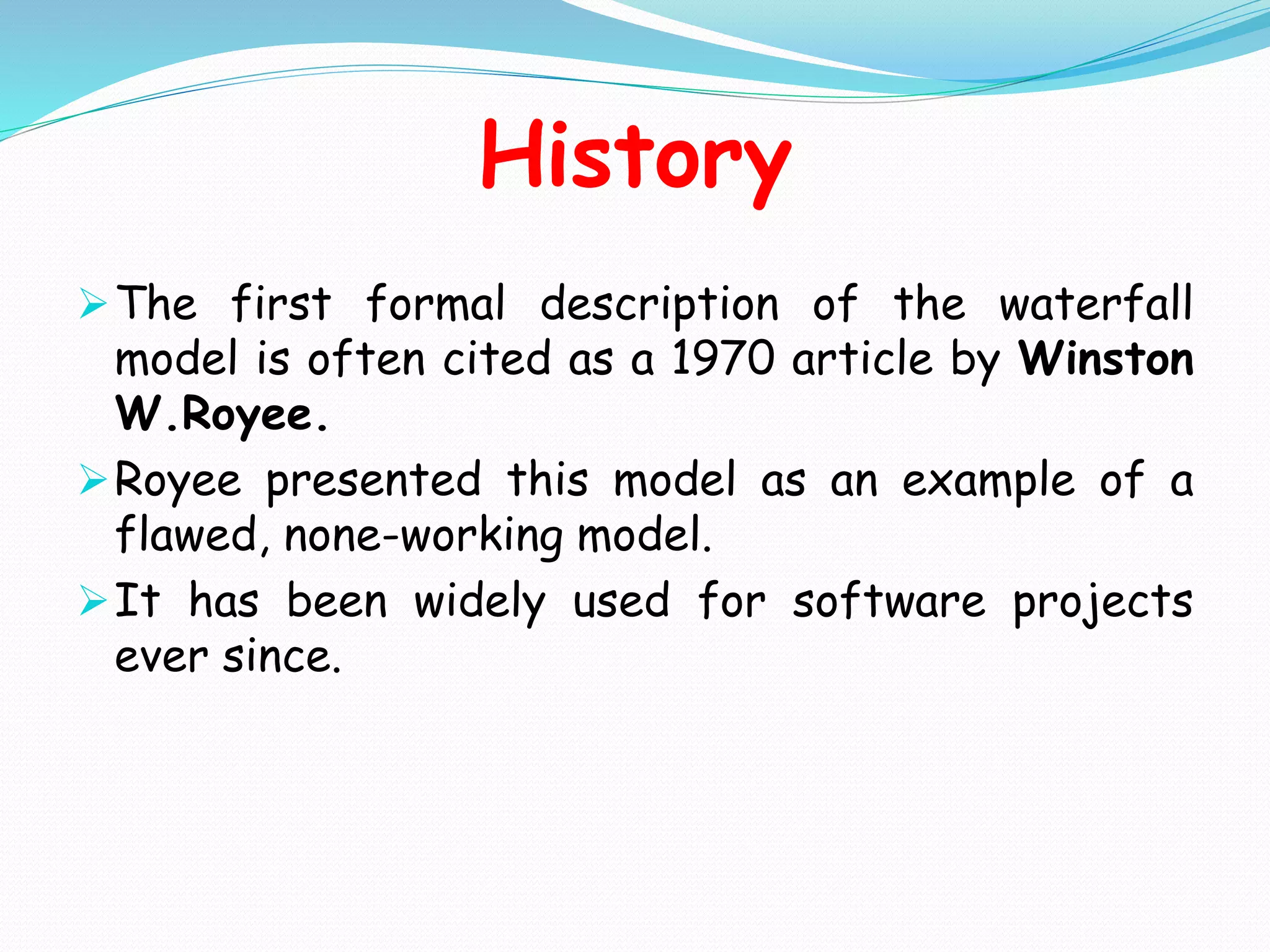
Describes the origin of the Waterfall Model linked to Winston W. Royce's critique in 1970.
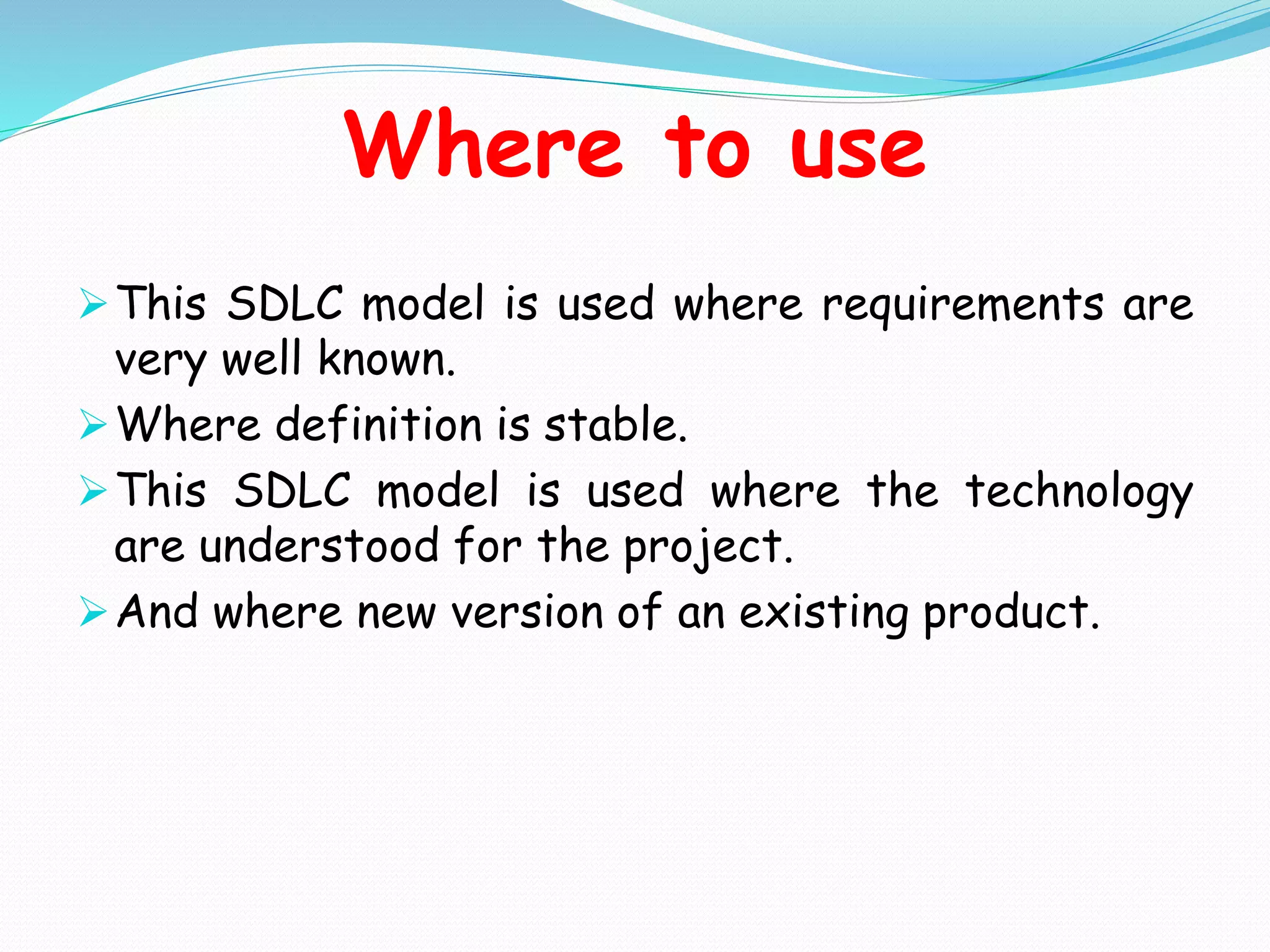
Details where the Waterfall Model is effectively utilized, focusing on well-defined requirements.
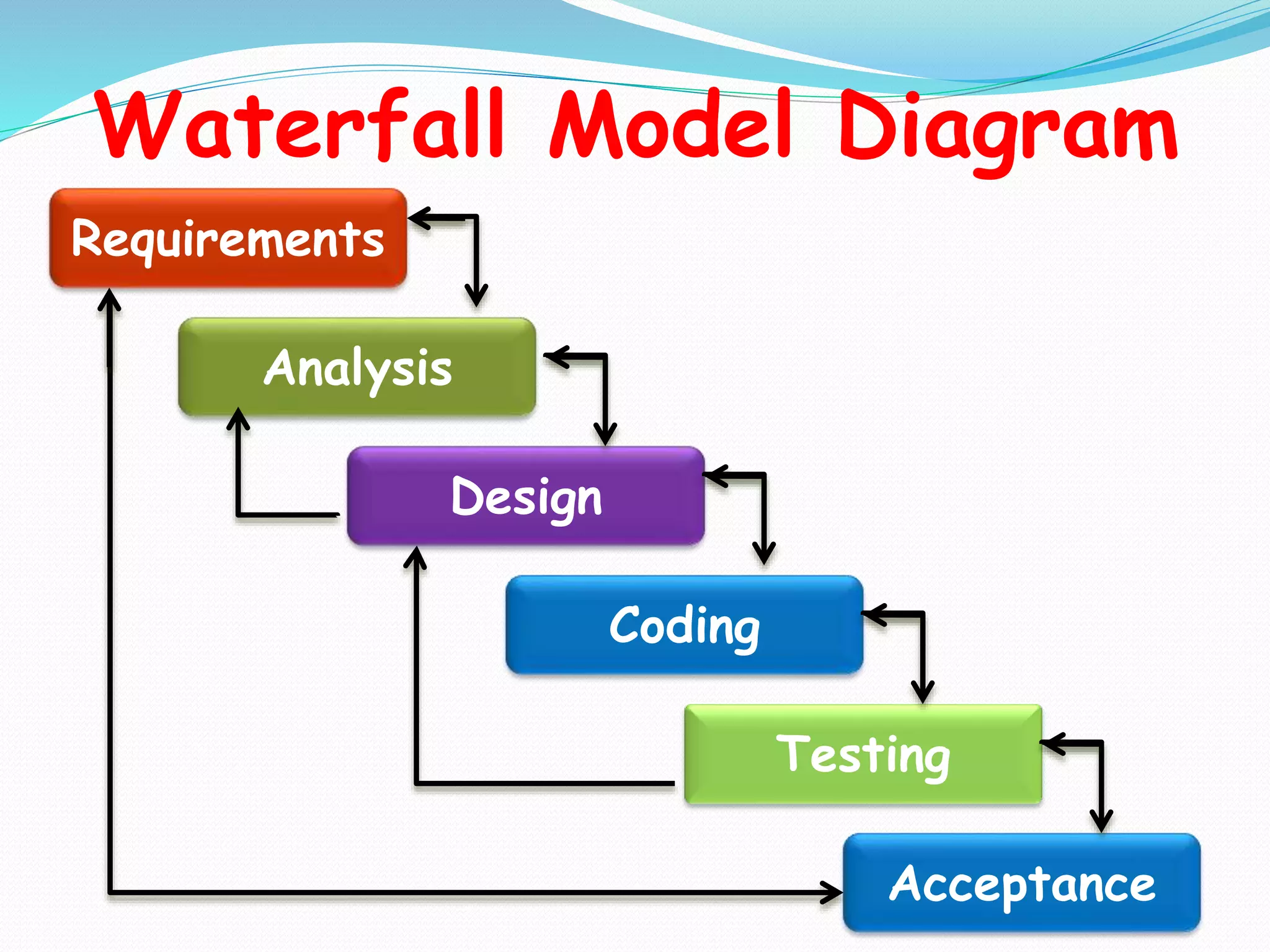
Illustration of the Waterfall Model stages: Requirements, Analysis, Design, Coding, Testing, Acceptance.
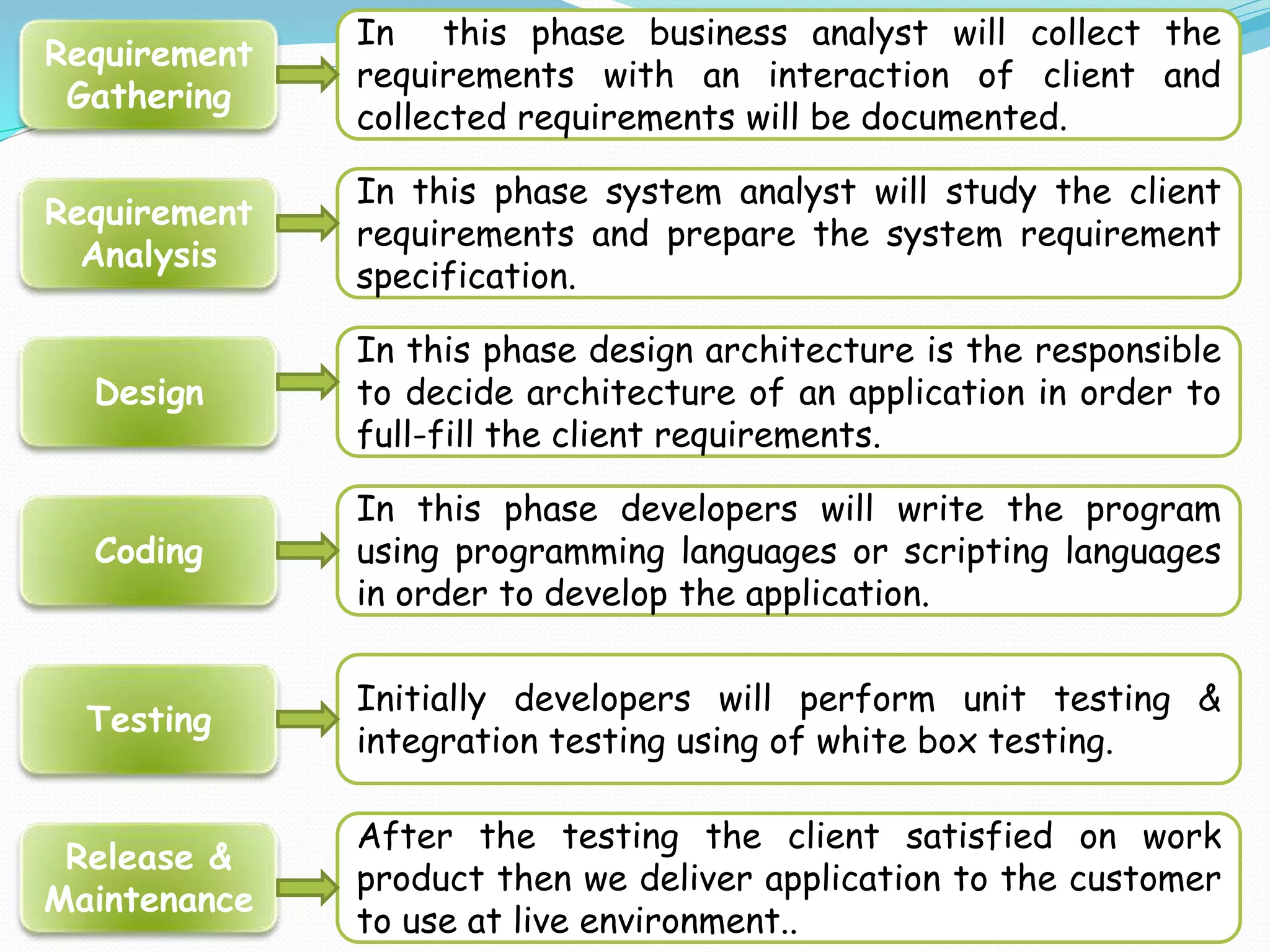
Description of each phase from Requirement Gathering to Release & Maintenance in the Waterfall Model.
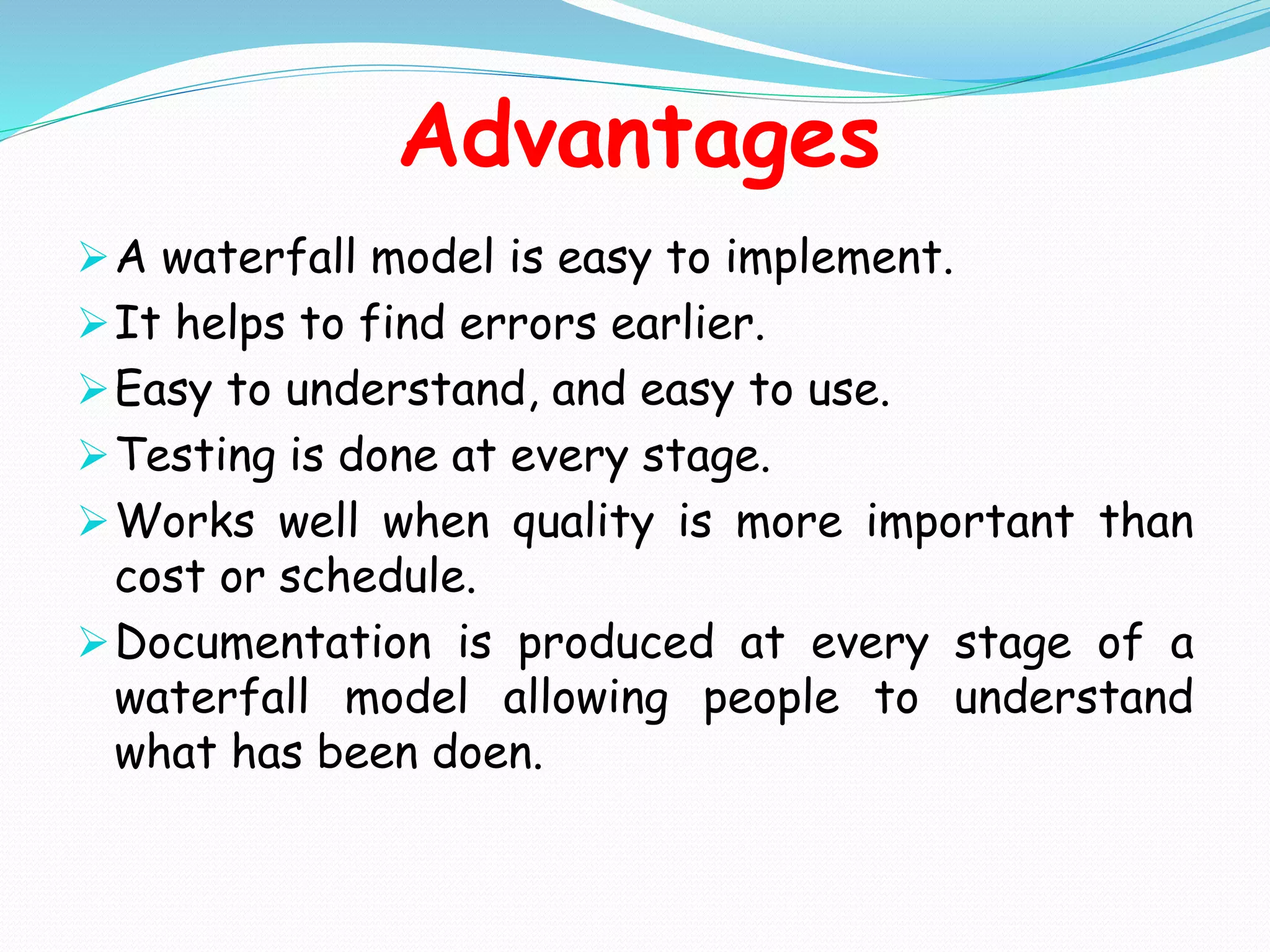
Outlines advantages like easy implementation, error discovery, and structured documentation.
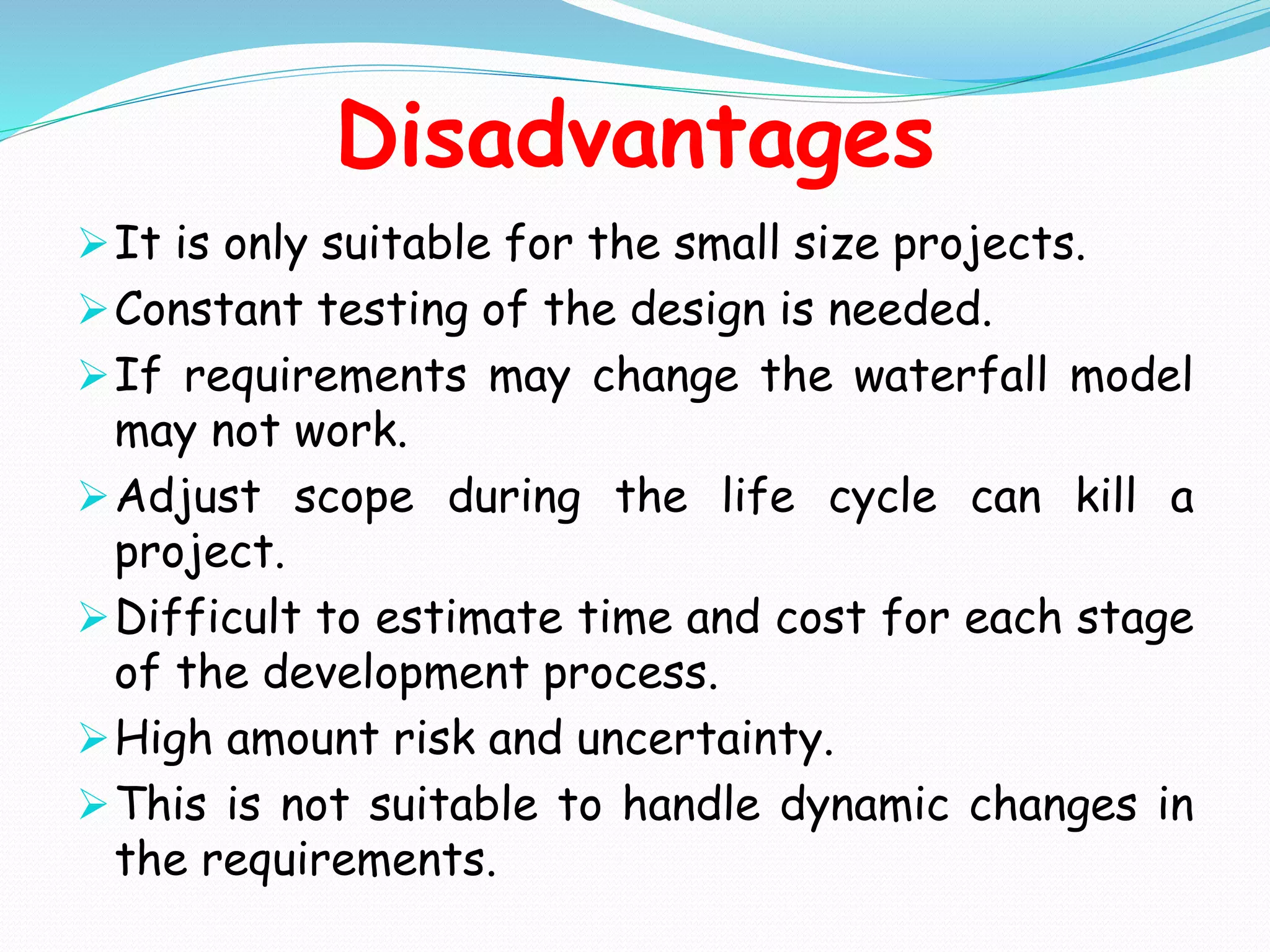
Identifies the model's drawbacks including suitability for small projects and challenges with changing requirements.
Closing remarks to the presentation.


