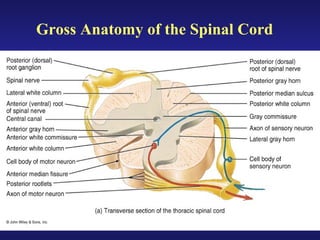
Gross Anatomy of the Spinal Cord
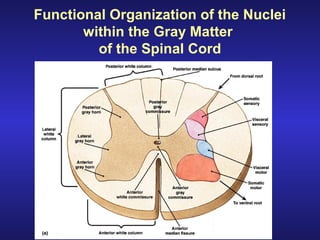
Functional Organization of the Nuclei
within the Gray Matter
of the Spinal Cord
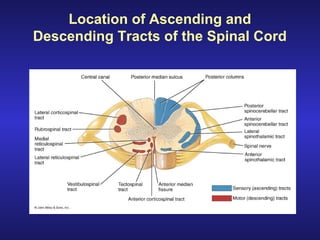
Location of Ascending and
Descending Tracts of the Spinal Cord
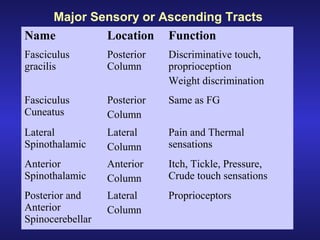
Major Sensory or Ascending Tracts
Name Location Function
Fasciculus
gracilis
Posterior
Column
Discriminative touch,
proprioception
Weight discrimination
Fasciculus
Cuneatus
Posterior
Column
Same as FG
Lateral
Spinothalamic
Lateral
Column
Pain and Thermal
sensations
Anterior
Spinothalamic
Anterior
Column
Itch, Tickle, Pressure,
Crude touch sensations
Posterior and
Anterior
Spinocerebellar
Lateral
Column
Proprioceptors
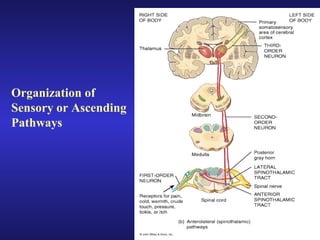
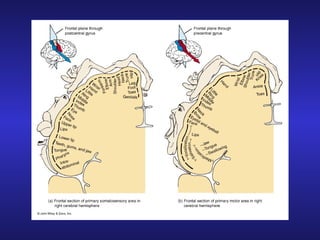
Organization of
Sensory or Ascending
Pathways
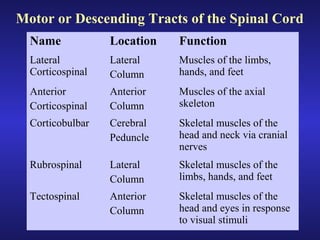
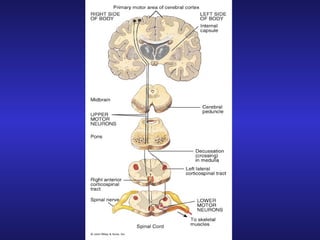
Motor or Descending Tracts of the Spinal Cord
Name Location Function
Lateral
Corticospinal
Lateral
Column
Muscles of the limbs,
hands, and feet
Anterior
Corticospinal
Anterior
Column
Muscles of the axial
skeleton
Corticobulbar Cerebral
Peduncle
Skeletal muscles of the
head and neck via cranial
nerves
Rubrospinal Lateral
Column
Skeletal muscles of the
limbs, hands, and feet
Tectospinal Anterior
Column
Skeletal muscles of the
head and eyes in response
to visual stimuli
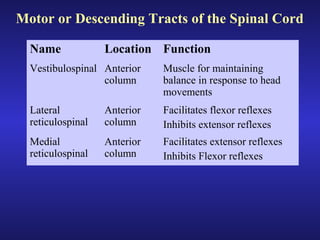
Motor or Descending Tracts of the Spinal Cord
Name Location Function
Vestibulospinal Anterior
column
Muscle for maintaining
balance in response to head
movements
Lateral
reticulospinal
Anterior
column
Facilitates flexor reflexes
Inhibits extensor reflexes
Medial
reticulospinal
Anterior
column
Facilitates extensor reflexes
Inhibits Flexor reflexes
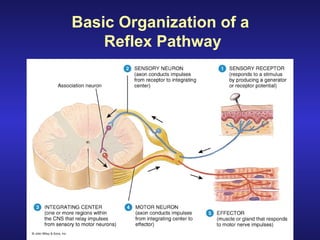
Basic Organization of a
Reflex Pathway
Terms Associated with
Reflex Pathways
• Spinal Reflexes // Cranial Reflexes
• Somatic Reflexes // Visceral (Autonomic)
Reflexes
• Monosynaptic Reflex // Polysynaptic
Reflex
• Ipsilateral Reflex // Contralateral Reflex
• Segmental Reflex // Intersegmental Reflex
• Reciprocal innervation
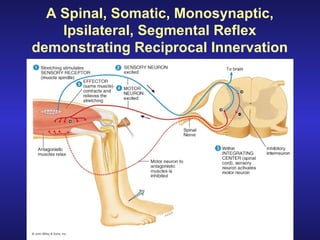
A Spinal, Somatic, Monosynaptic,
Ipsilateral, Segmental Reflex
demonstrating Reciprocal Innervation
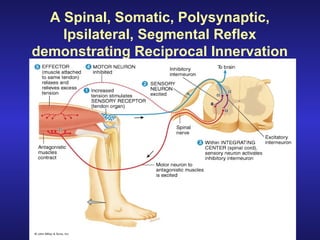
A Spinal, Somatic, Polysynaptic,
Ipsilateral, Segmental Reflex
demonstrating Reciprocal Innervation
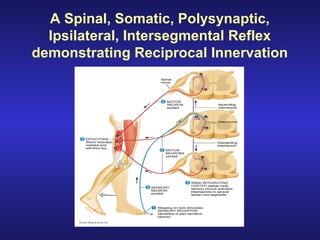
A Spinal, Somatic, Polysynaptic,
Ipsilateral, Intersegmental Reflex
demonstrating Reciprocal Innervation
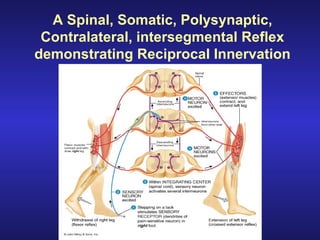
A Spinal, Somatic, Polysynaptic,
Contralateral, intersegmental Reflex
demonstrating Reciprocal Innervation

Spinal tracts and reflexes

  • 1.
    Gross Anatomy ofthe Spinal Cord
  • 2.
    Functional Organization ofthe Nuclei within the Gray Matter of the Spinal Cord
  • 3.
    Location of Ascendingand Descending Tracts of the Spinal Cord
  • 4.
    Major Sensory orAscending Tracts Name Location Function Fasciculus gracilis Posterior Column Discriminative touch, proprioception Weight discrimination Fasciculus Cuneatus Posterior Column Same as FG Lateral Spinothalamic Lateral Column Pain and Thermal sensations Anterior Spinothalamic Anterior Column Itch, Tickle, Pressure, Crude touch sensations Posterior and Anterior Spinocerebellar Lateral Column Proprioceptors
  • 5.
    Organization of Sensory orAscending Pathways
  • 7.
    Motor or DescendingTracts of the Spinal Cord Name Location Function Lateral Corticospinal Lateral Column Muscles of the limbs, hands, and feet Anterior Corticospinal Anterior Column Muscles of the axial skeleton Corticobulbar Cerebral Peduncle Skeletal muscles of the head and neck via cranial nerves Rubrospinal Lateral Column Skeletal muscles of the limbs, hands, and feet Tectospinal Anterior Column Skeletal muscles of the head and eyes in response to visual stimuli
  • 8.
    Motor or DescendingTracts of the Spinal Cord Name Location Function Vestibulospinal Anterior column Muscle for maintaining balance in response to head movements Lateral reticulospinal Anterior column Facilitates flexor reflexes Inhibits extensor reflexes Medial reticulospinal Anterior column Facilitates extensor reflexes Inhibits Flexor reflexes
  • 11.
    Basic Organization ofa Reflex Pathway
  • 12.
    Terms Associated with ReflexPathways • Spinal Reflexes // Cranial Reflexes • Somatic Reflexes // Visceral (Autonomic) Reflexes • Monosynaptic Reflex // Polysynaptic Reflex • Ipsilateral Reflex // Contralateral Reflex • Segmental Reflex // Intersegmental Reflex • Reciprocal innervation
  • 13.
    A Spinal, Somatic,Monosynaptic, Ipsilateral, Segmental Reflex demonstrating Reciprocal Innervation
  • 14.
    A Spinal, Somatic,Polysynaptic, Ipsilateral, Segmental Reflex demonstrating Reciprocal Innervation
  • 15.
    A Spinal, Somatic,Polysynaptic, Ipsilateral, Intersegmental Reflex demonstrating Reciprocal Innervation
  • 16.
    A Spinal, Somatic,Polysynaptic, Contralateral, intersegmental Reflex demonstrating Reciprocal Innervation