DR. MD. SHAH ALAM
MBBS FCPS MS FRCS
Fellowship training in Spine (USA & UK)
Active Fellow SRS
Professor
Department of Spine & Ortho Surgery,
NITOR, Dhaka, Bangladesh
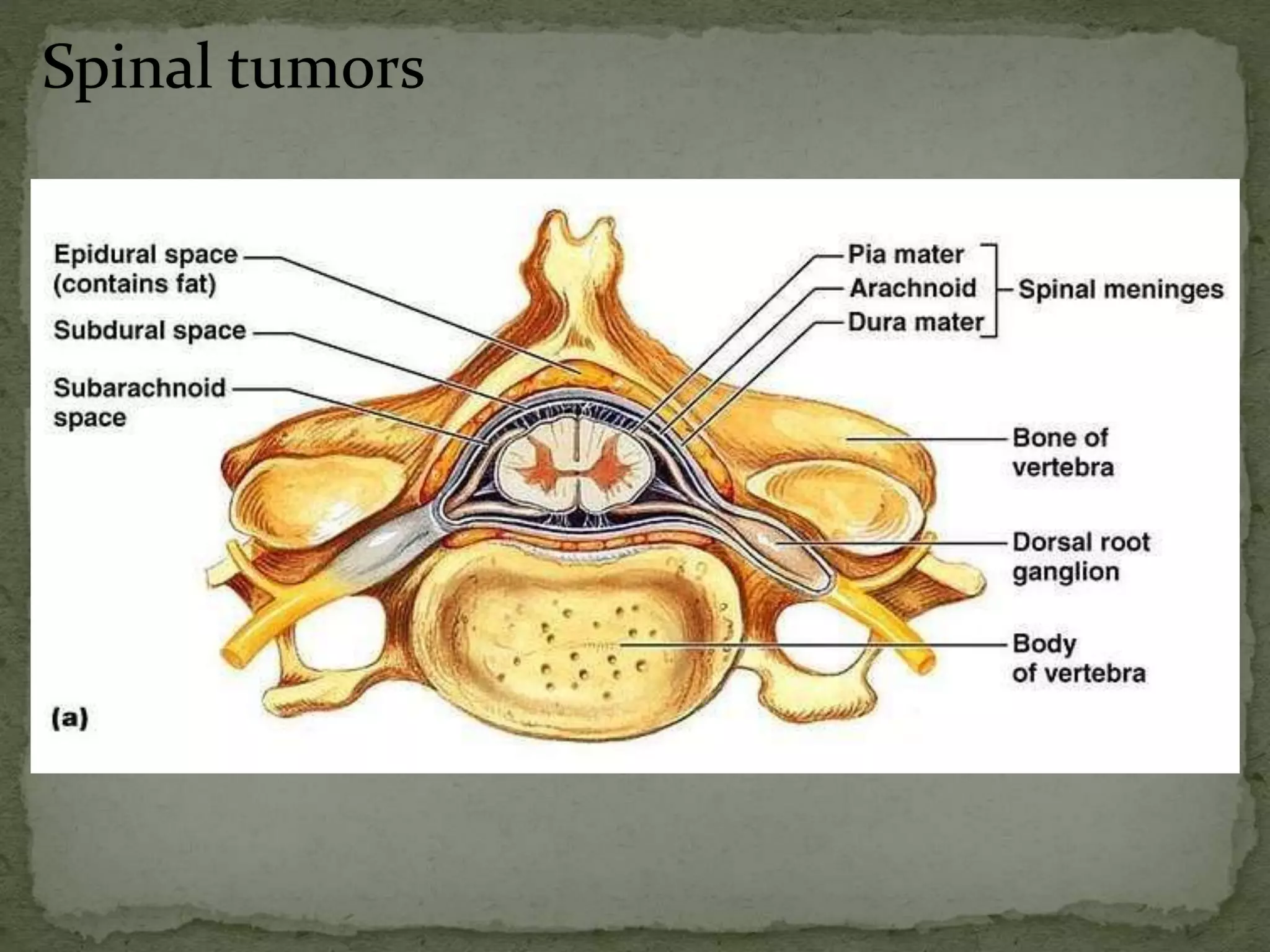
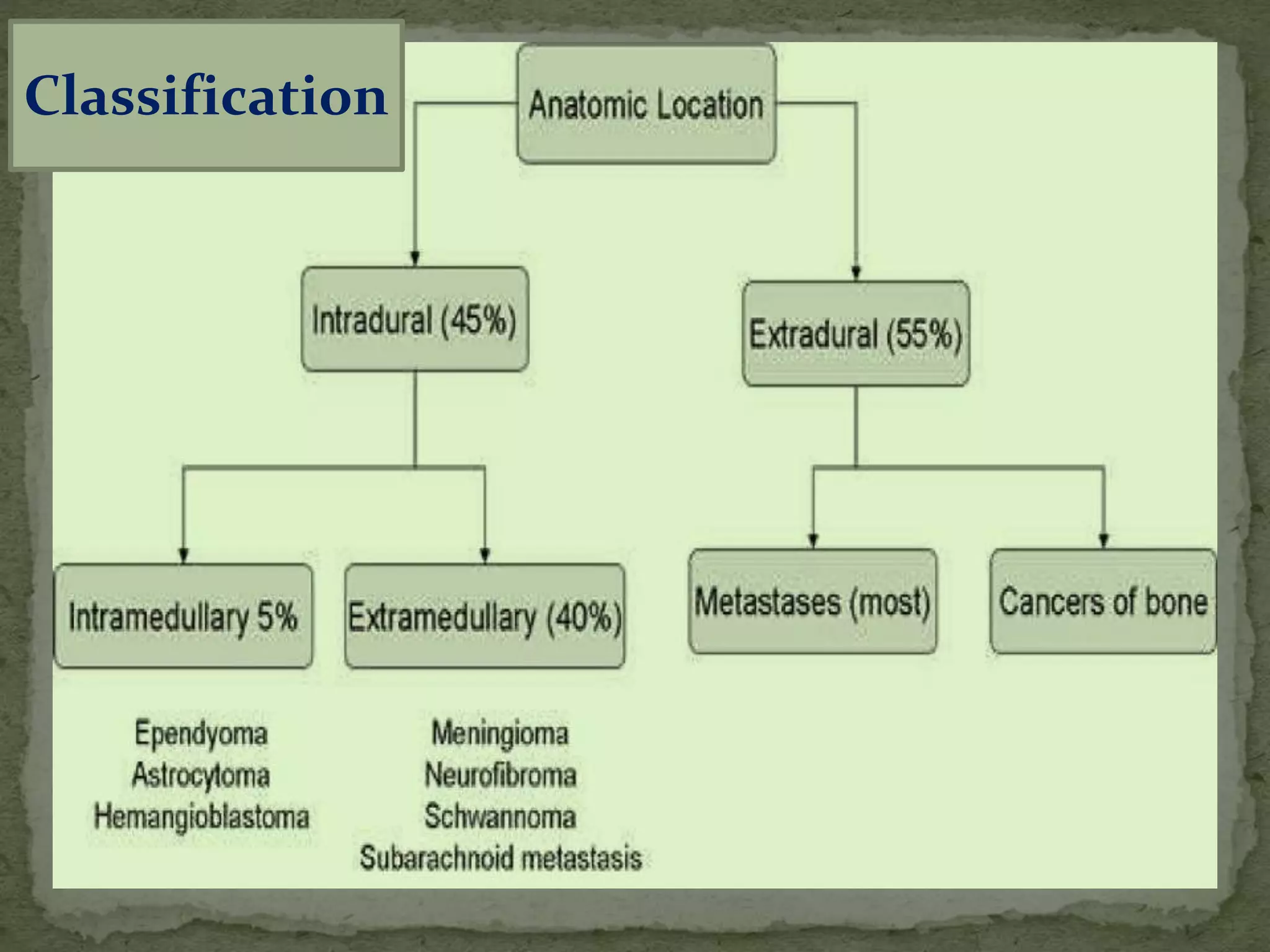
 Any neoplasm in the vertebral column or spinal cord
are considered as spinal tumors .
 In the vertebral column may be primary or secondary.
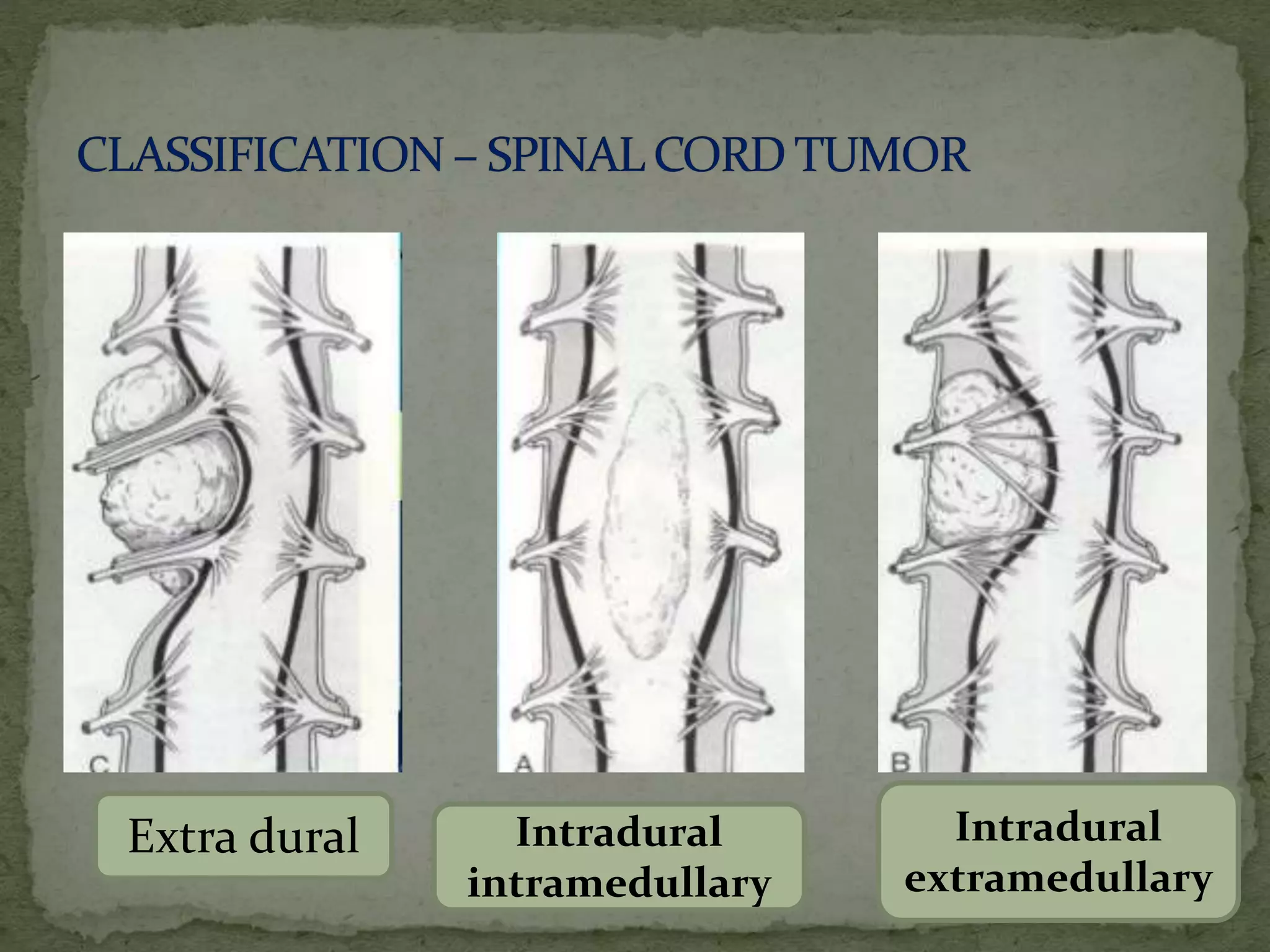
 In spinal cord ,may be extradural or intradural .
 Intradural may be intramedullary or extramedullary.
 Extra dural tumour more common than intra dural
tumor
Of all primary benign bone tumors, 8% occur in the
spine or sacrum
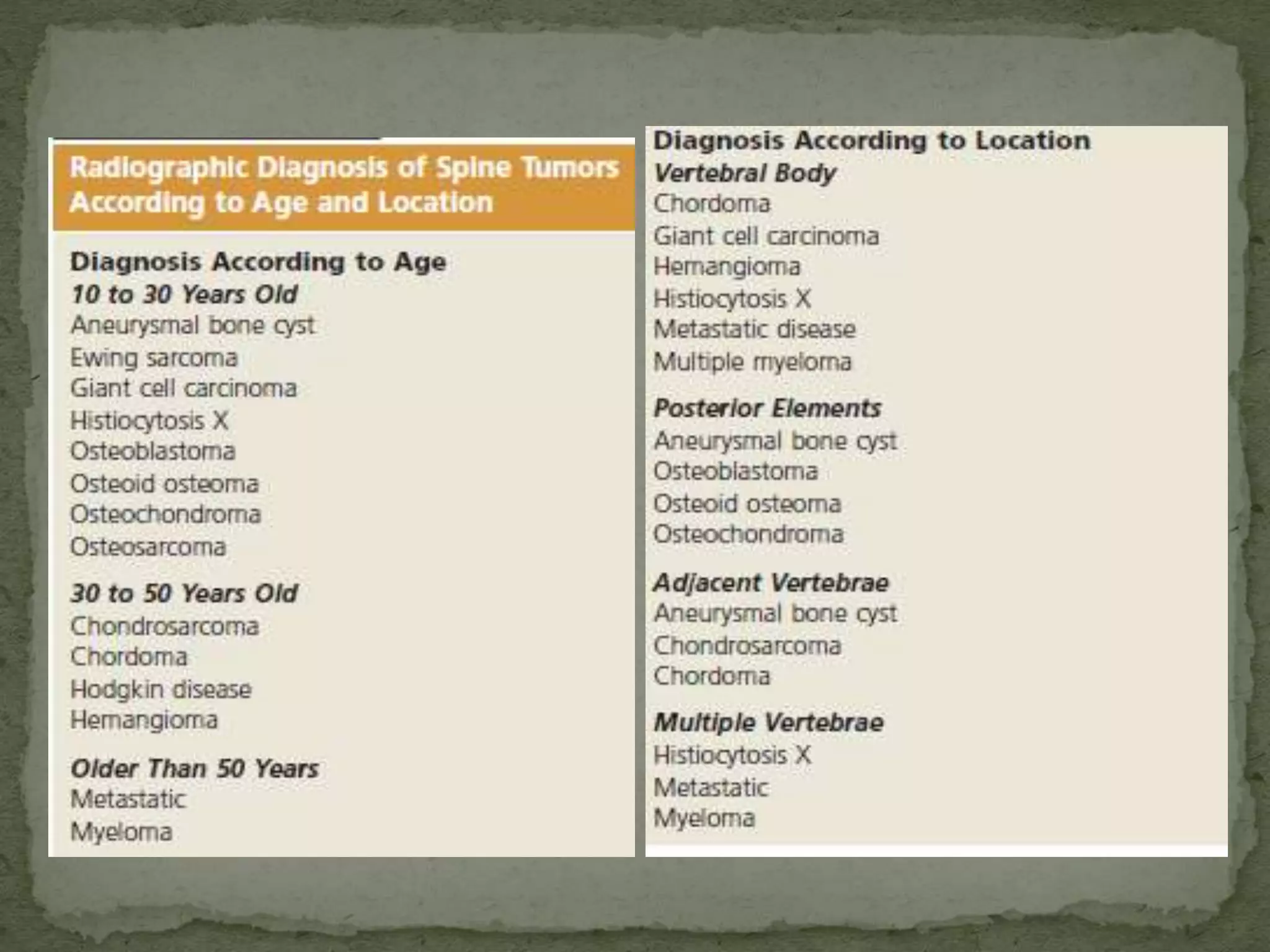
Benign primary tumors most commonly occur during
first 3 decades of life
Spine metastasis most often occur in patients older
than 40
Benign tumors most frequently involve the posterior
elements, but malignant tumors have a predilection for
the vertebral bodies
■ Most common symptom is pain, which occurs in 76%
of benign and 95% of malignant tumors.
■Ca breast, prostate, kidney, and thyroid gland
account for 80% of all skeletal metastasis, with
the spine as the most common site.
■ Malignant tumors occur more frequently in the lower
(lumbar > thoracic > cervical) spinal levels
 spinal cord tumors constitute 2 % of all tumors
and 1-3% of tumors of central nervous system.
Extra dural mainly metastatic from primary cancer
elsewhere.
Cord compression more in metastatic tumor
Classification
Extra dural Intradural
intramedullary
Intradural
extramedullary
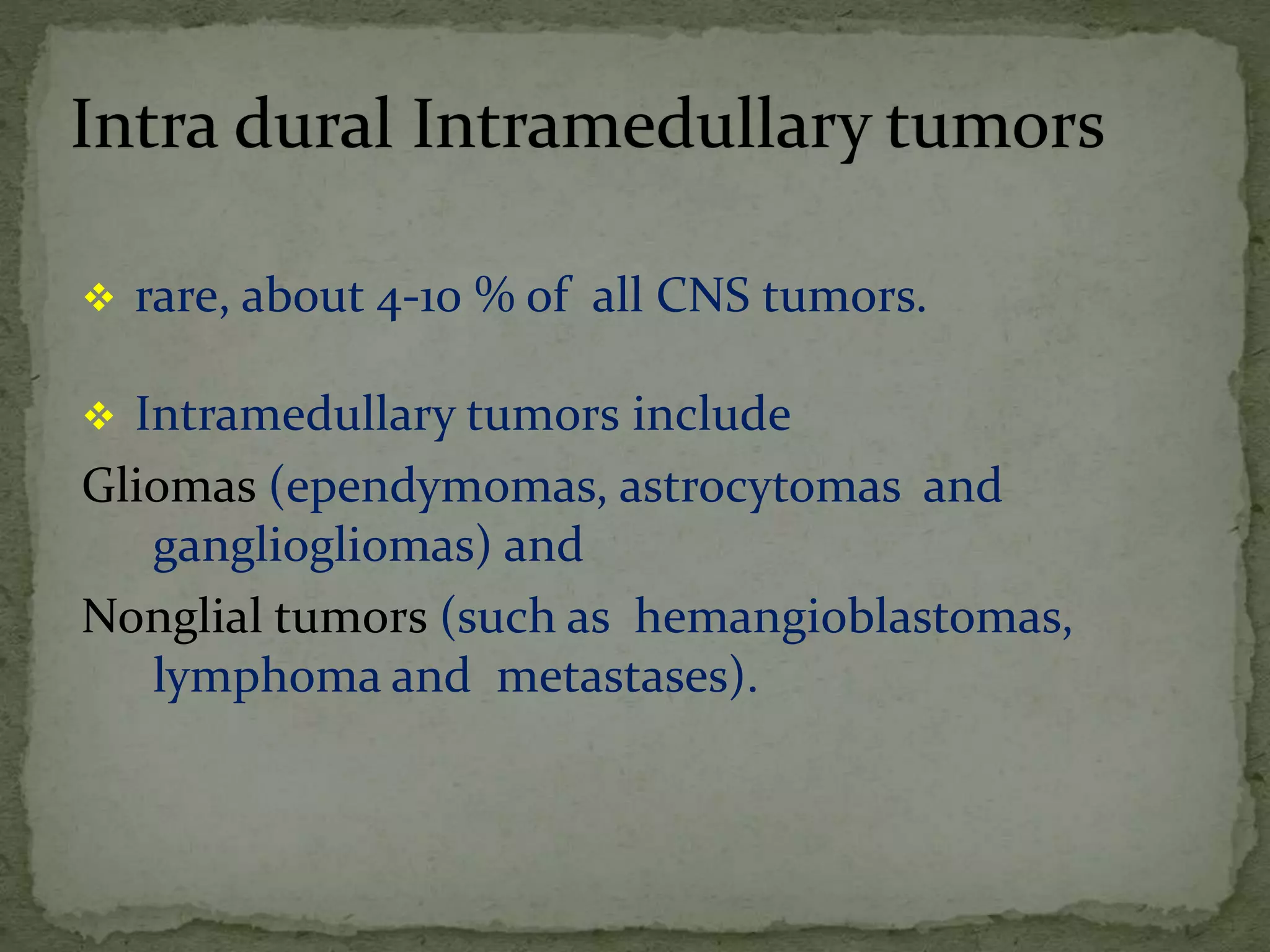
 rare, about 4-10 % of all CNS tumors.
 Intramedullary tumors include
Gliomas (ependymomas, astrocytomas and
gangliogliomas) and
Nonglial tumors (such as hemangioblastomas,
lymphoma and metastases).
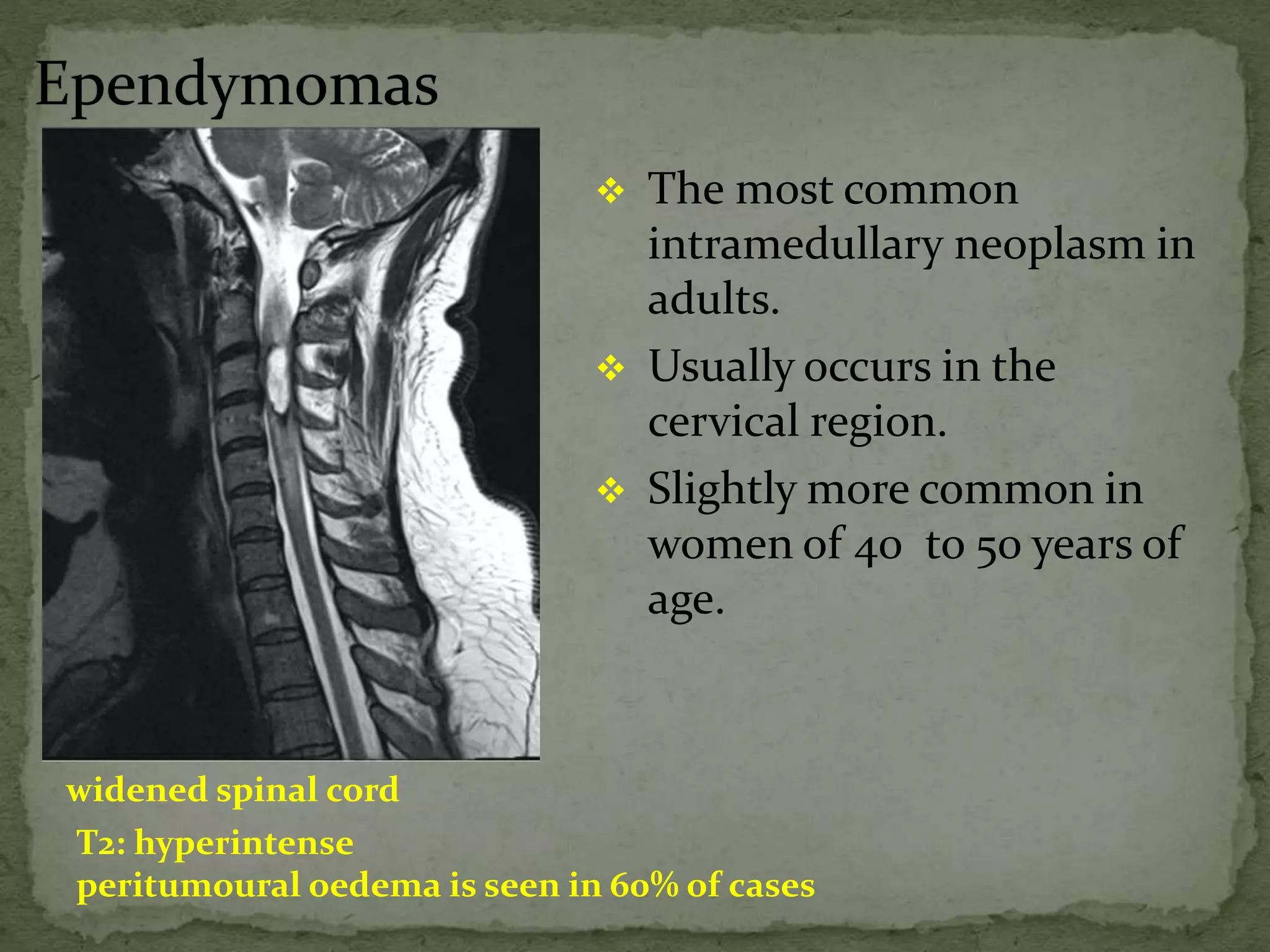
 The most common
intramedullary neoplasm in
adults.
 Usually occurs in the
cervical region.
 Slightly more common in
women of 40 to 50 years of
age.
widened spinal cord
T2: hyperintense
peritumoural oedema is seen in 60% of cases
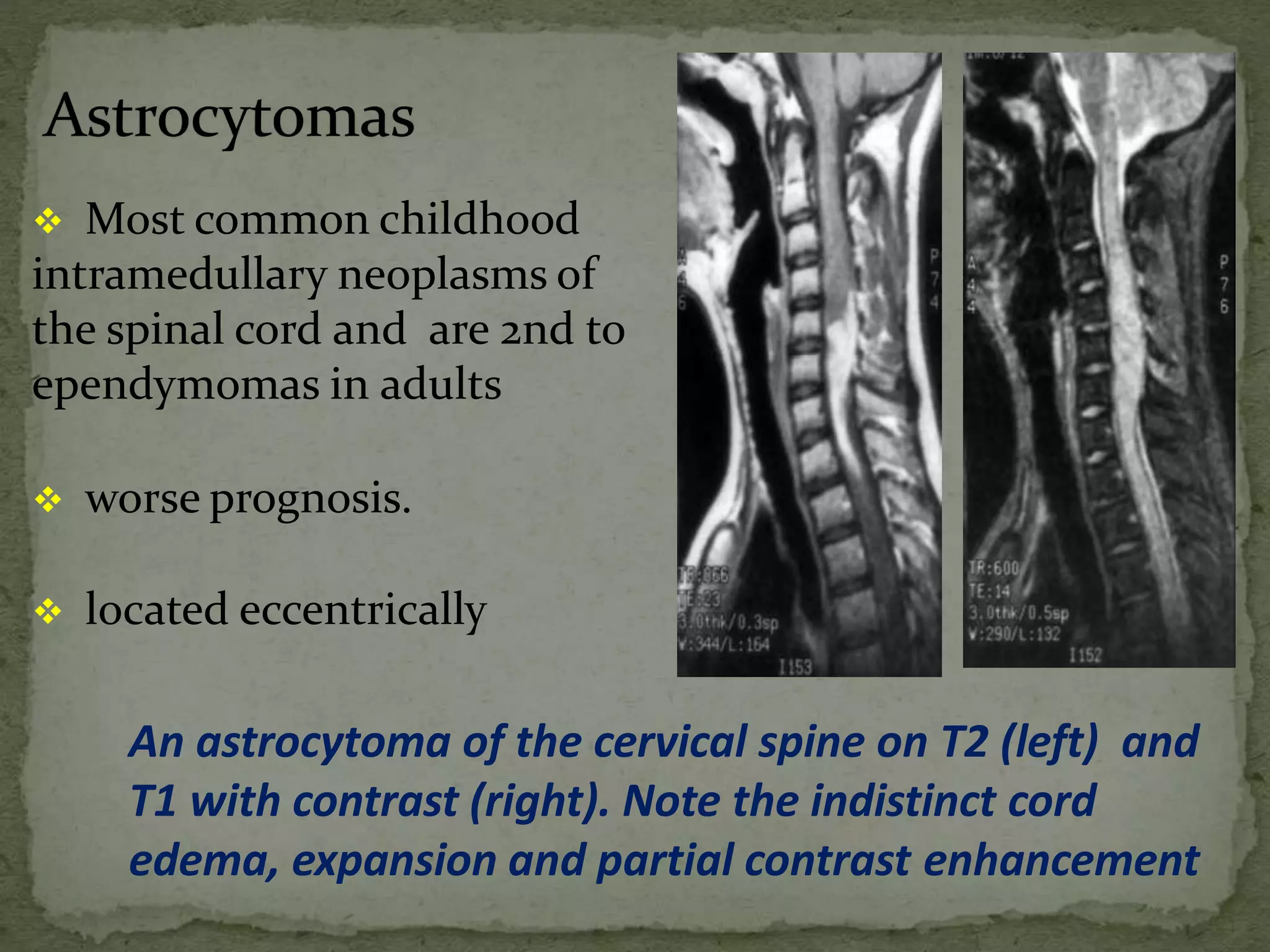
 Most common childhood
intramedullary neoplasms of
the spinal cord and are 2nd to
ependymomas in adults
 worse prognosis.
 located eccentrically
An astrocytoma of the cervical spine on T2 (left) and
T1 with contrast (right). Note the indistinct cord
edema, expansion and partial contrast enhancement
 Since the arachnoid is essentially continuous with the
dura in the spine, intradural lesions are located in the
subarachnoid space.
Meningiomas,
Nerve sheath tumors,
Intradural metastases,
Lymphoma/leukemia,
Paraganglioma
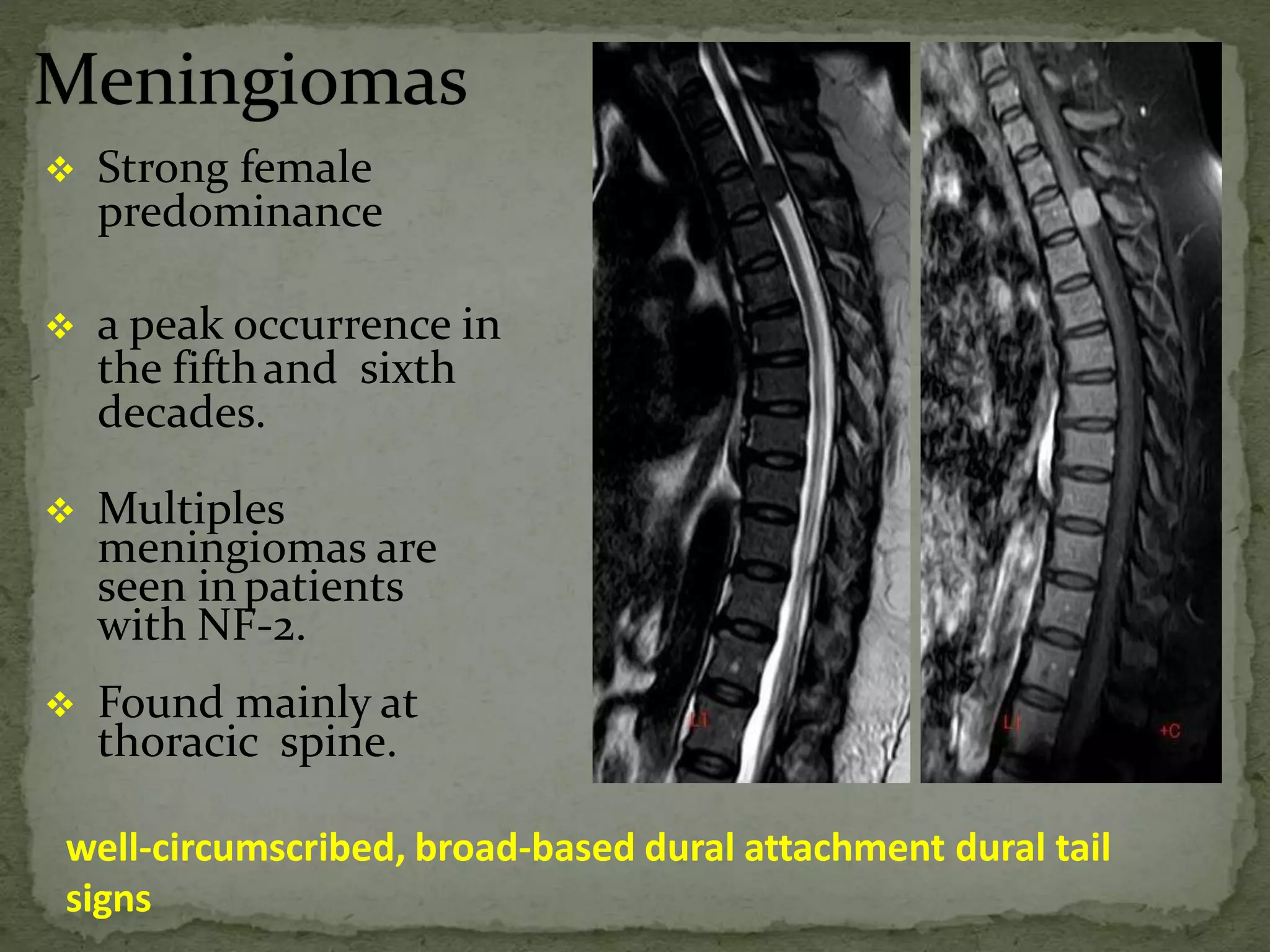
 Strong female
predominance
 a peak occurrence in
the fifthand sixth
decades.
 Multiples
meningiomas are
seen inpatients
with NF-2.
 Found mainly at
thoracic spine.
well-circumscribed, broad-based dural attachment dural tail
signs
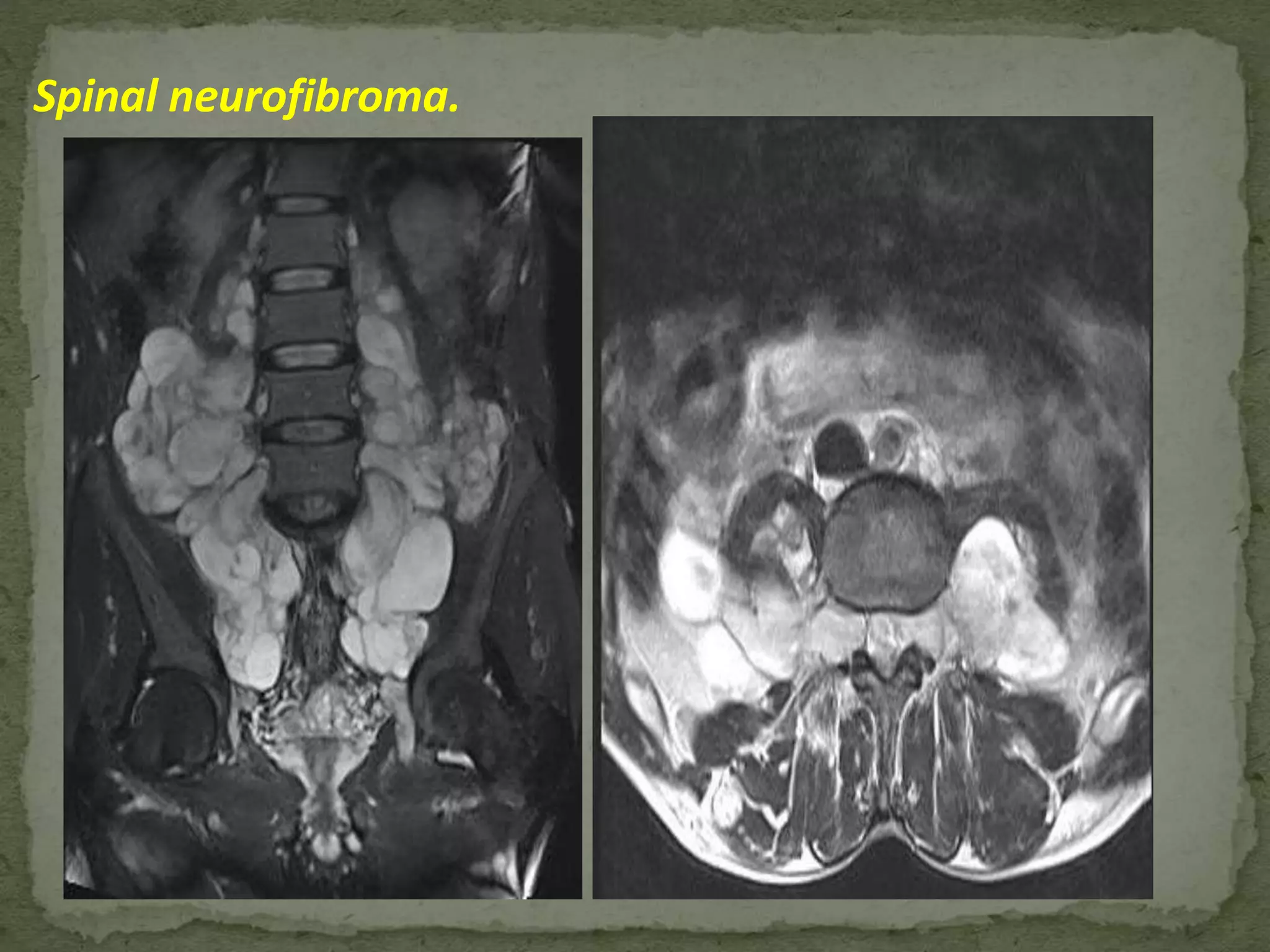
 Schwannomas and Neurofibromas.
 Schwannomas are most common
 Neurofibromas generally occur in association with
neurofibromatosis
 Approximately 50% of nerve sheath tumors are
intradural-extradural (dumbbell- shaped) in location
and 50% are purely extradural.
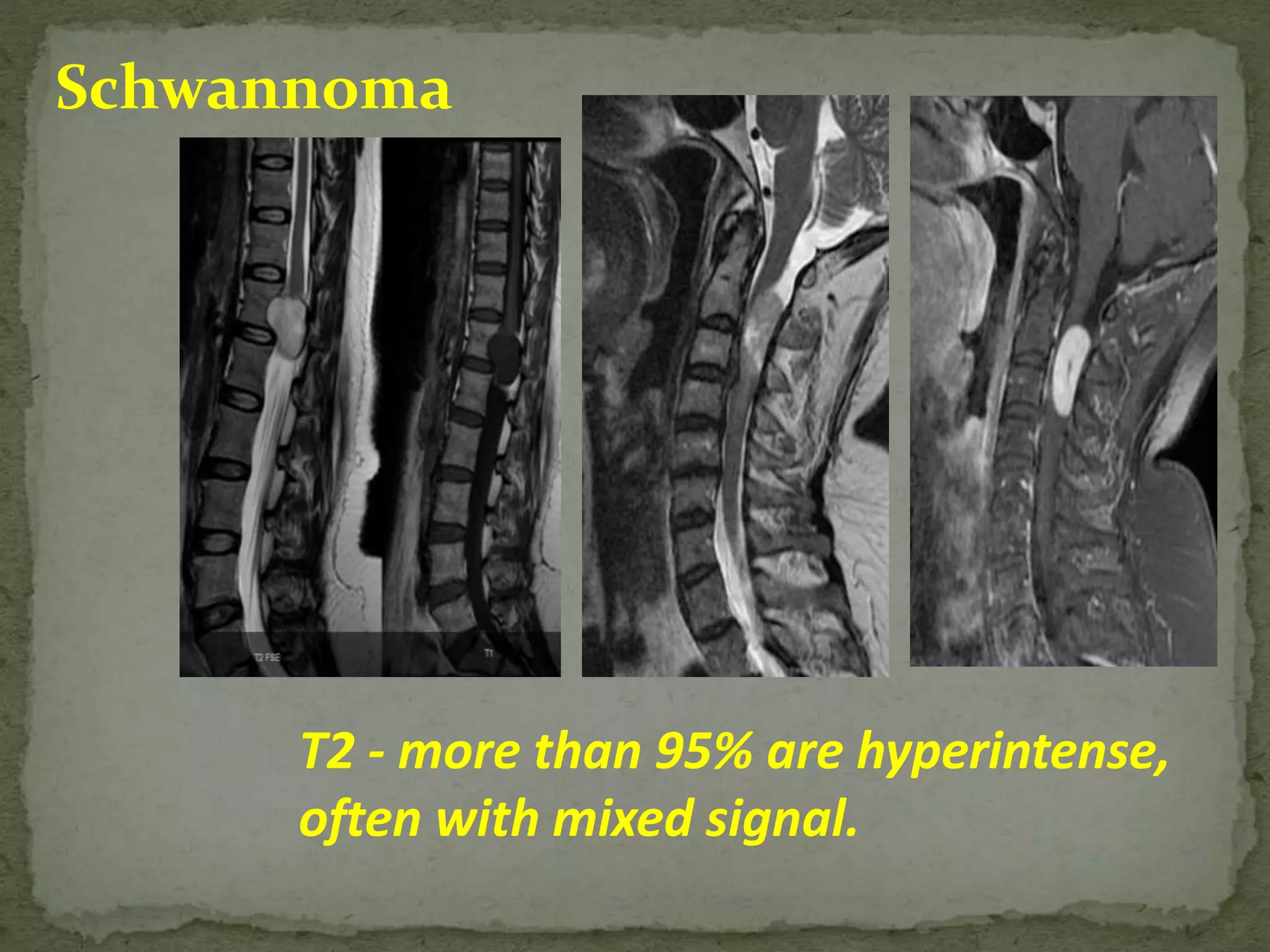
Schwannoma
T2 - more than 95% are hyperintense,
often with mixed signal.
Spinal neurofibroma.
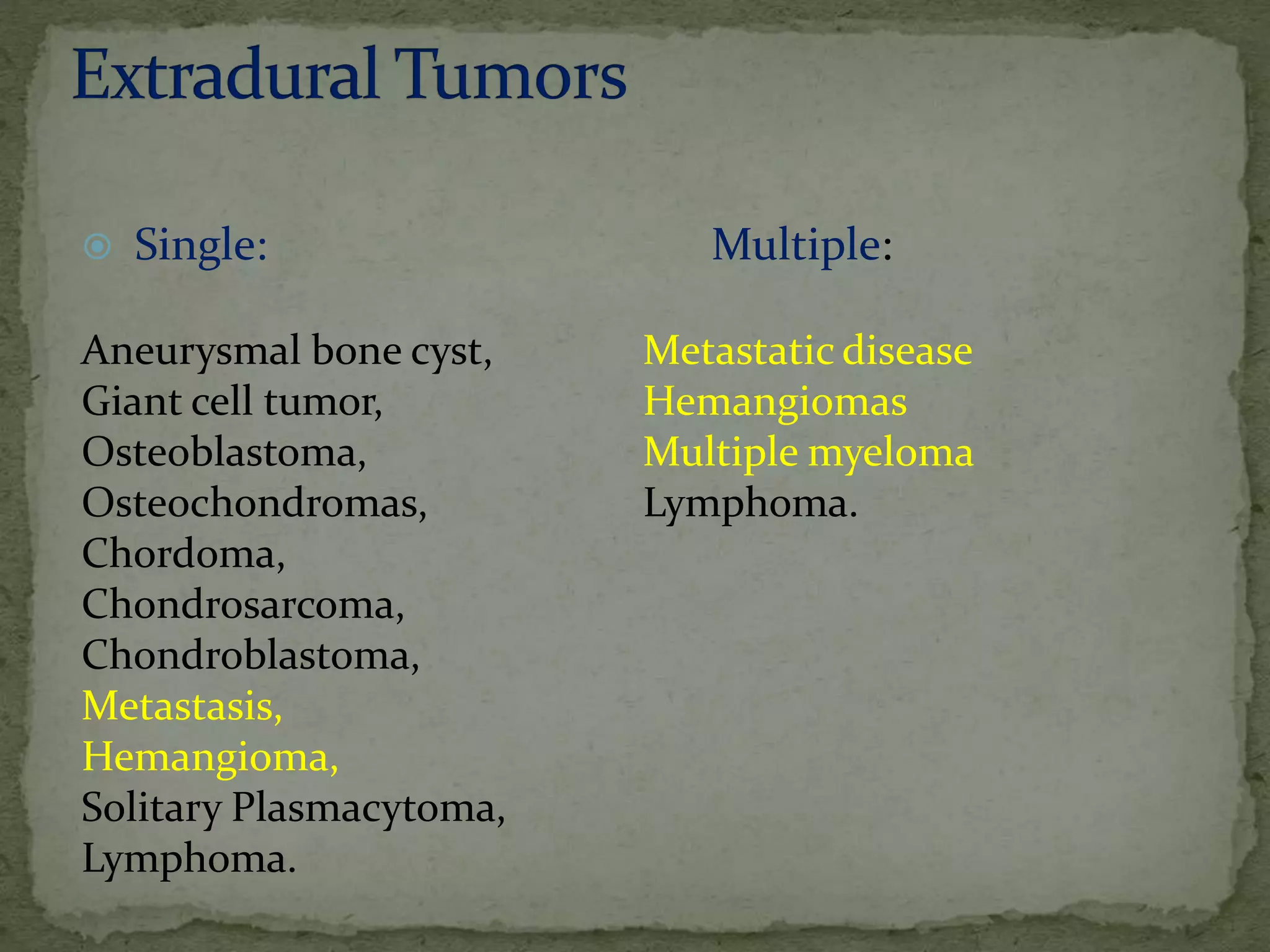
Multiple:
Metastatic disease
Hemangiomas
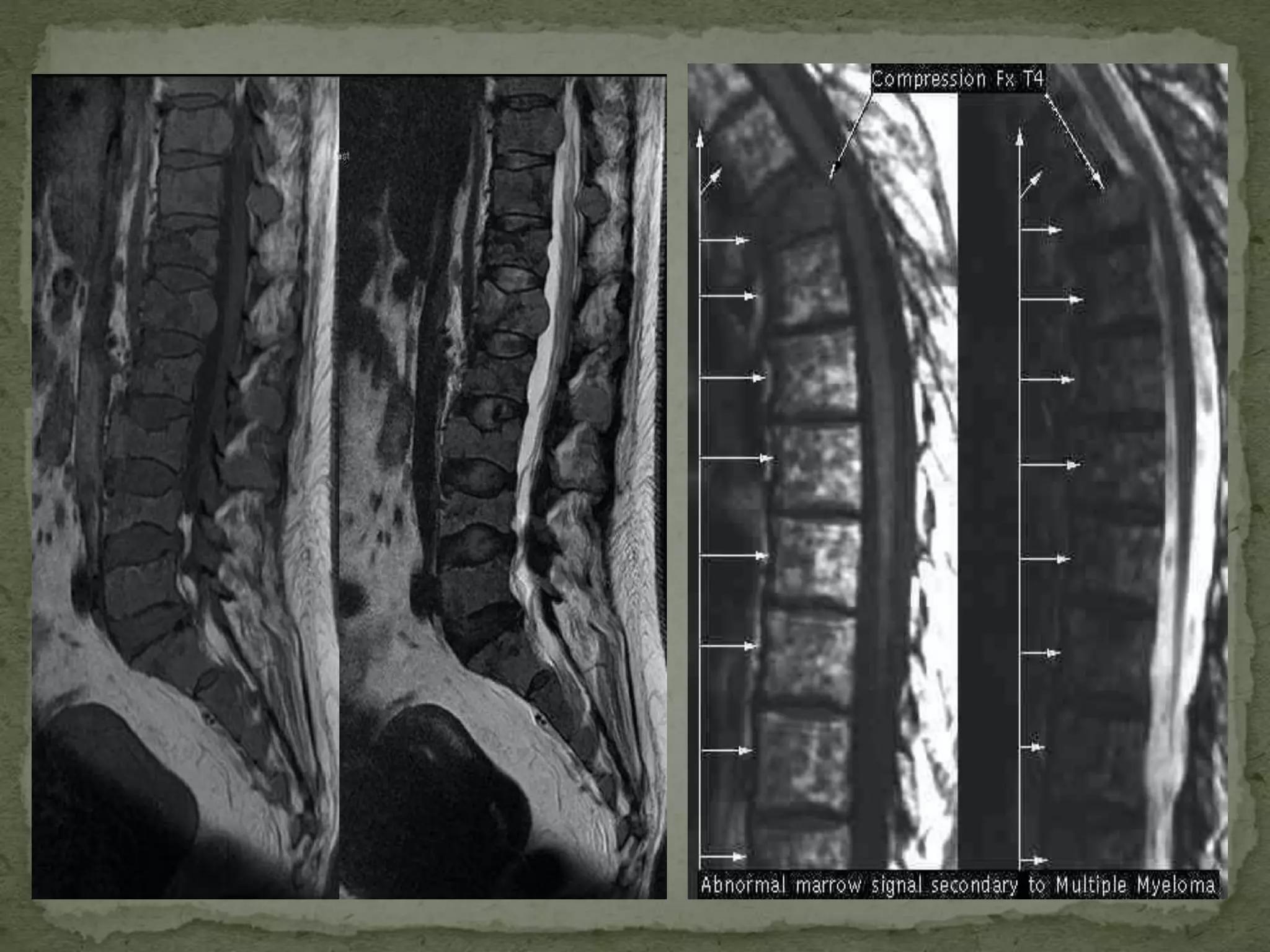
Multiple myeloma
Lymphoma.
 Single:
Aneurysmal bone cyst,
Giant cell tumor,
Osteoblastoma,
Osteochondromas,
Chordoma,
Chondrosarcoma,
Chondroblastoma,
Metastasis,
Hemangioma,
Solitary Plasmacytoma,
Lymphoma.
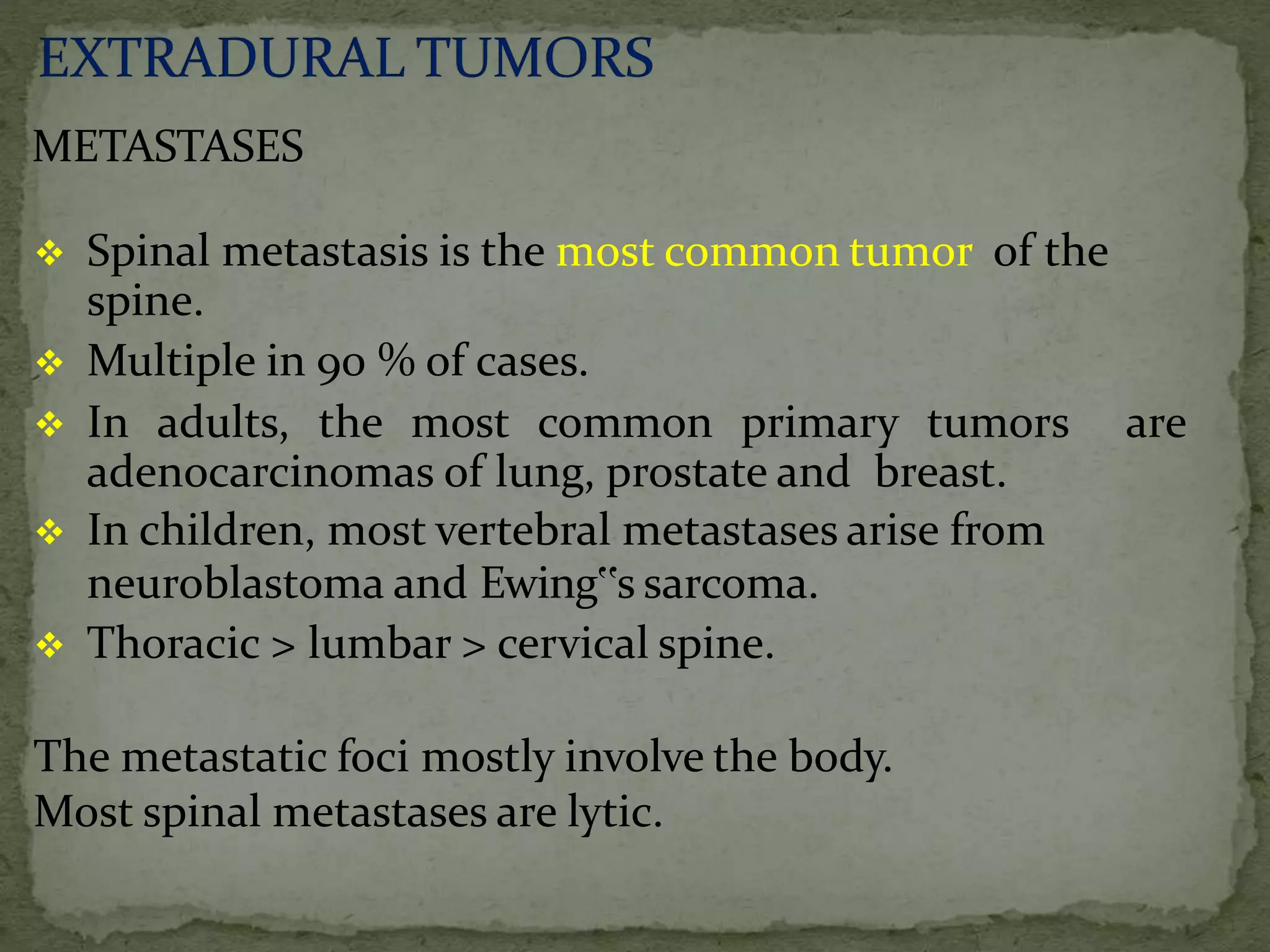
METASTASES
 Spinal metastasis is the most common tumor of the
spine.
 Multiple in 90 % of cases.
 In adults, the most common primary tumors are
adenocarcinomas of lung, prostate and breast.
 In children, most vertebral metastases arise from
neuroblastoma and Ewing‟s sarcoma.
 Thoracic > lumbar > cervical spine.
The metastatic foci mostly involve the body.
Most spinal metastases are lytic.
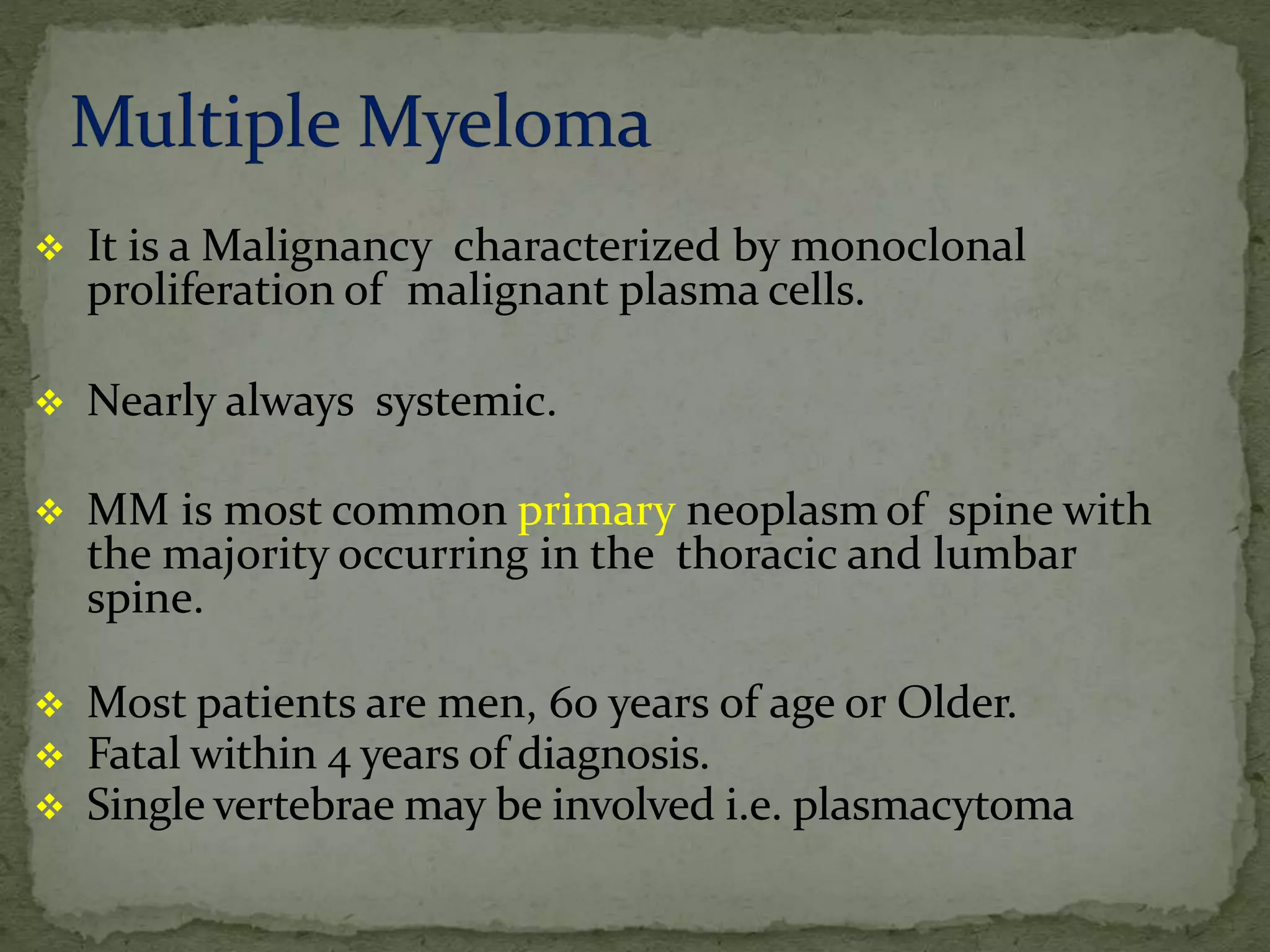
 It is a Malignancy characterized by monoclonal
proliferation of malignant plasma cells.
 Nearly always systemic.
 MM is most common primary neoplasm of spine with
the majority occurring in the thoracic and lumbar
spine.
 Most patients are men, 60 years of age or Older.
 Fatal within 4 years of diagnosis.
 Single vertebrae may be involved i.e. plasmacytoma
 Diagnosis confirmed by
1. At least 10% abnormal plasma cell
2. Lytic bone lesion
3. Monoclonal gammopathy ( Protein electrophoresis,
urinary Ben Zones protein)
4. Anaemia, High rise of ESR
Treatment:
1. Irradiation
2. Chemotherapy
3. Surgery: Patients with neurologic Deficits &
progressive deficit despite maximal chemo-
radiation.
 Common primary bone tumor and are found in >10 %
of population, mostly silent.
 Most commonly found in the 4th to 6th decades with
slight female predominance.
 They may be solitary (70%) or multiple (30%) with
contiguous level affected
 The most common locations are the thoracic
 Most of the hemangiomas arise in the body of the
vertebra.
 Atypical & aggressive type may involve posterior
elements
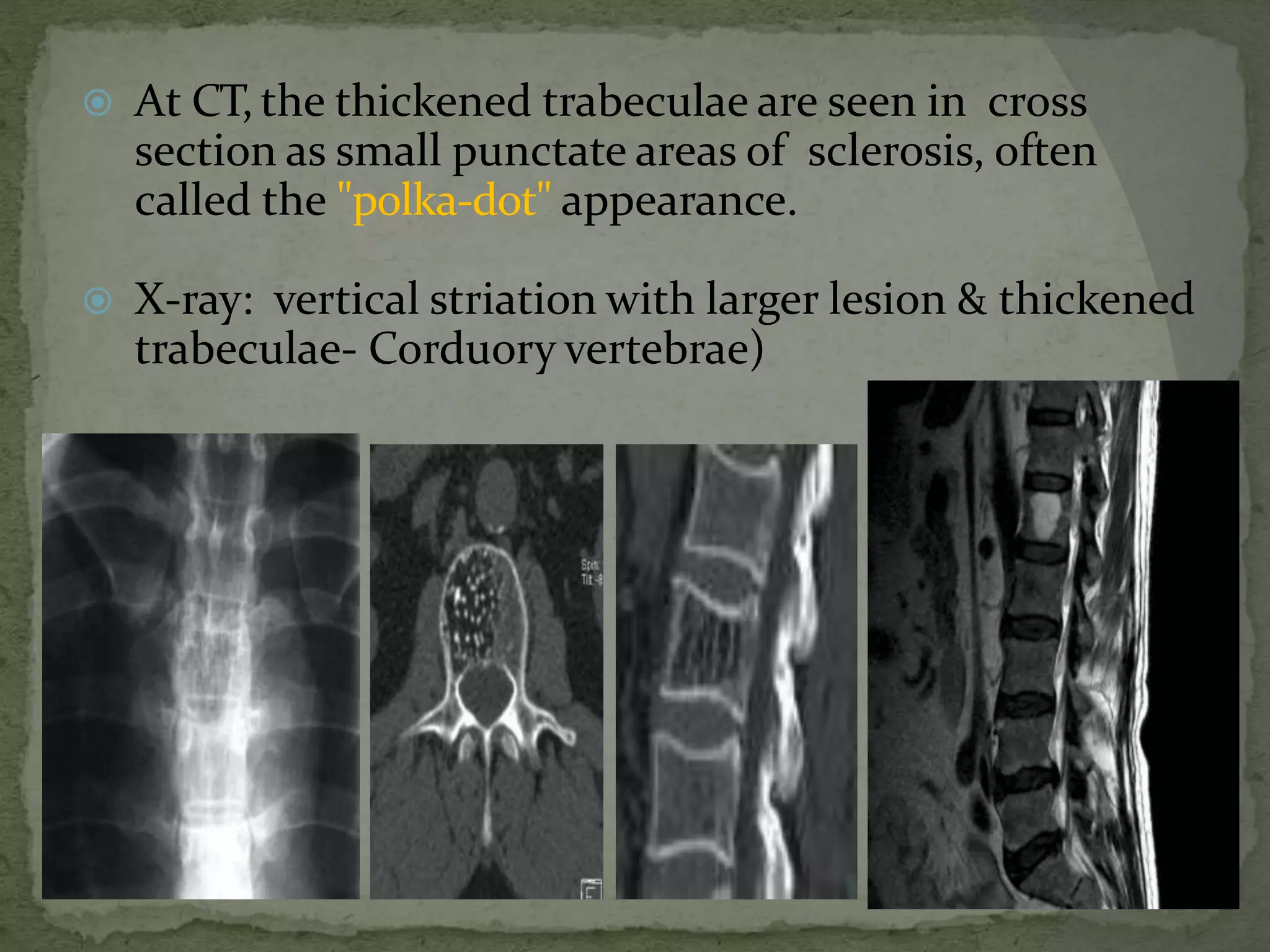
 At CT, the thickened trabeculae are seen in cross
section as small punctate areas of sclerosis, often
called the "polka-dot" appearance.
 X-ray: vertical striation with larger lesion & thickened
trabeculae- Corduory vertebrae)
Aneurysmal Bone Cyst
 Approx. 11-30% of ABC are located in spine
 Age: <20 yrs
 Particularly in cervical and thoracic regions
 Posterior elements are typically involved.
 X-ray: Expansile lesion with a reactive rim of cortical
bone
 Rx: 1. Surgery: Embolization, Curettage & bone grafting
± Fusion
2. Radiation : Successful in 50% cases
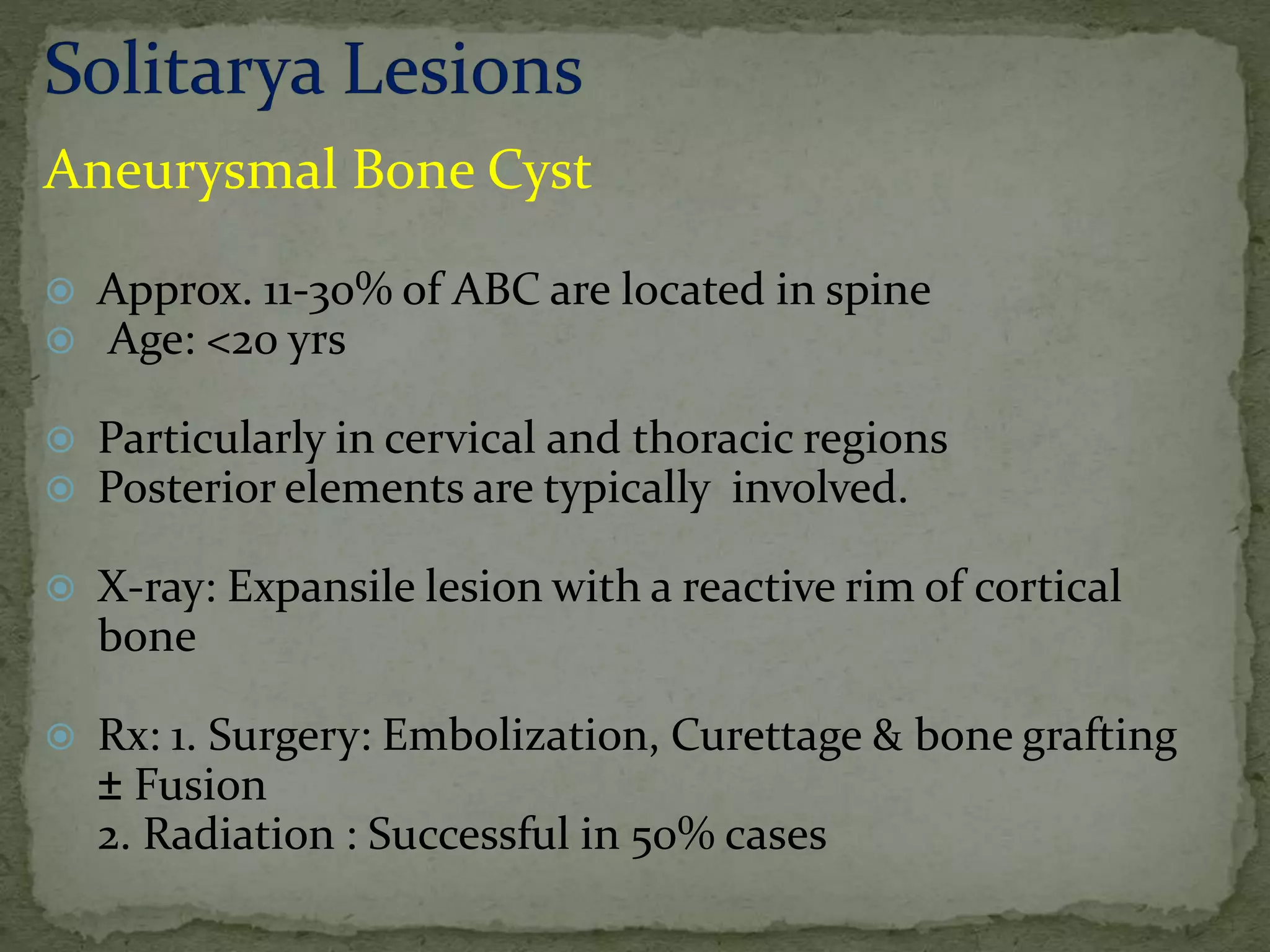
 Most common non lymphoproliferative primary
malignant tumor of the spine
 Originate from notochordal rests
 Almost always occur in a midline or paramedian
location in relation to the spine.
 Nearly 50% originate in the sacrococcygeal region,
particularly in the 4th & 5th sacral segments.
 M:F= 2:1, mean age >50 years.
 slow-growing tumors , relentless progression with
high recurrence rate
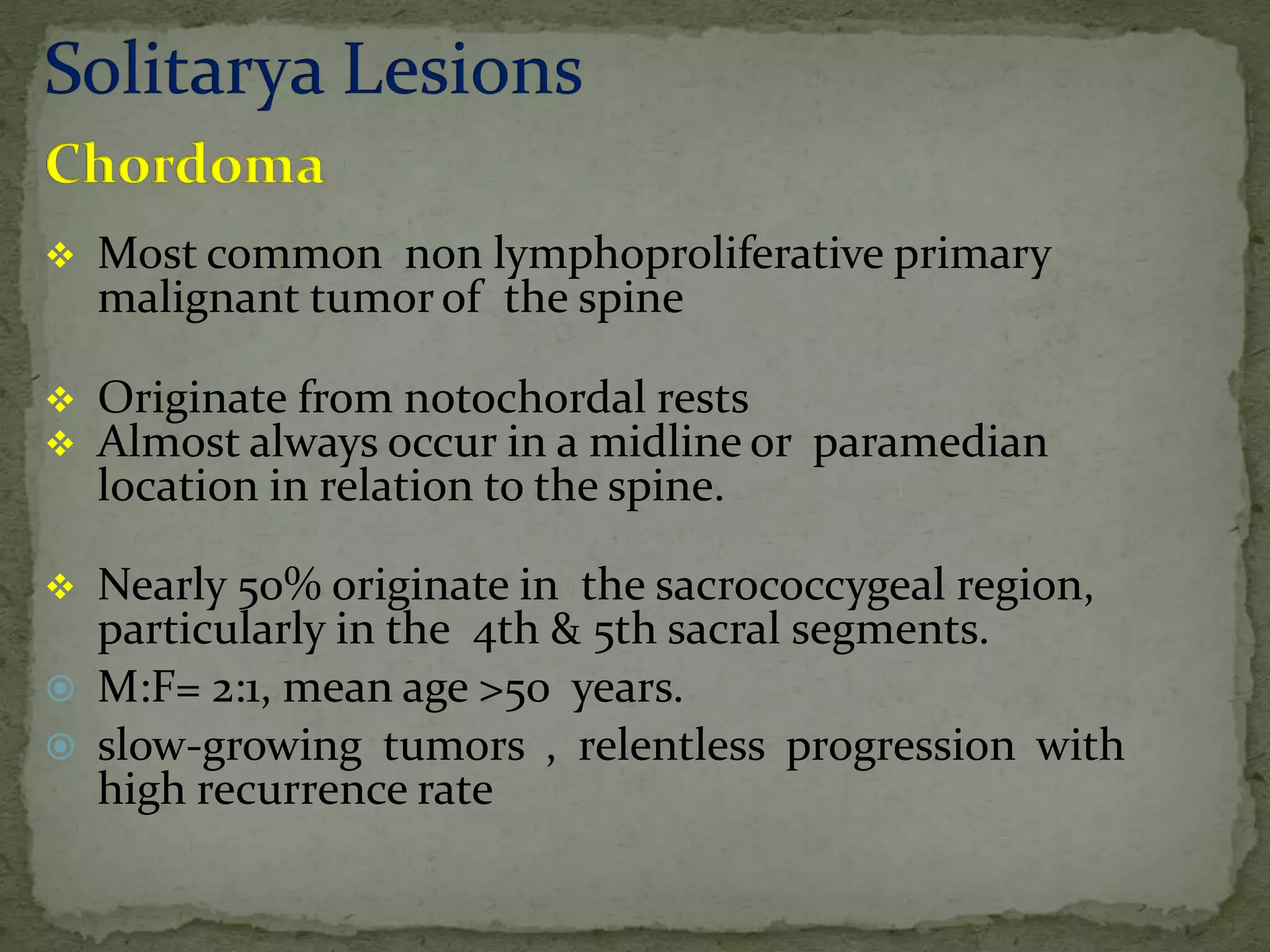
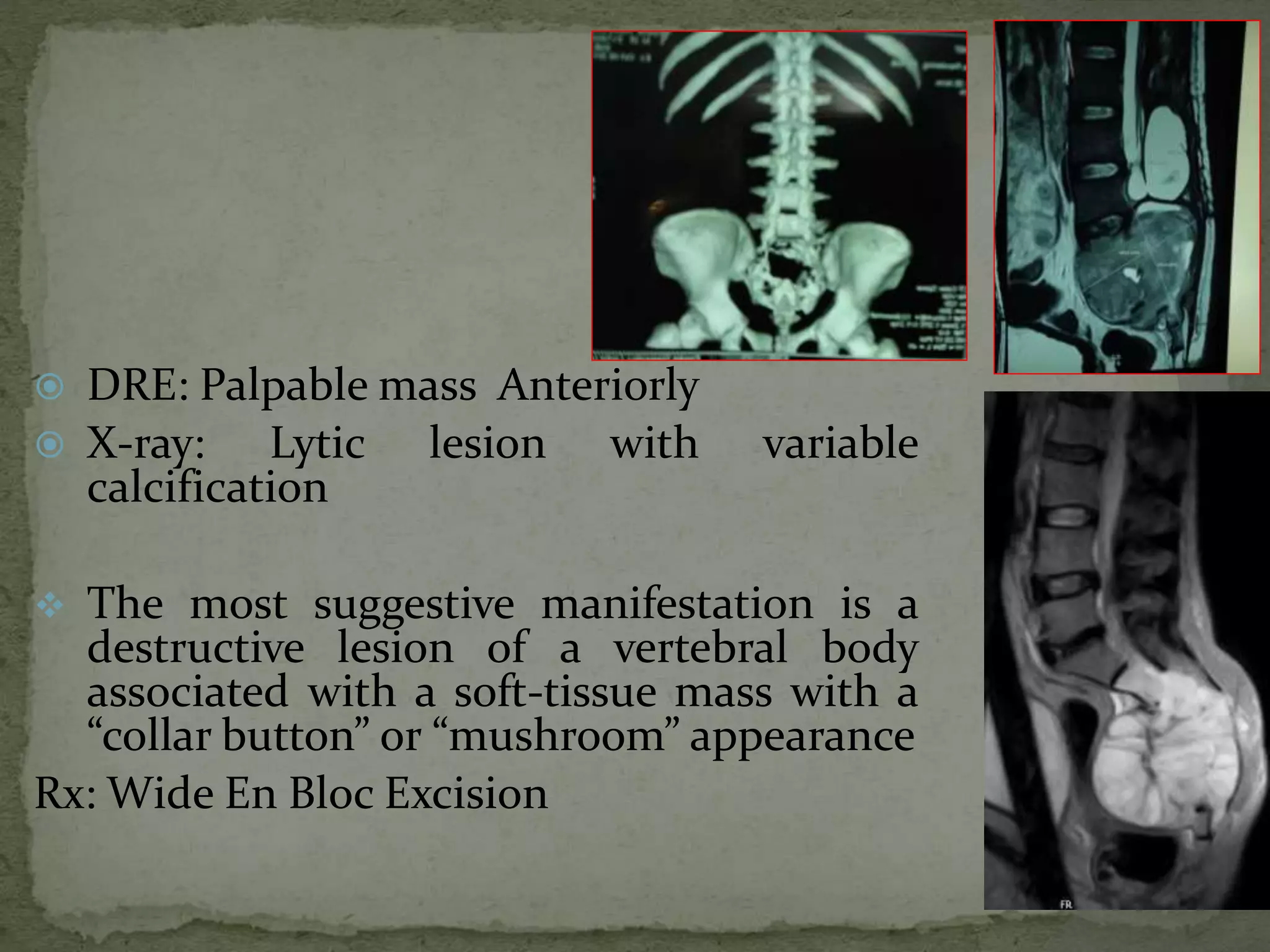
 DRE: Palpable mass Anteriorly
 X-ray: Lytic lesion with variable
calcification
 The most suggestive manifestation is a
destructive lesion of a vertebral body
associated with a soft-tissue mass with a
“collar button” or “mushroom” appearance
Rx: Wide En Bloc Excision
 Persisting pain
 Weakness of both lower limb
 Incontinence
 Paraparesis/paralysis
 Bowel & Bladder involvement
 In early stages , diagnosis of primary tumors are very
difficult. Symptoms are similar to degenerative
spinal disease.
 Diagnosis based upon :
 Biochemical
 Radiology imaging
 CT Scan & CT Myelogram
 MRI.
 CT or ultrasonic guided biopsy helps to confirm the
diagnosis
Plain radiographs:
The first step imaging for a suspected spine tumor is
plain radiographs
A tumor is detectable on plain radiographs only if
30 to 40% of vertebral body is involved
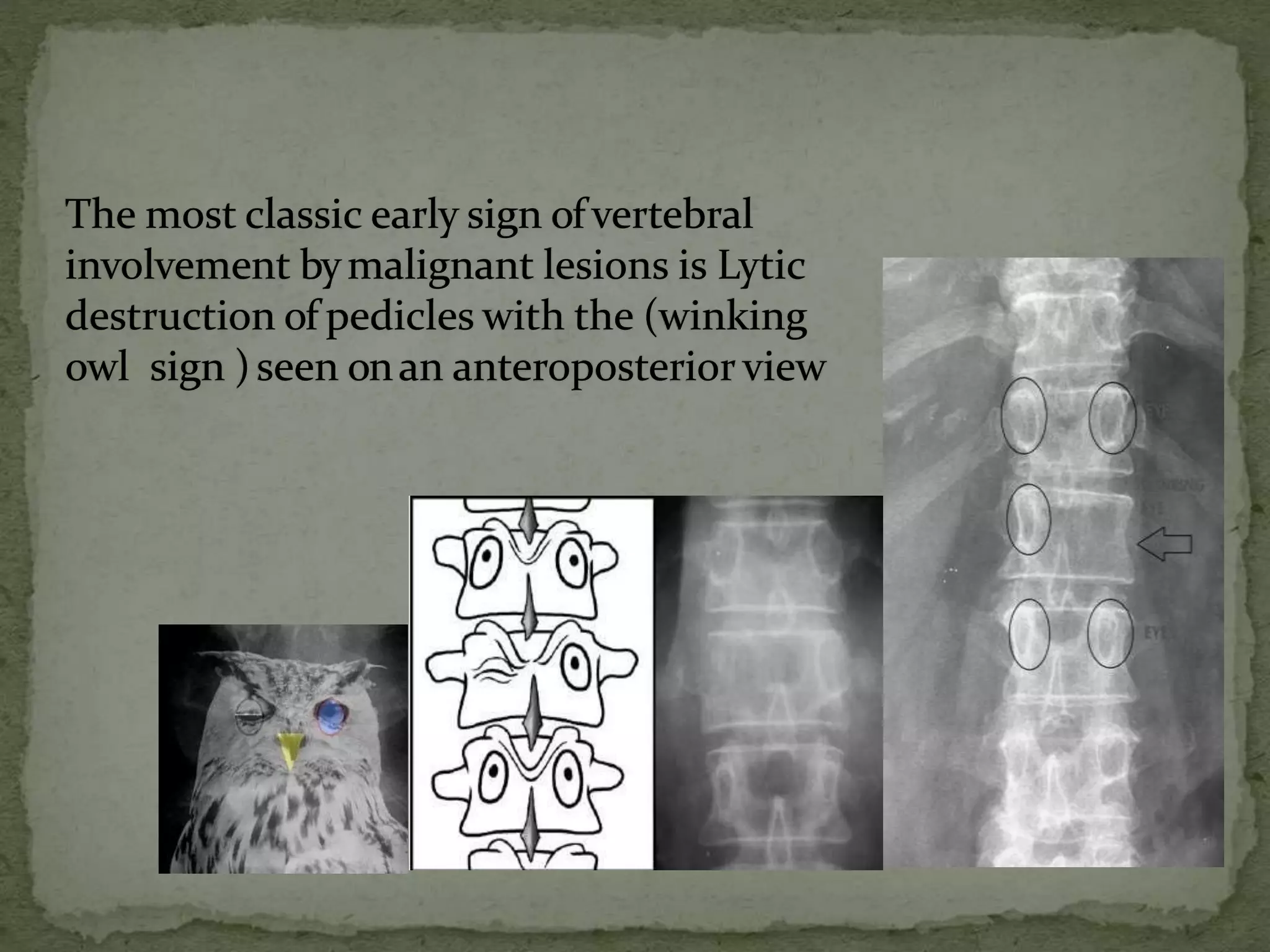
Neoplasms in the vertebrae can present as osteolytic
osteoblastic or mixed
 Recommended for investigating the suspected lesions
in terms of-
 Level
 Extent
 Bone marrow infiltration
 Infiltration to muscles, vessels
 Infiltration to nerve roots, spinal cord & thecal sac
 M R I show Progressive metastatic disease to thespine
Computed Tomography:
In general, CT is more reliable in demonstrating the
cortical outlines of bone and calcification in comparison
to MRI.
It can better show the extent of the tumor destruction
CT scan of the
lumbar spine
showing
destruction of the
right pedicle,
occur in
aneurysmal bone
cysts
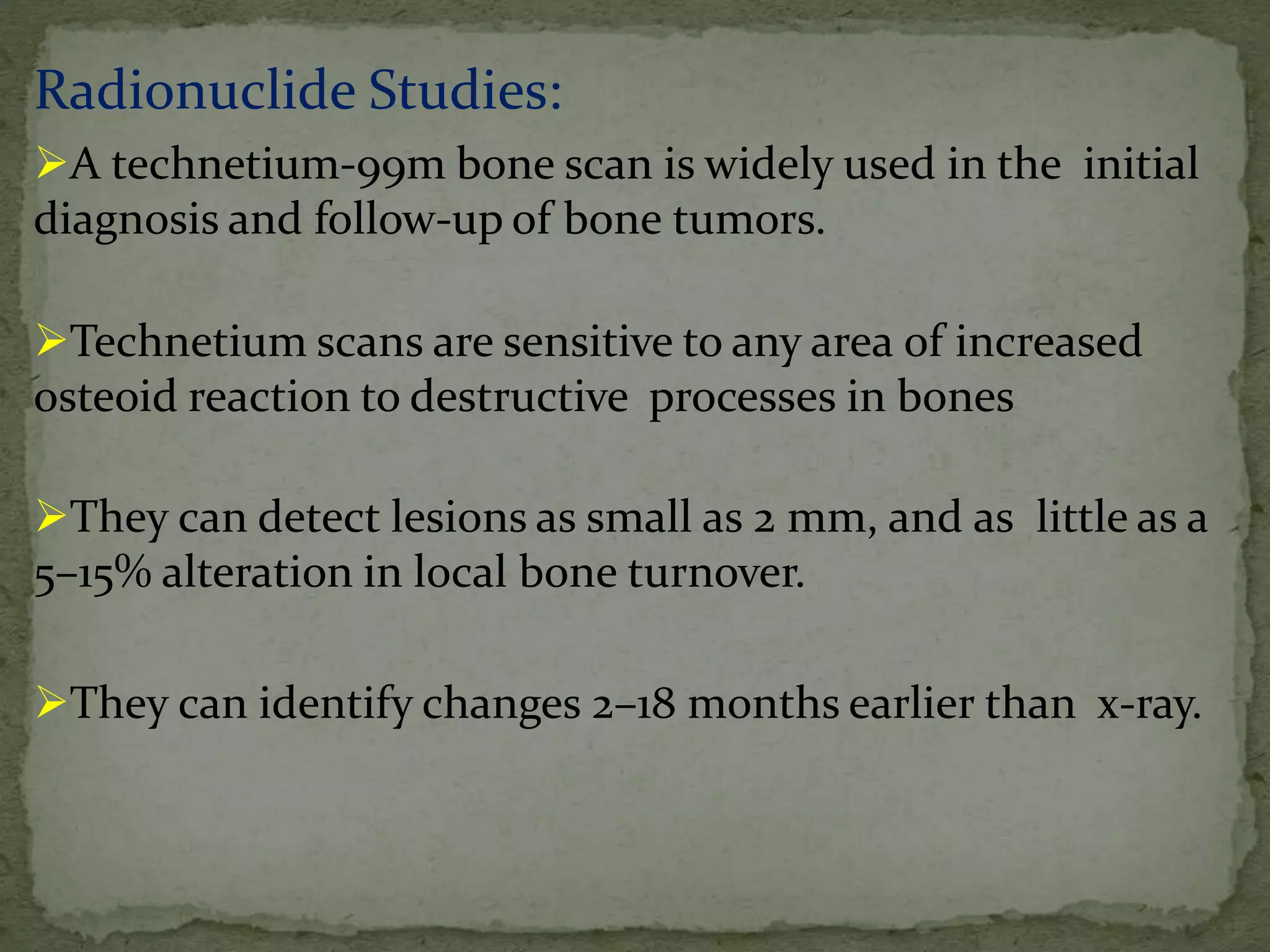
Radionuclide Studies:
A technetium-99m bone scan is widely used in the initial
diagnosis and follow-up of bone tumors.
Technetium scans are sensitive to any area of increased
osteoid reaction to destructive processes in bones
They can detect lesions as small as 2 mm, and as little as a
5–15% alteration in local bone turnover.
They can identify changes 2–18 months earlier than x-ray.
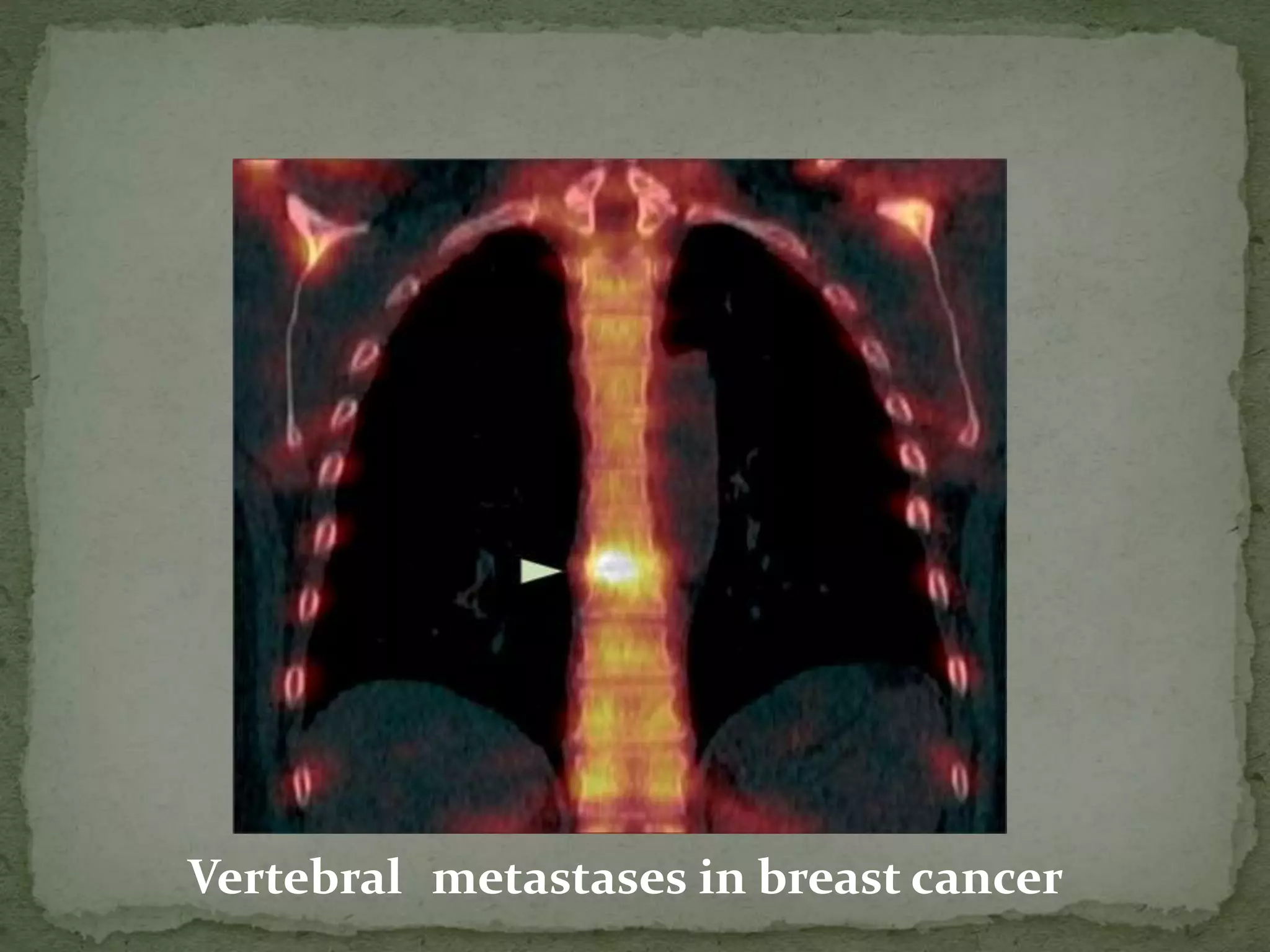
Vertebral metastases in breast cancer
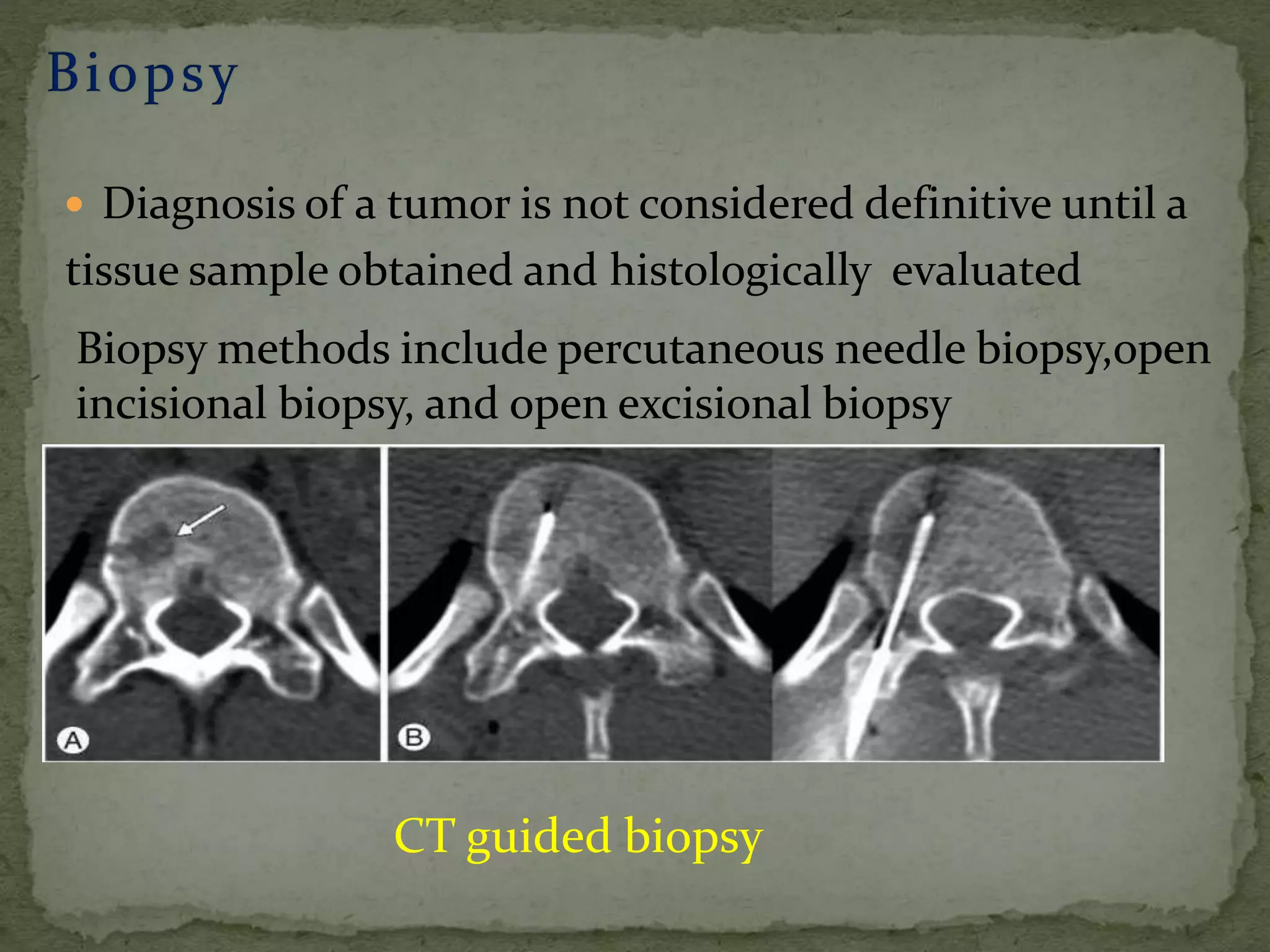
 Diagnosis of a tumor is not considered definitive until a
tissue sample obtained and histologically evaluated
CT guided biopsy
 Treatment of spinal tumor is a complex and it
requires multidisciplinary approach .
 Contemporary treatment include surgery, radiation
therapy and chemotherapy.
 Medical : Steroid , chemotherapy & radiotherapy
 Surgery : Minimal invasive surgery /Open surgery .
Operative Treatment:
The ultimate goal must be a “wide” and preferably an en
bloc resection of the primary tumor in combination with a
spinal reconstruction which allows for early mobilization.
The surgical techniques are classified by the tissue planes
and approach as:
 curettage
 intralesional resection
 en bloc resection
Availability of
Operating microscope
Neuro-monitor
Results of primary excision either in spinal column or
spinal cord is usually satisfactory
Results of secondary spinal tumor generally
unsatisfactory
Pre-operative planning, intra-operative stages and
post-operative management in collaboration with
pathologists & oncologists are important tools for
expected surgical outcome.
Spinal tumour   lecture - copy

Spinal tumour lecture - copy

  • 1.
    DR. MD. SHAHALAM MBBS FCPS MS FRCS Fellowship training in Spine (USA & UK) Active Fellow SRS Professor Department of Spine & Ortho Surgery, NITOR, Dhaka, Bangladesh
  • 2.
     Any neoplasmin the vertebral column or spinal cord are considered as spinal tumors .  In the vertebral column may be primary or secondary.  In spinal cord ,may be extradural or intradural .  Intradural may be intramedullary or extramedullary.  Extra dural tumour more common than intra dural tumor
  • 4.
    Of all primarybenign bone tumors, 8% occur in the spine or sacrum Benign primary tumors most commonly occur during first 3 decades of life Spine metastasis most often occur in patients older than 40 Benign tumors most frequently involve the posterior elements, but malignant tumors have a predilection for the vertebral bodies
  • 5.
    ■ Most commonsymptom is pain, which occurs in 76% of benign and 95% of malignant tumors. ■Ca breast, prostate, kidney, and thyroid gland account for 80% of all skeletal metastasis, with the spine as the most common site. ■ Malignant tumors occur more frequently in the lower (lumbar > thoracic > cervical) spinal levels
  • 6.
     spinal cordtumors constitute 2 % of all tumors and 1-3% of tumors of central nervous system. Extra dural mainly metastatic from primary cancer elsewhere. Cord compression more in metastatic tumor
  • 7.
  • 8.
  • 10.
     rare, about4-10 % of all CNS tumors.  Intramedullary tumors include Gliomas (ependymomas, astrocytomas and gangliogliomas) and Nonglial tumors (such as hemangioblastomas, lymphoma and metastases).
  • 11.
     The mostcommon intramedullary neoplasm in adults.  Usually occurs in the cervical region.  Slightly more common in women of 40 to 50 years of age. widened spinal cord T2: hyperintense peritumoural oedema is seen in 60% of cases
  • 12.
     Most commonchildhood intramedullary neoplasms of the spinal cord and are 2nd to ependymomas in adults  worse prognosis.  located eccentrically An astrocytoma of the cervical spine on T2 (left) and T1 with contrast (right). Note the indistinct cord edema, expansion and partial contrast enhancement
  • 13.
     Since thearachnoid is essentially continuous with the dura in the spine, intradural lesions are located in the subarachnoid space. Meningiomas, Nerve sheath tumors, Intradural metastases, Lymphoma/leukemia, Paraganglioma
  • 14.
     Strong female predominance a peak occurrence in the fifthand sixth decades.  Multiples meningiomas are seen inpatients with NF-2.  Found mainly at thoracic spine. well-circumscribed, broad-based dural attachment dural tail signs
  • 15.
     Schwannomas andNeurofibromas.  Schwannomas are most common  Neurofibromas generally occur in association with neurofibromatosis  Approximately 50% of nerve sheath tumors are intradural-extradural (dumbbell- shaped) in location and 50% are purely extradural.
  • 16.
    Schwannoma T2 - morethan 95% are hyperintense, often with mixed signal.
  • 17.
  • 18.
    Multiple: Metastatic disease Hemangiomas Multiple myeloma Lymphoma. Single: Aneurysmal bone cyst, Giant cell tumor, Osteoblastoma, Osteochondromas, Chordoma, Chondrosarcoma, Chondroblastoma, Metastasis, Hemangioma, Solitary Plasmacytoma, Lymphoma.
  • 19.
    METASTASES  Spinal metastasisis the most common tumor of the spine.  Multiple in 90 % of cases.  In adults, the most common primary tumors are adenocarcinomas of lung, prostate and breast.  In children, most vertebral metastases arise from neuroblastoma and Ewing‟s sarcoma.  Thoracic > lumbar > cervical spine. The metastatic foci mostly involve the body. Most spinal metastases are lytic.
  • 20.
     It isa Malignancy characterized by monoclonal proliferation of malignant plasma cells.  Nearly always systemic.  MM is most common primary neoplasm of spine with the majority occurring in the thoracic and lumbar spine.  Most patients are men, 60 years of age or Older.  Fatal within 4 years of diagnosis.  Single vertebrae may be involved i.e. plasmacytoma
  • 22.
     Diagnosis confirmedby 1. At least 10% abnormal plasma cell 2. Lytic bone lesion 3. Monoclonal gammopathy ( Protein electrophoresis, urinary Ben Zones protein) 4. Anaemia, High rise of ESR Treatment: 1. Irradiation 2. Chemotherapy 3. Surgery: Patients with neurologic Deficits & progressive deficit despite maximal chemo- radiation.
  • 23.
     Common primarybone tumor and are found in >10 % of population, mostly silent.  Most commonly found in the 4th to 6th decades with slight female predominance.  They may be solitary (70%) or multiple (30%) with contiguous level affected  The most common locations are the thoracic  Most of the hemangiomas arise in the body of the vertebra.  Atypical & aggressive type may involve posterior elements
  • 24.
     At CT,the thickened trabeculae are seen in cross section as small punctate areas of sclerosis, often called the "polka-dot" appearance.  X-ray: vertical striation with larger lesion & thickened trabeculae- Corduory vertebrae)
  • 25.
    Aneurysmal Bone Cyst Approx. 11-30% of ABC are located in spine  Age: <20 yrs  Particularly in cervical and thoracic regions  Posterior elements are typically involved.  X-ray: Expansile lesion with a reactive rim of cortical bone  Rx: 1. Surgery: Embolization, Curettage & bone grafting ± Fusion 2. Radiation : Successful in 50% cases
  • 26.
     Most commonnon lymphoproliferative primary malignant tumor of the spine  Originate from notochordal rests  Almost always occur in a midline or paramedian location in relation to the spine.  Nearly 50% originate in the sacrococcygeal region, particularly in the 4th & 5th sacral segments.  M:F= 2:1, mean age >50 years.  slow-growing tumors , relentless progression with high recurrence rate
  • 27.
     DRE: Palpablemass Anteriorly  X-ray: Lytic lesion with variable calcification  The most suggestive manifestation is a destructive lesion of a vertebral body associated with a soft-tissue mass with a “collar button” or “mushroom” appearance Rx: Wide En Bloc Excision
  • 28.
     Persisting pain Weakness of both lower limb  Incontinence  Paraparesis/paralysis  Bowel & Bladder involvement
  • 29.
     In earlystages , diagnosis of primary tumors are very difficult. Symptoms are similar to degenerative spinal disease.  Diagnosis based upon :  Biochemical  Radiology imaging  CT Scan & CT Myelogram  MRI.  CT or ultrasonic guided biopsy helps to confirm the diagnosis
  • 32.
    Plain radiographs: The firststep imaging for a suspected spine tumor is plain radiographs A tumor is detectable on plain radiographs only if 30 to 40% of vertebral body is involved Neoplasms in the vertebrae can present as osteolytic osteoblastic or mixed
  • 34.
     Recommended forinvestigating the suspected lesions in terms of-  Level  Extent  Bone marrow infiltration  Infiltration to muscles, vessels  Infiltration to nerve roots, spinal cord & thecal sac
  • 35.
     M RI show Progressive metastatic disease to thespine
  • 36.
    Computed Tomography: In general,CT is more reliable in demonstrating the cortical outlines of bone and calcification in comparison to MRI. It can better show the extent of the tumor destruction CT scan of the lumbar spine showing destruction of the right pedicle, occur in aneurysmal bone cysts
  • 37.
    Radionuclide Studies: A technetium-99mbone scan is widely used in the initial diagnosis and follow-up of bone tumors. Technetium scans are sensitive to any area of increased osteoid reaction to destructive processes in bones They can detect lesions as small as 2 mm, and as little as a 5–15% alteration in local bone turnover. They can identify changes 2–18 months earlier than x-ray.
  • 38.
  • 39.
     Diagnosis ofa tumor is not considered definitive until a tissue sample obtained and histologically evaluated CT guided biopsy
  • 40.
     Treatment ofspinal tumor is a complex and it requires multidisciplinary approach .  Contemporary treatment include surgery, radiation therapy and chemotherapy.  Medical : Steroid , chemotherapy & radiotherapy  Surgery : Minimal invasive surgery /Open surgery .
  • 41.
    Operative Treatment: The ultimategoal must be a “wide” and preferably an en bloc resection of the primary tumor in combination with a spinal reconstruction which allows for early mobilization. The surgical techniques are classified by the tissue planes and approach as:  curettage  intralesional resection  en bloc resection
  • 42.
  • 43.
    Results of primaryexcision either in spinal column or spinal cord is usually satisfactory Results of secondary spinal tumor generally unsatisfactory Pre-operative planning, intra-operative stages and post-operative management in collaboration with pathologists & oncologists are important tools for expected surgical outcome.