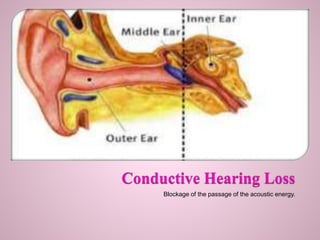
Blockage of the passage of the acoustic energy.
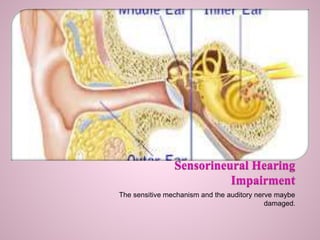
The sensitive mechanism and the auditory nerve maybe
damaged.
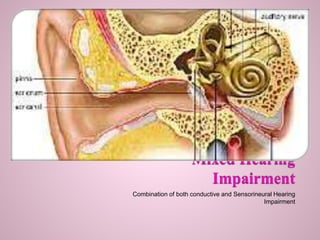
Combination of both conductive and Sensorineural Hearing
Impairment
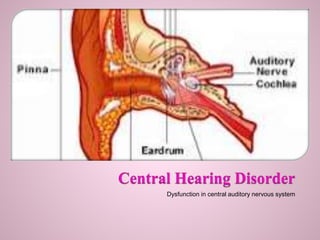
Dysfunction in central auditory nervous system
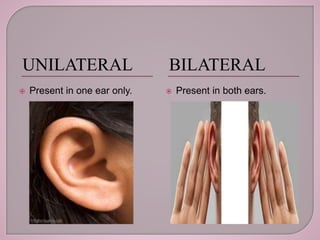
UNILATERAL BILATERAL
 Present in one ear only.  Present in both ears.
What is sound?
Sound is measured by decibels (dB) or units describe its
intensity of its softness and loudness.
Zero (dB) represents the softness and fairness of sound it is
also called zero-hearing threshold (HTL) or audiometric zero.
While the larger (dB) represent louder sounds.
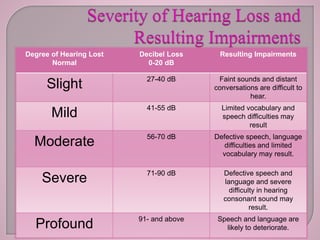
Degree of Hearing Lost
Normal
Decibel Loss
0-20 dB
Resulting Impairments
Slight 27-40 dB Faint sounds and distant
conversations are difficult to
hear.
Mild 41-55 dB Limited vocabulary and
speech difficulties may
result
Moderate 56-70 dB Defective speech, language
difficulties and limited
vocabulary may result.
Severe 71-90 dB Defective speech and
language and severe
difficulty in hearing
consonant sound may
result.
Profound 91- and above Speech and language are
likely to deteriorate.
In the Philippines 2% of the population
has a hearing impairment, and it was
found that the hearing disabilities is the
2nd highest form of disability next to the
moving disability.
1.Genetics and Hereditary Factor
2. Infections
3. Environmental and other traumatic factors
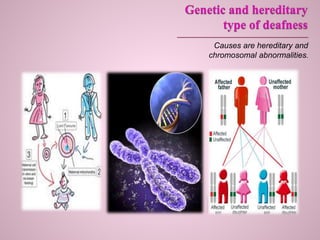
Causes are hereditary and
chromosomal abnormalities.
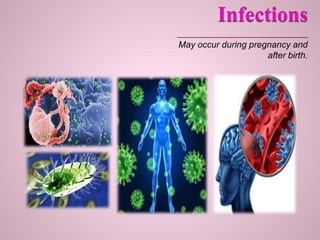
May occur during pregnancy and
after birth.
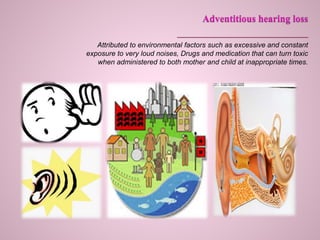
Attributed to environmental factors such as excessive and constant
exposure to very loud noises, Drugs and medication that can turn toxic
when administered to both mother and child at inappropriate times.
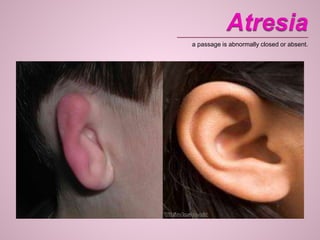
a passage is abnormally closed or absent.
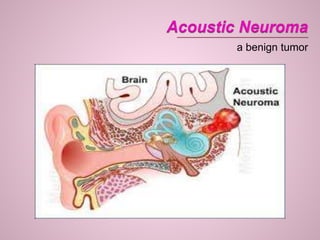
a benign tumor
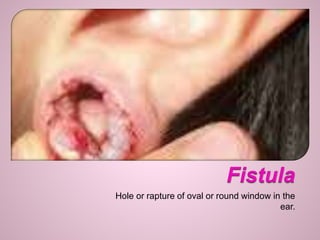
Hole or rapture of oval or round window in the
ear.
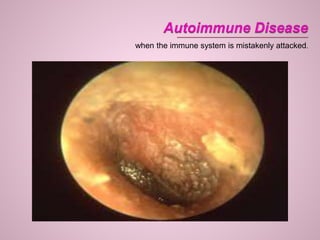
when the immune system is mistakenly attacked.
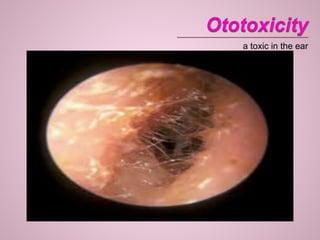
a toxic in the ear
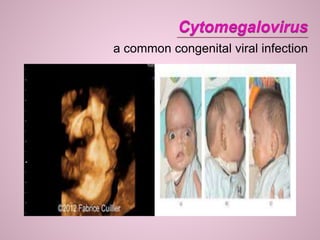
a common congenital viral infection
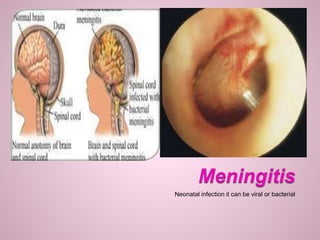
Neonatal infection it can be viral or bacterial
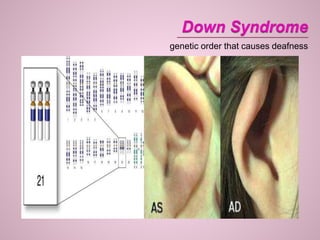
genetic order that causes deafness
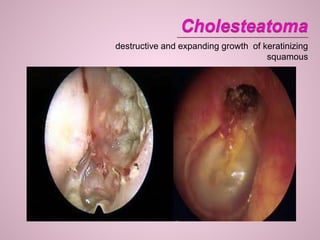
destructive and expanding growth of keratinizing
squamous
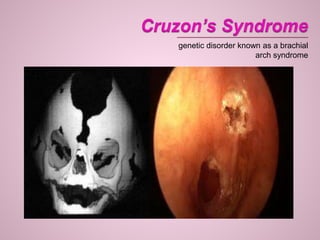
genetic disorder known as a brachial
arch syndrome
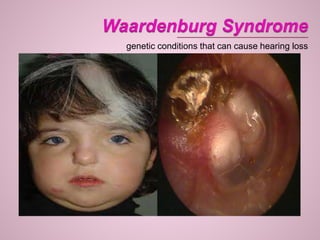
genetic conditions that can cause hearing loss
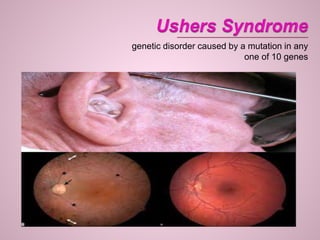
genetic disorder caused by a mutation in any
one of 10 genes
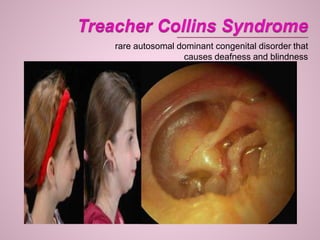
rare autosomal dominant congenital disorder that
causes deafness and blindness
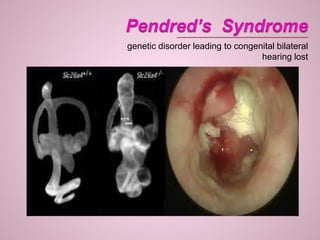
genetic disorder leading to congenital bilateral
hearing lost
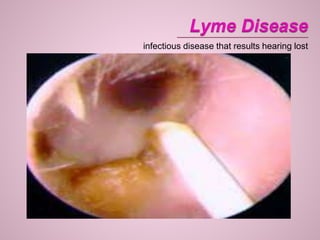
infectious disease that results hearing lost
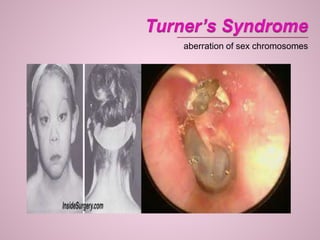
aberration of sex chromosomes
1. Cups hand behind the ear, cocks ear/tilts head at an angle to catch sounds
2. Has strained or blank facial expression when listening or talked to
3. Pays attention to vibration and vibrating objects
4. Moves closer to speaker, watches face especially the mouth and the lips of
the speaker when talked to
5. Less responsive to noise, voice, music and other sources of sounds
6. Uses more natural gestures, signs and movements to express self
7. Shows marked imitativeness at work and play
8. Often fails to respond to oral questions
9. Often asks for repetition of questions and statements
10. Often unable to follow oral instructions and directions
11. Has difficulty in associating concrete with abstract ideas
12. Has poor general learning performance
13. Invisible handicapping condition because there are only a few physical and
observable manifestation to indicate.
The major Effect of deafness is in language
development, concomitant issues occur in
intellectual and social development, speech
and language development that are closely
connected to educational concerns.

Special Education

  • 2.
    Blockage of thepassage of the acoustic energy.
  • 3.
    The sensitive mechanismand the auditory nerve maybe damaged.
  • 4.
    Combination of bothconductive and Sensorineural Hearing Impairment
  • 5.
    Dysfunction in centralauditory nervous system
  • 6.
    UNILATERAL BILATERAL  Presentin one ear only.  Present in both ears.
  • 7.
    What is sound? Soundis measured by decibels (dB) or units describe its intensity of its softness and loudness. Zero (dB) represents the softness and fairness of sound it is also called zero-hearing threshold (HTL) or audiometric zero. While the larger (dB) represent louder sounds.
  • 8.
    Degree of HearingLost Normal Decibel Loss 0-20 dB Resulting Impairments Slight 27-40 dB Faint sounds and distant conversations are difficult to hear. Mild 41-55 dB Limited vocabulary and speech difficulties may result Moderate 56-70 dB Defective speech, language difficulties and limited vocabulary may result. Severe 71-90 dB Defective speech and language and severe difficulty in hearing consonant sound may result. Profound 91- and above Speech and language are likely to deteriorate.
  • 9.
    In the Philippines2% of the population has a hearing impairment, and it was found that the hearing disabilities is the 2nd highest form of disability next to the moving disability.
  • 10.
    1.Genetics and HereditaryFactor 2. Infections 3. Environmental and other traumatic factors
  • 11.
    Causes are hereditaryand chromosomal abnormalities.
  • 12.
    May occur duringpregnancy and after birth.
  • 13.
    Attributed to environmentalfactors such as excessive and constant exposure to very loud noises, Drugs and medication that can turn toxic when administered to both mother and child at inappropriate times.
  • 15.
    a passage isabnormally closed or absent.
  • 16.
  • 17.
    Hole or raptureof oval or round window in the ear.
  • 18.
    when the immunesystem is mistakenly attacked.
  • 19.
    a toxic inthe ear
  • 20.
    a common congenitalviral infection
  • 21.
    Neonatal infection itcan be viral or bacterial
  • 22.
    genetic order thatcauses deafness
  • 23.
    destructive and expandinggrowth of keratinizing squamous
  • 24.
    genetic disorder knownas a brachial arch syndrome
  • 25.
    genetic conditions thatcan cause hearing loss
  • 26.
    genetic disorder causedby a mutation in any one of 10 genes
  • 27.
    rare autosomal dominantcongenital disorder that causes deafness and blindness
  • 28.
    genetic disorder leadingto congenital bilateral hearing lost
  • 29.
    infectious disease thatresults hearing lost
  • 30.
    aberration of sexchromosomes
  • 32.
    1. Cups handbehind the ear, cocks ear/tilts head at an angle to catch sounds 2. Has strained or blank facial expression when listening or talked to 3. Pays attention to vibration and vibrating objects 4. Moves closer to speaker, watches face especially the mouth and the lips of the speaker when talked to 5. Less responsive to noise, voice, music and other sources of sounds 6. Uses more natural gestures, signs and movements to express self 7. Shows marked imitativeness at work and play 8. Often fails to respond to oral questions 9. Often asks for repetition of questions and statements 10. Often unable to follow oral instructions and directions 11. Has difficulty in associating concrete with abstract ideas 12. Has poor general learning performance 13. Invisible handicapping condition because there are only a few physical and observable manifestation to indicate.
  • 33.
    The major Effectof deafness is in language development, concomitant issues occur in intellectual and social development, speech and language development that are closely connected to educational concerns.