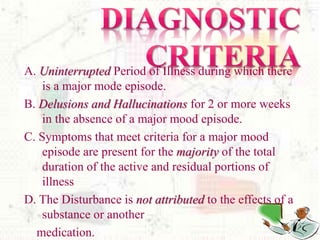
A. Uninterrupted Period of Illness during which there
is a major mode episode.
B. Delusions and Hallucinations for 2 or more weeks
in the absence of a major mood episode.
C. Symptoms that meet criteria for a major mood
episode are present for the majority of the total
duration of the active and residual portions of
illness
D. The Disturbance is not attributed to the effects of a
substance or another
medication.
 Schizoaffective disorder appears to be
about one-third as common as
schizophrenia.
 Lifetime prevalence is estimated to be
0.3%.
 Incidence is higher in female than males.
 Typical age is early adulthood but it can
occur anywhere from adolescence to late in
life.
 May occur in a variety of temporal patterns.
 Typical pattern: individual may have
pronounced auditory hallucination and
persecutory delusions for 2 months
 Psychotic symptoms & full major
depressive episode are present for
3months.
 Individual recovers completely from
major depressive episode, but the
psychotic symptoms persist for another
month before it will disappear.
A.Presence of one or both of the ff. symptoms:
1.Delusions
2.Hallucinations
B.There is evidence from the history, physical
examination, or laboratory finding of both 1 and 2
1.The symptoms is developed during or soon after
substance intoxication or withdrawal or after exposure
to a medication.
2.The involve substance or medication is capable of
producing the symptoms.
C.The disturbance is not better explained by a psychotic
disorder that is not a substance/medication-induced. Such
evidence of an independent psychotic disorder could
include the ff:
Symptoms preceded the onset of the
substance/medication use.
Symptoms persist for a substantial period of time after
the cessation of acute withdrawal or severe intoxication.
There is other evidence of an independent non-
substance/medication-induced psychotic disorder.
 Prevalence in general population is
unknown.
 7%-25% of individual is reported to
have substance/medication-induced
psychotic disorder, presenting the first
episode.
 The initiation of the disorder may vary considerably with
the substances such alcohol and cocaine that will induced
psychotic disorder and hallucination.
 Persecutory delusions may rapidly develop shortly after
use of substances.
 Substance or medication induced psychotic disorder may
at times persist when the offending agent is removed.
 It will evoke temporary psychotic state that can
sometime persist for weeks or longer despite of the
removal of the agent.
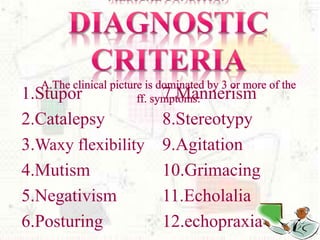
1.Stupor
2.Catalepsy
3.Waxy flexibility
4.Mutism
5.Negativism
6.Posturing
7.Mannerism
8.Stereotypy
9.Agitation
10.Grimacing
11.Echolalia
12.echopraxia
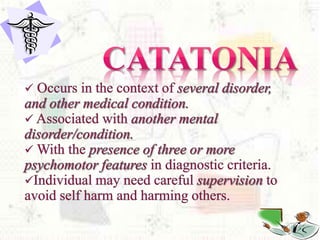
 When the psychomotor disturbance
involve at least 3 of the 12 diagnostic
features.
 Diagnosed in an inpatient setting.
 Occur in 35% of schizophrenia but the
majority cases involve has depressive or
bipolar disorder.
1.Stupor
2.Catalepsy
3.Waxy flexibility
4.Mutism
5.Negativism
6.Posturing
7.Mannerism
8.Stereotypy
9.Agitation
10.Grimacing
11.Echolalia
12.echopraxia
B.There must be a evidence that catatonia is
attributed from another medical condition.
C.Disturbance is not explained by another
medical disorder.
D.Disturbance does not occur exclusively
during the course of delirium.
E.There must be at least 3 of the 12 clinical
features
J.e.t

Abnormal Psychology

  • 3.
    A. Uninterrupted Periodof Illness during which there is a major mode episode. B. Delusions and Hallucinations for 2 or more weeks in the absence of a major mood episode. C. Symptoms that meet criteria for a major mood episode are present for the majority of the total duration of the active and residual portions of illness D. The Disturbance is not attributed to the effects of a substance or another medication.
  • 4.
     Schizoaffective disorderappears to be about one-third as common as schizophrenia.  Lifetime prevalence is estimated to be 0.3%.  Incidence is higher in female than males.
  • 5.
     Typical ageis early adulthood but it can occur anywhere from adolescence to late in life.  May occur in a variety of temporal patterns.  Typical pattern: individual may have pronounced auditory hallucination and persecutory delusions for 2 months
  • 6.
     Psychotic symptoms& full major depressive episode are present for 3months.  Individual recovers completely from major depressive episode, but the psychotic symptoms persist for another month before it will disappear.
  • 8.
    A.Presence of oneor both of the ff. symptoms: 1.Delusions 2.Hallucinations B.There is evidence from the history, physical examination, or laboratory finding of both 1 and 2 1.The symptoms is developed during or soon after substance intoxication or withdrawal or after exposure to a medication. 2.The involve substance or medication is capable of producing the symptoms.
  • 9.
    C.The disturbance isnot better explained by a psychotic disorder that is not a substance/medication-induced. Such evidence of an independent psychotic disorder could include the ff: Symptoms preceded the onset of the substance/medication use. Symptoms persist for a substantial period of time after the cessation of acute withdrawal or severe intoxication. There is other evidence of an independent non- substance/medication-induced psychotic disorder.
  • 10.
     Prevalence ingeneral population is unknown.  7%-25% of individual is reported to have substance/medication-induced psychotic disorder, presenting the first episode.
  • 11.
     The initiationof the disorder may vary considerably with the substances such alcohol and cocaine that will induced psychotic disorder and hallucination.  Persecutory delusions may rapidly develop shortly after use of substances.  Substance or medication induced psychotic disorder may at times persist when the offending agent is removed.  It will evoke temporary psychotic state that can sometime persist for weeks or longer despite of the removal of the agent.
  • 14.
  • 15.
     When thepsychomotor disturbance involve at least 3 of the 12 diagnostic features.  Diagnosed in an inpatient setting.  Occur in 35% of schizophrenia but the majority cases involve has depressive or bipolar disorder.
  • 17.
  • 18.
    B.There must bea evidence that catatonia is attributed from another medical condition. C.Disturbance is not explained by another medical disorder. D.Disturbance does not occur exclusively during the course of delirium. E.There must be at least 3 of the 12 clinical features
  • 19.