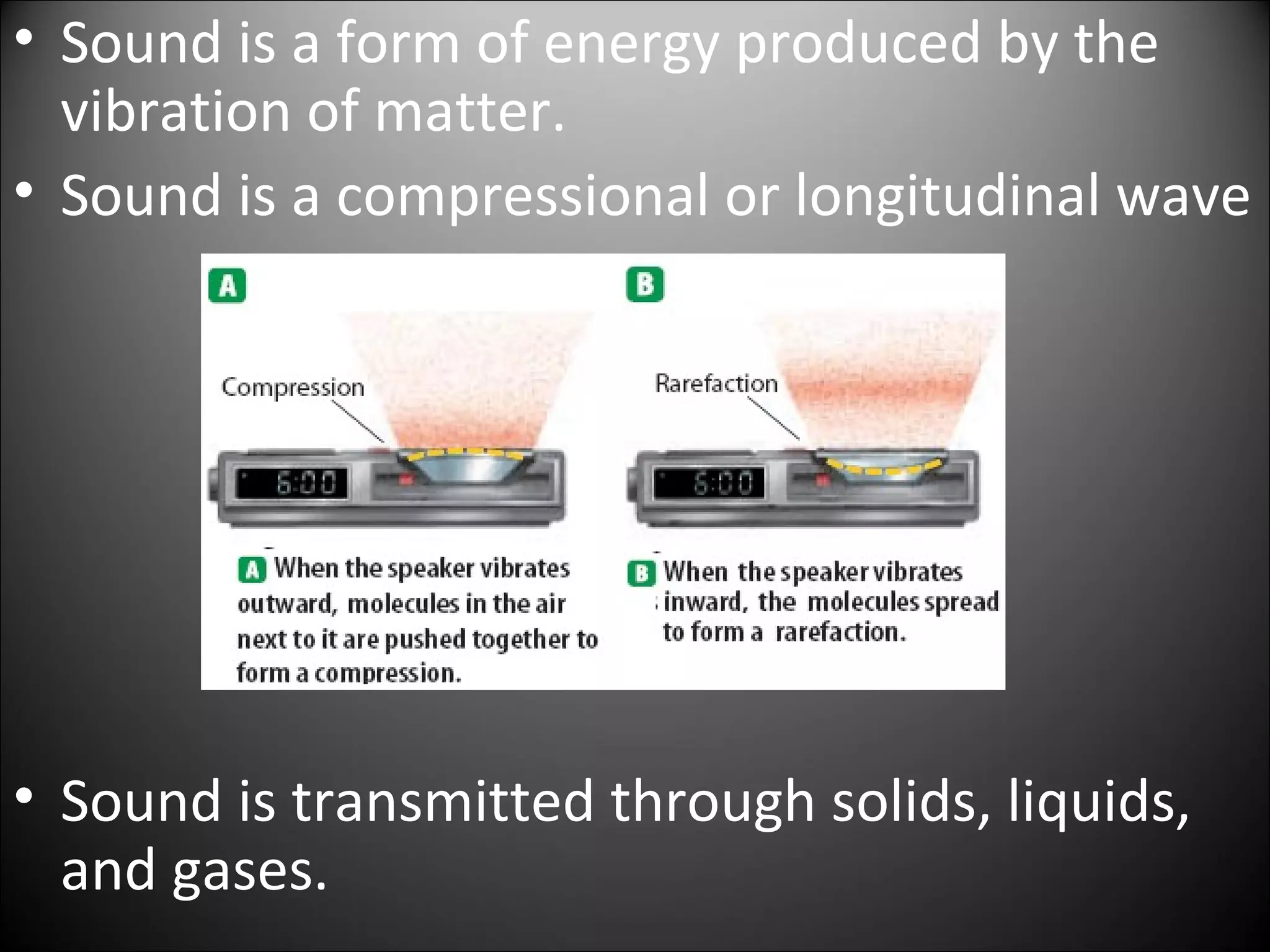
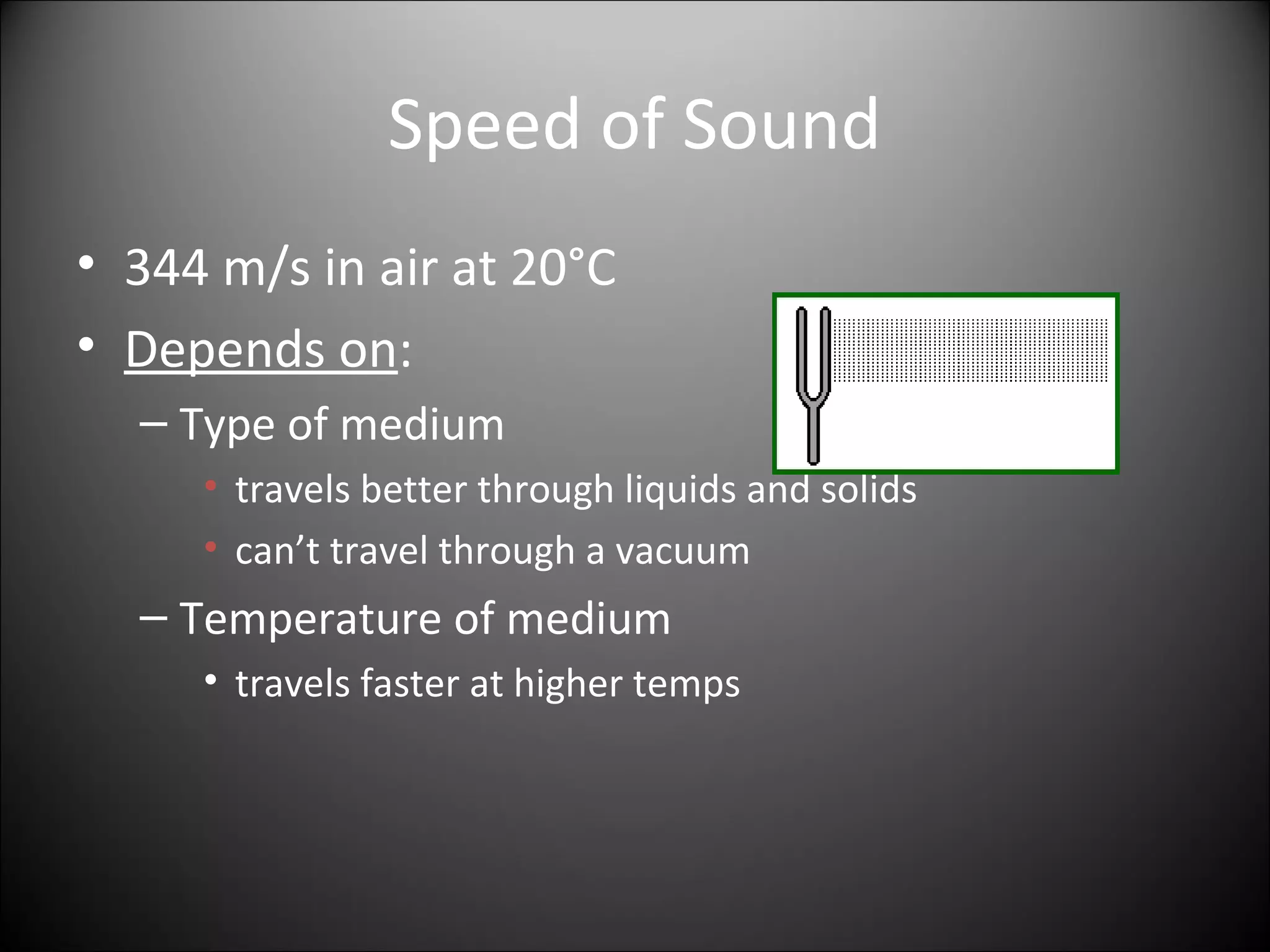
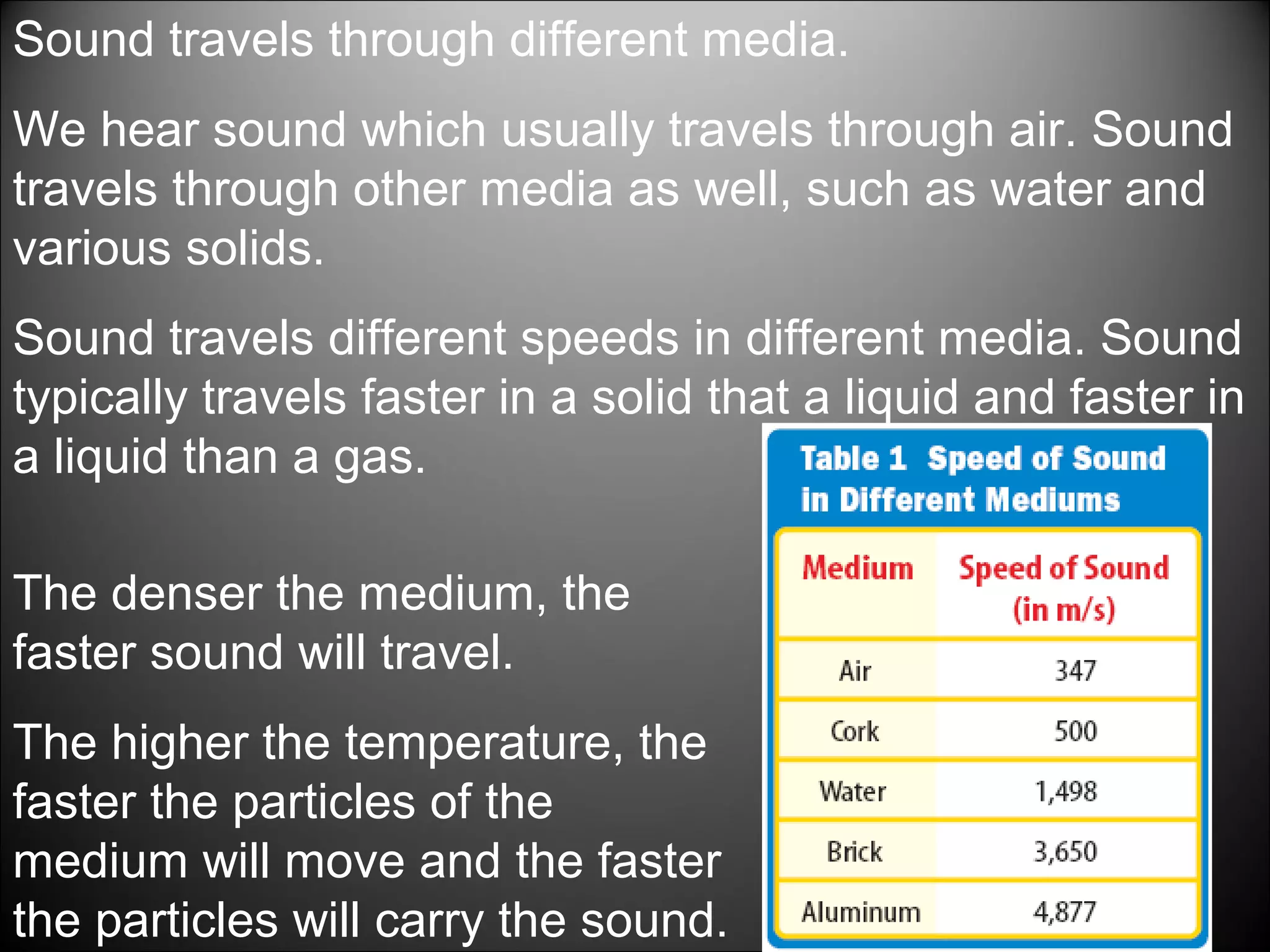
1. Sound is transmitted through different media at different speeds depending on the density and elasticity of the medium. Sound travels faster in solids than liquids and faster in liquids than gases.
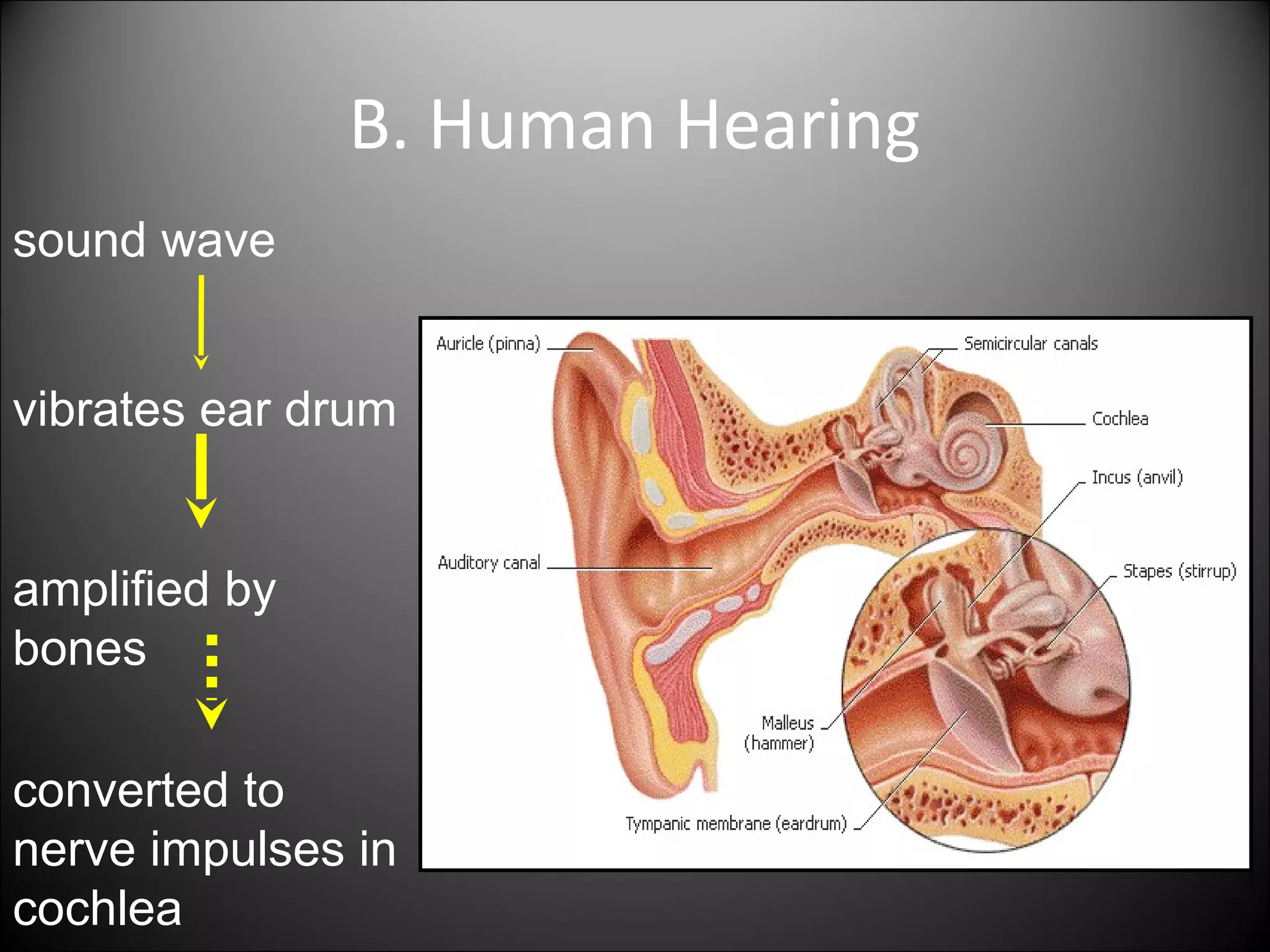
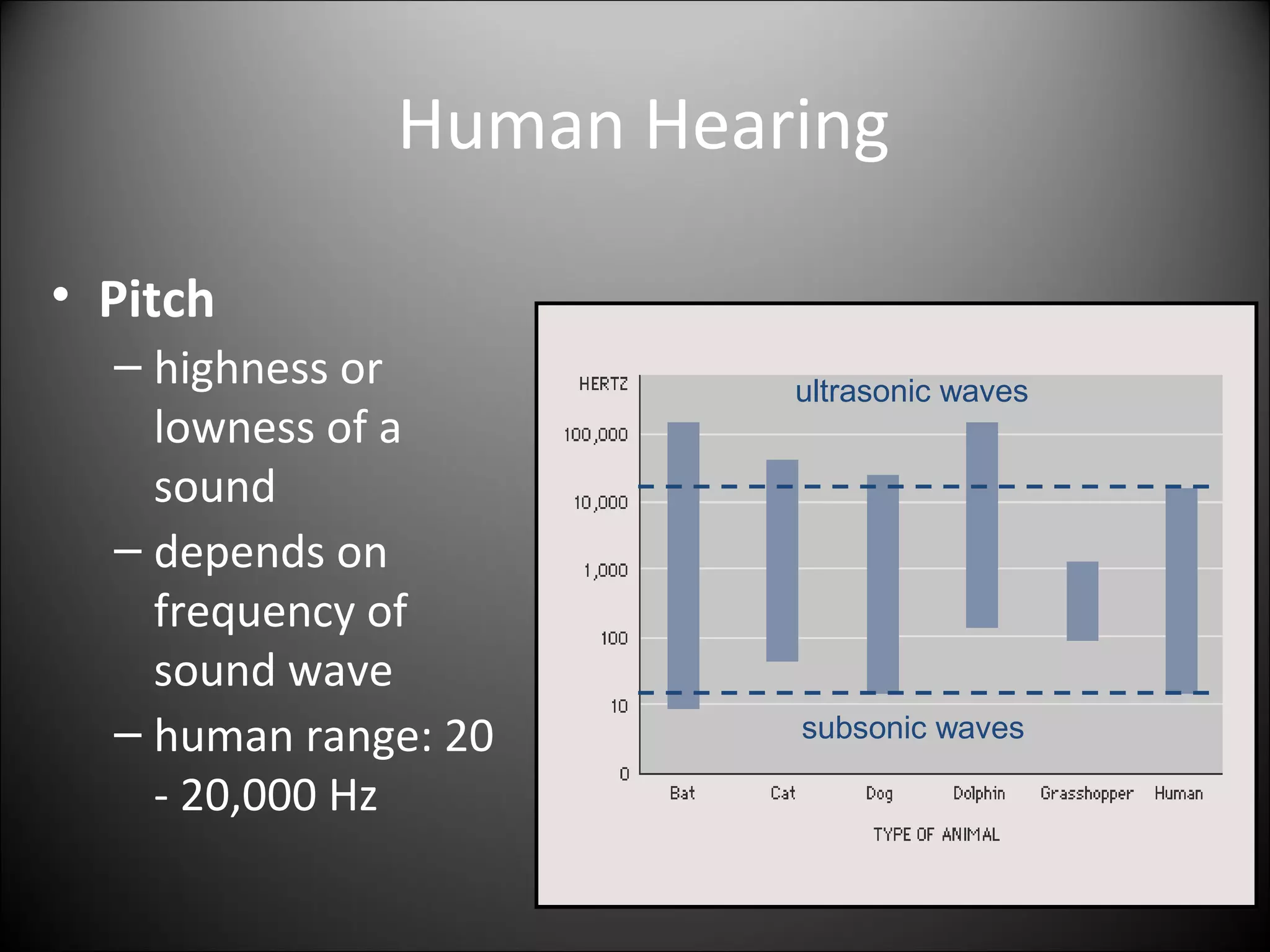
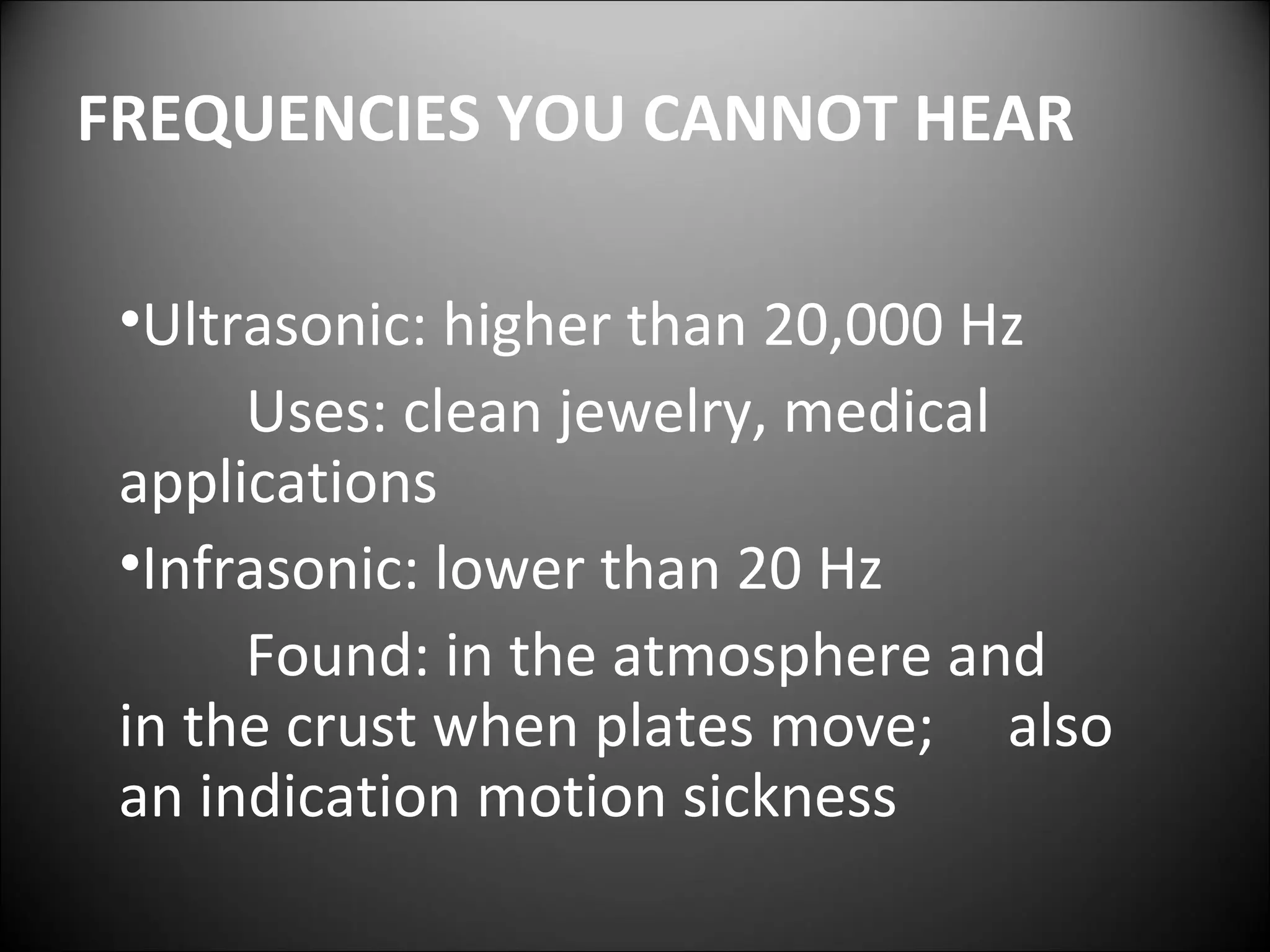
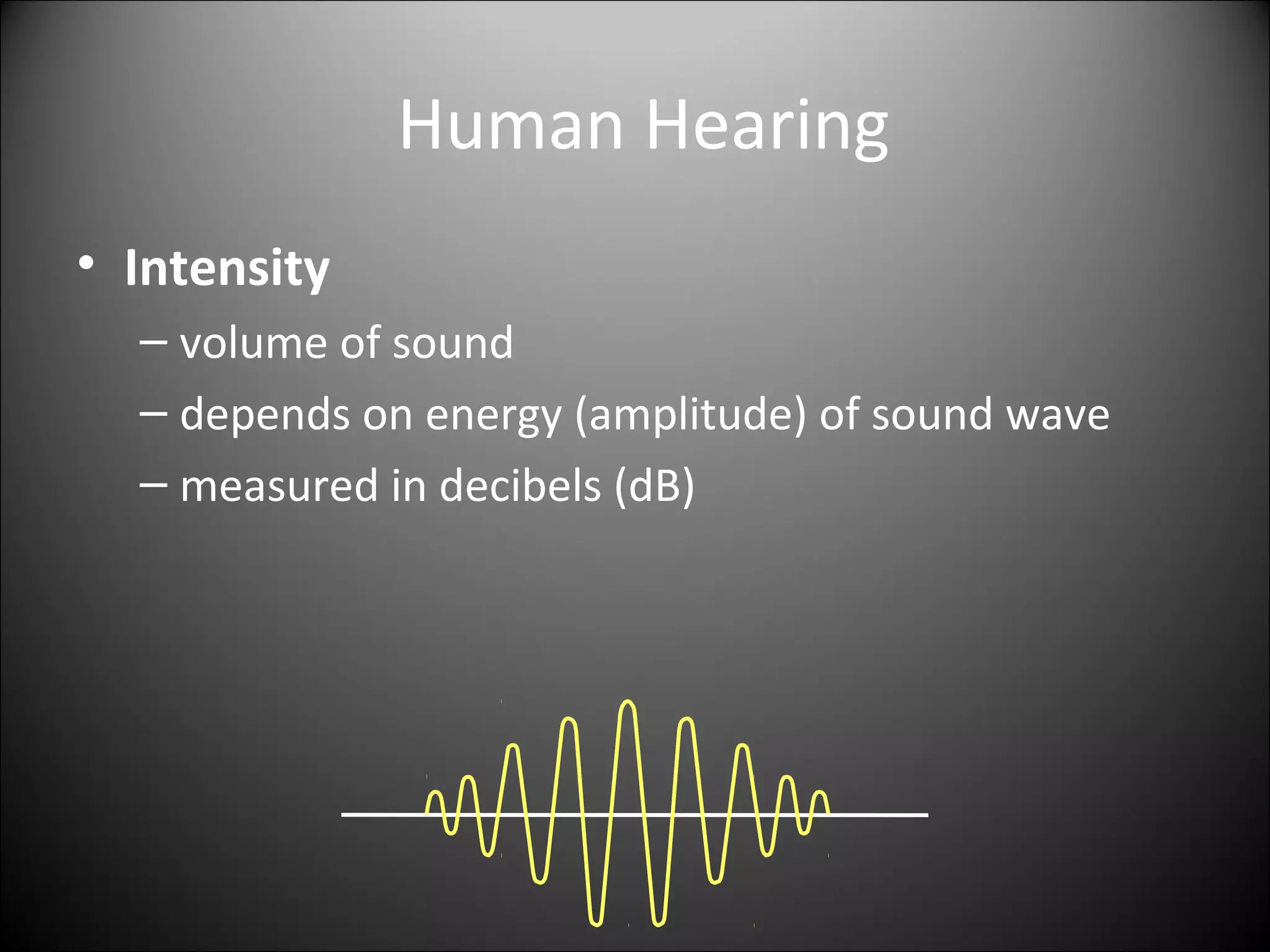
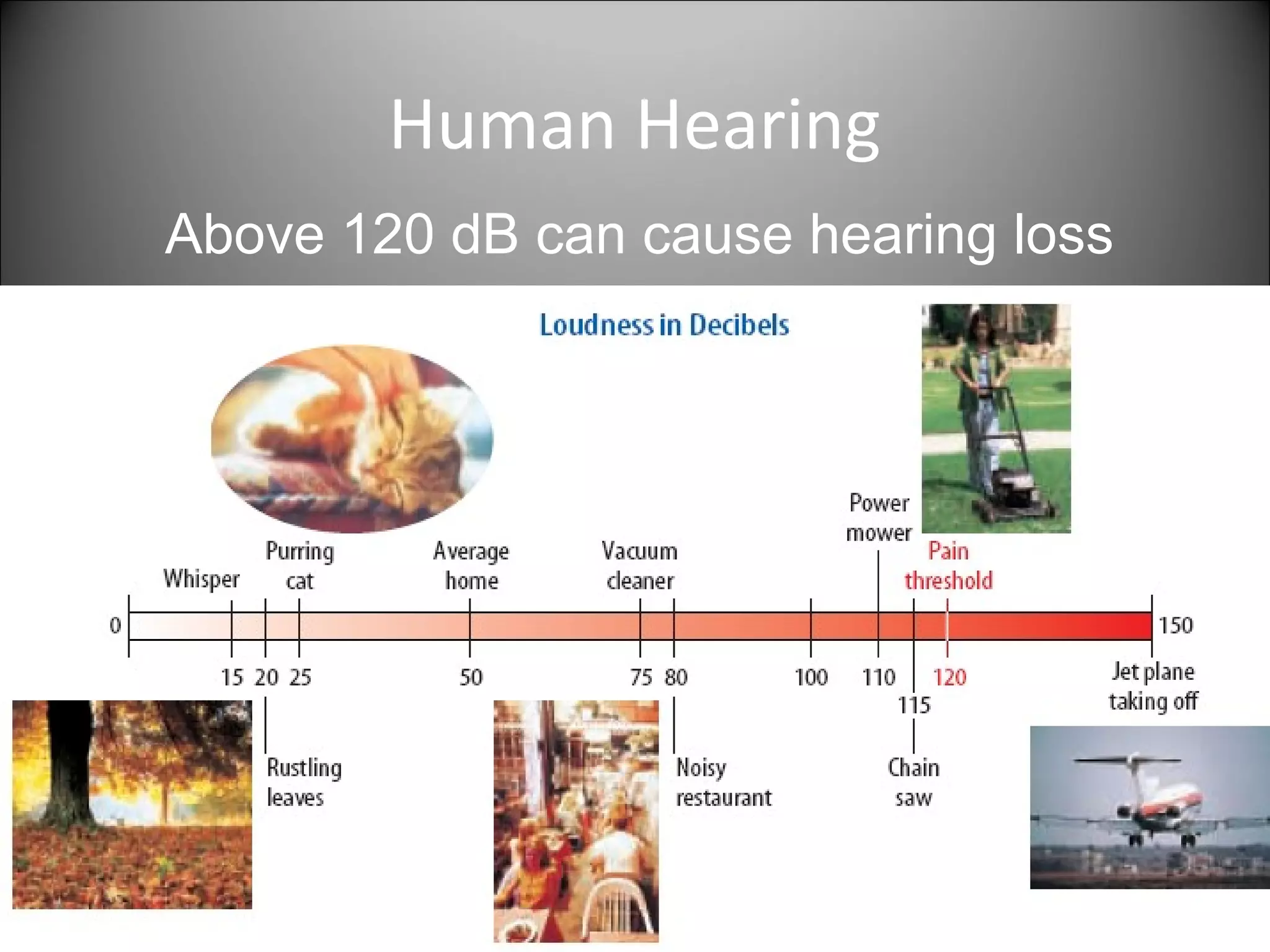
2. The human ear can detect sounds between 20-20,000 Hz. Higher pitches are detected as higher frequencies, while lower pitches are lower frequencies. Loudness depends on the amplitude of the sound wave.
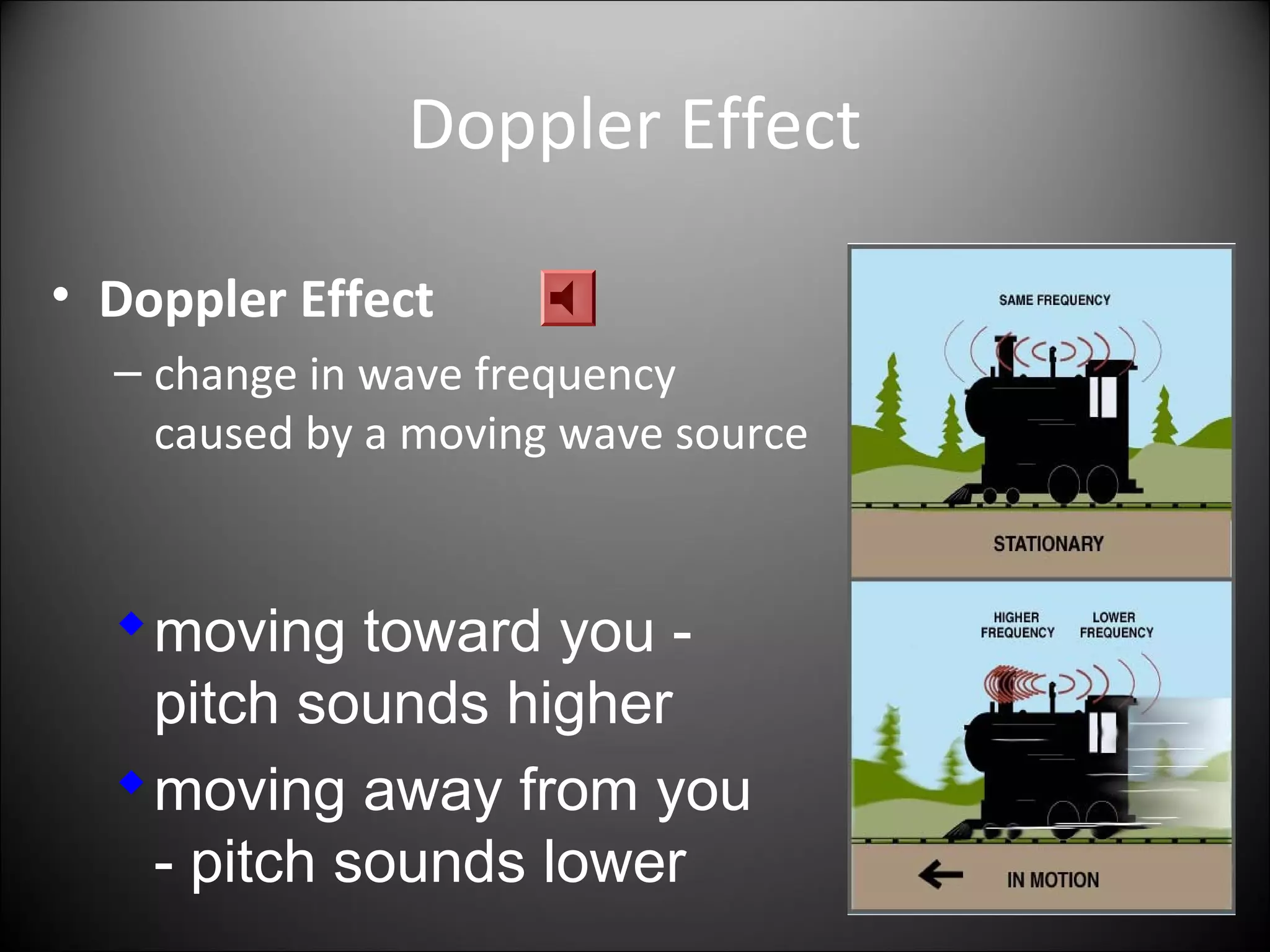
3. The Doppler Effect describes how the observed frequency of a sound wave is different for an observer moving relative to its source, with the pitch shifting higher as the source approaches and lower as it recedes.





![Long 50slideschapter 5 motion notes [autosaved]](https://cdn.slidesharecdn.com/ss_thumbnails/long50slideschapter5motionnotesautosaved-110126123317-phpapp02-thumbnail.jpg?width=640&height=640&fit=bounds)


