Solutions
Unit 9: Solutions
What are solutions?
• Solutions are homogeneous mixtures
–Look the same throughout
• Combined physically (not chemically)
• You CAN separate by physical means
using filtration, distillation, or
evaporation.
• Examples: Cola, Gasoline, Cleaners
What are solutions?
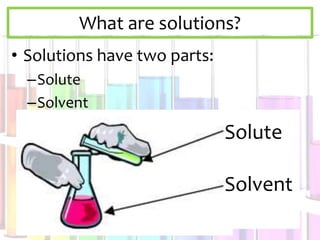
• Solutions have two parts:
–Solute
–Solvent
Solute
Solvent
What are solutes and solvents?
• The solute is the substance being
dissolved and it is always present in
smaller amounts
• The solvent is doing the dissolving
and is always present in larger
amounts
–AKA the dissolving agent
What are solutes and solvents?
• Example: Kool-Aid
• What is the solute?
–Kool-Aid Powder because it is being
dissolved and there is less of it
• What is the solvent?
–Water because it is doing the dissolving and
there is more of it
Solute + Solvent = Solution
What are the types of solutions?
• Solutions can be solid, liquid, or gas
based on the solvent’s state of matter
because there is more of it!
–Example: Air is a solution with the solvent
being nitrogen and solute being oxygen
because ~75% of air is nitrogen and ~24% of
air being oxygen
• Not all substances can form solutions!
• If a solid solute can dissolve in a liquid, it
is called soluble
–Kool-aid is soluble in water
What are the types of solutions?
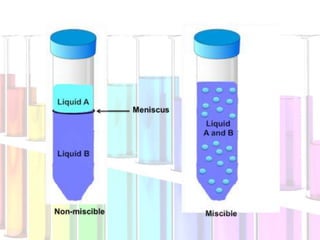
• If two liquids dissolve in each other they are
miscible
– Food coloring is miscible in water
• If a solid solute cannot dissolve in a liquid, it
is insoluble
– Sand is insoluble in water
• If two liquids cannot dissolve in each other,
they are immiscible
– Oil and water are immiscible
– Meniscus will be visible if two liquids are
immiscible!
What are the steps of solution formation?
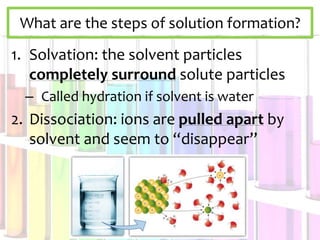
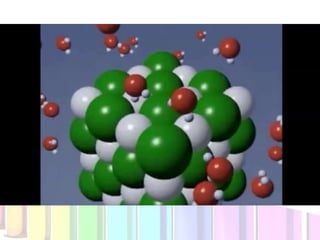
1. Solvation: the solvent particles
completely surround solute particles
– Called hydration if solvent is water
2. Dissociation: ions are pulled apart by
solvent and seem to “disappear”
How do we know if something is soluble?
• The substances involved in making a
solution are either polar or nonpolar
• If a substance is polar, it has regions
of opposite charge
–Ionic compounds are usually polar
How do we know if something is soluble?
• If a substance is nonpolar, it does not
have regions of opposite charge
–Covalent compounds are usually
nonpolar
• EXCEPTION: Water is covalent and
polar
• Nicknamed “universal solvent”
because of its unique solution
properties
Practice
• Are the following polar or nonpolar?
• NaCl
–Polar – Ionic
• KBr
–Polar – Ionic
• CH4
–Nonpolar – Covalent
How do we know if something is soluble?
• Rule: “Like Dissolves Like”
• Polar solvents dissolve polar solutes
• Nonpolar solvents dissolve nonpolar
solutes
• Polar solvents WILL NOT dissolve
nonpolar solutes

Solutions

  • 1.
  • 2.
    What are solutions? •Solutions are homogeneous mixtures –Look the same throughout • Combined physically (not chemically) • You CAN separate by physical means using filtration, distillation, or evaporation. • Examples: Cola, Gasoline, Cleaners
  • 3.
    What are solutions? •Solutions have two parts: –Solute –Solvent Solute Solvent
  • 4.
    What are solutesand solvents? • The solute is the substance being dissolved and it is always present in smaller amounts • The solvent is doing the dissolving and is always present in larger amounts –AKA the dissolving agent
  • 5.
    What are solutesand solvents? • Example: Kool-Aid • What is the solute? –Kool-Aid Powder because it is being dissolved and there is less of it • What is the solvent? –Water because it is doing the dissolving and there is more of it Solute + Solvent = Solution
  • 6.
    What are thetypes of solutions? • Solutions can be solid, liquid, or gas based on the solvent’s state of matter because there is more of it! –Example: Air is a solution with the solvent being nitrogen and solute being oxygen because ~75% of air is nitrogen and ~24% of air being oxygen • Not all substances can form solutions! • If a solid solute can dissolve in a liquid, it is called soluble –Kool-aid is soluble in water
  • 7.
    What are thetypes of solutions? • If two liquids dissolve in each other they are miscible – Food coloring is miscible in water • If a solid solute cannot dissolve in a liquid, it is insoluble – Sand is insoluble in water • If two liquids cannot dissolve in each other, they are immiscible – Oil and water are immiscible – Meniscus will be visible if two liquids are immiscible!
  • 9.
    What are thesteps of solution formation? 1. Solvation: the solvent particles completely surround solute particles – Called hydration if solvent is water 2. Dissociation: ions are pulled apart by solvent and seem to “disappear”
  • 11.
    How do weknow if something is soluble? • The substances involved in making a solution are either polar or nonpolar • If a substance is polar, it has regions of opposite charge –Ionic compounds are usually polar
  • 12.
    How do weknow if something is soluble? • If a substance is nonpolar, it does not have regions of opposite charge –Covalent compounds are usually nonpolar • EXCEPTION: Water is covalent and polar • Nicknamed “universal solvent” because of its unique solution properties
  • 13.
    Practice • Are thefollowing polar or nonpolar? • NaCl –Polar – Ionic • KBr –Polar – Ionic • CH4 –Nonpolar – Covalent
  • 14.
    How do weknow if something is soluble? • Rule: “Like Dissolves Like” • Polar solvents dissolve polar solutes • Nonpolar solvents dissolve nonpolar solutes • Polar solvents WILL NOT dissolve nonpolar solutes