II. Solutions and their properties A. Remember this from the 1 st   semester?!  1.  Mixtures - physical blends of 2 or    more kinds of matter each of which    retains its own  properties, 95% of    all things in the universe are    mixtures
a.  homogeneous mixture -  uniform in composition  1) ex: salt water, inks 2).  SOLUTIONS  are a uniform mix of  two or more substances which  are  NOT chemically   bonded  and  each component retains it  original identity and properties - ----usually in liquid form!
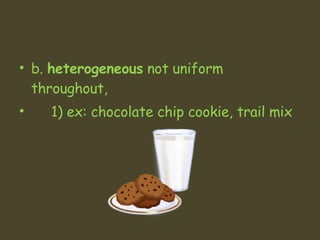
b.  heterogeneous  not uniform throughout,  1) ex: chocolate chip cookie, trail mix
B. Parts of a solution 1. A solution is a  mixture  of different substances that are evenly distributed throughout.  It can be between any two phases of matter.
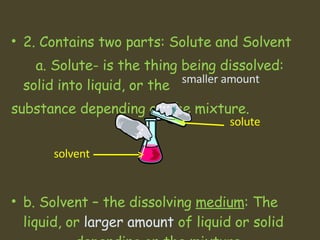
2. Contains two parts: Solute and Solvent   a. Solute- is the thing being dissolved:    solid into liquid, or the  substance depending on the mixture.  b. Solvent – the dissolving  medium : The  liquid, or  larger   amount  of liquid or solid  depending on the mixture. solute solvent smaller amount
Which is the solute in a mixture of 10 mL HCl and 90 mLWater?  The solute is the lesser amount so it’s the HCl!
C. Solutions are mixtures and depend on  particle  size. 1. Solutions- homogeneous mixtures where the particles are so small that they are not visible.  They can be  separated  by boiling but  not  by filters.    a.Ex. Salt water, Gatorade,  Vinegar.
2. Colloids - homogeneous mixtures with  intermediate sized particles – barely  visible but definitely there-  These  particles are  suspended , spread &  reflect light ( Tyndall effect ), and  can be separated by good filters.    a. Ex: Hair gel, Jello, and Foggy nights These are NOT solutions!!!
3. Suspensions- heterogeneous mixtures with larger particles easily separated and will settle out of solution if the  suspension  sits long enough.    a. Ex:  Muddy water, sand, blood. These are NOT solutions!!
.  Water and Electrolytes 1. Water is called the  universal   solvent  because of the large number of materials that dissolve in it.  The basis for this behavior is water’s polarity--- one end is slightly more negative & the other end is slightly more positive
2. Ionic solutes dissolve easiest in water- break apart into  ions.   a. Electrolytes are ionic compounds that break apart into ions  and conduct electricity.  1) Ex: salt, HCl  b. Non-electrolytes dissolve as  molecules  and  do not conduct electricity.   1)Ex:  Sugar, honey
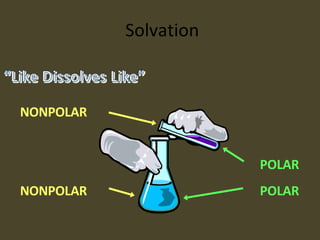
Like dissolves Like 3. Nonpolar or Covalent compounds typically do not dissolve in water.  Oils, paints, or grease don’t easily dissolve in water because they are so different from water
Solvation NONPOLAR NONPOLAR POLAR POLAR
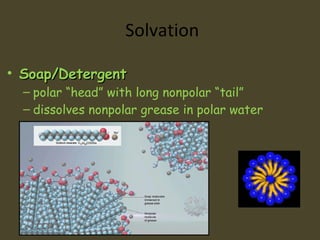
Solvation Soap/Detergent polar “head” with long nonpolar “tail” dissolves nonpolar grease in polar water

Notes Solubility2

  • 1.
    II. Solutions andtheir properties A. Remember this from the 1 st semester?! 1. Mixtures - physical blends of 2 or more kinds of matter each of which retains its own properties, 95% of all things in the universe are mixtures
  • 2.
    a. homogeneousmixture - uniform in composition 1) ex: salt water, inks 2). SOLUTIONS are a uniform mix of two or more substances which are NOT chemically bonded and each component retains it original identity and properties - ----usually in liquid form!
  • 3.
    b. heterogeneous not uniform throughout, 1) ex: chocolate chip cookie, trail mix
  • 4.
    B. Parts ofa solution 1. A solution is a mixture of different substances that are evenly distributed throughout. It can be between any two phases of matter.
  • 5.
    2. Contains twoparts: Solute and Solvent a. Solute- is the thing being dissolved: solid into liquid, or the substance depending on the mixture. b. Solvent – the dissolving medium : The liquid, or larger amount of liquid or solid depending on the mixture. solute solvent smaller amount
  • 6.
    Which is thesolute in a mixture of 10 mL HCl and 90 mLWater? The solute is the lesser amount so it’s the HCl!
  • 7.
    C. Solutions aremixtures and depend on particle size. 1. Solutions- homogeneous mixtures where the particles are so small that they are not visible. They can be separated by boiling but not by filters. a.Ex. Salt water, Gatorade, Vinegar.
  • 8.
    2. Colloids -homogeneous mixtures with intermediate sized particles – barely visible but definitely there- These particles are suspended , spread & reflect light ( Tyndall effect ), and can be separated by good filters. a. Ex: Hair gel, Jello, and Foggy nights These are NOT solutions!!!
  • 9.
    3. Suspensions- heterogeneousmixtures with larger particles easily separated and will settle out of solution if the suspension sits long enough. a. Ex: Muddy water, sand, blood. These are NOT solutions!!
  • 10.
    . Waterand Electrolytes 1. Water is called the universal solvent because of the large number of materials that dissolve in it. The basis for this behavior is water’s polarity--- one end is slightly more negative & the other end is slightly more positive
  • 11.
    2. Ionic solutesdissolve easiest in water- break apart into ions. a. Electrolytes are ionic compounds that break apart into ions and conduct electricity. 1) Ex: salt, HCl b. Non-electrolytes dissolve as molecules and do not conduct electricity. 1)Ex: Sugar, honey
  • 12.
    Like dissolves Like3. Nonpolar or Covalent compounds typically do not dissolve in water. Oils, paints, or grease don’t easily dissolve in water because they are so different from water
  • 13.
  • 14.
    Solvation Soap/Detergent polar“head” with long nonpolar “tail” dissolves nonpolar grease in polar water