BY
IBRAHIM SALEEM P
SOLID WASTE MANAGEMENT
“As useless, unwanted and
discarded materials coming from
production and consumption”
 Residential wastes
 Commercial wastes

 Municipal wastes
 Industrial wastes
 Agricultural wastes
 Hazardous wastes
It is defined as the discipline associated with the
control of generation, storage, collection, transfer,
transport, processing and disposal of solid wastes
in a manner that is in accord with best principles
of public health.
 To identify types of solid wastes and their sources
 To examine the physical and chemical
composition.
 To consider the elements involved in
management.
 To minimize the adverse environmental impacts
caused by the indiscriminate disposal of solid
wastes.
 Encompasses activities in which materials are
identified as no longer being of value and are
either thrown away or gathered together for
disposal.
Example: wrapping of candy bar
 Waste handling and separation involves the
activities associated with management of wastes
until they are placed in storage containers for
collection.
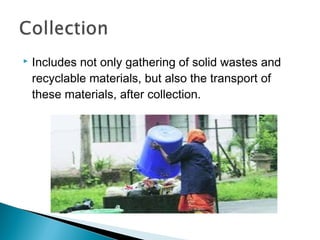
 Includes not only gathering of solid wastes and
recyclable materials, but also the transport of
these materials, after collection.
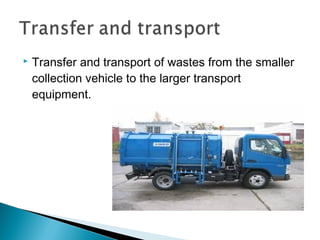
 Transfer and transport of wastes from the smaller
collection vehicle to the larger transport
equipment.
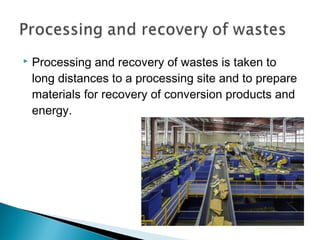
 Processing and recovery of wastes is taken to
long distances to a processing site and to prepare
materials for recovery of conversion products and
energy.
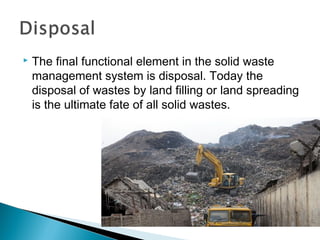
 The final functional element in the solid waste
management system is disposal. Today the
disposal of wastes by land filling or land spreading
is the ultimate fate of all solid wastes.
Factors influences:
 Geographic location
 Season of the year
 Population characteristics
 Legislation
 People’s attitude
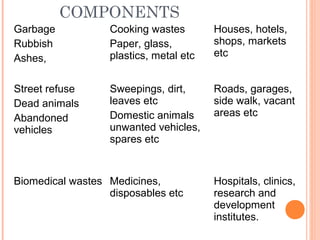
COMPONENTS
Garbage
Rubbish
Ashes,
Cooking wastes
Paper, glass,
plastics, metal etc
Houses, hotels,
shops, markets
etc
Street refuse
Dead animals
Abandoned
vehicles
Sweepings, dirt,
leaves etc
Domestic animals
unwanted vehicles,
spares etc
Roads, garages,
side walk, vacant
areas etc
Biomedical wastes Medicines,
disposables etc
Hospitals, clinics,
research and
development
institutes.
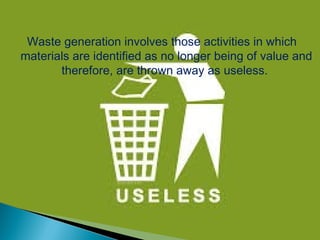
Waste generation involves those activities in which
materials are identified as no longer being of value and
therefore, are thrown away as useless.
It refers to the activities associated with handling,
storage and processing of solid wastes at or near
the point of generation until they are placed in
containers for storage before collection.
 Facilitates the collection process.
 Minimizes the collection process.
 Ensure maximum collection of solid wastes
generated.
 Discourage throwing of wastes indiscriminately in
the streets.
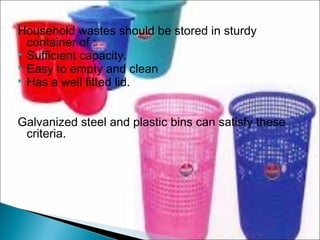
Household wastes should be stored in sturdy
container of :
 Sufficient capacity.
 Easy to empty and clean
 Has a well fitted lid.
Galvanized steel and plastic bins can satisfy these
criteria.
Problems:
 The provision of too few containers of insufficient
capacity.
 Inappropriate locating of containers.
 Containers are usually open, giving access to
rats, flies and animals, which is undesirable for
both hygienic and aesthetic reasons.
It is difficult and complex
occurrences in variety of places
High cost of fuel & labor
60-80% of cost only for collection
 In this system householders carry their wastes to
solid waste bins situated at specific location, solid
waste collection trucks visits these location at
regular intervals and collect and transport the
accumulated wastes to treatment or disposal
sites.
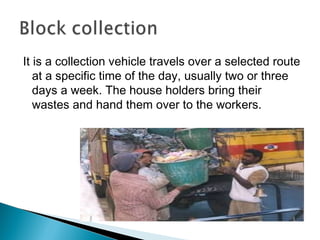
It is a collection vehicle travels over a selected route
at a specific time of the day, usually two or three
days a week. The house holders bring their
wastes and hand them over to the workers.
House holders leave the wastes in containers or
disposal bags on the footpath on pre-selected
days according to a collection schedule.
Succeeds only if well organized regular service is
provided
 The house holders store wastes in a bin, basket or
bag within their house premises.
Workers collect bin, basket or bag, empty it into the
collection vehicle and return container to
premises.
 To improve the efficiency of (swm) system.
 To recover useable material.
 To recover conversion products and energy.
 Mechanical volume reduction (compaction).
 Chemical volume reduction (incineration).
 Component separation (manual &mechanical).
 Mechanical size reduction (shredding).
 Moisture content reduction (drying & dewatering).
 By material separation
 By material conversion
 Physical treatment
 Chemical treatment
Neutralization
Chemical oxidation
reduction
 Dumping
 Burrying
 Burning
 composting
 Availability of land
 Distance & cost
 Soil condition & topography
 Climate condition
 Geological condition
 Noise, odour, dust &vector control
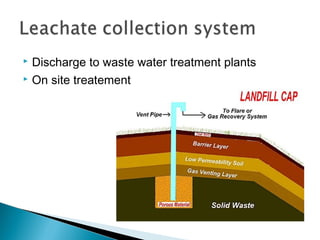
 Discharge to waste water treatment plants
 On site treatement
 Methane & carbon dioxide by organic matter
 Active and passive collection of gas for heat &
electricity
 Incineration
Controlled burning at high temp(i.e 850p C) in
presence of air
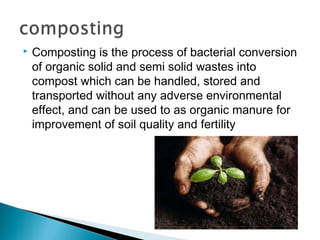
 Composting is the process of bacterial conversion
of organic solid and semi solid wastes into
compost which can be handled, stored and
transported without any adverse environmental
effect, and can be used to as organic manure for
improvement of soil quality and fertility
 Windrow composting
control parameter:
Moisture
Temperature
Ph
Oxygen
Carbon-Nitrogen ratio
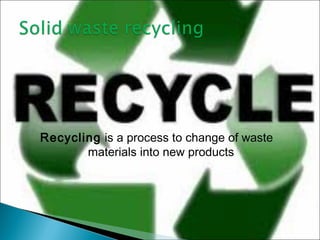
Recycling is a process to change of waste
materials into new products
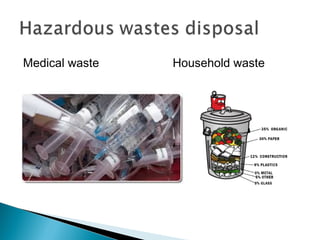
Medical waste Household waste
 Due to advancement in technology
 Changes in fashion
 Style
 Status
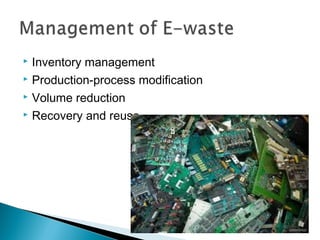
 Inventory management
 Production-process modification
 Volume reduction
 Recovery and reuse
Government
Industries
citizen
Solid waste management

Solid waste management

  • 1.
    BY IBRAHIM SALEEM P SOLIDWASTE MANAGEMENT
  • 2.
    “As useless, unwantedand discarded materials coming from production and consumption”
  • 3.
     Residential wastes Commercial wastes  Municipal wastes  Industrial wastes  Agricultural wastes  Hazardous wastes
  • 4.
    It is definedas the discipline associated with the control of generation, storage, collection, transfer, transport, processing and disposal of solid wastes in a manner that is in accord with best principles of public health.
  • 5.
     To identifytypes of solid wastes and their sources  To examine the physical and chemical composition.  To consider the elements involved in management.  To minimize the adverse environmental impacts caused by the indiscriminate disposal of solid wastes.
  • 6.
     Encompasses activitiesin which materials are identified as no longer being of value and are either thrown away or gathered together for disposal. Example: wrapping of candy bar
  • 7.
     Waste handlingand separation involves the activities associated with management of wastes until they are placed in storage containers for collection.
  • 8.
     Includes notonly gathering of solid wastes and recyclable materials, but also the transport of these materials, after collection.
  • 9.
     Transfer andtransport of wastes from the smaller collection vehicle to the larger transport equipment.
  • 10.
     Processing andrecovery of wastes is taken to long distances to a processing site and to prepare materials for recovery of conversion products and energy.
  • 11.
     The finalfunctional element in the solid waste management system is disposal. Today the disposal of wastes by land filling or land spreading is the ultimate fate of all solid wastes.
  • 12.
    Factors influences:  Geographiclocation  Season of the year  Population characteristics  Legislation  People’s attitude
  • 13.
    COMPONENTS Garbage Rubbish Ashes, Cooking wastes Paper, glass, plastics,metal etc Houses, hotels, shops, markets etc Street refuse Dead animals Abandoned vehicles Sweepings, dirt, leaves etc Domestic animals unwanted vehicles, spares etc Roads, garages, side walk, vacant areas etc Biomedical wastes Medicines, disposables etc Hospitals, clinics, research and development institutes.
  • 14.
    Waste generation involvesthose activities in which materials are identified as no longer being of value and therefore, are thrown away as useless.
  • 15.
    It refers tothe activities associated with handling, storage and processing of solid wastes at or near the point of generation until they are placed in containers for storage before collection.
  • 16.
     Facilitates thecollection process.  Minimizes the collection process.  Ensure maximum collection of solid wastes generated.  Discourage throwing of wastes indiscriminately in the streets.
  • 17.
    Household wastes shouldbe stored in sturdy container of :  Sufficient capacity.  Easy to empty and clean  Has a well fitted lid. Galvanized steel and plastic bins can satisfy these criteria.
  • 18.
    Problems:  The provisionof too few containers of insufficient capacity.  Inappropriate locating of containers.  Containers are usually open, giving access to rats, flies and animals, which is undesirable for both hygienic and aesthetic reasons.
  • 19.
    It is difficultand complex occurrences in variety of places High cost of fuel & labor 60-80% of cost only for collection
  • 20.
     In thissystem householders carry their wastes to solid waste bins situated at specific location, solid waste collection trucks visits these location at regular intervals and collect and transport the accumulated wastes to treatment or disposal sites.
  • 21.
    It is acollection vehicle travels over a selected route at a specific time of the day, usually two or three days a week. The house holders bring their wastes and hand them over to the workers.
  • 22.
    House holders leavethe wastes in containers or disposal bags on the footpath on pre-selected days according to a collection schedule. Succeeds only if well organized regular service is provided
  • 23.
     The householders store wastes in a bin, basket or bag within their house premises. Workers collect bin, basket or bag, empty it into the collection vehicle and return container to premises.
  • 24.
     To improvethe efficiency of (swm) system.  To recover useable material.  To recover conversion products and energy.
  • 25.
     Mechanical volumereduction (compaction).  Chemical volume reduction (incineration).  Component separation (manual &mechanical).  Mechanical size reduction (shredding).  Moisture content reduction (drying & dewatering).
  • 26.
     By materialseparation  By material conversion
  • 27.
     Physical treatment Chemical treatment Neutralization Chemical oxidation reduction
  • 28.
     Dumping  Burrying Burning  composting
  • 29.
     Availability ofland  Distance & cost  Soil condition & topography  Climate condition  Geological condition  Noise, odour, dust &vector control
  • 30.
     Discharge towaste water treatment plants  On site treatement
  • 31.
     Methane &carbon dioxide by organic matter  Active and passive collection of gas for heat & electricity  Incineration Controlled burning at high temp(i.e 850p C) in presence of air
  • 32.
     Composting isthe process of bacterial conversion of organic solid and semi solid wastes into compost which can be handled, stored and transported without any adverse environmental effect, and can be used to as organic manure for improvement of soil quality and fertility
  • 33.
     Windrow composting controlparameter: Moisture Temperature Ph Oxygen Carbon-Nitrogen ratio
  • 34.
    Recycling is a processto change of waste materials into new products
  • 35.
  • 36.
     Due toadvancement in technology  Changes in fashion  Style  Status
  • 37.
     Inventory management Production-process modification  Volume reduction  Recovery and reuse
  • 38.