presented by :-
RIYAJ SAYYAD BASHINDE
Third year, Department of CIVIL Engineering
Kolhapur Institute of Technology’s College of Engineering, Kolhapur
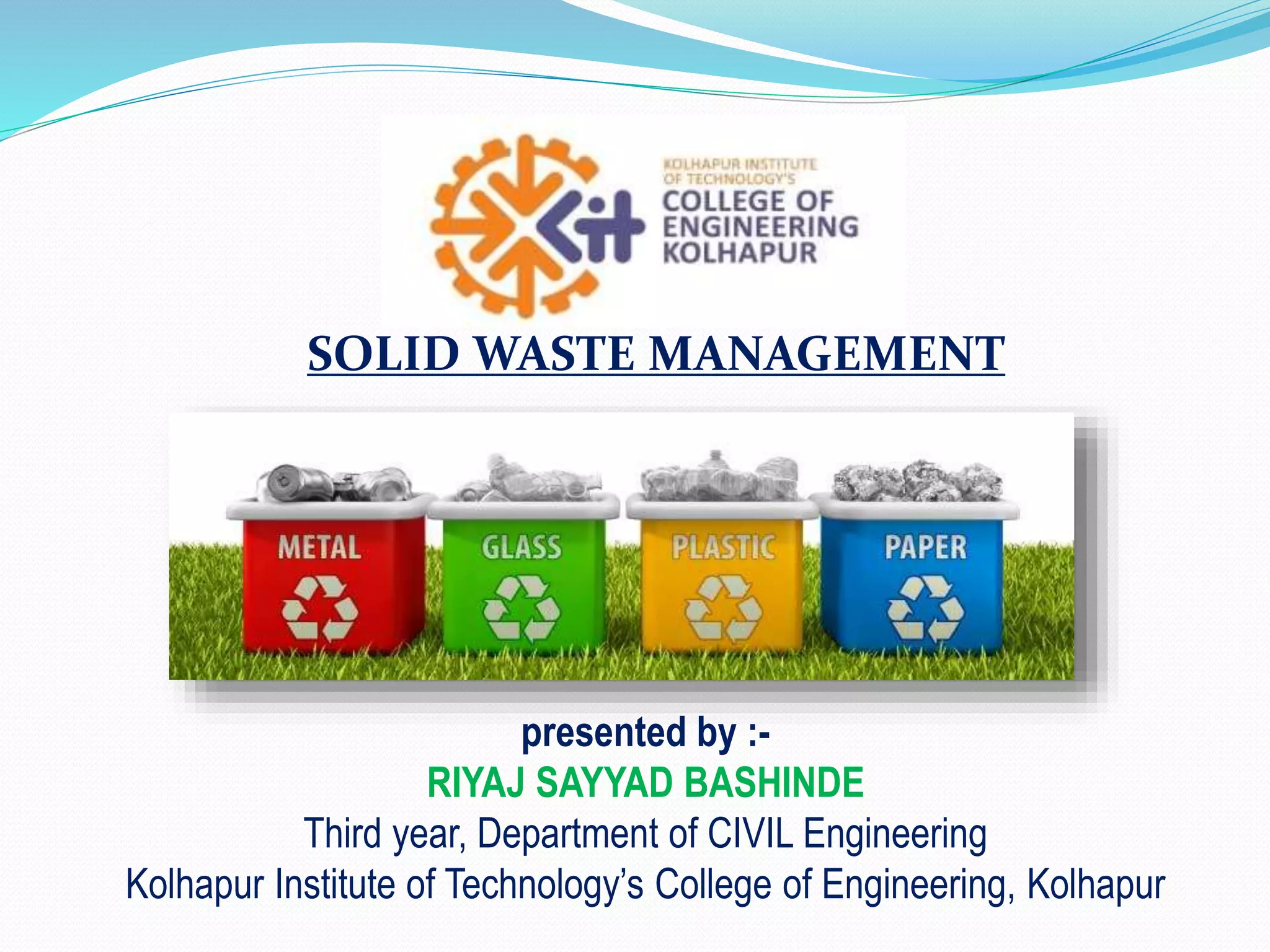
SOLID WASTE MANAGEMENT
CONTENT:
 What is solid waste?
 Sources of wastes
 Collection of solid waste
 Types of solid waste
 What is SWM?
 Objectives of SWM
 Methods of SWM
 Case study on SWM
 Conclusion
 Reference
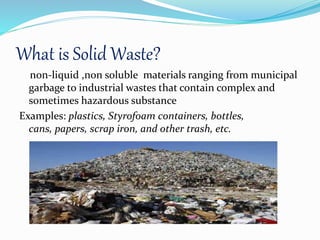
What is Solid Waste?
non-liquid ,non soluble materials ranging from municipal
garbage to industrial wastes that contain complex and
sometimes hazardous substance
Examples: plastics, Styrofoam containers, bottles,
cans, papers, scrap iron, and other trash, etc.
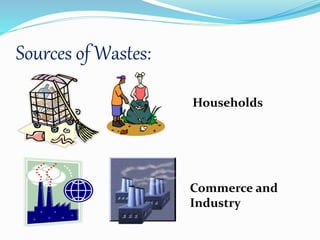
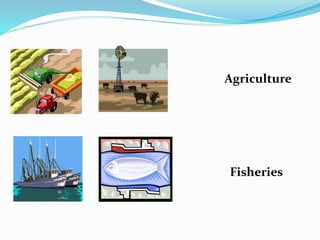
Sources of Wastes:
Households
Commerce and
Industry
Agriculture
Fisheries
Collection of solid waste:
 Collection of waste includes gathering the waste,
transporting to a centralized location and then
moving it to site of disposal
 Then collected waste is the separated.
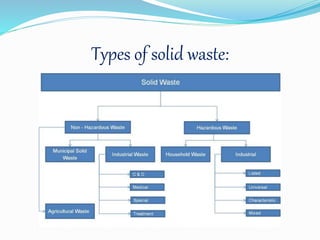
Types of solid waste:
Hazardous waste:
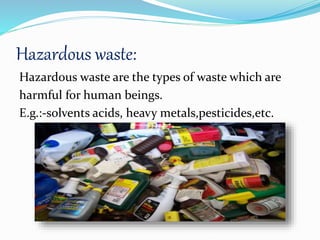
Hazardous waste are the types of waste which are
harmful for human beings.
E.g.:-solvents acids, heavy metals,pesticides,etc.
Non-Hazardous waste:
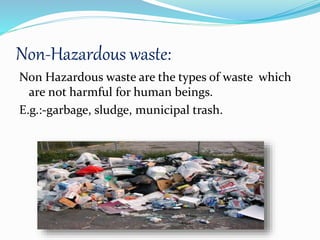
Non Hazardous waste are the types of waste which
are not harmful for human beings.
E.g.:-garbage, sludge, municipal trash.
What is meant by solid waste
management?
Solid Waste management is the
"generation, prevention, characterization,
monitoring, treatment, handling, reuse and
residual disposition of solid wastes".
SOLID WASTE MANAGEMENT-Objectives
 Public hygiene and health
 Reuse ,Recovery and Recycle
 Energy generation
 Sustainable development
 Aesthetics
Methods of solid waste management:
• LAND FILL
• INCINERATION
• COMPACTION:
• PYROLYSIS:-
• The 3 R’s
1.LAND FILL:
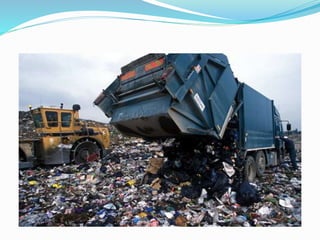
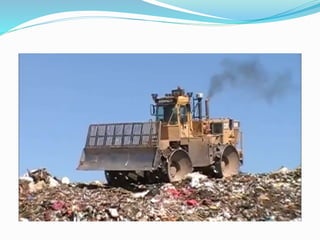
 It is the most traditional method of waste disposal.
 Waste is directly dumped into disused quarries,
mining voids or borrow pits.
 Disposed waste is compacted and covered with soil
 Gases generated by the decomposing waste
materials are often burnt to generate power.
 It is generally used for domestic waste.
2. INCINERATION:
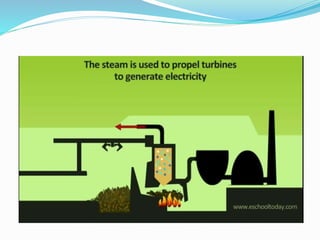
 Incineration is a waste treatment process that
involves the combustion of solid waste at 1000C.
 waste materials are converted into ash, flue gas,
and heat.
 The ash is mostly formed by the inorganic
constituents of the waste and gases due to organic
waste.
 the heat generated by incineration is used to
generate electric power.
3.COMPACTION:
 The waste is compacted or compressed. It also

breaks up large or fragile items of waste.
 This process is conspicuous in the feed at the back
end of many garbage collection vehicles. Deposit
refuse at bottom of slope for best compaction and
control of blowing litter.
4.PYROLYSIS:
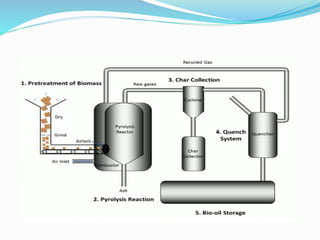
 Pyrolysis is defined as thermal degradation of
waste in the absence of air to produce char,
pyrolysis oil and syngas, e.g. the conversion of
wood to charcoal also it is defined as destructive
distillation of waste in the absence of oxygen.
External source of heat is employed in this process.
5.The 3 R’s:
 REDUCE
 REUSE
 RECYCLE
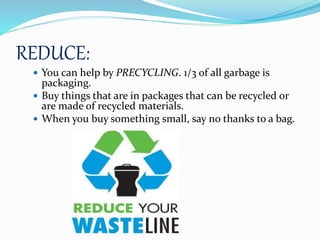
REDUCE:
 You can help by PRECYCLING. 1/3 of all garbage is
packaging.
 Buy things that are in packages that can be recycled or
are made of recycled materials.
 When you buy something small, say no thanks to a bag.
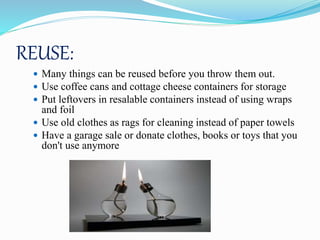
REUSE:
 Many things can be reused before you throw them out.
 Use coffee cans and cottage cheese containers for storage
 Put leftovers in resalable containers instead of using wraps
and foil
 Use old clothes as rags for cleaning instead of paper towels
 Have a garage sale or donate clothes, books or toys that you
don't use anymore
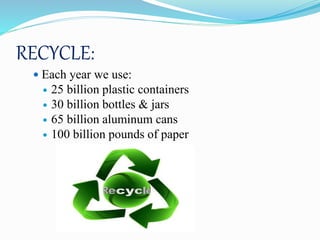
RECYCLE:
 Each year we use:
 25 billion plastic containers
 30 billion bottles & jars
 65 billion aluminum cans
 100 billion pounds of paper
Case study
 Location: Solid waste management in Mumbai,
Maharashtra
 Capital of Maharashtra
 Greater Mumbai consist of ‘island city’ and
suburbs;area:437.71 sq km (MCGM 2013);under
single municipal administration
General profile:
 Population of city around 12 mn
 41.3% of total urban households live in slums
 Climate :moderately hot ,humid almost through
the year
Waste collection:
 Agency in charge is MCGM or BMC
 Garbage generated in 2012-2013 is 9200 metric ton
 Street Sweeping – 100% street cleaning in 1 or 2 shifts
(67% by municipal staff and 33% roads by private
contractors)
 Collection 83% through collection bins and 13% house-
to-house collection (Source: MCGM)
 Frequency :
 1396 number of trips each day. (MCGM
Waste Collection Pilot schemes:
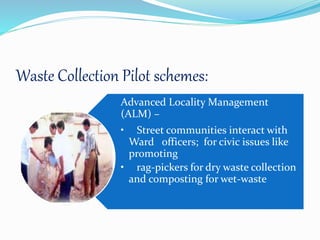
Advanced Locality Management
(ALM) –
• Street communities interact with
Ward officers; for civic issues like
promoting
• rag-pickers for dry waste collection
and composting for wet-waste
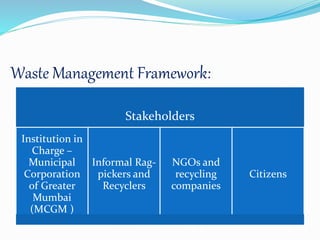
Waste Management Framework:
Stakeholders
Institution in
Charge –
Municipal
Corporation
of Greater
Mumbai
(MCGM )
Informal Rag-
pickers and
Recyclers
NGOs and
recycling
companies
Citizens
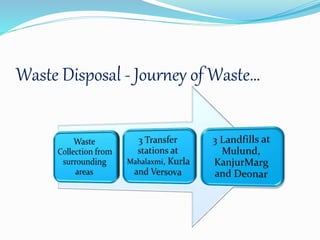
Waste Disposal - Journey of Waste…
Methods of landfill
 Area method
 Trench method
 Open pit method
 Canyon method.
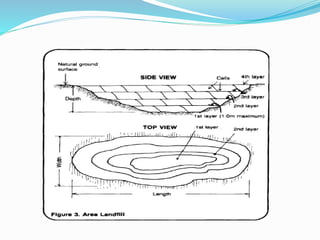
Area method
The area method is used when the terrain is unsuitable for
excavation.
The filling operation usually is started by building an
earthen levee against which wastes are compacted and
placed in thin layers.
At the end of each days operation a 150-300 mm of layer of
cover material is placed over the completed landfill.
A completed lift, including the cover material is called a
cell
CONCLUSION:
 Solid Waste Management is one of the important
functions of urban local bodies.
 It is observed that lack of financial resources,
institutional weakness, improper selection of
technology, transportation systems and disposal
options are making this problem even worse.
 Increase in population has increased all sorts of
demands leading to formation of wastes.
 If ignored, this problem may lead serious hazards and
hence this topic is burning issue.
REFERENCE:
 https://www.wikipedia.org/
 http://www.mcgm.gov.in/irj/portal/anonymous/ql
cleanover
 Solid Waste Management: Types, Sources, Effects
and Methods of Solid Waste Management;by Puja
Mondal
 SOLID WASTE MANAGEMENT; P. U. Asnani
 Waste disposal and landfill: Information needs; R.
Taylor and A. Allen
Thank you

solid waste management

  • 1.
    presented by :- RIYAJSAYYAD BASHINDE Third year, Department of CIVIL Engineering Kolhapur Institute of Technology’s College of Engineering, Kolhapur SOLID WASTE MANAGEMENT
  • 2.
    CONTENT:  What issolid waste?  Sources of wastes  Collection of solid waste  Types of solid waste  What is SWM?  Objectives of SWM  Methods of SWM  Case study on SWM  Conclusion  Reference
  • 3.
    What is SolidWaste? non-liquid ,non soluble materials ranging from municipal garbage to industrial wastes that contain complex and sometimes hazardous substance Examples: plastics, Styrofoam containers, bottles, cans, papers, scrap iron, and other trash, etc.
  • 4.
  • 5.
  • 6.
    Collection of solidwaste:  Collection of waste includes gathering the waste, transporting to a centralized location and then moving it to site of disposal  Then collected waste is the separated.
  • 7.
  • 8.
    Hazardous waste: Hazardous wasteare the types of waste which are harmful for human beings. E.g.:-solvents acids, heavy metals,pesticides,etc.
  • 9.
    Non-Hazardous waste: Non Hazardouswaste are the types of waste which are not harmful for human beings. E.g.:-garbage, sludge, municipal trash.
  • 10.
    What is meantby solid waste management? Solid Waste management is the "generation, prevention, characterization, monitoring, treatment, handling, reuse and residual disposition of solid wastes".
  • 11.
    SOLID WASTE MANAGEMENT-Objectives Public hygiene and health  Reuse ,Recovery and Recycle  Energy generation  Sustainable development  Aesthetics
  • 12.
    Methods of solidwaste management: • LAND FILL • INCINERATION • COMPACTION: • PYROLYSIS:- • The 3 R’s
  • 13.
    1.LAND FILL:  Itis the most traditional method of waste disposal.  Waste is directly dumped into disused quarries, mining voids or borrow pits.  Disposed waste is compacted and covered with soil  Gases generated by the decomposing waste materials are often burnt to generate power.  It is generally used for domestic waste.
  • 15.
    2. INCINERATION:  Incinerationis a waste treatment process that involves the combustion of solid waste at 1000C.  waste materials are converted into ash, flue gas, and heat.  The ash is mostly formed by the inorganic constituents of the waste and gases due to organic waste.  the heat generated by incineration is used to generate electric power.
  • 17.
    3.COMPACTION:  The wasteis compacted or compressed. It also breaks up large or fragile items of waste.  This process is conspicuous in the feed at the back end of many garbage collection vehicles. Deposit refuse at bottom of slope for best compaction and control of blowing litter.
  • 19.
    4.PYROLYSIS:  Pyrolysis isdefined as thermal degradation of waste in the absence of air to produce char, pyrolysis oil and syngas, e.g. the conversion of wood to charcoal also it is defined as destructive distillation of waste in the absence of oxygen. External source of heat is employed in this process.
  • 21.
    5.The 3 R’s: REDUCE  REUSE  RECYCLE
  • 22.
    REDUCE:  You canhelp by PRECYCLING. 1/3 of all garbage is packaging.  Buy things that are in packages that can be recycled or are made of recycled materials.  When you buy something small, say no thanks to a bag.
  • 23.
    REUSE:  Many thingscan be reused before you throw them out.  Use coffee cans and cottage cheese containers for storage  Put leftovers in resalable containers instead of using wraps and foil  Use old clothes as rags for cleaning instead of paper towels  Have a garage sale or donate clothes, books or toys that you don't use anymore
  • 24.
    RECYCLE:  Each yearwe use:  25 billion plastic containers  30 billion bottles & jars  65 billion aluminum cans  100 billion pounds of paper
  • 25.
    Case study  Location:Solid waste management in Mumbai, Maharashtra  Capital of Maharashtra  Greater Mumbai consist of ‘island city’ and suburbs;area:437.71 sq km (MCGM 2013);under single municipal administration
  • 26.
    General profile:  Populationof city around 12 mn  41.3% of total urban households live in slums  Climate :moderately hot ,humid almost through the year
  • 27.
    Waste collection:  Agencyin charge is MCGM or BMC  Garbage generated in 2012-2013 is 9200 metric ton  Street Sweeping – 100% street cleaning in 1 or 2 shifts (67% by municipal staff and 33% roads by private contractors)  Collection 83% through collection bins and 13% house- to-house collection (Source: MCGM)  Frequency :  1396 number of trips each day. (MCGM
  • 28.
    Waste Collection Pilotschemes: Advanced Locality Management (ALM) – • Street communities interact with Ward officers; for civic issues like promoting • rag-pickers for dry waste collection and composting for wet-waste
  • 29.
    Waste Management Framework: Stakeholders Institutionin Charge – Municipal Corporation of Greater Mumbai (MCGM ) Informal Rag- pickers and Recyclers NGOs and recycling companies Citizens
  • 30.
    Waste Disposal -Journey of Waste…
  • 31.
    Methods of landfill Area method  Trench method  Open pit method  Canyon method.
  • 32.
    Area method The areamethod is used when the terrain is unsuitable for excavation. The filling operation usually is started by building an earthen levee against which wastes are compacted and placed in thin layers. At the end of each days operation a 150-300 mm of layer of cover material is placed over the completed landfill. A completed lift, including the cover material is called a cell
  • 34.
    CONCLUSION:  Solid WasteManagement is one of the important functions of urban local bodies.  It is observed that lack of financial resources, institutional weakness, improper selection of technology, transportation systems and disposal options are making this problem even worse.  Increase in population has increased all sorts of demands leading to formation of wastes.  If ignored, this problem may lead serious hazards and hence this topic is burning issue.
  • 35.
    REFERENCE:  https://www.wikipedia.org/  http://www.mcgm.gov.in/irj/portal/anonymous/ql cleanover Solid Waste Management: Types, Sources, Effects and Methods of Solid Waste Management;by Puja Mondal  SOLID WASTE MANAGEMENT; P. U. Asnani  Waste disposal and landfill: Information needs; R. Taylor and A. Allen
  • 36.