HAZARDOUS WASTE
MANAGEMENT
1.Khairnar Pavan
2.Kahar Anirudha
3.Lokhande Pramod
4.Navle Ravindra
Guided by-
Mr.Ganesh Kavle
Mr.Saurabh Shukla
Ms.Kalyani Kothule
1.Introduction
2.Types of hazardous waste
i]Reactive wastes
ii]Ignitable wastes
iii]Medical waste
iv]Radioactive waste
v]Corrosive waste
3.Characteristics of hazardous waste
i]Ignitability
ii]Corrosivity
iii]Reactivity
iv]Toxicity
4.Management of hazardous waste
i]Management of reactive waste
ii]Management of ignitable waste
iii]Management of radioactive waste
iv]Management of corrosive waste
v]Management of medical waste
5.Conclusion
Introduction
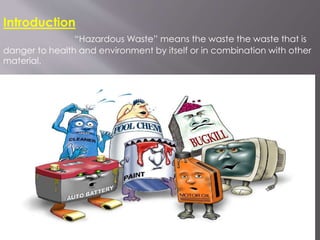
“Hazardous Waste” means the waste the waste that is
danger to health and environment by itself or in combination with other
material.
Types of hazardous waste
i]Reactive wastes
ii]Ignitable wastes
iii]Medical waste
iv]Radioactive waste
v]Corrosive waste
1.Reactive wastes-
This wastes are unstable and tend to react vigorously
with air and water and other substances.
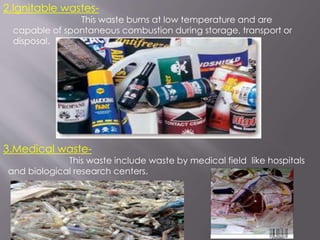
2.Ignitable wastes-
This waste burns at low temperature and are
capable of spontaneous combustion during storage, transport or
disposal.
3.Medical waste-
This waste include waste by medical field like hospitals
and biological research centers.
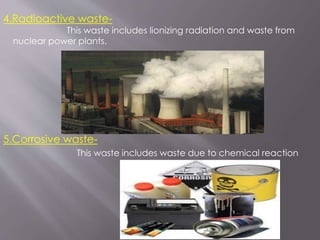
4.Radioactive waste-
This waste includes lionizing radiation and waste from
nuclear power plants.
5.Corrosive waste-
This waste includes waste due to chemical reaction
Characteristics of hazardous waste-
i]Ignitability
ii]CorrosivitySSDSFDF
iii]Reactivity
iv]Toxicity
1.Ignitability-
This characteristic of hazardous waste is due to fires
under certain condition.
2.Corrosivity-
The characteristic of hazardous waste due to high
alkaline or acidic waste.
3.Reactivity-
This characteristic gives unstable property to
waste.
4.Toxicity-
It is the degree which substance can damage an
Management of Hazardous Waste
i]Management of reactive waste
ii]Management of ignitable waste
iii]Management of radioactive waste
v]Management of corrosive waste
v]Management of medical waste
Management of medical waste
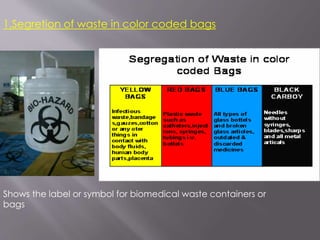
1.Segretion of waste in color coded bags
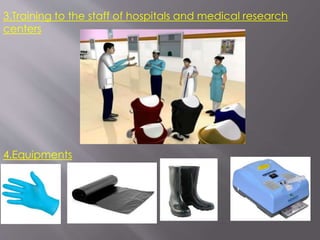
2.Training to the staff of hospitals and medical research centers
3.Equipments
1.Segretion of waste in color coded bags
Shows the label or symbol for biomedical waste containers or
bags
3.Training to the staff of hospitals and medical research
centers
4.Equipments
Management of Radioactive Waste
i]Ocean dumping
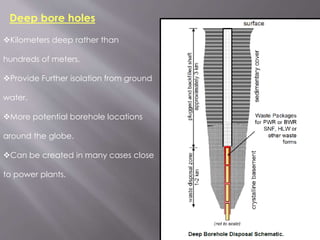
Kilometers deep rather than
hundreds of meters.
Provide Further isolation from ground
water.
More potential borehole locations
around the globe.
Can be created in many cases close
to power plants.
Deep bore holes
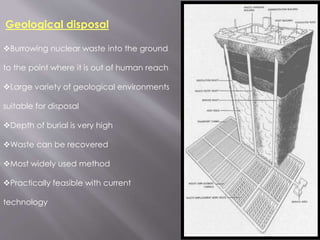
Burrowing nuclear waste into the ground
to the point where it is out of human reach
Large variety of geological environments
suitable for disposal
Depth of burial is very high
Waste can be recovered
Most widely used method
Practically feasible with current
technology
Geological disposal
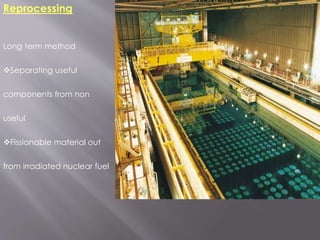
Long term method
Separating useful
components from non
useful
Fissionable material out
from irradiated nuclear fuel
Reprocessing
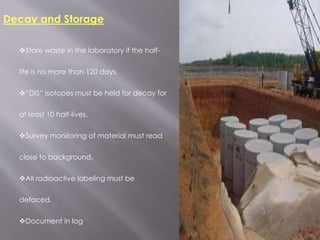
Decay and Storage
Store waste in the laboratory if the half-
life is no more than 120 days.
“DIS” Isotopes must be held for decay for
at least 10 half-lives.
Survey monitoring of material must read
close to background.
All radioactive labeling must be
defaced.
Document in log
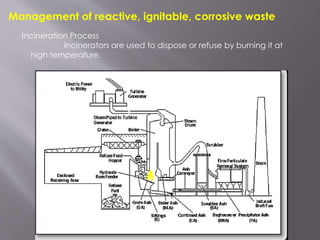
Management of reactive, ignitable, corrosive waste
Incineration Process
Incinerators are used to dispose or refuse by burning it at
high temperature.
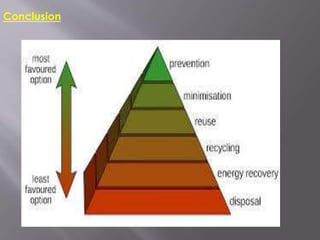
Conclusion
Any Questions

Hazardous waste managment

  • 1.
    HAZARDOUS WASTE MANAGEMENT 1.Khairnar Pavan 2.KaharAnirudha 3.Lokhande Pramod 4.Navle Ravindra Guided by- Mr.Ganesh Kavle Mr.Saurabh Shukla Ms.Kalyani Kothule
  • 2.
    1.Introduction 2.Types of hazardouswaste i]Reactive wastes ii]Ignitable wastes iii]Medical waste iv]Radioactive waste v]Corrosive waste 3.Characteristics of hazardous waste i]Ignitability ii]Corrosivity iii]Reactivity iv]Toxicity 4.Management of hazardous waste i]Management of reactive waste ii]Management of ignitable waste iii]Management of radioactive waste iv]Management of corrosive waste v]Management of medical waste 5.Conclusion
  • 3.
    Introduction “Hazardous Waste” meansthe waste the waste that is danger to health and environment by itself or in combination with other material.
  • 4.
    Types of hazardouswaste i]Reactive wastes ii]Ignitable wastes iii]Medical waste iv]Radioactive waste v]Corrosive waste 1.Reactive wastes- This wastes are unstable and tend to react vigorously with air and water and other substances.
  • 5.
    2.Ignitable wastes- This wasteburns at low temperature and are capable of spontaneous combustion during storage, transport or disposal. 3.Medical waste- This waste include waste by medical field like hospitals and biological research centers.
  • 6.
    4.Radioactive waste- This wasteincludes lionizing radiation and waste from nuclear power plants. 5.Corrosive waste- This waste includes waste due to chemical reaction
  • 7.
    Characteristics of hazardouswaste- i]Ignitability ii]CorrosivitySSDSFDF iii]Reactivity iv]Toxicity 1.Ignitability- This characteristic of hazardous waste is due to fires under certain condition. 2.Corrosivity- The characteristic of hazardous waste due to high alkaline or acidic waste. 3.Reactivity- This characteristic gives unstable property to waste. 4.Toxicity- It is the degree which substance can damage an
  • 8.
    Management of HazardousWaste i]Management of reactive waste ii]Management of ignitable waste iii]Management of radioactive waste v]Management of corrosive waste v]Management of medical waste Management of medical waste 1.Segretion of waste in color coded bags 2.Training to the staff of hospitals and medical research centers 3.Equipments
  • 9.
    1.Segretion of wastein color coded bags Shows the label or symbol for biomedical waste containers or bags
  • 10.
    3.Training to thestaff of hospitals and medical research centers 4.Equipments
  • 11.
    Management of RadioactiveWaste i]Ocean dumping
  • 12.
    Kilometers deep ratherthan hundreds of meters. Provide Further isolation from ground water. More potential borehole locations around the globe. Can be created in many cases close to power plants. Deep bore holes
  • 13.
    Burrowing nuclear wasteinto the ground to the point where it is out of human reach Large variety of geological environments suitable for disposal Depth of burial is very high Waste can be recovered Most widely used method Practically feasible with current technology Geological disposal
  • 14.
    Long term method Separatinguseful components from non useful Fissionable material out from irradiated nuclear fuel Reprocessing
  • 15.
    Decay and Storage Storewaste in the laboratory if the half- life is no more than 120 days. “DIS” Isotopes must be held for decay for at least 10 half-lives. Survey monitoring of material must read close to background. All radioactive labeling must be defaced. Document in log
  • 16.
    Management of reactive,ignitable, corrosive waste Incineration Process Incinerators are used to dispose or refuse by burning it at high temperature.
  • 17.
  • 18.

Editor's Notes