Solid waste bio-methanation plants
Dr. Akepati S. Reddy
Professor, School of Energy and Environment
Thapar University, Patiala
Punjab (INDIA) – 147 004
Composition of Municipal Solid Waste
Anaerobic Digestion/Bio-methanation
• Stabilization of putrifiable fraction of the biodegradable waste
is the primary objective
– Bio-methanation (biogas generation) is just a secondary objective
• We usually have two types of biodegradable wastes for
anaerobic digestion/Bio-methanation
– Waste with <15% consistency: Animal manures and night soil; ETP
and STP sludges; Industrial organic sludges and solid wastes
– Waste with >10% consistency: Municipal solid waste, food waste,
etc., and Horticultural waste, and parks and garden waste
• Anaerobic wet digesters and Anaerobic dry digesters are used
• In anaerobic wet digesters, the substrate moves around the
digester as a liquid slurry of 3-15% consistency
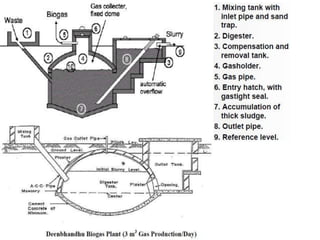
– Fixed dome (Janta/Deenbandu) and floating dome (KVIC)
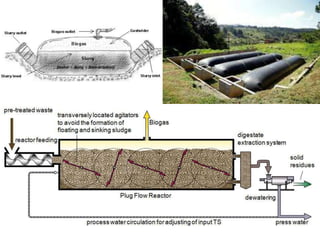
digesters; Bag digesters - Plastic digesters - Plug flow digesters
– Anaerobic high rate digesters: BIMA digesters – egg shaped
digesters – conventional German design
Anaerobic Digestion/Bio-methanation
• In anaerobic dry digesters, the substrate is kept stacked/piled
- liquid is moved around and usually a separate methanization
digester is used
– Anaerobic membrane bioreactor (An MBR): Multi-phased
digestion (hydrolysis - methanogenesis steps) with inter-stage
solids separation
• Biomethanation may need conversion of input feed material
into slurry and require water
– May generate pre-processing rejects (screenings of the slurry)
• Biomethanation generates biogas and also digestate
– Biogas collection, storage, upgradation, and use/disposal
(flaring) –Cooking fuel (BioCNG!); fuel in boilers, IC engines, gas
turbines; fuel in fuel cells (after reforming!)
– Digestate needs separation of solids from the liquid portion
– Liquid portion needs proper treatment prior to disposal
Anaerobic Digestion/Treatment
• Anaerobic digestion is considered to include
– Acidogenesis stage (by bacteria or acid formers)
• Hydrolysis stage (suspended and colloidal organic matter
and polymeric organic matter by exoenzymes)
• Acidogenesis (fermentative bacteria/ acid formers produce
VFA)
• Acetogenesis (H2 producing acetogens and homo acetogens
produce actic acid, hydrogen and carbon dioxide)
– Archeae (methanogenesis) stage
• Hydrogenotrophic and acetotrophic methanogens produce
methane from acetate, hydrogen and CO2
• Dynamic and stable balance between acid formers and
methane formers should be established and maintained in
the digester
Anaerobic Digestion/Treatment
• Methane formers
– obligate anaerobes
– Temperature should be at 30-38°C and temperature variations
should be <1°C/day
– Mixing of the digester contents is important
– pH should be in 6.8-7.2 range
• Acid formers
– Optimal pH range is 5.5-6.5;
– Lower pH causes accumulation of VFA and H2
– Higher partial pressure of H2 severely inhibits propionic acid
transforming bacteria
– Accumulation of higher VFA (propionic, butyric, etc.) further
drops the pH
• Nutrients (macronutrients: nitrogen, phosphorus and sulfur;
Trace metals: iron, zinc, cobalt, nickel and selenium) are
needed
Anaerobic Treatment Process
Homoacetogenesis
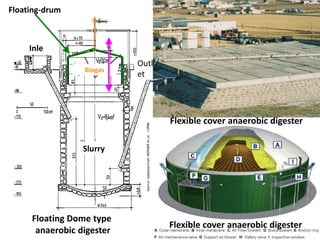
Floating-drum
Biogas
Slurry
Inle
t Outl
et
Floating Dome type
anaerobic digester
Flexible cover anaerobic digester
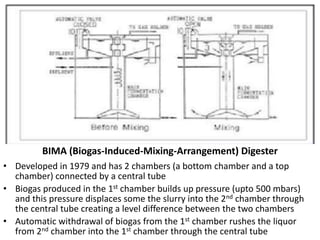
BIMA (Biogas-Induced-Mixing-Arrangement) Digester
• Developed in 1979 and has 2 chambers (a bottom chamber and a top
chamber) connected by a central tube
• Biogas produced in the 1st chamber builds up pressure (upto 500 mbars)
and this pressure displaces some the slurry into the 2nd chamber through
the central tube creating a level difference between the two chambers
• Automatic withdrawal of biogas from the 1st chamber rushes the liquor
from 2nd chamber into the 1st chamber through the central tube
Egg shaped anaerobic sludge digester
Conventional German design is similar to
the egg shaped digester (American design)
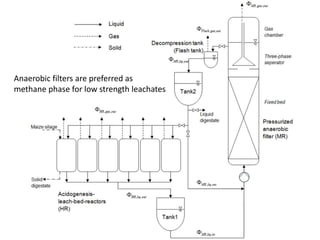
Anaerobic filters are preferred as
methane phase for low strength leachates
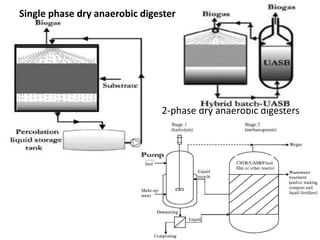
Single phase dry anaerobic digester
2-phase dry anaerobic digesters
Single phase dry anaerobic digesters in series (sequenching batch!)
Multiple first phase dry digesters and single 2nd phase digester
Anaerobic dry digestion
• Appropriate for the municipal solid waste
– Consistency is >15%
– Significant fraction of the waste is non-putrifiable
• Hydrolysis phase is almost separated from the acidogenesis
(acetogenesis) and methanogenesis phases
– The dry digester can be kept exposed and biogas collection from
this may not be needed (TNPL bagasse storage facility)
– A perforated rotating drum (similar to the RBC of wastewater
treatment) packed with the biodegradable solid waste can be
rotated in the pool of digestion liquor for batch hydrolysis
– Residues can be screw dewatered and sent for disposal as
stabilized solid waste
• The pool of digestion liquor can be circulated through an
anaerobic reactor for biogas generation and taken back
– UASB or Anaerobic Baffled Reactor can be used – if the liquor
strength is lower, anaerobic filter can be used
– Net water requirement of the process can be negligible and
digestate generation can be almost eliminated

Solid waste biomethanation plants

  • 1.
    Solid waste bio-methanationplants Dr. Akepati S. Reddy Professor, School of Energy and Environment Thapar University, Patiala Punjab (INDIA) – 147 004
  • 2.
  • 3.
    Anaerobic Digestion/Bio-methanation • Stabilizationof putrifiable fraction of the biodegradable waste is the primary objective – Bio-methanation (biogas generation) is just a secondary objective • We usually have two types of biodegradable wastes for anaerobic digestion/Bio-methanation – Waste with <15% consistency: Animal manures and night soil; ETP and STP sludges; Industrial organic sludges and solid wastes – Waste with >10% consistency: Municipal solid waste, food waste, etc., and Horticultural waste, and parks and garden waste • Anaerobic wet digesters and Anaerobic dry digesters are used • In anaerobic wet digesters, the substrate moves around the digester as a liquid slurry of 3-15% consistency – Fixed dome (Janta/Deenbandu) and floating dome (KVIC) digesters; Bag digesters - Plastic digesters - Plug flow digesters – Anaerobic high rate digesters: BIMA digesters – egg shaped digesters – conventional German design
  • 4.
    Anaerobic Digestion/Bio-methanation • Inanaerobic dry digesters, the substrate is kept stacked/piled - liquid is moved around and usually a separate methanization digester is used – Anaerobic membrane bioreactor (An MBR): Multi-phased digestion (hydrolysis - methanogenesis steps) with inter-stage solids separation • Biomethanation may need conversion of input feed material into slurry and require water – May generate pre-processing rejects (screenings of the slurry) • Biomethanation generates biogas and also digestate – Biogas collection, storage, upgradation, and use/disposal (flaring) –Cooking fuel (BioCNG!); fuel in boilers, IC engines, gas turbines; fuel in fuel cells (after reforming!) – Digestate needs separation of solids from the liquid portion – Liquid portion needs proper treatment prior to disposal
  • 5.
    Anaerobic Digestion/Treatment • Anaerobicdigestion is considered to include – Acidogenesis stage (by bacteria or acid formers) • Hydrolysis stage (suspended and colloidal organic matter and polymeric organic matter by exoenzymes) • Acidogenesis (fermentative bacteria/ acid formers produce VFA) • Acetogenesis (H2 producing acetogens and homo acetogens produce actic acid, hydrogen and carbon dioxide) – Archeae (methanogenesis) stage • Hydrogenotrophic and acetotrophic methanogens produce methane from acetate, hydrogen and CO2 • Dynamic and stable balance between acid formers and methane formers should be established and maintained in the digester
  • 6.
    Anaerobic Digestion/Treatment • Methaneformers – obligate anaerobes – Temperature should be at 30-38°C and temperature variations should be <1°C/day – Mixing of the digester contents is important – pH should be in 6.8-7.2 range • Acid formers – Optimal pH range is 5.5-6.5; – Lower pH causes accumulation of VFA and H2 – Higher partial pressure of H2 severely inhibits propionic acid transforming bacteria – Accumulation of higher VFA (propionic, butyric, etc.) further drops the pH • Nutrients (macronutrients: nitrogen, phosphorus and sulfur; Trace metals: iron, zinc, cobalt, nickel and selenium) are needed
  • 7.
  • 9.
    Floating-drum Biogas Slurry Inle t Outl et Floating Dometype anaerobic digester Flexible cover anaerobic digester Flexible cover anaerobic digester
  • 11.
    BIMA (Biogas-Induced-Mixing-Arrangement) Digester •Developed in 1979 and has 2 chambers (a bottom chamber and a top chamber) connected by a central tube • Biogas produced in the 1st chamber builds up pressure (upto 500 mbars) and this pressure displaces some the slurry into the 2nd chamber through the central tube creating a level difference between the two chambers • Automatic withdrawal of biogas from the 1st chamber rushes the liquor from 2nd chamber into the 1st chamber through the central tube
  • 12.
    Egg shaped anaerobicsludge digester Conventional German design is similar to the egg shaped digester (American design)
  • 13.
    Anaerobic filters arepreferred as methane phase for low strength leachates
  • 14.
    Single phase dryanaerobic digester 2-phase dry anaerobic digesters
  • 15.
    Single phase dryanaerobic digesters in series (sequenching batch!) Multiple first phase dry digesters and single 2nd phase digester
  • 16.
    Anaerobic dry digestion •Appropriate for the municipal solid waste – Consistency is >15% – Significant fraction of the waste is non-putrifiable • Hydrolysis phase is almost separated from the acidogenesis (acetogenesis) and methanogenesis phases – The dry digester can be kept exposed and biogas collection from this may not be needed (TNPL bagasse storage facility) – A perforated rotating drum (similar to the RBC of wastewater treatment) packed with the biodegradable solid waste can be rotated in the pool of digestion liquor for batch hydrolysis – Residues can be screw dewatered and sent for disposal as stabilized solid waste • The pool of digestion liquor can be circulated through an anaerobic reactor for biogas generation and taken back – UASB or Anaerobic Baffled Reactor can be used – if the liquor strength is lower, anaerobic filter can be used – Net water requirement of the process can be negligible and digestate generation can be almost eliminated