BUILDING SERVICES 1
SOLID WASTE MANAGEMENT
Presented By:
ABHINITI GARG
ANKITA YADAV
ANKITA KUMARI
(B.ARCH Ist YEAR
2nd sem)
CONTENT
 INTRODUCTION
 HEALTH IMPACTS OF SOLID WASTE
 WASTE MINIMISATION
 WASTE COLLECTION & SEGREGATION
 PROCESSES CARRIED OUT DURING SWM
 CONCLUSION
INTRODUCTION
Solid waste is the unwanted or useless solid
materials generated from combined residential,
industrial, and commercial activities in a given
common area.
-Municipal solid waste(MSW):
solid waste from home or office
-Industrial solid waste:
solid waste produced from Mines, Agriculture or
Industry.
HEALTH IMPACTS OF SOLID WASTE
 Exposure to hazardous waste can affect human
health, children being more vulnerable to these
pollutants.
 Improperly operated incineration plants cause air
pollution and improperly managed and designed
landfills attract all types of insects and rodents that
spread disease.
 Direct handling of solid waste results in chronic
diseases with the waste workers and rag pickers
being the most vulnerable.
WASTE MINIMISATION
 Prevention of waste being created is known as
waste reduction which is an important method of
waste management.
 The modern concepts based on three R’s are:
Reduce, Reuse and Recycle.
 Methods of avoidance include Reuse of second
hand products, designing products to be refillable or
reusable, repairing broken items instead of buying
new etc.
WASTE COLLECTION
 To minimize the time and cost involved in collecting
through vehicles, public can be given instructions to
dump their house wastes in one place or waste can
be collected in person with the help of vehicle.
SEGREGATION
o Segregation of wastes into degradable and non-
degradable waste is to be done to recover or divert
non-degradable (electric items, plastics, tyres etc)
and degradable items (wood, textile etc) to its
recycling plant and if possible, it can be reused.
PROCESSES CARRIED OUT DURING
SWM
Integrated solid waste management through the
following processes can provide a better reliable
solution for the problem of municipal solid waste
generation.
-BIOLOGICAL TREATMENT
-THERMAL TREATMENT
-LANDFILL
-RECYCLING
BIOLOGICAL TREATMENT -
COMPOSTING
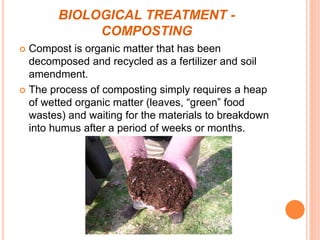
 Compost is organic matter that has been
decomposed and recycled as a fertilizer and soil
amendment.
 The process of composting simply requires a heap
of wetted organic matter (leaves, “green” food
wastes) and waiting for the materials to breakdown
into humus after a period of weeks or months.
THERMAL TREATMENT
 This refers to processes that involve the use of heat
to treat waste. These are the commonly utilized
thermal treatment processes
-Incineration
-Pyrolysis and Gasification
-Open Burning
INCINERATION
 This is the combustion of wastes in presence of
oxygen. After incineration, the waste are converted
to CO2 , Water vapour and ash.
PYROLYSIS AND GASIFICATION
 These processes, both decompose organic waste
by exposing it to high temperatures and low
amounts of oxygen.Gasification uses a low oxygen
environment while pyrolysis allows no oxygen.
OPEN BURNING
 Burning of unwanted materials in a manner that
causes smoke and other emissions to be released
directly into the air without passing through the
chimney or incinerators.
DUMPS AND LANDFILLS
 Sanitary landfills
-Designed to greatly reduce or eliminate the risks
that waste disposal may pose to the public health
and environmental quality.
-They are usually placed in areas where land
features act as natural buffers between the landfill
and the environment.
-The bottom and sides of landfills are lined with
layers of clay or plastic to keep the liquid waste,
known as leachate, from escaping into the soil.
-A landfill is divided into a series of individual cells
and only a few cells of the site are filled with trash
at any one time.
-The natural anaerobic decomposition of the waste in
the landfill produces landfill gases which include
Carbon Dioxide, methane and traces of other gases.
-Thus some landfills are fitted with landfill gas
collection (LFG) systems to capitalise on the
methane being produced. The process of generating
gas is very slow.
-The cost of establishing these sanitary landfills are
high when compared to the other land disposal
methods.
 Controlled dumps
-Controlled dumps are disposal sites which comply
with most of the requirements for a sanitary landfill
but usually have one deficiency. -They may have a
planned capacity but no cell planning. These
dumps have a reduced risk of environmental
contamination, the initial costs are low and the
operational costs are moderate.
 Bioreactor Landfills
-The Bioreactor landfills use enhanced
microbiological processes to accelerate the
decomposition of waste.
-The main controlling factor is the constant addition
of liquid to maintain optimum moisture for microbial
digestion.
-They rapidly reduce the volume of the waste
creating more space for additional waste, & also
maximise the production and capture of methane
for energy recovery systems.
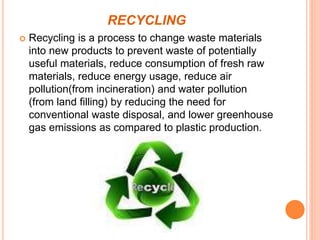
RECYCLING
 Recycling is a process to change waste materials
into new products to prevent waste of potentially
useful materials, reduce consumption of fresh raw
materials, reduce energy usage, reduce air
pollution(from incineration) and water pollution
(from land filling) by reducing the need for
conventional waste disposal, and lower greenhouse
gas emissions as compared to plastic production.
CONCLUSION
THANKYOU

Solid waste management

  • 1.
    BUILDING SERVICES 1 SOLIDWASTE MANAGEMENT Presented By: ABHINITI GARG ANKITA YADAV ANKITA KUMARI (B.ARCH Ist YEAR 2nd sem)
  • 2.
    CONTENT  INTRODUCTION  HEALTHIMPACTS OF SOLID WASTE  WASTE MINIMISATION  WASTE COLLECTION & SEGREGATION  PROCESSES CARRIED OUT DURING SWM  CONCLUSION
  • 3.
    INTRODUCTION Solid waste isthe unwanted or useless solid materials generated from combined residential, industrial, and commercial activities in a given common area. -Municipal solid waste(MSW): solid waste from home or office -Industrial solid waste: solid waste produced from Mines, Agriculture or Industry.
  • 4.
    HEALTH IMPACTS OFSOLID WASTE  Exposure to hazardous waste can affect human health, children being more vulnerable to these pollutants.  Improperly operated incineration plants cause air pollution and improperly managed and designed landfills attract all types of insects and rodents that spread disease.  Direct handling of solid waste results in chronic diseases with the waste workers and rag pickers being the most vulnerable.
  • 5.
    WASTE MINIMISATION  Preventionof waste being created is known as waste reduction which is an important method of waste management.  The modern concepts based on three R’s are: Reduce, Reuse and Recycle.  Methods of avoidance include Reuse of second hand products, designing products to be refillable or reusable, repairing broken items instead of buying new etc.
  • 7.
    WASTE COLLECTION  Tominimize the time and cost involved in collecting through vehicles, public can be given instructions to dump their house wastes in one place or waste can be collected in person with the help of vehicle. SEGREGATION o Segregation of wastes into degradable and non- degradable waste is to be done to recover or divert non-degradable (electric items, plastics, tyres etc) and degradable items (wood, textile etc) to its recycling plant and if possible, it can be reused.
  • 8.
    PROCESSES CARRIED OUTDURING SWM Integrated solid waste management through the following processes can provide a better reliable solution for the problem of municipal solid waste generation. -BIOLOGICAL TREATMENT -THERMAL TREATMENT -LANDFILL -RECYCLING
  • 9.
    BIOLOGICAL TREATMENT - COMPOSTING Compost is organic matter that has been decomposed and recycled as a fertilizer and soil amendment.  The process of composting simply requires a heap of wetted organic matter (leaves, “green” food wastes) and waiting for the materials to breakdown into humus after a period of weeks or months.
  • 10.
    THERMAL TREATMENT  Thisrefers to processes that involve the use of heat to treat waste. These are the commonly utilized thermal treatment processes -Incineration -Pyrolysis and Gasification -Open Burning
  • 11.
    INCINERATION  This isthe combustion of wastes in presence of oxygen. After incineration, the waste are converted to CO2 , Water vapour and ash. PYROLYSIS AND GASIFICATION  These processes, both decompose organic waste by exposing it to high temperatures and low amounts of oxygen.Gasification uses a low oxygen environment while pyrolysis allows no oxygen. OPEN BURNING  Burning of unwanted materials in a manner that causes smoke and other emissions to be released directly into the air without passing through the chimney or incinerators.
  • 12.
    DUMPS AND LANDFILLS Sanitary landfills -Designed to greatly reduce or eliminate the risks that waste disposal may pose to the public health and environmental quality. -They are usually placed in areas where land features act as natural buffers between the landfill and the environment. -The bottom and sides of landfills are lined with layers of clay or plastic to keep the liquid waste, known as leachate, from escaping into the soil. -A landfill is divided into a series of individual cells and only a few cells of the site are filled with trash at any one time.
  • 13.
    -The natural anaerobicdecomposition of the waste in the landfill produces landfill gases which include Carbon Dioxide, methane and traces of other gases. -Thus some landfills are fitted with landfill gas collection (LFG) systems to capitalise on the methane being produced. The process of generating gas is very slow. -The cost of establishing these sanitary landfills are high when compared to the other land disposal methods.
  • 15.
     Controlled dumps -Controlleddumps are disposal sites which comply with most of the requirements for a sanitary landfill but usually have one deficiency. -They may have a planned capacity but no cell planning. These dumps have a reduced risk of environmental contamination, the initial costs are low and the operational costs are moderate.
  • 16.
     Bioreactor Landfills -TheBioreactor landfills use enhanced microbiological processes to accelerate the decomposition of waste. -The main controlling factor is the constant addition of liquid to maintain optimum moisture for microbial digestion. -They rapidly reduce the volume of the waste creating more space for additional waste, & also maximise the production and capture of methane for energy recovery systems.
  • 17.
    RECYCLING  Recycling isa process to change waste materials into new products to prevent waste of potentially useful materials, reduce consumption of fresh raw materials, reduce energy usage, reduce air pollution(from incineration) and water pollution (from land filling) by reducing the need for conventional waste disposal, and lower greenhouse gas emissions as compared to plastic production.
  • 18.
  • 19.