BIOREACTOR
LANDFILLS
MADE BY: ANKITA PAYAL
SONALI FARTIYAL
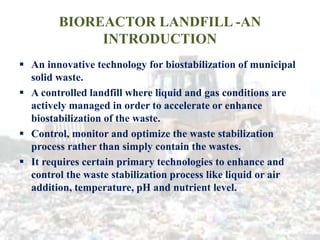
BIOREACTOR LANDFILL -AN
INTRODUCTION
 An innovative technology for biostabilization of municipal
solid waste.
 A controlled landfill where liquid and gas conditions are
actively managed in order to accelerate or enhance
biostabilization of the waste.
 Control, monitor and optimize the waste stabilization
process rather than simply contain the wastes.
 It requires certain primary technologies to enhance and
control the waste stabilization process like liquid or air
addition, temperature, pH and nutrient level.
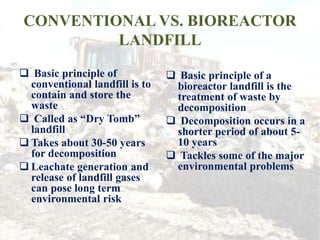
CONVENTIONAL VS. BIOREACTOR
LANDFILL
 Basic principle of
conventional landfill is to
contain and store the
waste
 Called as “Dry Tomb”
landfill
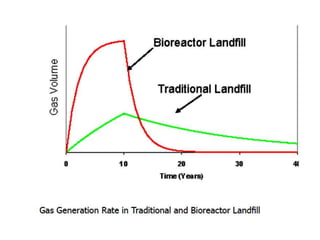
 Takes about 30-50 years
for decomposition
 Leachate generation and
release of landfill gases
can pose long term
environmental risk
 Basic principle of a
bioreactor landfill is the
treatment of waste by
decomposition
 Decomposition occurs in a
shorter period of about 5-
10 years
 Tackles some of the major
environmental problems
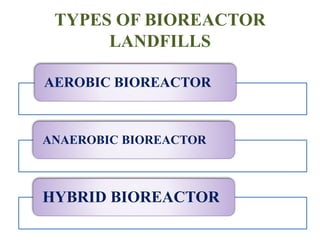
TYPES OF BIOREACTOR
LANDFILLS
AEROBIC BIOREACTOR
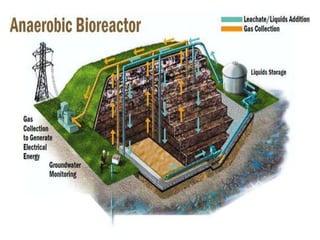
ANAEROBIC BIOREACTOR
HYBRID BIOREACTOR
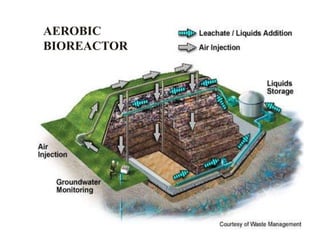
AEROBIC
BIOREACTOR
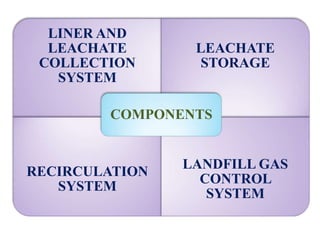
LINER AND
LEACHATE
COLLECTION
SYSTEM
LEACHATE
STORAGE
RECIRCULATION
SYSTEM
LANDFILL GAS
CONTROL
SYSTEM
COMPONENTS
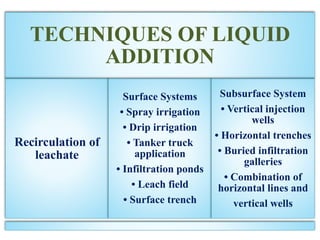
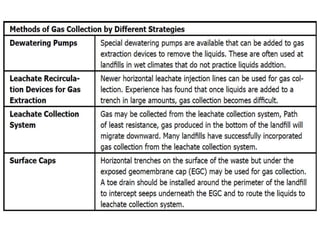
TECHNIQUES OF LIQUID
ADDITION
Recirculation of
leachate
Surface Systems
• Spray irrigation
• Drip irrigation
• Tanker truck
application
• Infiltration ponds
• Leach field
• Surface trench
Subsurface System
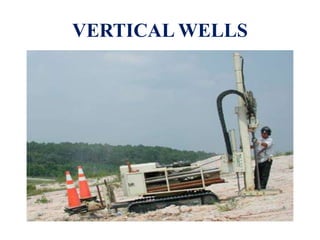
• Vertical injection
wells
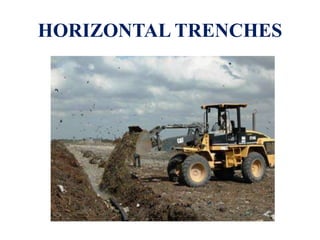
• Horizontal trenches
• Buried infiltration
galleries
• Combination of
horizontal lines and
vertical wells
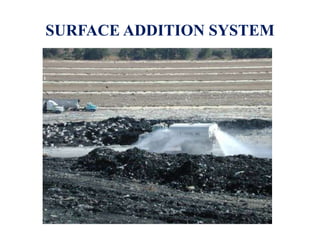
SURFACE ADDITION SYSTEM
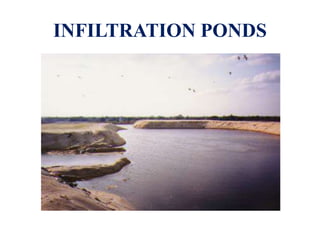
INFILTRATION PONDS
HORIZONTAL TRENCHES
VERTICAL WELLS
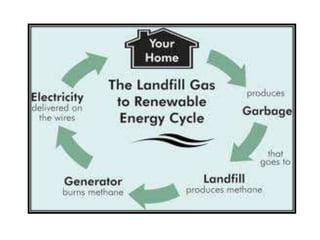
LANDFILL GASES
Direct by-product of anaerobic waste
decomposition
Gas from anaerobic decomposition of waste
is primarily composed of methane (CH4) and
carbon dioxide.
 Other trace components such as water
vapor, hydrogen sulfide and a variety of
organic chemicals, are also founds in LFG.
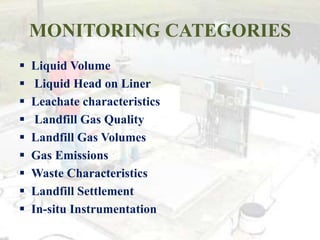
MONITORING CATEGORIES
 Liquid Volume
 Liquid Head on Liner
 Leachate characteristics
 Landfill Gas Quality
 Landfill Gas Volumes
 Gas Emissions
 Waste Characteristics
 Landfill Settlement
 In-situ Instrumentation
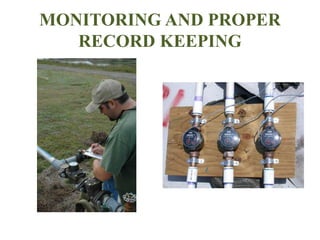
MONITORING AND PROPER
RECORD KEEPING
WHY BIOREACTOR
LANDFILLS?
 WASTE STABILIZATION
 LEACHATE TREATMENT, CAPITALAND
OPERATING COST
 POTENTIAL FOR AIR SPACE RECOVERY
 LANDFILL GAS GENERATION RATES
 ENVIRONMENTAL IMPACTS
 POST CLOSURE CARE, MAINTENANCE AND
RISKS
CHALLENGES
• Leachate Seepage
• Temperature Control
• Gas and Odor Control
• Fire and Explosions
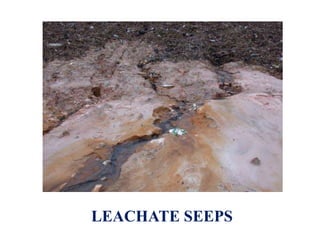
LEACHATE SEEPS
NON-TECHNICAL BARRIERS TO
THE BIOREACTOR LANDFILLS
• Limited regulatory awareness and negative
perception.
• Dearth of site-specific performance
quantification.
• Limited availability of project economic
assessments.
• Insufficient project sustainability experience.
• Lack of financing experience.
• Extended time expectations for planning
permitting and licensing.
• Increased regulatory constraints and conditions.
THANK YOU

Bioreactor landfills

  • 1.
  • 2.
    BIOREACTOR LANDFILL -AN INTRODUCTION An innovative technology for biostabilization of municipal solid waste.  A controlled landfill where liquid and gas conditions are actively managed in order to accelerate or enhance biostabilization of the waste.  Control, monitor and optimize the waste stabilization process rather than simply contain the wastes.  It requires certain primary technologies to enhance and control the waste stabilization process like liquid or air addition, temperature, pH and nutrient level.
  • 4.
    CONVENTIONAL VS. BIOREACTOR LANDFILL Basic principle of conventional landfill is to contain and store the waste  Called as “Dry Tomb” landfill  Takes about 30-50 years for decomposition  Leachate generation and release of landfill gases can pose long term environmental risk  Basic principle of a bioreactor landfill is the treatment of waste by decomposition  Decomposition occurs in a shorter period of about 5- 10 years  Tackles some of the major environmental problems
  • 5.
    TYPES OF BIOREACTOR LANDFILLS AEROBICBIOREACTOR ANAEROBIC BIOREACTOR HYBRID BIOREACTOR
  • 6.
  • 8.
  • 9.
    TECHNIQUES OF LIQUID ADDITION Recirculationof leachate Surface Systems • Spray irrigation • Drip irrigation • Tanker truck application • Infiltration ponds • Leach field • Surface trench Subsurface System • Vertical injection wells • Horizontal trenches • Buried infiltration galleries • Combination of horizontal lines and vertical wells
  • 10.
  • 11.
  • 12.
  • 13.
  • 14.
    LANDFILL GASES Direct by-productof anaerobic waste decomposition Gas from anaerobic decomposition of waste is primarily composed of methane (CH4) and carbon dioxide.  Other trace components such as water vapor, hydrogen sulfide and a variety of organic chemicals, are also founds in LFG.
  • 18.
    MONITORING CATEGORIES  LiquidVolume  Liquid Head on Liner  Leachate characteristics  Landfill Gas Quality  Landfill Gas Volumes  Gas Emissions  Waste Characteristics  Landfill Settlement  In-situ Instrumentation
  • 19.
  • 20.
    WHY BIOREACTOR LANDFILLS?  WASTESTABILIZATION  LEACHATE TREATMENT, CAPITALAND OPERATING COST  POTENTIAL FOR AIR SPACE RECOVERY  LANDFILL GAS GENERATION RATES  ENVIRONMENTAL IMPACTS  POST CLOSURE CARE, MAINTENANCE AND RISKS
  • 21.
    CHALLENGES • Leachate Seepage •Temperature Control • Gas and Odor Control • Fire and Explosions
  • 22.
  • 23.
    NON-TECHNICAL BARRIERS TO THEBIOREACTOR LANDFILLS • Limited regulatory awareness and negative perception. • Dearth of site-specific performance quantification. • Limited availability of project economic assessments. • Insufficient project sustainability experience. • Lack of financing experience. • Extended time expectations for planning permitting and licensing. • Increased regulatory constraints and conditions.
  • 24.