Social Networking 
Literacy Skills: 
Recasting the Readers Services 
Librarians’ Competencies in the 
21st Century 
By Fe Angela M. Verzosa 
Presented at PAARL’s Summer Seminar-Workshop on the theme “Librarians at 
their Best: Envisioning and Realizing Multilevel and Progressive Readers Services” 
Lyceum of Aparri, Cagayan Valley, April 29 – May 1, 2009
• “A huge number of the readers services 
population are logging on to the internet for 
the sole purpose of social networking.” 
• In order for librarians to successfully extend 
effective and efficient services to its modern 
library users, engaging in social networking activities 
is a must. 
• This topic discusses various social networking 
activities and develops strategic approaches for 
integrating these activities to formulate a 
productive and cutting-edge readers services.
• Internet usage increased from 23 percent 
in 2007 to 28 percent in 2008, according 
to a new survey conducted by Nielsen and 
Yahoo on Filipino Internet habits study. 
• Internet use is not restricted to the big 
cities like Metro Manila. E.g. Cagayan de Oro 
City – 35% 
• 47% of all internet time are spent in 
internet cafes. 
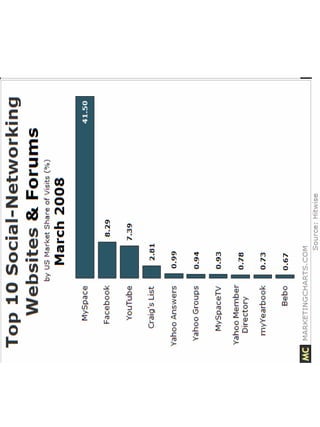
• Social networking is a key online activity.
Overall popular online activities : 
63% - Email/Instant messaging 
58% - Searches 
53% - Playing online games 
51% - Download/upload of photos 
51% - Social networking 
24% - Reading news online 
3% - Online banking/purchasing products
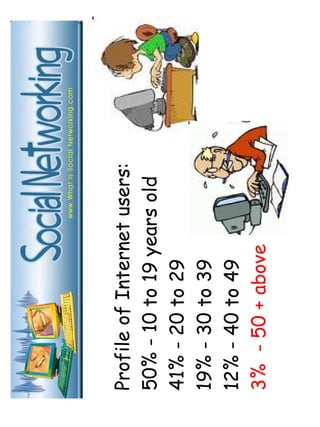
Profile of Internet users: 
50% - 10 to 19 years old 
41% - 20 to 29 
19% - 30 to 39 
12% - 40 to 49 
3% - 50 + above
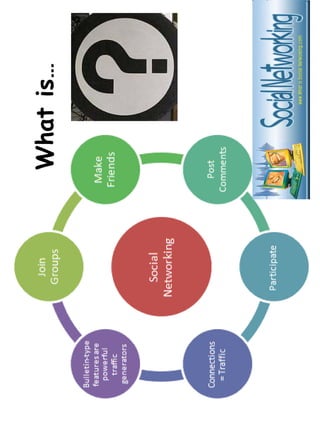
What is…
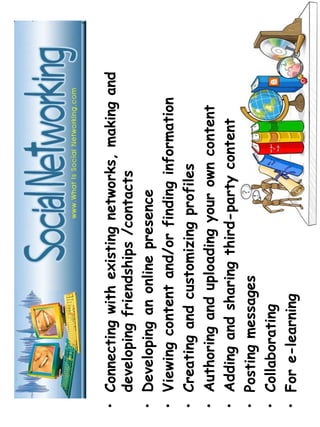
• Connecting with existing networks, making and 
developing friendships /contacts 
• Developing an online presence 
• Viewing content and/or finding information 
• Creating and customizing profiles 
• Authoring and uploading your own content 
• Adding and sharing third-party content 
• Posting messages 
• Collaborating 
• For e-learning
What is Social Software? 
• a range of web-enabled software programs that 
allow users to interact and work collaboratively 
with other users 
• includes the ability to browse, search, invite 
friends to connect and interact, share film 
reviews, comments, blog entries, favorites, 
discussions, events, videos, ratings, music, 
classified ads, tag and classify information, etc. 
• functions like an online community of internet 
users
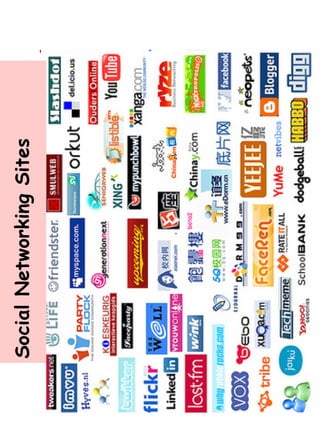
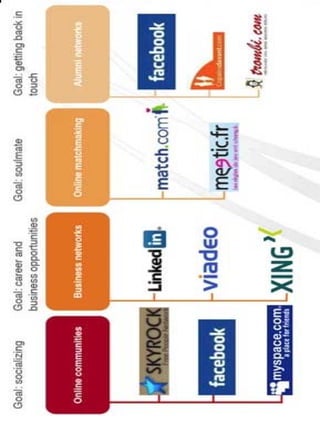
Social Networking Sites
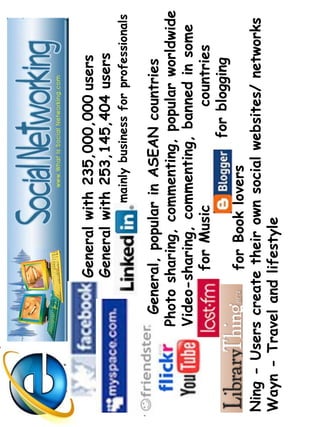
General with 235,000,000 users 
General with 253,145,404 users 
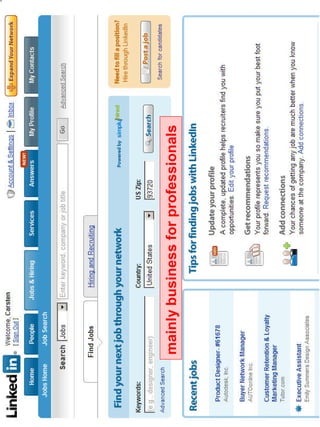
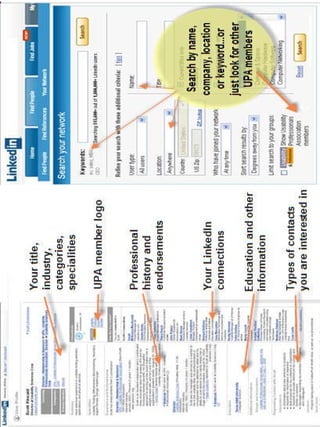
mainly business for professionals 
General, popular in ASEAN countries 
Photo sharing, commenting, popular worldwide 
Video-sharing, commenting, banned in some 
for Music countries 
for blogging 
for Book lovers 
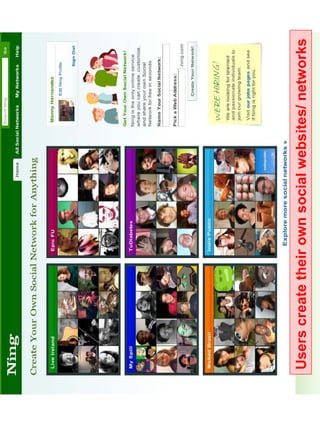
Ning - Users create their own social websites/ networks 
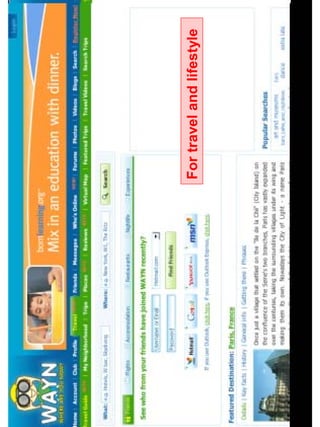
Wayn - Travel and lifestyle
Sosyalan.com is the 1st Pinoy video-sharing and 
social networking site in one. With Sosyalan.com you will 
be able to: 
- Easily connect with friends, relatives, 
classmates and other Filipinos from 
all over the world 
- Create your own webpage 
- Share, blog, and watch videos, tagalog movies, and listen to 
OPM music videos 
Friendster - the Philippines now holds the record of 
“having the most number of Friendster users 
worldwide” with 87% of local Internet users
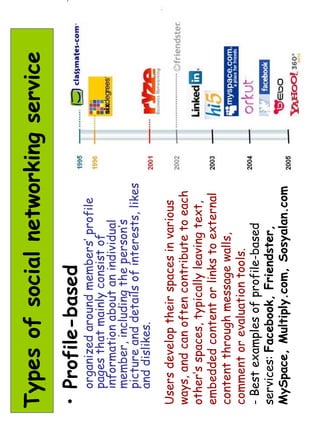
Types of social networking service 
• Profile-based 
organized around members’ profile 
pages that mainly consist of 
information about an individual 
member, including the person’s 
picture and details of interests, likes 
and dislikes. 
Users develop their spaces in various 
ways, and can often contribute to each 
other’s spaces, typically leaving text, 
embedded content or links to external 
content through message walls, 
comment or evaluation tools. 
- Best examples of profile-based 
services: Facebook, Friendster, 
MySpace, Multiply.com, Sosyalan.com
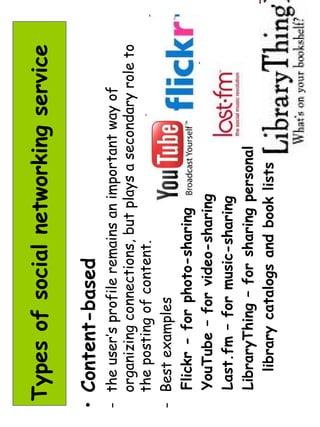
Types of social networking service 
• Content-based 
- the user’s profile remains an important way of 
organizing connections, but plays a secondary role to 
the posting of content. 
- Best examples 
Flickr - for photo-sharing 
YouTube – for video-sharing 
Last.fm – for music-sharing 
LibraryThing – for sharing personal 
library catalogs and book lists
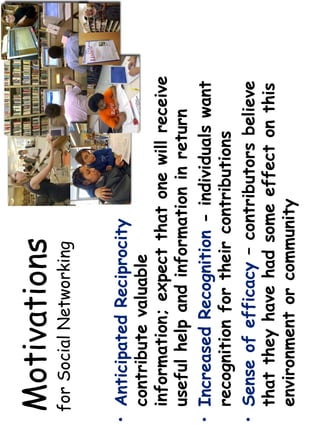
Motivations 
for Social Networking 
• Anticipated Reciprocity 
contribute valuable 
information; expect that one will receive 
useful help and information in return 
• Increased Recognition - individuals want 
recognition for their contributions 
• Sense of efficacy – contributors believe 
that they have had some effect on this 
environment or community
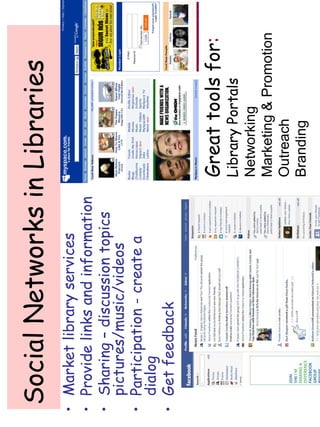
Social Networks in Libraries 
• Market library services 
• Provide links and information 
• Sharing – discussion topics 
pictures/music/videos 
• Participation - create a 
dialog 
• Get feedback 
Great tools for: 
Library Portals 
Networking 
Marketing & Promotion 
Outreach 
Branding
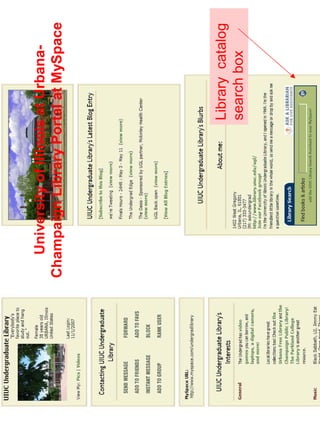
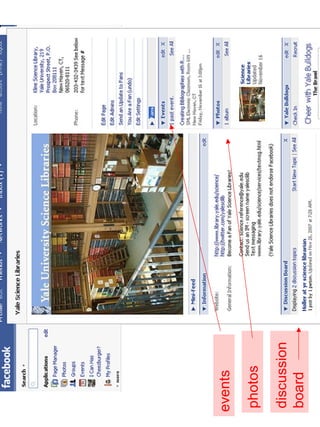
…as Library PUonrivterasitlys of Illinois at Urbana- 
Champaign Library Portal at MySpace 
Library catalog 
search box
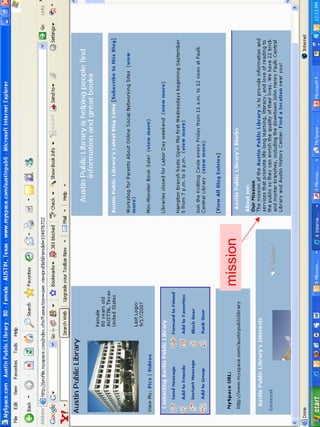
mission
events 
photos 
discussion 
board
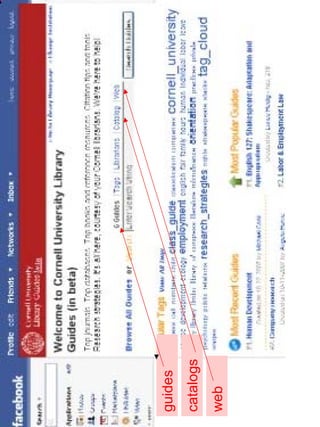
guides 
catalogs 
web
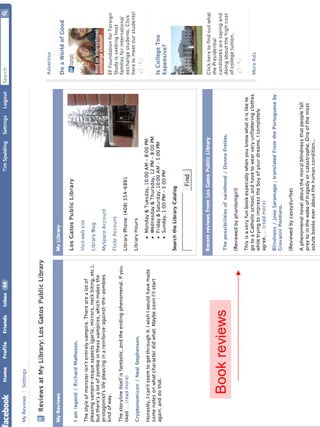
Book reviews
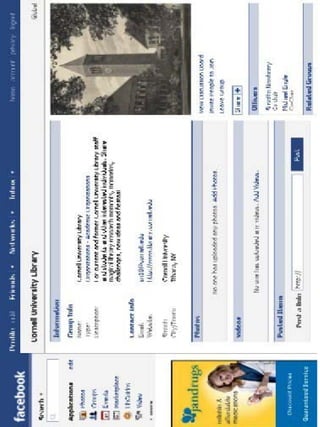
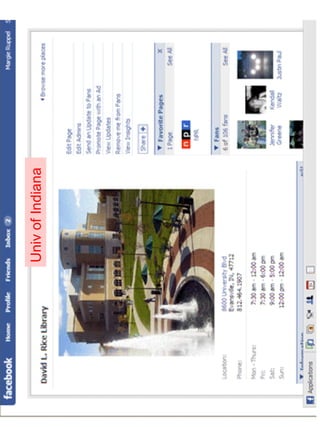
Univ of Indiana
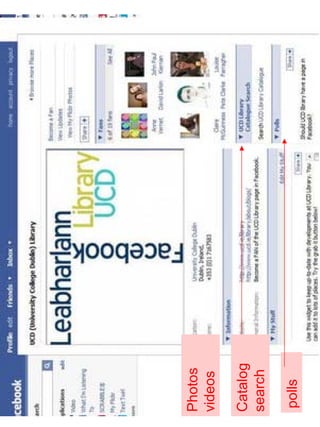
Photos 
videos 
Catalog 
search 
polls
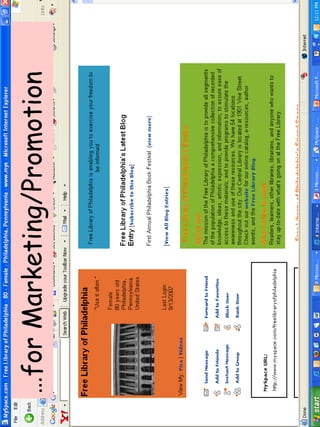
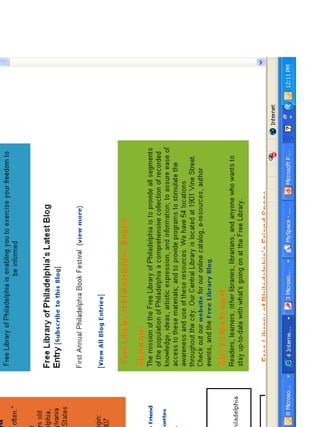
…for Marketing/Promotion 
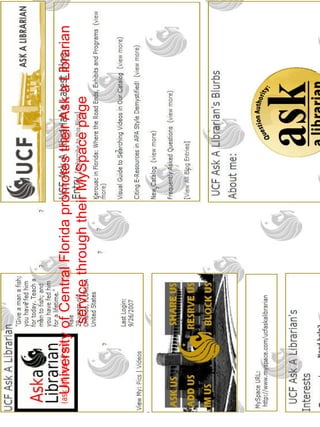
University of Central Florida promotes their Ask a Librarian 
service through their MySpace page
…for Marketing/Promotion
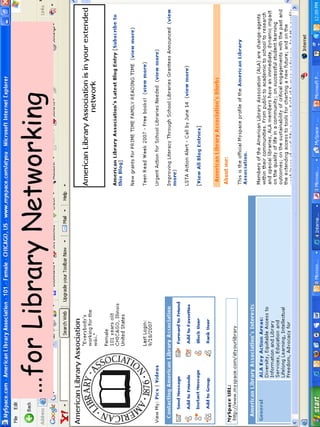
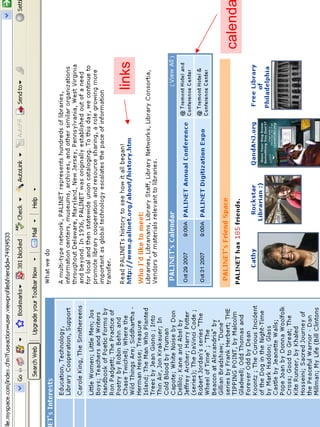
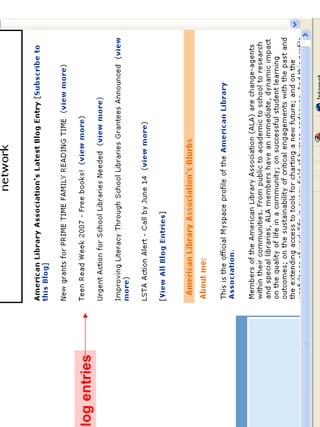
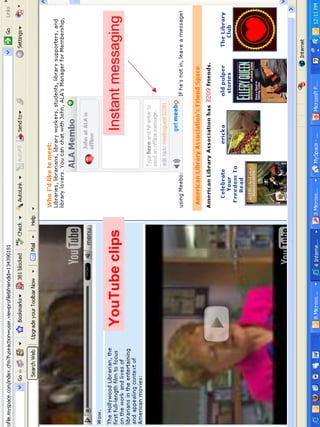
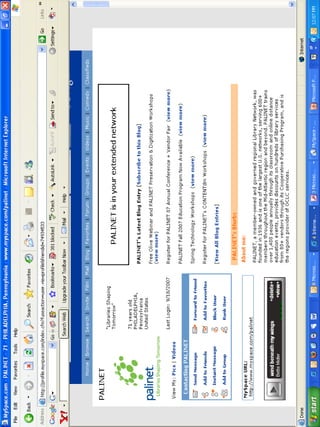
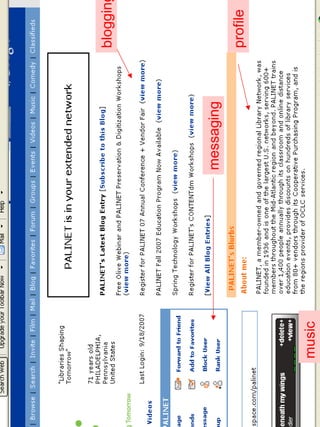
…for Library Networking
log entries
YouTube clips Instant messaging
messaging 
blogging 
profile 
music
links 
calenda
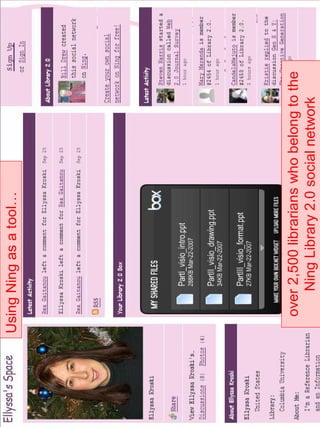
Using Ning as a tool… 
…for Professional Networking 
over 2,500 librarians who belong to the 
Ning Library 2.0 social network
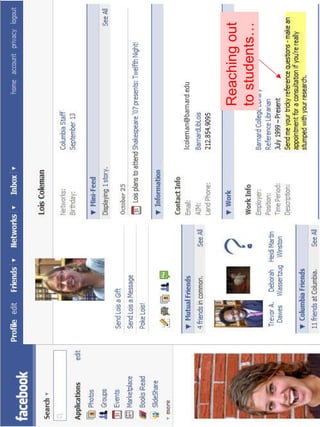
…for Library Outreach 
Reaching out 
to students…
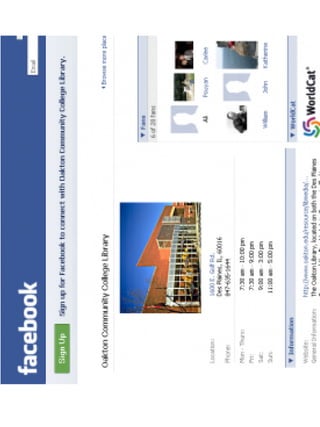
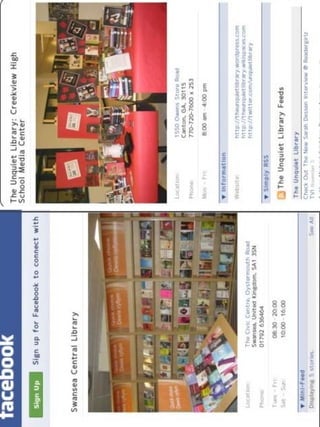
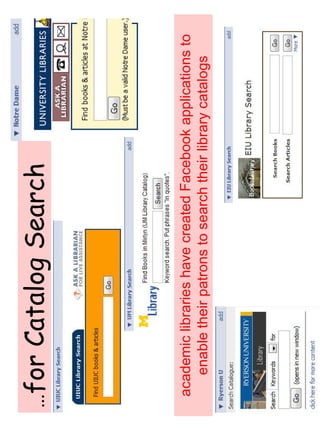
…for Catalog Search 
academic libraries have created Facebook applications to 
enable their patrons to search their library catalogs
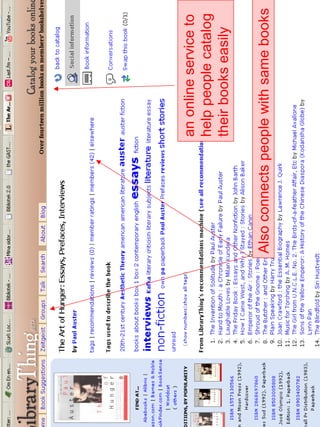
an online service to 
help people catalog 
their books easily 
Also connects people with same books
Users create their own social websites/ networks
mainly business for professionals
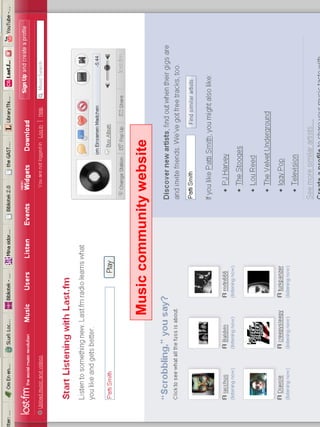
Music community website
For travel and lifestyle
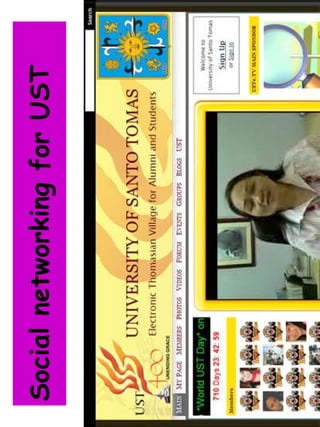
Social networking for UST
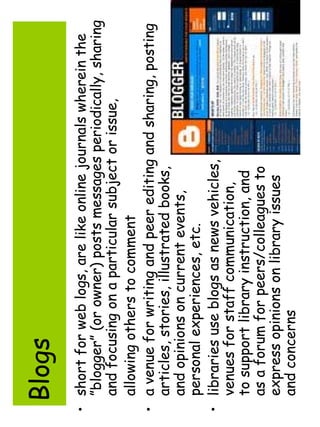
Blogs 
• short for web logs, are like online journals wherein the 
”blogger” (or owner) posts messages periodically, sharing 
and focusing on a particular subject or issue, 
allowing others to comment 
• a venue for writing and peer editing and sharing, posting 
articles, stories, illustrated books, 
and opinions on current events, 
personal experiences, etc. 
• libraries use blogs as news vehicles, 
venues for staff communication, 
to support library instruction, and 
as a forum for peers/colleagues to 
express opinions on library issues 
and concerns
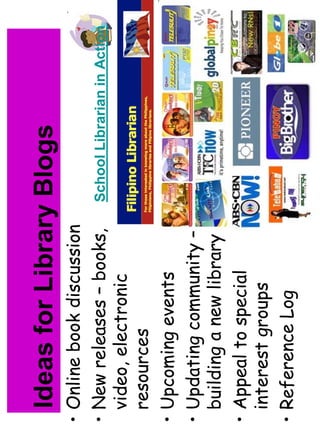
Ideas for Library Blogs 
• Online book discussion 
• New releases – books, 
video, electronic 
resources 
• Upcoming events 
• Updating community – 
building a new library 
• Appeal to special 
interest groups 
• Reference Log 
School Librarian in Action
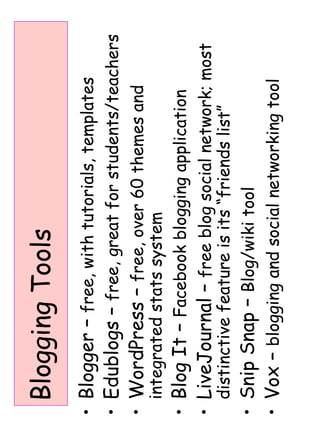
Blogging Tools 
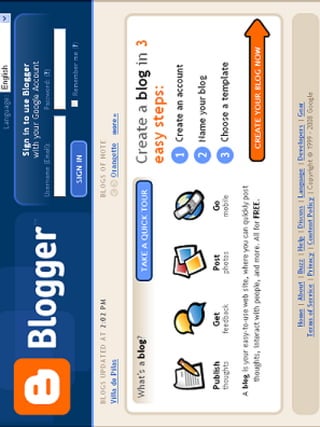
• Blogger – free, with tutorials, templates 
• Edublogs – free, great for students/teachers 
• WordPress – free, over 60 themes and 
integrated stats system 
• Blog It – Facebook blogging application 
• LiveJournal – free blog social network; most 
distinctive feature is its “friends list” 
• Snip Snap – Blog/wiki tool 
• Vox – blogging and social networking tool
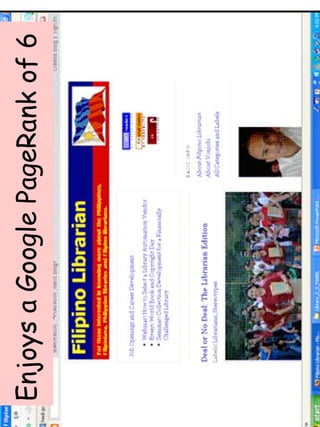
Enjoys a Google PageRank of 6
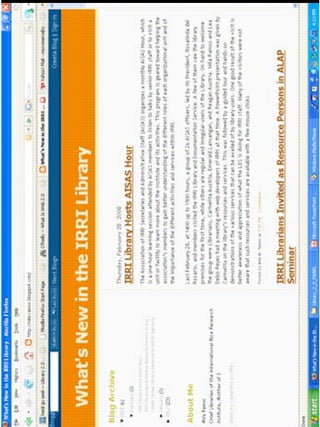
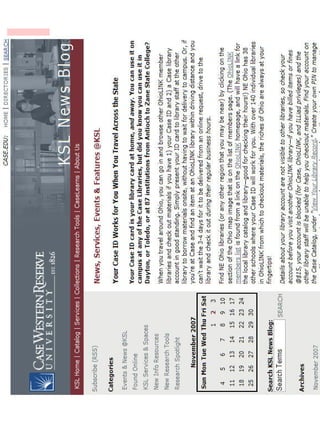
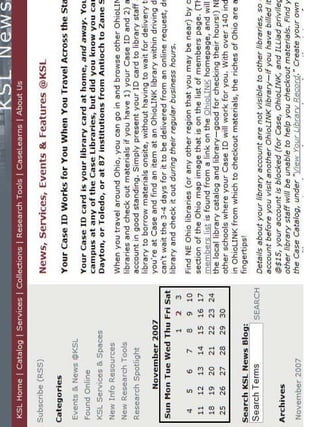
Blogs as Library News Vehicles
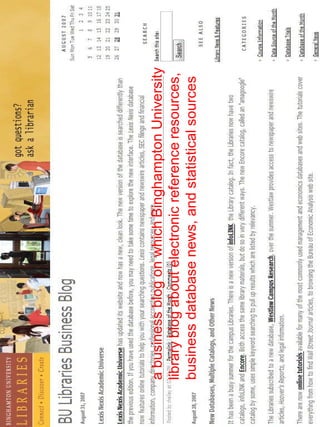
Blogs as Subject Resources 
a business blog on which Binghampton University 
library blog about electronic reference resources, 
business database news, and statistical sources
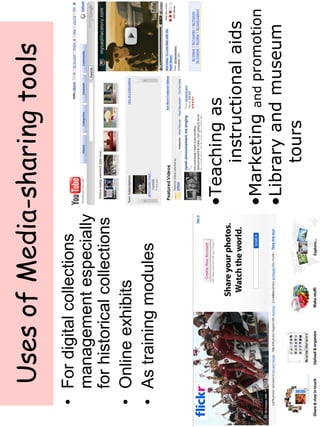
Uses of Media-sharing tools 
• For digital collections 
management especially 
for historical collections 
• Online exhibits 
• As training modules 
•Teaching as 
instructional aids 
•Marketing and promotion 
•Library and museum 
tours
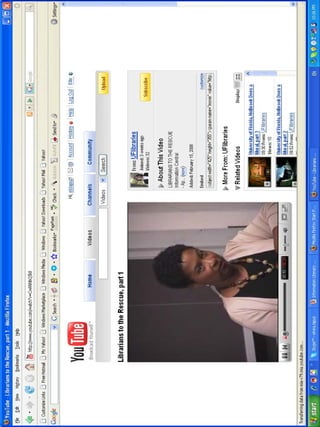
Video-sharing for Library Orientation
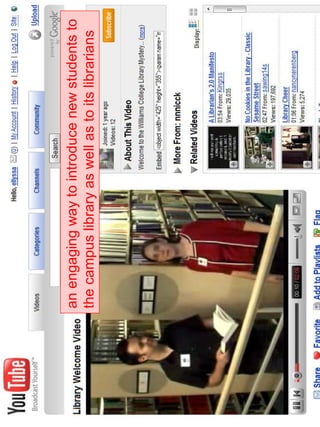
Video-sharing for Library Tours 
an engaging way to introduce new students to 
the campus library as well as to its librarians
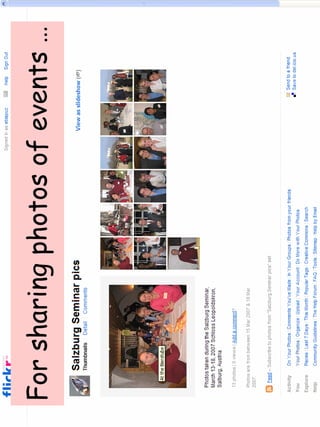
For sharing photos of events …
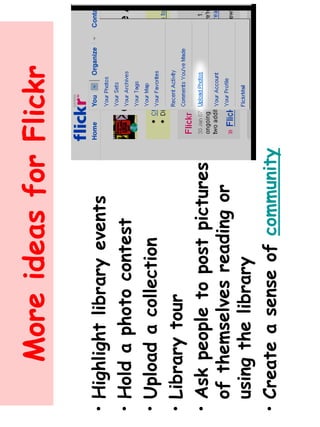
More ideas for Flickr 
• Highlight library events 
• Hold a photo contest 
• Upload a collection 
• Library tour 
• Ask people to post pictures 
of themselves reading or 
using the library 
• Create a sense of community
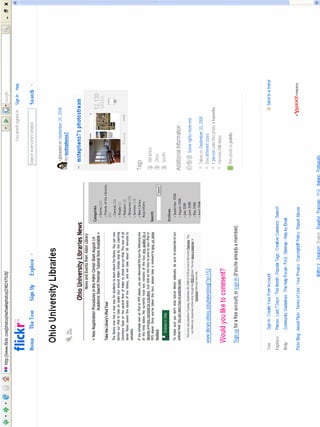
Library News on Flickr
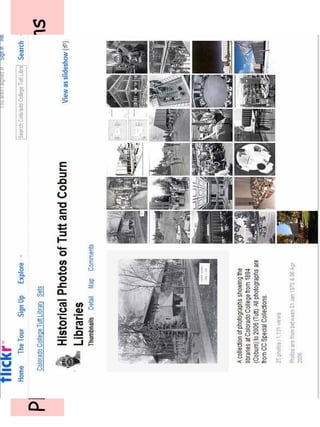
Photo-sharing for Historical Collections
Wikis 
• a web page that is accessible to 
anyone with a Web browser and 
an Internet connection 
• allows readers to collaborate with 
others in writing it and add, edit, 
and change the web page’s content, 
• making it a tool for collaboration
Uses of Wikis in Libraries 
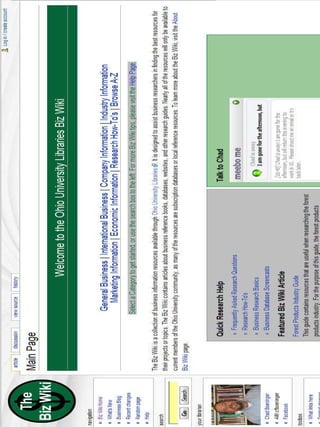
• Library Websites 
• Intranets 
• Training tools or course instruction 
• Event planning 
• Subject Guides 
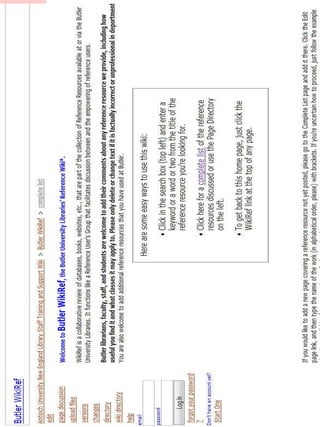
• Reference Wiki 
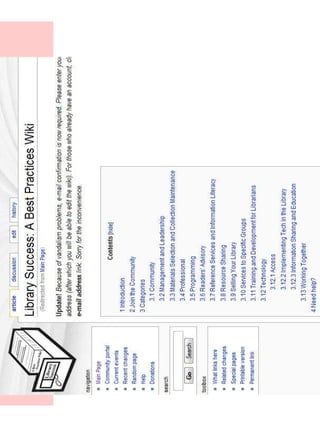
• Best Practices 
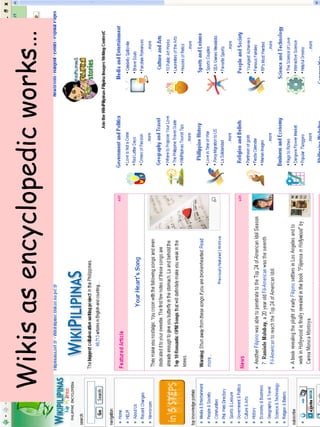
• Encyclopedic works
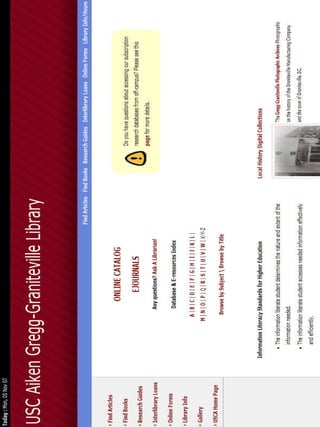
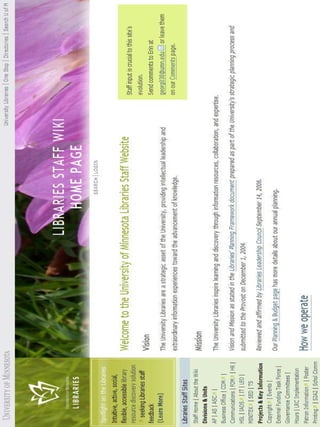
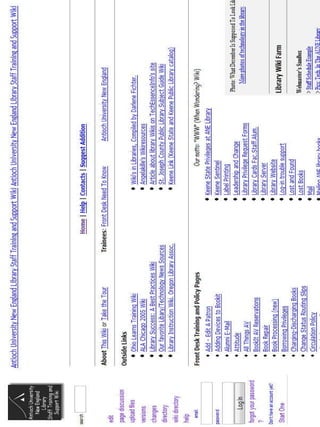
Wikis as Library Web Sites
Wikis as Intranets
Wikis as Training Tools
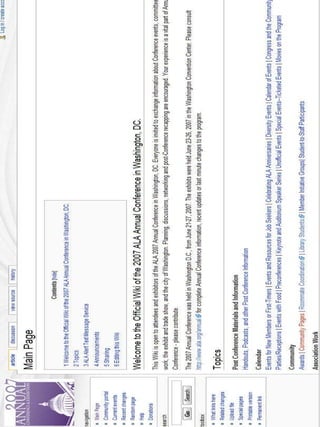
Wikis for Event Planning
Wikis as Subject Guides
… as a Reference Wiki
Wikis for Best Practices
Wikis as encyclopedic works…
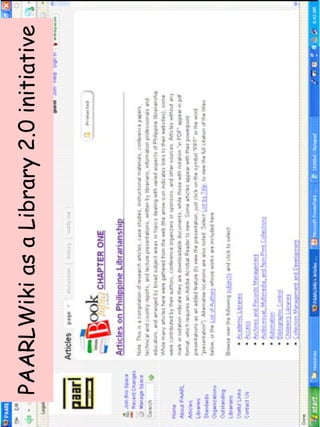
PAARLWiki as a Library 2.0 initiative
Benefits and Opportunities 
• Literacy and communication skills 
Using sites to communicate, collaborate and create 
means learners use and can develop a wide range of 
literacy skills. 
• Collaboration encourages creativity 
Using collaborative tools can develop 
creative and entrepreneurial skills 
• Being where learners are 
Using social networking services 
sends a clear message to learners 
that you are aware of the types of 
spaces they enjoy online.
Negative Views/Potential Risks 
• Blocking and filtering sites because of 
perceived inappropriate content 
• Abuse and mismanagement of online 
presence 
• Misunderstanding the nature of online 
environment 
• Data protection and copyright concerns 
• Learning about e-safety issues
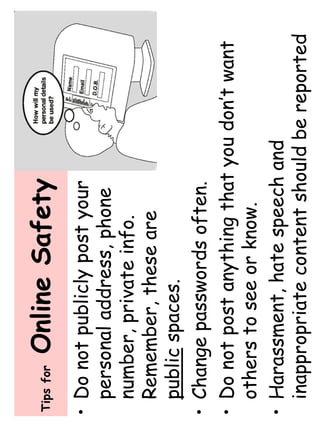
Tips for Online Safety 
• Do not publicly post your 
personal address, phone 
number, private info. 
Remember, these are 
public spaces. 
• Change passwords often. 
• Do not post anything that you don’t want 
others to see or know. 
• Harassment, hate speech and 
inappropriate content should be reported
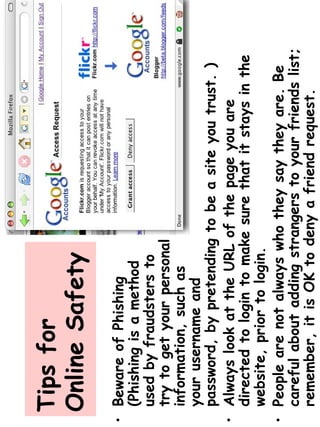
Tips for 
Online Safety 
• Beware of Phishing 
(Phishing is a method 
used by fraudsters to 
try to get your personal 
information, such as 
your username and 
password, by pretending to be a site you trust. ) 
• Always look at the URL of the page you are 
directed to login to make sure that it stays in the 
website, prior to login. 
• People are not always who they say they are. Be 
careful about adding strangers to your friends list; 
remember, it is OK to deny a friend request.
Questions? 
Contact fe.verzosa@dlsu.edu.ph

Social networking literacy skills

  • 1.
    Social Networking LiteracySkills: Recasting the Readers Services Librarians’ Competencies in the 21st Century By Fe Angela M. Verzosa Presented at PAARL’s Summer Seminar-Workshop on the theme “Librarians at their Best: Envisioning and Realizing Multilevel and Progressive Readers Services” Lyceum of Aparri, Cagayan Valley, April 29 – May 1, 2009
  • 2.
    • “A hugenumber of the readers services population are logging on to the internet for the sole purpose of social networking.” • In order for librarians to successfully extend effective and efficient services to its modern library users, engaging in social networking activities is a must. • This topic discusses various social networking activities and develops strategic approaches for integrating these activities to formulate a productive and cutting-edge readers services.
  • 3.
    • Internet usageincreased from 23 percent in 2007 to 28 percent in 2008, according to a new survey conducted by Nielsen and Yahoo on Filipino Internet habits study. • Internet use is not restricted to the big cities like Metro Manila. E.g. Cagayan de Oro City – 35% • 47% of all internet time are spent in internet cafes. • Social networking is a key online activity.
  • 4.
    Overall popular onlineactivities : 63% - Email/Instant messaging 58% - Searches 53% - Playing online games 51% - Download/upload of photos 51% - Social networking 24% - Reading news online 3% - Online banking/purchasing products
  • 5.
    Profile of Internetusers: 50% - 10 to 19 years old 41% - 20 to 29 19% - 30 to 39 12% - 40 to 49 3% - 50 + above
  • 6.
  • 7.
    • Connecting withexisting networks, making and developing friendships /contacts • Developing an online presence • Viewing content and/or finding information • Creating and customizing profiles • Authoring and uploading your own content • Adding and sharing third-party content • Posting messages • Collaborating • For e-learning
  • 9.
    What is SocialSoftware? • a range of web-enabled software programs that allow users to interact and work collaboratively with other users • includes the ability to browse, search, invite friends to connect and interact, share film reviews, comments, blog entries, favorites, discussions, events, videos, ratings, music, classified ads, tag and classify information, etc. • functions like an online community of internet users
  • 10.
  • 13.
    General with 235,000,000users General with 253,145,404 users mainly business for professionals General, popular in ASEAN countries Photo sharing, commenting, popular worldwide Video-sharing, commenting, banned in some for Music countries for blogging for Book lovers Ning - Users create their own social websites/ networks Wayn - Travel and lifestyle
  • 14.
    Sosyalan.com is the1st Pinoy video-sharing and social networking site in one. With Sosyalan.com you will be able to: - Easily connect with friends, relatives, classmates and other Filipinos from all over the world - Create your own webpage - Share, blog, and watch videos, tagalog movies, and listen to OPM music videos Friendster - the Philippines now holds the record of “having the most number of Friendster users worldwide” with 87% of local Internet users
  • 15.
    Types of socialnetworking service • Profile-based organized around members’ profile pages that mainly consist of information about an individual member, including the person’s picture and details of interests, likes and dislikes. Users develop their spaces in various ways, and can often contribute to each other’s spaces, typically leaving text, embedded content or links to external content through message walls, comment or evaluation tools. - Best examples of profile-based services: Facebook, Friendster, MySpace, Multiply.com, Sosyalan.com
  • 16.
    Types of socialnetworking service • Content-based - the user’s profile remains an important way of organizing connections, but plays a secondary role to the posting of content. - Best examples Flickr - for photo-sharing YouTube – for video-sharing Last.fm – for music-sharing LibraryThing – for sharing personal library catalogs and book lists
  • 17.
    Motivations for SocialNetworking • Anticipated Reciprocity contribute valuable information; expect that one will receive useful help and information in return • Increased Recognition - individuals want recognition for their contributions • Sense of efficacy – contributors believe that they have had some effect on this environment or community
  • 18.
    Social Networks inLibraries • Market library services • Provide links and information • Sharing – discussion topics pictures/music/videos • Participation - create a dialog • Get feedback Great tools for: Library Portals Networking Marketing & Promotion Outreach Branding
  • 19.
    …as Library PUonrivterasitlysof Illinois at Urbana- Champaign Library Portal at MySpace Library catalog search box
  • 20.
  • 21.
  • 23.
  • 24.
  • 25.
  • 26.
    Photos videos Catalog search polls
  • 29.
    …for Marketing/Promotion Universityof Central Florida promotes their Ask a Librarian service through their MySpace page
  • 30.
  • 34.
  • 35.
  • 36.
  • 38.
  • 39.
  • 41.
    Using Ning asa tool… …for Professional Networking over 2,500 librarians who belong to the Ning Library 2.0 social network
  • 42.
    …for Library Outreach Reaching out to students…
  • 43.
    …for Catalog Search academic libraries have created Facebook applications to enable their patrons to search their library catalogs
  • 44.
    an online serviceto help people catalog their books easily Also connects people with same books
  • 45.
    Users create theirown social websites/ networks
  • 46.
    mainly business forprofessionals
  • 48.
  • 49.
    For travel andlifestyle
  • 50.
  • 51.
    Blogs • shortfor web logs, are like online journals wherein the ”blogger” (or owner) posts messages periodically, sharing and focusing on a particular subject or issue, allowing others to comment • a venue for writing and peer editing and sharing, posting articles, stories, illustrated books, and opinions on current events, personal experiences, etc. • libraries use blogs as news vehicles, venues for staff communication, to support library instruction, and as a forum for peers/colleagues to express opinions on library issues and concerns
  • 52.
    Ideas for LibraryBlogs • Online book discussion • New releases – books, video, electronic resources • Upcoming events • Updating community – building a new library • Appeal to special interest groups • Reference Log School Librarian in Action
  • 53.
    Blogging Tools •Blogger – free, with tutorials, templates • Edublogs – free, great for students/teachers • WordPress – free, over 60 themes and integrated stats system • Blog It – Facebook blogging application • LiveJournal – free blog social network; most distinctive feature is its “friends list” • Snip Snap – Blog/wiki tool • Vox – blogging and social networking tool
  • 55.
    Enjoys a GooglePageRank of 6
  • 57.
    Blogs as LibraryNews Vehicles
  • 59.
    Blogs as SubjectResources a business blog on which Binghampton University library blog about electronic reference resources, business database news, and statistical sources
  • 60.
    Uses of Media-sharingtools • For digital collections management especially for historical collections • Online exhibits • As training modules •Teaching as instructional aids •Marketing and promotion •Library and museum tours
  • 61.
  • 62.
    Video-sharing for LibraryTours an engaging way to introduce new students to the campus library as well as to its librarians
  • 63.
    For sharing photosof events …
  • 64.
    More ideas forFlickr • Highlight library events • Hold a photo contest • Upload a collection • Library tour • Ask people to post pictures of themselves reading or using the library • Create a sense of community
  • 65.
  • 66.
  • 67.
    Wikis • aweb page that is accessible to anyone with a Web browser and an Internet connection • allows readers to collaborate with others in writing it and add, edit, and change the web page’s content, • making it a tool for collaboration
  • 68.
    Uses of Wikisin Libraries • Library Websites • Intranets • Training tools or course instruction • Event planning • Subject Guides • Reference Wiki • Best Practices • Encyclopedic works
  • 69.
  • 70.
  • 71.
  • 72.
  • 73.
  • 74.
    … as aReference Wiki
  • 75.
    Wikis for BestPractices
  • 76.
  • 77.
    PAARLWiki as aLibrary 2.0 initiative
  • 78.
    Benefits and Opportunities • Literacy and communication skills Using sites to communicate, collaborate and create means learners use and can develop a wide range of literacy skills. • Collaboration encourages creativity Using collaborative tools can develop creative and entrepreneurial skills • Being where learners are Using social networking services sends a clear message to learners that you are aware of the types of spaces they enjoy online.
  • 79.
    Negative Views/Potential Risks • Blocking and filtering sites because of perceived inappropriate content • Abuse and mismanagement of online presence • Misunderstanding the nature of online environment • Data protection and copyright concerns • Learning about e-safety issues
  • 80.
    Tips for OnlineSafety • Do not publicly post your personal address, phone number, private info. Remember, these are public spaces. • Change passwords often. • Do not post anything that you don’t want others to see or know. • Harassment, hate speech and inappropriate content should be reported
  • 81.
    Tips for OnlineSafety • Beware of Phishing (Phishing is a method used by fraudsters to try to get your personal information, such as your username and password, by pretending to be a site you trust. ) • Always look at the URL of the page you are directed to login to make sure that it stays in the website, prior to login. • People are not always who they say they are. Be careful about adding strangers to your friends list; remember, it is OK to deny a friend request.
  • 82.