On the Social Contract Theories On the Social Contract Theories
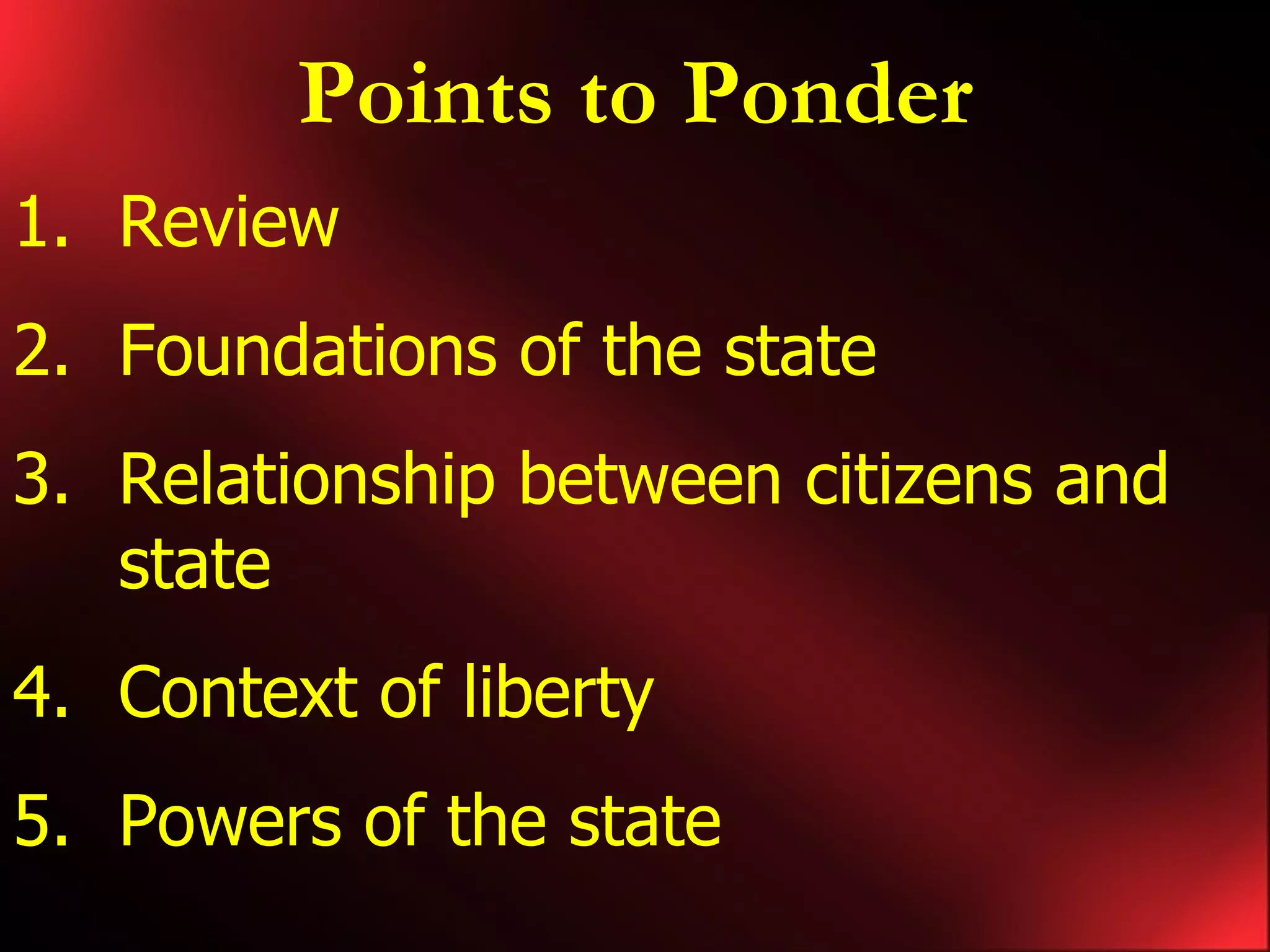
Points to Ponder Review Foundations of the state Relationship between citizens and state Context of liberty Powers of the state
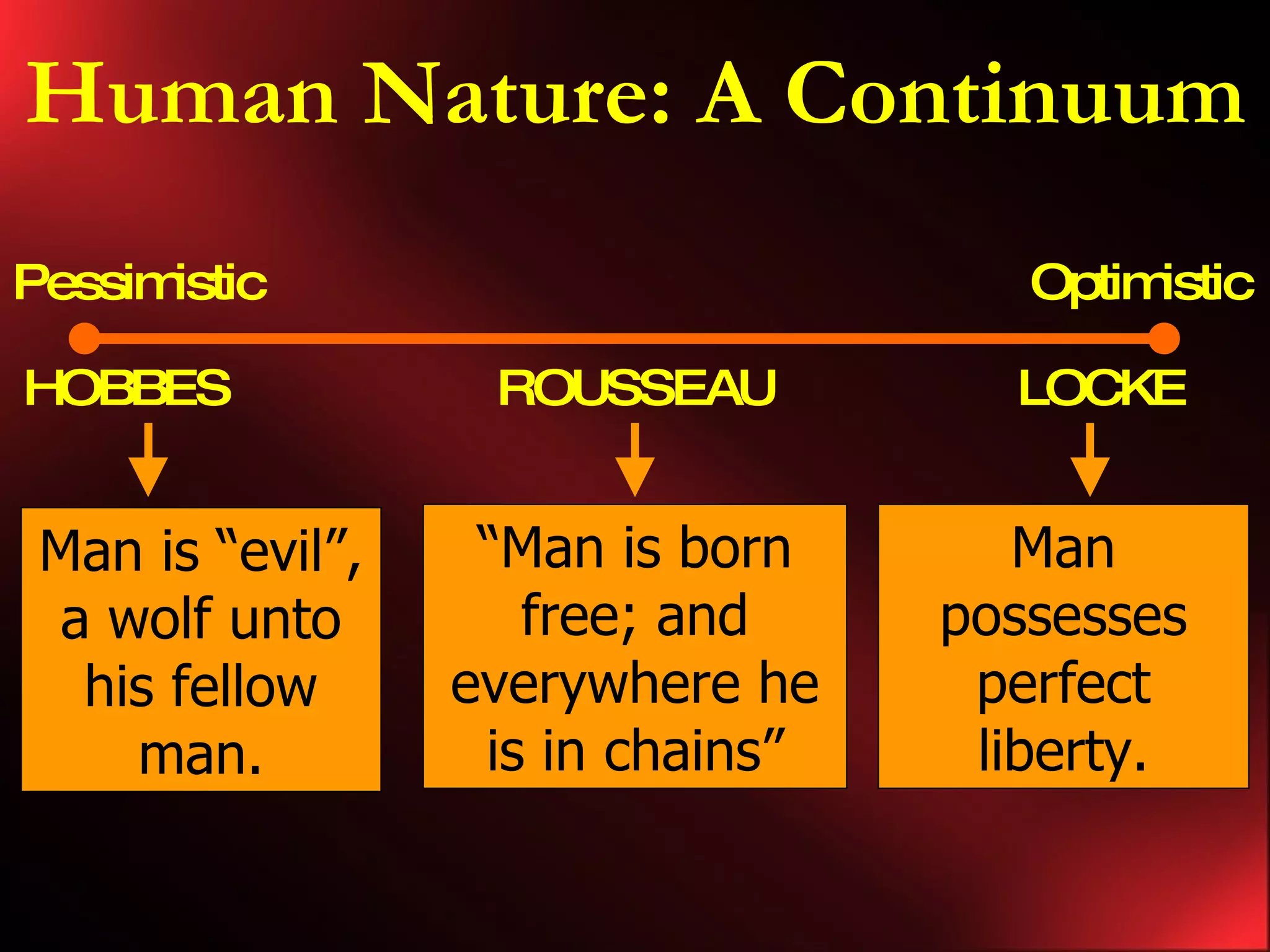
Human Nature: A Continuum Pessimistic Optimistic HOBBES LOCKE ROUSSEAU Man is “evil”, a wolf unto his fellow man. Man possesses perfect liberty. “ Man is born free; and everywhere he is in chains”
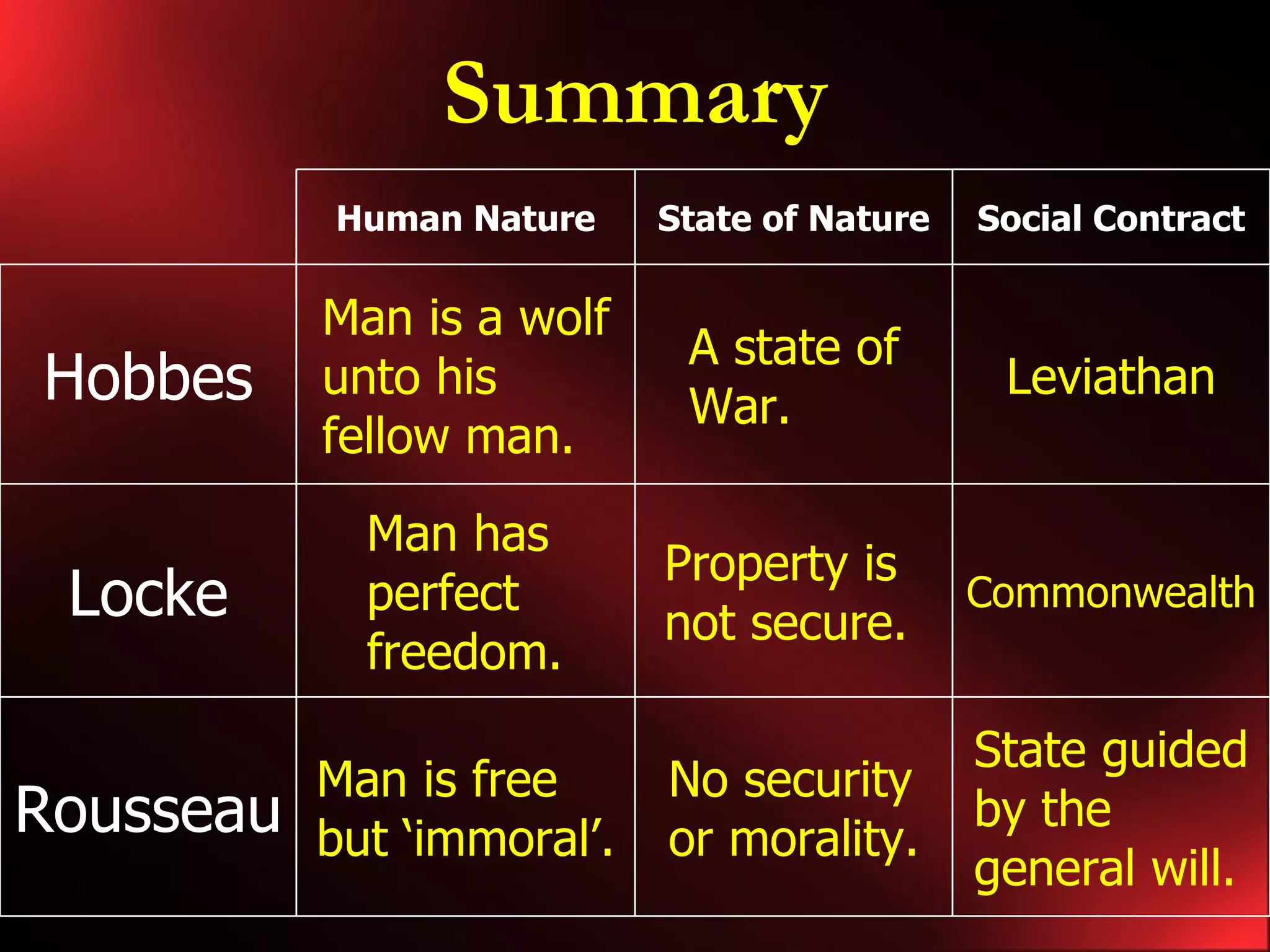
Summary State guided by the general will. No security or morality. Man is free but ‘immoral’. Rousseau Commonwealth Property is not secure.  Man has  perfect freedom. Locke Leviathan A state of War. Man is a wolf unto his fellow man. Hobbes Social Contract State of Nature Human Nature
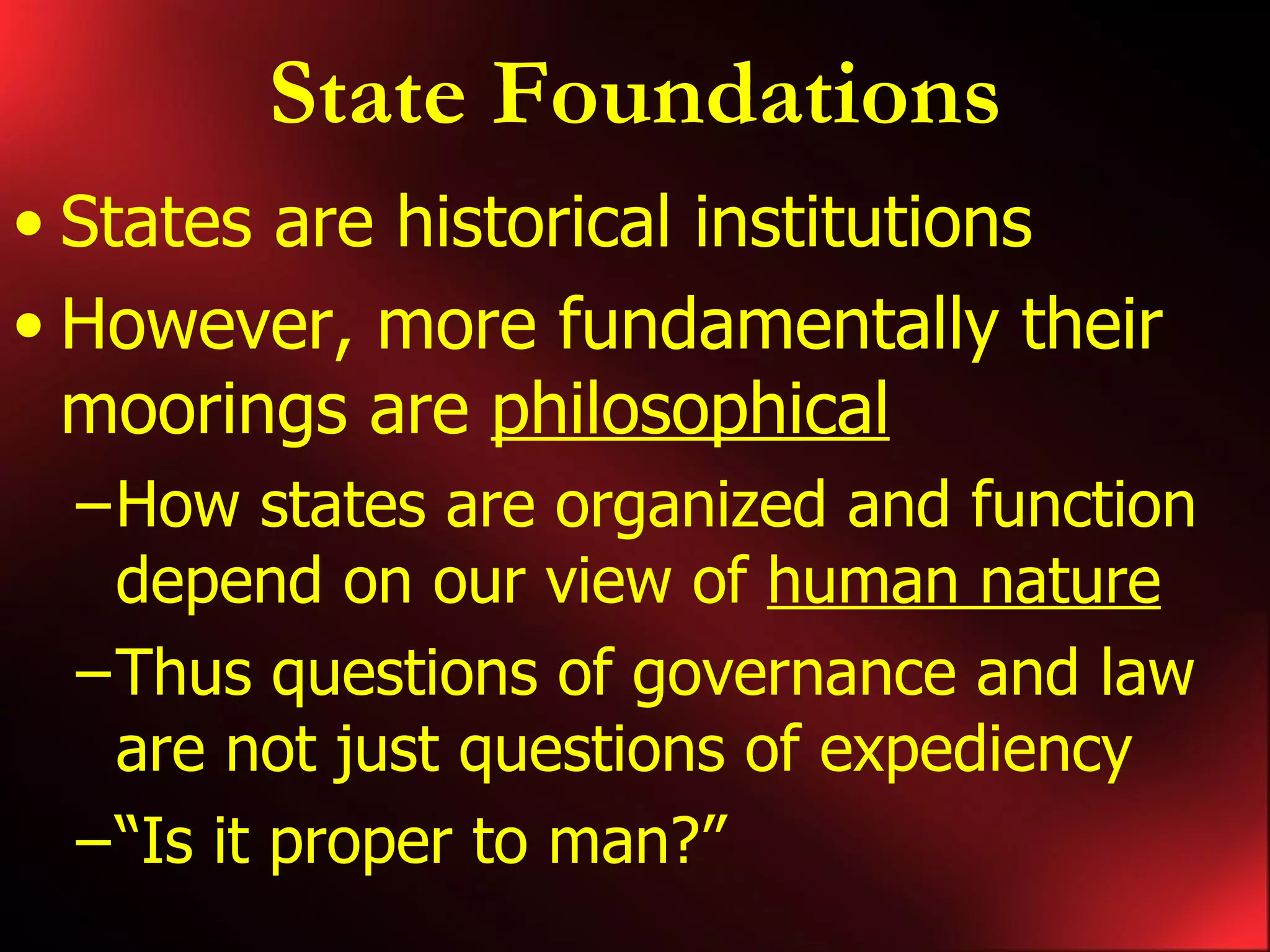
State Foundations States are historical institutions However, more fundamentally their moorings are  philosophical How states are organized and function depend on our view of  human nature Thus questions of governance and law are not just questions of expediency “Is it proper to man?”
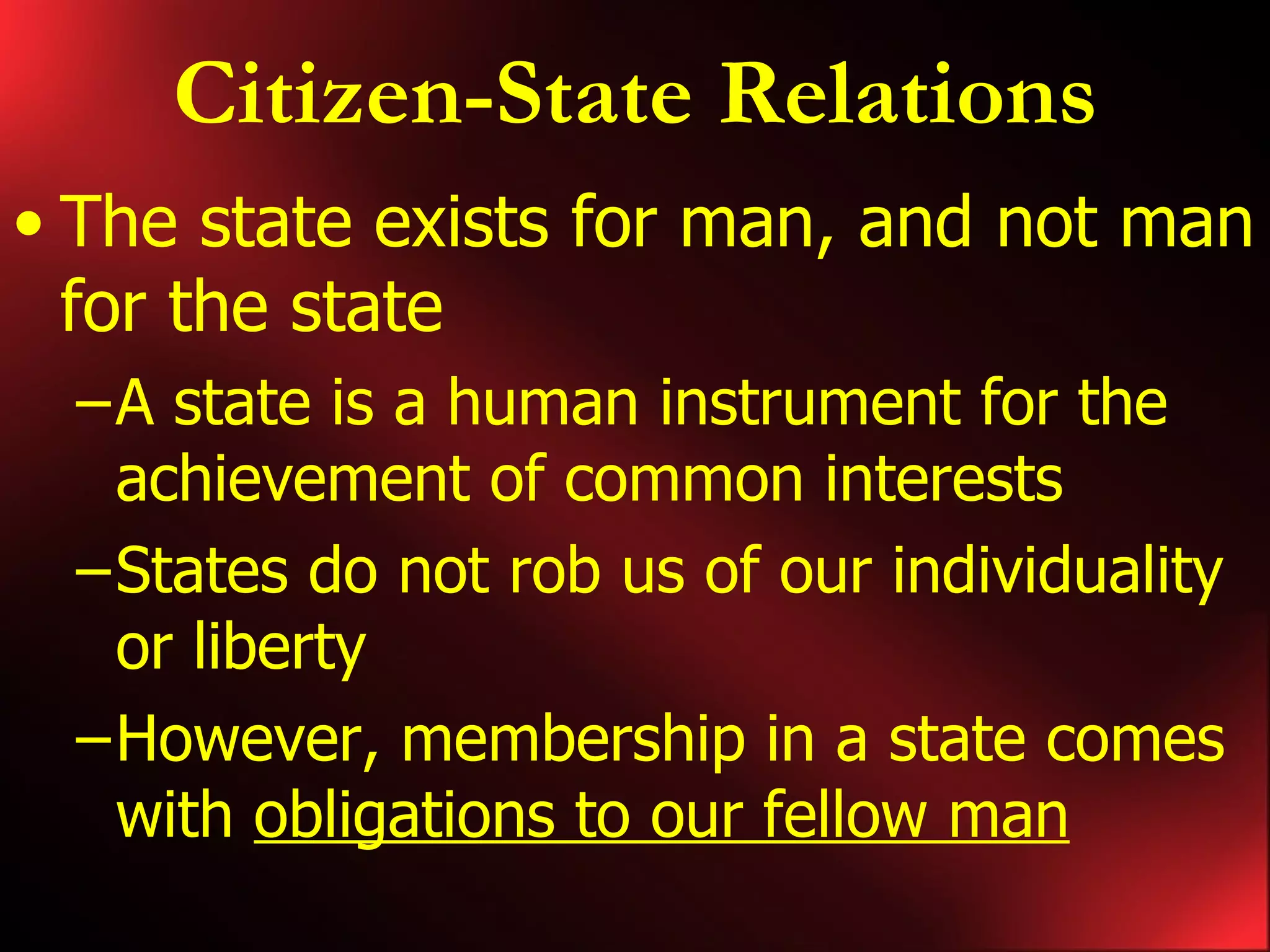
Citizen-State Relations The state exists for man, and not man for the state A state is a human instrument for the achievement of common interests States do not rob us of our individuality or liberty However, membership in a state comes with  obligations to our fellow man
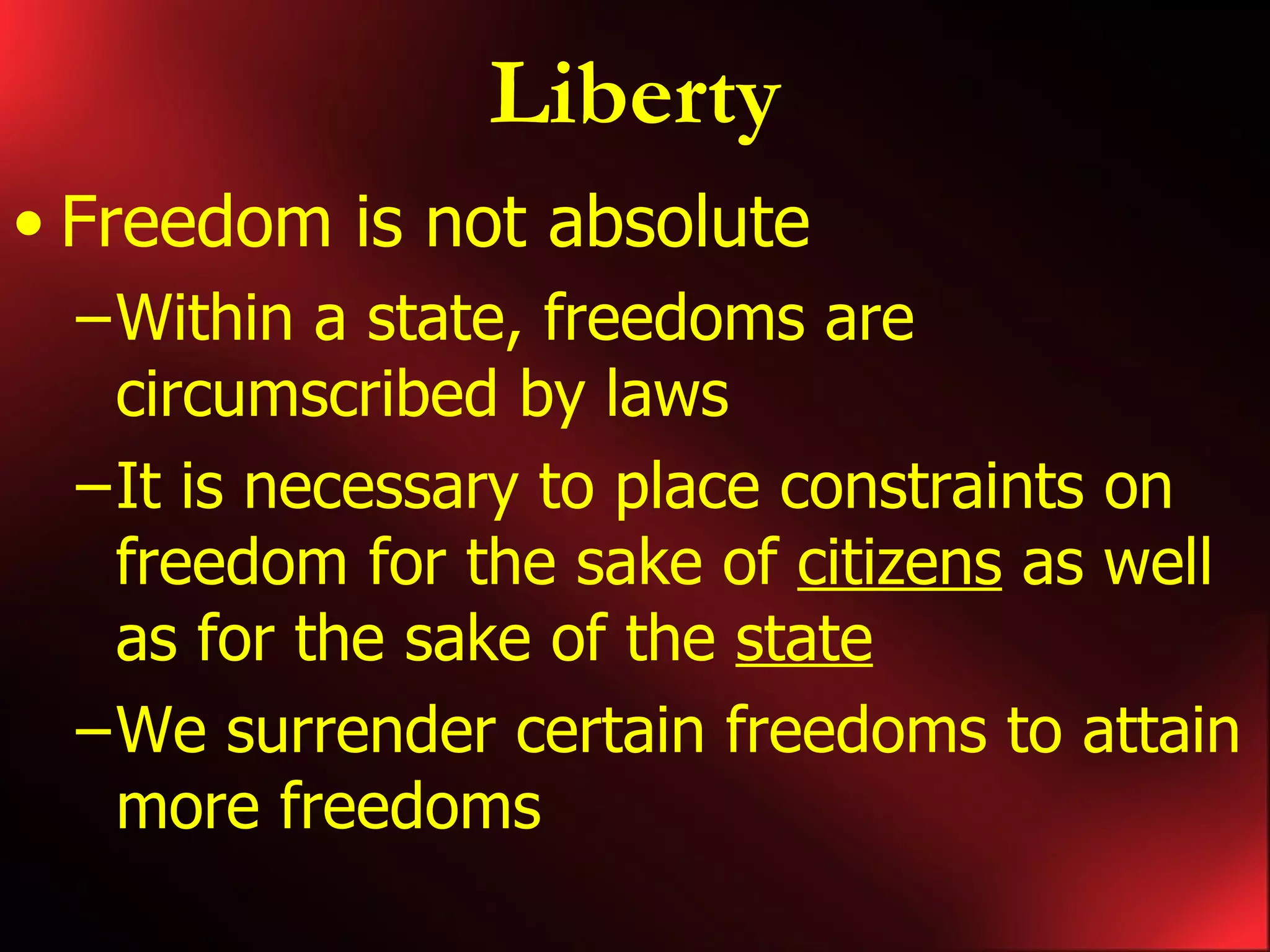
Liberty Freedom is not absolute Within a state, freedoms are circumscribed by laws  It is necessary to place constraints on freedom for the sake of  citizens  as well as for the sake of the  state We surrender certain freedoms to attain more freedoms
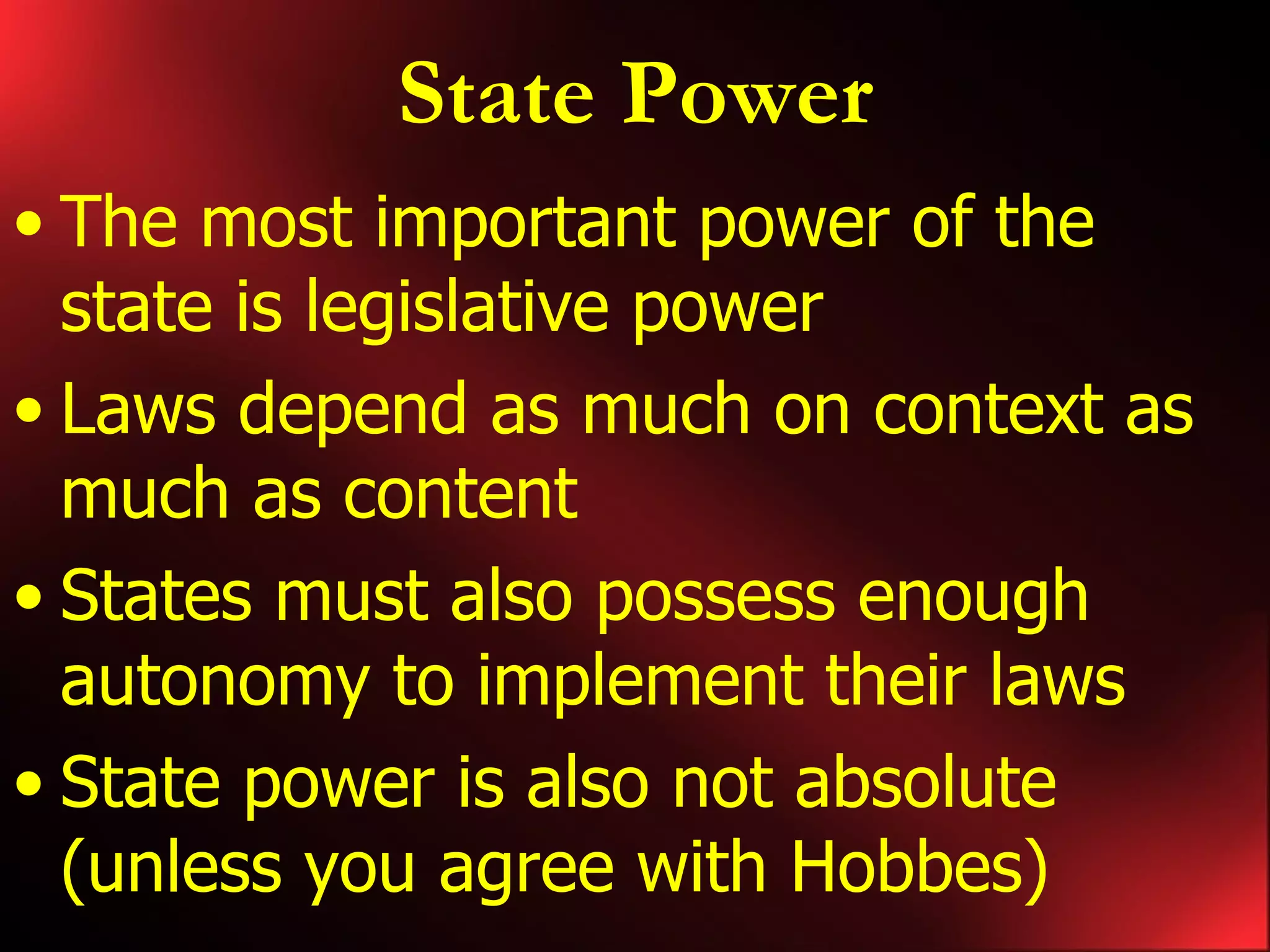
State Power The most important power of the state is legislative power Laws depend as much on context as much as content States must also possess enough autonomy to implement their laws State power is also not absolute (unless you agree with Hobbes)

Social Contract Theories

  • 1.
    On the SocialContract Theories On the Social Contract Theories
  • 2.
    Points to PonderReview Foundations of the state Relationship between citizens and state Context of liberty Powers of the state
  • 3.
    Human Nature: AContinuum Pessimistic Optimistic HOBBES LOCKE ROUSSEAU Man is “evil”, a wolf unto his fellow man. Man possesses perfect liberty. “ Man is born free; and everywhere he is in chains”
  • 4.
    Summary State guidedby the general will. No security or morality. Man is free but ‘immoral’. Rousseau Commonwealth Property is not secure. Man has perfect freedom. Locke Leviathan A state of War. Man is a wolf unto his fellow man. Hobbes Social Contract State of Nature Human Nature
  • 5.
    State Foundations Statesare historical institutions However, more fundamentally their moorings are philosophical How states are organized and function depend on our view of human nature Thus questions of governance and law are not just questions of expediency “Is it proper to man?”
  • 6.
    Citizen-State Relations Thestate exists for man, and not man for the state A state is a human instrument for the achievement of common interests States do not rob us of our individuality or liberty However, membership in a state comes with obligations to our fellow man
  • 7.
    Liberty Freedom isnot absolute Within a state, freedoms are circumscribed by laws It is necessary to place constraints on freedom for the sake of citizens as well as for the sake of the state We surrender certain freedoms to attain more freedoms
  • 8.
    State Power Themost important power of the state is legislative power Laws depend as much on context as much as content States must also possess enough autonomy to implement their laws State power is also not absolute (unless you agree with Hobbes)