SNMP
INTRODUCTION
 SNMP
 What is SNMP?
 SNMP Architecture
 SNMP Components
 Versions of SNMP
 Trap Event
WHAT IS SNMP?
 Simple Network Management Protocol (SNMP) is an
Internet standard protocol
 It is defined by IETF, Internet engineering task force. It is
application layer protocol.
 It manages devices on IP networks. Devices that typically
support SNMP include routers, switches, servers,
workstations, printers, modem racks and more. It is used
mostly in network management.
 SNMP is an application program that allows,
manager to retrieve value of an object defined in agent, a
manager to store value in an object defined in agent , an
agent to send alarm information called trap event.
SNMP ARCHITECTURE
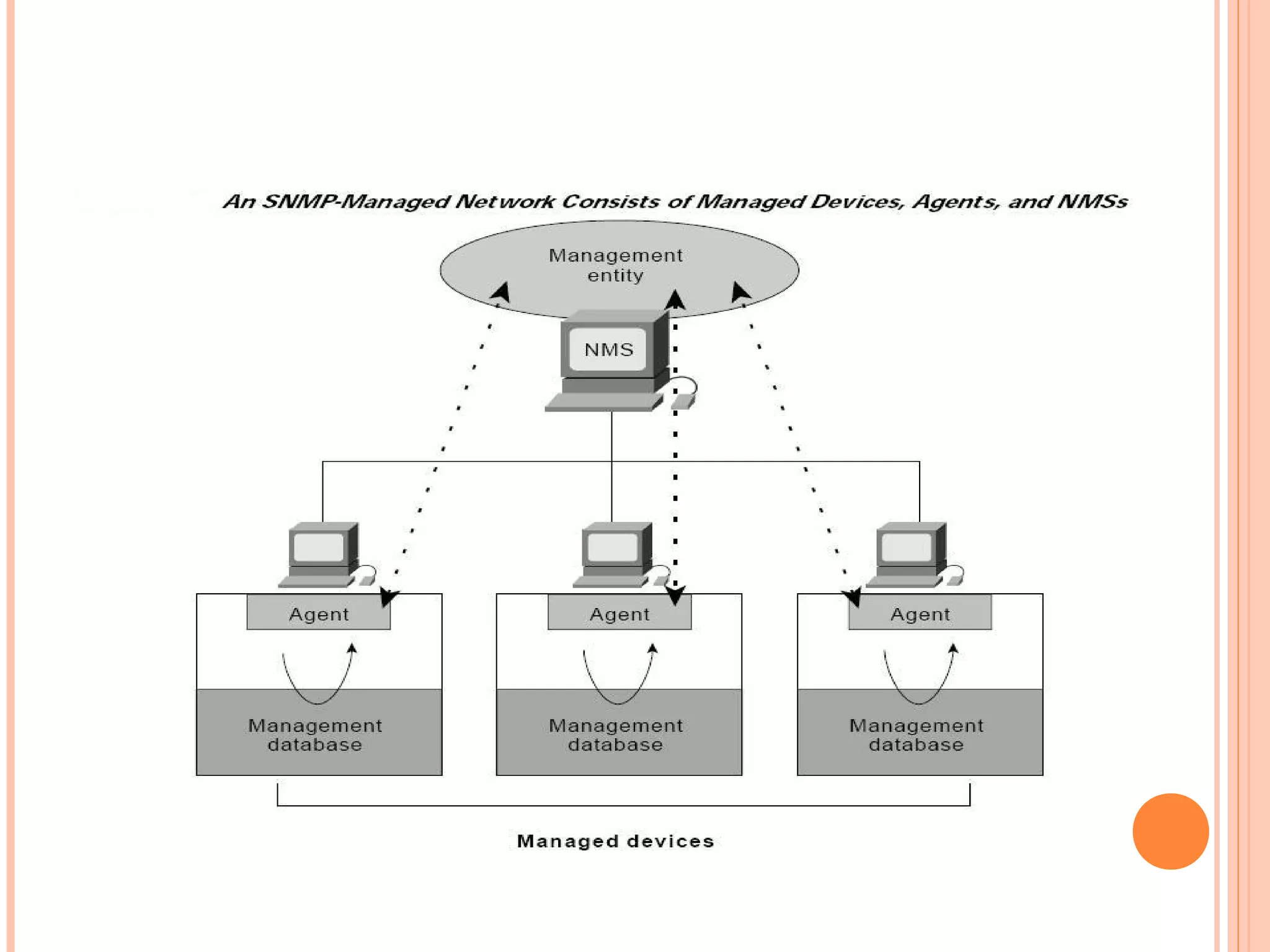
 Manager
 Agent
 NMS(network management Systems)
SNMP ARCHITECTURE
 SNMP defines manager ,it monitoring
and managing devices connected with
network.
 Manager sending request to network
device called agent and agent will
respond to manager request via SNMP.
 Agents will respond data on managed
systems as variables.
SNMP ARCHITECTURE
 NMS, network management systems it executes
application which monitor and manage devices.
basically it will run on manager
SNMP COMPONENTS
 Management information base (MIB)
 Structure of management information (SMI)
MIB
 SNMP protocol provide information about
devices and that variables information is
provided by management information
base(MIB). It is collection of objects and
their types in hierarchal tree format.
SMI
 SMI defines rule for naming objects, defining
object types and showing how to encode objects
and data.
 Agent will receives request on UDP port no. 161
and manager will send request on UDP port no.
161
 Manger receives notifications from agent on port
no. 162 that called trap event.
SNMP VERSIONS & PDU
• SNMPv1
• SNMPv2 (SNMPv2P,SNMPv2C,SNMPv2u)
SNMP has protocol data units(PDUs),
• GetRequest
• SetRequest
• Getnextrequest
• GetBulkrequest (SNMPv2)
• Response
• Trap
• InformRequest(SNMPv2)
 SNMPv1
V1 is first version of SNMP basically has poor
security.
 SNMPv2
V2 is revised version of V1 it improves in area of
performance, security, confidentially. It
introduces Getbulkrequest & inform Request
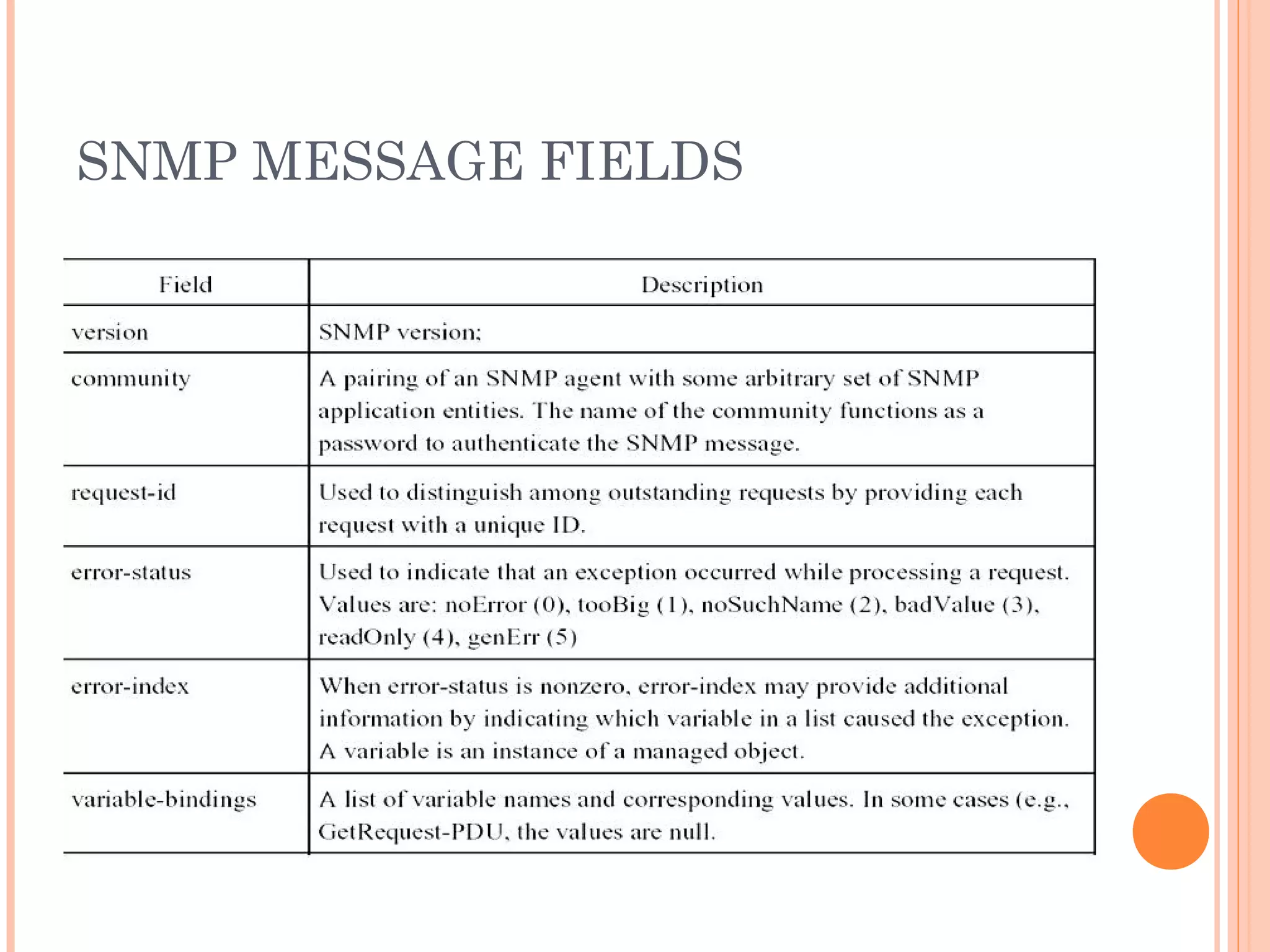
SNMP MESSAGE FIELDS
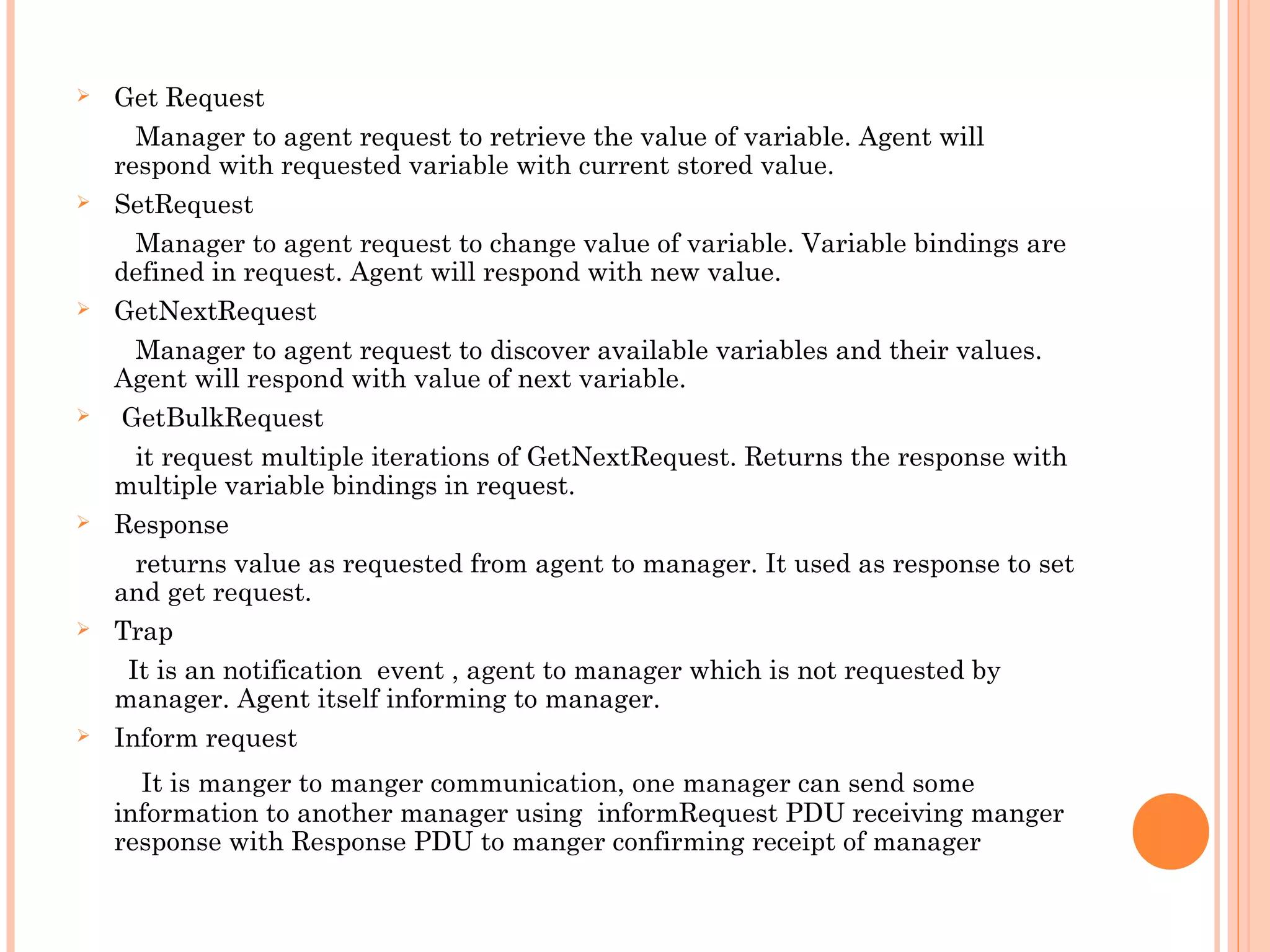
 Get Request
Manager to agent request to retrieve the value of variable. Agent will
respond with requested variable with current stored value.
 SetRequest
Manager to agent request to change value of variable. Variable bindings are
defined in request. Agent will respond with new value.
 GetNextRequest
Manager to agent request to discover available variables and their values.
Agent will respond with value of next variable.
 GetBulkRequest
it request multiple iterations of GetNextRequest. Returns the response with
multiple variable bindings in request.
 Response
returns value as requested from agent to manager. It used as response to set
and get request.
 Trap
It is an notification event , agent to manager which is not requested by
manager. Agent itself informing to manager.
 Inform request
It is manger to manger communication, one manager can send some
information to another manager using informRequest PDU receiving manger
response with Response PDU to manger confirming receipt of manager
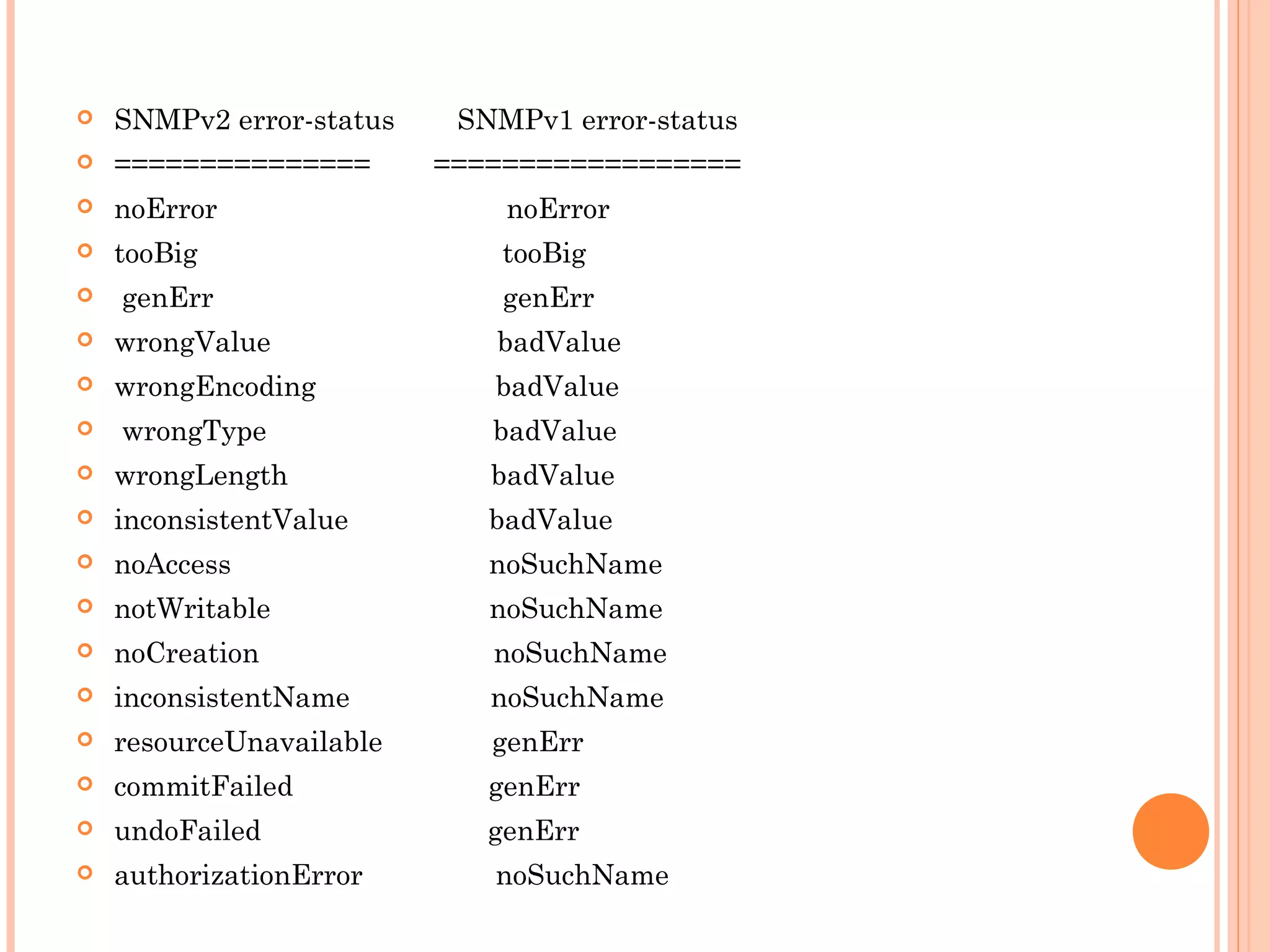
 SNMPv2 error-status SNMPv1 error-status
 =============== ==================
 noError noError
 tooBig tooBig
 genErr genErr
 wrongValue badValue
 wrongEncoding badValue
 wrongType badValue
 wrongLength badValue
 inconsistentValue badValue
 noAccess noSuchName
 notWritable noSuchName
 noCreation noSuchName
 inconsistentName noSuchName
 resourceUnavailable genErr
 commitFailed genErr
 undoFailed genErr
 authorizationError noSuchName
TRAP-PDU
 A sysUpTime parameter (TimeTicks). This appears in the
first variable-binding in an SNMPv2-Trap-PDU or
InformRequest-PDU.
 An snmpTrapOID parameter (OBJECT IDENTIFIER).
This appears in the second variable-binding in an
SNMPv2-Trap-PDU or InformRequest-PDU.
 A list of variable-bindings (VarBindList). This refers to all
but the first two variable-bindings in an SNMPv2-Trap-
PDU or InformRequest-PDU
TRAPV1
1. Contains agent address.
2. It has information about specific trap and
generic trap value.
3. It does not have error index and status
TRAPV2
1. Does not contain agent address.
2. It has Trap OID in the second varbind.
3. It has error index and status.
THANK YOU

Snmp

  • 1.
  • 2.
    INTRODUCTION  SNMP  Whatis SNMP?  SNMP Architecture  SNMP Components  Versions of SNMP  Trap Event
  • 3.
    WHAT IS SNMP? Simple Network Management Protocol (SNMP) is an Internet standard protocol  It is defined by IETF, Internet engineering task force. It is application layer protocol.  It manages devices on IP networks. Devices that typically support SNMP include routers, switches, servers, workstations, printers, modem racks and more. It is used mostly in network management.  SNMP is an application program that allows, manager to retrieve value of an object defined in agent, a manager to store value in an object defined in agent , an agent to send alarm information called trap event.
  • 4.
    SNMP ARCHITECTURE  Manager Agent  NMS(network management Systems)
  • 5.
    SNMP ARCHITECTURE  SNMPdefines manager ,it monitoring and managing devices connected with network.  Manager sending request to network device called agent and agent will respond to manager request via SNMP.  Agents will respond data on managed systems as variables.
  • 6.
    SNMP ARCHITECTURE  NMS,network management systems it executes application which monitor and manage devices. basically it will run on manager
  • 8.
    SNMP COMPONENTS  Managementinformation base (MIB)  Structure of management information (SMI)
  • 9.
    MIB  SNMP protocolprovide information about devices and that variables information is provided by management information base(MIB). It is collection of objects and their types in hierarchal tree format.
  • 11.
    SMI  SMI definesrule for naming objects, defining object types and showing how to encode objects and data.
  • 12.
     Agent willreceives request on UDP port no. 161 and manager will send request on UDP port no. 161  Manger receives notifications from agent on port no. 162 that called trap event.
  • 13.
    SNMP VERSIONS &PDU • SNMPv1 • SNMPv2 (SNMPv2P,SNMPv2C,SNMPv2u) SNMP has protocol data units(PDUs), • GetRequest • SetRequest • Getnextrequest • GetBulkrequest (SNMPv2) • Response • Trap • InformRequest(SNMPv2)
  • 14.
     SNMPv1 V1 isfirst version of SNMP basically has poor security.  SNMPv2 V2 is revised version of V1 it improves in area of performance, security, confidentially. It introduces Getbulkrequest & inform Request
  • 15.
  • 16.
     Get Request Managerto agent request to retrieve the value of variable. Agent will respond with requested variable with current stored value.  SetRequest Manager to agent request to change value of variable. Variable bindings are defined in request. Agent will respond with new value.  GetNextRequest Manager to agent request to discover available variables and their values. Agent will respond with value of next variable.  GetBulkRequest it request multiple iterations of GetNextRequest. Returns the response with multiple variable bindings in request.  Response returns value as requested from agent to manager. It used as response to set and get request.  Trap It is an notification event , agent to manager which is not requested by manager. Agent itself informing to manager.  Inform request It is manger to manger communication, one manager can send some information to another manager using informRequest PDU receiving manger response with Response PDU to manger confirming receipt of manager
  • 18.
     SNMPv2 error-statusSNMPv1 error-status  =============== ==================  noError noError  tooBig tooBig  genErr genErr  wrongValue badValue  wrongEncoding badValue  wrongType badValue  wrongLength badValue  inconsistentValue badValue  noAccess noSuchName  notWritable noSuchName  noCreation noSuchName  inconsistentName noSuchName  resourceUnavailable genErr  commitFailed genErr  undoFailed genErr  authorizationError noSuchName
  • 19.
  • 20.
     A sysUpTimeparameter (TimeTicks). This appears in the first variable-binding in an SNMPv2-Trap-PDU or InformRequest-PDU.  An snmpTrapOID parameter (OBJECT IDENTIFIER). This appears in the second variable-binding in an SNMPv2-Trap-PDU or InformRequest-PDU.  A list of variable-bindings (VarBindList). This refers to all but the first two variable-bindings in an SNMPv2-Trap- PDU or InformRequest-PDU
  • 21.
    TRAPV1 1. Contains agentaddress. 2. It has information about specific trap and generic trap value. 3. It does not have error index and status TRAPV2 1. Does not contain agent address. 2. It has Trap OID in the second varbind. 3. It has error index and status.
  • 22.