SMOG
PRESENTED BY : Muzna Kashaf
Roll number : 16261514-030
SMOG
• Smog is air pollution that reduces visibility.
• The term "smog" was first used in the early 1900s by H.A. Des
Voeux to describe a mix of smoke and fog over many British
towns.
• It is grimy, dirty, smelly and more dangerous than smoke.
• Smog was common in industrial areas, and remains a familiar
sight in cities today.
FORMATION OF SMOG
• Pollutant from automobiles, factories etc. are released into the
atmosphere.
• Under certain conditions of the atmosphere these particles
remain suspended in air.
• Suspended layer forms smog.
TYPES OF SMOG
 Two distinct types of smog are recognized:
 Sulfurous smog
 Photochemical smog
SULFUROUS SMOG
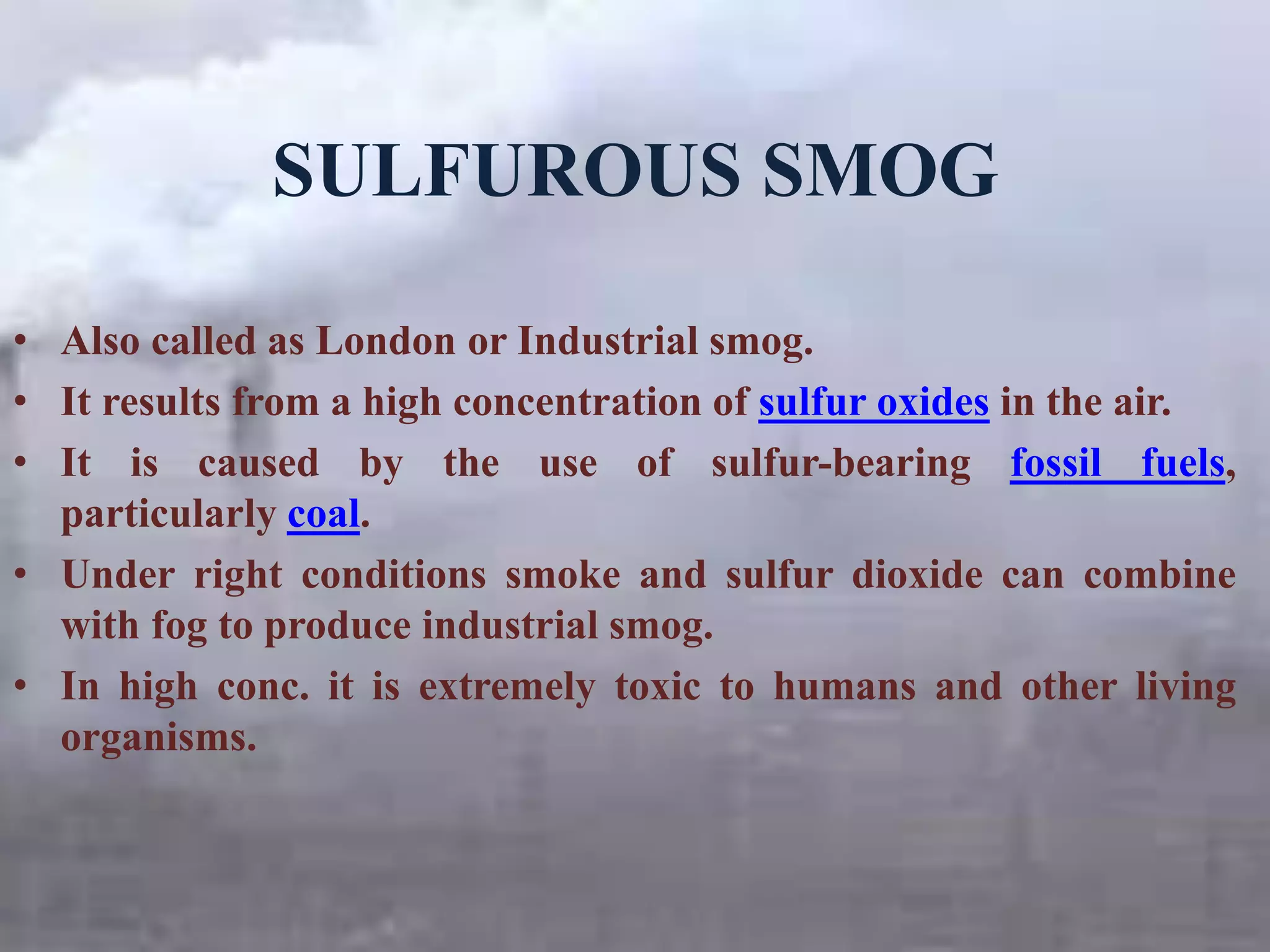
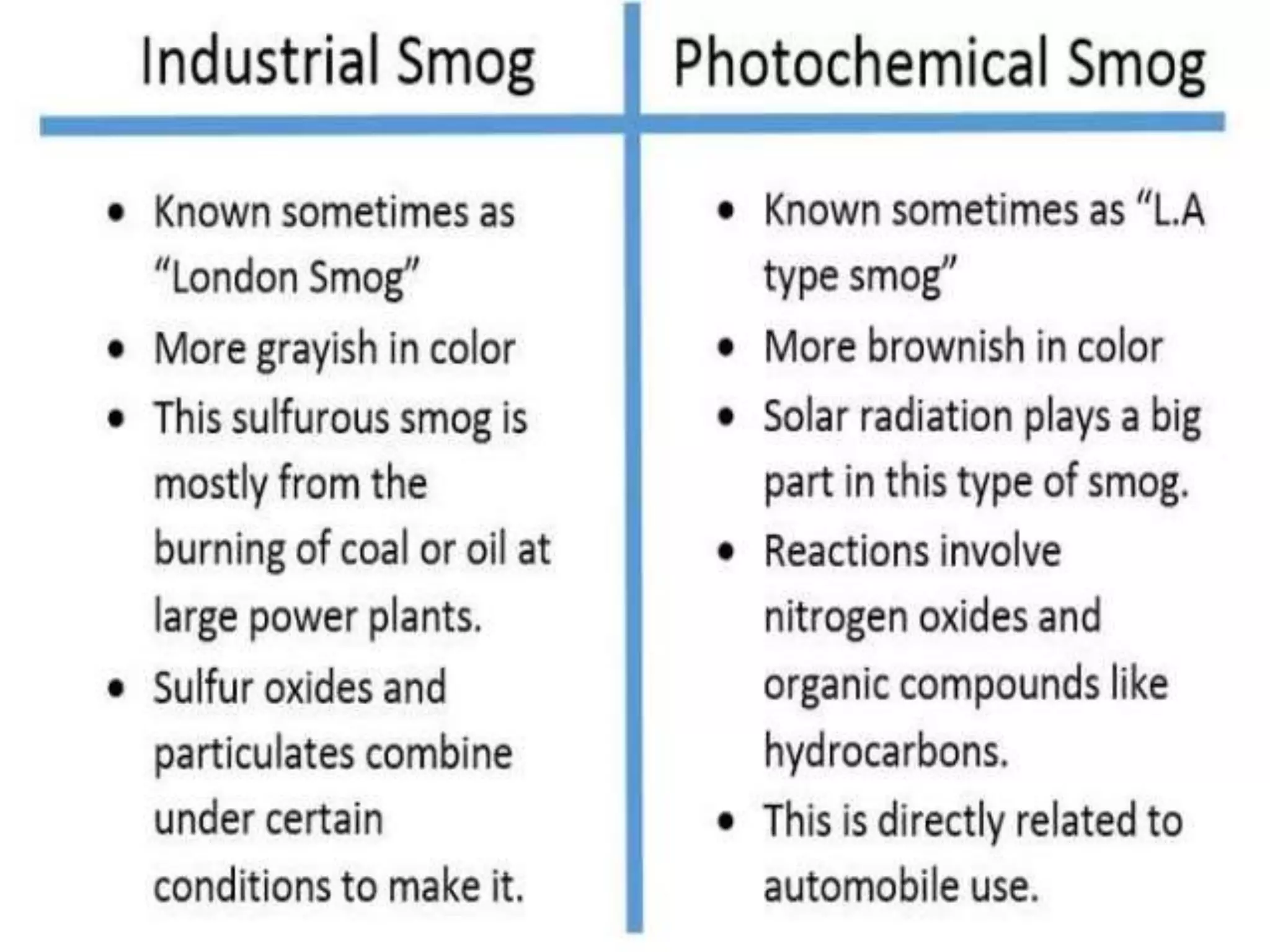
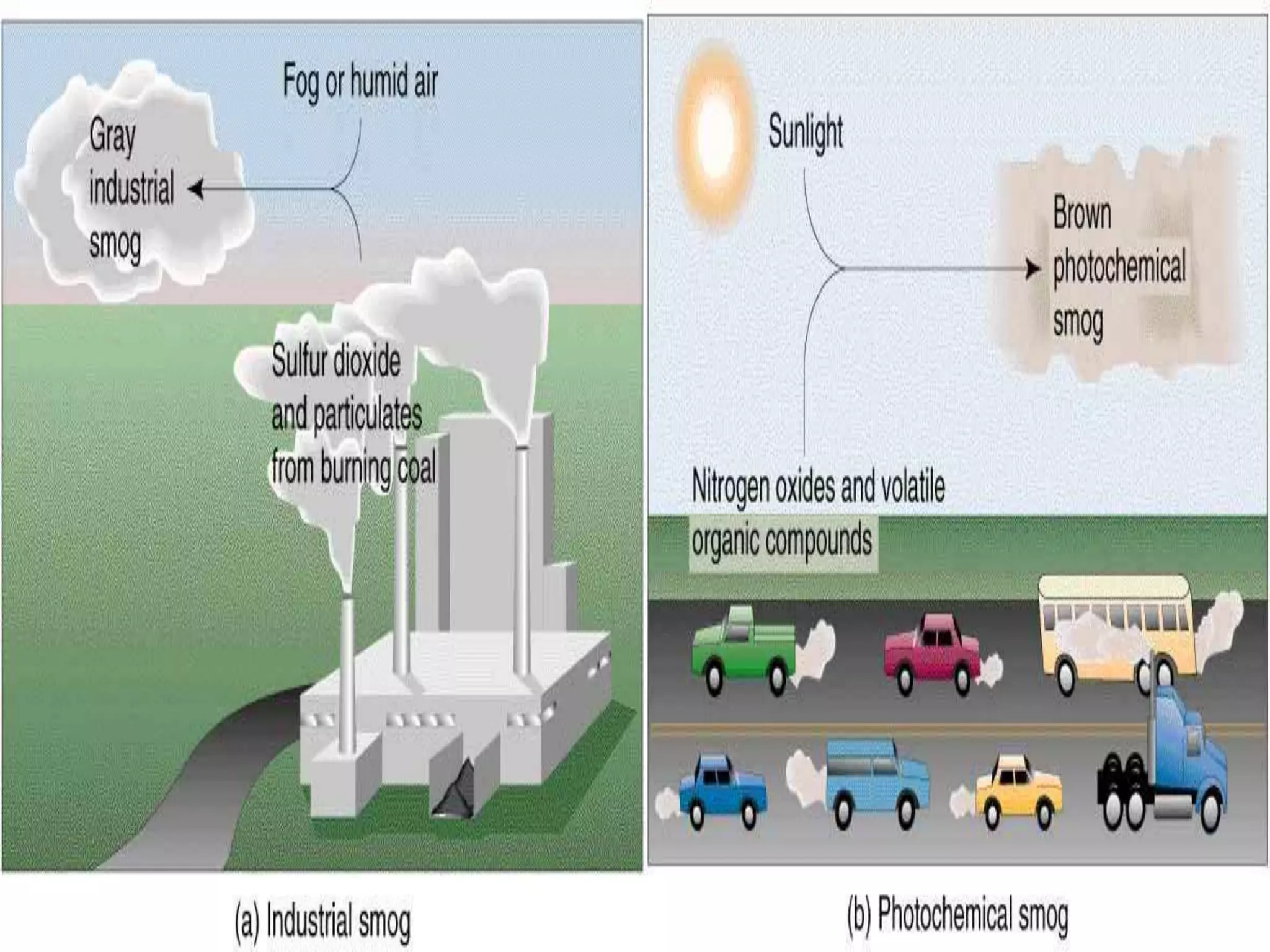
• Also called as London or Industrial smog.
• It results from a high concentration of sulfur oxides in the air.
• It is caused by the use of sulfur-bearing fossil fuels,
particularly coal.
• Under right conditions smoke and sulfur dioxide can combine
with fog to produce industrial smog.
• In high conc. it is extremely toxic to humans and other living
organisms.
PHOTOCHEMICAL SMOG
• It is also known as “Los Angeles smog”.
• It develops when primary pollutants (oxides of nitrogen and other
organic compounds) interact under influence of sunlight
(photochemical reaction).
• This interaction produces mixture of hazardous chemicals called
secondary pollutants e.g. LA smog.
• Burning of fossil fuels like gasoline can also create photochemical
smog.
EFFECTS OF SMOG
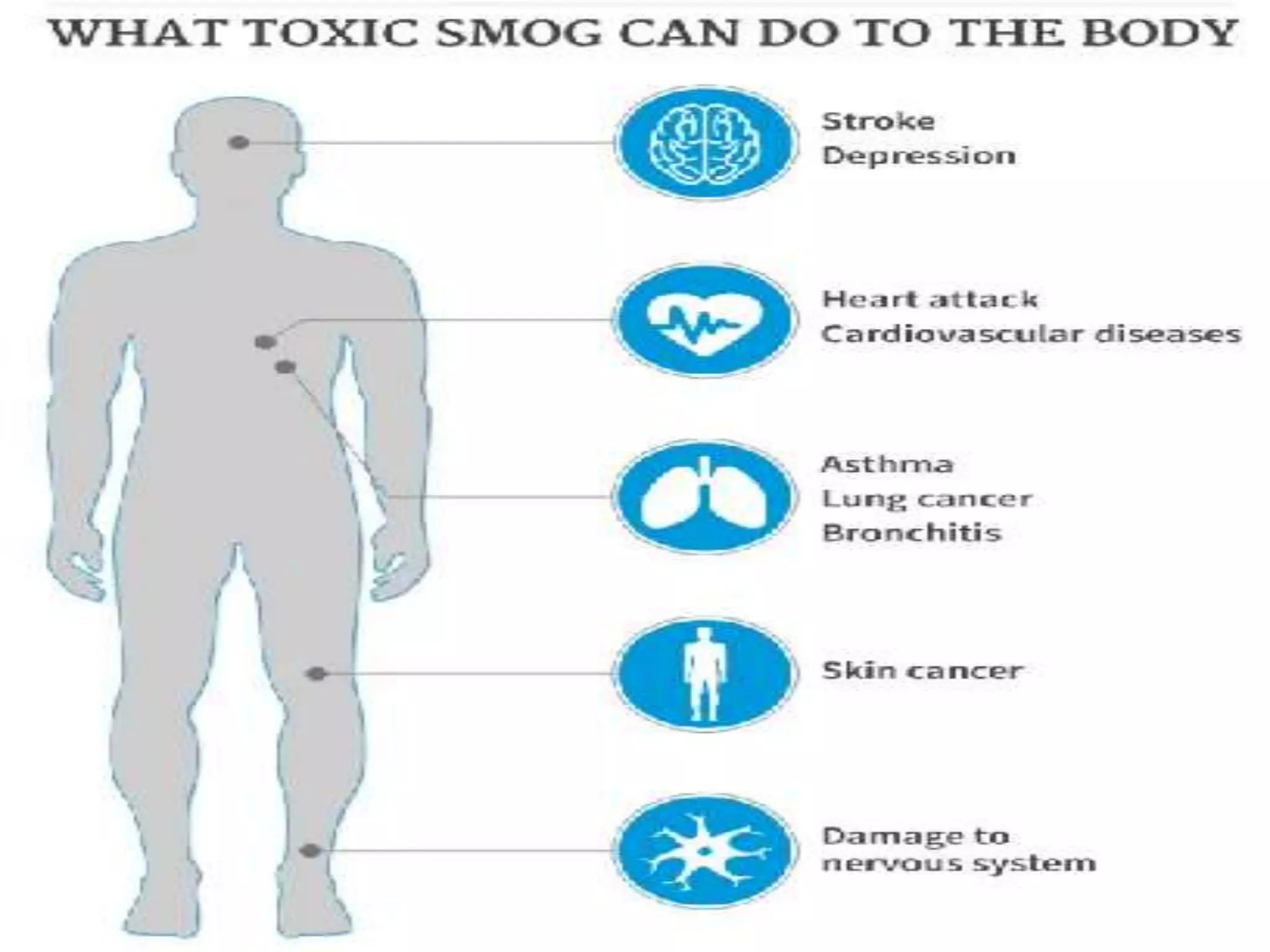
• Smog is unhealthy to humans and animals, and it can kill plants.
• It causes:
 Coughing and throat or chest irritation.
 Worsening of asthma symptoms.
 Difficulty in breathing and lung damage.
 Heart failure.
 Smog affects everyone differently, and some people are more
susceptible to its negative effects.
 Children, seniors, and people with asthma need to be especially
careful on smoggy days.
PRECAUTIONS
• To spend less time outdoors.
• Schedule your outside activities for the early morning or evening,
when ozone levels are low.
• Drive less and walk, bike, carpool, and use public transportation
whenever possible.
SMOG IN PAKISTAN
• In recent years, smog has become a problem for some cities in
Pakistan due to industrial and transport pollution.
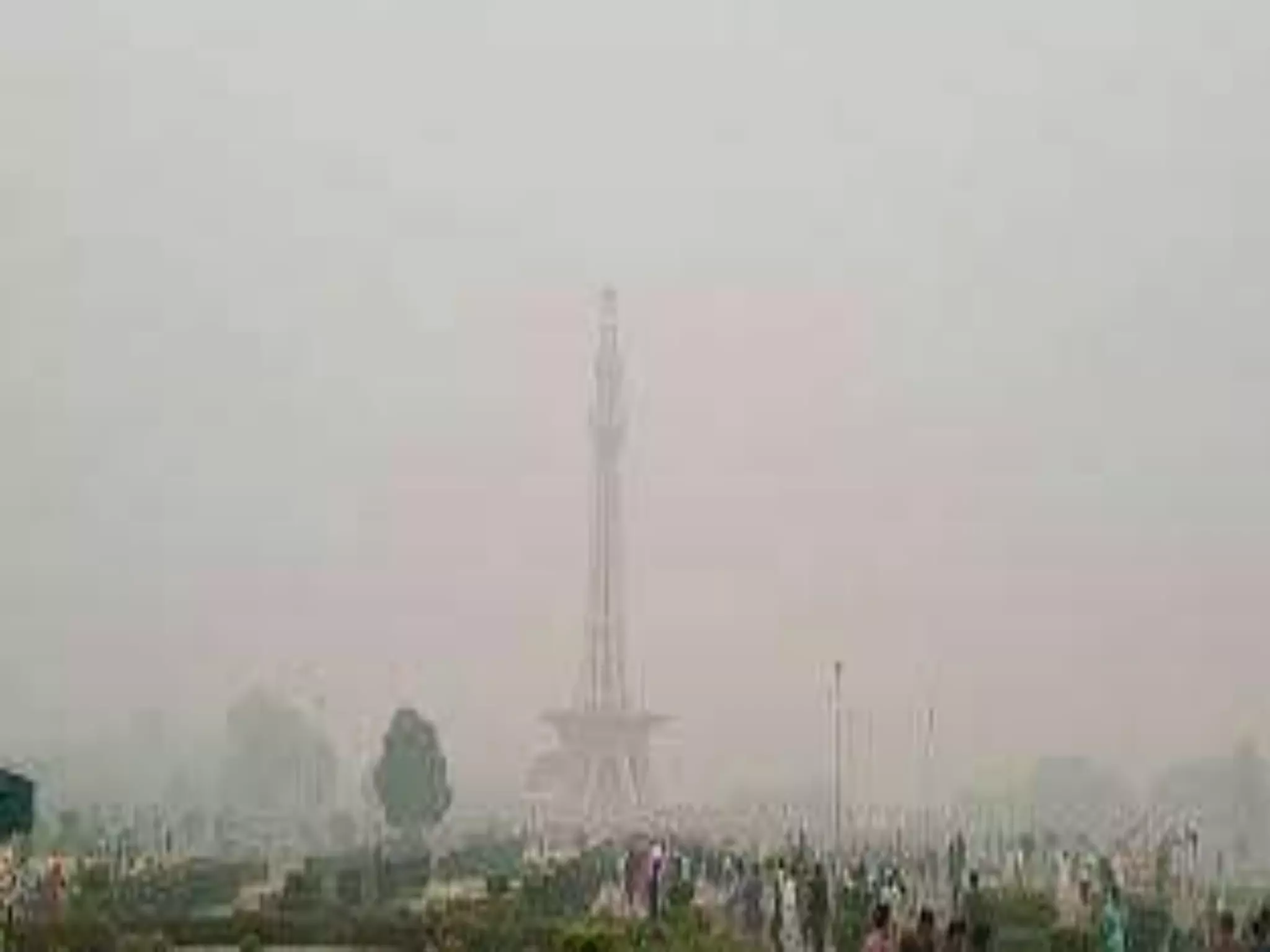
• The recent smog was observed on 6th November in Lahore as AQI
is recorded as 600.
• Punjab Minister for Industries, Commerce and Investment Mian
Aslam Iqbal in november,2018 said the government was adopting
adequate measures to combat pollution and smog across the
province.
• He maintained that a campaign would be launched on social
media to raise awareness about the damages caused to the
environment by burning of solid waste.
THANKS.

Smog ppt

  • 1.
    SMOG PRESENTED BY :Muzna Kashaf Roll number : 16261514-030
  • 2.
    SMOG • Smog isair pollution that reduces visibility. • The term "smog" was first used in the early 1900s by H.A. Des Voeux to describe a mix of smoke and fog over many British towns. • It is grimy, dirty, smelly and more dangerous than smoke. • Smog was common in industrial areas, and remains a familiar sight in cities today.
  • 3.
    FORMATION OF SMOG •Pollutant from automobiles, factories etc. are released into the atmosphere. • Under certain conditions of the atmosphere these particles remain suspended in air. • Suspended layer forms smog.
  • 4.
    TYPES OF SMOG Two distinct types of smog are recognized:  Sulfurous smog  Photochemical smog
  • 5.
    SULFUROUS SMOG • Alsocalled as London or Industrial smog. • It results from a high concentration of sulfur oxides in the air. • It is caused by the use of sulfur-bearing fossil fuels, particularly coal. • Under right conditions smoke and sulfur dioxide can combine with fog to produce industrial smog. • In high conc. it is extremely toxic to humans and other living organisms.
  • 6.
    PHOTOCHEMICAL SMOG • Itis also known as “Los Angeles smog”. • It develops when primary pollutants (oxides of nitrogen and other organic compounds) interact under influence of sunlight (photochemical reaction). • This interaction produces mixture of hazardous chemicals called secondary pollutants e.g. LA smog. • Burning of fossil fuels like gasoline can also create photochemical smog.
  • 9.
    EFFECTS OF SMOG •Smog is unhealthy to humans and animals, and it can kill plants. • It causes:  Coughing and throat or chest irritation.  Worsening of asthma symptoms.  Difficulty in breathing and lung damage.  Heart failure.  Smog affects everyone differently, and some people are more susceptible to its negative effects.  Children, seniors, and people with asthma need to be especially careful on smoggy days.
  • 11.
    PRECAUTIONS • To spendless time outdoors. • Schedule your outside activities for the early morning or evening, when ozone levels are low. • Drive less and walk, bike, carpool, and use public transportation whenever possible.
  • 12.
    SMOG IN PAKISTAN •In recent years, smog has become a problem for some cities in Pakistan due to industrial and transport pollution. • The recent smog was observed on 6th November in Lahore as AQI is recorded as 600. • Punjab Minister for Industries, Commerce and Investment Mian Aslam Iqbal in november,2018 said the government was adopting adequate measures to combat pollution and smog across the province. • He maintained that a campaign would be launched on social media to raise awareness about the damages caused to the environment by burning of solid waste.
  • 14.