Small group Learning
(Teaching)
By
Dr. Moawia Ahmed Elbadri
By the end of the lecture, the student
should be able to
• Define small group learning
• Define collaborative Learning
• List the three signature characteristics of small group learning
• Discuss the characteristics of the small group
• Outline the goals of small group teaching
• Describe the size of the small group
• Outline the advantages of small group learning
• List the common types of small group Learning
• Discuss common types of small group Learning
• Discuss the rationale for clinical teaching
Definition of Small groups
• Small group teaching (SGT) is a planned and organized face-to-face interaction
between members of a small group, which is formed to achieve a common
objective.
• are instructional settings that better optimize the instructor-to-learner ratio and
can foster collaborative learning.
collaborative learning
• Collaborative learning contends that learners make meaning together, actively
engaging in knowledge construction through inquiry and discussion with their
• peers
• Collaborative learning within a small group can be used to
clarify concepts
stimulate discussion
learn from each other’s inquiries and explanations
Goals of small group teaching
• The goals of SGT may be described as
development of intellectual understanding
development of communication skills, professional abilities
personal and professional growth
support for independence
development of group working skills and reflective practice
The size of the small group
• There is a consensus that the optimum size for SGT, in general, is between 5 and
8 per group
• for tutor-led, tutorial-type SGT a group of six is best.
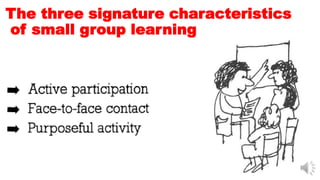
The three signature characteristics
of small group learning signature characteristics
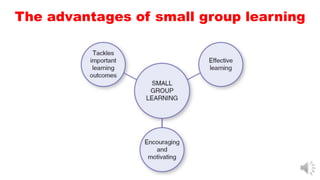
The advantages of small group learning
Common format of small group learning
• Problem-based Learning (PBL)
• Team Based Learning (TBL)
• Case-Based Learning (CBL)
Small Group Learning techniques
• Brainstorming sessions
• Free discussion
• Peer tutoring
• Problem-based tutorial group
• Role play
• Seminar
• Tutorial
• Tutorless group
Tutorial
Tutorials are a small group or individual meetings with an academic member of
staff.
• the group discusses previously covered material or assignments.
• The role of the teacher is to focus on the prepared work
• after answering the main questions set by the teacher the students should guide
the course of the session through new questions, follow-up discussion etc.
Seminar
• The traditional seminar relies on the learners reading the same text and then
coming together as a group to discuss the material, often in a free discussion
• questions can be raised and debates conducted
Seminar
• the students present a piece of work e.g. a PowerPoint presentation. All the
students should be involved.
• This type of small group teaching session is aimed at improving presentation
skills, research ability, critical appraisal of information etc.
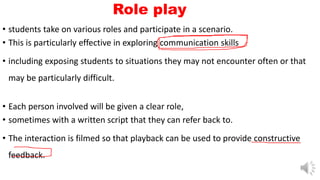
Role play
• students take on various roles and participate in a scenario.
• This is particularly effective in exploring communication skills
• including exposing students to situations they may not encounter often or that
may be particularly difficult.
• Each person involved will be given a clear role,
• sometimes with a written script that they can refer back to.
• The interaction is filmed so that playback can be used to provide constructive
feedback.
Role play
• In addition to viewing the video and providing some self-reflection
• students and facilitators can provide feedback using the ‘sandwich’ technique
where constructive criticism is provided in the following order:
• – What went well/was good
• – What could be improved
• – What went well/was good
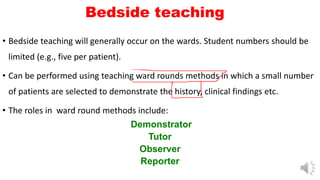
Bedside teaching
• Bedside teaching will generally occur on the wards. Student numbers should be
limited (e.g., five per patient).
• Can be performed using teaching ward rounds methods in which a small number
of patients are selected to demonstrate the history, clinical findings etc.
• The roles in ward round methods include:
Demonstrator
Tutor
Observer
Reporter
What are the goals of clinical teaching
• Be able to accumulate and record information about patients.
• Be able to perform a thorough, orderly, and complete physical examination.
• Be able to perform clinical skills eg blood pressure,
• Be able to correctly interpret data such as blood tests, radiological investigations, etc.
• •Be able to communicate effectively with patients and coworkers.
• Develop an understanding of allied health professionals
• Develop correct attitudes towards patients and allied health professionals.
Roles during Bedside teaching
• – Demonstrator – the tutor demonstrates aspects of the history or clinical
findings to the students.
• – Tutor –student takes it, in turn, to elicit a part of the history or examine.
• – Observer - (longer cases) The tutor observes from a distance the entire
history and/or physical examination and then critiques at the end.
• – Reporter – the students are not directly observed but are given the time to
elicit a history and perform an examination before reporting back
Summary
Small group Learning.ppsx

Small group Learning.ppsx

  • 1.
  • 2.
    By the endof the lecture, the student should be able to • Define small group learning • Define collaborative Learning • List the three signature characteristics of small group learning • Discuss the characteristics of the small group • Outline the goals of small group teaching • Describe the size of the small group • Outline the advantages of small group learning • List the common types of small group Learning • Discuss common types of small group Learning • Discuss the rationale for clinical teaching
  • 3.
    Definition of Smallgroups • Small group teaching (SGT) is a planned and organized face-to-face interaction between members of a small group, which is formed to achieve a common objective. • are instructional settings that better optimize the instructor-to-learner ratio and can foster collaborative learning.
  • 4.
    collaborative learning • Collaborativelearning contends that learners make meaning together, actively engaging in knowledge construction through inquiry and discussion with their • peers • Collaborative learning within a small group can be used to clarify concepts stimulate discussion learn from each other’s inquiries and explanations
  • 6.
    Goals of smallgroup teaching • The goals of SGT may be described as development of intellectual understanding development of communication skills, professional abilities personal and professional growth support for independence development of group working skills and reflective practice
  • 7.
    The size ofthe small group • There is a consensus that the optimum size for SGT, in general, is between 5 and 8 per group • for tutor-led, tutorial-type SGT a group of six is best.
  • 10.
    The three signaturecharacteristics of small group learning signature characteristics
  • 12.
    The advantages ofsmall group learning
  • 13.
    Common format ofsmall group learning • Problem-based Learning (PBL) • Team Based Learning (TBL) • Case-Based Learning (CBL)
  • 14.
    Small Group Learningtechniques • Brainstorming sessions • Free discussion • Peer tutoring • Problem-based tutorial group • Role play • Seminar • Tutorial • Tutorless group
  • 15.
    Tutorial Tutorials are asmall group or individual meetings with an academic member of staff. • the group discusses previously covered material or assignments. • The role of the teacher is to focus on the prepared work • after answering the main questions set by the teacher the students should guide the course of the session through new questions, follow-up discussion etc.
  • 16.
    Seminar • The traditionalseminar relies on the learners reading the same text and then coming together as a group to discuss the material, often in a free discussion • questions can be raised and debates conducted
  • 17.
    Seminar • the studentspresent a piece of work e.g. a PowerPoint presentation. All the students should be involved. • This type of small group teaching session is aimed at improving presentation skills, research ability, critical appraisal of information etc.
  • 18.
    Role play • studentstake on various roles and participate in a scenario. • This is particularly effective in exploring communication skills • including exposing students to situations they may not encounter often or that may be particularly difficult. • Each person involved will be given a clear role, • sometimes with a written script that they can refer back to. • The interaction is filmed so that playback can be used to provide constructive feedback.
  • 19.
    Role play • Inaddition to viewing the video and providing some self-reflection • students and facilitators can provide feedback using the ‘sandwich’ technique where constructive criticism is provided in the following order: • – What went well/was good • – What could be improved • – What went well/was good
  • 20.
    Bedside teaching • Bedsideteaching will generally occur on the wards. Student numbers should be limited (e.g., five per patient). • Can be performed using teaching ward rounds methods in which a small number of patients are selected to demonstrate the history, clinical findings etc. • The roles in ward round methods include: Demonstrator Tutor Observer Reporter
  • 21.
    What are thegoals of clinical teaching • Be able to accumulate and record information about patients. • Be able to perform a thorough, orderly, and complete physical examination. • Be able to perform clinical skills eg blood pressure, • Be able to correctly interpret data such as blood tests, radiological investigations, etc. • •Be able to communicate effectively with patients and coworkers. • Develop an understanding of allied health professionals • Develop correct attitudes towards patients and allied health professionals.
  • 22.
    Roles during Bedsideteaching • – Demonstrator – the tutor demonstrates aspects of the history or clinical findings to the students. • – Tutor –student takes it, in turn, to elicit a part of the history or examine. • – Observer - (longer cases) The tutor observes from a distance the entire history and/or physical examination and then critiques at the end. • – Reporter – the students are not directly observed but are given the time to elicit a history and perform an examination before reporting back
  • 23.