Download to read offline


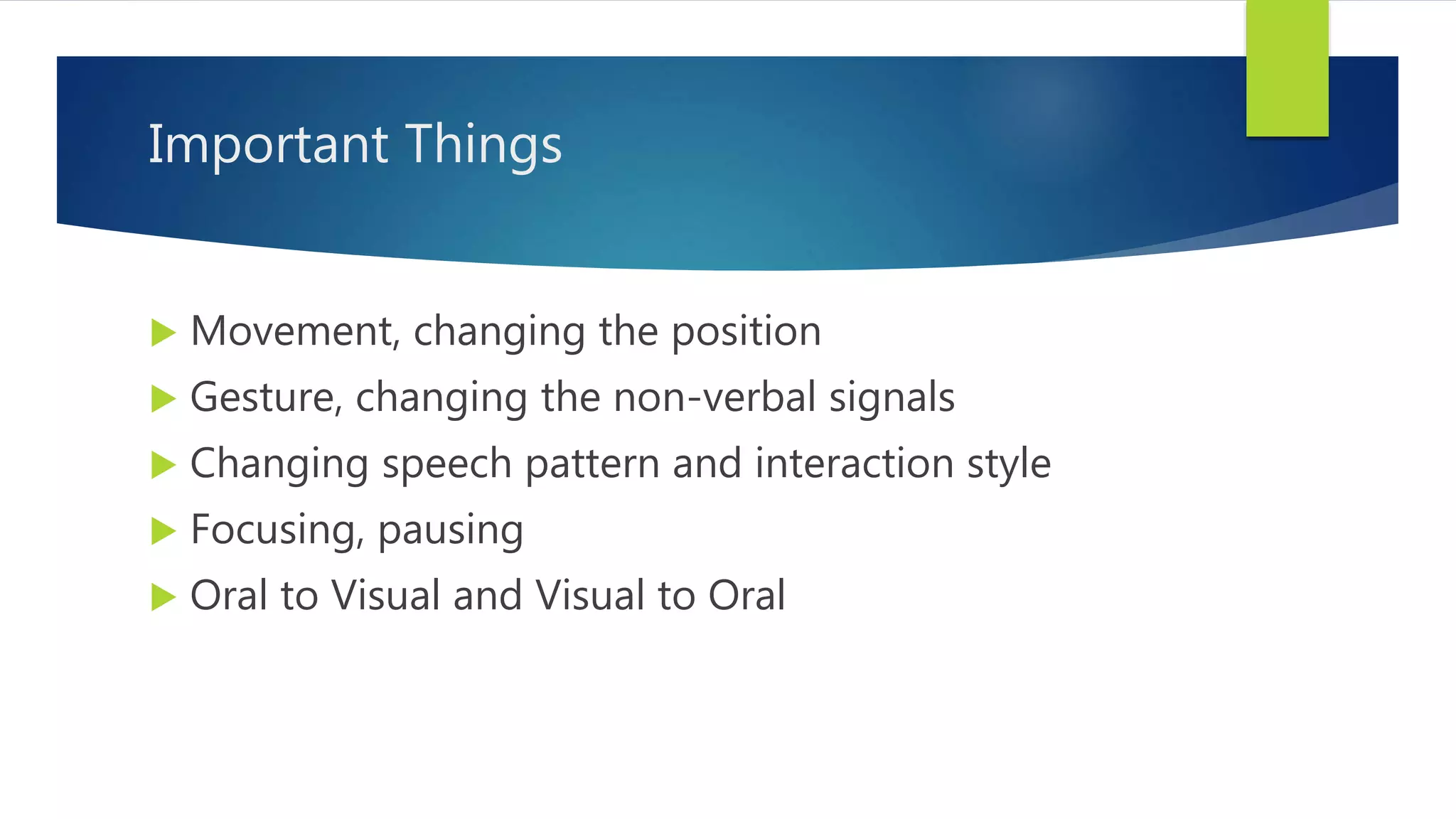


This document discusses the skill of stimulus variation in microteaching. Stimulus variation refers to changing teaching behaviors and stimuli to sustain student attention and understanding. It is important for enhancing active involvement, understanding, liveliness, grabbing attention, minimizing boredom, and motivating students. Effective stimulus variation includes changing position, gestures, speech patterns, focusing, and switching between oral and visual presentation. Topics that benefit from stimulus variation include poems, dialogues, stories, and grammar lessons. Teachers should purposefully vary questions, facilitate discussions, demonstrate physically, use gestures while talking, and interact with students. They should avoid unnecessary movements, standing in one place too long, and playing with teaching materials.
Introduction to Stimulus Variation as a micro-teaching skill, presented by Dr. Rajnikant Dodiya.
Definition of stimulus; it serves as an action that provokes responses, with an emphasis on the importance of variation to maintain student engagement.
Description of stimulus variation as a teacher's technique to secure attention and reduce boredom, enhancing understanding and motivation in students.
Key aspects of maintaining stimulus variation, including movement, gestures, and interaction; suggested topics like poems and dialogues for effective engagement.
Guidelines for effective stimulus variation, mentioning do's like purposeful questions and don'ts like unnecessary movements to foster a productive learning environment.


