COMMUNICATION
-Group Approach-
Dr. Mathew joseph
Junior resident
Department of anatomy
Aiims rishikesh
COMMUNICATION
GROUP APPROACH
 Lecture
 Group discussion
 Tutorial
 Seminar
 Symposium
 Panel discussion
 Role play
 Project
 Grand Clinical Rounds(GCR)
 Clinical Case Presentation.
Lecture:
Lecture
Advantages
 Saving of time & resources
 Enables a large amount of information to be
presented
 Covers a large group of learners
 Serves as a good means of introducing a subject
 Can provide an up to date view of the subject
 Presents factual material in direct, logical
manner
 Contains experience which inspires
Lecture
Disadvantages
•keeps learners in a passive situation
•Does not help in problem solving
•Offers hardly any possibility of how much a learner has learnt
•Does not cater to individual pace of learning
•Experts are not always good teachers
•Communication in one way
Lecture With Discussion
Advantages
Involves audience at least after the lecture
Audience can question, clarify & challenge
Lecture With Discussion
Disadvantages
Time may limit discussion period
Quality is limited to quality of questions and discussion
Group Discussion:
A face to face mutual interchange of ideas &
opinions between members or a relatively small
group(5-15).
It is more than random, unstructured conservation
which occurs whenever small no. of
participants discuss freely, frankly which is
democratic in every sense .
Group Discussion
Advantages
• Not authority dependent
• Demands activity on the part of learner
• A learner discovers his strengths and weaknesses himself in
comparison to his fellow learners
Group Discussion
Disadvantages
• Inexperience of teacher and learner in the group process
• Subject may not be adequately covered
• Inadequate preparation by the learner
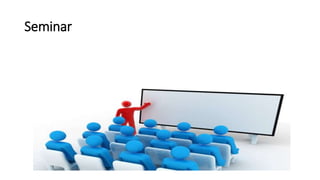
Seminar
Seminar
Advantages
• Helps to study a subject in depth under the guidance of an authority
• Authority available to guide discuss and assist the participants
• Detail and systematic discussion and inquiry can take place
• All members participate in the discussion
Seminar
Disadvantages
• May difficult to inhibit participation of some members
• Presence of an expert may inhibit participation of some members
• Members may not want to spend all the time in preparation of
reports
PANEL DISCUSSION
Symposium
Symposium
Advantages
• Present new material in a concise and logical way
• Gives a fair analysis of several sides of a controversial issue
• Comprehensive coverage of subject is possible
• Audience alert because of discussion
Symposium
Disadvantages
• A symposium is quite formal
• Role of audience is passive
• Little opportunity for discussion between speeches
Tutorial
Limited number of students are taught in groups
on a particular subject by a tutor.
Tutorial
Advantages
• Communication is a two way process
• Demands activity on the part of learner
• Help to discover and correct mistakes
• Helps to find out the extant of learning
Tutorial
Disadvantages
• Authority dependency is maintained
• Inadequate coverage of subject may occur
• Lack of preparation by the learner.
Project:
A significant practical unit of activity having aimed
at one or more definite goal of understanding. It
involves the investigation and solution of
problems.
Role Play:
Acting out a situation for objective study, by a
group of the behavior of the role players.
Different from simulation.
Role Play:
Advantages
• Introduces problem situation dramatically
• Provides opportunity for people to assume roles of others and
thus appreciate another point of view
• Allows for exploration of solutions
• Provides opportunity to practice skills
Role Play
Disadvantages
• People may be too self-conscious
• Not appropriate for large groups
• People may feel threatened
Practical Bedside Teaching
Advantages
• Puts learner in an active situation
• Covers limited group of learners
• Permits evaluation of degree to which educational objectives have
been attained.
• Develops qualities of observation and decision making
• Permits comparison between reality and theory
• Enables learners to develop self - confidence
Practical Bedside Teaching
Disadvantages
• Poor standardization
• Sometimes puts the patient in difficulty
• Involves personal costs
Grand Clinical Rounds:
• GCR are methodology of medical education and inpatient care,
consisting of presenting the medical problems and treatment of a
particular patient to an audience consisting of doctors, residents and
medical students.
Clinical Case Presentation:
• A case presentation is a formal communication between health care
professionals(doctors, pharmacists, nurses, therapists, nutritionist
etc) regarding a patient's clinical informations.
The authority of those who teach is often an
obstacle to those who want to learn.
-Cicero
Thank You

Communication dr mathew joseph

  • 1.
    COMMUNICATION -Group Approach- Dr. Mathewjoseph Junior resident Department of anatomy Aiims rishikesh
  • 2.
    COMMUNICATION GROUP APPROACH  Lecture Group discussion  Tutorial  Seminar  Symposium  Panel discussion  Role play  Project  Grand Clinical Rounds(GCR)  Clinical Case Presentation.
  • 3.
  • 4.
    Lecture Advantages  Saving oftime & resources  Enables a large amount of information to be presented  Covers a large group of learners  Serves as a good means of introducing a subject  Can provide an up to date view of the subject  Presents factual material in direct, logical manner  Contains experience which inspires
  • 5.
    Lecture Disadvantages •keeps learners ina passive situation •Does not help in problem solving •Offers hardly any possibility of how much a learner has learnt •Does not cater to individual pace of learning •Experts are not always good teachers •Communication in one way
  • 6.
    Lecture With Discussion Advantages Involvesaudience at least after the lecture Audience can question, clarify & challenge
  • 7.
    Lecture With Discussion Disadvantages Timemay limit discussion period Quality is limited to quality of questions and discussion
  • 8.
    Group Discussion: A faceto face mutual interchange of ideas & opinions between members or a relatively small group(5-15). It is more than random, unstructured conservation which occurs whenever small no. of participants discuss freely, frankly which is democratic in every sense .
  • 9.
    Group Discussion Advantages • Notauthority dependent • Demands activity on the part of learner • A learner discovers his strengths and weaknesses himself in comparison to his fellow learners
  • 10.
    Group Discussion Disadvantages • Inexperienceof teacher and learner in the group process • Subject may not be adequately covered • Inadequate preparation by the learner
  • 11.
  • 12.
    Seminar Advantages • Helps tostudy a subject in depth under the guidance of an authority • Authority available to guide discuss and assist the participants • Detail and systematic discussion and inquiry can take place • All members participate in the discussion
  • 13.
    Seminar Disadvantages • May difficultto inhibit participation of some members • Presence of an expert may inhibit participation of some members • Members may not want to spend all the time in preparation of reports
  • 14.
  • 15.
  • 16.
    Symposium Advantages • Present newmaterial in a concise and logical way • Gives a fair analysis of several sides of a controversial issue • Comprehensive coverage of subject is possible • Audience alert because of discussion
  • 17.
    Symposium Disadvantages • A symposiumis quite formal • Role of audience is passive • Little opportunity for discussion between speeches
  • 18.
    Tutorial Limited number ofstudents are taught in groups on a particular subject by a tutor.
  • 19.
    Tutorial Advantages • Communication isa two way process • Demands activity on the part of learner • Help to discover and correct mistakes • Helps to find out the extant of learning
  • 20.
    Tutorial Disadvantages • Authority dependencyis maintained • Inadequate coverage of subject may occur • Lack of preparation by the learner.
  • 21.
    Project: A significant practicalunit of activity having aimed at one or more definite goal of understanding. It involves the investigation and solution of problems.
  • 22.
    Role Play: Acting outa situation for objective study, by a group of the behavior of the role players. Different from simulation.
  • 23.
    Role Play: Advantages • Introducesproblem situation dramatically • Provides opportunity for people to assume roles of others and thus appreciate another point of view • Allows for exploration of solutions • Provides opportunity to practice skills
  • 24.
    Role Play Disadvantages • Peoplemay be too self-conscious • Not appropriate for large groups • People may feel threatened
  • 25.
    Practical Bedside Teaching Advantages •Puts learner in an active situation • Covers limited group of learners • Permits evaluation of degree to which educational objectives have been attained. • Develops qualities of observation and decision making • Permits comparison between reality and theory • Enables learners to develop self - confidence
  • 26.
    Practical Bedside Teaching Disadvantages •Poor standardization • Sometimes puts the patient in difficulty • Involves personal costs
  • 27.
    Grand Clinical Rounds: •GCR are methodology of medical education and inpatient care, consisting of presenting the medical problems and treatment of a particular patient to an audience consisting of doctors, residents and medical students.
  • 28.
    Clinical Case Presentation: •A case presentation is a formal communication between health care professionals(doctors, pharmacists, nurses, therapists, nutritionist etc) regarding a patient's clinical informations.
  • 29.
    The authority ofthose who teach is often an obstacle to those who want to learn. -Cicero
  • 30.