

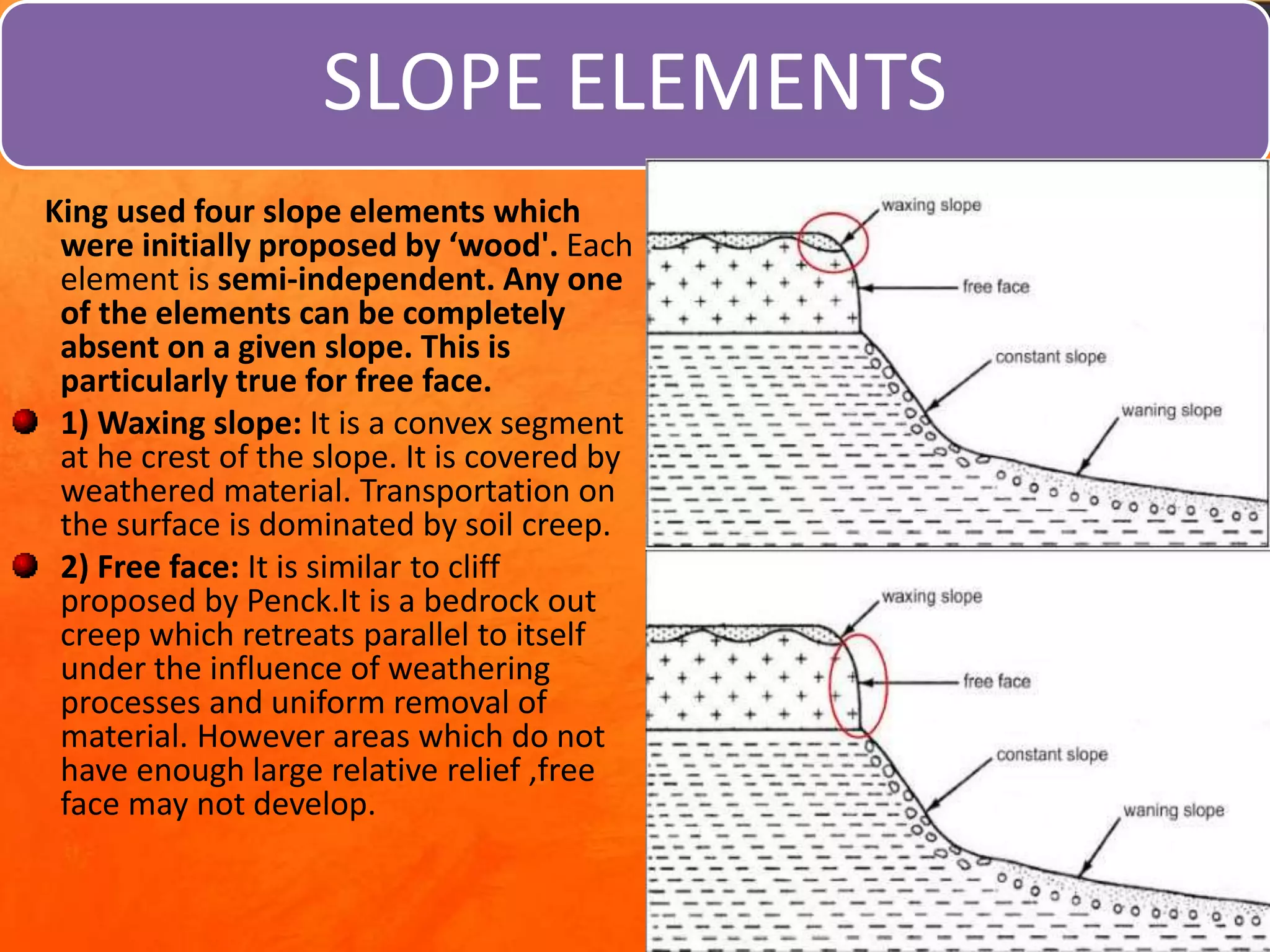
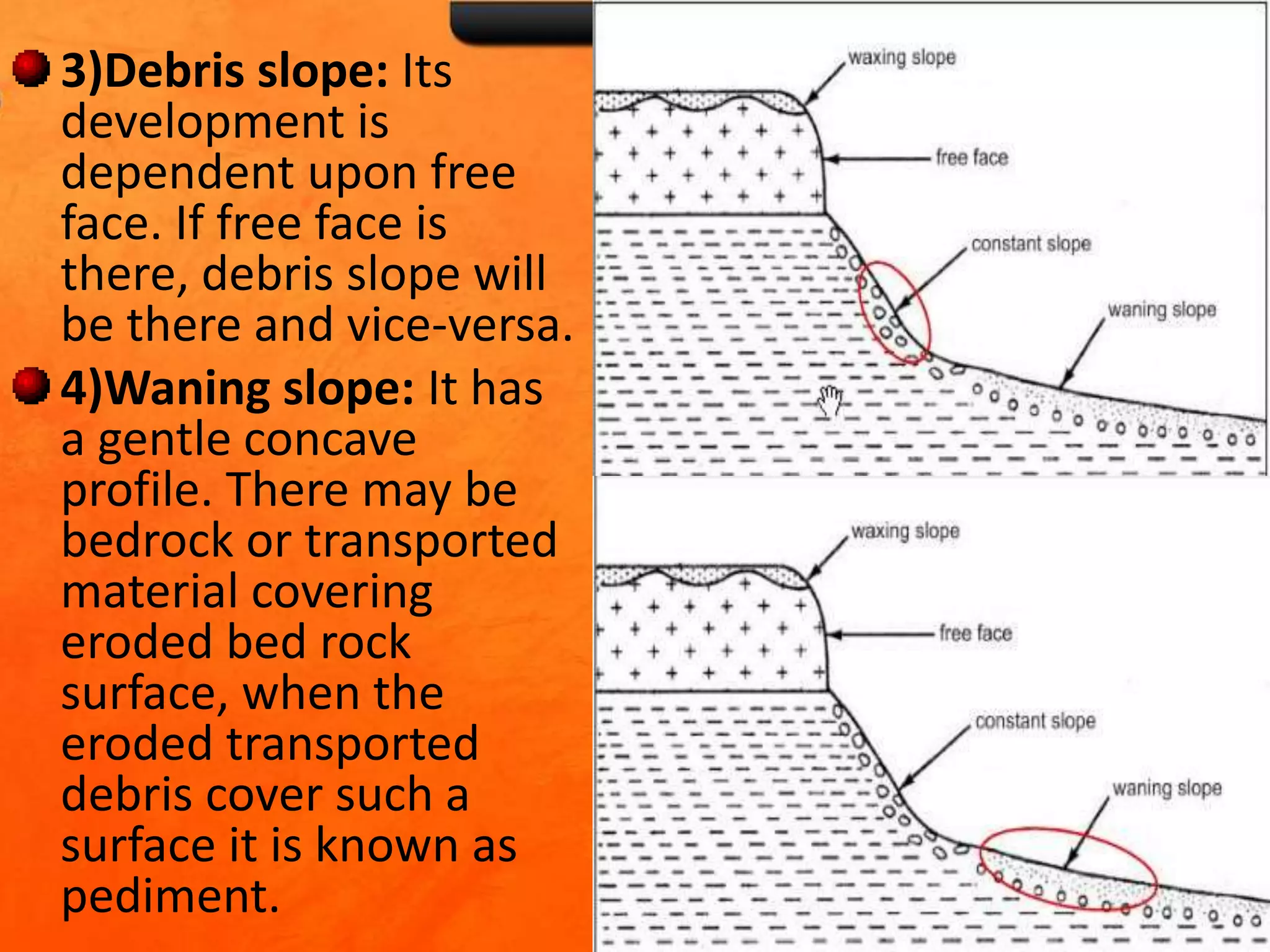
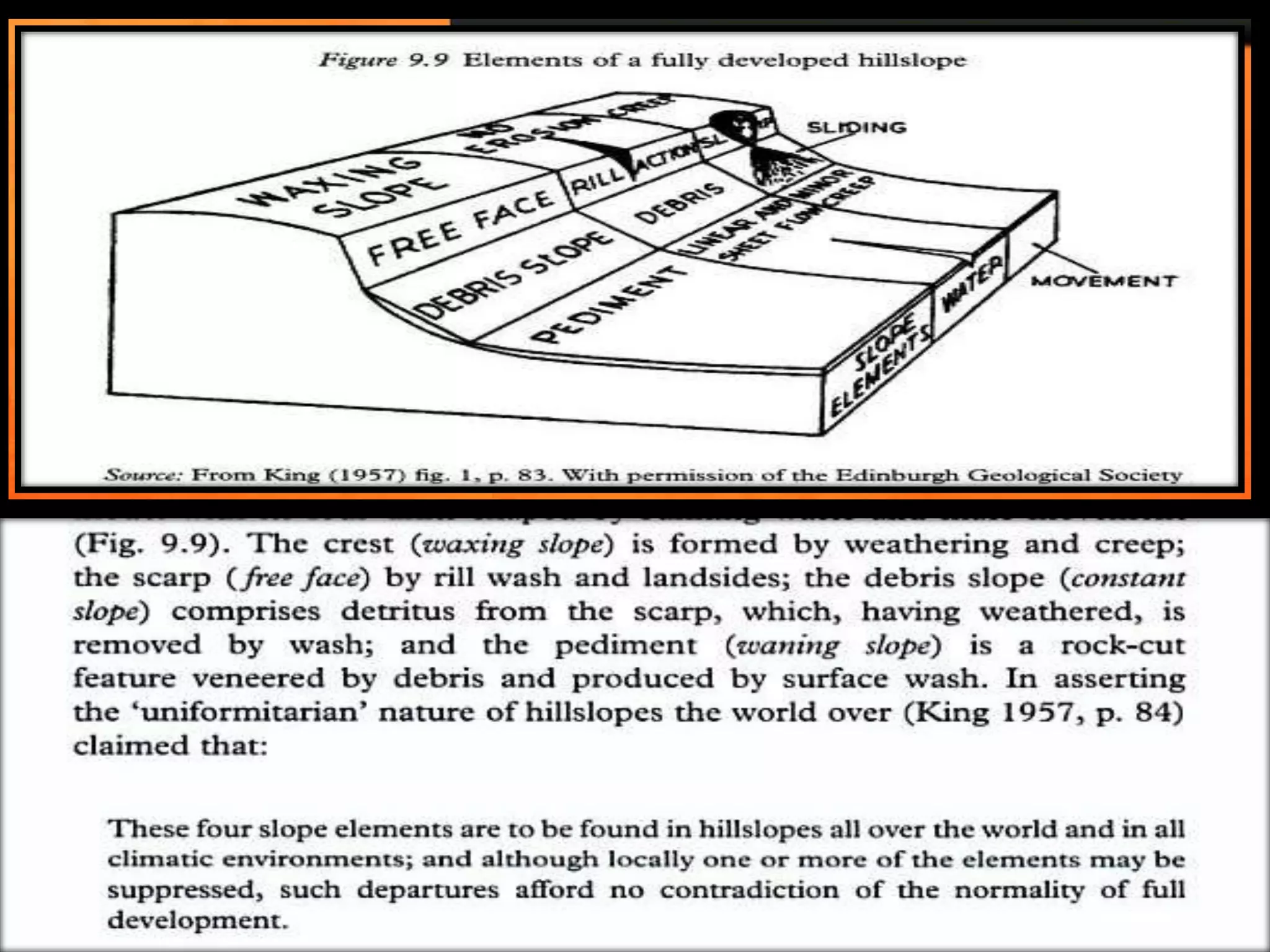
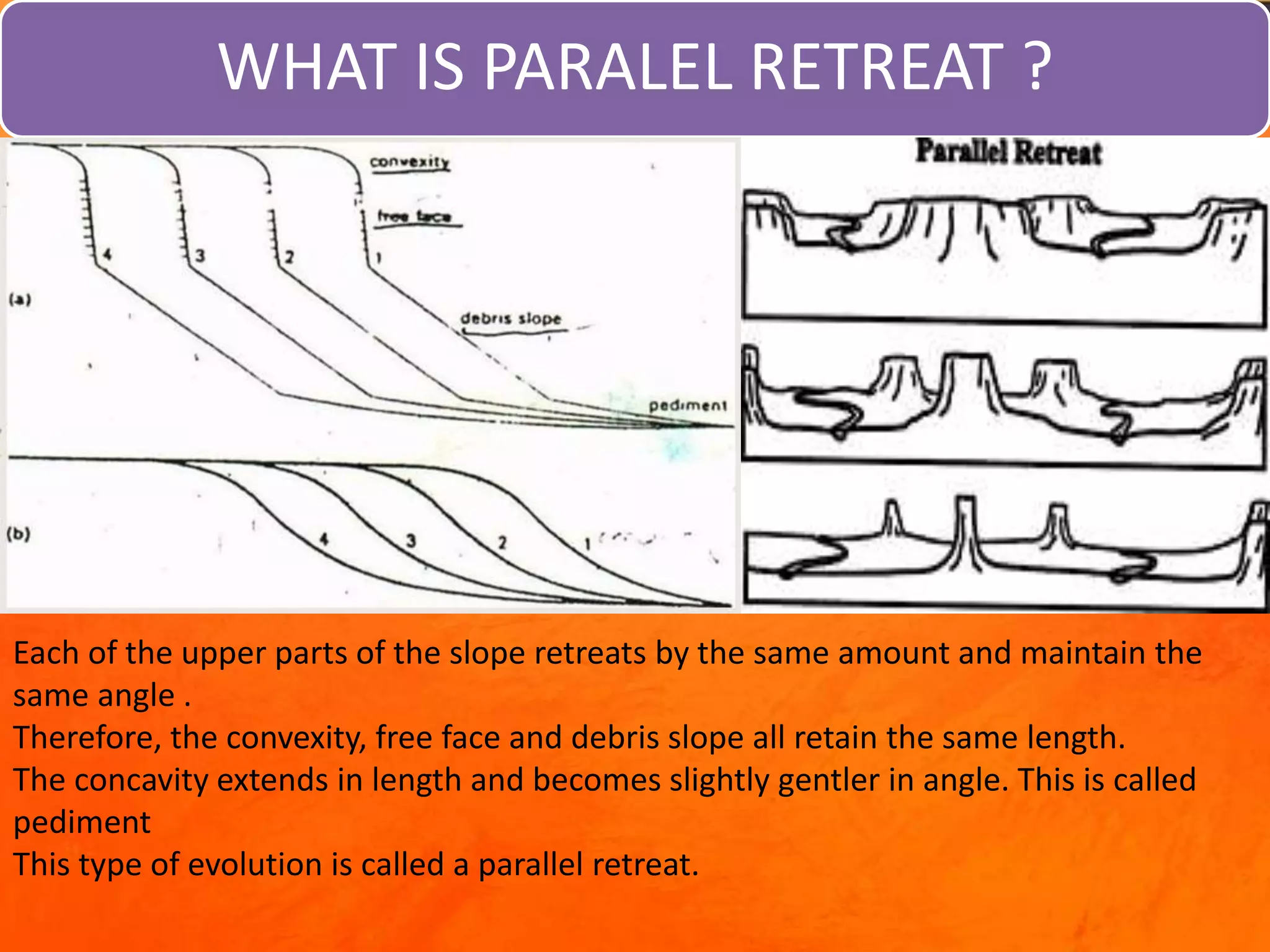
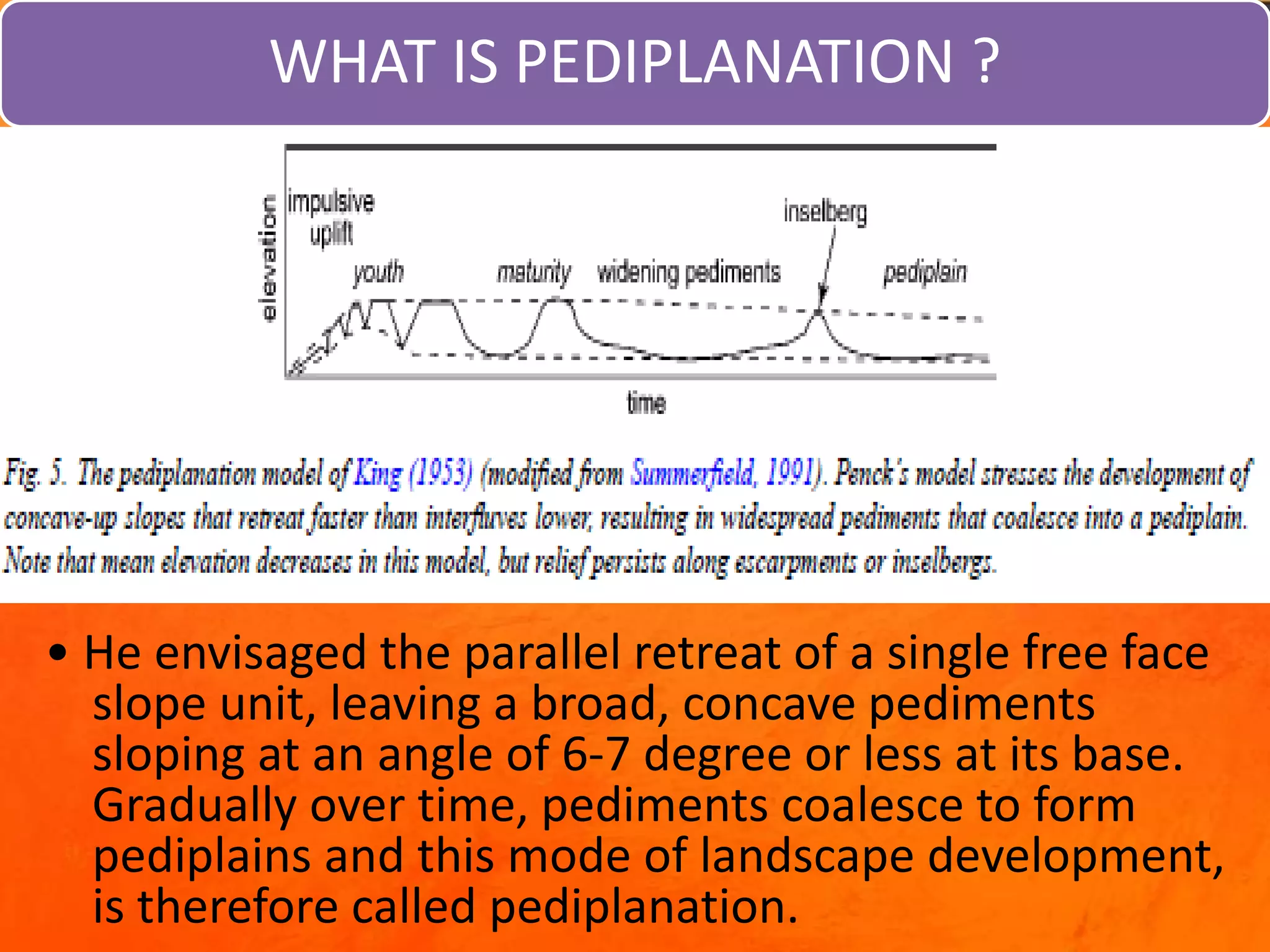
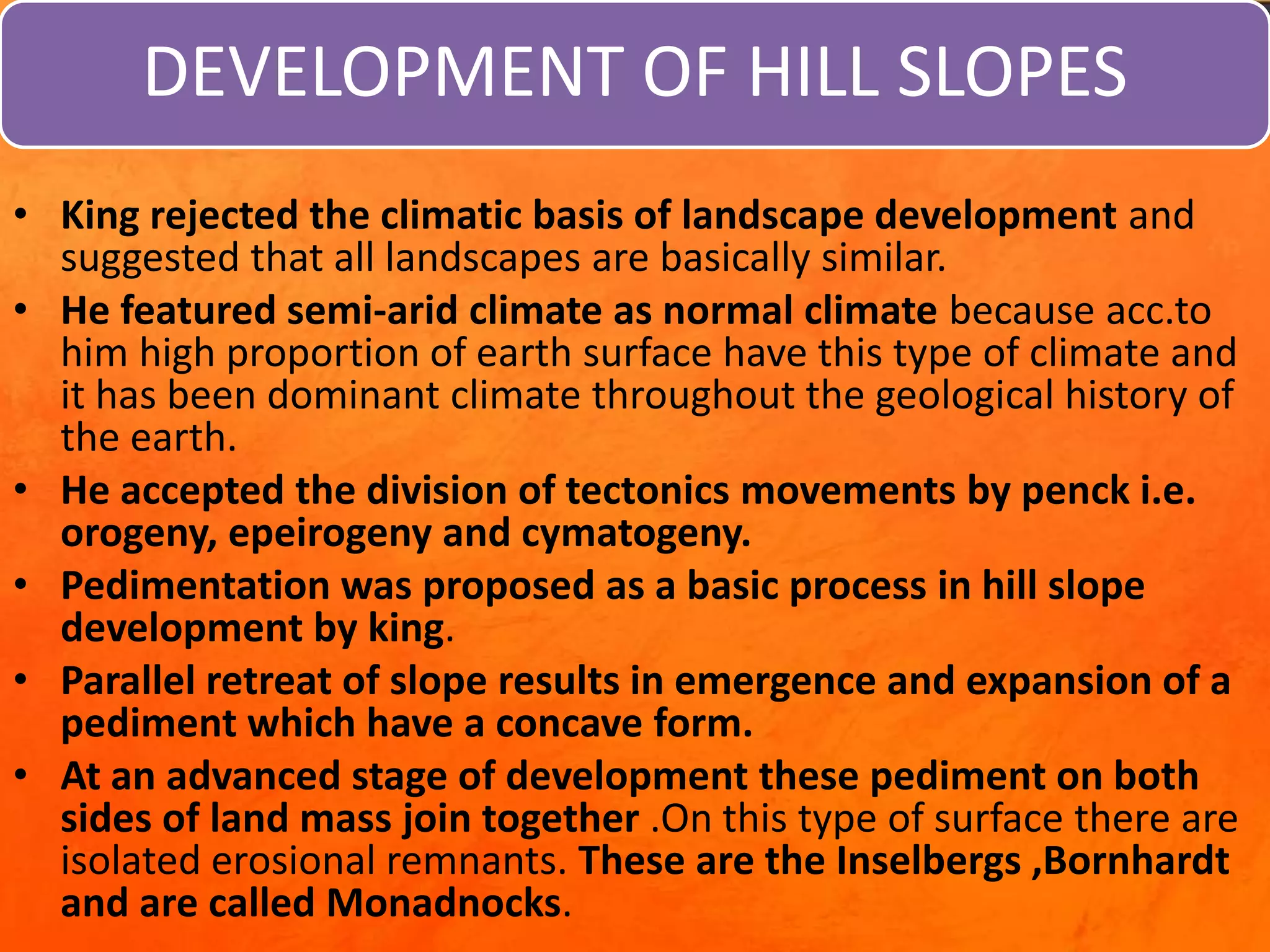

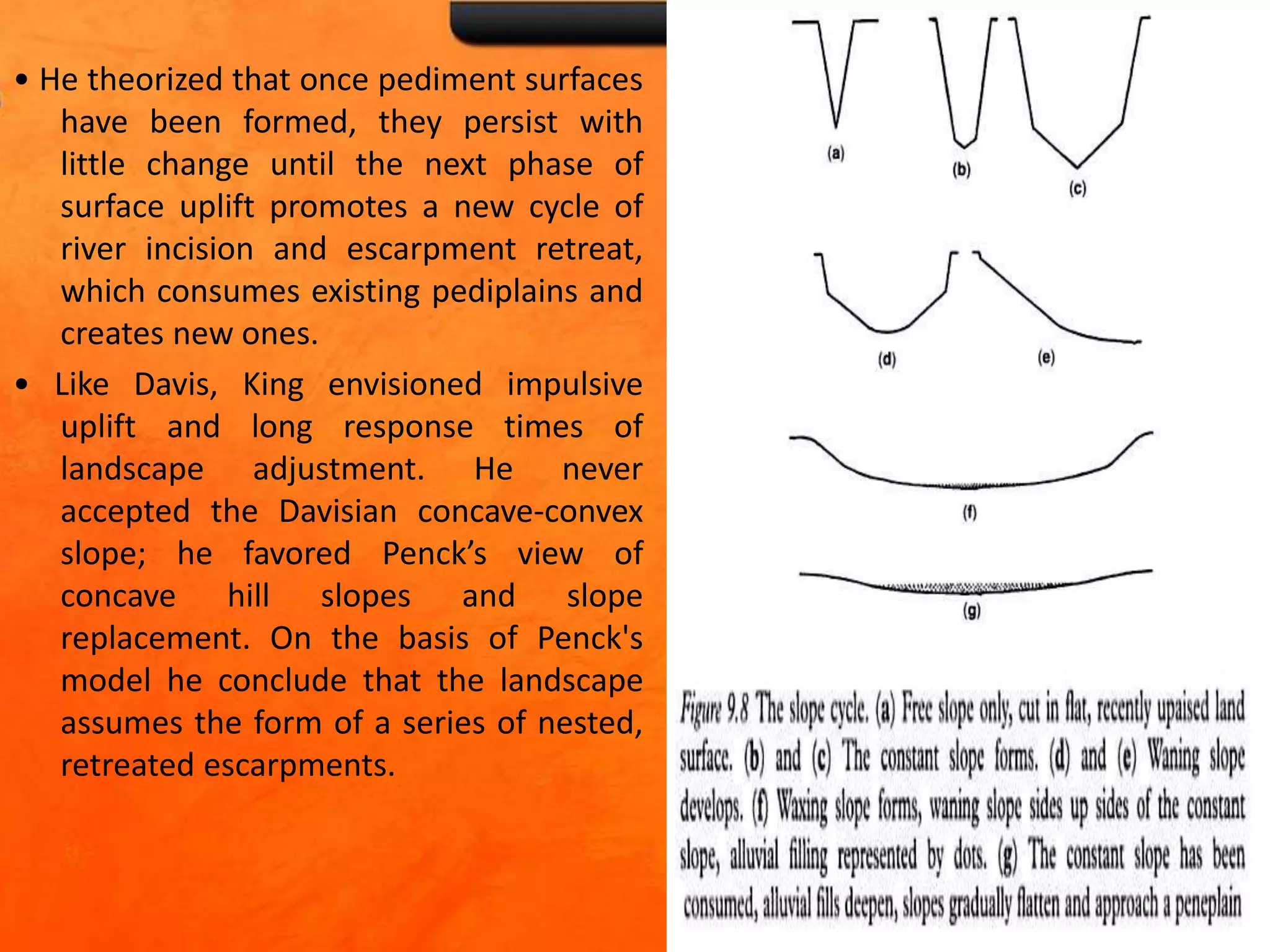


King proposed a model of landscape evolution and slope development consisting of three components: slope elements, hill slope development, and an epigene cycle of erosion. The slope elements include a waxing slope, free face, debris slope, and waning slope. Hill slopes develop through the parallel retreat of these slope elements, resulting in the expansion and merging of pediments. The epigene cycle involves periodic stream incision and escarpment retreat driven by erosion processes, forming new landscapes and cyclic surfaces over geological timescales. King's model emphasizes the role of erosion and semi-arid climates and rejects climatic influences on landscape development.


