
ASGEOGRAPHYREVISION
SETTLEMENTS
6.1 CHANGESINRURALSETTLEMENTS
KEYTERMSANDDEFINITIONS
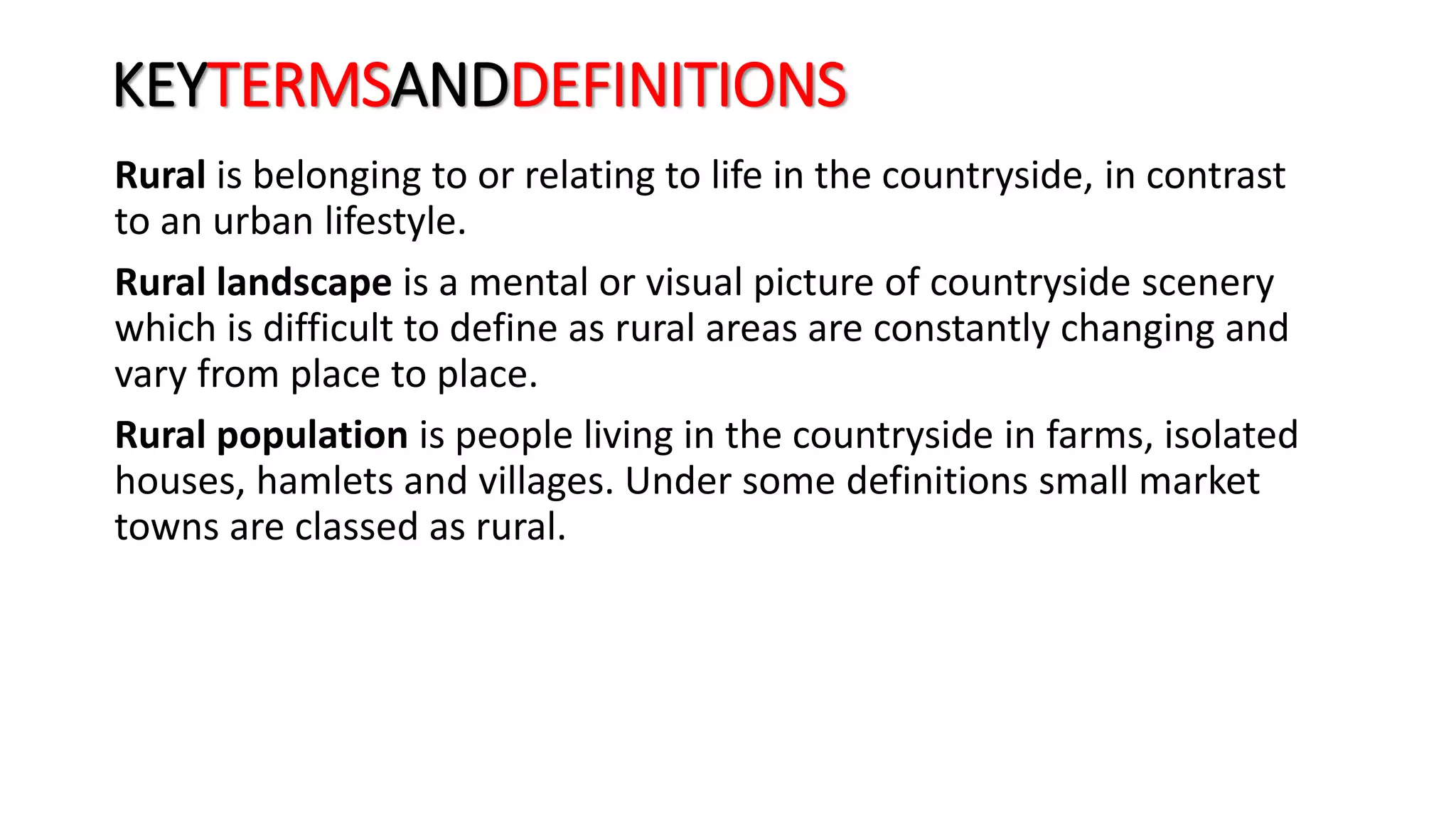
Rural is belonging to or relating to life in the countryside, in contrast
to an urban lifestyle.
Rural landscape is a mental or visual picture of countryside scenery
which is difficult to define as rural areas are constantly changing and
vary from place to place.
Rural population is people living in the countryside in farms, isolated
houses, hamlets and villages. Under some definitions small market
towns are classed as rural.
KEYTERMSANDDEFINITIONS
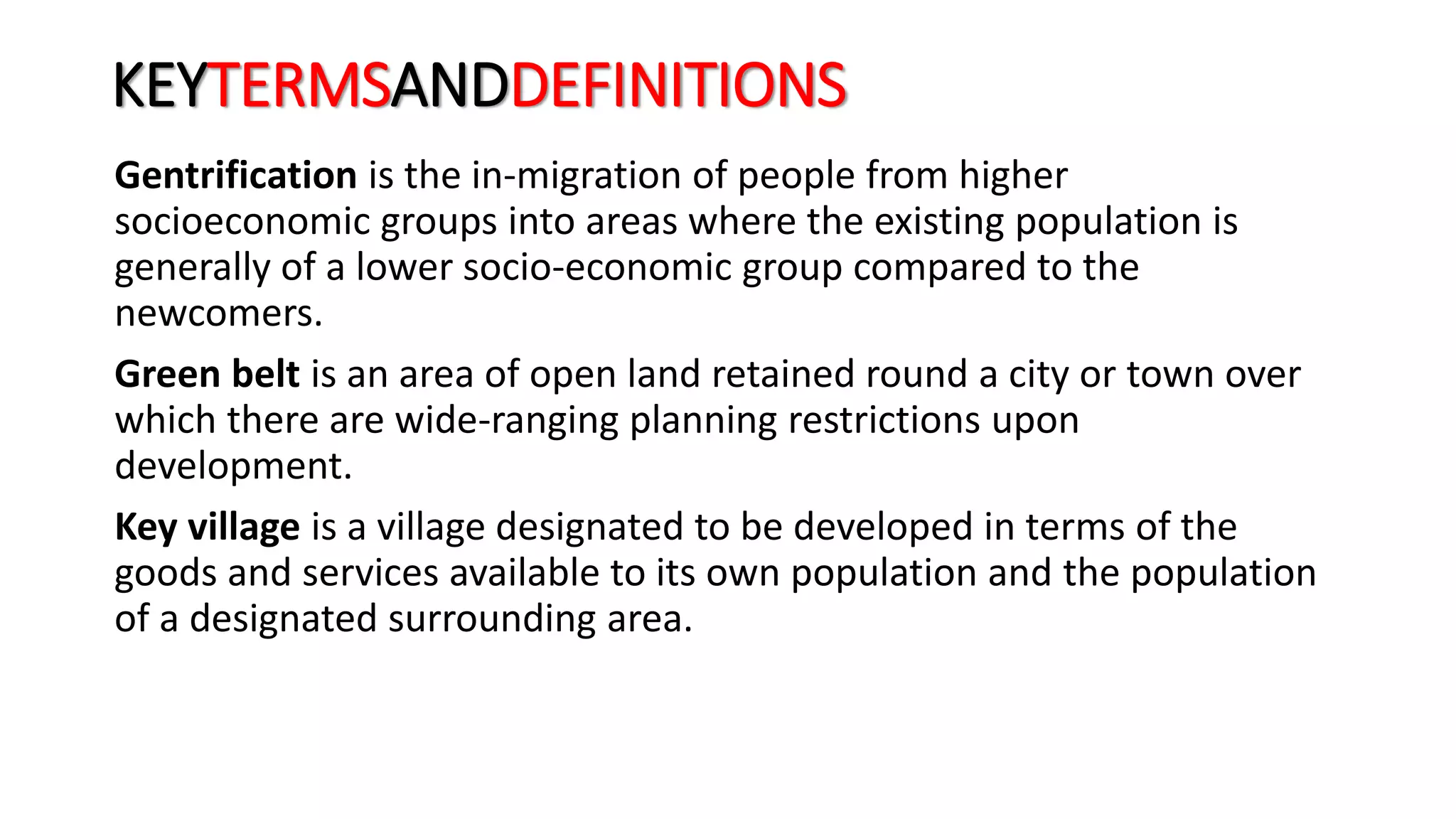
Gentrification is the in-migration of people from higher
socioeconomic groups into areas where the existing population is
generally of a lower socio-economic group compared to the
newcomers.
Green belt is an area of open land retained round a city or town over
which there are wide-ranging planning restrictions upon
development.
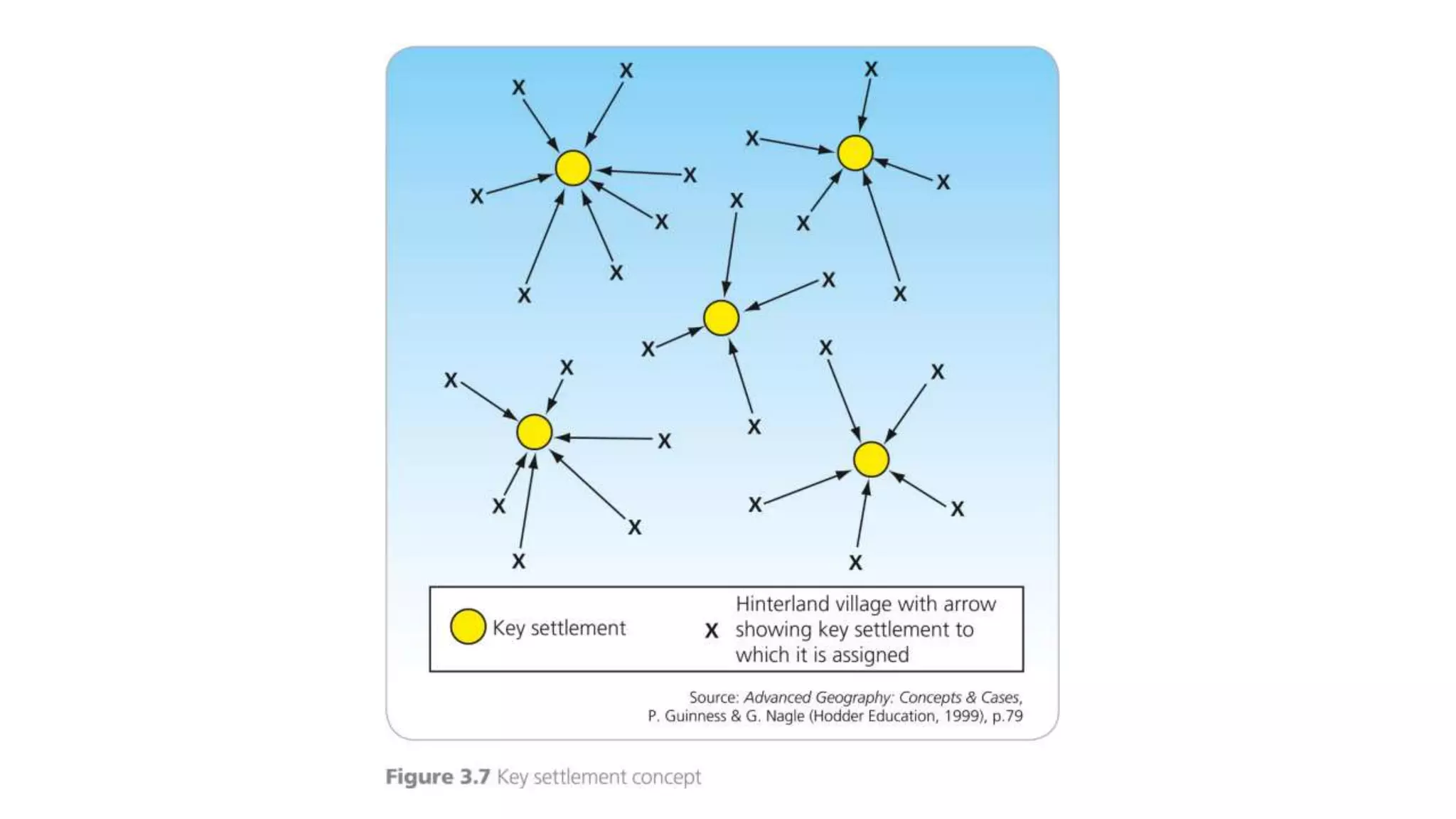
Key village is a village designated to be developed in terms of the
goods and services available to its own population and the population
of a designated surrounding area.
KEYTERMSANDDEFINITIONS
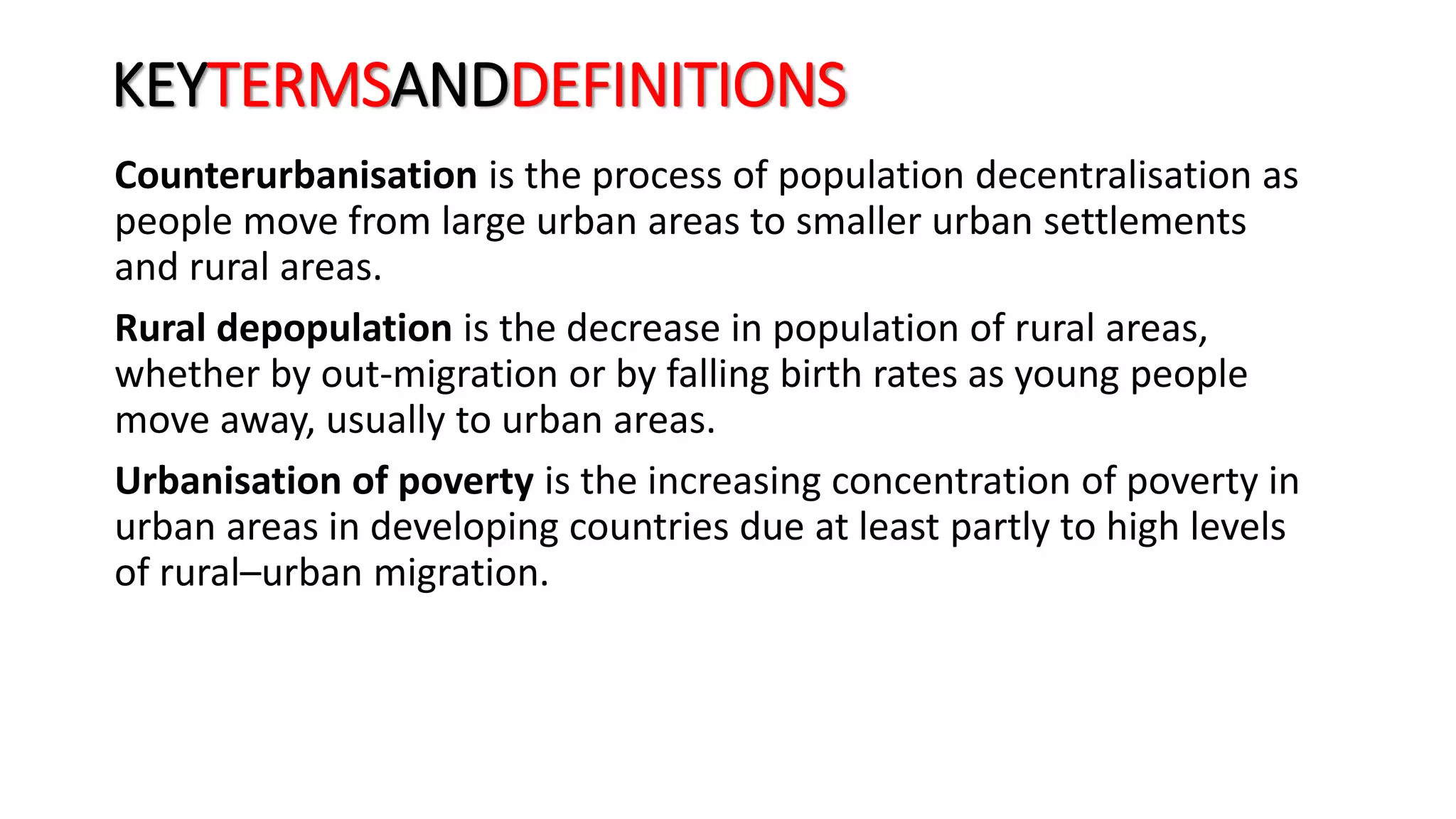
Counterurbanisation is the process of population decentralisation as
people move from large urban areas to smaller urban settlements
and rural areas.
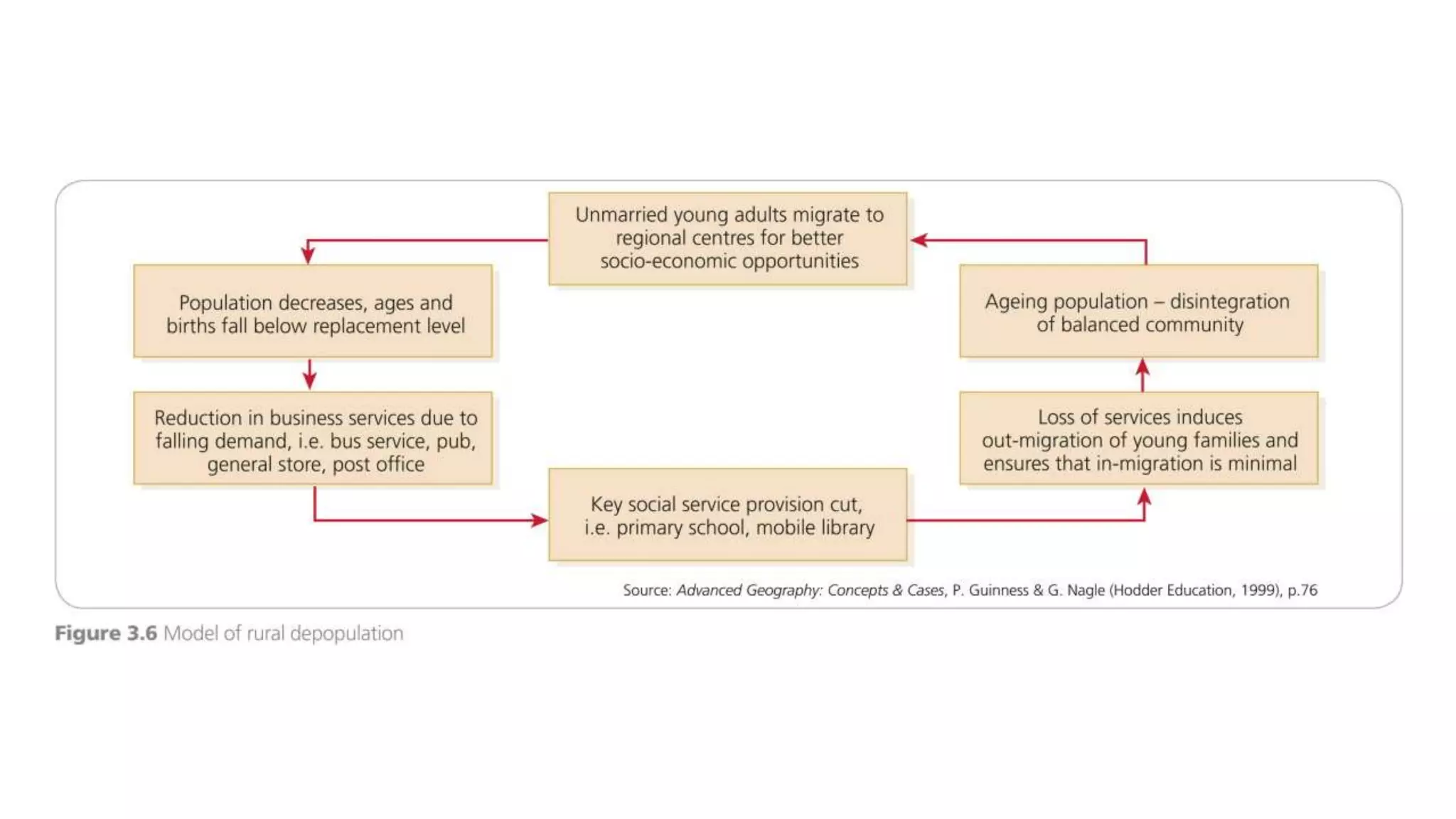
Rural depopulation is the decrease in population of rural areas,
whether by out-migration or by falling birth rates as young people
move away, usually to urban areas.
Urbanisation of poverty is the increasing concentration of poverty in
urban areas in developing countries due at least partly to high levels
of rural–urban migration.
KEYTERMSANDDEFINITIONS
Urban hierarchy is the grouping together of urban areas into
distinctive levels of functional importance. Settlements at the top of
the hierarchy have larger populations, a wider range of functions and
more extensive market areas than settlements lower down the
hierarchy.
Town is a centre of population and business that is the next step up
the urban hierarchy from a village.
Village is a group of houses and other buildings such as a church, a
school and some shops. A village is larger than a hamlet but smaller
than a town, usually ranging from a few hundred people to a few
thousand.
KEYTERMSANDDEFINITIONS
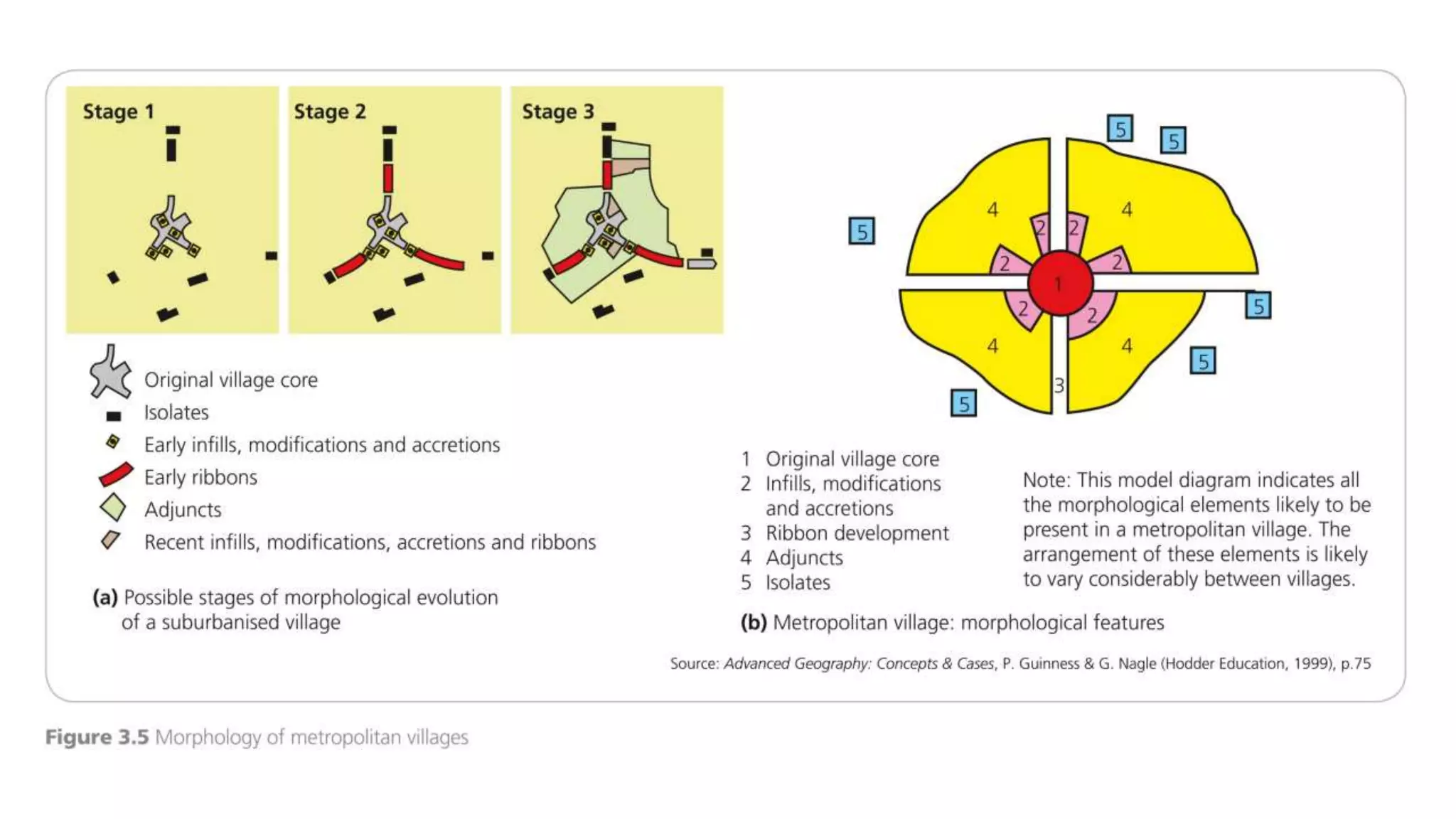
Metropolitan village is a village which has been transformed into a
commuter settlement because of its proximity to a large urban area.
Hamlet is a very small rural settlement which is too small to be
considered a village. It lacks a church and usually all other services.
LEDCs are Less Economically Developed Countries.
MEDCs are More Economically Developed Countries.
TOPICSUMMARY
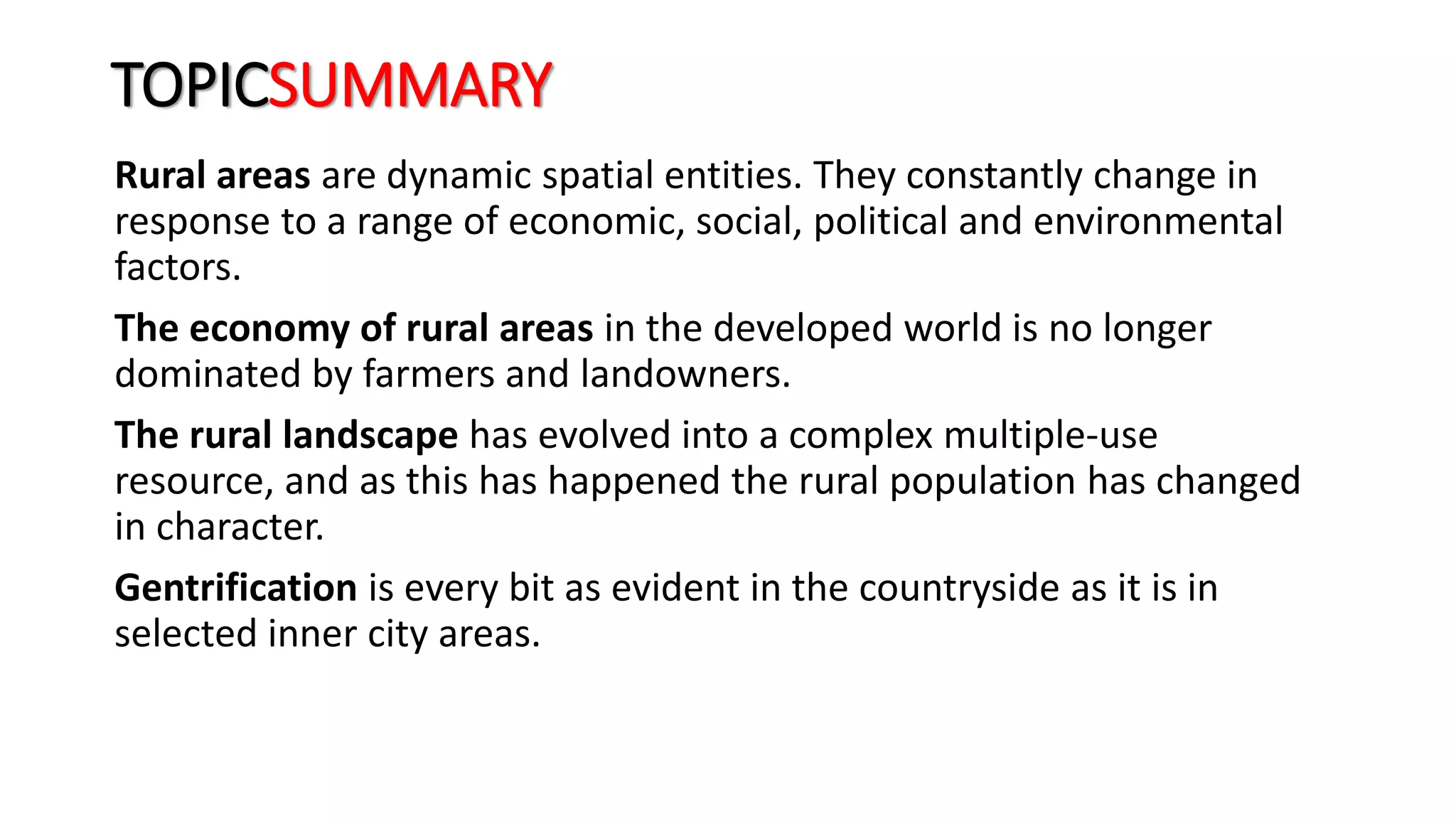
Rural areas are dynamic spatial entities. They constantly change in
response to a range of economic, social, political and environmental
factors.
The economy of rural areas in the developed world is no longer
dominated by farmers and landowners.
The rural landscape has evolved into a complex multiple-use
resource, and as this has happened the rural population has changed
in character.
Gentrification is every bit as evident in the countryside as it is in
selected inner city areas.
TOPICSUMMARY
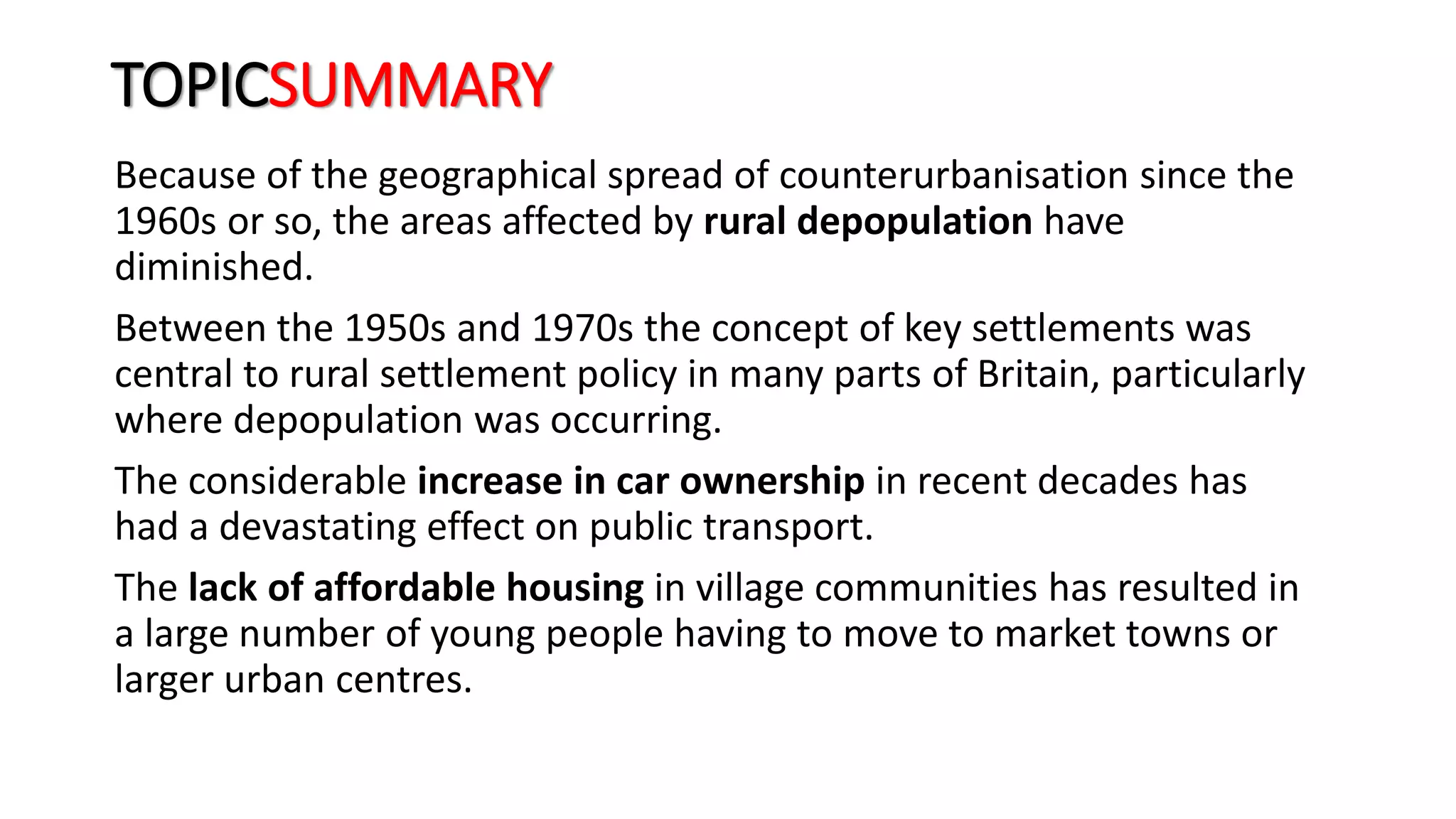
Because of the geographical spread of counterurbanisation since the
1960s or so, the areas affected by rural depopulation have
diminished.
Between the 1950s and 1970s the concept of key settlements was
central to rural settlement policy in many parts of Britain, particularly
where depopulation was occurring.
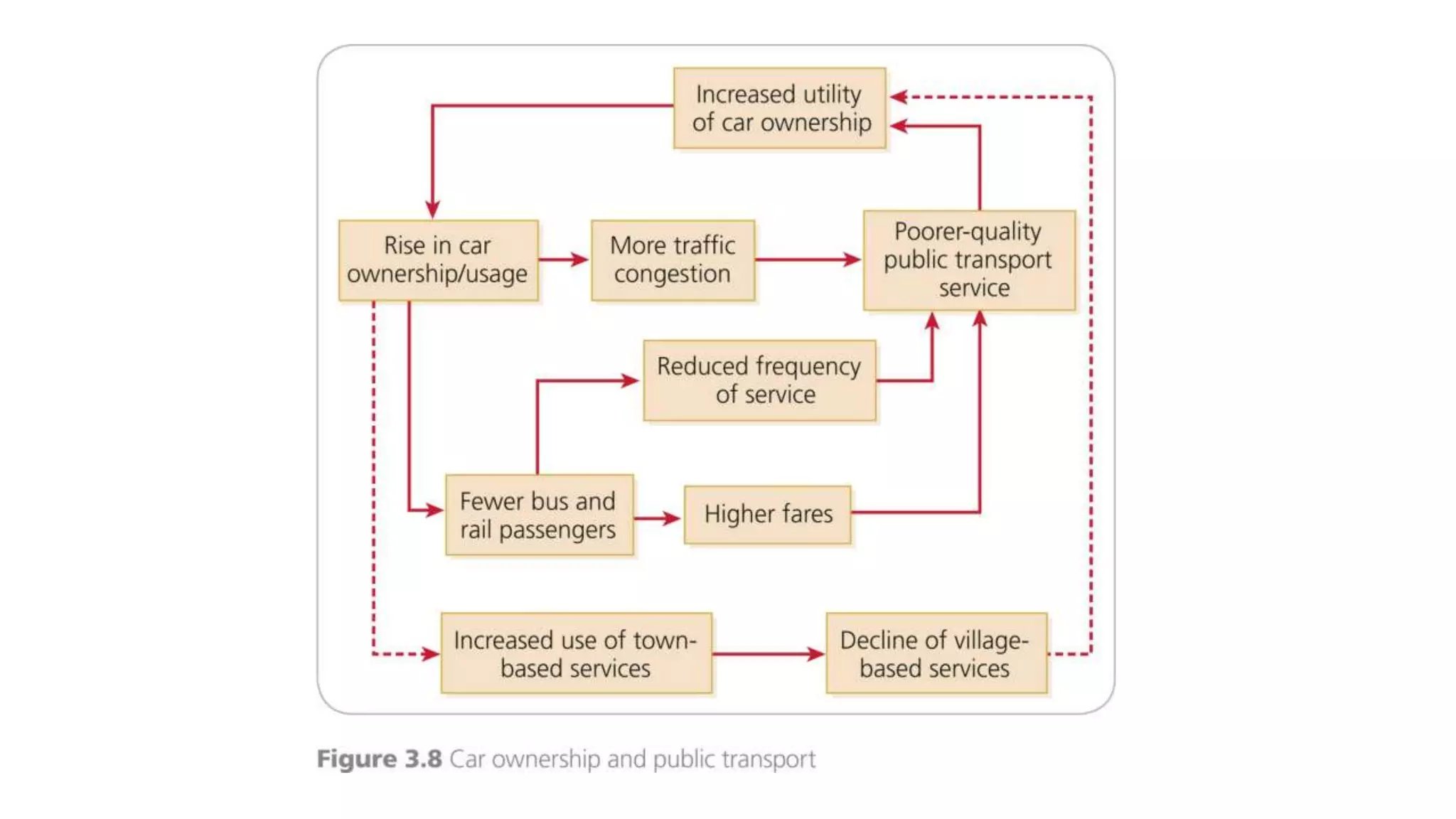
The considerable increase in car ownership in recent decades has
had a devastating effect on public transport.
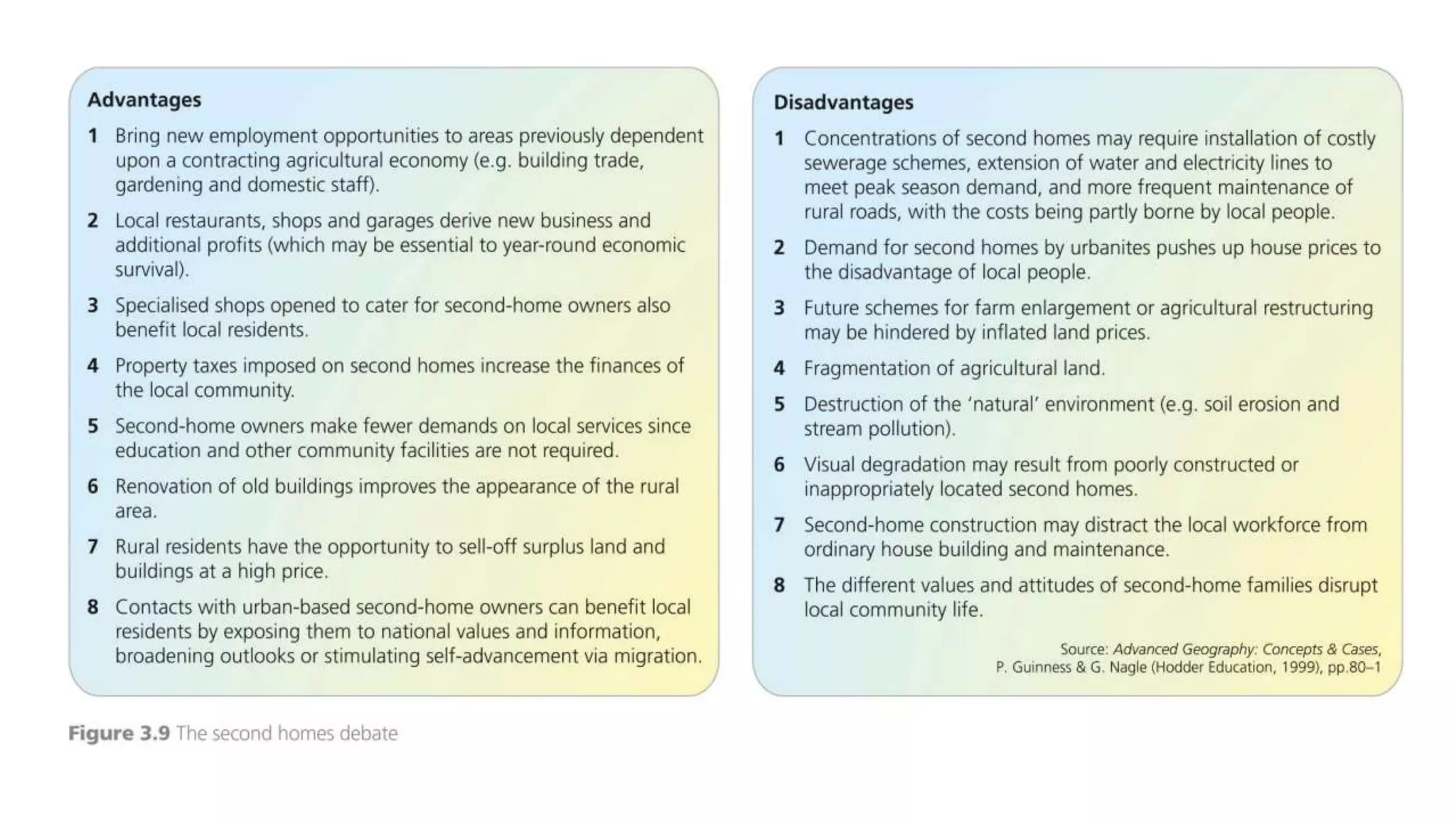
The lack of affordable housing in village communities has resulted in
a large number of young people having to move to market towns or
larger urban centres.
TOPICSUMMARY
The main process affecting rural settlements in developing countries
has been rural–urban migration. The impact of such migration has
varied considerably across developing-world rural communities.
Rural Mongolia exemplifies the problems experienced by people in
the developing world living in very isolated rural areas.
The Isle of Purbeck in Dorset, UK exemplifies many of the issues
affecting rural communities in the developed world.
ADDITIONALWORK
1. a Describe the rural area that you live in or the rural area nearest to
you if you live in a town or city.
b What are the major concerns of the population living in this rural
area?
2. Use the internet to find out the most recent changes that have
occurred in one rural settlement on the Isle of Purbeck.
SUGGESTEDWEBSITES
www.populationenvironmentresearch.org
www.imf.org
www.unescap.org
www.waset.org
www.dorsetforyou.com

CAMBRIDGE AS GEOGRAPHY REVISION: SETTLEMENTS - 6.1 CHANGES IN RURAL SETTLEMENTS

  • 1.
  • 2.
    KEYTERMSANDDEFINITIONS Rural is belongingto or relating to life in the countryside, in contrast to an urban lifestyle. Rural landscape is a mental or visual picture of countryside scenery which is difficult to define as rural areas are constantly changing and vary from place to place. Rural population is people living in the countryside in farms, isolated houses, hamlets and villages. Under some definitions small market towns are classed as rural.
  • 3.
    KEYTERMSANDDEFINITIONS Gentrification is thein-migration of people from higher socioeconomic groups into areas where the existing population is generally of a lower socio-economic group compared to the newcomers. Green belt is an area of open land retained round a city or town over which there are wide-ranging planning restrictions upon development. Key village is a village designated to be developed in terms of the goods and services available to its own population and the population of a designated surrounding area.
  • 5.
    KEYTERMSANDDEFINITIONS Counterurbanisation is theprocess of population decentralisation as people move from large urban areas to smaller urban settlements and rural areas. Rural depopulation is the decrease in population of rural areas, whether by out-migration or by falling birth rates as young people move away, usually to urban areas. Urbanisation of poverty is the increasing concentration of poverty in urban areas in developing countries due at least partly to high levels of rural–urban migration.
  • 7.
    KEYTERMSANDDEFINITIONS Urban hierarchy isthe grouping together of urban areas into distinctive levels of functional importance. Settlements at the top of the hierarchy have larger populations, a wider range of functions and more extensive market areas than settlements lower down the hierarchy. Town is a centre of population and business that is the next step up the urban hierarchy from a village. Village is a group of houses and other buildings such as a church, a school and some shops. A village is larger than a hamlet but smaller than a town, usually ranging from a few hundred people to a few thousand.
  • 8.
    KEYTERMSANDDEFINITIONS Metropolitan village isa village which has been transformed into a commuter settlement because of its proximity to a large urban area. Hamlet is a very small rural settlement which is too small to be considered a village. It lacks a church and usually all other services. LEDCs are Less Economically Developed Countries. MEDCs are More Economically Developed Countries.
  • 10.
    TOPICSUMMARY Rural areas aredynamic spatial entities. They constantly change in response to a range of economic, social, political and environmental factors. The economy of rural areas in the developed world is no longer dominated by farmers and landowners. The rural landscape has evolved into a complex multiple-use resource, and as this has happened the rural population has changed in character. Gentrification is every bit as evident in the countryside as it is in selected inner city areas.
  • 11.
    TOPICSUMMARY Because of thegeographical spread of counterurbanisation since the 1960s or so, the areas affected by rural depopulation have diminished. Between the 1950s and 1970s the concept of key settlements was central to rural settlement policy in many parts of Britain, particularly where depopulation was occurring. The considerable increase in car ownership in recent decades has had a devastating effect on public transport. The lack of affordable housing in village communities has resulted in a large number of young people having to move to market towns or larger urban centres.
  • 14.
    TOPICSUMMARY The main processaffecting rural settlements in developing countries has been rural–urban migration. The impact of such migration has varied considerably across developing-world rural communities. Rural Mongolia exemplifies the problems experienced by people in the developing world living in very isolated rural areas. The Isle of Purbeck in Dorset, UK exemplifies many of the issues affecting rural communities in the developed world.
  • 15.
    ADDITIONALWORK 1. a Describethe rural area that you live in or the rural area nearest to you if you live in a town or city. b What are the major concerns of the population living in this rural area? 2. Use the internet to find out the most recent changes that have occurred in one rural settlement on the Isle of Purbeck.
  • 16.