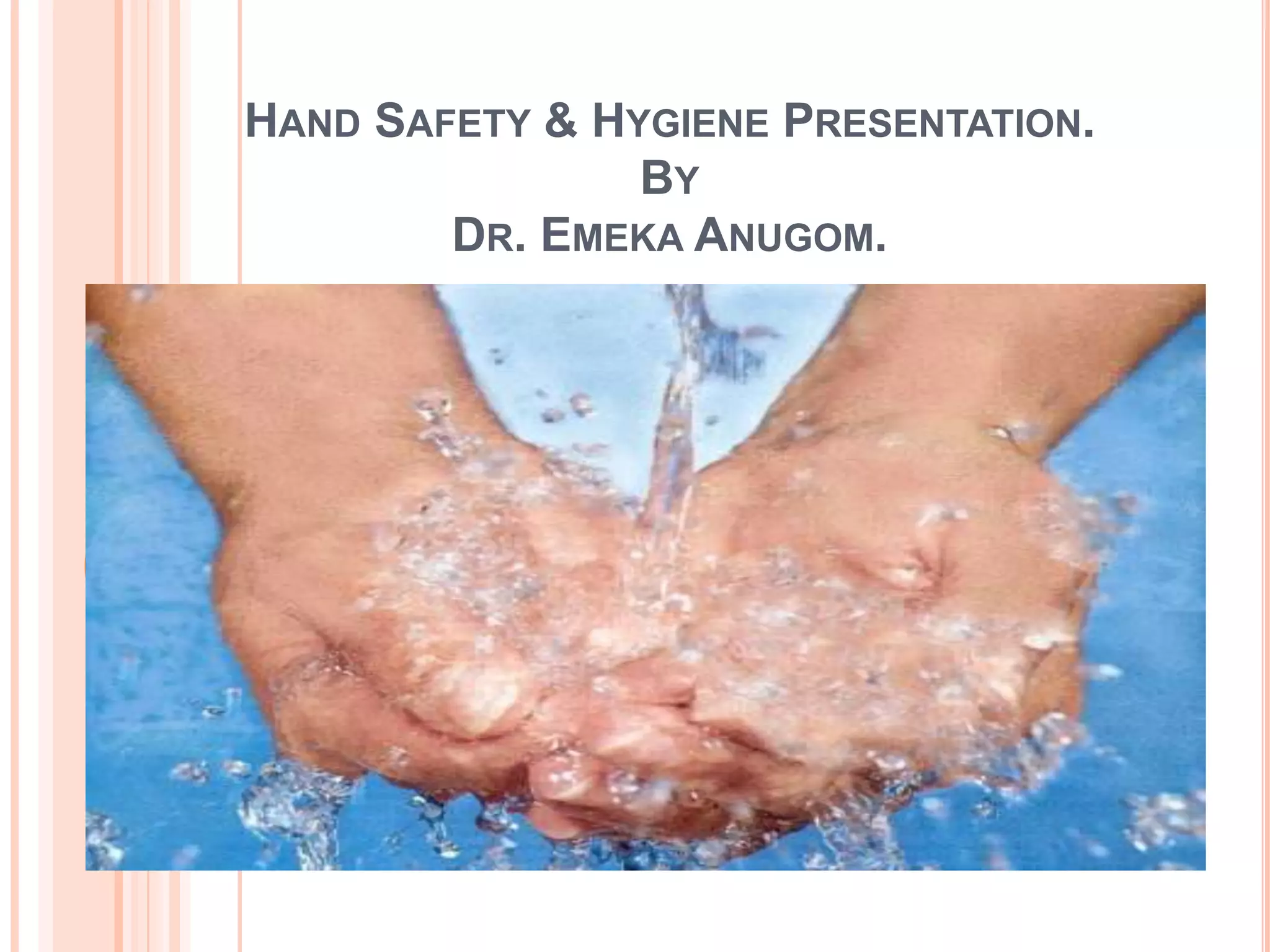


HAND SAFETY & HYGIENE PRESENTATION.
BY
DR. EMEKA ANUGOM.
.
AGENDA
 Overview of Hand Safety and Hygiene
 Diseases Caused by Improper Hand Hygiene
 Possible Modes of Disease Spread
 ALWAYS WASH Your Hands
 Steps for Proper Hand washing.
 Proper Hand washing technique summary
 Location of Hand washing technique posters.
 REMEMBER
 Credits
 Questions 2
3
OVERVIEW
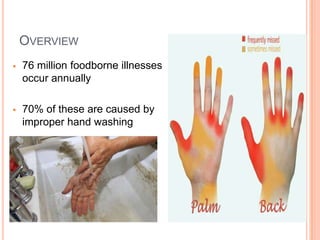
 76 million foodborne illnesses
occur annually
 70% of these are caused by
improper hand washing
4
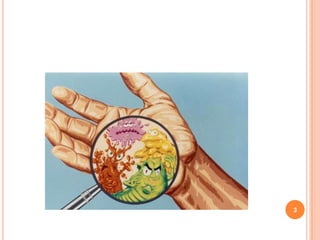
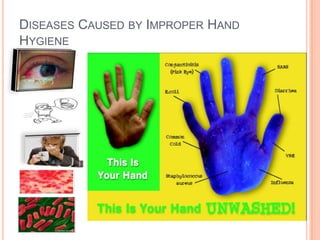
DISEASES CAUSED BY IMPROPER HAND
HYGIENE
5
POSSIBLE MODES OF DISEASE SPREAD.
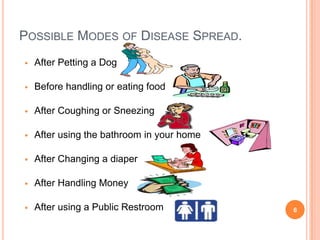
 After Petting a Dog
 Before handling or eating food
 After Coughing or Sneezing
 After using the bathroom in your home
 After Changing a diaper
 After Handling Money
 After using a Public Restroom 6
ALWAYS WASH YOUR HANDS:
- After Using the bathroom
- After Changing a diaper
- After Touching animals or animal waste
- Before and After Preparing food
(especially before and immediately after
handling raw meat, poultry or fish)
- Before Eating
- After Blowing your Nose
- Before and After treating wounds or cuts
- Before and After touching sick or injured
person(s)
- After Handling rubbish
- Before Inserting or removing contact
lenses
- When Using public toilets
7
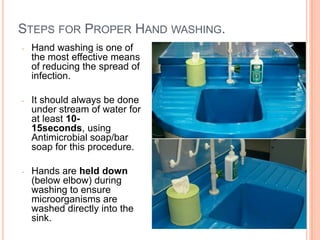
STEPS FOR PROPER HAND WASHING.
- Hand washing is one of
the most effective means
of reducing the spread of
infection.
- It should always be done
under stream of water for
at least 10-
15seconds, using
Antimicrobial soap/bar
soap for this procedure.
- Hands are held down
(below elbow) during
washing to ensure
microorganisms are
washed directly into the
sink.
8
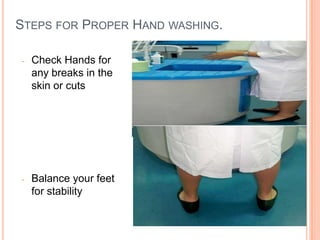
STEPS FOR PROPER HAND WASHING.
- Check Hands for
any breaks in the
skin or cuts
- Balance your feet
for stability
9
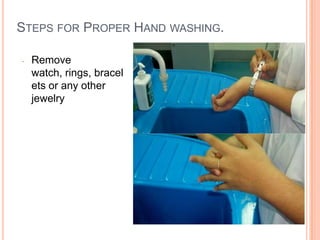
STEPS FOR PROPER HAND WASHING.
- Remove
watch, rings, bracel
ets or any other
jewelry
10
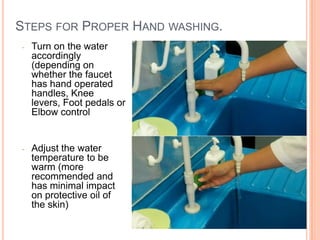
STEPS FOR PROPER HAND WASHING.
- Turn on the water
accordingly
(depending on
whether the faucet
has hand operated
handles, Knee
levers, Foot pedals or
Elbow control
- Adjust the water
temperature to be
warm (more
recommended and
has minimal impact
on protective oil of
the skin) 11
STEPS FOR PROPER HAND WASHING.
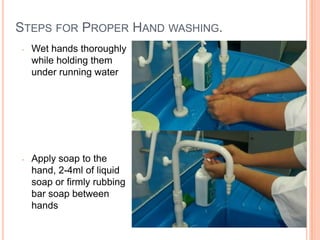
- Wet hands thoroughly
while holding them
under running water
- Apply soap to the
hand, 2-4ml of liquid
soap or firmly rubbing
bar soap between
hands 12
STEPS FOR PROPER HAND WASHING.
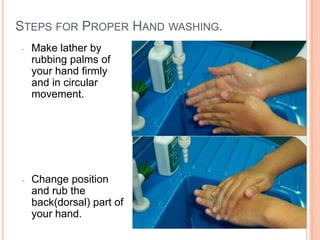
- Make lather by
rubbing palms of
your hand firmly
and in circular
movement.
- Change position
and rub the
back(dorsal) part of
your hand. 13
STEPS FOR PROPER HAND WASHING.
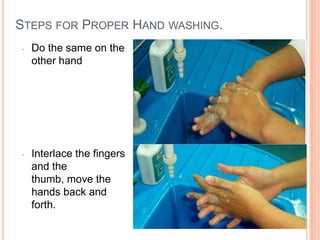
- Do the same on the
other hand
- Interlace the fingers
and the
thumb, move the
hands back and
forth. 14
STEPS FOR PROPER HAND WASHING.
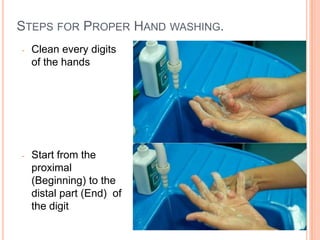
- Clean every digits
of the hands
- Start from the
proximal
(Beginning) to the
distal part (End) of
the digit 15
STEPS FOR PROPER HAND WASHING.
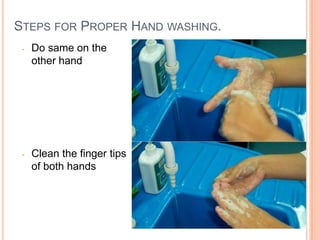
- Do same on the
other hand
- Clean the finger tips
of both hands
16
STEPS FOR PROPER HAND WASHING.
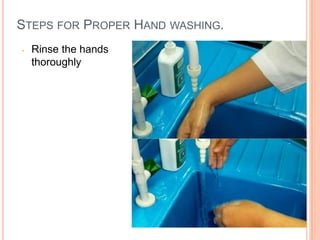
- Rinse the hands
thoroughly
17
STEPS FOR PROPER HAND WASHING.
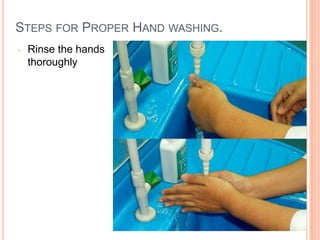
- Rinse the hands
thoroughly
18
STEPS FOR PROPER HAND WASHING.
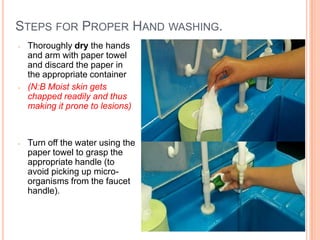
- Thoroughly dry the hands
and arm with paper towel
and discard the paper in
the appropriate container
- (N:B Moist skin gets
chapped readily and thus
making it prone to lesions)
- Turn off the water using the
paper towel to grasp the
appropriate handle (to
avoid picking up micro-
organisms from the faucet
handle).
19
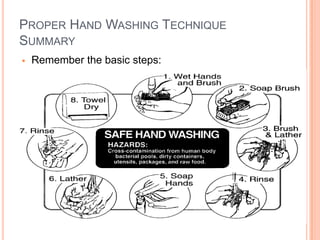
PROPER HAND WASHING TECHNIQUE
SUMMARY
 Remember the basic steps:
20
LOCATION OF HAND WASHING TECHNIQUE POSTERS
- The posters are
located in all public
restrooms, pantry, k
itchen, mess hall
and cleaning locker
rooms.
- Please take the time
to look through it.
21
REMEMBER
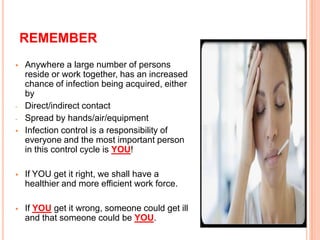
 Anywhere a large number of persons
reside or work together, has an increased
chance of infection being acquired, either
by
- Direct/indirect contact
- Spread by hands/air/equipment
 Infection control is a responsibility of
everyone and the most important person
in this control cycle is YOU!
 If YOU get it right, we shall have a
healthier and more efficient work force.
 If YOU get it wrong, someone could get ill
and that someone could be YOU.
22
.
23
CREDITS
 http://www.slideshare.net/DocLorie/routine-hand-washing-
technique-presentation?from=ss_embed
 http://www.slideshare.net/nick.johnstone/hand-washing-and-
infection-control-school-presentation/download
 http://www.hopkinsmedicine.org/heic/Hand_Hygiene/
 http://www.foodsafetynews.com/Handwashing-Presentation-
MDH-4-6-10.pdf
 http://www.slideshare.net/chris271154/infection-control-
1408854
 http://www.microbeworld.org/images/stories/washup/2010trend
edhandwashingfindings_081610.ppt.
 http://grad.msu.edu/wellness/physical/physicalhealth.aspx
 http://online.wsj.com/article/SB10001424052702304537904577
277420353494102.html 24
QUESTIONS
25

Slides hand safety & hygiene

  • 1.
    HAND SAFETY &HYGIENE PRESENTATION. BY DR. EMEKA ANUGOM. .
  • 2.
    AGENDA  Overview ofHand Safety and Hygiene  Diseases Caused by Improper Hand Hygiene  Possible Modes of Disease Spread  ALWAYS WASH Your Hands  Steps for Proper Hand washing.  Proper Hand washing technique summary  Location of Hand washing technique posters.  REMEMBER  Credits  Questions 2
  • 3.
  • 4.
    OVERVIEW  76 millionfoodborne illnesses occur annually  70% of these are caused by improper hand washing 4
  • 5.
    DISEASES CAUSED BYIMPROPER HAND HYGIENE 5
  • 6.
    POSSIBLE MODES OFDISEASE SPREAD.  After Petting a Dog  Before handling or eating food  After Coughing or Sneezing  After using the bathroom in your home  After Changing a diaper  After Handling Money  After using a Public Restroom 6
  • 7.
    ALWAYS WASH YOURHANDS: - After Using the bathroom - After Changing a diaper - After Touching animals or animal waste - Before and After Preparing food (especially before and immediately after handling raw meat, poultry or fish) - Before Eating - After Blowing your Nose - Before and After treating wounds or cuts - Before and After touching sick or injured person(s) - After Handling rubbish - Before Inserting or removing contact lenses - When Using public toilets 7
  • 8.
    STEPS FOR PROPERHAND WASHING. - Hand washing is one of the most effective means of reducing the spread of infection. - It should always be done under stream of water for at least 10- 15seconds, using Antimicrobial soap/bar soap for this procedure. - Hands are held down (below elbow) during washing to ensure microorganisms are washed directly into the sink. 8
  • 9.
    STEPS FOR PROPERHAND WASHING. - Check Hands for any breaks in the skin or cuts - Balance your feet for stability 9
  • 10.
    STEPS FOR PROPERHAND WASHING. - Remove watch, rings, bracel ets or any other jewelry 10
  • 11.
    STEPS FOR PROPERHAND WASHING. - Turn on the water accordingly (depending on whether the faucet has hand operated handles, Knee levers, Foot pedals or Elbow control - Adjust the water temperature to be warm (more recommended and has minimal impact on protective oil of the skin) 11
  • 12.
    STEPS FOR PROPERHAND WASHING. - Wet hands thoroughly while holding them under running water - Apply soap to the hand, 2-4ml of liquid soap or firmly rubbing bar soap between hands 12
  • 13.
    STEPS FOR PROPERHAND WASHING. - Make lather by rubbing palms of your hand firmly and in circular movement. - Change position and rub the back(dorsal) part of your hand. 13
  • 14.
    STEPS FOR PROPERHAND WASHING. - Do the same on the other hand - Interlace the fingers and the thumb, move the hands back and forth. 14
  • 15.
    STEPS FOR PROPERHAND WASHING. - Clean every digits of the hands - Start from the proximal (Beginning) to the distal part (End) of the digit 15
  • 16.
    STEPS FOR PROPERHAND WASHING. - Do same on the other hand - Clean the finger tips of both hands 16
  • 17.
    STEPS FOR PROPERHAND WASHING. - Rinse the hands thoroughly 17
  • 18.
    STEPS FOR PROPERHAND WASHING. - Rinse the hands thoroughly 18
  • 19.
    STEPS FOR PROPERHAND WASHING. - Thoroughly dry the hands and arm with paper towel and discard the paper in the appropriate container - (N:B Moist skin gets chapped readily and thus making it prone to lesions) - Turn off the water using the paper towel to grasp the appropriate handle (to avoid picking up micro- organisms from the faucet handle). 19
  • 20.
    PROPER HAND WASHINGTECHNIQUE SUMMARY  Remember the basic steps: 20
  • 21.
    LOCATION OF HANDWASHING TECHNIQUE POSTERS - The posters are located in all public restrooms, pantry, k itchen, mess hall and cleaning locker rooms. - Please take the time to look through it. 21
  • 22.
    REMEMBER  Anywhere alarge number of persons reside or work together, has an increased chance of infection being acquired, either by - Direct/indirect contact - Spread by hands/air/equipment  Infection control is a responsibility of everyone and the most important person in this control cycle is YOU!  If YOU get it right, we shall have a healthier and more efficient work force.  If YOU get it wrong, someone could get ill and that someone could be YOU. 22
  • 23.
  • 24.
    CREDITS  http://www.slideshare.net/DocLorie/routine-hand-washing- technique-presentation?from=ss_embed  http://www.slideshare.net/nick.johnstone/hand-washing-and- infection-control-school-presentation/download http://www.hopkinsmedicine.org/heic/Hand_Hygiene/  http://www.foodsafetynews.com/Handwashing-Presentation- MDH-4-6-10.pdf  http://www.slideshare.net/chris271154/infection-control- 1408854  http://www.microbeworld.org/images/stories/washup/2010trend edhandwashingfindings_081610.ppt.  http://grad.msu.edu/wellness/physical/physicalhealth.aspx  http://online.wsj.com/article/SB10001424052702304537904577 277420353494102.html 24
  • 25.

Editor's Notes