

Patel Neha 
Final Year M.Sc Nursing 
SUMANDEEP NURSING 
COLLEGE
Why Hand Hygiene? 
FACT: 
Hand Hygiene is the single most 
important measure for preventing the 
spread of infection 
IT IS ESSENTIAL FOR PATIENT 
SAFETY 
SUMANDEEP NURSING 
COLLEGE
Why carry out hand hygiene?: 
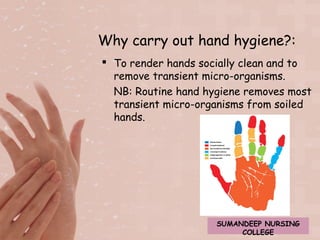
 To render hands socially clean and to 
remove transient micro-organisms. 
NB: Routine hand hygiene removes most 
transient micro-organisms from soiled 
hands. 
SUMANDEEP NURSING 
COLLEGE
What are your hands carrying? 
 Resident 
Flora: 
 Deep seated 
 Difficult to remove 
 Part of body’s 
natural defence 
mechanism 
 Associated with 
infection following 
surgery/invasive 
procedures. 
 Transient 
Flora: 
 Superficial 
 Transferred with 
ease to and from 
hands 
 Important cause of 
cross infection 
 Easily removed with 
good hand hygiene. 
SUMANDEEP NURSING 
COLLEGE
Hand Hygiene includes: 
 Routine hand washing 
 Use of alcohol rubs/gels/ 
soap. 
 Surgical hand ‘scrub’ 
SUMANDEEP NURSING 
COLLEGE
Why need hand washing? 
 Any staff member with any portion of 
their forearm, wrist and/or hand in a 
bandage, splint, plaster cast and/or sling 
of any description cannot be permitted 
to work in the clinical environment as 
hand contamination and the need for 
hand hygiene occurs due to contact with 
the environment and equipment, as well 
as with patients. 
SUMANDEEP NURSING 
COLLEGE
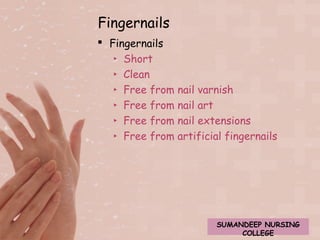
Fingernails 
 Fingernails 
‣ Short 
‣ Clean 
‣ Free from nail varnish 
‣ Free from nail art 
‣ Free from nail extensions 
‣ Free from artificial fingernails 
SUMANDEEP NURSING 
COLLEGE
Jewellery 
 Jewellery worn on the hands & 
wrists 
‣ become contaminated 
during work activities 
‣ Prevent thorough hand 
hygiene procedures 
SUMANDEEP NURSING 
COLLEGE
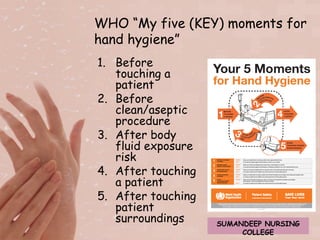
WHO “My five (KEY) moments for 
hand hygiene” 
1. Before 
touching a 
patient 
2. Before 
clean/aseptic 
procedure 
3. After body 
fluid exposure 
risk 
4. After touching 
a patient 
5. After touching 
patient 
surroundings SUMANDEEP NURSING 
COLLEGE
Additional Moments for Hand 
Hygiene 
 Before commencing work/after leaving 
work area 
 Before preparing or eating food 
 Before handling medicines 
 Before wearing & after removing gloves* 
 After handling contaminated laundry & 
waste 
 After using the toilet 
 After contact with patients in isolation 
 After cleaning equipment or the 
environment 
SUMANDEEP NURSING 
COLLEGE
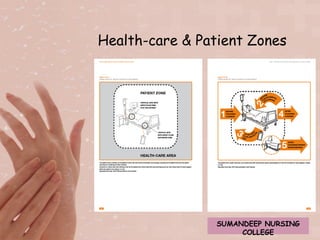
Health-care & Patient Zones 
SUMANDEEP NURSING 
COLLEGE
Choice of cleansing agent. 
Risk Assessment: 
 Likelihood that micro-organisms have 
been acquired or transmitted. 
 Whether the hands are visibly soiled. 
 What procedure is about to take place. 
 Wash hands with soap & water following 
contact with Clostridium difficile 
diarrhoea/infective diarrhoea. 
SUMANDEEP NURSING 
COLLEGE
Alcohol rubs/gels 
 Use on visibly clean hands only 
 Rub into hands using same technique as 
for hand washing 
 Continue rubbing until dry (emollient will 
condition hands). 
 Not suitable for use following contact 
with Clostridium difficile or suspected 
infectious diarrhoea. 
SUMANDEEP NURSING 
COLLEGE
Routine Hand Washing. 
Duration 
 Routine hand wash = 40 – 60 seconds. 
Technique 
 Wash systematically, rubbing all parts 
of hands and wrists with soap and water 
– careful to include areas of hands that 
are most frequently missed. 
SUMANDEEP NURSING 
COLLEGE
Technique 
• palm to palm 
• backs of hands 
• interdigital 
spaces 
• fingertips 
• thumbs and 
wrists 
• nails 
SUMANDEEP NURSING 
COLLEGE
Areas most frequently missed: 
• Webs of fingers 
• Thumbs 
• Palms 
• Nails 
• Backs of fingers 
& hands 
• Wrists 
SUMANDEEP NURSING 
COLLEGE
Drying: 
 CRUCIAL – micro-organisms thrive 
in a warm, moist environment 
 Use paper hand towels 
 When you dry your hands: 
‣ Work from fingertips to wrists 
‣ Dispose of used towel correctly (foot 
operated bin) 
‣ Repeat until both hands are 
completely dry. 
SUMANDEEP NURSING 
COLLEGE
Tips: 
 Remove jewellery, roll up sleeves & 
remove wrist watches (should already be 
compliant with NBE). 
 Always use running water at a 
comfortable temperature 
 Wet hands thoroughly before applying 
any soap (forms a protective barrier) 
 Use enough soap to get a visible lather 
SUMANDEEP NURSING 
COLLEGE
Tips: 
MAKE SURE THAT YOU: 
 Clean all parts of both hands 
 Pay attention to thumbs, fingertips, 
palms. 
 Clean and dry beneath wedding rings (& 
Kara if worn) 
 Pay equal attention to dominant and non-dominant 
hands. 
SUMANDEEP NURSING 
COLLEGE
Tips: 
 Rinse your hands thoroughly under 
running water to ensure that all micro-organisms 
and soap are washed away. 
 Leaving soap on your hands or failing to 
dry properly will make them sore. 
 The only time you should use soap & 
water followed by alcohol hand gel, is 
when you are about to don a pair of 
sterile gloves prior to performing a 
(non-operative) aseptic technique. 
SUMANDEEP NURSING 
COLLEGE
Looking after your hands 
 Risk of skin problems (dermatitis) may increase 
with frequent hand washing. 
 Bacterial counts increase when skin is damaged. 
 Risk reduced by: 
‣ Using alcohol gel instead of washing if 
appropriate 
‣ Always apply soap to wet hands. 
‣ Thorough rinsing & drying 
‣ Moisturise (should be available in all clinical 
areas) 
‣ Only using gloves when necessary 
‣ Always cover cuts and grazes 
 Report any skin rashes immediately to 
Occupational Health 
SUMANDEEP NURSING 
COLLEGE
Hand Care 
 Important to look after the skin & 
fingernails 
 Damaged skin leads to loss of a 
smooth skin surface & increases the 
risk of skin colonisation with 
resistant micro organisms 
 Continuing to work with damaged, 
cracked or weeping skin may expose 
the healthcare worker to increased 
infection risk, which could ultimately 
lead to sickness absence due to 
dermatitis 
SUMANDEEP NURSING 
COLLEGE
Hand hygiene
Hand hygiene

Hand hygiene

  • 2.
    Patel Neha FinalYear M.Sc Nursing SUMANDEEP NURSING COLLEGE
  • 4.
    Why Hand Hygiene? FACT: Hand Hygiene is the single most important measure for preventing the spread of infection IT IS ESSENTIAL FOR PATIENT SAFETY SUMANDEEP NURSING COLLEGE
  • 5.
    Why carry outhand hygiene?:  To render hands socially clean and to remove transient micro-organisms. NB: Routine hand hygiene removes most transient micro-organisms from soiled hands. SUMANDEEP NURSING COLLEGE
  • 6.
    What are yourhands carrying?  Resident Flora:  Deep seated  Difficult to remove  Part of body’s natural defence mechanism  Associated with infection following surgery/invasive procedures.  Transient Flora:  Superficial  Transferred with ease to and from hands  Important cause of cross infection  Easily removed with good hand hygiene. SUMANDEEP NURSING COLLEGE
  • 7.
    Hand Hygiene includes:  Routine hand washing  Use of alcohol rubs/gels/ soap.  Surgical hand ‘scrub’ SUMANDEEP NURSING COLLEGE
  • 8.
    Why need handwashing?  Any staff member with any portion of their forearm, wrist and/or hand in a bandage, splint, plaster cast and/or sling of any description cannot be permitted to work in the clinical environment as hand contamination and the need for hand hygiene occurs due to contact with the environment and equipment, as well as with patients. SUMANDEEP NURSING COLLEGE
  • 9.
    Fingernails  Fingernails ‣ Short ‣ Clean ‣ Free from nail varnish ‣ Free from nail art ‣ Free from nail extensions ‣ Free from artificial fingernails SUMANDEEP NURSING COLLEGE
  • 10.
    Jewellery  Jewelleryworn on the hands & wrists ‣ become contaminated during work activities ‣ Prevent thorough hand hygiene procedures SUMANDEEP NURSING COLLEGE
  • 11.
    WHO “My five(KEY) moments for hand hygiene” 1. Before touching a patient 2. Before clean/aseptic procedure 3. After body fluid exposure risk 4. After touching a patient 5. After touching patient surroundings SUMANDEEP NURSING COLLEGE
  • 12.
    Additional Moments forHand Hygiene  Before commencing work/after leaving work area  Before preparing or eating food  Before handling medicines  Before wearing & after removing gloves*  After handling contaminated laundry & waste  After using the toilet  After contact with patients in isolation  After cleaning equipment or the environment SUMANDEEP NURSING COLLEGE
  • 13.
    Health-care & PatientZones SUMANDEEP NURSING COLLEGE
  • 14.
    Choice of cleansingagent. Risk Assessment:  Likelihood that micro-organisms have been acquired or transmitted.  Whether the hands are visibly soiled.  What procedure is about to take place.  Wash hands with soap & water following contact with Clostridium difficile diarrhoea/infective diarrhoea. SUMANDEEP NURSING COLLEGE
  • 15.
    Alcohol rubs/gels Use on visibly clean hands only  Rub into hands using same technique as for hand washing  Continue rubbing until dry (emollient will condition hands).  Not suitable for use following contact with Clostridium difficile or suspected infectious diarrhoea. SUMANDEEP NURSING COLLEGE
  • 16.
    Routine Hand Washing. Duration  Routine hand wash = 40 – 60 seconds. Technique  Wash systematically, rubbing all parts of hands and wrists with soap and water – careful to include areas of hands that are most frequently missed. SUMANDEEP NURSING COLLEGE
  • 17.
    Technique • palmto palm • backs of hands • interdigital spaces • fingertips • thumbs and wrists • nails SUMANDEEP NURSING COLLEGE
  • 18.
    Areas most frequentlymissed: • Webs of fingers • Thumbs • Palms • Nails • Backs of fingers & hands • Wrists SUMANDEEP NURSING COLLEGE
  • 19.
    Drying:  CRUCIAL– micro-organisms thrive in a warm, moist environment  Use paper hand towels  When you dry your hands: ‣ Work from fingertips to wrists ‣ Dispose of used towel correctly (foot operated bin) ‣ Repeat until both hands are completely dry. SUMANDEEP NURSING COLLEGE
  • 20.
    Tips:  Removejewellery, roll up sleeves & remove wrist watches (should already be compliant with NBE).  Always use running water at a comfortable temperature  Wet hands thoroughly before applying any soap (forms a protective barrier)  Use enough soap to get a visible lather SUMANDEEP NURSING COLLEGE
  • 21.
    Tips: MAKE SURETHAT YOU:  Clean all parts of both hands  Pay attention to thumbs, fingertips, palms.  Clean and dry beneath wedding rings (& Kara if worn)  Pay equal attention to dominant and non-dominant hands. SUMANDEEP NURSING COLLEGE
  • 22.
    Tips:  Rinseyour hands thoroughly under running water to ensure that all micro-organisms and soap are washed away.  Leaving soap on your hands or failing to dry properly will make them sore.  The only time you should use soap & water followed by alcohol hand gel, is when you are about to don a pair of sterile gloves prior to performing a (non-operative) aseptic technique. SUMANDEEP NURSING COLLEGE
  • 23.
    Looking after yourhands  Risk of skin problems (dermatitis) may increase with frequent hand washing.  Bacterial counts increase when skin is damaged.  Risk reduced by: ‣ Using alcohol gel instead of washing if appropriate ‣ Always apply soap to wet hands. ‣ Thorough rinsing & drying ‣ Moisturise (should be available in all clinical areas) ‣ Only using gloves when necessary ‣ Always cover cuts and grazes  Report any skin rashes immediately to Occupational Health SUMANDEEP NURSING COLLEGE
  • 24.
    Hand Care Important to look after the skin & fingernails  Damaged skin leads to loss of a smooth skin surface & increases the risk of skin colonisation with resistant micro organisms  Continuing to work with damaged, cracked or weeping skin may expose the healthcare worker to increased infection risk, which could ultimately lead to sickness absence due to dermatitis SUMANDEEP NURSING COLLEGE

Editor's Notes

  • #3 Explain that this is the Practical Hand Hygiene update for all Clinical staff & that it must be attended annually. Non-clinical staff welcome to attend, but not compulsory.
  • #5 Didier Pittet is a Swiss physician who has undertaken extensive research into hand hygiene compliance & behaviour. The development of alcohol hand gel/rubs came about as a direct consequence of his findings. Hand hygiene has been proven to be the single most important measure for preventing the spread of infection in the healthcare setting.
  • #6 Discuss the purpose of hand hygiene – i.e. aiming to remove the transient micro-organisms acquired through undertaking routine tasks in the clinical environment. Can also give examples of non-clinical acquisition to emphasise the importance of hand hygiene in every day life.
  • #7 Discuss the two types of flora carried by the hands.
  • #8 Explain that “Hand Hygiene” constitutes all of the above, but that this session will not be covering surgical scrubs.
  • #12 EXAMPLES: Moment 1. Shaking hands, helping a patient to move around, getting washed, taking pulse, blood pressure, chest auscultation, abdominal palpation Moment 2. Oral/dental care, secretion aspiration, skin lesion care, wound dressing, subcutaneous injection; catheter insertion, opening a vascular access system; preparation of food, medication, dressing sets Moment 3. Oral/dental care, secretion aspiration; skin lesion care, wound dressing, subcutaneous injection; drawing and manipulating any fluid sample, opening draining system, endotracheal tube insertion and removal; clearing up urine, faeces, vomit, handling waste (bandages, napkin, incontinence pads), cleaning of contaminated and visibly soiled material or areas (lavatories, medical instruments). Moment 4. Shaking hands, helping a patient to move around, getting washed, taking pulse, blood pressure, chest auscultation, abdominal palpation Moment 5. Changing bed linen, perfusion speed adjustment, monitoring alarm, holding a bed rail, clearing the bedside table
  • #15 Discuss when to wash hands with soap & water, and when to use alcohol gel/rub. Alcohol gel/rub is effective against the flu virus.
  • #16 Need to make sure that hands are rubbed until completely dry, as the emollient in the gel will actually condition hands. If you do the “alcohol gel wave” i.e. shake your hands to get them dry, this will only make hands become sore & dry.
  • #17 Study undertaken in which a large group of participants were divided into 3 groups. All participants hands were “plated” on agar prior to routine hand washing. The first group washed their hands for 20 secs, the second group for 40 secs, & the third group for 60 secs. All participants hands were then “re-plated” on agar. There was minimal difference between the groups on re-plating, therefore it was concluded that providing technique is correct, hands can be satisfactorily decontaminated in 20 seconds. In spite of this evidence, WHO have now decided to advise 40-60 seconds duration, & posters have been changed to reflect this.
  • #18 Talk through the different steps – emphasise that it does not matter what order the steps are performed in, as long as they are all performed.
  • #19 Discuss areas most commonly missed – re-visit this when looking at hands under the lightbox following the practical component. Use lightbox at this point.
  • #20 There should be no hot-air dryers in clinical areas, only paper towel dispensers. Hands that are not dried properly are more prone to becoming sore and cracked.
  • #21 Proper hand hygiene cannot be performed if an individual is non-compliant with NBE. Hot water runs at 60º in hospitals (Legionella prevention measure), so you must make sure that the water is at a comfortable temperature before starting hand washing. Areas with automated sinks do not need to worry, as water is pre-mixed. Wetting hands thoroughly before applying soap, forms a protective barrier & helps to prevent hands becoming sore and cracked. If only cold water available, this is still acceptable – it is recognised however that compliance decreases when there is only cold water available for hand-washing.
  • #22 Right handed people wash their left hand more thoroughly, and likewise left handed people wash their right hand more thoroughly. Therefore equal attention should be paid to both the dominant & non-dominant hands. Colony counts of micro-organisms are higher beneath wedding bands (& Kara if worn), so care must be taken to move it & wash and dry thoroughly underneath.
  • #23 See Hand Hygiene Policy Section 6.7 (pg 10) about aseptic technique: If you are about to perform an aseptic non-touch technique: Use soap and water followed by drying with a disposable paper towel and then use alcohol hand gel.   If you are about to don a pair of sterile gloves & perform a sterile (non-operative) procedure e.g. Arterial line insertion: Perform a surgical scrub using an antiseptic agent such as Chlorhexidine liquid. OR Use soap and water followed by drying with a sterile paper towel and then use an alcohol hand rub up to the elbows.
  • #24 It is a legal requirement to report any occupationally acquired skin problems to the HSE, and Occupational Health are obliged to collect the data in order to do this. Staff must not work clinically if they have any broken areas on their hands. If a staff member has to wear wrist splints or have a plaster cast on their arm, they cannot work clinically either, as they cannot perform adequate hand hygiene. The use of Standard (formerly Universal) Precautions has led to an increase in the use of natural rubber latex gloves by health care workers. This has been associated with a rise in the glove related symptoms, including asthma and (rarely) anaphylaxis from type 1 latex allergy. There is a clear legal obligation for hospitals to minimise the health risks from infection and from glove use. Occupational Health will Manage reported cases of glove related symptoms, including referral for fast track dermatology opinion and patch testing where indicated. Carry out Health Surveillance in accordance with COSHH for all employees who are notified to OH as using latex glove products or being at high risk of dermatitis from frequent or prolonged glove use. Assess the need for exceptions to the guidance on glove choice on an individual basis (usually where allergy to glove components has developed). Notification in the form of a risk assessment will be sent to the Divisional Clinical Director for approval and forwarding to the Materials Management Team. Identify individuals with pre-existing allergy to glove products at pre-employment assessment, and recommend special gloves where necessary.