DR Nehal Shah
First Aid is the provision of initial and immediate care
to an injured or ill person
Importance of first Aid
 Prevent further harm
 Prevent the condition from worsening
 Preserve life
 Promote early recovery
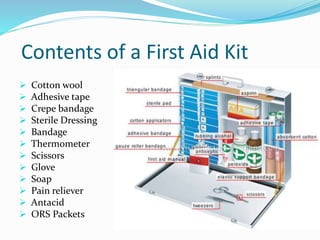
Contents of a First Aid Kit
 Cotton wool
 Adhesive tape
 Crepe bandage
 Sterile Dressing
 Bandage
 Thermometer
 Scissors
 Glove
 Soap
 Pain reliever
 Antacid
 ORS Packets
Before you provide first Aid
 If the person responds, introduce yourself as a first aid
provider before you touch him. Ask if you may help
him.
 If the person agrees, you may give first aid.
 If the person refuses your help, phone your emergency
response number (or 1122)
 and stay with him until someone with more advanced
training arrives and takes over.
 If the person is confused or cannot answer, assume
that he would want you to help.
Action plan
Check for DANGER
 To you
 To others
 To victim
Check RESPONSE
 Is victim conscious?
- Check for AIRWAY
 Is airway clear of objects?
 Is airway open?
B - Check for BREATHING
 Is chest rising and falling?
 Can you hear victim's breathing?
 Can you feel the breath on your cheek?
C - Check for CIRCULATION
 Can you feel a pulse?
 Can you see any obvious signs of life?
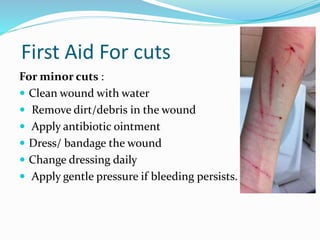
First Aid For cuts
For minor cuts :
 Clean wound with water
 Remove dirt/debris in the wound
 Apply antibiotic ointment
 Dress/ bandage the wound
 Change dressing daily
 Apply gentle pressure if bleeding persists.
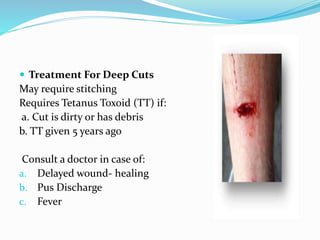
 Treatment For Deep Cuts
May require stitching
Requires Tetanus Toxoid (TT) if:
a. Cut is dirty or has debris
b. TT given 5 years ago
Consult a doctor in case of:
a. Delayed wound- healing
b. Pus Discharge
c. Fever
Bleeding
Bleeding is a loss of blood from the blood vessel
 External bleeding
 Internal bleeding
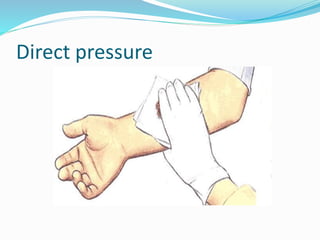
Direct pressure
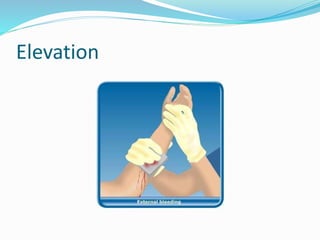
Elevation
Pressure dressing
Constrictive bandage
Internal Bleeding Management
•-lay the casualty down
•-raise the legs or bend the knees
•-loosen tight clothing
•-seek medical aid urgently
•-give nothing by mouth
•-reassure the casualt
Nose bleeding
Nose bleeding
 Sit up straight with head slightly forward
 Use your thumb and forefinger to firmly pinch the soft
part of nose
 Pinch nose for 5 mints and observe
 If bleeding does not stop Keep pinching for a full 10
minutes
 Check to see if there is still bleeding after 10 minutes
 Apply an ice pack to nose and cheeks
Injury to Head and spine
 A hard blow to the head, from a fall, knock or assault,
can injure the brain,
Symptoms
 wounds, altered consciousness, clear fluid from the
eyes or nose, black eyes or bruises behind the ears,
vision changes, nausea and vomiting.
Concussion:
brief period of unconsciousness
 Lie the person down, with their shoulders and head
slightly raised.
 Control any bleeding.
 Check for signs of serious head injury
 If the injury occurred during sport, don’t allow the
person to ‘play
Head injury
 Assess consciousness
 Assess Airway
 Assess Breathing
 Assess circulation
 Avoid cervical spine mobilization
Burns
First Aid for Burns
 Flush with cool water
 Remove all burned clothing and jewelry
 Give acetaminophen or ibuprofen for pain.
 If blisters form, don’t break them
 Give fluids by mouth if the person’s airway is not impaired
 Use an antibiotic ointment.
 Do not use butter (it increases the risk of infection and
doesn’t help heal the burn).
 Cover the burn with sterile, dry bandages.
 Seek immediate medical care
Fracture
Always control severe bleeding before immobilizing any
fractures
Place sufficient padding to support fracture site
Immobilize fracture sites
Do not force bones back into the wound
Give proper padding before the patient is shifted to the
hospital
Apply ice pack on the affected area to reduce pain and
control swelling
Sprain and strain
 apply an icepack or cold pack for 10 to 15 minutes at a
time each hour.
 Use an elastic bandage to prevent swelling and
support the joint.
 Don’t wrap it too tightly.
 If possible, elevate the injury above the level of the
heart to reduce swelling
First Aid for Bites and Stings from
Flying Insects
 scrape or pick it off (stringer)
 Avoid squeezing
 A cold compress may reduce the swelling and ease the
pain.
 painkiller such as acetaminophen or ibuprofen
 To prevent infection, wash the area with soap and
water.
 Apply an antiseptic or an antibacterial ointment
First Aid for snake bite
 immobilize the bite area
 Remove constricting clothing or jewelry, clean the bite
with soap and water,
 Cover the wound with loose, sterile bandage
 Take the person to a hospital or clinic as soon as
possible.
don’t
 Cut a bite wound
 Attempt to suck out venom
 Apply tourniquet, ice
Choking
 Choking is when food or another object gets stuck in
the airway
 Give 5 back blows. First, deliver five back blows
between the person's shoulder blades with the heel of
your hand.
 Give 5 abdominal thrusts. Perform five abdominal
thrusts (also known as the Heimlich maneuver).
 Alternate between 5 blows and 5 thrusts until the
blockage is dislodged.
Fainting /unconsciousness
 Help the person lie flat on the floor
 If the person does not improve or stop responding
Call helpline or carry to hospital
Dog bite
 Wipe the saliva away from the wound using a clean
cloth or handkerchief.
 Wash the wound thoroughly with plenty of soap and
water.
 Cover the wound with a dry, sterile dressing.
 Get medical aid or send the patient to the hospital
as soon as possible.
Heat cramps/exhaustion/stroke
 Take away from sun exposure
 Rest
 Cool
 Apply ice bag/water to sore muscles
 Give juice/water to drink
First AID

First AID

  • 1.
  • 2.
    First Aid isthe provision of initial and immediate care to an injured or ill person
  • 3.
    Importance of firstAid  Prevent further harm  Prevent the condition from worsening  Preserve life  Promote early recovery
  • 4.
    Contents of aFirst Aid Kit  Cotton wool  Adhesive tape  Crepe bandage  Sterile Dressing  Bandage  Thermometer  Scissors  Glove  Soap  Pain reliever  Antacid  ORS Packets
  • 5.
    Before you providefirst Aid  If the person responds, introduce yourself as a first aid provider before you touch him. Ask if you may help him.  If the person agrees, you may give first aid.  If the person refuses your help, phone your emergency response number (or 1122)  and stay with him until someone with more advanced training arrives and takes over.  If the person is confused or cannot answer, assume that he would want you to help.
  • 6.
    Action plan Check forDANGER  To you  To others  To victim Check RESPONSE  Is victim conscious?
  • 7.
    - Check forAIRWAY  Is airway clear of objects?  Is airway open? B - Check for BREATHING  Is chest rising and falling?  Can you hear victim's breathing?  Can you feel the breath on your cheek? C - Check for CIRCULATION  Can you feel a pulse?  Can you see any obvious signs of life?
  • 8.
    First Aid Forcuts For minor cuts :  Clean wound with water  Remove dirt/debris in the wound  Apply antibiotic ointment  Dress/ bandage the wound  Change dressing daily  Apply gentle pressure if bleeding persists.
  • 9.
     Treatment ForDeep Cuts May require stitching Requires Tetanus Toxoid (TT) if: a. Cut is dirty or has debris b. TT given 5 years ago Consult a doctor in case of: a. Delayed wound- healing b. Pus Discharge c. Fever
  • 10.
    Bleeding Bleeding is aloss of blood from the blood vessel  External bleeding  Internal bleeding
  • 11.
  • 12.
  • 13.
  • 14.
  • 15.
    Internal Bleeding Management •-laythe casualty down •-raise the legs or bend the knees •-loosen tight clothing •-seek medical aid urgently •-give nothing by mouth •-reassure the casualt
  • 16.
  • 17.
    Nose bleeding  Situp straight with head slightly forward  Use your thumb and forefinger to firmly pinch the soft part of nose  Pinch nose for 5 mints and observe  If bleeding does not stop Keep pinching for a full 10 minutes  Check to see if there is still bleeding after 10 minutes  Apply an ice pack to nose and cheeks
  • 19.
    Injury to Headand spine  A hard blow to the head, from a fall, knock or assault, can injure the brain, Symptoms  wounds, altered consciousness, clear fluid from the eyes or nose, black eyes or bruises behind the ears, vision changes, nausea and vomiting.
  • 20.
    Concussion: brief period ofunconsciousness  Lie the person down, with their shoulders and head slightly raised.  Control any bleeding.  Check for signs of serious head injury  If the injury occurred during sport, don’t allow the person to ‘play
  • 21.
    Head injury  Assessconsciousness  Assess Airway  Assess Breathing  Assess circulation  Avoid cervical spine mobilization
  • 22.
  • 23.
    First Aid forBurns  Flush with cool water  Remove all burned clothing and jewelry  Give acetaminophen or ibuprofen for pain.  If blisters form, don’t break them  Give fluids by mouth if the person’s airway is not impaired  Use an antibiotic ointment.  Do not use butter (it increases the risk of infection and doesn’t help heal the burn).  Cover the burn with sterile, dry bandages.  Seek immediate medical care
  • 24.
    Fracture Always control severebleeding before immobilizing any fractures Place sufficient padding to support fracture site Immobilize fracture sites Do not force bones back into the wound Give proper padding before the patient is shifted to the hospital Apply ice pack on the affected area to reduce pain and control swelling
  • 26.
    Sprain and strain apply an icepack or cold pack for 10 to 15 minutes at a time each hour.  Use an elastic bandage to prevent swelling and support the joint.  Don’t wrap it too tightly.  If possible, elevate the injury above the level of the heart to reduce swelling
  • 27.
    First Aid forBites and Stings from Flying Insects  scrape or pick it off (stringer)  Avoid squeezing  A cold compress may reduce the swelling and ease the pain.  painkiller such as acetaminophen or ibuprofen  To prevent infection, wash the area with soap and water.  Apply an antiseptic or an antibacterial ointment
  • 28.
    First Aid forsnake bite  immobilize the bite area  Remove constricting clothing or jewelry, clean the bite with soap and water,  Cover the wound with loose, sterile bandage  Take the person to a hospital or clinic as soon as possible.
  • 29.
    don’t  Cut abite wound  Attempt to suck out venom  Apply tourniquet, ice
  • 30.
    Choking  Choking iswhen food or another object gets stuck in the airway
  • 31.
     Give 5back blows. First, deliver five back blows between the person's shoulder blades with the heel of your hand.  Give 5 abdominal thrusts. Perform five abdominal thrusts (also known as the Heimlich maneuver).  Alternate between 5 blows and 5 thrusts until the blockage is dislodged.
  • 33.
    Fainting /unconsciousness  Helpthe person lie flat on the floor  If the person does not improve or stop responding Call helpline or carry to hospital
  • 34.
    Dog bite  Wipethe saliva away from the wound using a clean cloth or handkerchief.  Wash the wound thoroughly with plenty of soap and water.  Cover the wound with a dry, sterile dressing.  Get medical aid or send the patient to the hospital as soon as possible.
  • 35.
    Heat cramps/exhaustion/stroke  Takeaway from sun exposure  Rest  Cool  Apply ice bag/water to sore muscles  Give juice/water to drink