Skin & Appendages
Dr. Shahbaz Ahmad PT
DPT[UIPT][UOL]
MS-MSK-PT [UIPT][UOL]*
Lecturer [LIHS][LCPS]
SKIN PHYSIOLOGY
 Protective barrier
 Conservation of fluid,
protein, & electrolyte loss
 Regulation of body
temperature
 Secretory ability
 Vitamin D production
 Sensation
 Appearance and self-image
 Wound healing and
epithelial cell regeneration
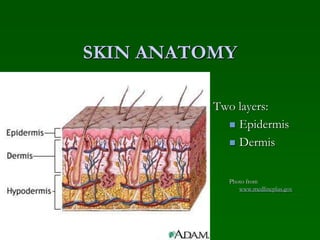
SKIN ANATOMY
Two layers:
 Epidermis
 Dermis
Photo from
www.medlineplus.gov
 The epidermis, the outermost layer of skin,
provides a waterproof barrier and creates our
skin tone.
 The dermis, beneath the epidermis, contains
tough connective tissue, hair follicles,
and sweat glands.
 The deeper subcutaneous
tissue (hypodermis) is made of fat
and connective tissue.
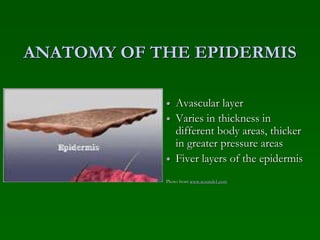
ANATOMY OF THE EPIDERMIS
 Avascular layer
 Varies in thickness in
different body areas, thicker
in greater pressure areas
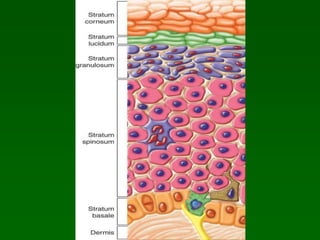
 Fiver layers of the epidermis
Photo from www.wounds1.com
FIVER LAYERS OF THE EPIDERMIS
 Stratum Corneum (waterproof; constantly being shed
 Stratum Lucidium (only found in soles of feet and palms)
 Stratum Granulosum (cells become more flattened)
 Stratum Spinosum (active growing layer)
 Stratum Germinativum (mitotic growth; makes melanin)
EPIDERMIS
 Four types of cells
1. Keratinocytes
2. Melanocytes
3. Langerhans cells
4. Merkel cells
EPIDERMIS
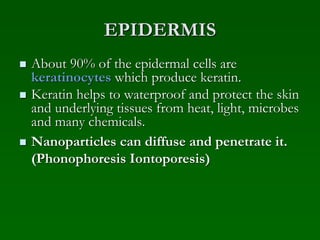
 About 90% of the epidermal cells are
keratinocytes which produce keratin.
 Keratin helps to waterproof and protect the skin
and underlying tissues from heat, light, microbes
and many chemicals.
 Nanoparticles can diffuse and penetrate it.
(Phonophoresis Iontoporesis)
Epidermis
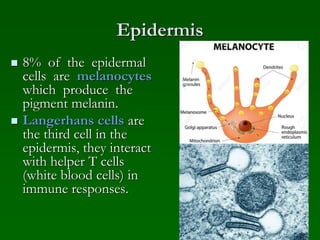
 8% of the epidermal
cells are melanocytes
which produce the
pigment melanin.
 Langerhans cells are
the third cell in the
epidermis, they interact
with helper T cells
(white blood cells) in
immune responses.
EPIDERMIS
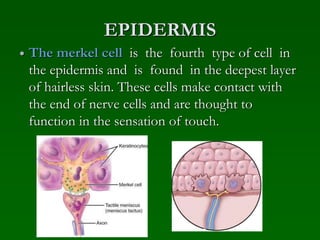
 The merkel cell is the fourth type of cell in
the epidermis and is found in the deepest layer
of hairless skin. These cells make contact with
the end of nerve cells and are thought to
function in the sensation of touch.
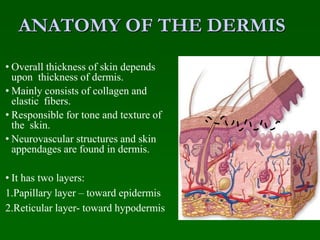
ANATOMY OF THE DERMIS
• Overall thickness of skin depends
upon thickness of dermis.
• Mainly consists of collagen and
elastic fibers.
• Responsible for tone and texture of
the skin.
• Neurovascular structures and skin
appendages are found in dermis.
• It has two layers:
1.Papillary layer – toward epidermis
2.Reticular layer- toward hypodermis
Layers of dermis
 Papillary layer: loose areolar connective tissue,
finger like projections papillae towards the
epidermis, and contains blood capillaries or
Meissner’s corpuscles.(finger prints)
 Areolar connective tissues hold organs in place and attaches
epithelial tissue to other underlying tissues.
Layers of dermis
 Reticular layer:
 lies under papillary layer.
 Much thicker and composed of dense irregular
connective tissue.
 Collagenous elastic and reticular fibres, gives strength,
elasticity, and extensibility.
Roots of hair, sweat and sebaceous glands, receptors,
nails and blood vessels.

Physiology of the Dermis
 Supports epidermis through tensile strength and
elasticity
 Nourishes epidermis through capillary loops
Reticular layer
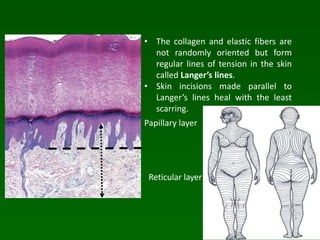
• The collagen and elastic fibers are
not randomly oriented but form
regular lines of tension in the skin
called Langer’s lines.
• Skin incisions made parallel to
Langer’s lines heal with the least
scarring.
Papillary layer
Skin appendages
•These are developed as a result of down growth of
the epidermis of skin toward dermis and
hypodermis.
•It includes
1.Hair follicle: give rise to the hair
2.Sebaceous gland
3.Sweat gland
4.Nail
Appendages of the Skin
 Hair
 Produced by hair follicle
which are made of hard
keratinized epithelial cells
 Melanocytes provide
pigment for hair color
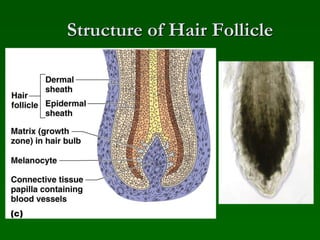
Structure of Hair Follicle
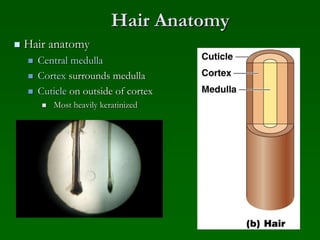
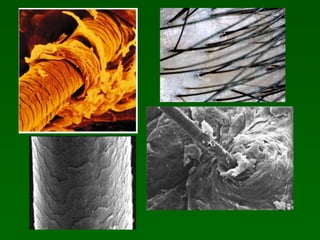
Hair Anatomy
 Hair anatomy
 Central medulla
 Cortex surrounds medulla
 Cuticle on outside of cortex
 Most heavily keratinized
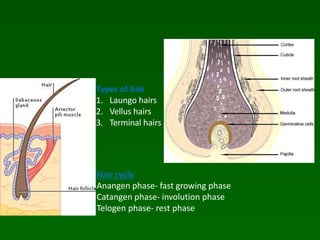
Hair cycle
Anangen phase- fast growing phase
Catangen phase- involution phase
Telogen phase- rest phase
Types of hair
1. Laungo hairs
2. Vellus hairs
3. Terminal hairs
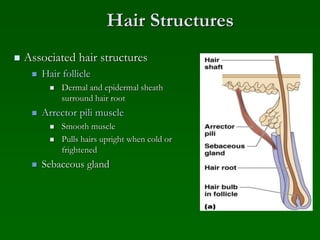
Hair Structures
 Associated hair structures
 Hair follicle
 Dermal and epidermal sheath
surround hair root
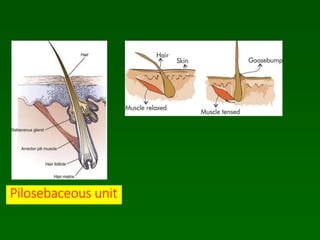
 Arrector pili muscle
 Smooth muscle
 Pulls hairs upright when cold or
frightened
 Sebaceous gland
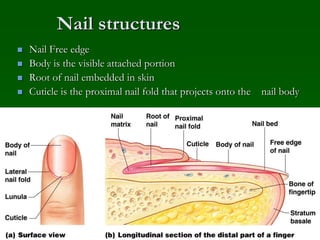
Nail structures
 Nail Free edge
 Body is the visible attached portion
 Root of nail embedded in skin
 Cuticle is the proximal nail fold that projects onto the nail body
Sweat and
Its Function
 Composition
 Mostly water
 Salts and vitamin C
 Some metabolic waste (urea and uric acid)
 Fatty acids and proteins (apocrine only)
 Function
 Helps rid body of excess heat
 Excretes waste products
 Acidic nature inhibits bacteria growth
 Odor is from associated bacteria
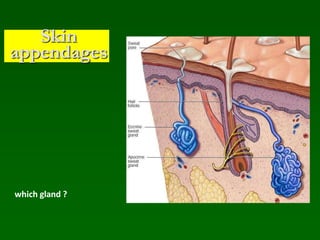
which gland ?
Skin
appendages
Pilosebaceous unit

skin and appendages Histology

  • 1.
    Skin & Appendages Dr.Shahbaz Ahmad PT DPT[UIPT][UOL] MS-MSK-PT [UIPT][UOL]* Lecturer [LIHS][LCPS]
  • 2.
    SKIN PHYSIOLOGY  Protectivebarrier  Conservation of fluid, protein, & electrolyte loss  Regulation of body temperature  Secretory ability  Vitamin D production  Sensation  Appearance and self-image  Wound healing and epithelial cell regeneration
  • 3.
    SKIN ANATOMY Two layers: Epidermis  Dermis Photo from www.medlineplus.gov
  • 4.
     The epidermis,the outermost layer of skin, provides a waterproof barrier and creates our skin tone.  The dermis, beneath the epidermis, contains tough connective tissue, hair follicles, and sweat glands.  The deeper subcutaneous tissue (hypodermis) is made of fat and connective tissue.
  • 5.
    ANATOMY OF THEEPIDERMIS  Avascular layer  Varies in thickness in different body areas, thicker in greater pressure areas  Fiver layers of the epidermis Photo from www.wounds1.com
  • 6.
    FIVER LAYERS OFTHE EPIDERMIS  Stratum Corneum (waterproof; constantly being shed  Stratum Lucidium (only found in soles of feet and palms)  Stratum Granulosum (cells become more flattened)  Stratum Spinosum (active growing layer)  Stratum Germinativum (mitotic growth; makes melanin)
  • 8.
    EPIDERMIS  Four typesof cells 1. Keratinocytes 2. Melanocytes 3. Langerhans cells 4. Merkel cells
  • 9.
    EPIDERMIS  About 90%of the epidermal cells are keratinocytes which produce keratin.  Keratin helps to waterproof and protect the skin and underlying tissues from heat, light, microbes and many chemicals.  Nanoparticles can diffuse and penetrate it. (Phonophoresis Iontoporesis)
  • 10.
    Epidermis  8% ofthe epidermal cells are melanocytes which produce the pigment melanin.  Langerhans cells are the third cell in the epidermis, they interact with helper T cells (white blood cells) in immune responses.
  • 11.
    EPIDERMIS  The merkelcell is the fourth type of cell in the epidermis and is found in the deepest layer of hairless skin. These cells make contact with the end of nerve cells and are thought to function in the sensation of touch.
  • 12.
    ANATOMY OF THEDERMIS • Overall thickness of skin depends upon thickness of dermis. • Mainly consists of collagen and elastic fibers. • Responsible for tone and texture of the skin. • Neurovascular structures and skin appendages are found in dermis. • It has two layers: 1.Papillary layer – toward epidermis 2.Reticular layer- toward hypodermis
  • 13.
    Layers of dermis Papillary layer: loose areolar connective tissue, finger like projections papillae towards the epidermis, and contains blood capillaries or Meissner’s corpuscles.(finger prints)  Areolar connective tissues hold organs in place and attaches epithelial tissue to other underlying tissues.
  • 14.
    Layers of dermis Reticular layer:  lies under papillary layer.  Much thicker and composed of dense irregular connective tissue.  Collagenous elastic and reticular fibres, gives strength, elasticity, and extensibility. Roots of hair, sweat and sebaceous glands, receptors, nails and blood vessels. 
  • 15.
    Physiology of theDermis  Supports epidermis through tensile strength and elasticity  Nourishes epidermis through capillary loops
  • 16.
    Reticular layer • Thecollagen and elastic fibers are not randomly oriented but form regular lines of tension in the skin called Langer’s lines. • Skin incisions made parallel to Langer’s lines heal with the least scarring. Papillary layer
  • 17.
    Skin appendages •These aredeveloped as a result of down growth of the epidermis of skin toward dermis and hypodermis. •It includes 1.Hair follicle: give rise to the hair 2.Sebaceous gland 3.Sweat gland 4.Nail
  • 18.
    Appendages of theSkin  Hair  Produced by hair follicle which are made of hard keratinized epithelial cells  Melanocytes provide pigment for hair color
  • 19.
  • 20.
    Hair Anatomy  Hairanatomy  Central medulla  Cortex surrounds medulla  Cuticle on outside of cortex  Most heavily keratinized
  • 21.
    Hair cycle Anangen phase-fast growing phase Catangen phase- involution phase Telogen phase- rest phase Types of hair 1. Laungo hairs 2. Vellus hairs 3. Terminal hairs
  • 22.
    Hair Structures  Associatedhair structures  Hair follicle  Dermal and epidermal sheath surround hair root  Arrector pili muscle  Smooth muscle  Pulls hairs upright when cold or frightened  Sebaceous gland
  • 24.
    Nail structures  NailFree edge  Body is the visible attached portion  Root of nail embedded in skin  Cuticle is the proximal nail fold that projects onto the nail body
  • 25.
    Sweat and Its Function Composition  Mostly water  Salts and vitamin C  Some metabolic waste (urea and uric acid)  Fatty acids and proteins (apocrine only)  Function  Helps rid body of excess heat  Excretes waste products  Acidic nature inhibits bacteria growth  Odor is from associated bacteria
  • 26.
  • 27.