Hyperventilation
Syndrome
DR. SHAHBAZ AHMAD PT
DPT [UIPT][UOL]
MS-MSK-PT [UIPT][UOL]
LECTURER [LIHS][LCPS]
Hyperventilation syndrome (HVS) is a name
given to a collection of physical and emotional
symptoms, largely brought about by
hyperventilation. This happens when we over-
breathe.
It is also known as rapid (or fast) deep
breathing
Pathophysiology
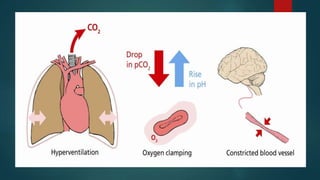
 In hyperventilation, the exhalation is more than inhalation. Physical
changes can take place in our body over time.
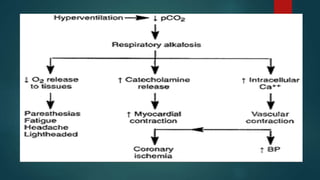
 This causes a rapid reduction in carbon dioxide in alveoli and
arteries, an increase in arterial pH (respiratory alkalosis), constriction
of cerebral arteries and increased production of lactic acid.
 Low carbon dioxide levels lead to narrowing of the blood vessels that
supply blood to the brain. This reduction in blood supply to the brain
leads to symptoms like lightheadedness and tingling in the fingers.
Types of HVS
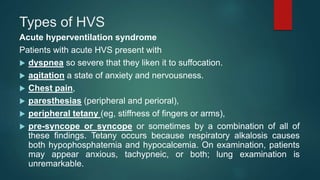
Acute hyperventilation syndrome
Patients with acute HVS present with
 dyspnea so severe that they liken it to suffocation.
 agitation a state of anxiety and nervousness.
 Chest pain,
 paresthesias (peripheral and perioral),
 peripheral tetany (eg, stiffness of fingers or arms),
 pre-syncope or syncope or sometimes by a combination of all of
these findings. Tetany occurs because respiratory alkalosis causes
both hypophosphatemia and hypocalcemia. On examination, patients
may appear anxious, tachypneic, or both; lung examination is
unremarkable.
Chronic hyperventilation syndrome
 Patients with chronic hyperventilation
syndrome exhale deeply and frequently and
often have nonspecific somatic symptoms and
anxiety disorders and emotional stress.
SIGNS ANS SYMPTOMS
 The main signs of HVS are when we breathe much
more quickly and more shallowly than our bodies
needs.
 Severe hyperventilation can lead to loss of
consciousness.
 Hyperventilation happens most often to people 15 to
55 years old
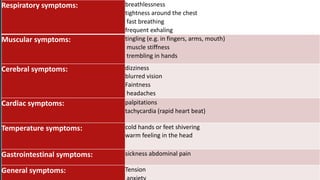
Respiratory symptoms: breathlessness
tightness around the chest
fast breathing
frequent exhaling
Muscular symptoms: tingling (e.g. in fingers, arms, mouth)
muscle stiffness
trembling in hands
Cerebral symptoms: dizziness
blurred vision
Faintness
headaches
Cardiac symptoms: palpitations
tachycardia (rapid heart beat)
Temperature symptoms: cold hands or feet shivering
warm feeling in the head
Gastrointestinal symptoms: sickness abdominal pain
General symptoms: Tension
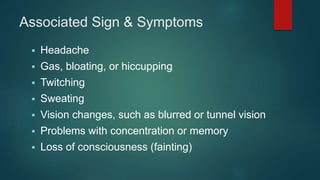
Associated Sign & Symptoms
 Headache
 Gas, bloating, or hiccupping
 Twitching
 Sweating
 Vision changes, such as blurred or tunnel vision
 Problems with concentration or memory
 Loss of consciousness (fainting)
Causes
 Anxiety attack
 Bleeding
 Drug overdose (e.g.
aspirin)
 Diabetic ketoacidosis
 Pain
 Panic attack
Pregnancy
Heart disease e.g. MI or heart attack
Head injuries
High altitude
Lung infection or lung disease(e.g. COPD
or asthma)
shock
Diagnosis
Hyperventilation syndrome is a diagnosis of exclusion; the
challenge is to use tests and resources to distinguish this
syndrome from more serious diagnoses. Basic testing includes:
1. Pulse oximetry in HVS shows oxygen saturation at or close
to 100%.
2. Chest x-ray.
3. ECG is done to detect cardiac ischemia, although HVS itself
can cause ST-segment depressions, T-wave inversions, and
prolonged QT intervals.
4. ABGs are needed when other causes of hyperventilation are
suspected, such as metabolic acidosis.
Hyperventilation syndrome is a remarkably common cause of
dizziness. About 25% of patients who complain about dizziness
are diagnosed with HVS.
 Occasionally, acute hyperventilation syndrome is
indistinguishable from acute pulmonary embolism, and tests
for pulmonary embolism (e.g, D-dimer, ventilation/perfusion
scanning, angiography) may be necessary.
TREATMENT
HOME
CARE
STRESS
REDUCTIO
N
MEDICATI
ON
ACUPUNC
TURE
HOME CARE
 Immediate techniques to help treat acute
hyperventilation:
 Breathe through pursed lips
 Breathe slowly into a paper bag or cupped hands
 Attempt to breathe into your belly (diaphragm) rather
than your chest.
 Hold your breath for 10 to 15 seconds at a time.
 Alternate nostril breathing
Stress Reduction
 If you suffer from anxiety or stress, you may want to see a
psychologist to help you understand and treat your condition.
Acupuncture
 Acupuncture is an alternative treatment based on ancient
Chinese medicine. It involves placing thin needles into areas of
the body to promote healing.
 One preliminary study found that acupuncture helped reduce
anxiety and the severity of hyperventilation.
Medication
Examples of medications for hyperventilation include:
 alprazolam (Xanax)
 doxepin (Silenor)
 paroxetine (Paxil)
Prevent Hyperventilation
 Learn breathing and relaxation techniques like:
 Meditation
 Alternate nostril breathing, deep belly breathing, and
full body breathing
 Mind/body exercises, such as yoga.
 Exercising regularly (walking, running, bicycling, etc.)
“
”
THANK YOU
FOR LISTENING
“Most people do not listen with the intent to understand; they listen with the intent to
reply.”
Stephen R. Covey

Hyperventilation syndrome

  • 1.
    Hyperventilation Syndrome DR. SHAHBAZ AHMADPT DPT [UIPT][UOL] MS-MSK-PT [UIPT][UOL] LECTURER [LIHS][LCPS]
  • 2.
    Hyperventilation syndrome (HVS)is a name given to a collection of physical and emotional symptoms, largely brought about by hyperventilation. This happens when we over- breathe. It is also known as rapid (or fast) deep breathing
  • 3.
    Pathophysiology  In hyperventilation,the exhalation is more than inhalation. Physical changes can take place in our body over time.  This causes a rapid reduction in carbon dioxide in alveoli and arteries, an increase in arterial pH (respiratory alkalosis), constriction of cerebral arteries and increased production of lactic acid.  Low carbon dioxide levels lead to narrowing of the blood vessels that supply blood to the brain. This reduction in blood supply to the brain leads to symptoms like lightheadedness and tingling in the fingers.
  • 6.
    Types of HVS Acutehyperventilation syndrome Patients with acute HVS present with  dyspnea so severe that they liken it to suffocation.  agitation a state of anxiety and nervousness.  Chest pain,  paresthesias (peripheral and perioral),  peripheral tetany (eg, stiffness of fingers or arms),  pre-syncope or syncope or sometimes by a combination of all of these findings. Tetany occurs because respiratory alkalosis causes both hypophosphatemia and hypocalcemia. On examination, patients may appear anxious, tachypneic, or both; lung examination is unremarkable.
  • 7.
    Chronic hyperventilation syndrome Patients with chronic hyperventilation syndrome exhale deeply and frequently and often have nonspecific somatic symptoms and anxiety disorders and emotional stress.
  • 8.
    SIGNS ANS SYMPTOMS The main signs of HVS are when we breathe much more quickly and more shallowly than our bodies needs.  Severe hyperventilation can lead to loss of consciousness.  Hyperventilation happens most often to people 15 to 55 years old
  • 9.
    Respiratory symptoms: breathlessness tightnessaround the chest fast breathing frequent exhaling Muscular symptoms: tingling (e.g. in fingers, arms, mouth) muscle stiffness trembling in hands Cerebral symptoms: dizziness blurred vision Faintness headaches Cardiac symptoms: palpitations tachycardia (rapid heart beat) Temperature symptoms: cold hands or feet shivering warm feeling in the head Gastrointestinal symptoms: sickness abdominal pain General symptoms: Tension
  • 10.
    Associated Sign &Symptoms  Headache  Gas, bloating, or hiccupping  Twitching  Sweating  Vision changes, such as blurred or tunnel vision  Problems with concentration or memory  Loss of consciousness (fainting)
  • 11.
    Causes  Anxiety attack Bleeding  Drug overdose (e.g. aspirin)  Diabetic ketoacidosis  Pain  Panic attack Pregnancy Heart disease e.g. MI or heart attack Head injuries High altitude Lung infection or lung disease(e.g. COPD or asthma) shock
  • 12.
    Diagnosis Hyperventilation syndrome isa diagnosis of exclusion; the challenge is to use tests and resources to distinguish this syndrome from more serious diagnoses. Basic testing includes: 1. Pulse oximetry in HVS shows oxygen saturation at or close to 100%. 2. Chest x-ray. 3. ECG is done to detect cardiac ischemia, although HVS itself can cause ST-segment depressions, T-wave inversions, and prolonged QT intervals. 4. ABGs are needed when other causes of hyperventilation are suspected, such as metabolic acidosis.
  • 13.
    Hyperventilation syndrome isa remarkably common cause of dizziness. About 25% of patients who complain about dizziness are diagnosed with HVS.  Occasionally, acute hyperventilation syndrome is indistinguishable from acute pulmonary embolism, and tests for pulmonary embolism (e.g, D-dimer, ventilation/perfusion scanning, angiography) may be necessary.
  • 14.
  • 15.
    HOME CARE  Immediatetechniques to help treat acute hyperventilation:  Breathe through pursed lips  Breathe slowly into a paper bag or cupped hands  Attempt to breathe into your belly (diaphragm) rather than your chest.  Hold your breath for 10 to 15 seconds at a time.  Alternate nostril breathing
  • 16.
    Stress Reduction  Ifyou suffer from anxiety or stress, you may want to see a psychologist to help you understand and treat your condition. Acupuncture  Acupuncture is an alternative treatment based on ancient Chinese medicine. It involves placing thin needles into areas of the body to promote healing.  One preliminary study found that acupuncture helped reduce anxiety and the severity of hyperventilation.
  • 17.
    Medication Examples of medicationsfor hyperventilation include:  alprazolam (Xanax)  doxepin (Silenor)  paroxetine (Paxil)
  • 18.
    Prevent Hyperventilation  Learnbreathing and relaxation techniques like:  Meditation  Alternate nostril breathing, deep belly breathing, and full body breathing  Mind/body exercises, such as yoga.  Exercising regularly (walking, running, bicycling, etc.)
  • 19.
    “ ” THANK YOU FOR LISTENING “Mostpeople do not listen with the intent to understand; they listen with the intent to reply.” Stephen R. Covey