



Skin Structure
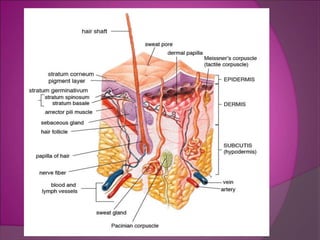
 Epidermis :outer layer, Stratified squamous
epithelium , Provide protection to the body.
 Dermis (intermediate layer) Dense
connective tissue , role of the dermis is to
support and protect the skin and deeper layers,
assist in thermoregulation, and aid in sensation
 Hypodermis ( inner layer)Subcutaneous
tissues,
 provides the main structural support for the skin,
as well as insulating the body from cold and
aiding shock absorption
Skin Structure
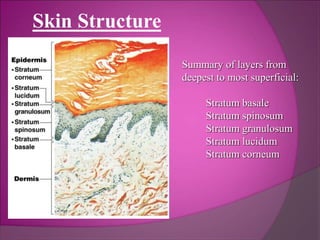
Summary of layers from
deepest to most superficial:
Stratum basale
Stratum spinosum
Stratum granulosum
Stratum lucidum
Stratum corneum
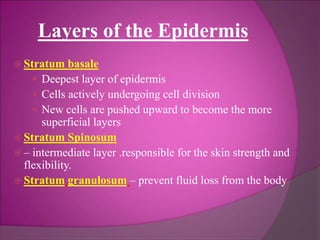
Layers of the Epidermis
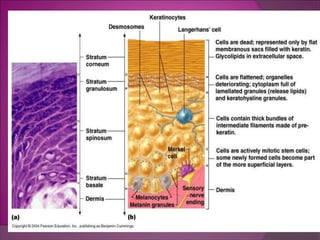
 Stratum basale
 Deepest layer of epidermis
 Cells actively undergoing cell division
 New cells are pushed upward to become the more
superficial layers
 Stratum Spinosum
 – intermediate layer .responsible for the skin strength and
flexibility.
 Stratum granulosum – prevent fluid loss from the body
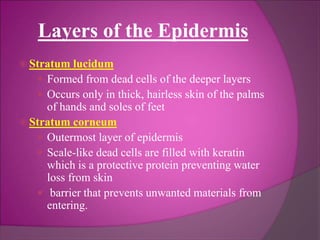
Layers of the Epidermis
 Stratum lucidum
 Formed from dead cells of the deeper layers
 Occurs only in thick, hairless skin of the palms
of hands and soles of feet
 Stratum corneum
 Outermost layer of epidermis
 Scale-like dead cells are filled with keratin
which is a protective protein preventing water
loss from skin
 barrier that prevents unwanted materials from
entering.
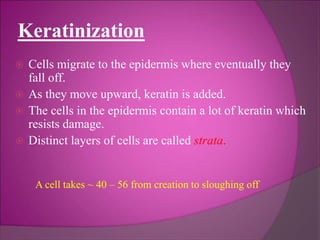
Keratinization
 Cells migrate to the epidermis where eventually they
fall off.
 As they move upward, keratin is added.
 The cells in the epidermis contain a lot of keratin which
resists damage.
 Distinct layers of cells are called strata.
A cell takes ~ 40 – 56 from creation to sloughing off
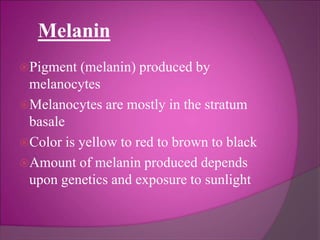
Melanin
Pigment (melanin) produced by
melanocytes
Melanocytes are mostly in the stratum
basale
Color is yellow to red to brown to black
Amount of melanin produced depends
upon genetics and exposure to sunlight
 Large amounts of melanin occur in some
regions like freckles, moles, and nipples.
 Less melanin occurs in the lips, hands,
and soles of the feet.
 All races have the same number of
melanoctyes! The amount of melanin
produced is determined by genetics.
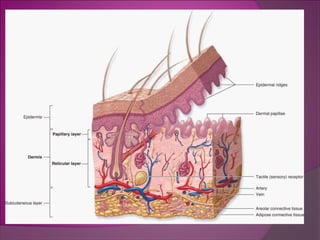
Dermis
Two layers
 Papillary layer (upper dermal region)
○ Projections called dermal papillae
 Some contain capillary loops containing
blood
 Some pain receptors and touch receptors
 Reticular layer (deepest skin layer)
○ Blood vessels
○ Sweat and oil glands
○ Deep pressure receptors
Dermis
Overall dermis structure
 Collagen and elastic fibers located throughout the
dermis
○ Collagen fibers give skin its toughness
○ Elastic fibers give skin elasticity
 Dermal papillae – extend toward the epidermis and
deliver nutrients, remove waste products (sweat ,
urea and uric acid) and aid in regulating body
temperature.
Normal Skin Color
Melanin
 Yellow, brown, or black pigments
Carotene
 Orange-yellow pigment from some
vegetables
Hemoglobin
 Red coloring from blood cells in dermal
capillaries
 Oxygen content determines the extent of red
coloring
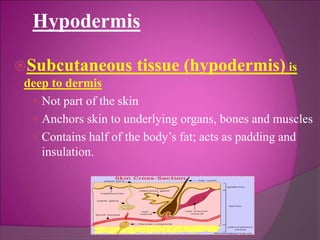
Hypodermis
Subcutaneous tissue (hypodermis) is
deep to dermis
 Not part of the skin
 Anchors skin to underlying organs, bones and muscles
 Contains half of the body’s fat; acts as padding and
insulation.
Skin Functions
 Thermal control – regulates body temperature
dilated vessels allow for heat loss, while constricted vessels retain
heat
 Waterproofing – contains lipids to prevent drying out
 Excretion of waste – urea and uric acid secreted in sweat
 Makes vitamin D – modifies cholesterol molecules in skin and
converts it to vitamin D
 Mechanical/Chemical damage –Provides a protective barrier
against mechanical, thermal and physical injury and hazardous
substances.
 Bacterial damage – skin secretions are acidic and inhibit bacteria.
 Ultraviolet radiation – melanin produced to protect from UV
damage
What Else Comes from the Epidermis?
Hair
Glands
Nails
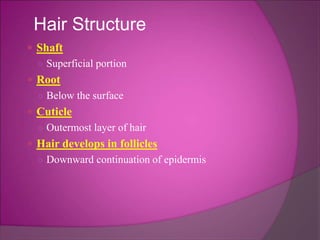
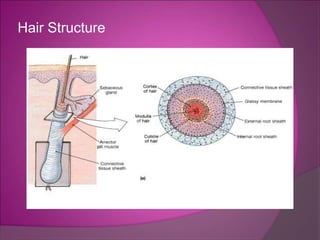
Hair Structure
 Shaft
○ Superficial portion
 Root
○ Below the surface
 Cuticle
○ Outermost layer of hair
 Hair develops in follicles
○ Downward continuation of epidermis
Functions of Hair
Protection
Thermoregulation
Sensory
Hair Structure
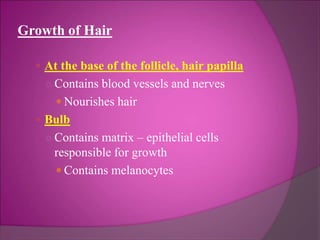
Growth of Hair
 At the base of the follicle, hair papilla
○ Contains blood vessels and nerves
 Nourishes hair
 Bulb
○ Contains matrix – epithelial cells
responsible for growth
 Contains melanocytes
Glands
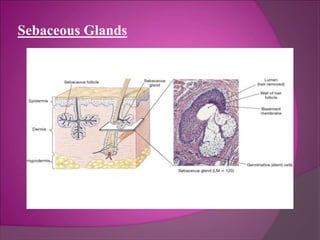
 Sebaceous glands
○Connected to hair follicles
○Secrete a waxy, oily substance
(sebum)
Sebaceous Glands
Glands
 Sweat glands
○ Found just about everywhere
○ Produce “perspiration”
 Water, salt. Wastes
○ Function – cooling of the body
 Scent Glands
○ Specific type of sweat gland
○ Found near hair follicles
○ Develop at puberty
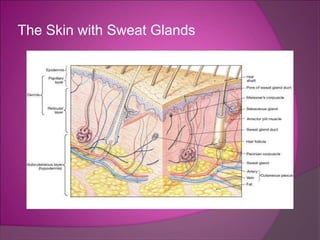
The Skin with Sweat Glands
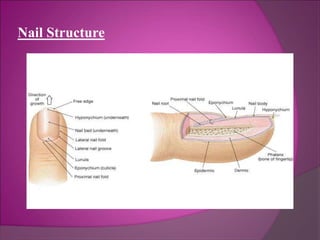
Nail Structure
Nail body
Free edge
Nail root
○Matrix
Nail Structure
Skin An Essential Organ

Skin An Essential Organ

  • 3.
    Skin Structure  Epidermis:outer layer, Stratified squamous epithelium , Provide protection to the body.  Dermis (intermediate layer) Dense connective tissue , role of the dermis is to support and protect the skin and deeper layers, assist in thermoregulation, and aid in sensation  Hypodermis ( inner layer)Subcutaneous tissues,  provides the main structural support for the skin, as well as insulating the body from cold and aiding shock absorption
  • 4.
    Skin Structure Summary oflayers from deepest to most superficial: Stratum basale Stratum spinosum Stratum granulosum Stratum lucidum Stratum corneum
  • 6.
    Layers of theEpidermis  Stratum basale  Deepest layer of epidermis  Cells actively undergoing cell division  New cells are pushed upward to become the more superficial layers  Stratum Spinosum  – intermediate layer .responsible for the skin strength and flexibility.  Stratum granulosum – prevent fluid loss from the body
  • 7.
    Layers of theEpidermis  Stratum lucidum  Formed from dead cells of the deeper layers  Occurs only in thick, hairless skin of the palms of hands and soles of feet  Stratum corneum  Outermost layer of epidermis  Scale-like dead cells are filled with keratin which is a protective protein preventing water loss from skin  barrier that prevents unwanted materials from entering.
  • 8.
    Keratinization  Cells migrateto the epidermis where eventually they fall off.  As they move upward, keratin is added.  The cells in the epidermis contain a lot of keratin which resists damage.  Distinct layers of cells are called strata. A cell takes ~ 40 – 56 from creation to sloughing off
  • 9.
    Melanin Pigment (melanin) producedby melanocytes Melanocytes are mostly in the stratum basale Color is yellow to red to brown to black Amount of melanin produced depends upon genetics and exposure to sunlight
  • 10.
     Large amountsof melanin occur in some regions like freckles, moles, and nipples.  Less melanin occurs in the lips, hands, and soles of the feet.  All races have the same number of melanoctyes! The amount of melanin produced is determined by genetics.
  • 11.
    Dermis Two layers  Papillarylayer (upper dermal region) ○ Projections called dermal papillae  Some contain capillary loops containing blood  Some pain receptors and touch receptors  Reticular layer (deepest skin layer) ○ Blood vessels ○ Sweat and oil glands ○ Deep pressure receptors
  • 13.
    Dermis Overall dermis structure Collagen and elastic fibers located throughout the dermis ○ Collagen fibers give skin its toughness ○ Elastic fibers give skin elasticity  Dermal papillae – extend toward the epidermis and deliver nutrients, remove waste products (sweat , urea and uric acid) and aid in regulating body temperature.
  • 14.
    Normal Skin Color Melanin Yellow, brown, or black pigments Carotene  Orange-yellow pigment from some vegetables Hemoglobin  Red coloring from blood cells in dermal capillaries  Oxygen content determines the extent of red coloring
  • 15.
    Hypodermis Subcutaneous tissue (hypodermis)is deep to dermis  Not part of the skin  Anchors skin to underlying organs, bones and muscles  Contains half of the body’s fat; acts as padding and insulation.
  • 16.
    Skin Functions  Thermalcontrol – regulates body temperature dilated vessels allow for heat loss, while constricted vessels retain heat  Waterproofing – contains lipids to prevent drying out  Excretion of waste – urea and uric acid secreted in sweat  Makes vitamin D – modifies cholesterol molecules in skin and converts it to vitamin D  Mechanical/Chemical damage –Provides a protective barrier against mechanical, thermal and physical injury and hazardous substances.  Bacterial damage – skin secretions are acidic and inhibit bacteria.  Ultraviolet radiation – melanin produced to protect from UV damage
  • 17.
    What Else Comesfrom the Epidermis? Hair Glands Nails
  • 18.
    Hair Structure  Shaft ○Superficial portion  Root ○ Below the surface  Cuticle ○ Outermost layer of hair  Hair develops in follicles ○ Downward continuation of epidermis
  • 19.
  • 20.
  • 21.
    Growth of Hair At the base of the follicle, hair papilla ○ Contains blood vessels and nerves  Nourishes hair  Bulb ○ Contains matrix – epithelial cells responsible for growth  Contains melanocytes
  • 22.
    Glands  Sebaceous glands ○Connectedto hair follicles ○Secrete a waxy, oily substance (sebum)
  • 23.
  • 24.
    Glands  Sweat glands ○Found just about everywhere ○ Produce “perspiration”  Water, salt. Wastes ○ Function – cooling of the body  Scent Glands ○ Specific type of sweat gland ○ Found near hair follicles ○ Develop at puberty
  • 25.
    The Skin withSweat Glands
  • 26.
    Nail Structure Nail body Freeedge Nail root ○Matrix
  • 27.