NUTRITION.
WHAT IS NUTRITION/
TYPES OF NUTRI…
Importance of nutrition.
nutrition deficiency diseases.
What are the basic principles of
nutrition ?
Eating a diet high in vegetables, fruits, whole grains, and
legumes.
Choosing lean, low-fat sources of protein.
Limiting sweets, soft drinks, and foods with added sugar.
Including proteins, carbohydrates, and a little good fat in
all meals and snacks.
How does poor nutrition affect the
body?
In the short term, poor nutrition can contribute to stress,
tiredness and our capacity to work, and over time,
it can contribute to the risk of developing some illnesses
and other health problems such as:
being overweight or obese. tooth decay
Here's how to recognize seven
common nutrient deficiencies.
Calcium Strengthens Your Musculoskeletal System. ..
Vitamin D Is Essential for Maintaining Strong Bones. ...
Potassium Helps Muscles and Nerves Function Properly. ..
.
Iron Is Necessary for Oxygen-Rich Blood. ...
Vitamin B12 Aids in the Production of Brain Chemicals.
Nutrition def..diseases
Nutritional disease, any of the nutrient-related diseases
and conditions that cause illness in humans.
They may include deficiencies or excesses in the diet, obesity and
eating disorders, and chronic diseases such as
cardiovascular disease, hypertension, cancer, and diabetes mellitus
etc
1. Rickets:
Deficiency of Vitamin D along with calcium and potassium in
the body causes rickets.
Rickets is characterized by weak and soft bones, bowed legs
and bone deformities.
Fish, fortified dairy products, liver, oil and sunlight are some
rich sources of Vitamin D.
One may need to resort to dietary supplements for making
up for the lack of the “sunshine vitamin” in the body.
Osteoporosis:
. Osteoporosis:
Deficiency of Vitamin D and calcium in the body can
negatively affect the health of the bones and spine,
It leads to unhealthy, soft and brittle bones that are prone
to fractures and defects in the spine structure.
Bananas, spinach, milk, okra, soy and sunlight are natural
sources of Vitamin D and calcium that act to eliminate this
deficiency,
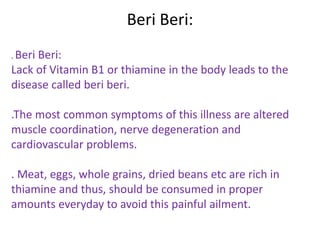
Beri Beri:
. Beri Beri:
Lack of Vitamin B1 or thiamine in the body leads to the
disease called beri beri.
.The most common symptoms of this illness are altered
muscle coordination, nerve degeneration and
cardiovascular problems.
. Meat, eggs, whole grains, dried beans etc are rich in
thiamine and thus, should be consumed in proper
amounts everyday to avoid this painful ailment.
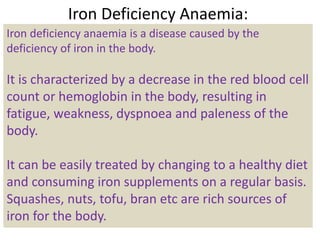
Iron Deficiency Anaemia:
Iron deficiency anaemia is a disease caused by the
deficiency of iron in the body.
It is characterized by a decrease in the red blood cell
count or hemoglobin in the body, resulting in
fatigue, weakness, dyspnoea and paleness of the
body.
It can be easily treated by changing to a healthy diet
and consuming iron supplements on a regular basis.
Squashes, nuts, tofu, bran etc are rich sources of
iron for the body.
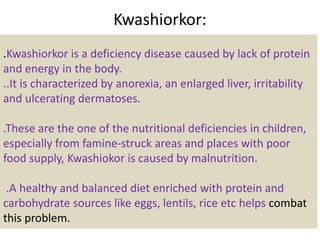
Kwashiorkor:
.Kwashiorkor is a deficiency disease caused by lack of protein
and energy in the body.
..It is characterized by anorexia, an enlarged liver, irritability
and ulcerating dermatoses.
.These are the one of the nutritional deficiencies in children,
especially from famine-struck areas and places with poor
food supply, Kwashiokor is caused by malnutrition.
.A healthy and balanced diet enriched with protein and
carbohydrate sources like eggs, lentils, rice etc helps combat
this problem.
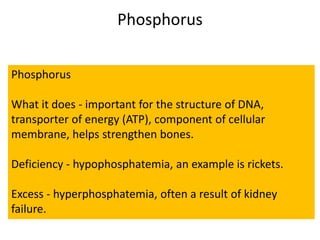
Phosphorus
Phosphorus
What it does - important for the structure of DNA,
transporter of energy (ATP), component of cellular
membrane, helps strengthen bones.
Deficiency - hypophosphatemia, an example is rickets.
Excess - hyperphosphatemia, often a result of kidney
failure.
ZINC.
What it does - required by many enzymes. Important for
reproductive organ growth. Also important in gene
expression and regulating the nervous and immune
systems.
Deficiency - short stature, anemia, increased pigmentation
of skin, enlarged liver and spleen, impaired reproductive
function, impaired wound healing, and immune deficiency.
Excess - suppresses copper and iron absorption
Iodine.
What it does - required for the biosynthesis of
thyroxine (one type of thyroid hormone).
Deficiency - developmental delays, enlarged thyroid
gland (in the neck), and fatigue.
Excess - can affect the function of the thyroid gland.
Why is nutrition important
.A healthy diet throughout life promotes healthy pregnancy
outcomes, supports normal growth, development and ageing,
helps to maintain a healthy body weight, and reduces the risk of
chronic disease leading to overall health and well-being.
.Benefits of healthy eating
A diversified, balanced and healthy diet will vary depending on:
.age
.gender
.lifestyle
.degree of physical activity
.cultural context
.locally available foods
.dietary and food customs.
Thank you…

Nutrition

  • 1.
    NUTRITION. WHAT IS NUTRITION/ TYPESOF NUTRI… Importance of nutrition. nutrition deficiency diseases.
  • 3.
    What are thebasic principles of nutrition ? Eating a diet high in vegetables, fruits, whole grains, and legumes. Choosing lean, low-fat sources of protein. Limiting sweets, soft drinks, and foods with added sugar. Including proteins, carbohydrates, and a little good fat in all meals and snacks.
  • 4.
    How does poornutrition affect the body? In the short term, poor nutrition can contribute to stress, tiredness and our capacity to work, and over time, it can contribute to the risk of developing some illnesses and other health problems such as: being overweight or obese. tooth decay
  • 5.
    Here's how torecognize seven common nutrient deficiencies. Calcium Strengthens Your Musculoskeletal System. .. Vitamin D Is Essential for Maintaining Strong Bones. ... Potassium Helps Muscles and Nerves Function Properly. .. . Iron Is Necessary for Oxygen-Rich Blood. ... Vitamin B12 Aids in the Production of Brain Chemicals.
  • 6.
    Nutrition def..diseases Nutritional disease,any of the nutrient-related diseases and conditions that cause illness in humans. They may include deficiencies or excesses in the diet, obesity and eating disorders, and chronic diseases such as cardiovascular disease, hypertension, cancer, and diabetes mellitus etc
  • 7.
    1. Rickets: Deficiency ofVitamin D along with calcium and potassium in the body causes rickets. Rickets is characterized by weak and soft bones, bowed legs and bone deformities. Fish, fortified dairy products, liver, oil and sunlight are some rich sources of Vitamin D. One may need to resort to dietary supplements for making up for the lack of the “sunshine vitamin” in the body.
  • 8.
    Osteoporosis: . Osteoporosis: Deficiency ofVitamin D and calcium in the body can negatively affect the health of the bones and spine, It leads to unhealthy, soft and brittle bones that are prone to fractures and defects in the spine structure. Bananas, spinach, milk, okra, soy and sunlight are natural sources of Vitamin D and calcium that act to eliminate this deficiency,
  • 9.
    Beri Beri: . BeriBeri: Lack of Vitamin B1 or thiamine in the body leads to the disease called beri beri. .The most common symptoms of this illness are altered muscle coordination, nerve degeneration and cardiovascular problems. . Meat, eggs, whole grains, dried beans etc are rich in thiamine and thus, should be consumed in proper amounts everyday to avoid this painful ailment.
  • 10.
    Iron Deficiency Anaemia: Irondeficiency anaemia is a disease caused by the deficiency of iron in the body. It is characterized by a decrease in the red blood cell count or hemoglobin in the body, resulting in fatigue, weakness, dyspnoea and paleness of the body. It can be easily treated by changing to a healthy diet and consuming iron supplements on a regular basis. Squashes, nuts, tofu, bran etc are rich sources of iron for the body.
  • 11.
    Kwashiorkor: .Kwashiorkor is adeficiency disease caused by lack of protein and energy in the body. ..It is characterized by anorexia, an enlarged liver, irritability and ulcerating dermatoses. .These are the one of the nutritional deficiencies in children, especially from famine-struck areas and places with poor food supply, Kwashiokor is caused by malnutrition. .A healthy and balanced diet enriched with protein and carbohydrate sources like eggs, lentils, rice etc helps combat this problem.
  • 12.
    Phosphorus Phosphorus What it does- important for the structure of DNA, transporter of energy (ATP), component of cellular membrane, helps strengthen bones. Deficiency - hypophosphatemia, an example is rickets. Excess - hyperphosphatemia, often a result of kidney failure.
  • 13.
    ZINC. What it does- required by many enzymes. Important for reproductive organ growth. Also important in gene expression and regulating the nervous and immune systems. Deficiency - short stature, anemia, increased pigmentation of skin, enlarged liver and spleen, impaired reproductive function, impaired wound healing, and immune deficiency. Excess - suppresses copper and iron absorption
  • 14.
    Iodine. What it does- required for the biosynthesis of thyroxine (one type of thyroid hormone). Deficiency - developmental delays, enlarged thyroid gland (in the neck), and fatigue. Excess - can affect the function of the thyroid gland.
  • 15.
    Why is nutritionimportant .A healthy diet throughout life promotes healthy pregnancy outcomes, supports normal growth, development and ageing, helps to maintain a healthy body weight, and reduces the risk of chronic disease leading to overall health and well-being. .Benefits of healthy eating A diversified, balanced and healthy diet will vary depending on: .age .gender .lifestyle .degree of physical activity .cultural context .locally available foods .dietary and food customs.
  • 16.