
SKETCHING TO
 COMMUNICATE
SHARE STORIES &
 SOLVE PROBLEMS
     everyday applications of
              visual thinking


                                Kelsey Ruger
                                @themoleskin
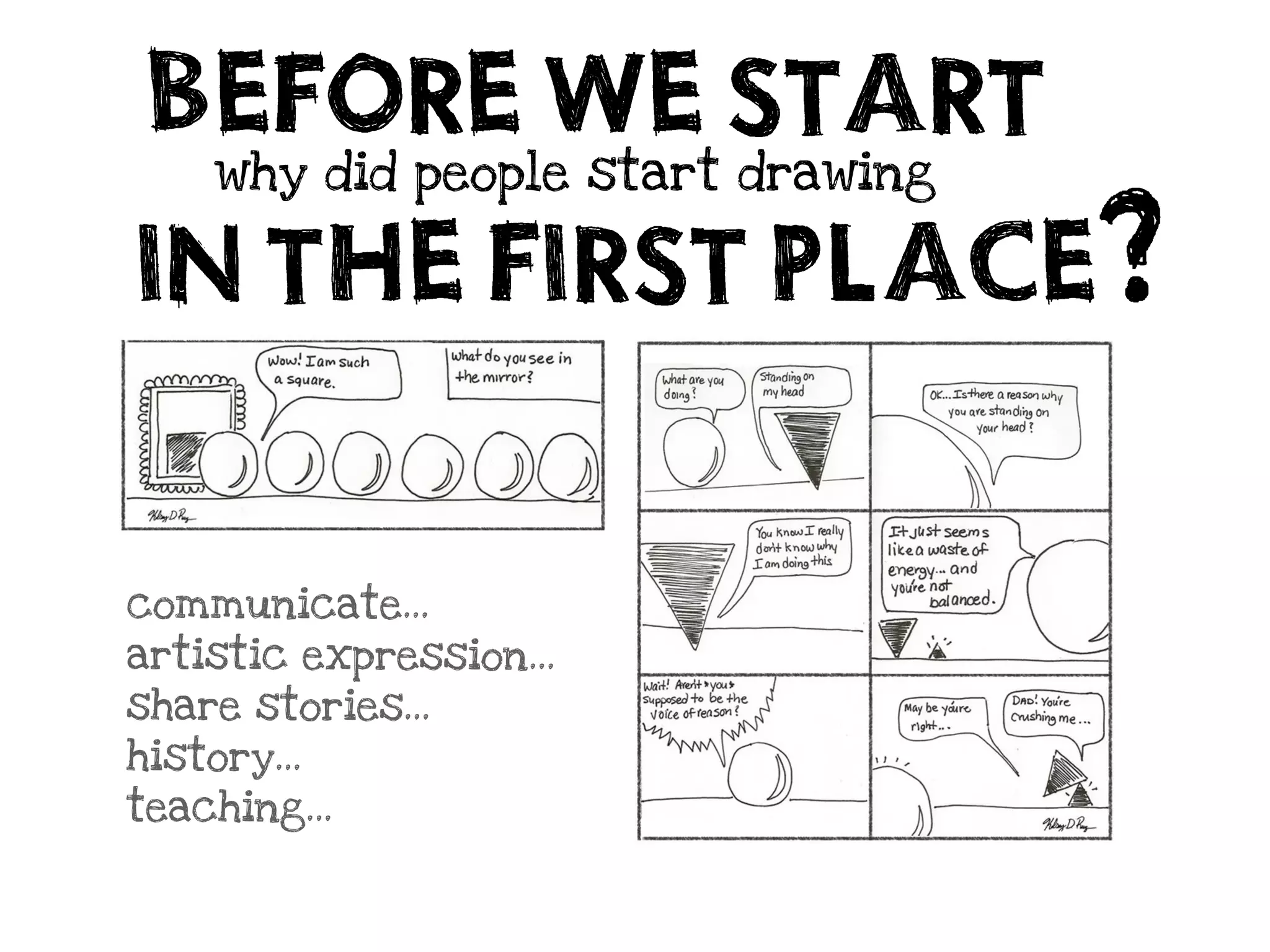
BEFORE WE START
     why did people start drawing

IN THE FIRST PLACE                  ?
communicate...
artistic expression...
share stories...
history...
teaching...
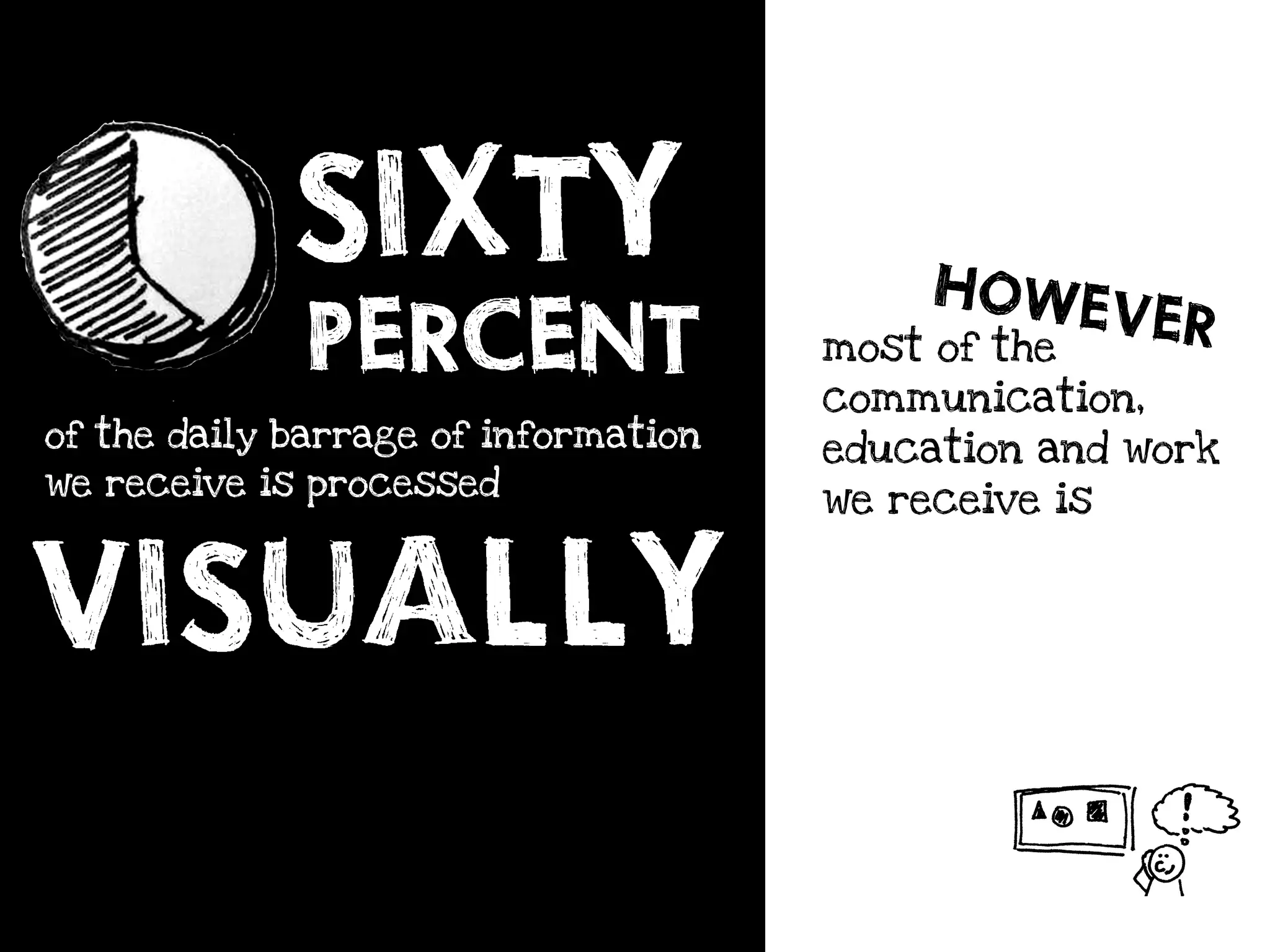
SIXTY
             PERCENT                       HOWEVER
                                      most of the
                                      communication,
of the daily barrage of information   education and work
we receive is processed


VISUALLY
                                      we receive is
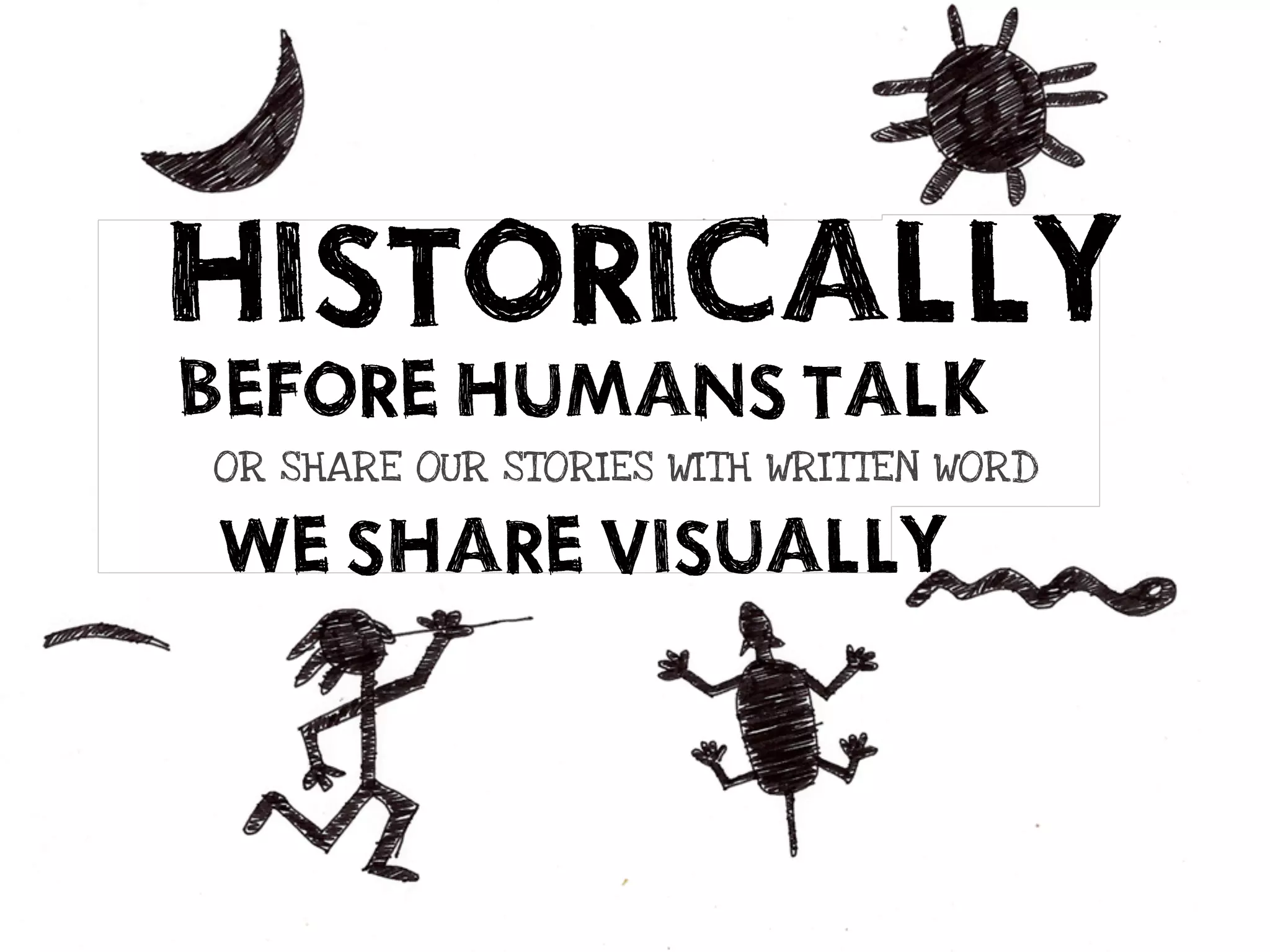
HISTORICALLY
BEFORE HUMANS TALK
OR SHARE OUR STORIES WITH WRITTEN WORD

 WE SHARE VISUALLY
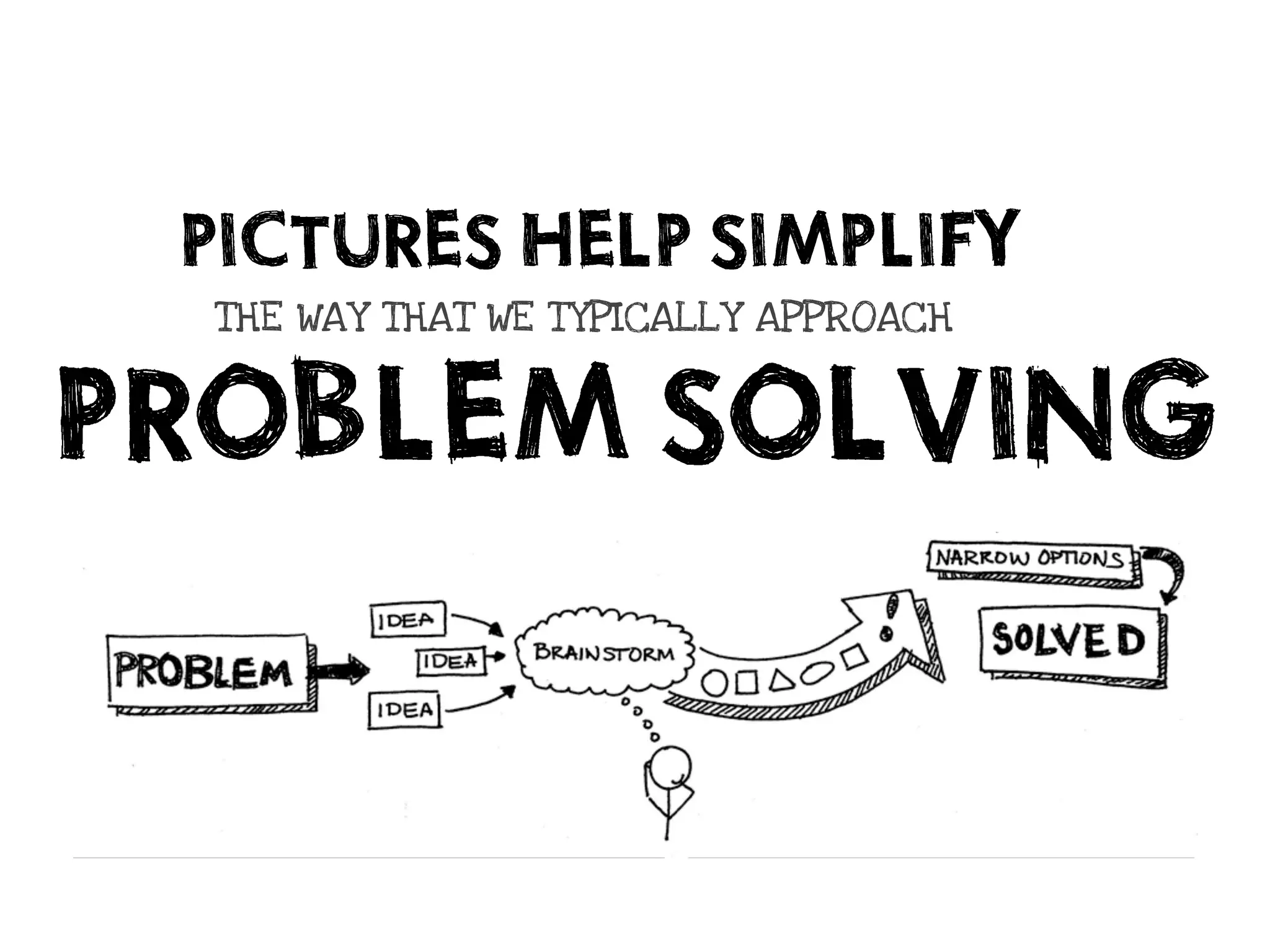
PICTURES HELP SIMPLIFY
  THE WAY THAT WE TYPICALLY APPROACH


PROBLEM SOLVING
humans are really


VISUAL
THINKERS            !
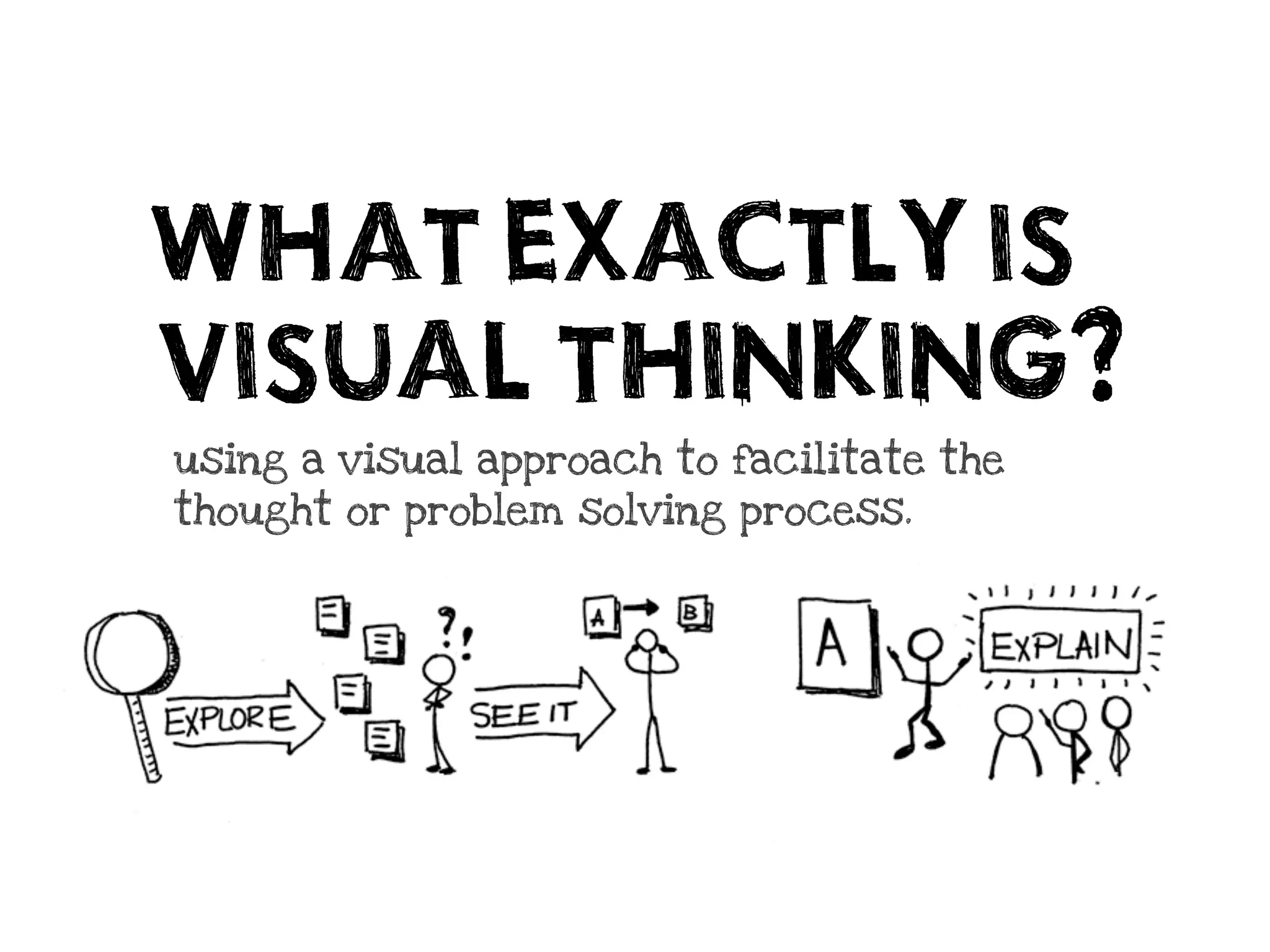
WHAT EXACTLY IS
VISUAL THINKING
using a visual approach to facilitate the
thought or problem solving process.
                                            ?
VISUAL THINKING
 at its core is about discovery and exploring different


 POSSIBILITIES
for making things clear and easy for people to


  UNDERSTAND
COMMON
   LANGUAGE,
METAPHORS &
   ANALOGIES
to communicate, document and solve
problems and share common stories


                             Visual Thinking Goal
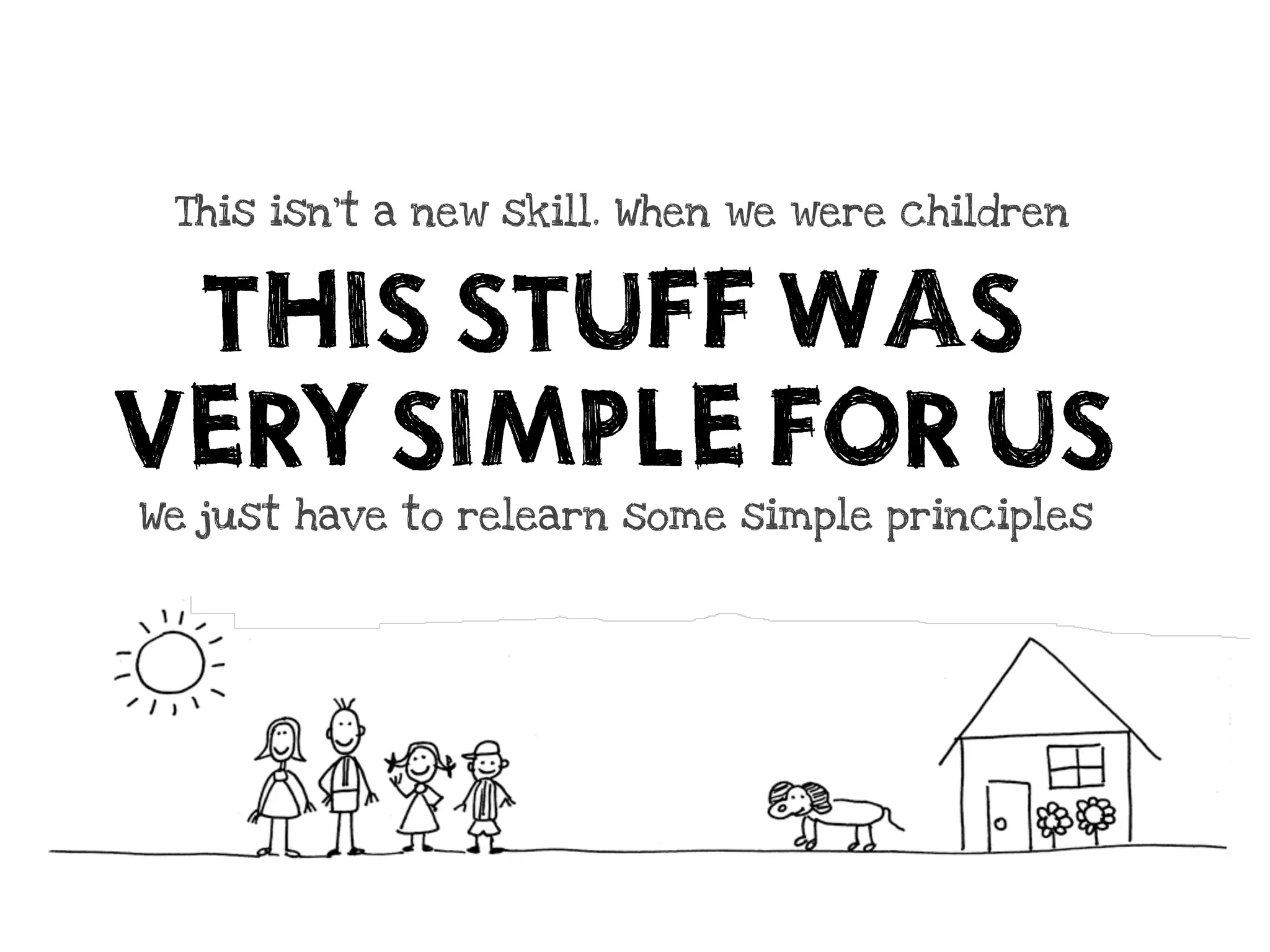
This isn’t a new skill. When we were children


 THIS STUFF WAS
VERY SIMPLE FOR US
We just have to relearn some simple principles
^
     most


WHY DO PEOPLE
AVOID DRAWING?
            and by most I mean 99.9%
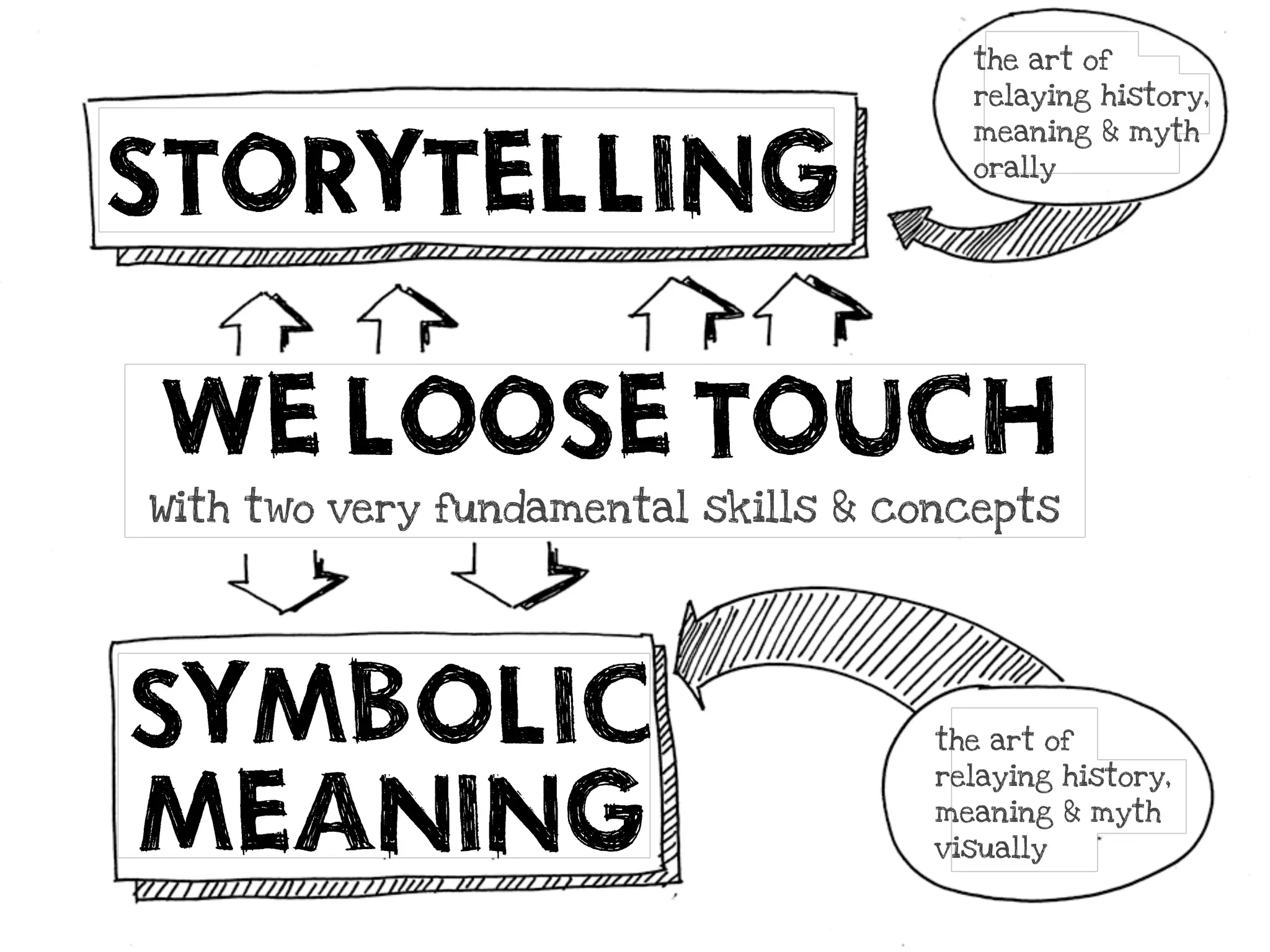
the art of
                                       relaying history,


STORYTELLING                           meaning & myth
                                       orally


 WE LOOSE TOUCH
With two very fundamental skills & concepts


SYMBOLIC
MEANING
                                     the art of
                                     relaying history,
                                     meaning & myth
                                     visually
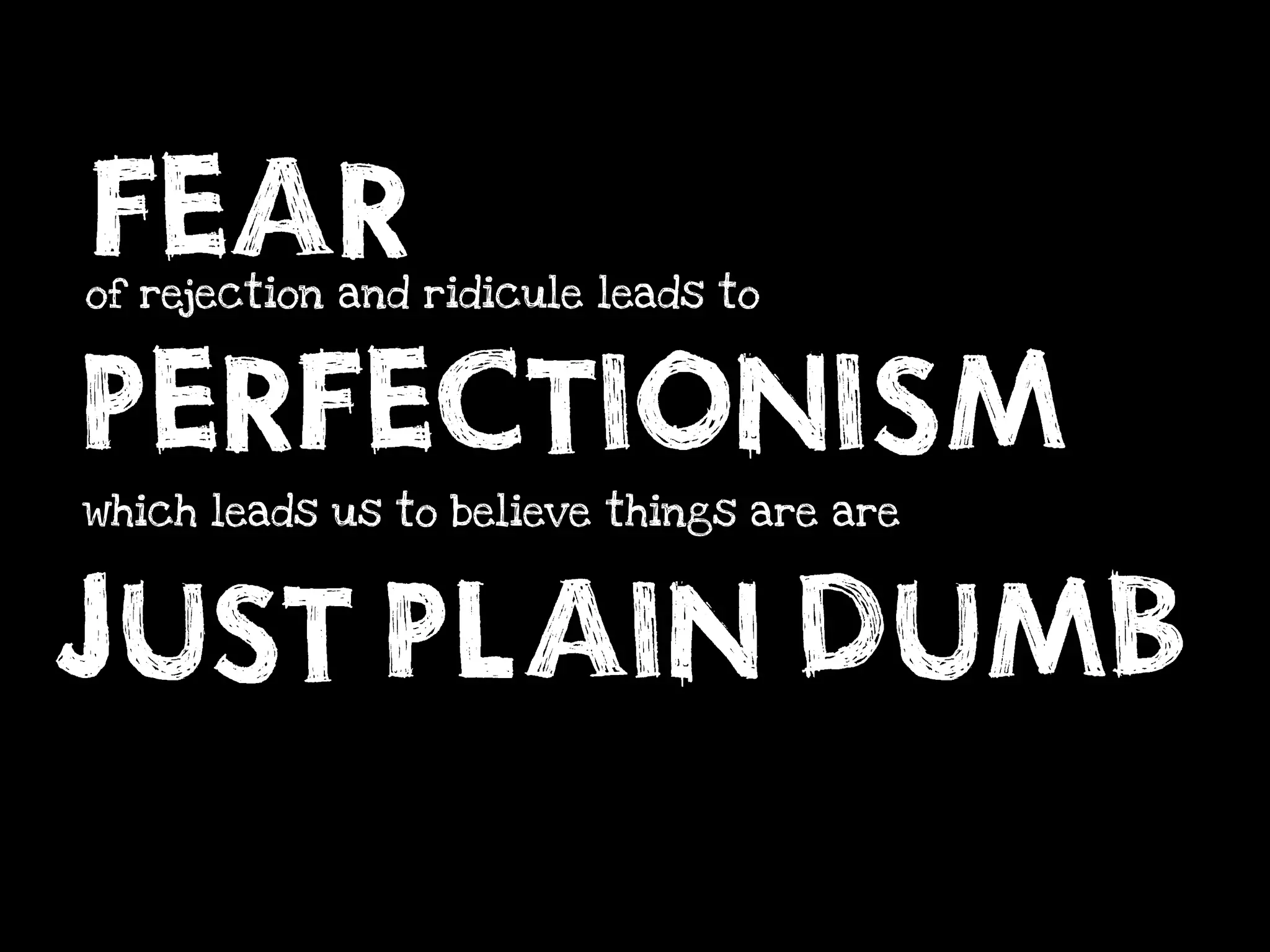
FEAR
of rejection and ridicule leads to


PERFECTIONISM
which leads us to believe things are are


JUST PLAIN DUMB
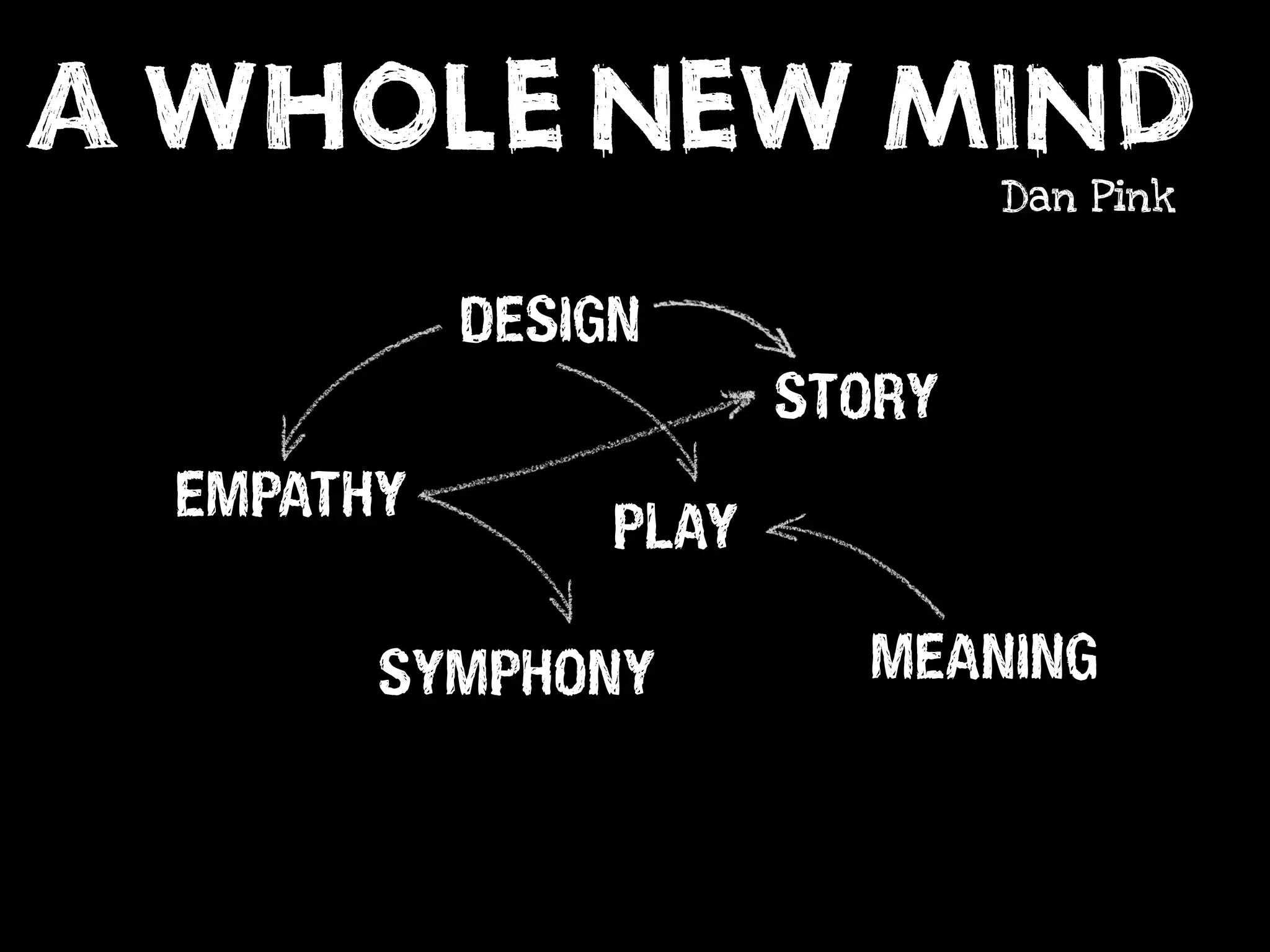
A WHOLE NEW MIND                Dan Pink


            DESIGN
                        STORY
  EMPATHY
                 PLAY

        SYMPHONY          MEANING
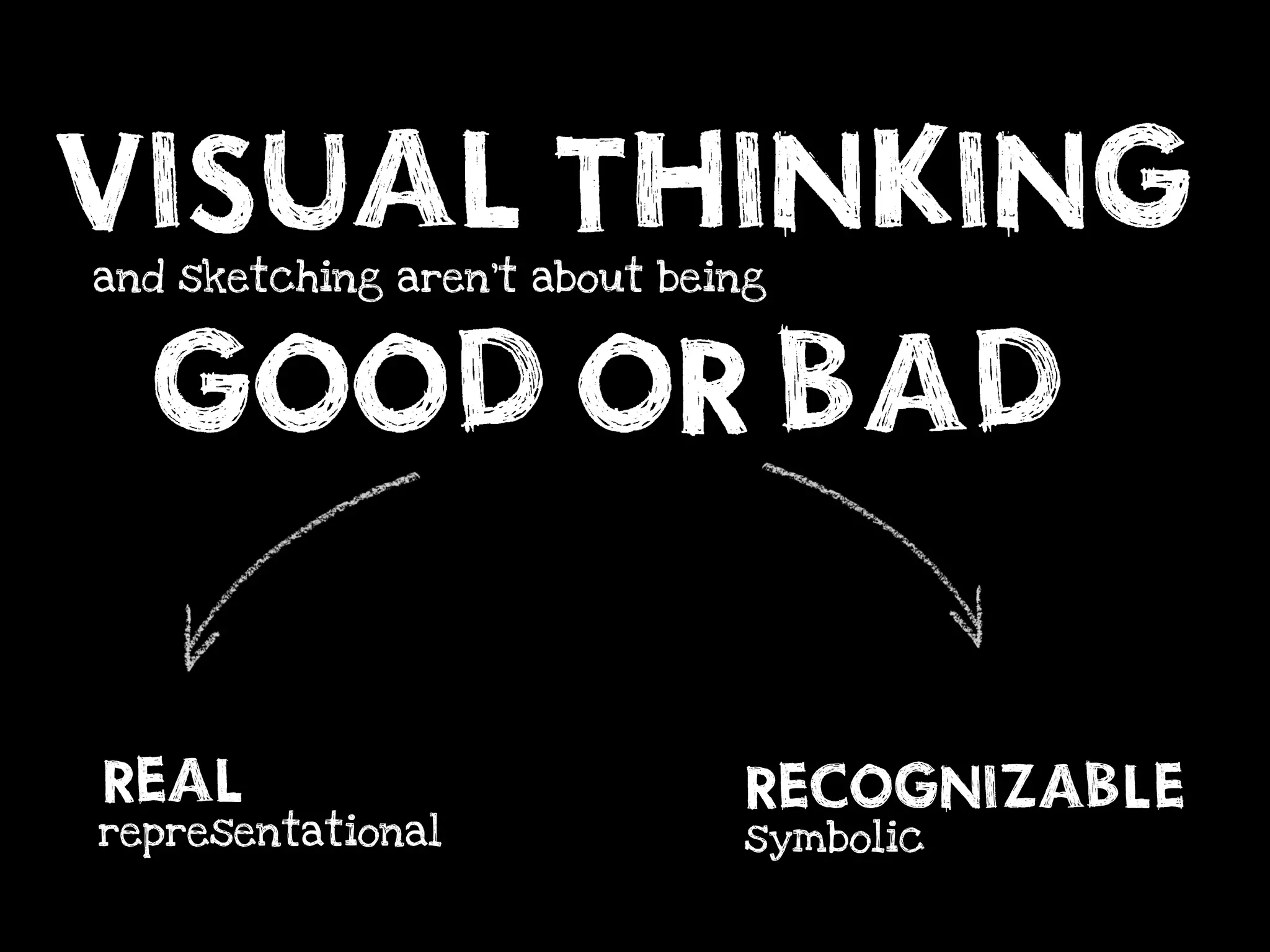
VISUAL THINKING
and sketching aren’t about being


 GOOD OR BAD
REAL
representational
                              RECOGNIZABLE
                              symbolic
relearning the essentials of the

VISUAL TOOLKIT
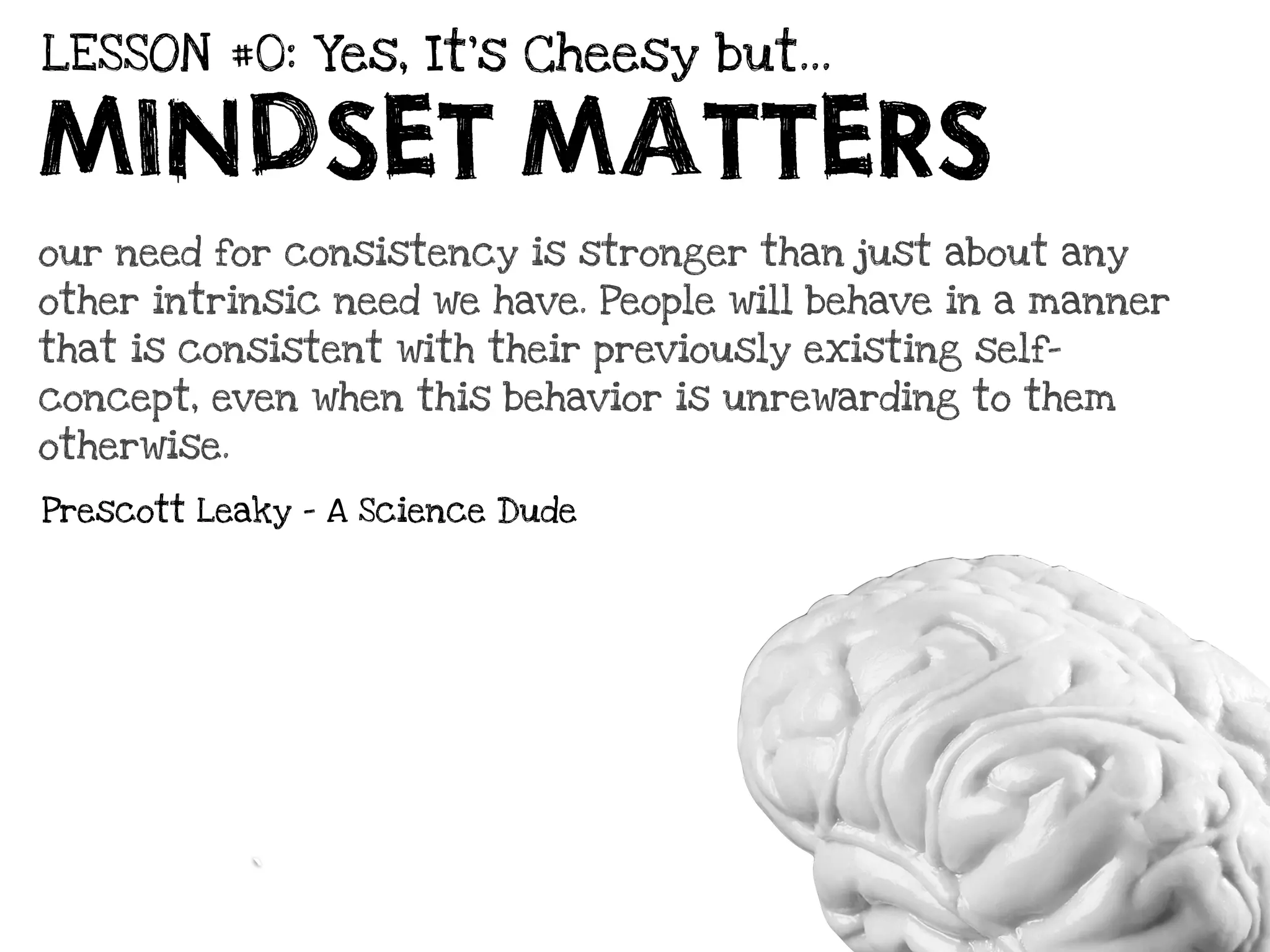
LESSON #0: Yes, It’s Cheesy but...

MINDSET MATTERS
our need for consistency is stronger than just about any
other intrinsic need we have. People will behave in a manner
that is consistent with their previously existing self-
concept, even when this behavior is unrewarding to them
otherwise.

Prescott Leaky - A Science Dude


             `
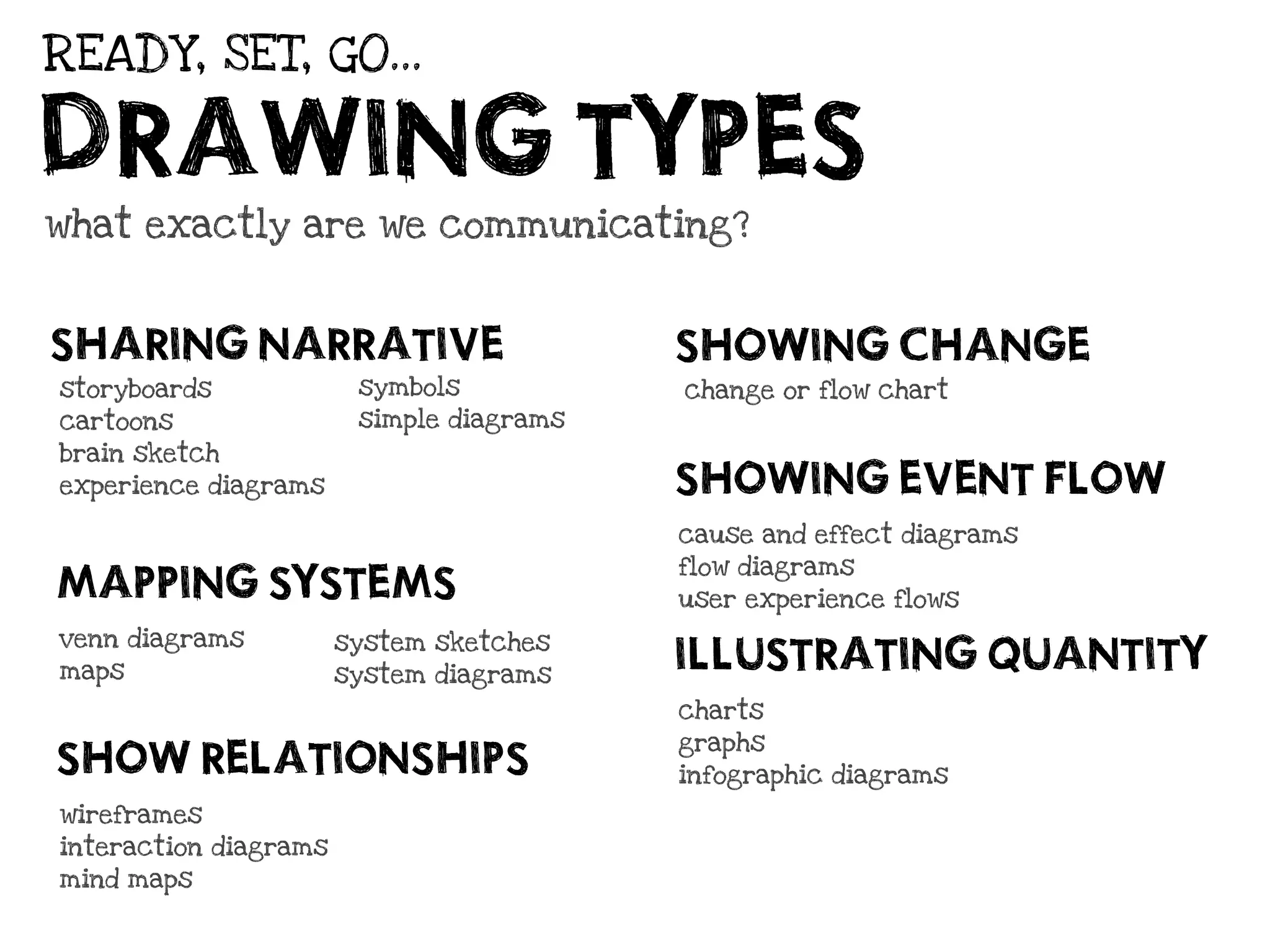
READY, SET, GO...

DRAWING TYPES
what exactly are we communicating?


SHARING NARRATIVE       symbols
                                          SHOWING CHANGE
storyboards                               change or flow chart
cartoons                simple diagrams
brain sketch
experience diagrams                       SHOWING EVENT FLOW
                                          cause and effect diagrams

MAPPING SYSTEMS                           flow diagrams
                                          user experience flows

venn diagrams
maps
                       system sketches
                       system diagrams
                                          ILLUSTRATING QUANTITY
                                          charts

SHOW RELATIONSHIPS                        graphs
                                          infographic diagrams

wireframes
interaction diagrams
mind maps
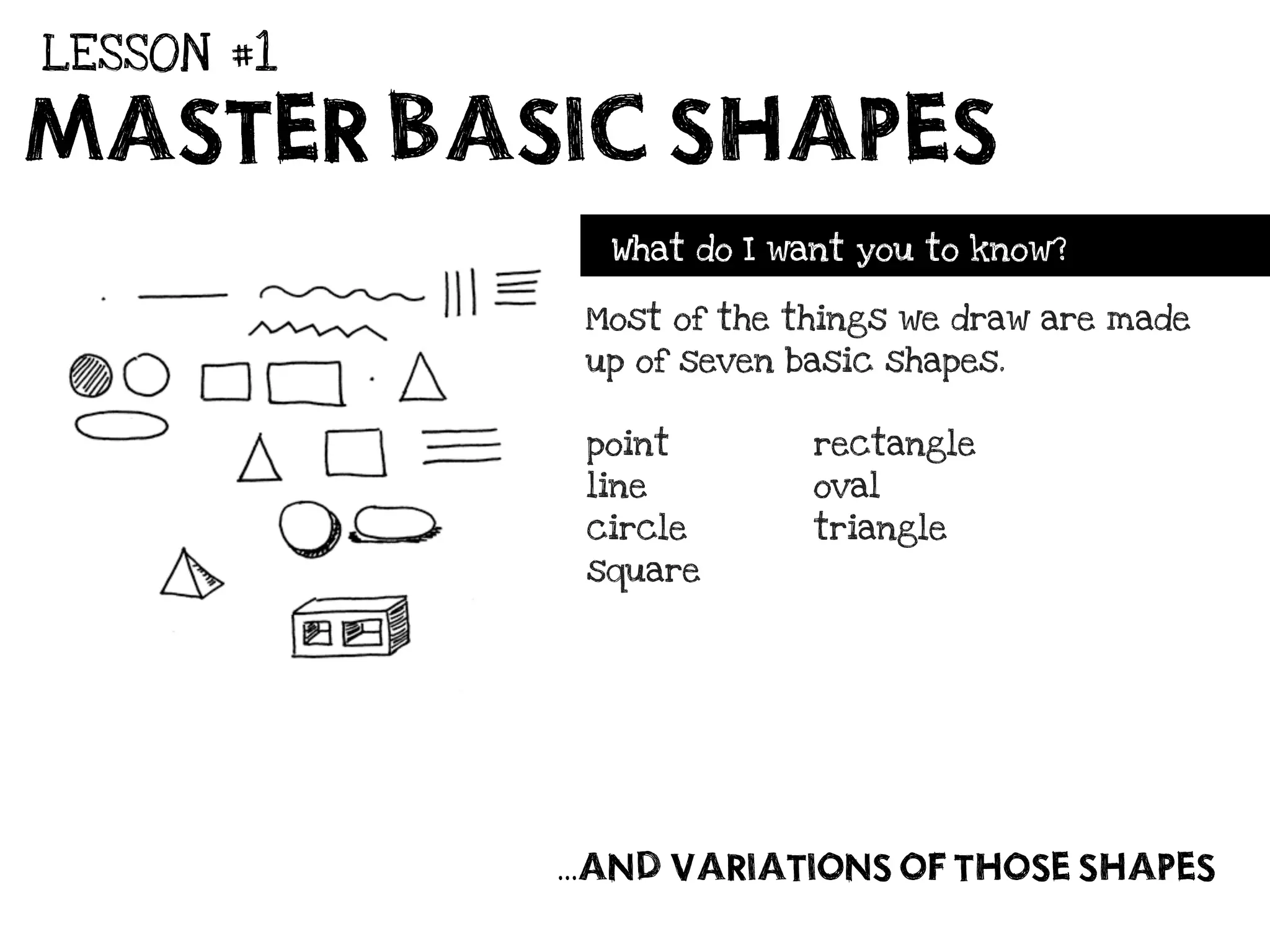
LESSON #1

MASTER BASIC SHAPES
              What do I want you to know?

             Most of the things we draw are made
             up of seven basic shapes.


             point        rectangle
             line         oval
             circle       triangle
             square


            ...AND VARIATIONS OF THOSE SHAPES
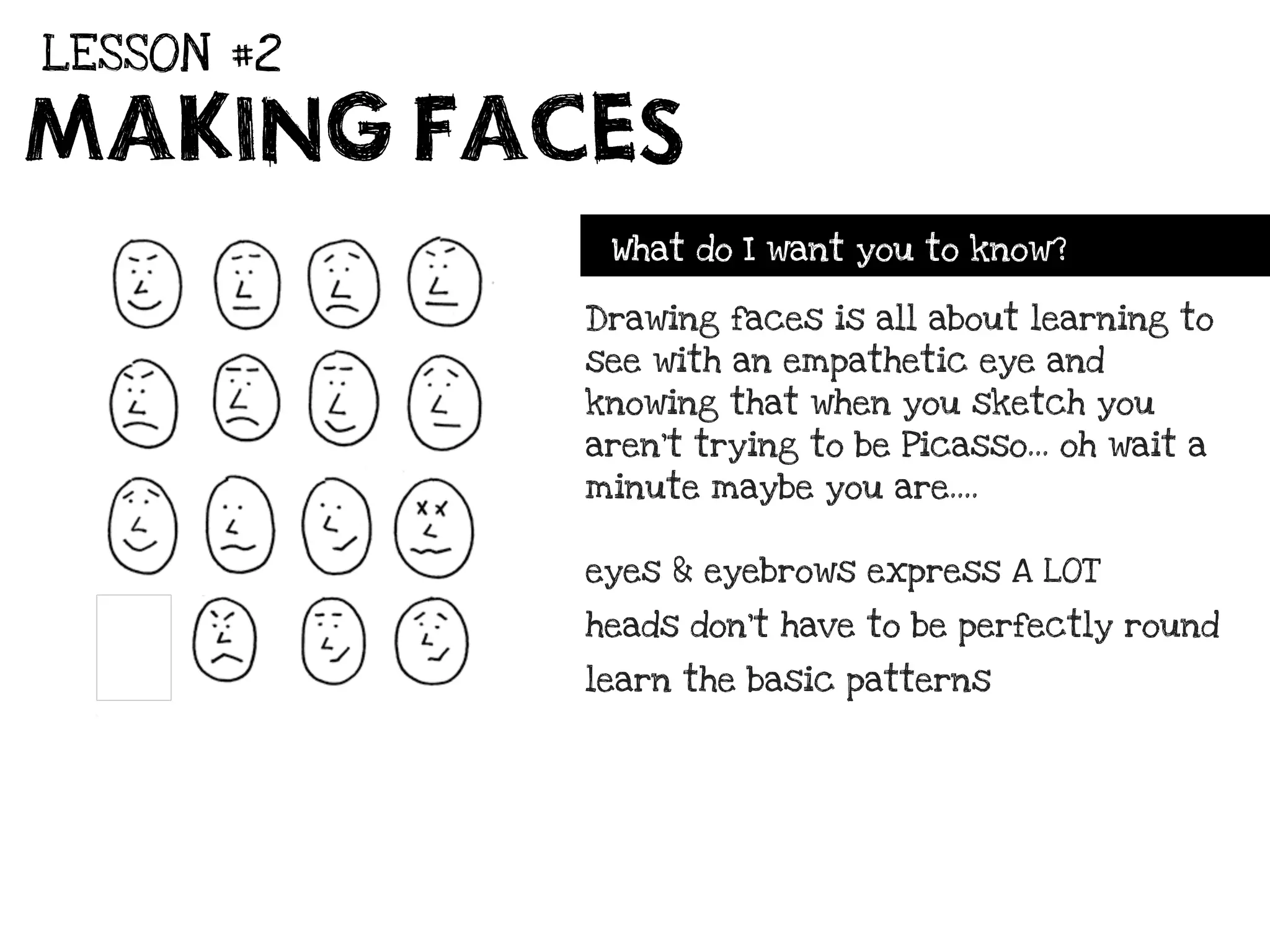
LESSON #2

MAKING FACES
             What do I want you to know?

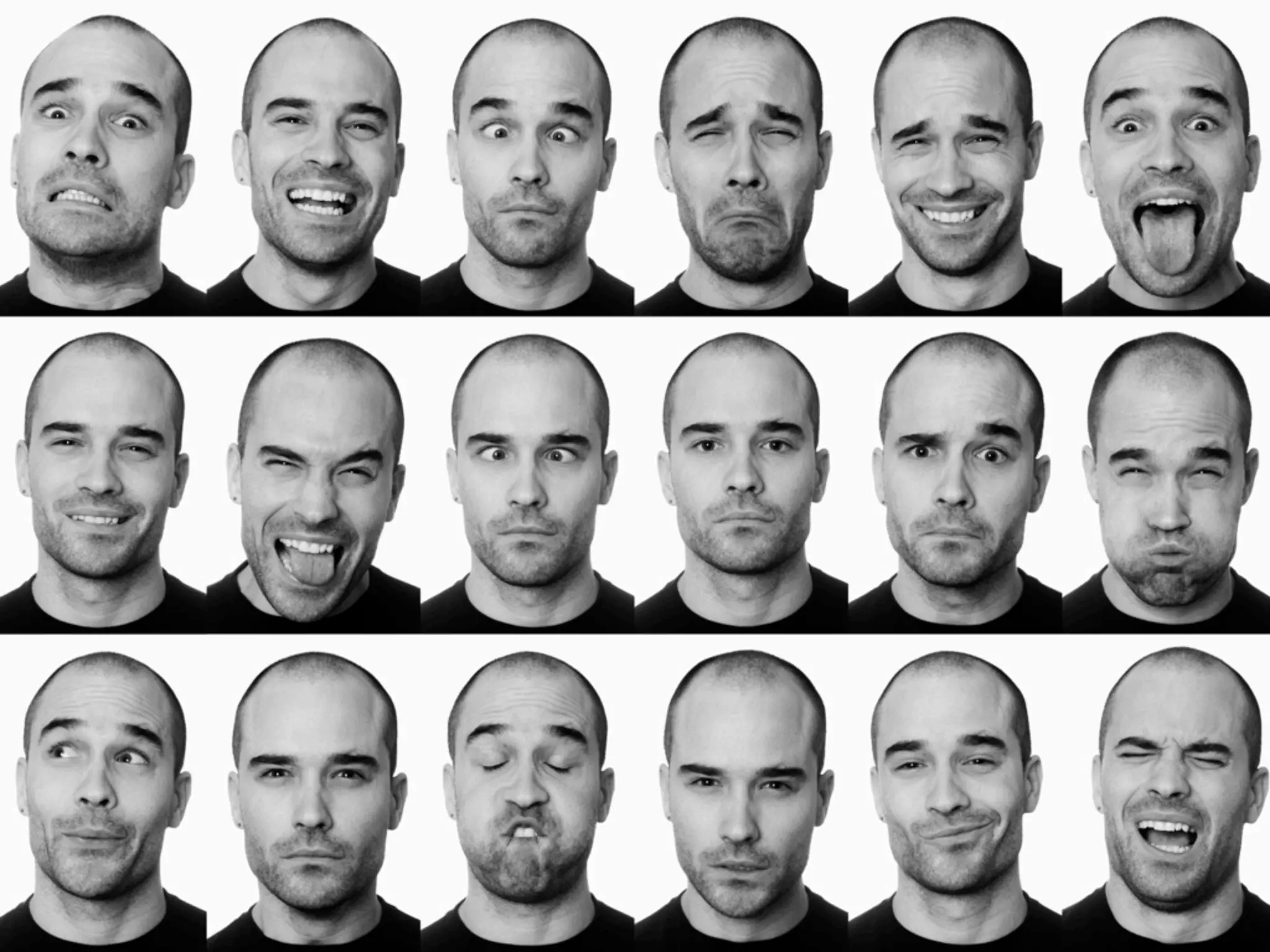
            Drawing faces is all about learning to
            see with an empathetic eye and
            knowing that when you sketch you
            aren’t trying to be Picasso... oh wait a
            minute maybe you are....


            eyes & eyebrows express A LOT

            heads don’t have to be perfectly round

            learn the basic patterns
LESSON #3

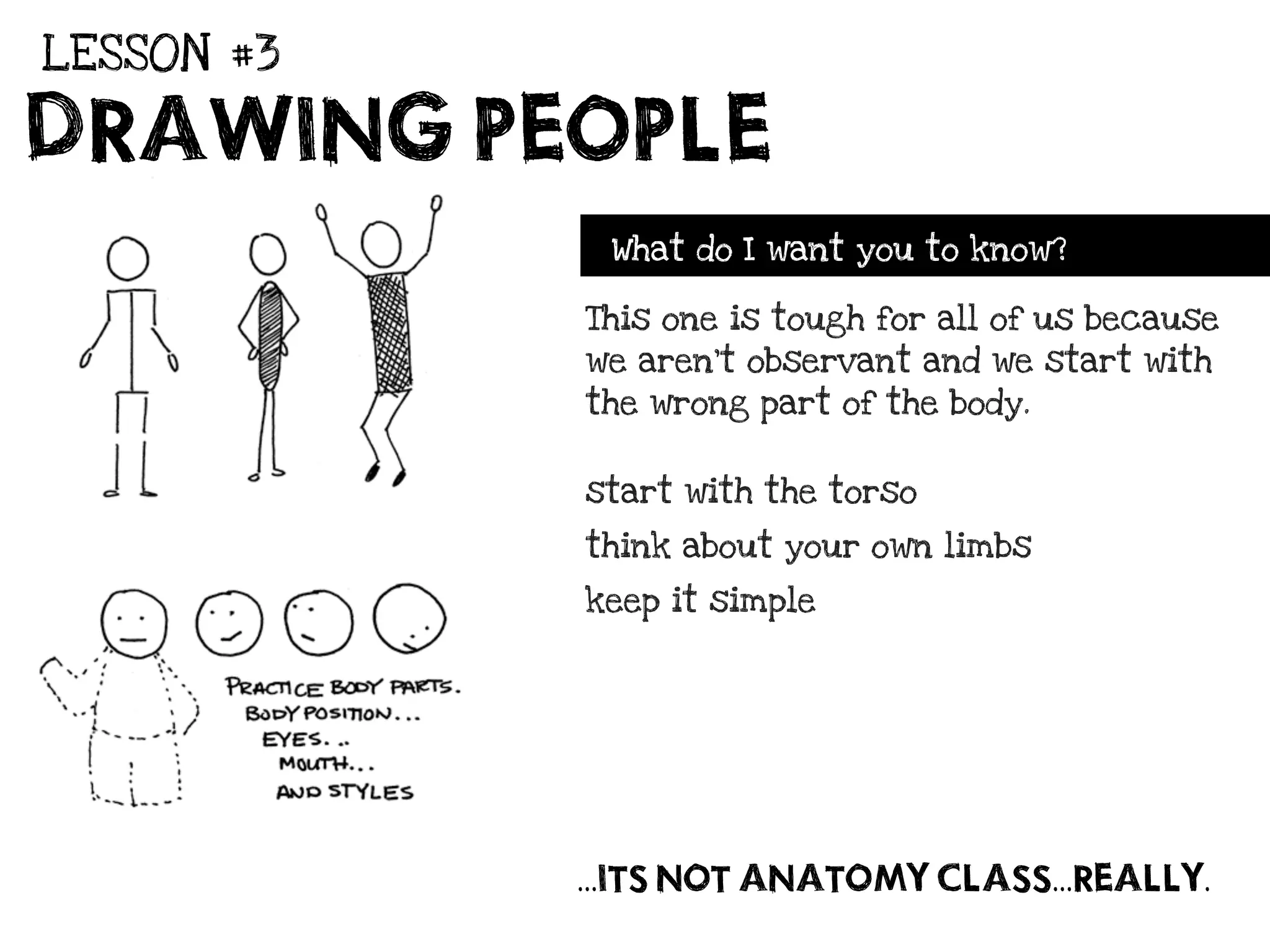
DRAWING PEOPLE
             What do I want you to know?

            This one is tough for all of us because
            we aren’t observant and we start with
            the wrong part of the body.


            start with the torso

            think about your own limbs

            keep it simple


            ...ITS NOT ANATOMY CLASS...REALLY.
LESSON #4

LETTERING
             What do I want you to know?

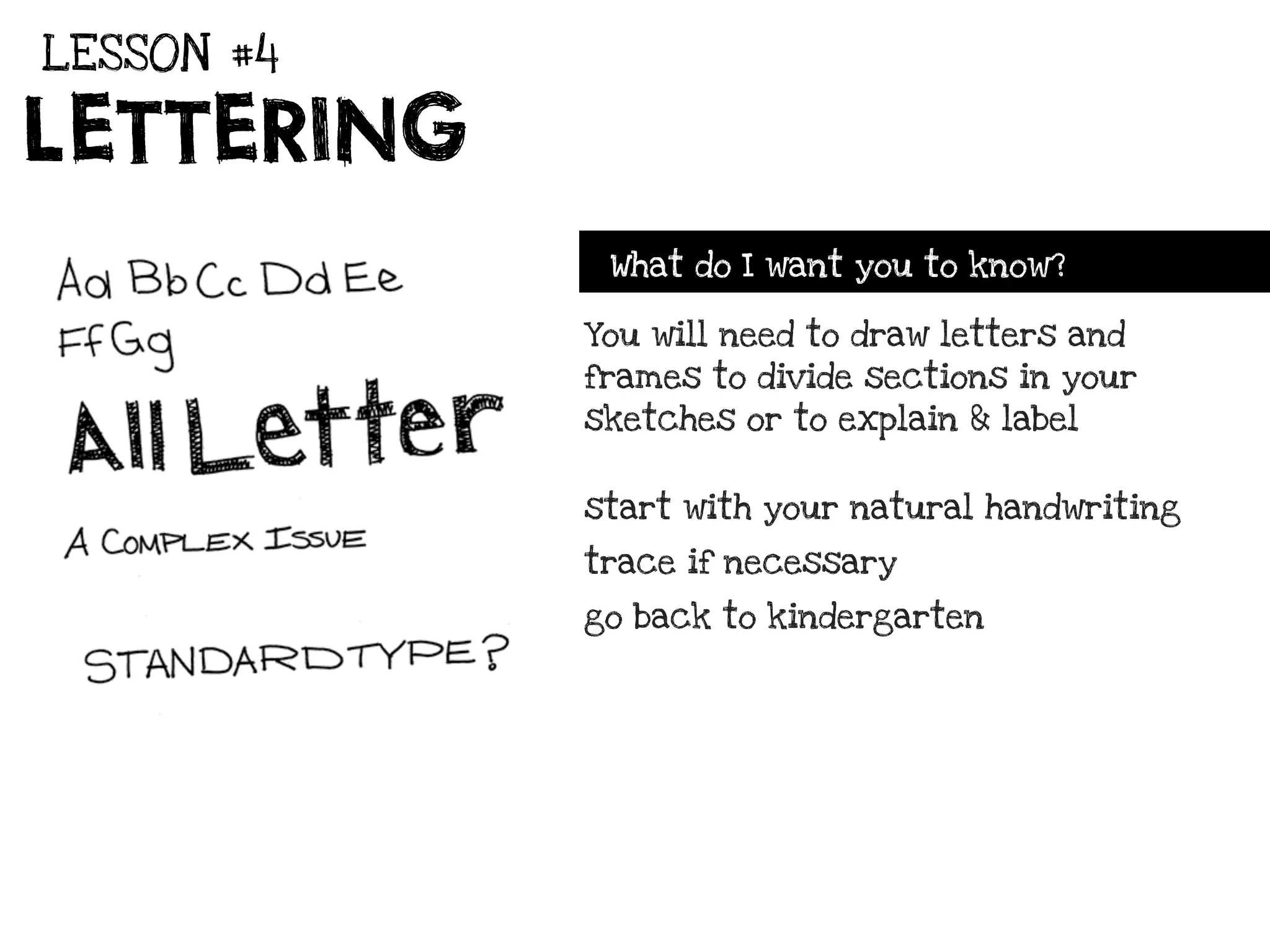
            You will need to draw letters and
            frames to divide sections in your
            sketches or to explain & label


            start with your natural handwriting

            trace if necessary

            go back to kindergarten
LESSON #5

ARROWS,CONNECTORS
             What do I want you to know?

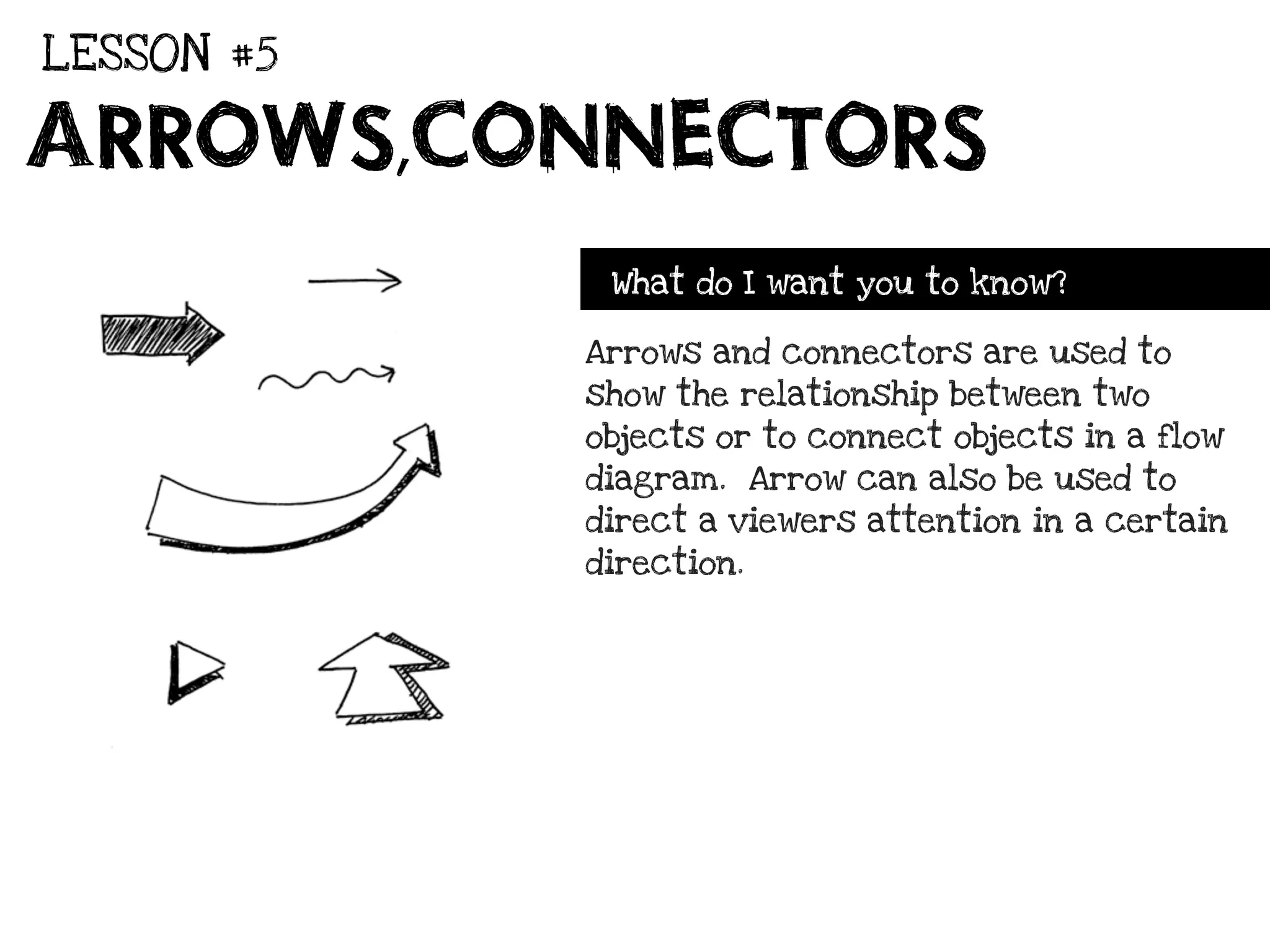
            Arrows and connectors are used to
            show the relationship between two
            objects or to connect objects in a flow
            diagram. Arrow can also be used to
            direct a viewers attention in a certain
            direction.
LESSON #6

FRAMES & CALLOUTS
             What do I want you to know?

            Frames will help you section your
            sketches and create flows. They are
            also good for illustrating relationships
            in systems
TIPS, TRICKS &
OK, How do I make this work for me?


SOLID WISDOM
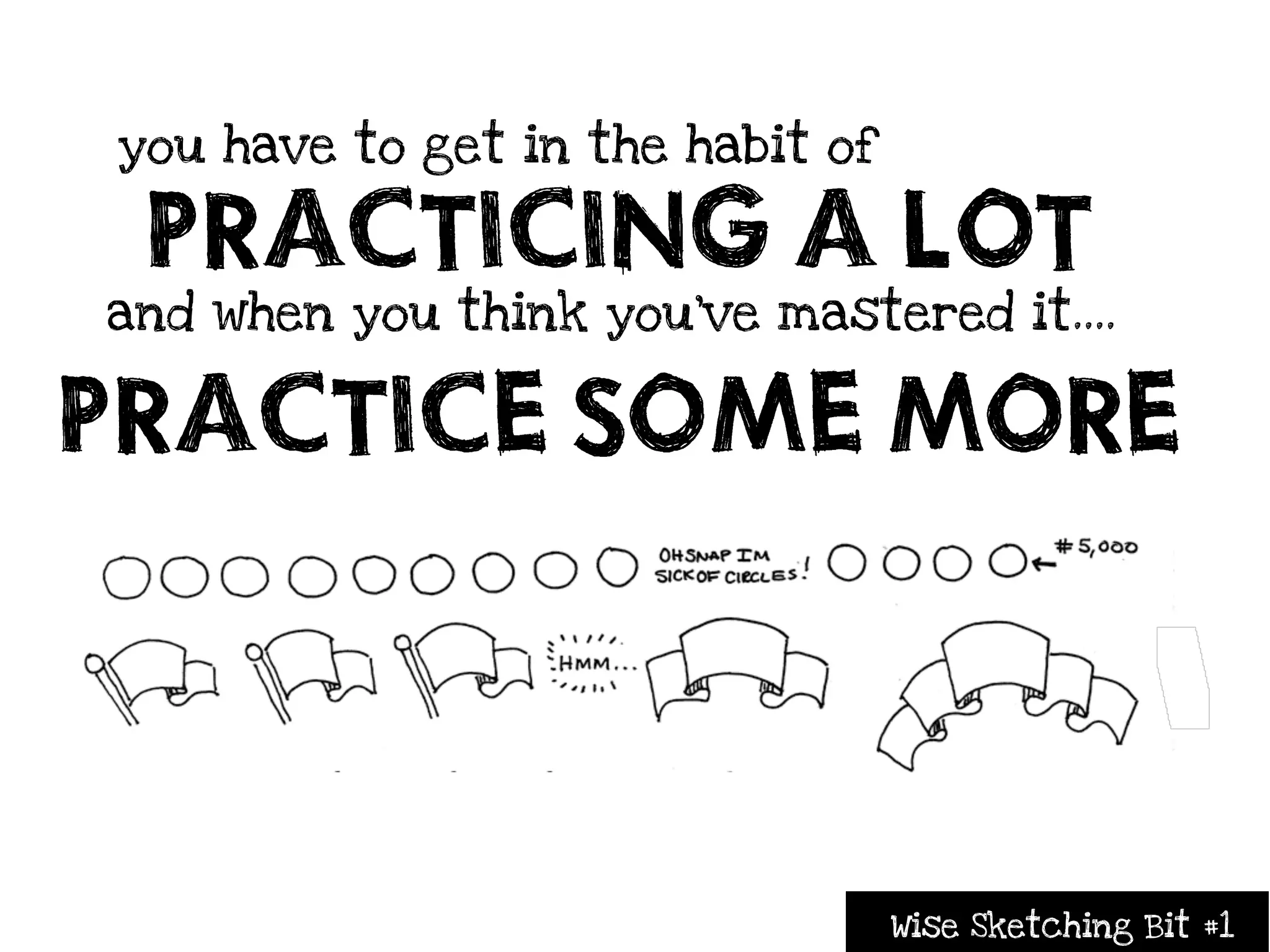
you have to get in the habit of

  PRACTICING A LOT
and when you think you’ve mastered it....


PRACTICE SOME MORE

                                  Wise Sketching Bit #1
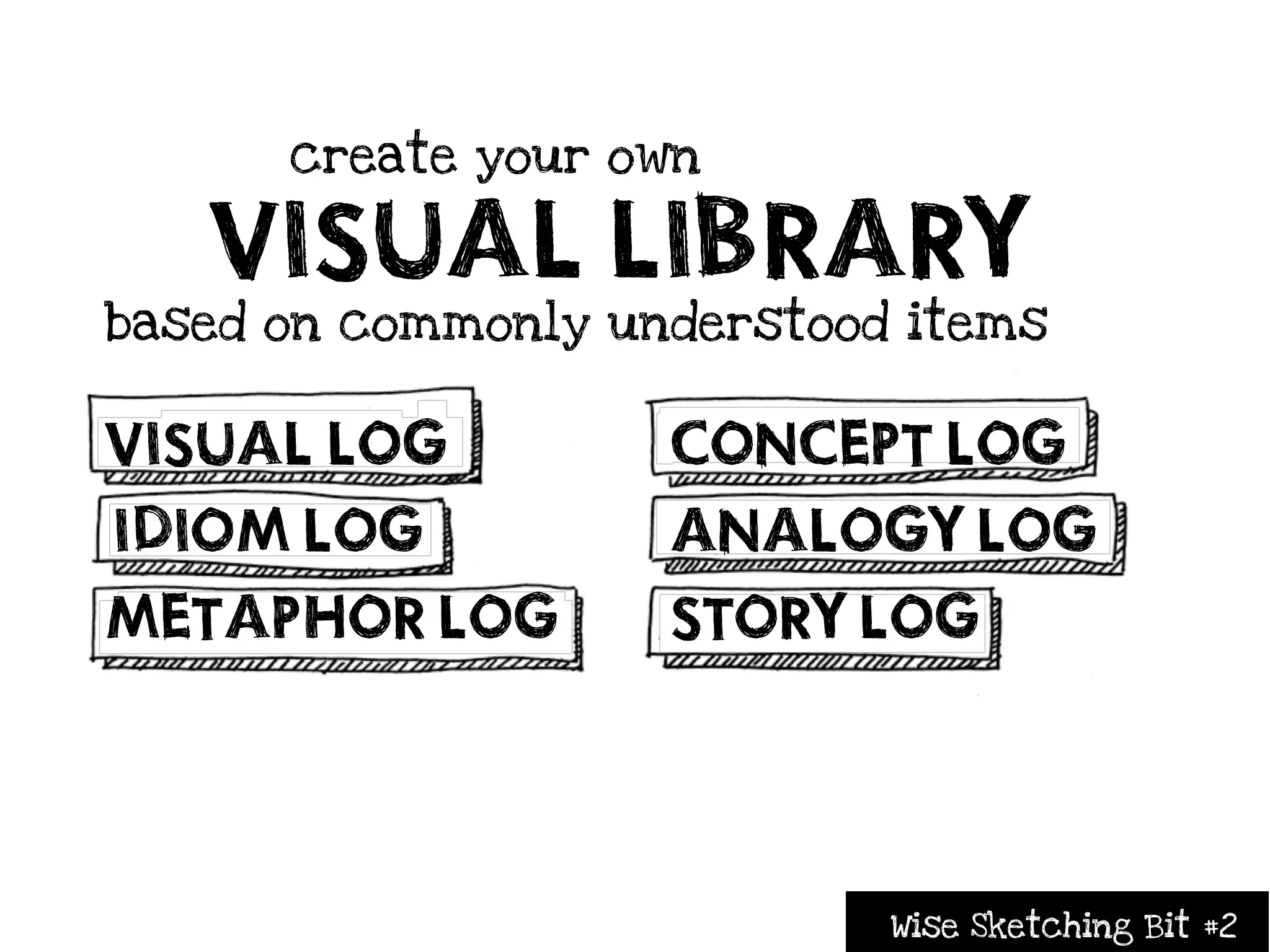
create your own

   VISUAL LIBRARY
based on commonly understood items


VISUAL LOG          CONCEPT LOG
IDIOM LOG           ANALOGY LOG
METAPHOR LOG        STORY LOG


                            Wise Sketching Bit #2
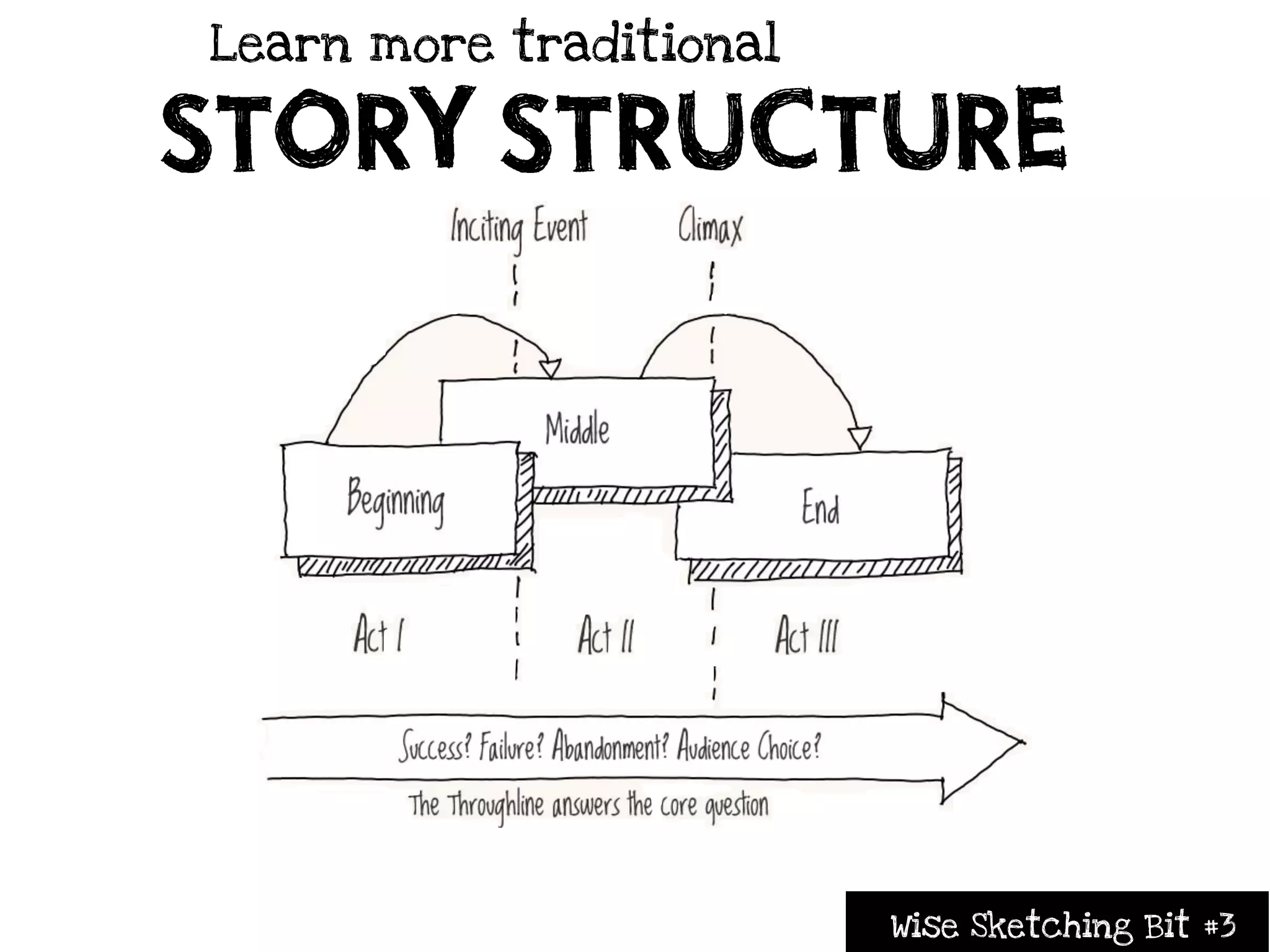
Learn more traditional

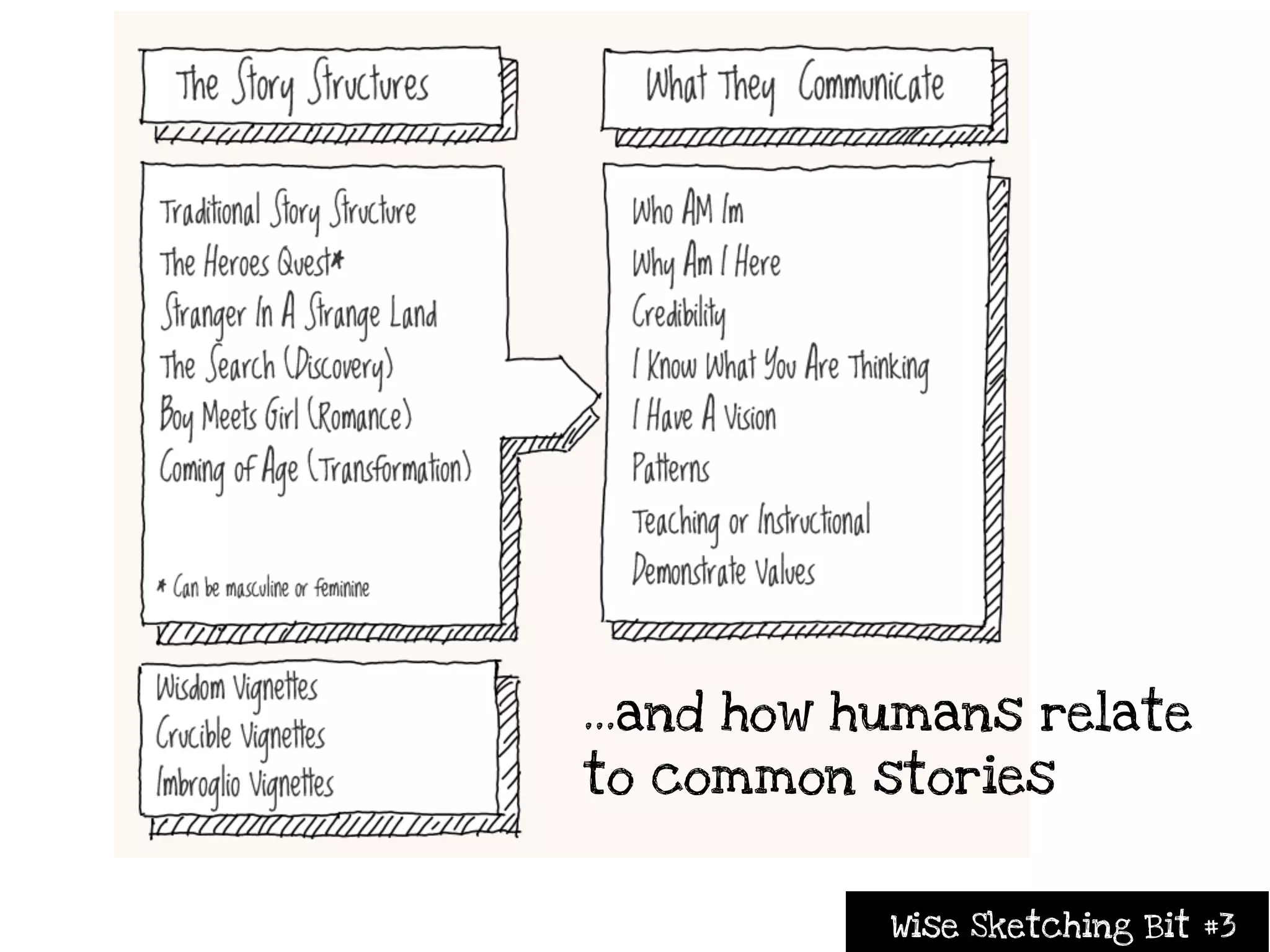
STORY STRUCTURE


                         Wise Sketching Bit #3
...and how humans relate
to common stories


            Wise Sketching Bit #3
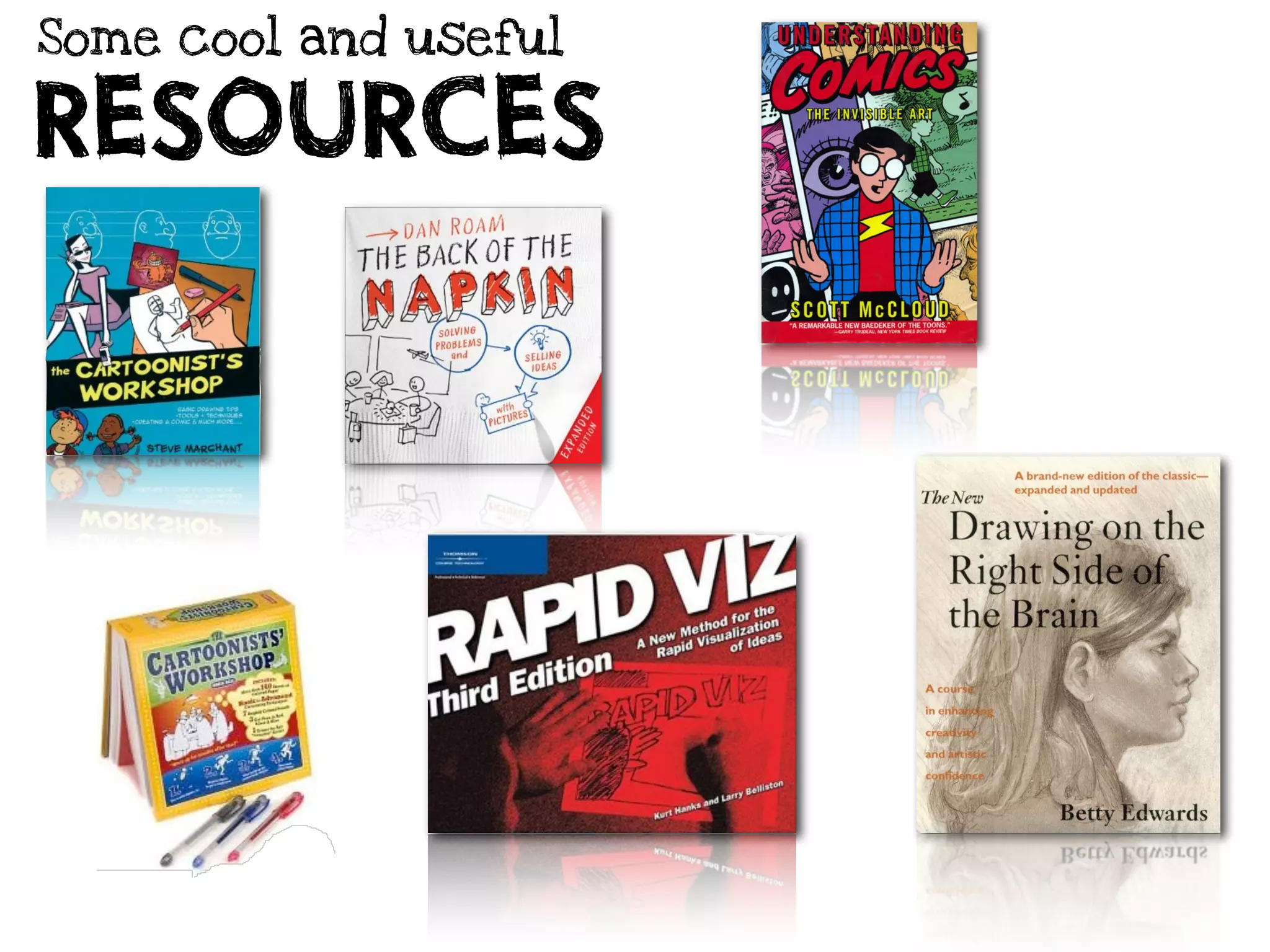
Some cool and useful

RESOURCES
and finally

THANK YOU
 Kelsey Ruger
 http://www.themoleskin.com
                              !
 @themoleskin on Twitter

Sketching To Communicate, Share Stories And Solve Problems

  • 1.
    SKETCHING TO COMMUNICATE SHARESTORIES & SOLVE PROBLEMS everyday applications of visual thinking Kelsey Ruger @themoleskin
  • 2.
    BEFORE WE START why did people start drawing IN THE FIRST PLACE ? communicate... artistic expression... share stories... history... teaching...
  • 3.
    SIXTY PERCENT HOWEVER most of the communication, of the daily barrage of information education and work we receive is processed VISUALLY we receive is
  • 4.
    HISTORICALLY BEFORE HUMANS TALK ORSHARE OUR STORIES WITH WRITTEN WORD WE SHARE VISUALLY
  • 5.
    PICTURES HELP SIMPLIFY THE WAY THAT WE TYPICALLY APPROACH PROBLEM SOLVING
  • 6.
  • 7.
    WHAT EXACTLY IS VISUALTHINKING using a visual approach to facilitate the thought or problem solving process. ?
  • 8.
    VISUAL THINKING atits core is about discovery and exploring different POSSIBILITIES for making things clear and easy for people to UNDERSTAND
  • 9.
    COMMON LANGUAGE, METAPHORS & ANALOGIES to communicate, document and solve problems and share common stories Visual Thinking Goal
  • 10.
    This isn’t anew skill. When we were children THIS STUFF WAS VERY SIMPLE FOR US We just have to relearn some simple principles
  • 11.
    ^ most WHY DO PEOPLE AVOID DRAWING? and by most I mean 99.9%
  • 12.
    the art of relaying history, STORYTELLING meaning & myth orally WE LOOSE TOUCH With two very fundamental skills & concepts SYMBOLIC MEANING the art of relaying history, meaning & myth visually
  • 13.
    FEAR of rejection andridicule leads to PERFECTIONISM which leads us to believe things are are JUST PLAIN DUMB
  • 14.
    A WHOLE NEWMIND Dan Pink DESIGN STORY EMPATHY PLAY SYMPHONY MEANING
  • 15.
    VISUAL THINKING and sketchingaren’t about being GOOD OR BAD REAL representational RECOGNIZABLE symbolic
  • 16.
    relearning the essentialsof the VISUAL TOOLKIT
  • 17.
    LESSON #0: Yes,It’s Cheesy but... MINDSET MATTERS our need for consistency is stronger than just about any other intrinsic need we have. People will behave in a manner that is consistent with their previously existing self- concept, even when this behavior is unrewarding to them otherwise. Prescott Leaky - A Science Dude `
  • 18.
    READY, SET, GO... DRAWINGTYPES what exactly are we communicating? SHARING NARRATIVE symbols SHOWING CHANGE storyboards change or flow chart cartoons simple diagrams brain sketch experience diagrams SHOWING EVENT FLOW cause and effect diagrams MAPPING SYSTEMS flow diagrams user experience flows venn diagrams maps system sketches system diagrams ILLUSTRATING QUANTITY charts SHOW RELATIONSHIPS graphs infographic diagrams wireframes interaction diagrams mind maps
  • 19.
    LESSON #1 MASTER BASICSHAPES What do I want you to know? Most of the things we draw are made up of seven basic shapes. point rectangle line oval circle triangle square ...AND VARIATIONS OF THOSE SHAPES
  • 20.
    LESSON #2 MAKING FACES What do I want you to know? Drawing faces is all about learning to see with an empathetic eye and knowing that when you sketch you aren’t trying to be Picasso... oh wait a minute maybe you are.... eyes & eyebrows express A LOT heads don’t have to be perfectly round learn the basic patterns
  • 22.
    LESSON #3 DRAWING PEOPLE What do I want you to know? This one is tough for all of us because we aren’t observant and we start with the wrong part of the body. start with the torso think about your own limbs keep it simple ...ITS NOT ANATOMY CLASS...REALLY.
  • 23.
    LESSON #4 LETTERING What do I want you to know? You will need to draw letters and frames to divide sections in your sketches or to explain & label start with your natural handwriting trace if necessary go back to kindergarten
  • 24.
    LESSON #5 ARROWS,CONNECTORS What do I want you to know? Arrows and connectors are used to show the relationship between two objects or to connect objects in a flow diagram. Arrow can also be used to direct a viewers attention in a certain direction.
  • 25.
    LESSON #6 FRAMES &CALLOUTS What do I want you to know? Frames will help you section your sketches and create flows. They are also good for illustrating relationships in systems
  • 26.
    TIPS, TRICKS & OK,How do I make this work for me? SOLID WISDOM
  • 27.
    you have toget in the habit of PRACTICING A LOT and when you think you’ve mastered it.... PRACTICE SOME MORE Wise Sketching Bit #1
  • 28.
    create your own VISUAL LIBRARY based on commonly understood items VISUAL LOG CONCEPT LOG IDIOM LOG ANALOGY LOG METAPHOR LOG STORY LOG Wise Sketching Bit #2
  • 29.
    Learn more traditional STORYSTRUCTURE Wise Sketching Bit #3
  • 30.
    ...and how humansrelate to common stories Wise Sketching Bit #3
  • 31.
    Some cool anduseful RESOURCES
  • 32.
    and finally THANK YOU Kelsey Ruger http://www.themoleskin.com ! @themoleskin on Twitter