Texture
[The surface character of a material that can be experienced through
touch or the illusion of touch. Texture is produced by natural forces or
through an artist’s manipulation of the art elements]
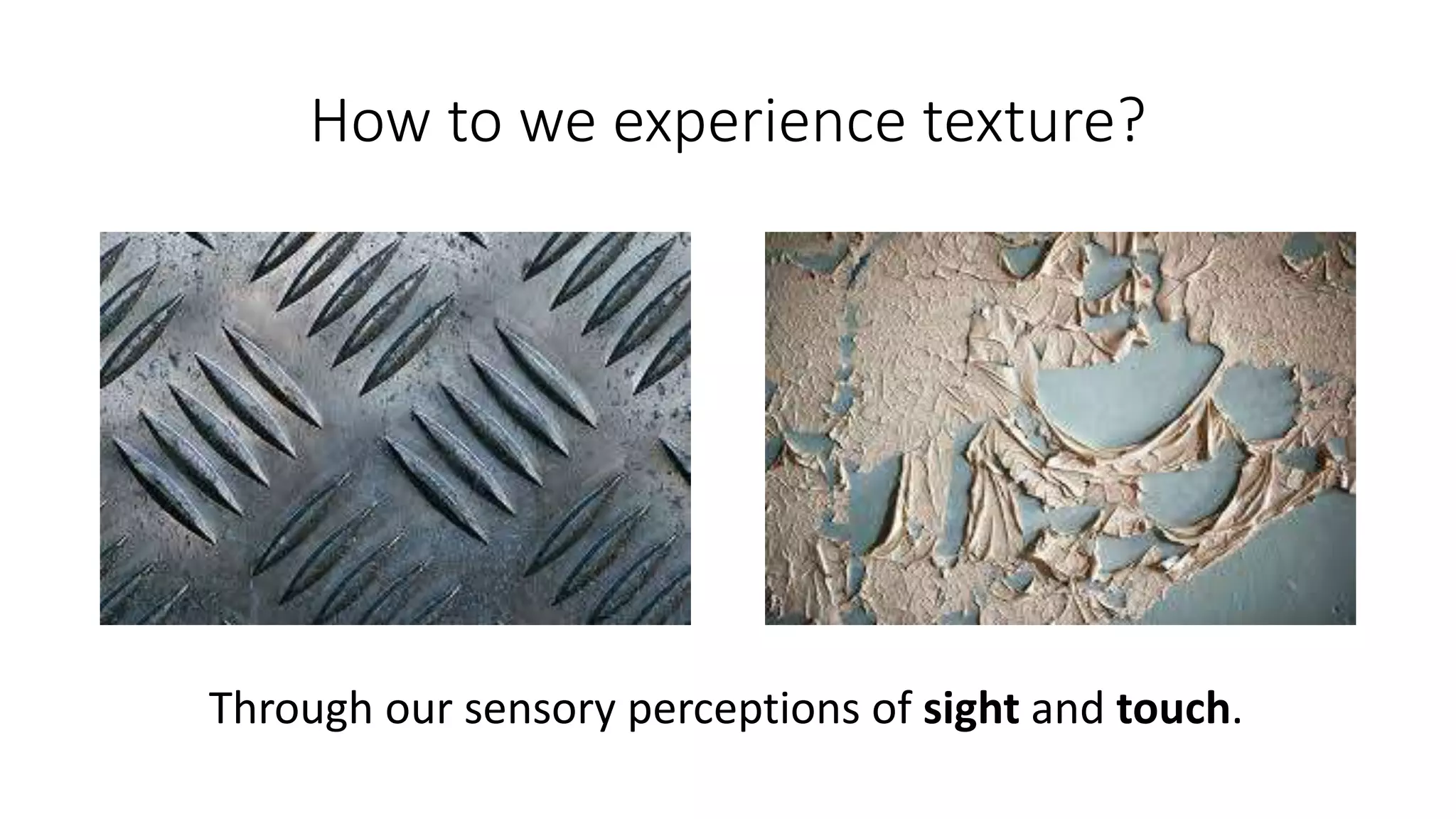
How to we experience texture?
Through our sensory perceptions of sight and touch.
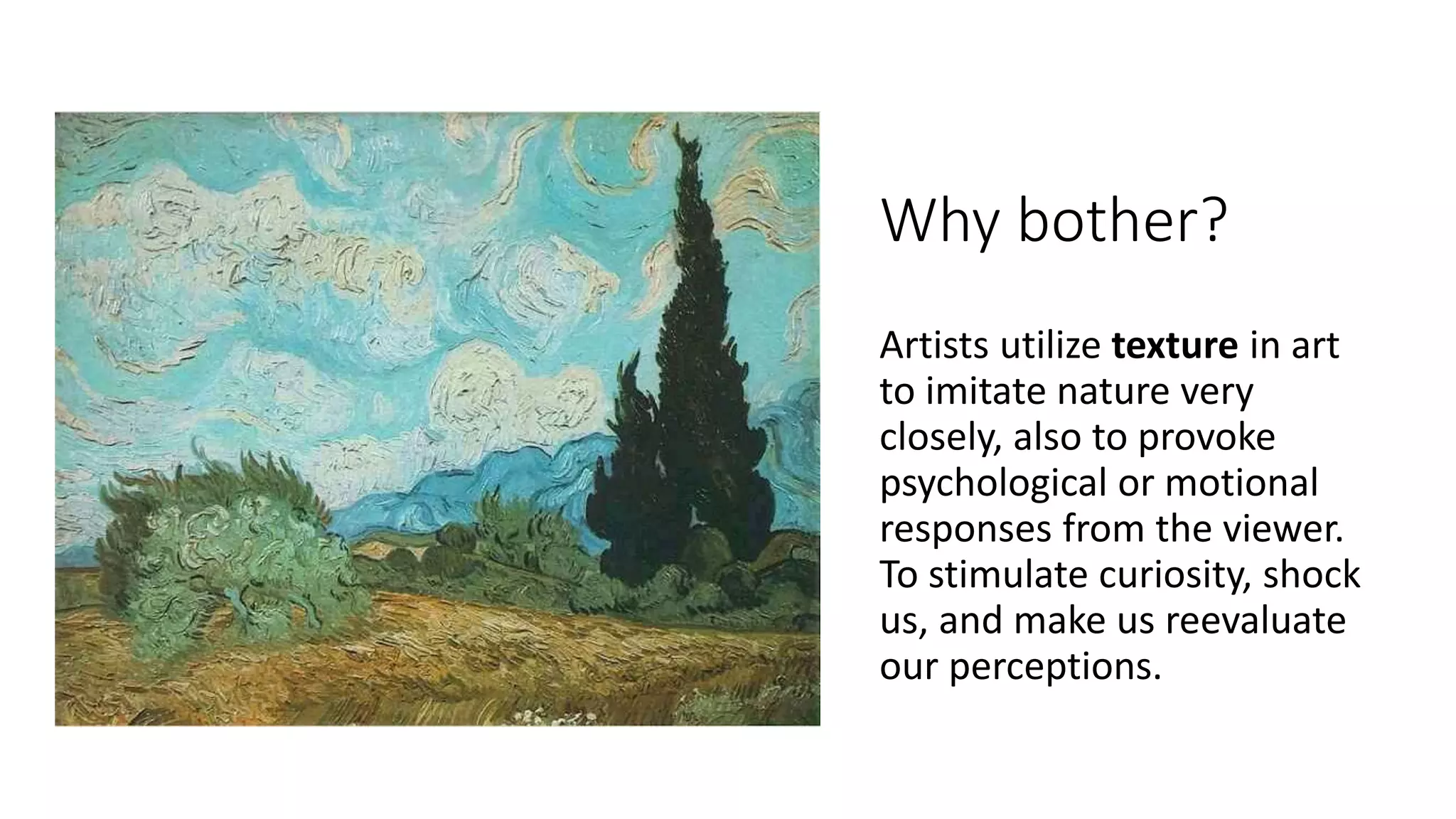
Why bother?
Artists utilize texture in art
to imitate nature very
closely, also to provoke
psychological or motional
responses from the viewer.
To stimulate curiosity, shock
us, and make us reevaluate
our perceptions.
4 Types of Texture:
Actual
Simulated
Abstract
Invented
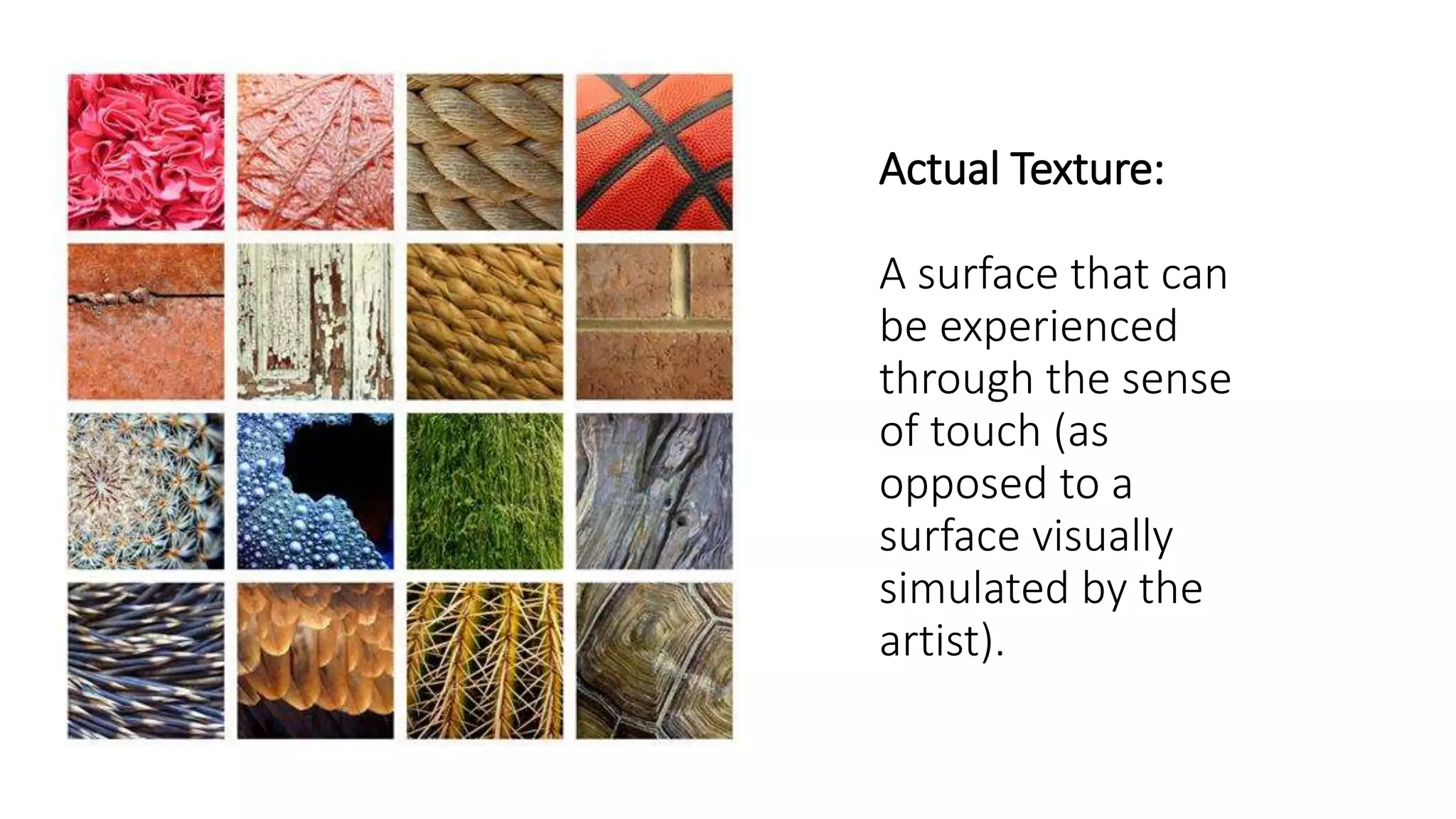
Actual Texture:
A surface that can
be experienced
through the sense
of touch (as
opposed to a
surface visually
simulated by the
artist).
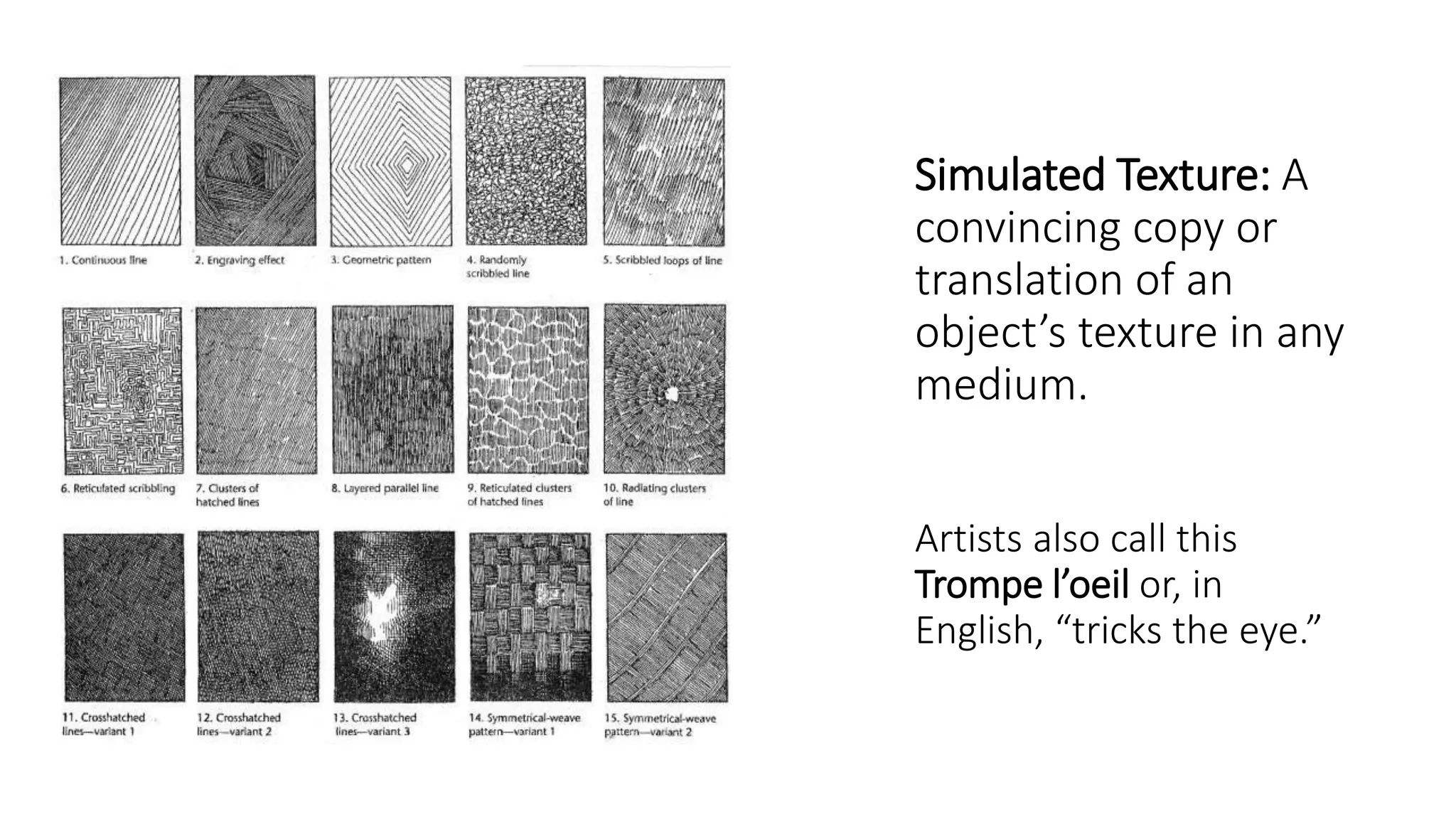
Simulated Texture: A
convincing copy or
translation of an
object’s texture in any
medium.
Artists also call this
Trompe l’oeil or, in
English, “tricks the eye.”
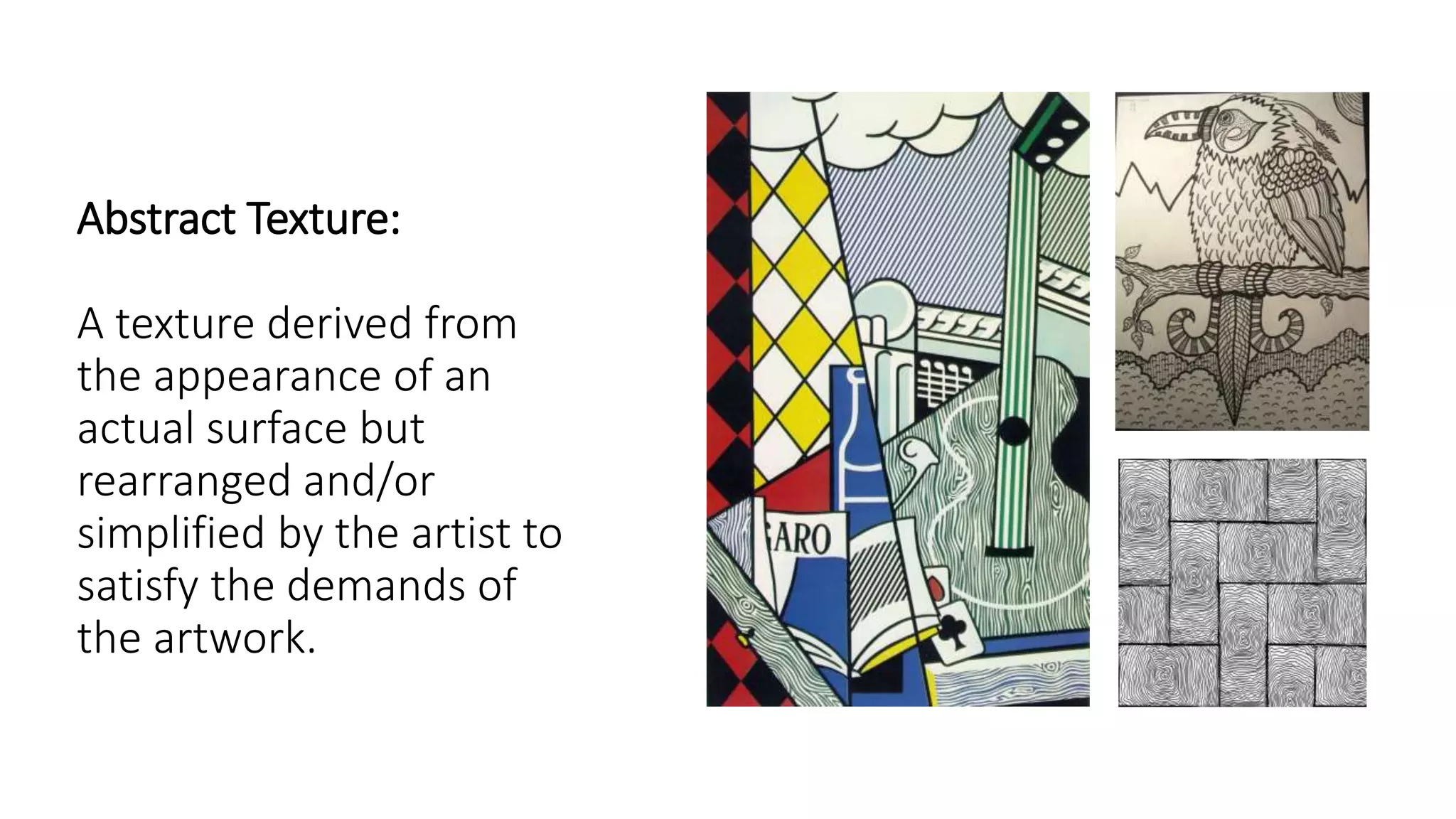
Abstract Texture:
A texture derived from
the appearance of an
actual surface but
rearranged and/or
simplified by the artist to
satisfy the demands of
the artwork.
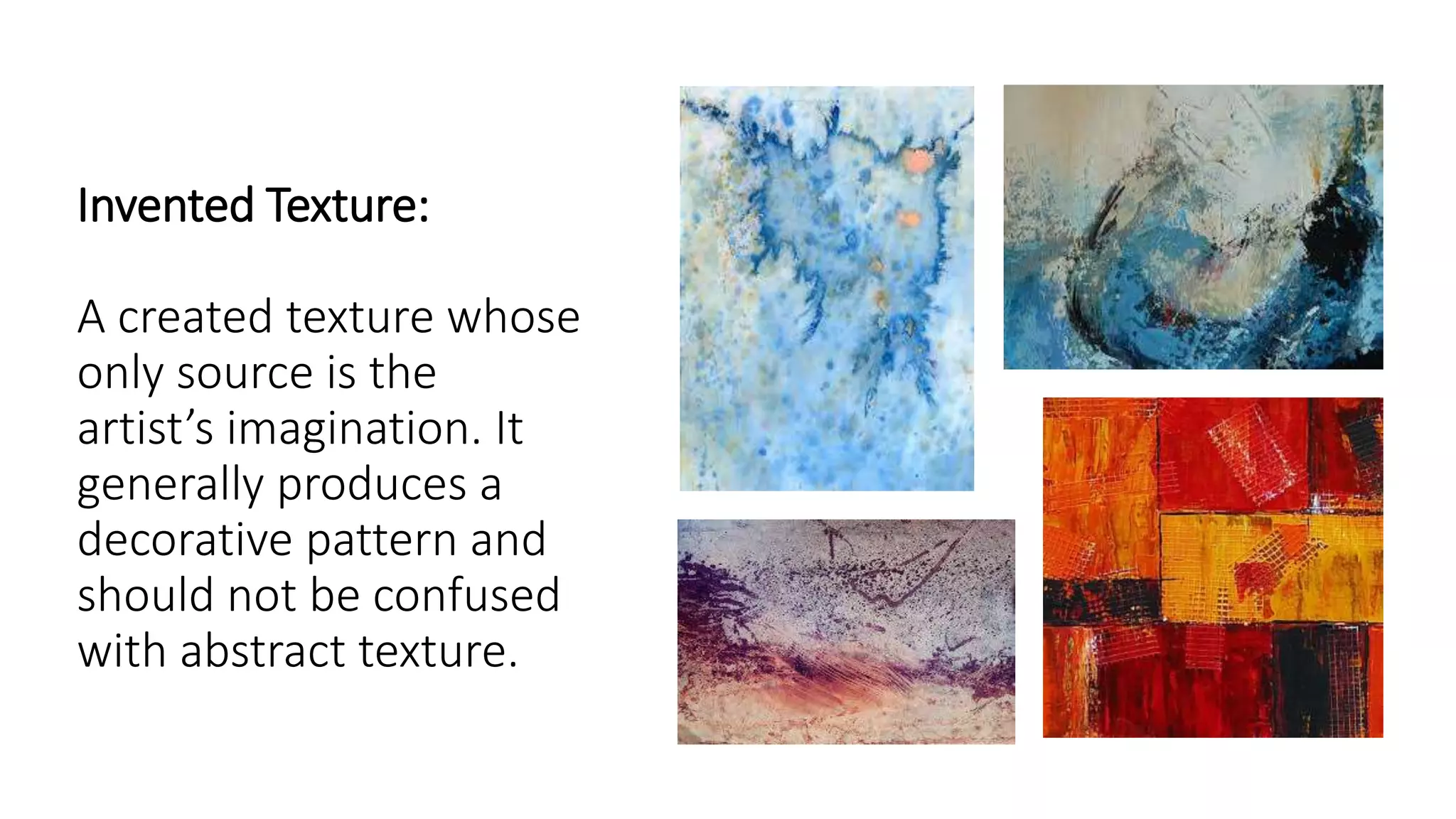
Invented Texture:
A created texture whose
only source is the
artist’s imagination. It
generally produces a
decorative pattern and
should not be confused
with abstract texture.
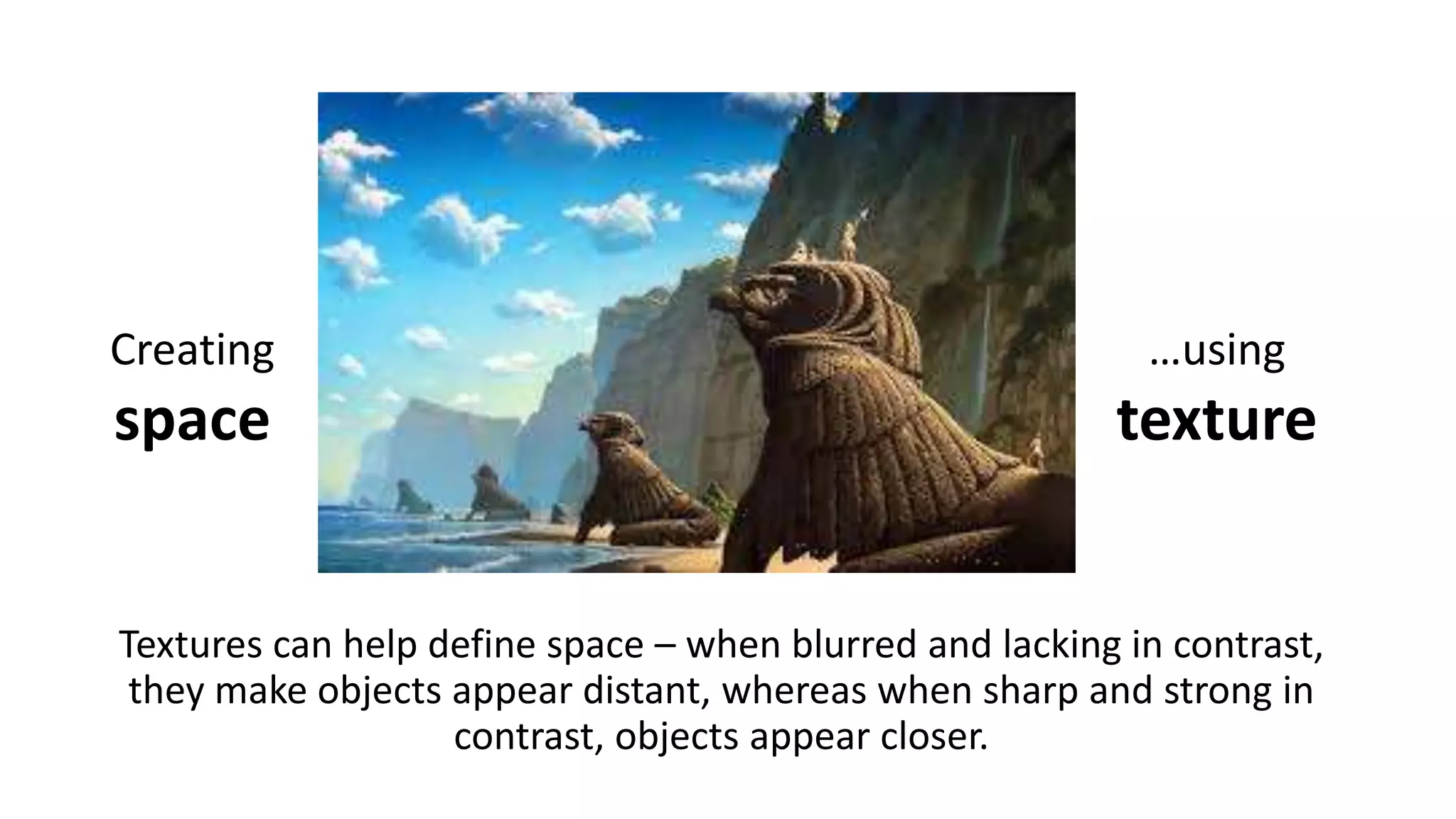
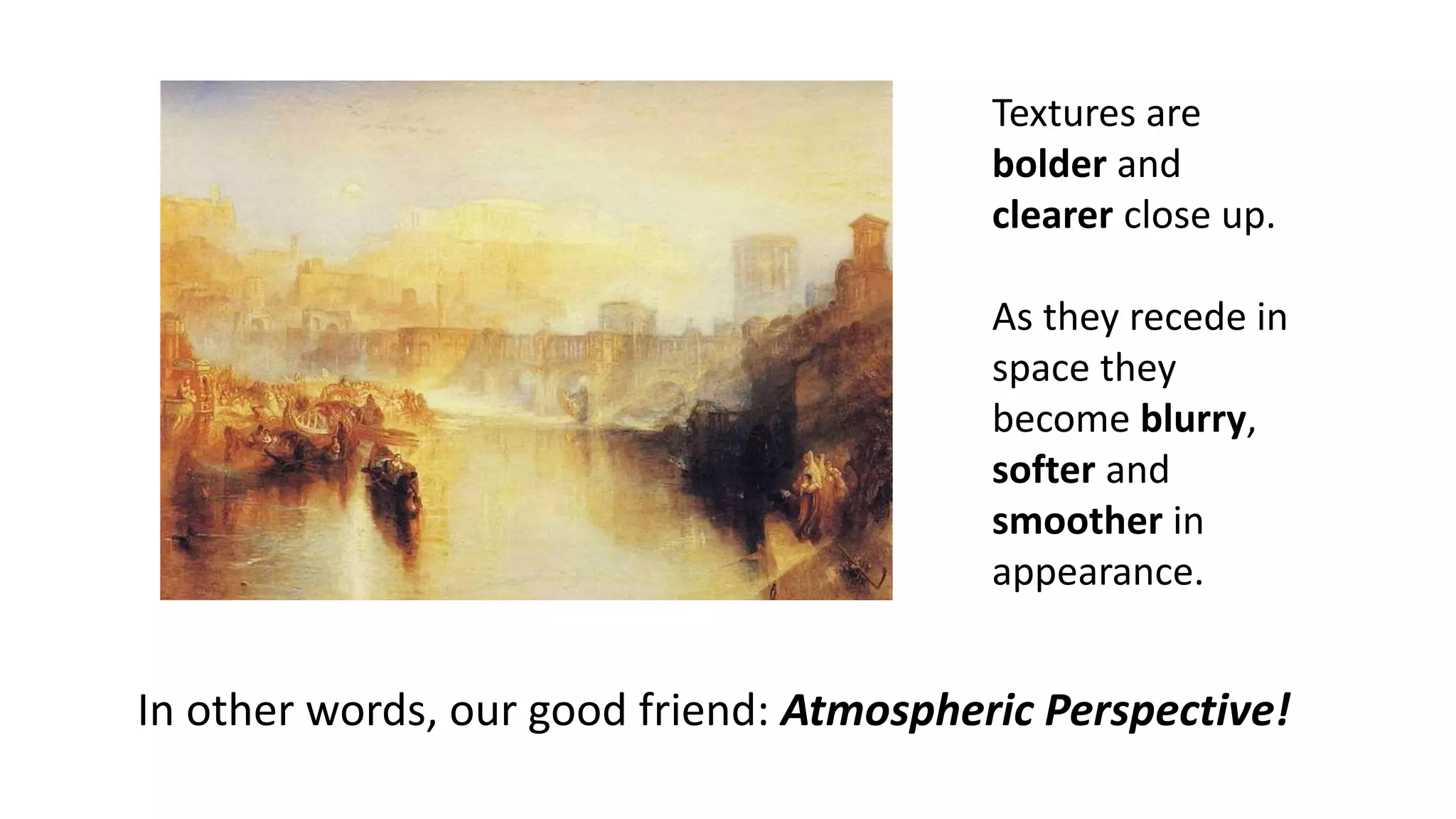
Textures can help define space – when blurred and lacking in contrast,
they make objects appear distant, whereas when sharp and strong in
contrast, objects appear closer.
Creating
space
…using
texture
Textures are
bolder and
clearer close up.
As they recede in
space they
become blurry,
softer and
smoother in
appearance.
In other words, our good friend: Atmospheric Perspective!
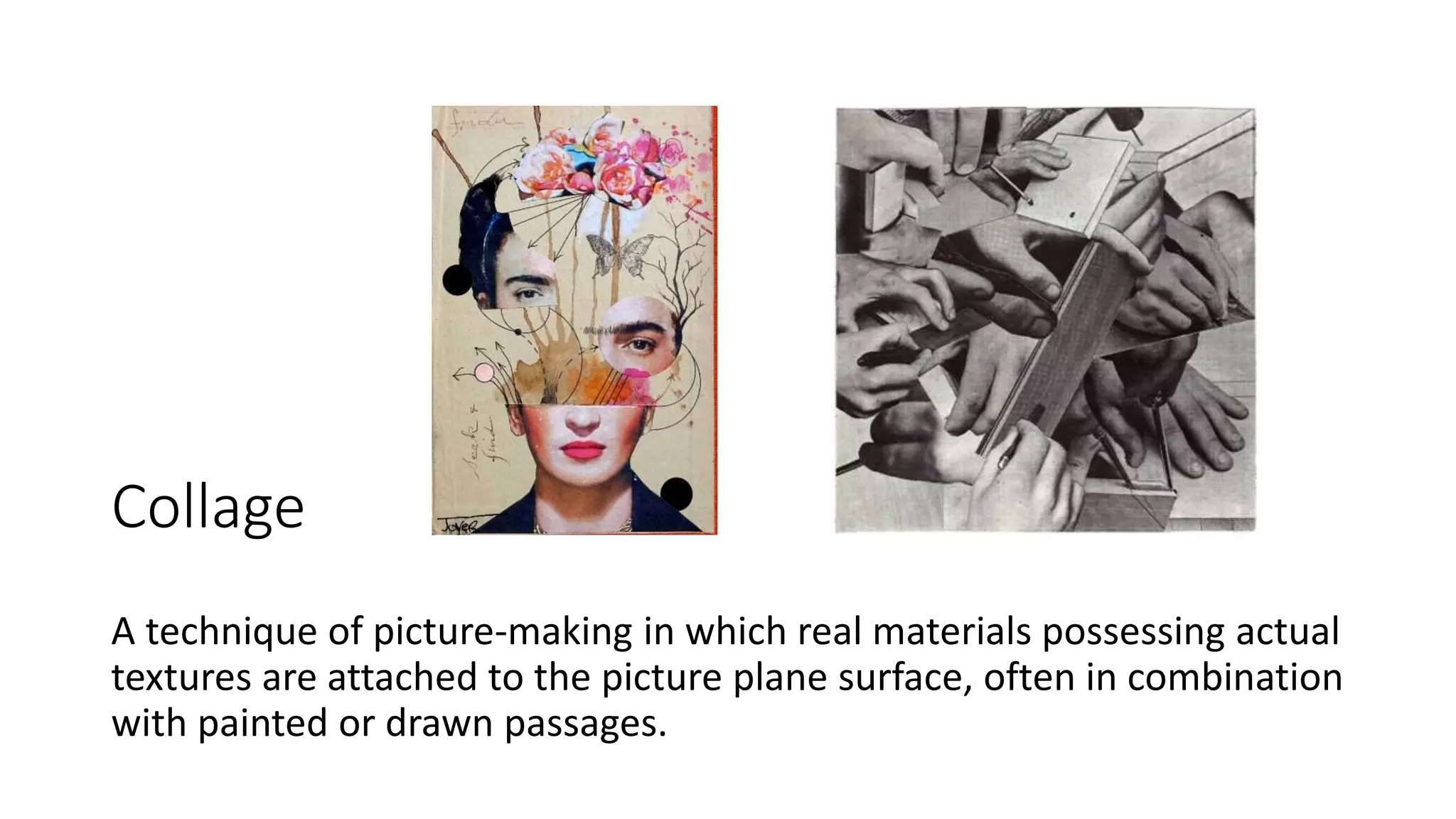
Collage
A technique of picture-making in which real materials possessing actual
textures are attached to the picture plane surface, often in combination
with painted or drawn passages.
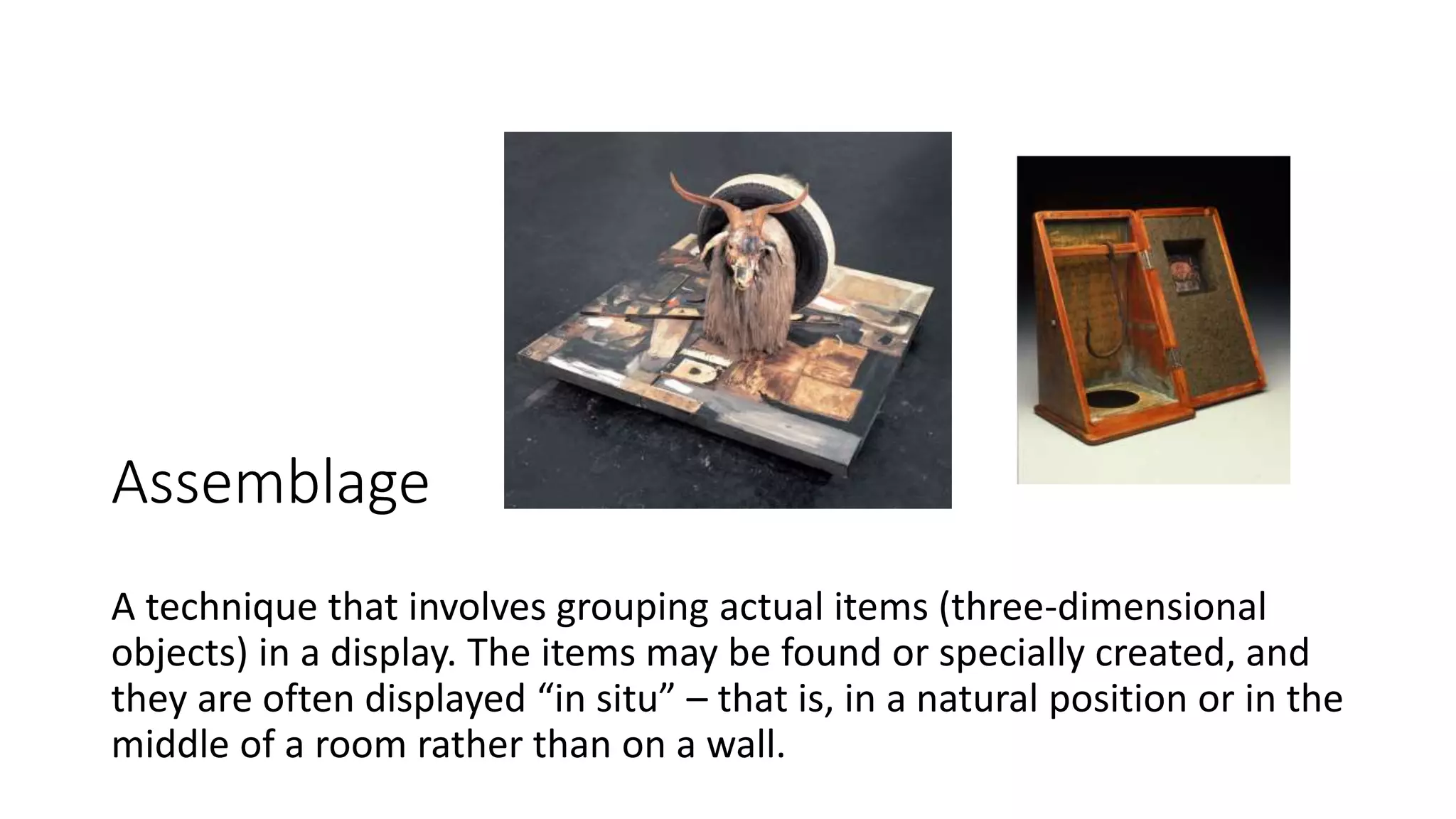
Assemblage
A technique that involves grouping actual items (three-dimensional
objects) in a display. The items may be found or specially created, and
they are often displayed “in situ” – that is, in a natural position or in the
middle of a room rather than on a wall.
What is the difference between
texture and pattern?
PATTERN
• Decorative design (flat)
• Involves repetition and
ornament
• Not concerned with surface
texture, but with appearance.
TEXTURE
• Stimulates a tactile response
• Can be actual – not just an
illusion
• Does not simply engage the eye,
but also our sense of touch
Texture Project
Objectives:
• Explore the use of drawing media to create the tactile illusion of
texture
• Use collected samples of textures to inform a 2D artwork
• Create a simple still life with invented textures in place of actual ones
Preliminary (Sketchbook) Work:
• 6 texture drawings, created from your 6 textured items
• 1 compositional sketch of your still life
Materials:
• Bring in 6 physical examples of interesting textures (examples: pine cone,
pebbles, fur, metal grate, textured fabric, tree bark, etc.)
• 2-3 simple still life objects (examples: bowl, vase, wine bottle, fruit, etc.)
• 1 sheet white illustration board size 15x22” OR 1 sheet white watercolor
paper. Your design should measure 12x18”.
• Graphite pencils of various hardness (2B, 4B, 6B, 2H, 4H, etc)
• Staedtler Mars eraser
Process:
1. Arrange your still life objects into a composition of your choosing. Use what you
have learned in class about successful composition (focal point, visual hierarchy,
flow, emphasis, zooming in, etc.)
2. Identify the different textures in your actual still life, and then assign each of
them a new, substituted texture, taken from your 6 practice drawings in your
sketchbook (for instance, if you’re drawing a glass vase, the shiny glassy texture is
reassigned the texture of a swatch of fur you drew – now you’re drawing the vase,
only with this new texture on the surface).
4. Pay attention to the light source in your still life, as well as the forms of the
actually objects you are drawing. The only thing that is changed is the surface
texture of the objects. Try to imagine how each object would look if it was made
out of this very different material.
3. Render your entire still life using this method. You must use between 4-6
different textures in your still life.

Element of Art - Texture

  • 1.
    Texture [The surface characterof a material that can be experienced through touch or the illusion of touch. Texture is produced by natural forces or through an artist’s manipulation of the art elements]
  • 2.
    How to weexperience texture? Through our sensory perceptions of sight and touch.
  • 3.
    Why bother? Artists utilizetexture in art to imitate nature very closely, also to provoke psychological or motional responses from the viewer. To stimulate curiosity, shock us, and make us reevaluate our perceptions.
  • 4.
    4 Types ofTexture: Actual Simulated Abstract Invented
  • 5.
    Actual Texture: A surfacethat can be experienced through the sense of touch (as opposed to a surface visually simulated by the artist).
  • 6.
    Simulated Texture: A convincingcopy or translation of an object’s texture in any medium. Artists also call this Trompe l’oeil or, in English, “tricks the eye.”
  • 7.
    Abstract Texture: A texturederived from the appearance of an actual surface but rearranged and/or simplified by the artist to satisfy the demands of the artwork.
  • 8.
    Invented Texture: A createdtexture whose only source is the artist’s imagination. It generally produces a decorative pattern and should not be confused with abstract texture.
  • 9.
    Textures can helpdefine space – when blurred and lacking in contrast, they make objects appear distant, whereas when sharp and strong in contrast, objects appear closer. Creating space …using texture
  • 10.
    Textures are bolder and clearerclose up. As they recede in space they become blurry, softer and smoother in appearance. In other words, our good friend: Atmospheric Perspective!
  • 11.
    Collage A technique ofpicture-making in which real materials possessing actual textures are attached to the picture plane surface, often in combination with painted or drawn passages.
  • 12.
    Assemblage A technique thatinvolves grouping actual items (three-dimensional objects) in a display. The items may be found or specially created, and they are often displayed “in situ” – that is, in a natural position or in the middle of a room rather than on a wall.
  • 13.
    What is thedifference between texture and pattern? PATTERN • Decorative design (flat) • Involves repetition and ornament • Not concerned with surface texture, but with appearance. TEXTURE • Stimulates a tactile response • Can be actual – not just an illusion • Does not simply engage the eye, but also our sense of touch
  • 14.
    Texture Project Objectives: • Explorethe use of drawing media to create the tactile illusion of texture • Use collected samples of textures to inform a 2D artwork • Create a simple still life with invented textures in place of actual ones
  • 15.
    Preliminary (Sketchbook) Work: •6 texture drawings, created from your 6 textured items • 1 compositional sketch of your still life Materials: • Bring in 6 physical examples of interesting textures (examples: pine cone, pebbles, fur, metal grate, textured fabric, tree bark, etc.) • 2-3 simple still life objects (examples: bowl, vase, wine bottle, fruit, etc.) • 1 sheet white illustration board size 15x22” OR 1 sheet white watercolor paper. Your design should measure 12x18”. • Graphite pencils of various hardness (2B, 4B, 6B, 2H, 4H, etc) • Staedtler Mars eraser
  • 16.
    Process: 1. Arrange yourstill life objects into a composition of your choosing. Use what you have learned in class about successful composition (focal point, visual hierarchy, flow, emphasis, zooming in, etc.) 2. Identify the different textures in your actual still life, and then assign each of them a new, substituted texture, taken from your 6 practice drawings in your sketchbook (for instance, if you’re drawing a glass vase, the shiny glassy texture is reassigned the texture of a swatch of fur you drew – now you’re drawing the vase, only with this new texture on the surface). 4. Pay attention to the light source in your still life, as well as the forms of the actually objects you are drawing. The only thing that is changed is the surface texture of the objects. Try to imagine how each object would look if it was made out of this very different material. 3. Render your entire still life using this method. You must use between 4-6 different textures in your still life.