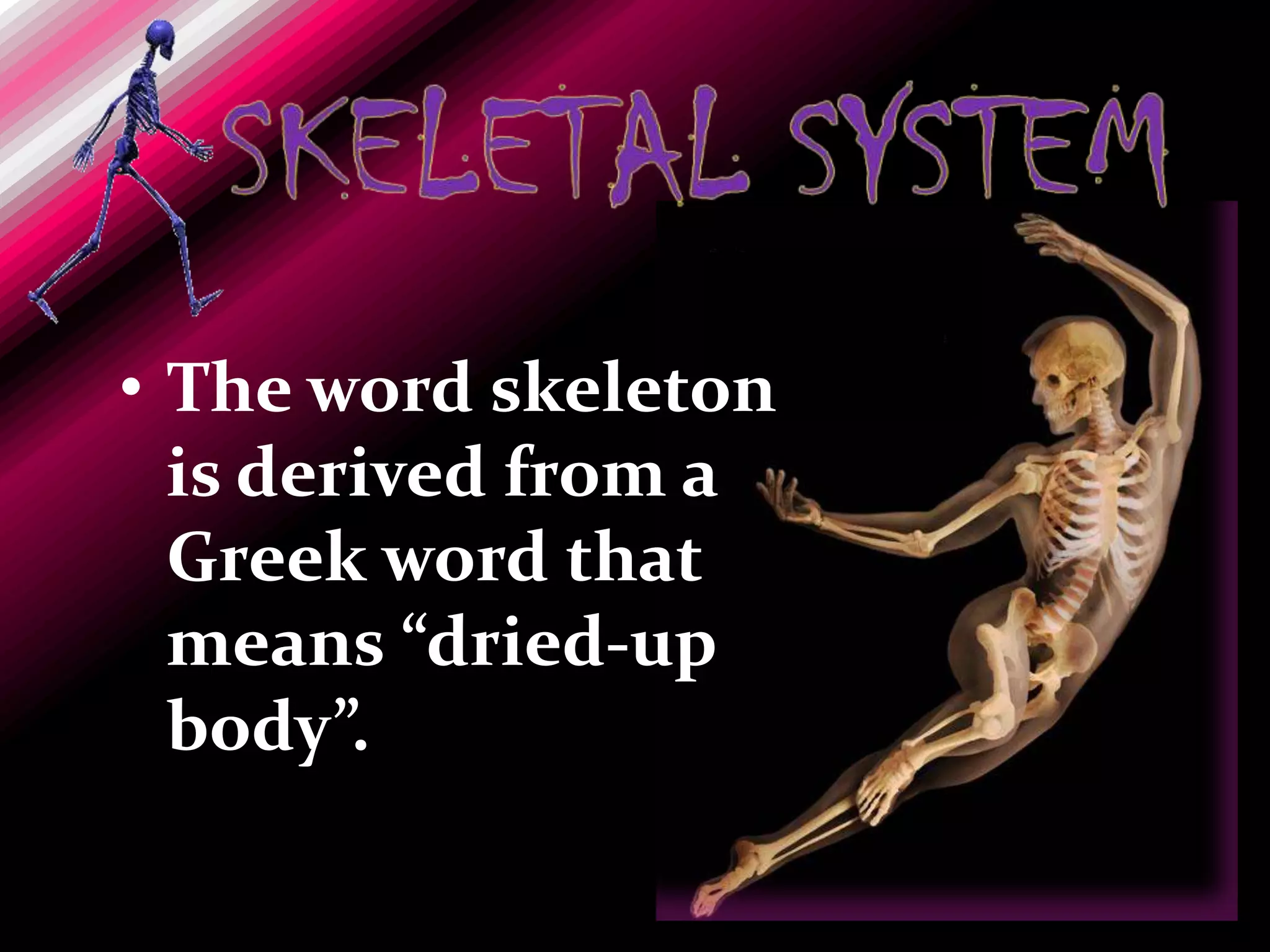
• The word skeleton
  is derived from a
  Greek word that
  means “dried-up
  body”.
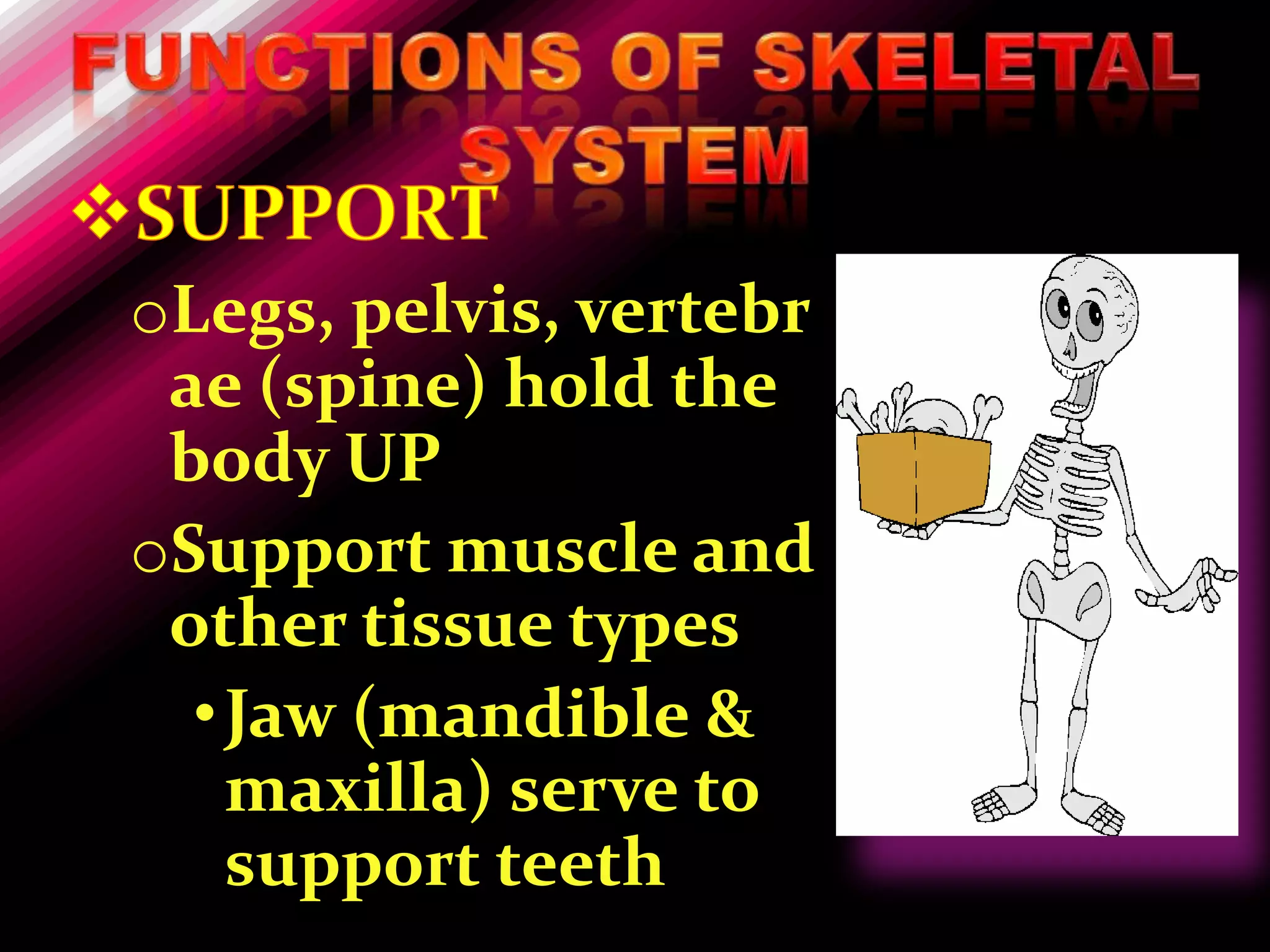
oLegs, pelvis, vertebr
 ae (spine) hold the
 body UP
oSupport muscle and
 other tissue types
  • Jaw (mandible &
    maxilla) serve to
    support teeth
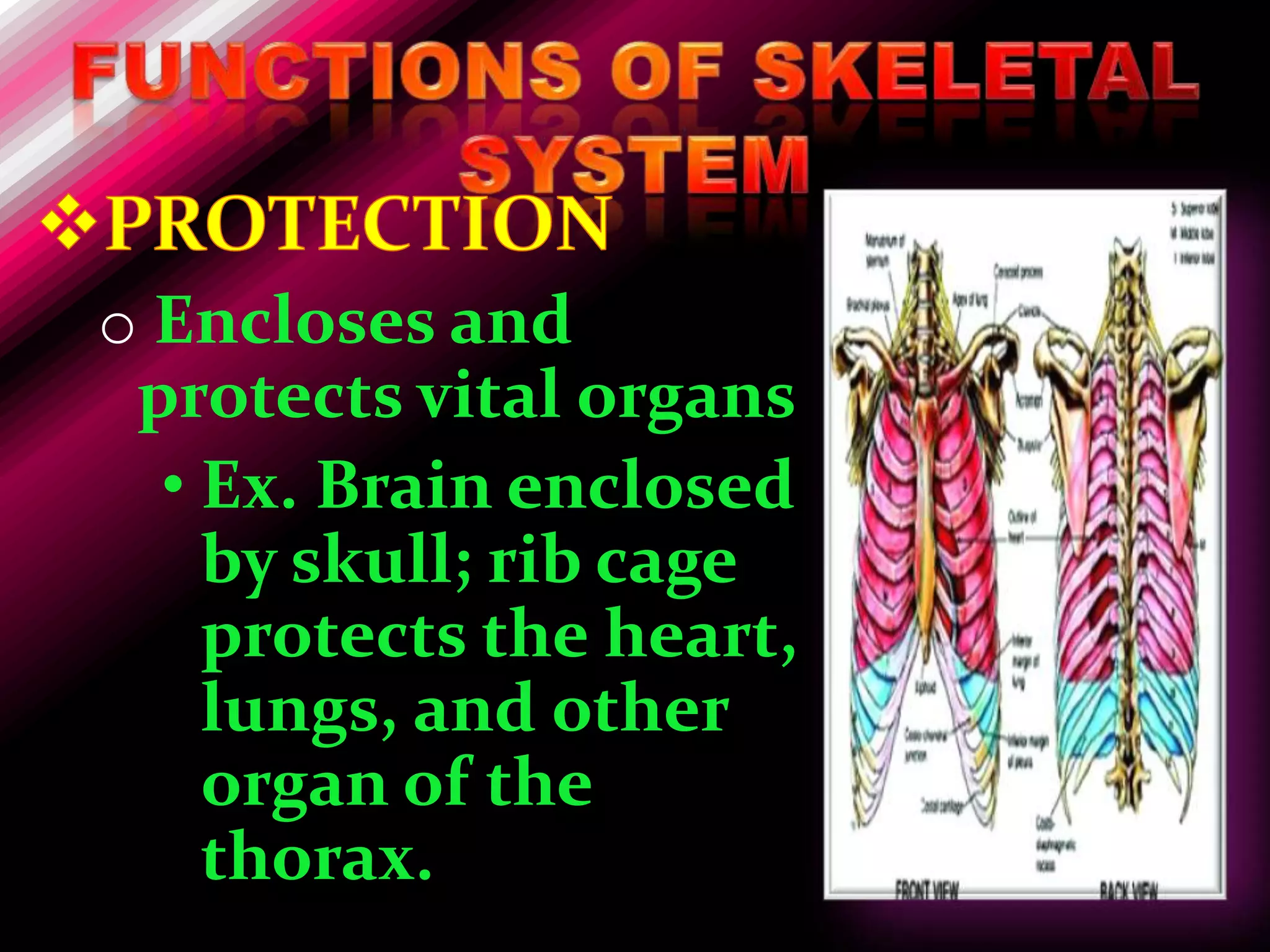
o Encloses and
 protects vital organs
  • Ex. Brain enclosed
    by skull; rib cage
    protects the heart,
    lungs, and other
    organ of the
    thorax.
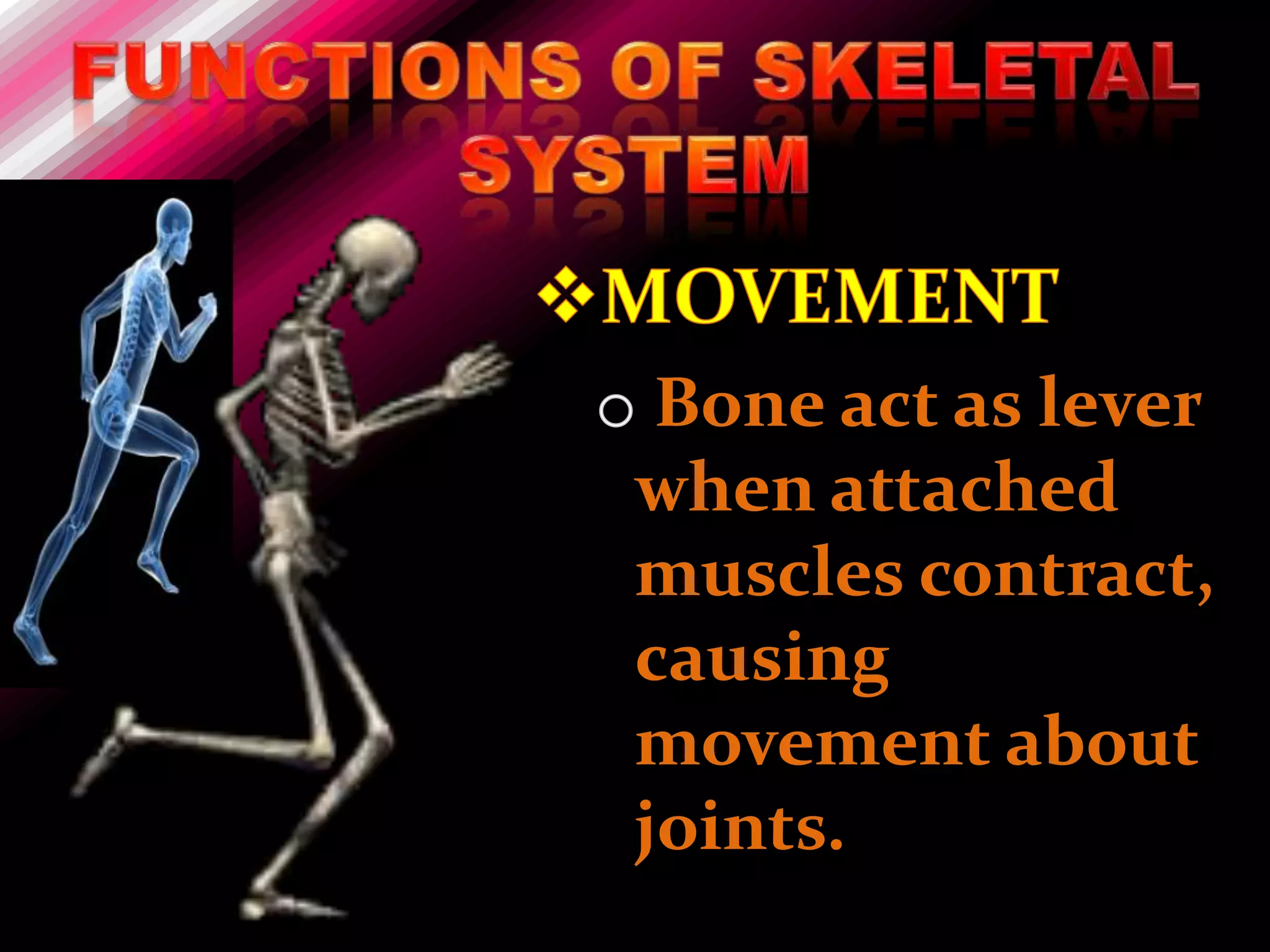
Bone act as lever
when attached
muscles contract,
causing
movement about
joints.
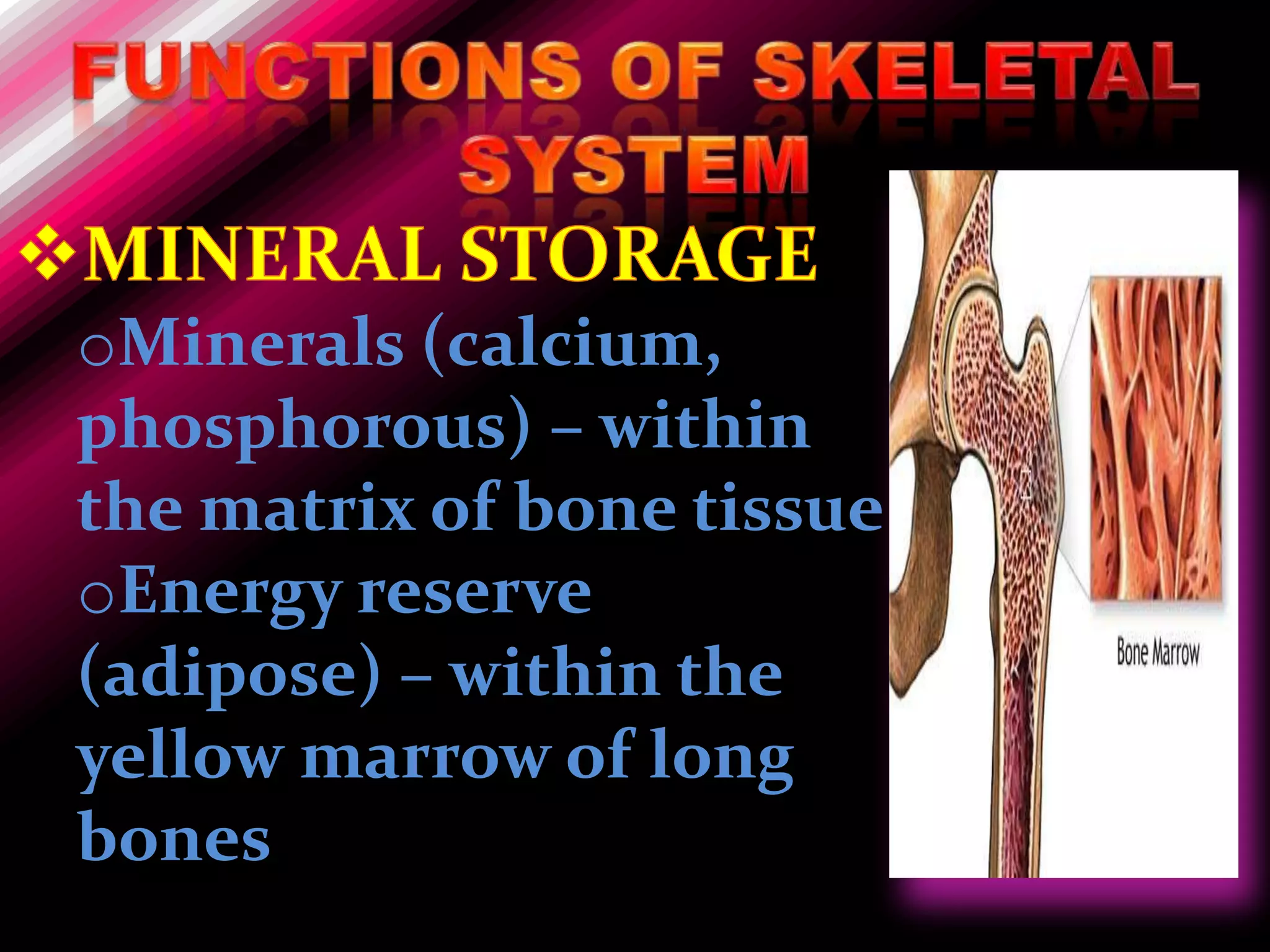
oMinerals (calcium,
phosphorous) – within
the matrix of bone tissue
oEnergy reserve
(adipose) – within the
yellow marrow of long
bones
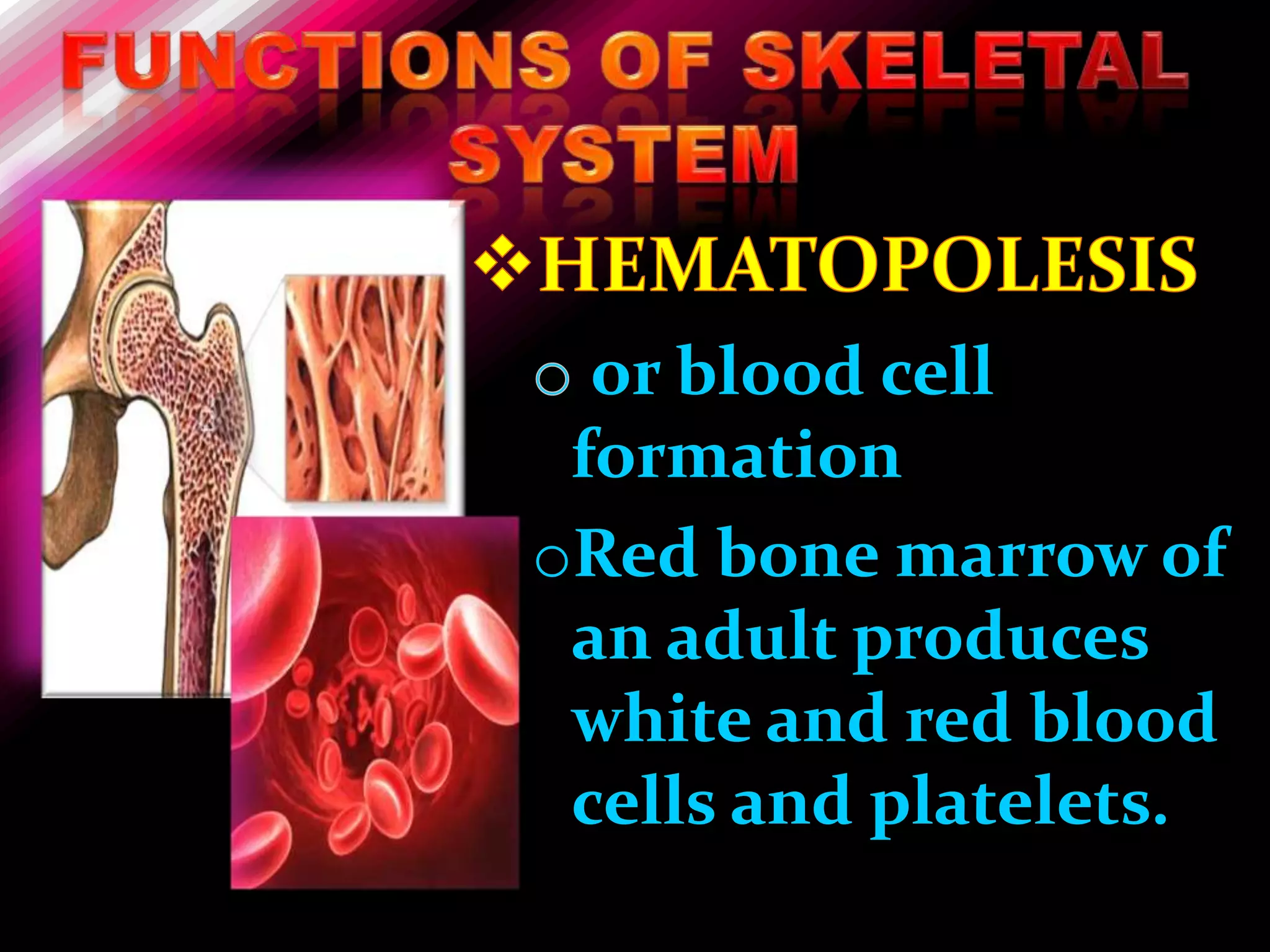
or blood cell
 formation
oRed bone marrow of
 an adult produces
 white and red blood
 cells and platelets.
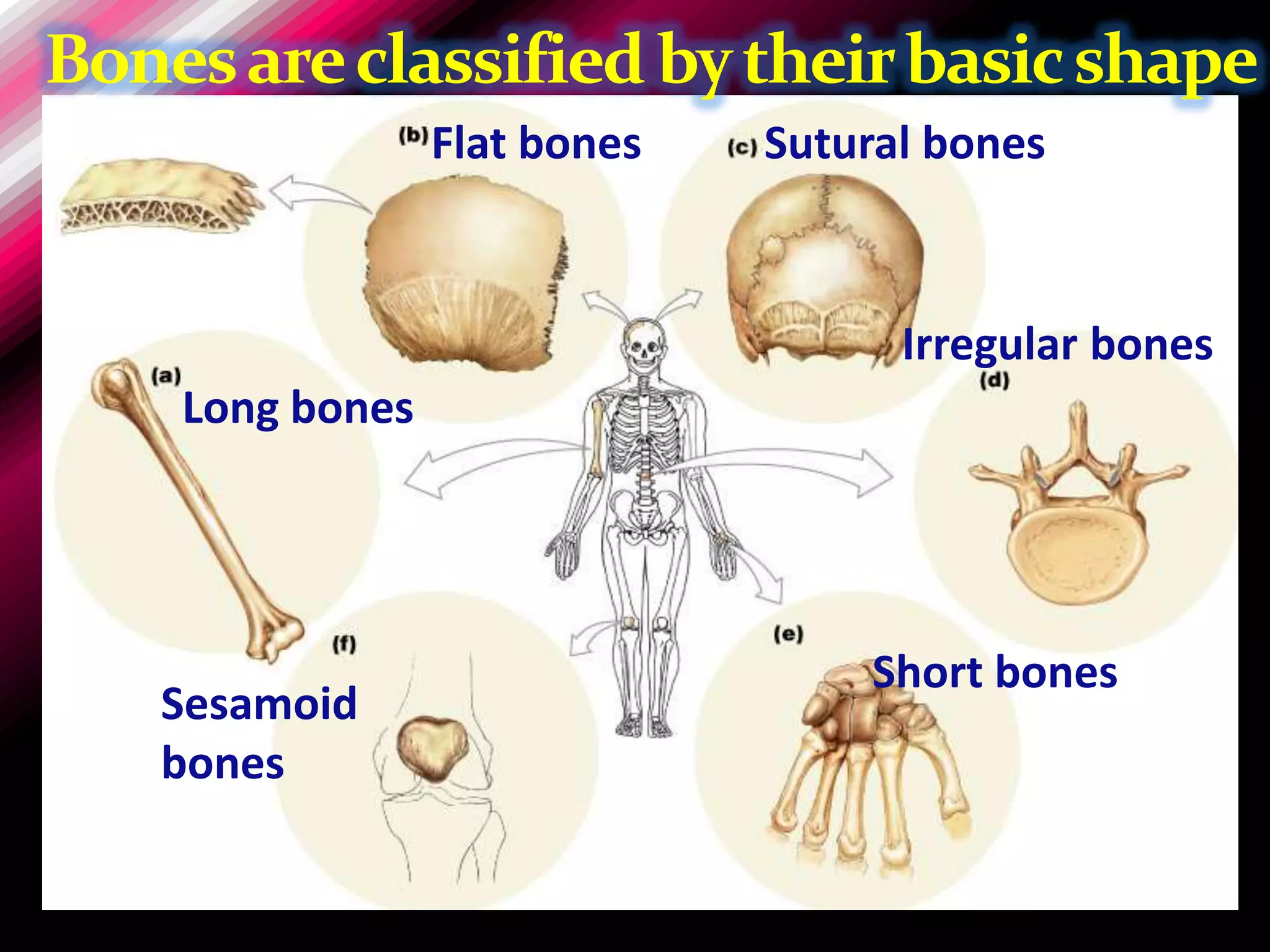
Bones are classified by their basic shape
                 Flat bones   Sutural bones


                                    Irregular bones
    Long bones


                                  Short bones
   Sesamoid
   bones
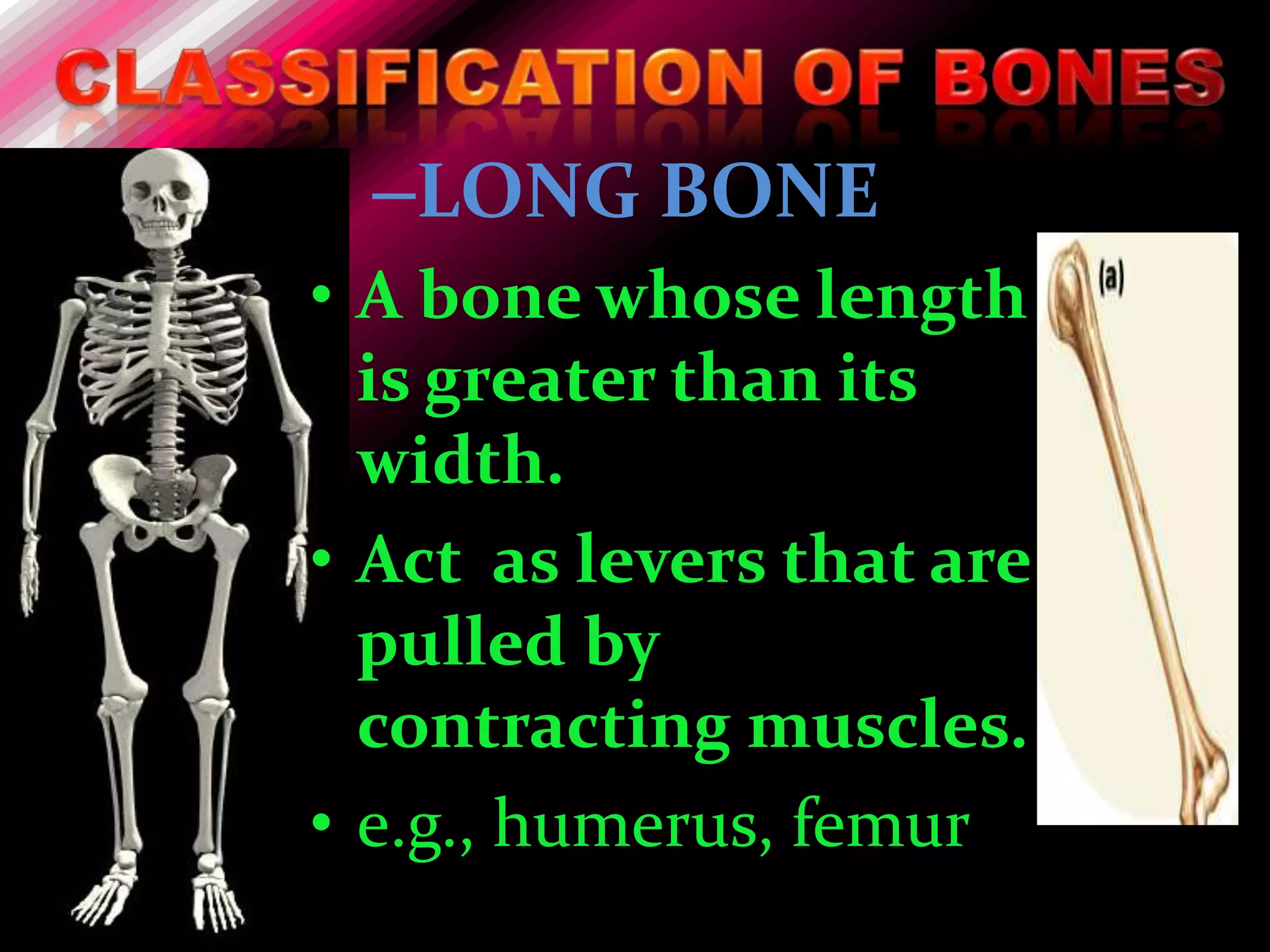
–LONG BONE
• A bone whose length
  is greater than its
  width.
• Act as levers that are
  pulled by
  contracting muscles.
• e.g., humerus, femur
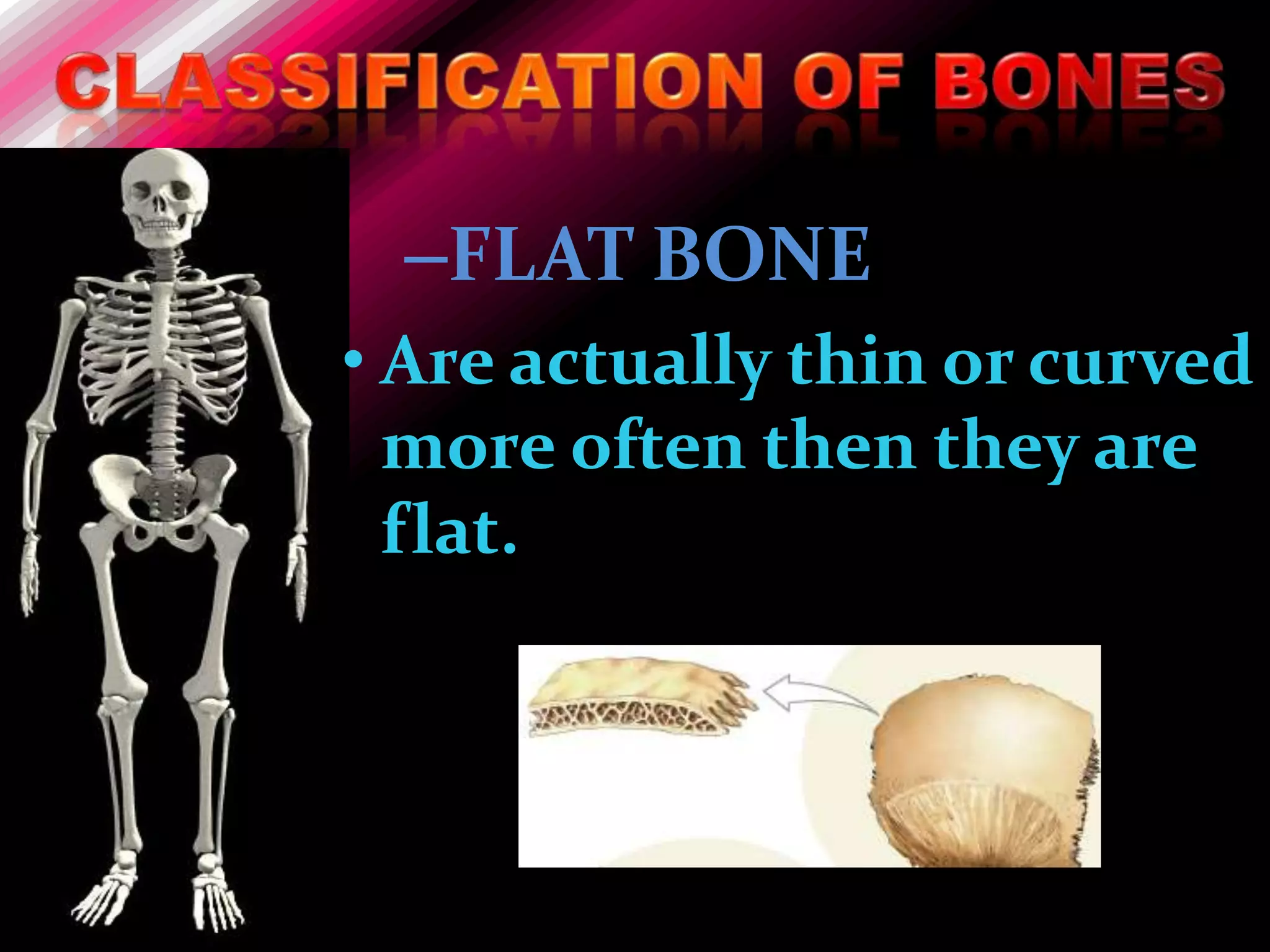
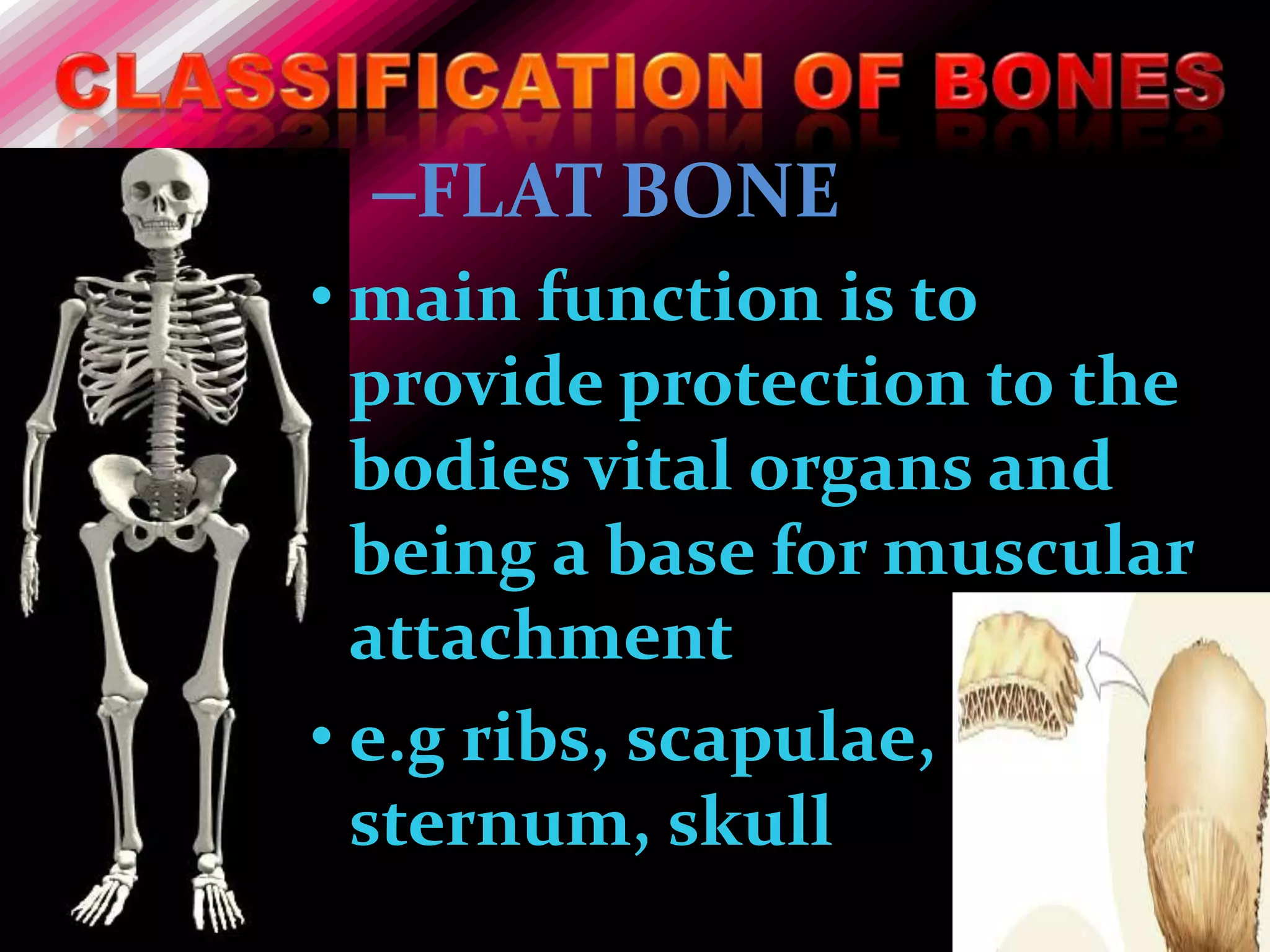
–FLAT BONE
• Are actually thin or curved
  more often then they are
  flat.
–FLAT BONE
• main function is to
  provide protection to the
  bodies vital organs and
  being a base for muscular
  attachment
• e.g ribs, scapulae,
  sternum, skull
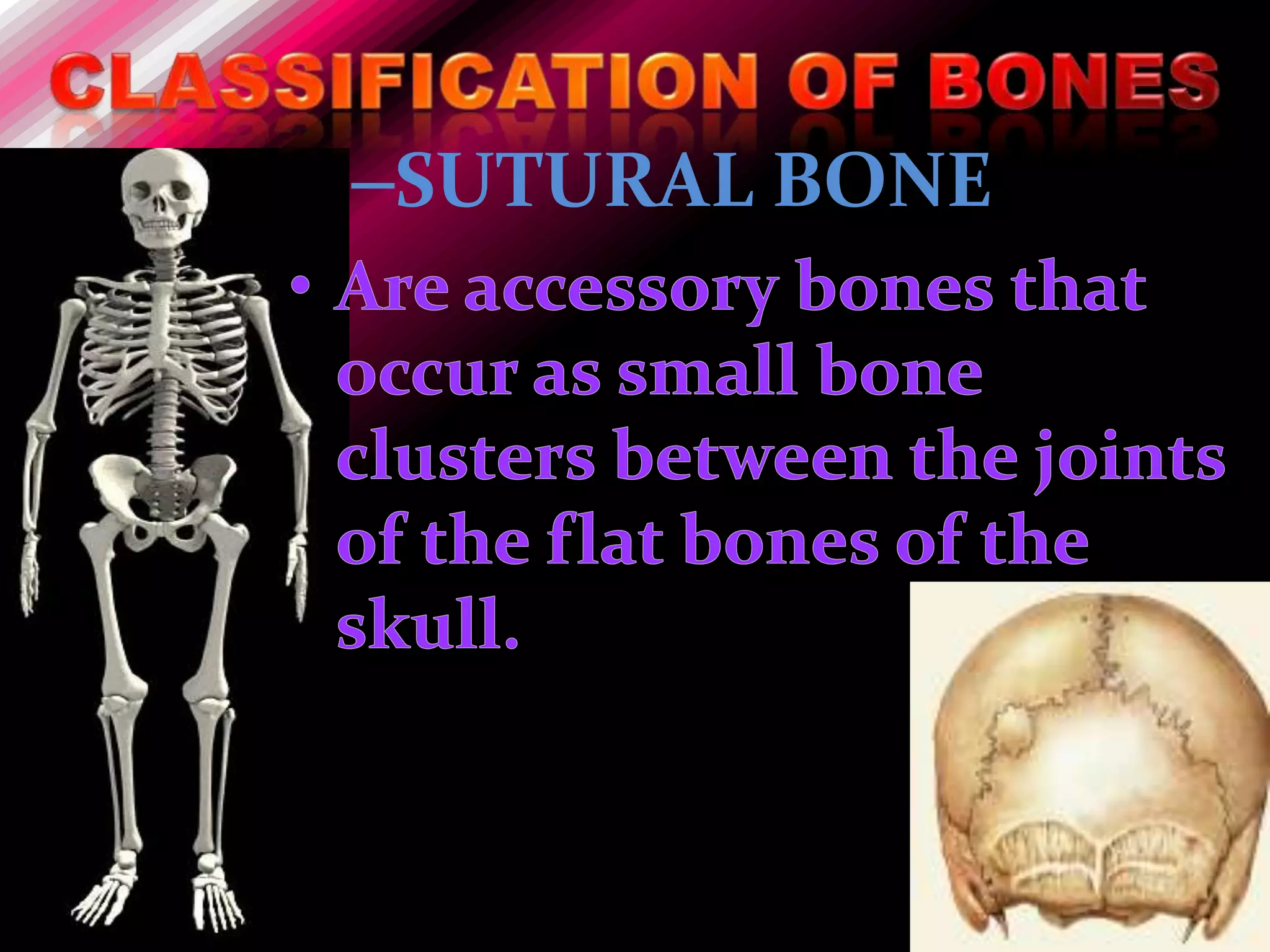
–SUTURAL BONE
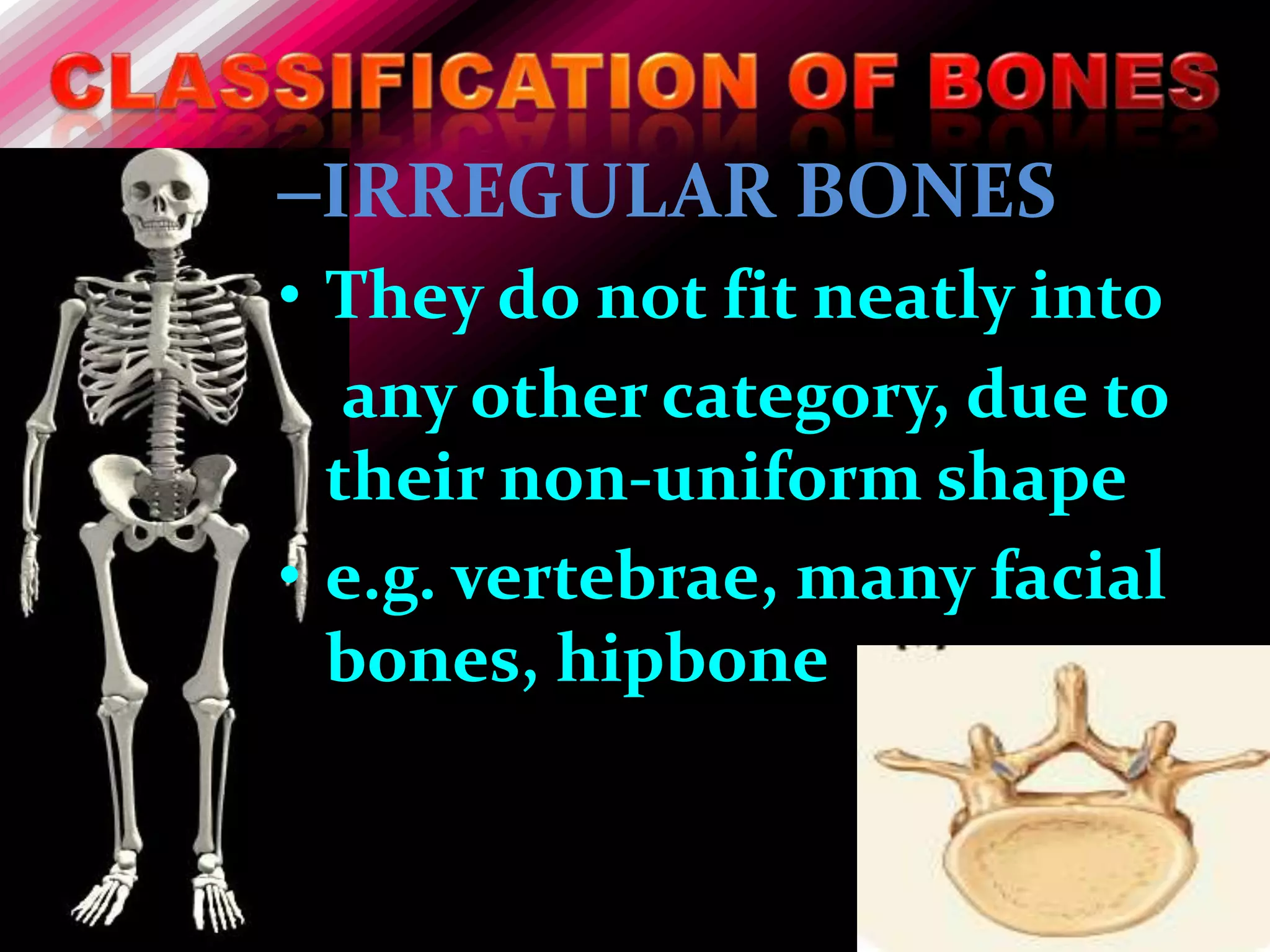
–IRREGULAR BONES
• They do not fit neatly into
   any other category, due to
  their non-uniform shape
• e.g. vertebrae, many facial
  bones, hipbone
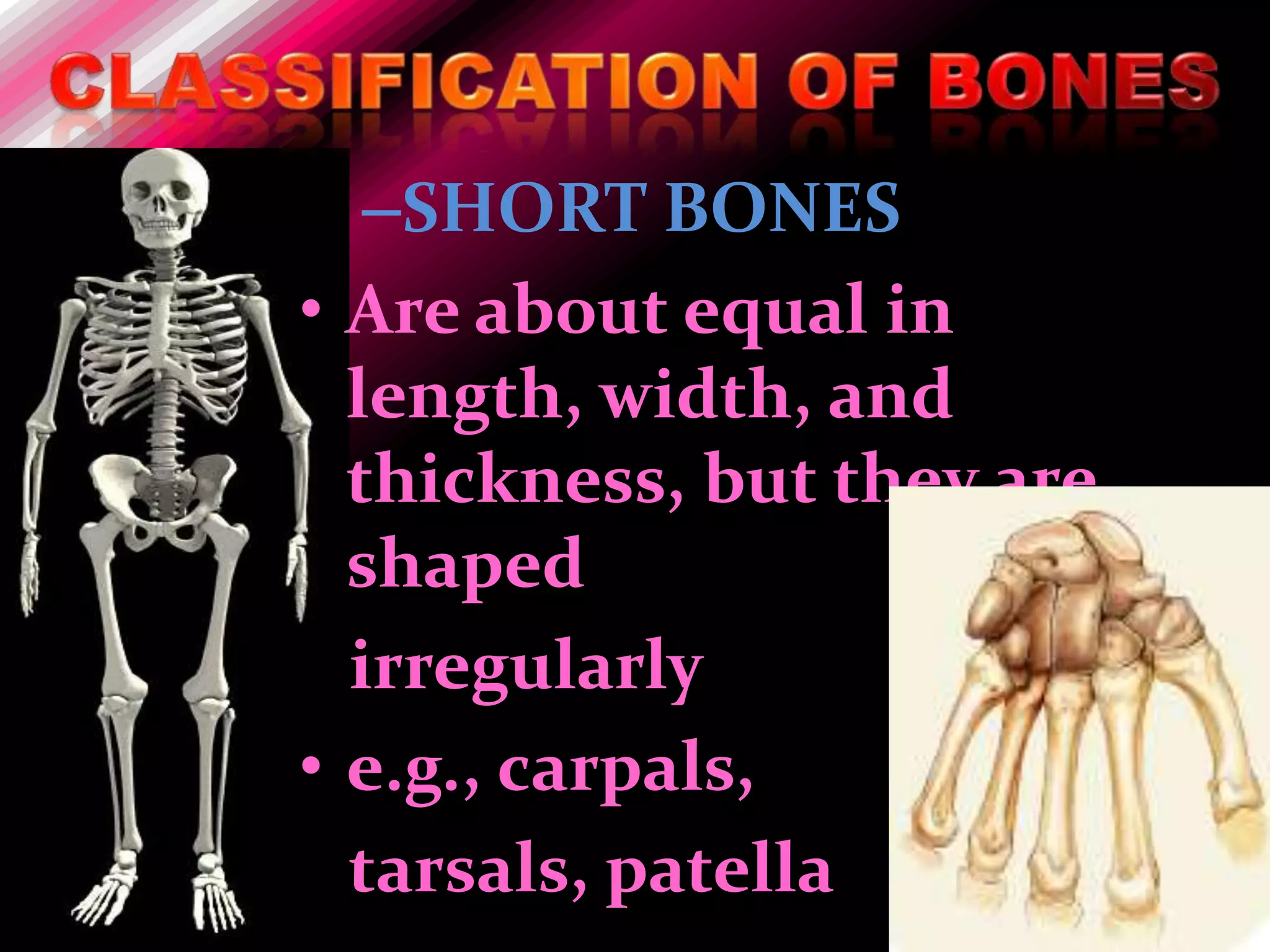
–SHORT BONES
• Are about equal in
  length, width, and
  thickness, but they are
  shaped
  irregularly
• e.g., carpals,
  tarsals, patella
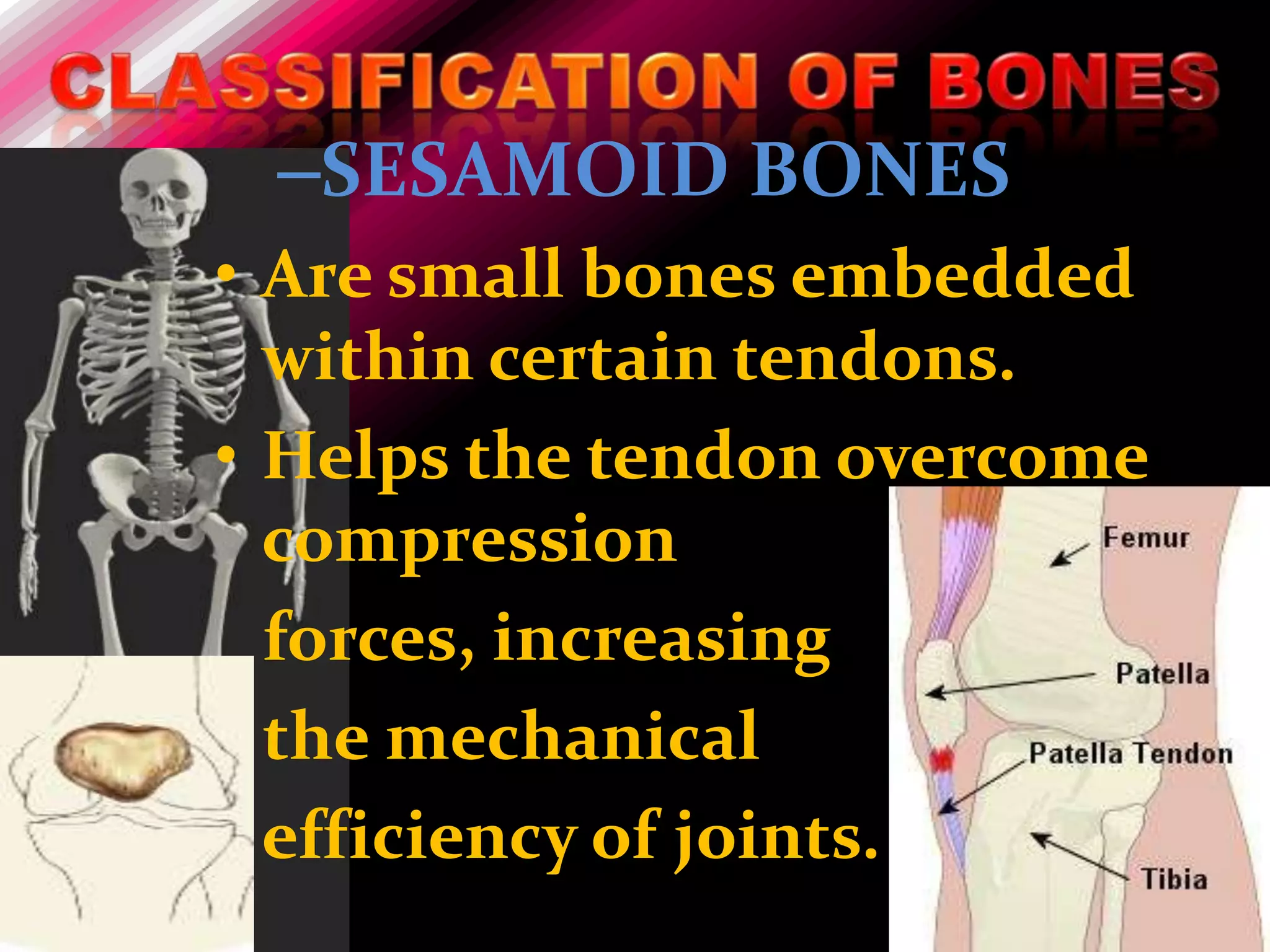
–SESAMOID BONES
• Are small bones embedded
  within certain tendons.
• Helps the tendon overcome
  compression
  forces, increasing
  the mechanical
  efficiency of joints.
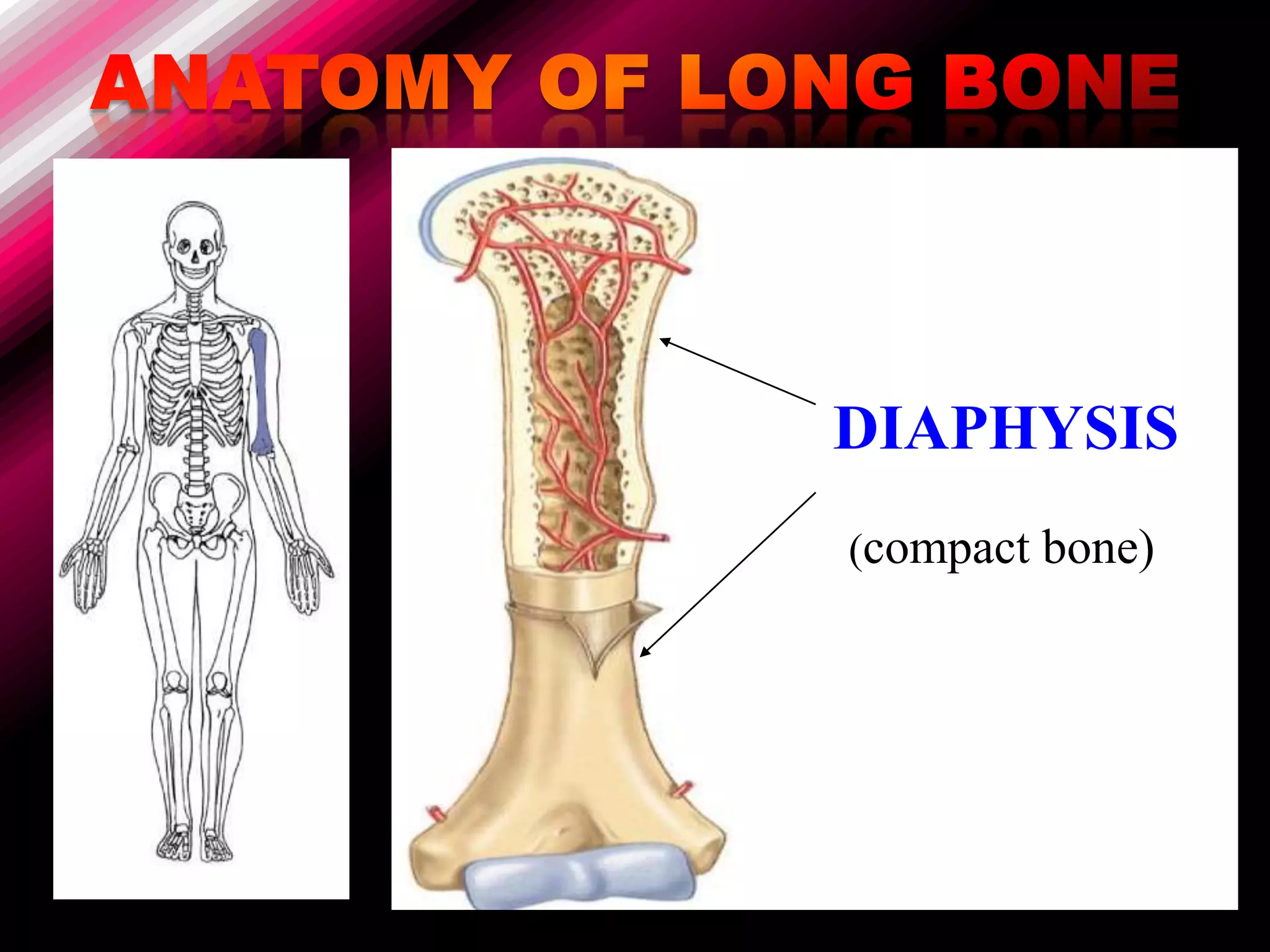
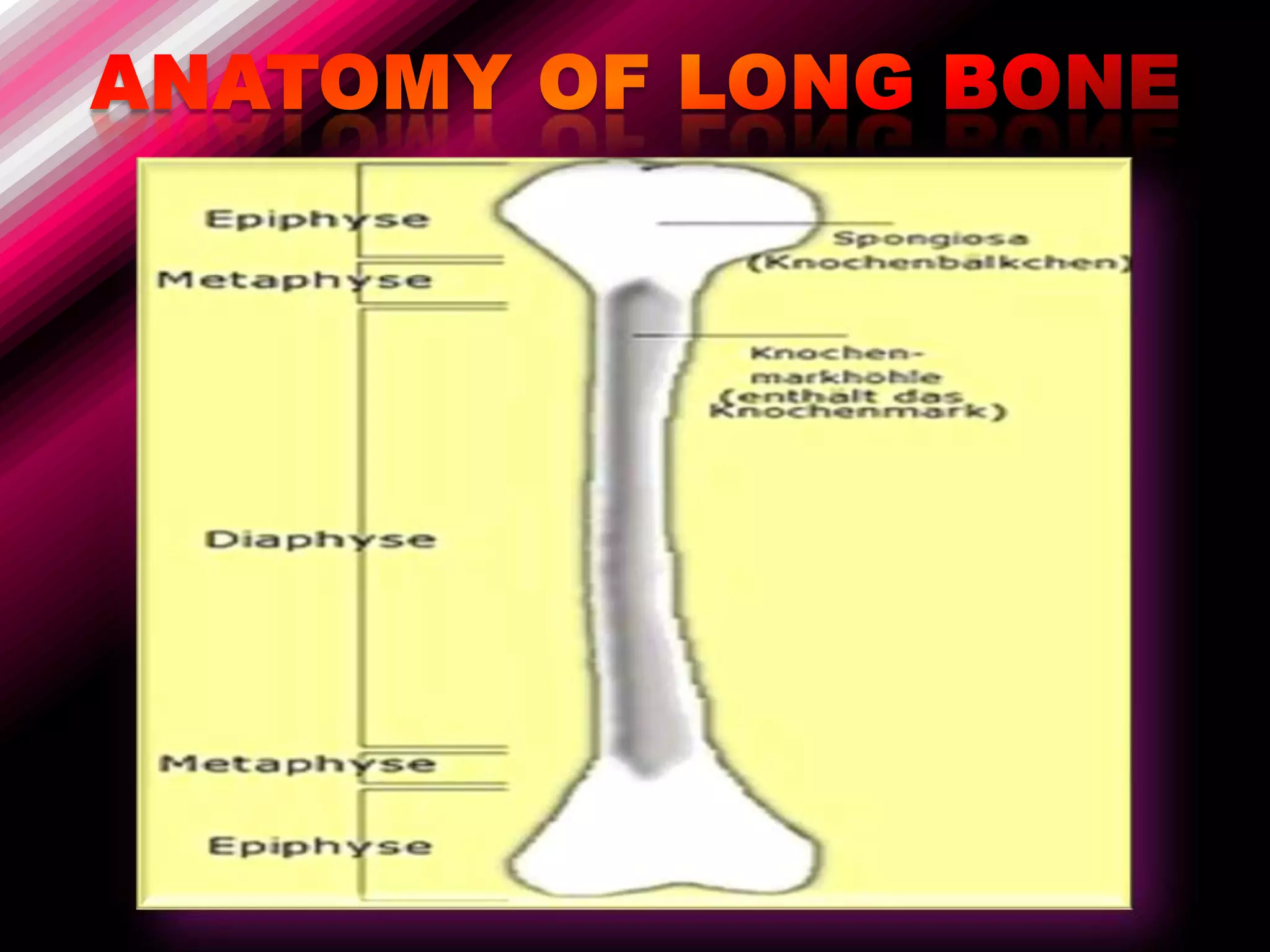
 The shaft of a long bone
 A hollow cylinder with walls
  of compact bone tissue.
DIAPHYSIS
(compact bone)
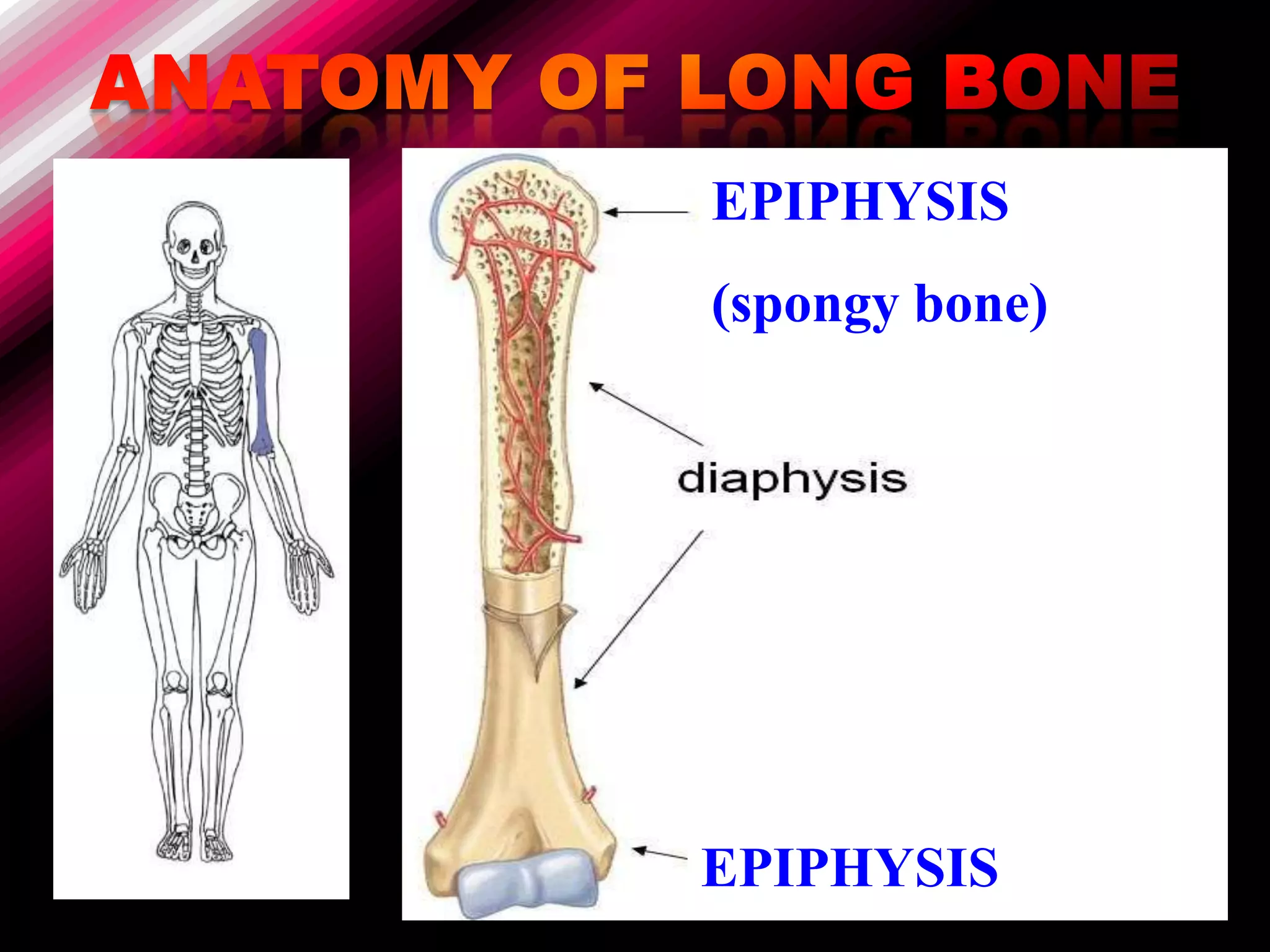
 Ends of the long bone and
  articulates or meets with a
  second bone at a joint
 consist mainly of spongy bone
 surrounded by a thin layer of
       compact bone
EPIPHYSIS
(spongy bone)


EPIPHYSIS
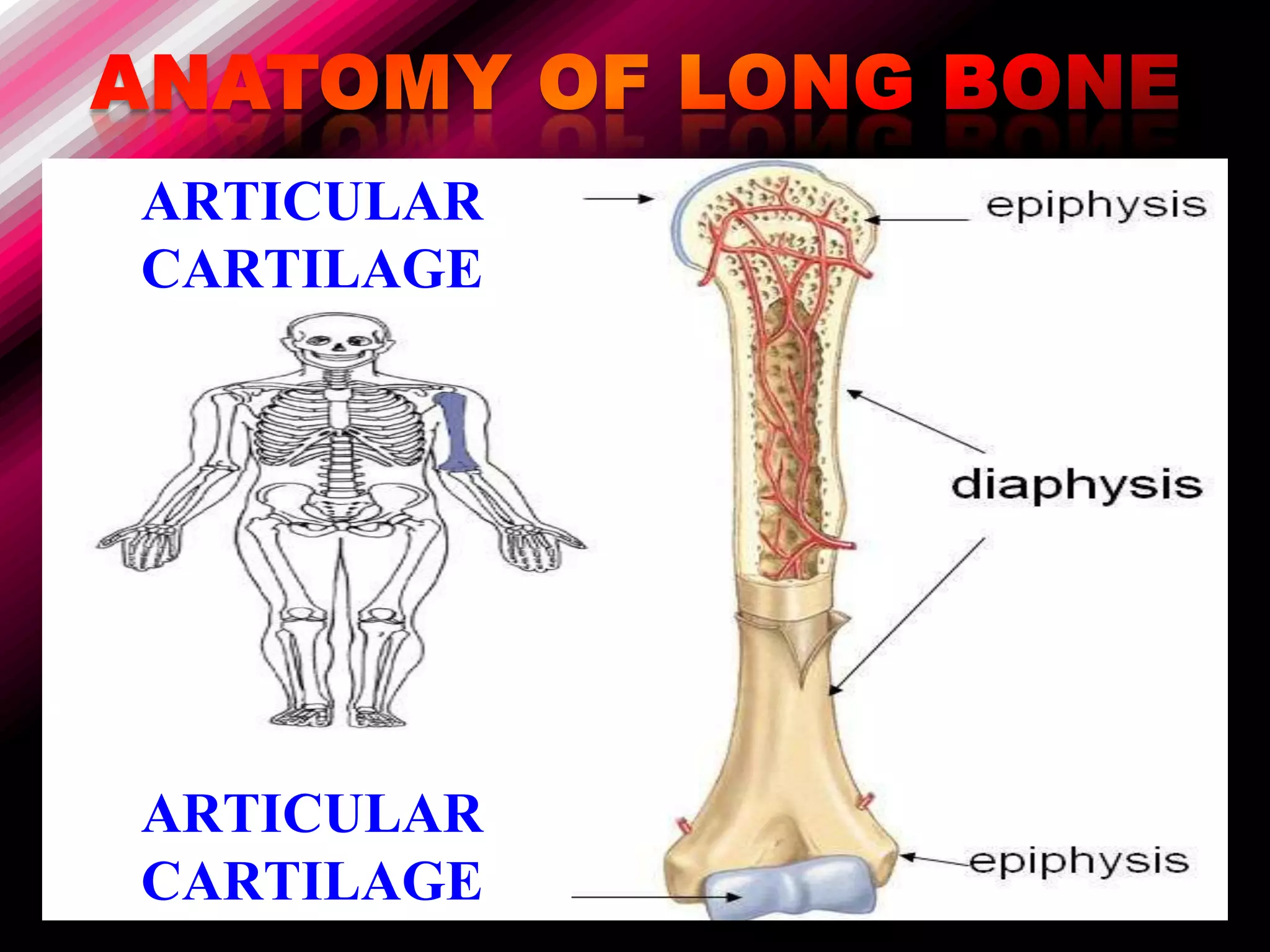
pad of hyaline cartilage on the
epiphyses where long bones
articulate or join.
"shock absorber“ -It forms a
smooth, shiny surface that
decreases friction within a joint.
ARTICULAR
CARTILAGE


ARTICULAR
CARTILAGE
 remnant of epiphyseal
disk/plate.
cartilage at the junction of
the diaphysis and epiphyses
(growth plate).
 is the wider portion of a long
bone adjacent to the epiphyseal
plate.
part of the bone that grows
during childhood; as it grows, it
  ossifies near the diaphysis and
       the epiphyses.
•In the adult- filled with
   yellow bone marrow and
   functions as a storage site for
   fat.
 inside this cavity is lined with
  connective tissue called the
           endosteum.
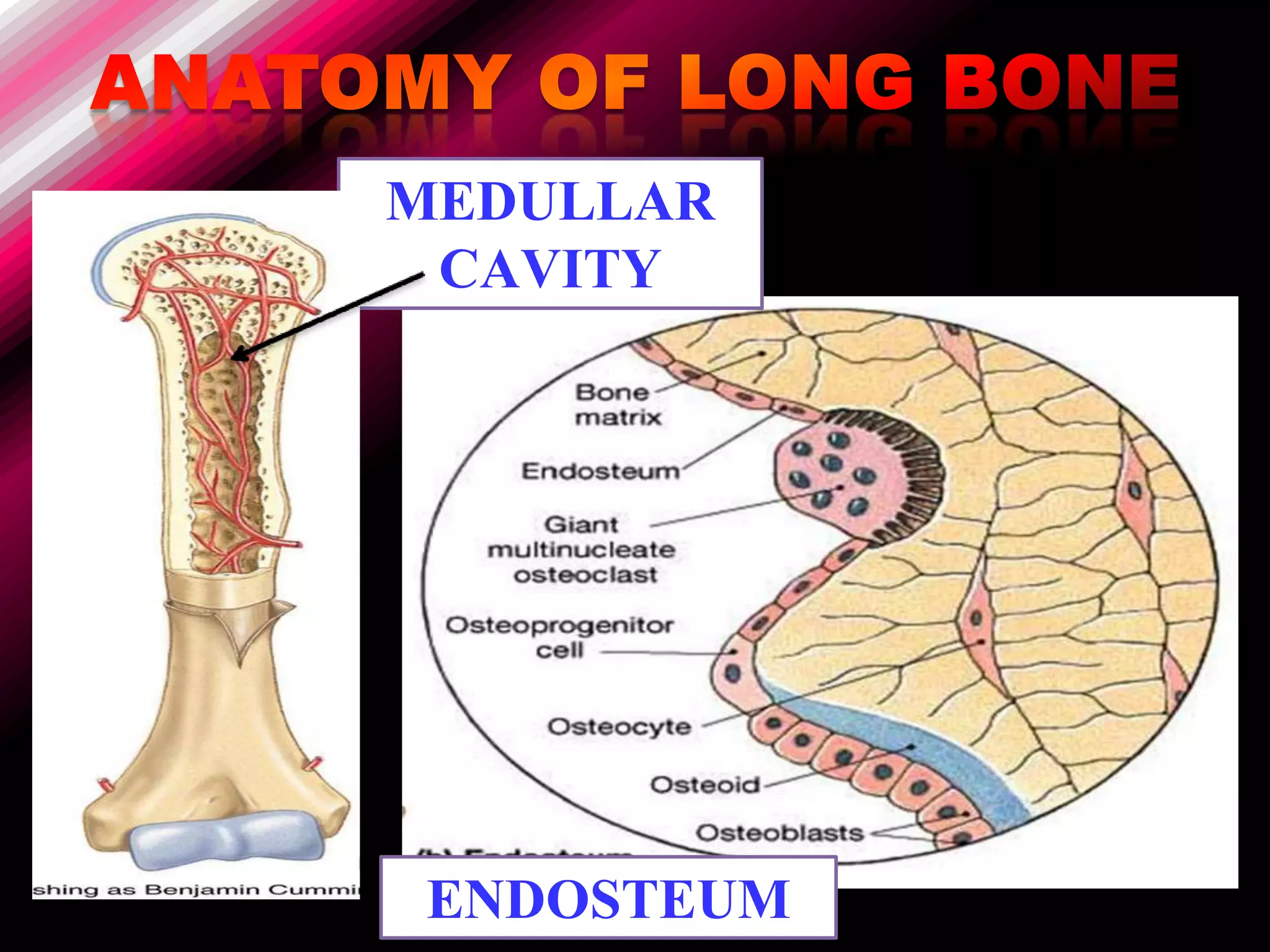
MEDULLAR
 CAVITY


ENDOSTEUM
inner lining of medullary
cavity.
contains layer of
osteoblasts & osteoclasts.
Double layered membrane
surrounding bone except at
articular cartilage.
Inner cellular layer contains
osteoprogenitor cells, osteoblasts,
      osteoclasts; therefore
      functions in bone growth &
      repair.
Outer fibrous layer of dense
irregular CT for attachment of
tendons& ligaments; provides
route for blood vessels &
nerves; separates bone tissue
     from surrounding tissues.
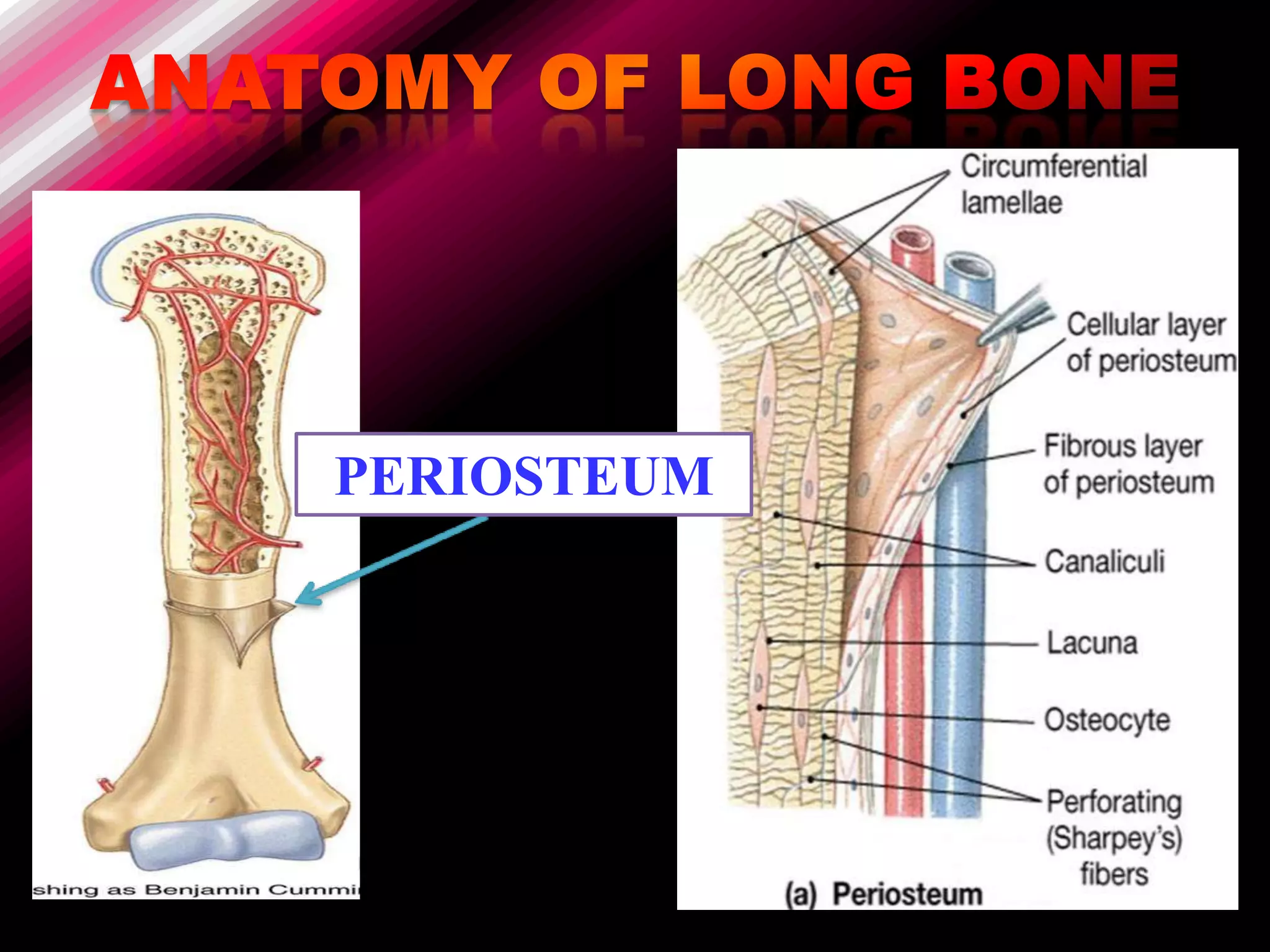
PERIOSTEUM
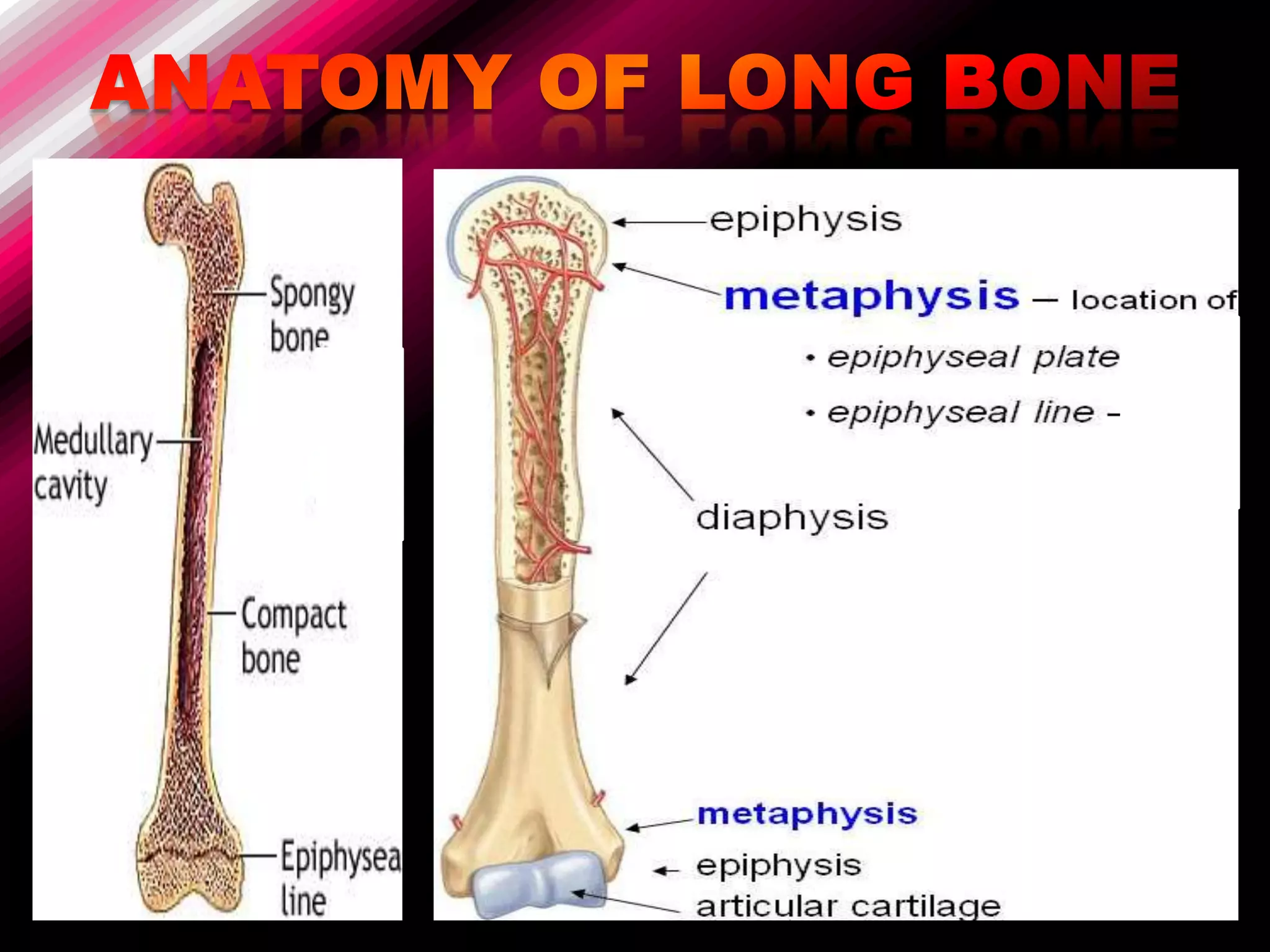
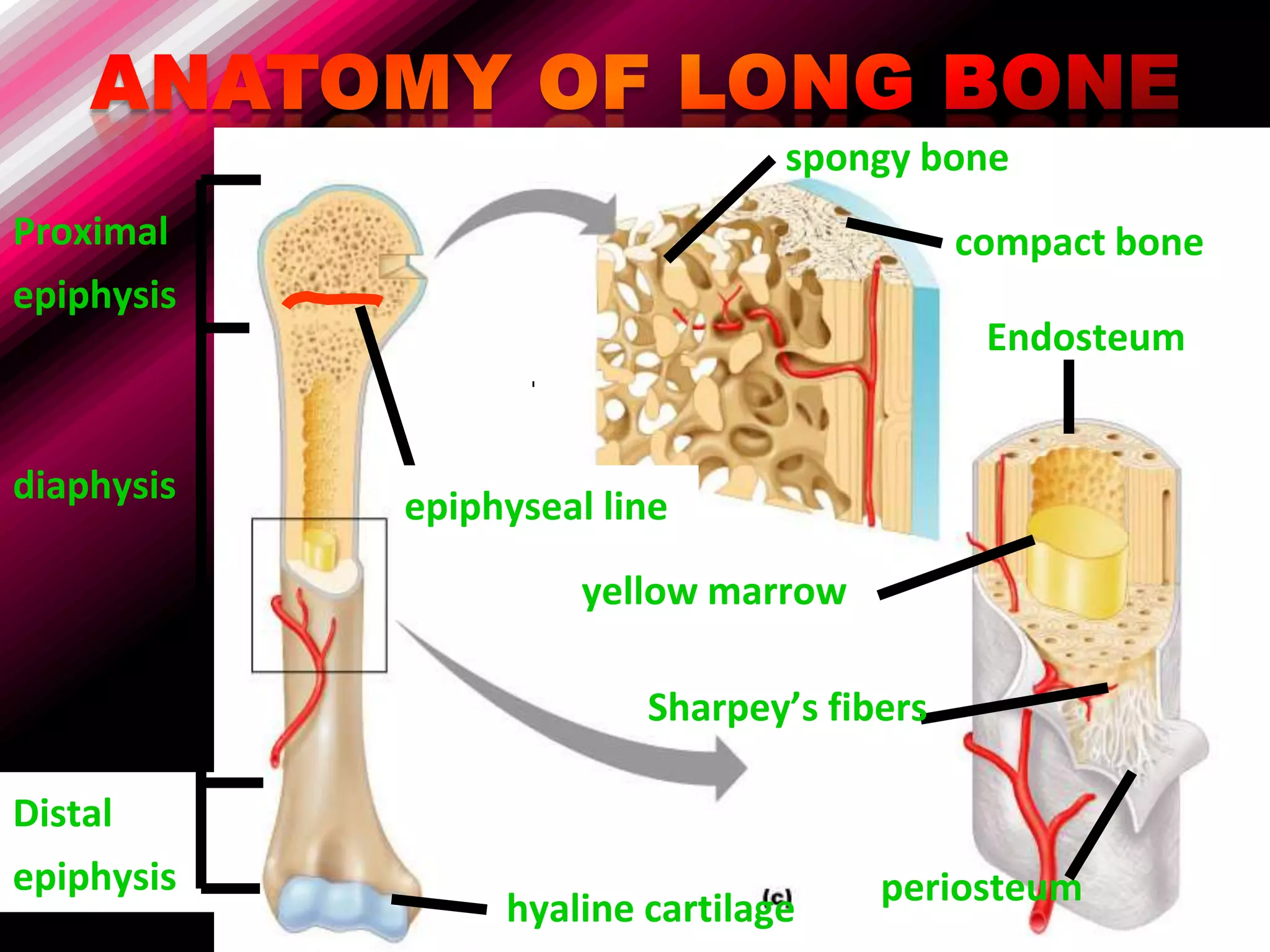
spongy bone
Proximal                                    compact bone
epiphysis
                                             Endosteum


diaphysis   epiphyseal line

                      yellow marrow

                         Sharpey’s fibers

Distal
epiphysis                             periosteum
                 hyaline cartilage
THANK YOU!

Skeletal system

  • 2.
    • The wordskeleton is derived from a Greek word that means “dried-up body”.
  • 4.
    oLegs, pelvis, vertebr ae (spine) hold the body UP oSupport muscle and other tissue types • Jaw (mandible & maxilla) serve to support teeth
  • 5.
    o Encloses and protects vital organs • Ex. Brain enclosed by skull; rib cage protects the heart, lungs, and other organ of the thorax.
  • 6.
    Bone act aslever when attached muscles contract, causing movement about joints.
  • 7.
    oMinerals (calcium, phosphorous) –within the matrix of bone tissue oEnergy reserve (adipose) – within the yellow marrow of long bones
  • 8.
    or blood cell formation oRed bone marrow of an adult produces white and red blood cells and platelets.
  • 10.
    Bones are classifiedby their basic shape Flat bones Sutural bones Irregular bones Long bones Short bones Sesamoid bones
  • 11.
    –LONG BONE • Abone whose length is greater than its width. • Act as levers that are pulled by contracting muscles. • e.g., humerus, femur
  • 12.
    –FLAT BONE • Areactually thin or curved more often then they are flat.
  • 13.
    –FLAT BONE • mainfunction is to provide protection to the bodies vital organs and being a base for muscular attachment • e.g ribs, scapulae, sternum, skull
  • 14.
  • 15.
    –IRREGULAR BONES • Theydo not fit neatly into any other category, due to their non-uniform shape • e.g. vertebrae, many facial bones, hipbone
  • 16.
    –SHORT BONES • Areabout equal in length, width, and thickness, but they are shaped irregularly • e.g., carpals, tarsals, patella
  • 17.
    –SESAMOID BONES • Aresmall bones embedded within certain tendons. • Helps the tendon overcome compression forces, increasing the mechanical efficiency of joints.
  • 19.
     The shaftof a long bone  A hollow cylinder with walls of compact bone tissue.
  • 20.
  • 21.
     Ends ofthe long bone and articulates or meets with a second bone at a joint  consist mainly of spongy bone  surrounded by a thin layer of compact bone
  • 22.
  • 23.
    pad of hyalinecartilage on the epiphyses where long bones articulate or join. "shock absorber“ -It forms a smooth, shiny surface that decreases friction within a joint.
  • 24.
  • 25.
     remnant ofepiphyseal disk/plate. cartilage at the junction of the diaphysis and epiphyses (growth plate).
  • 27.
     is thewider portion of a long bone adjacent to the epiphyseal plate. part of the bone that grows during childhood; as it grows, it ossifies near the diaphysis and the epiphyses.
  • 30.
    •In the adult-filled with yellow bone marrow and functions as a storage site for fat.  inside this cavity is lined with connective tissue called the endosteum.
  • 31.
  • 32.
    inner lining ofmedullary cavity. contains layer of osteoblasts & osteoclasts.
  • 33.
    Double layered membrane surroundingbone except at articular cartilage. Inner cellular layer contains osteoprogenitor cells, osteoblasts, osteoclasts; therefore functions in bone growth & repair.
  • 34.
    Outer fibrous layerof dense irregular CT for attachment of tendons& ligaments; provides route for blood vessels & nerves; separates bone tissue from surrounding tissues.
  • 35.
  • 36.
    spongy bone Proximal compact bone epiphysis Endosteum diaphysis epiphyseal line yellow marrow Sharpey’s fibers Distal epiphysis periosteum hyaline cartilage
  • 37.