The Dentition
Eruption Sequence
Functions
Line/Point Angles
Oral Cavity Terminology
CHAPTER 1, 2
Review
The Dentition
Teeth arranged to form two arches, named by the
bone which composes it
Maxilla forms the maxillary or upper arch
Mandible forms mandibular or lower arch
Two arches make up one dentition or set of teeth
Two dentitions over a lifespan
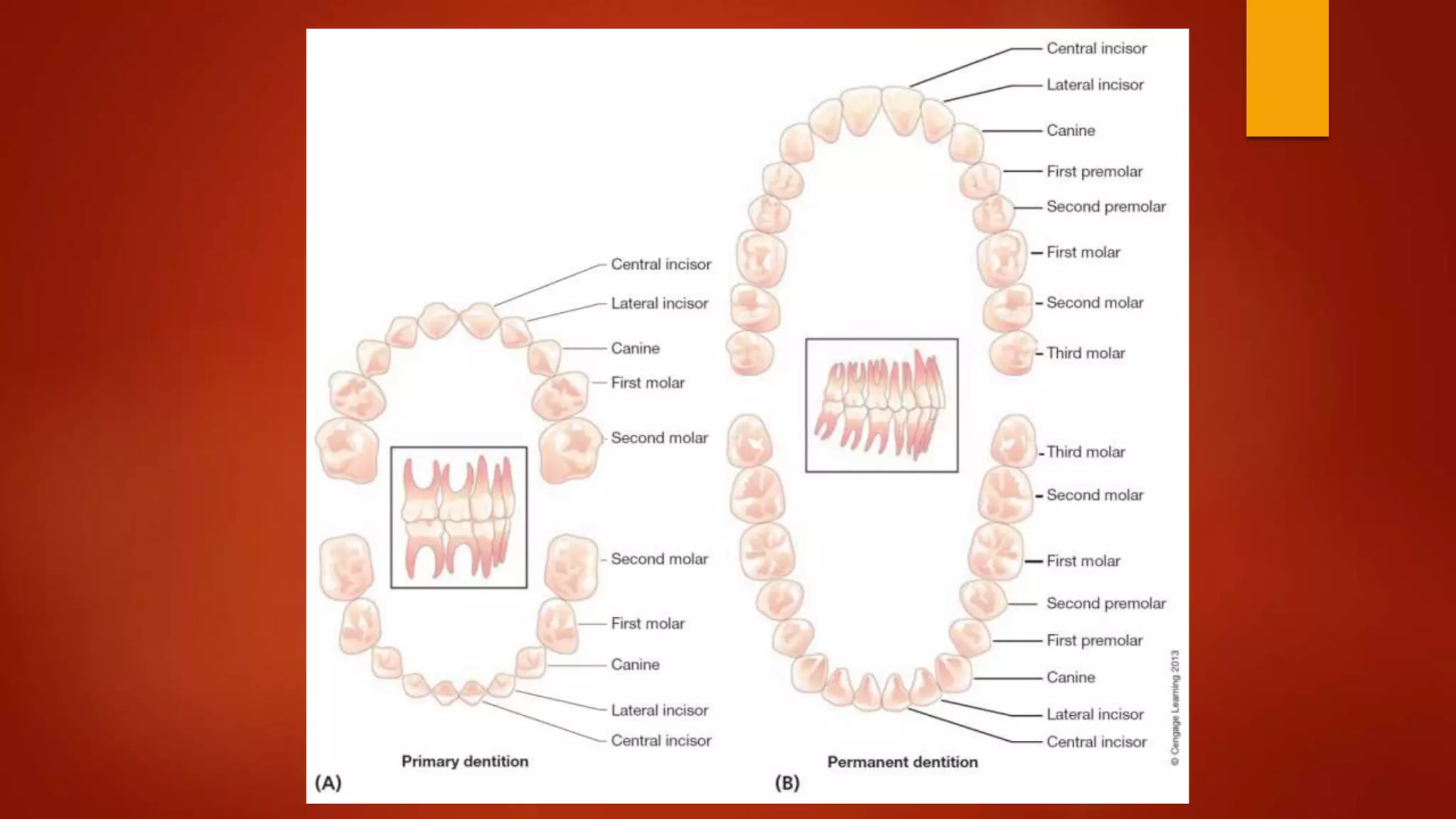
Primary (deciduous) and permanent
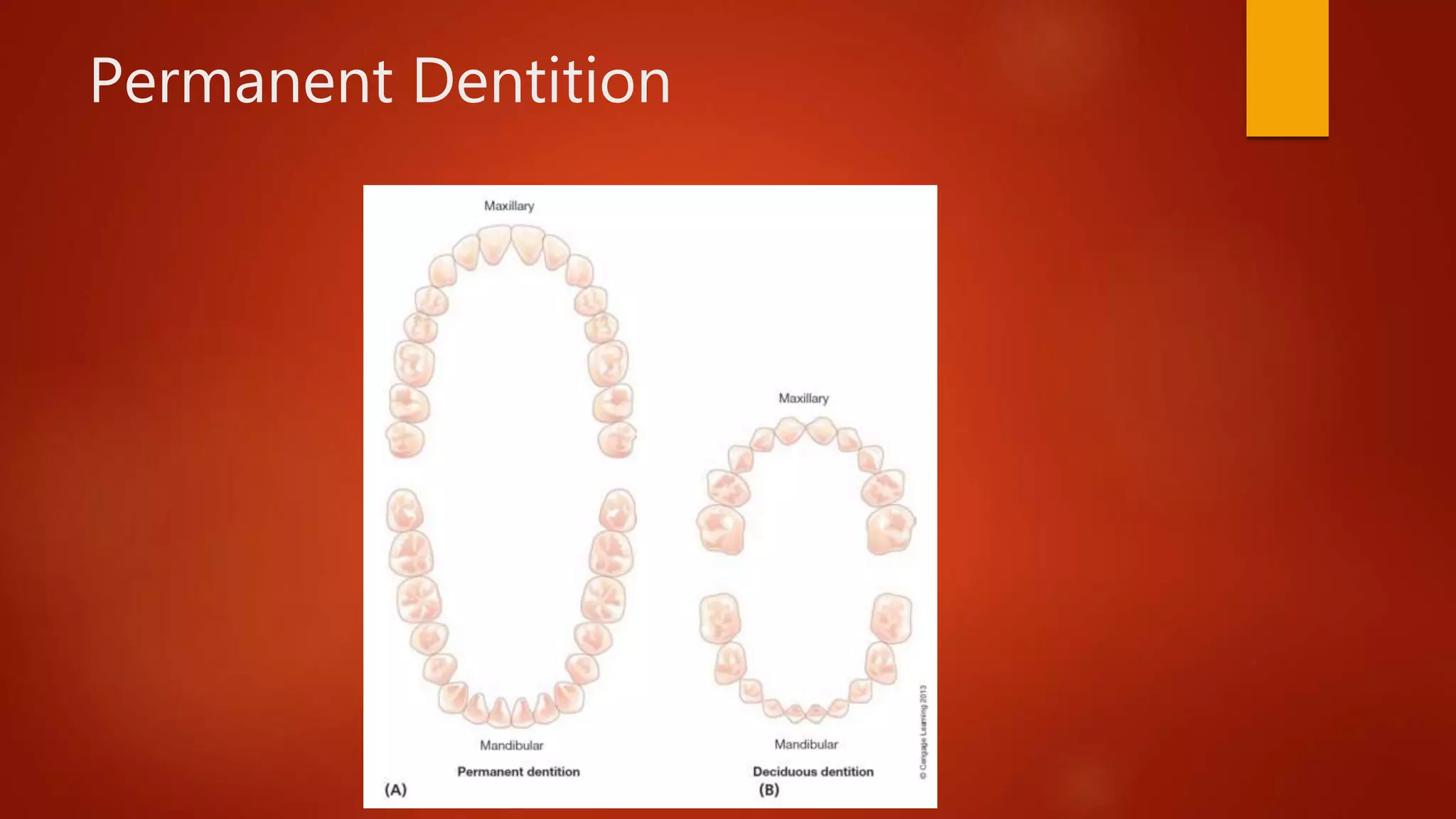
Primary or Deciduous Dentition
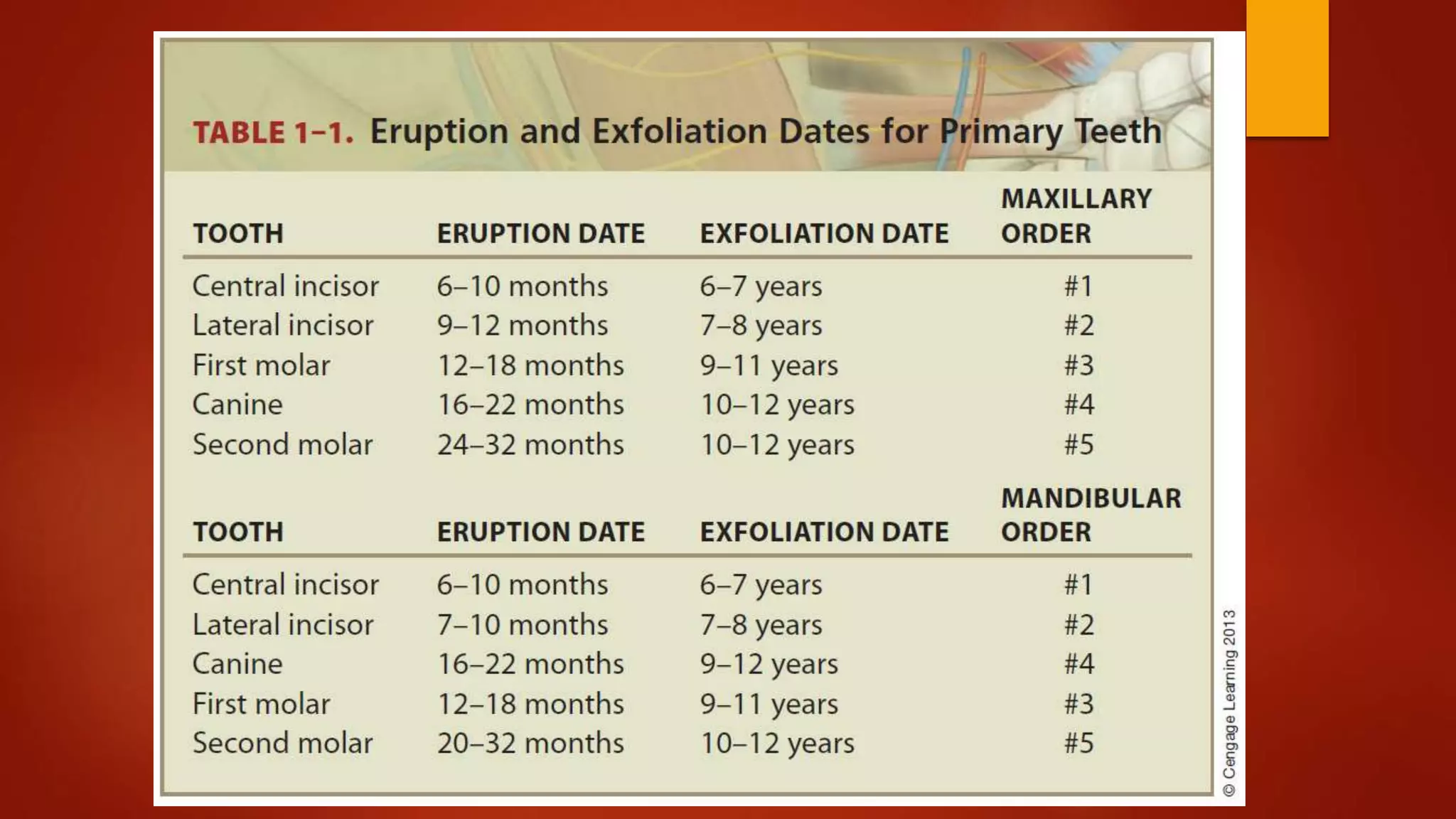
Begin to emerge into mouth about 6-8 months age
Teeth erupt following a developmental schedule
20 teeth
10 maxillary and 10 mandibular
Fully erupt by age 2½-3 years
Eventually replaced by permanent teeth
Permanent Dentition
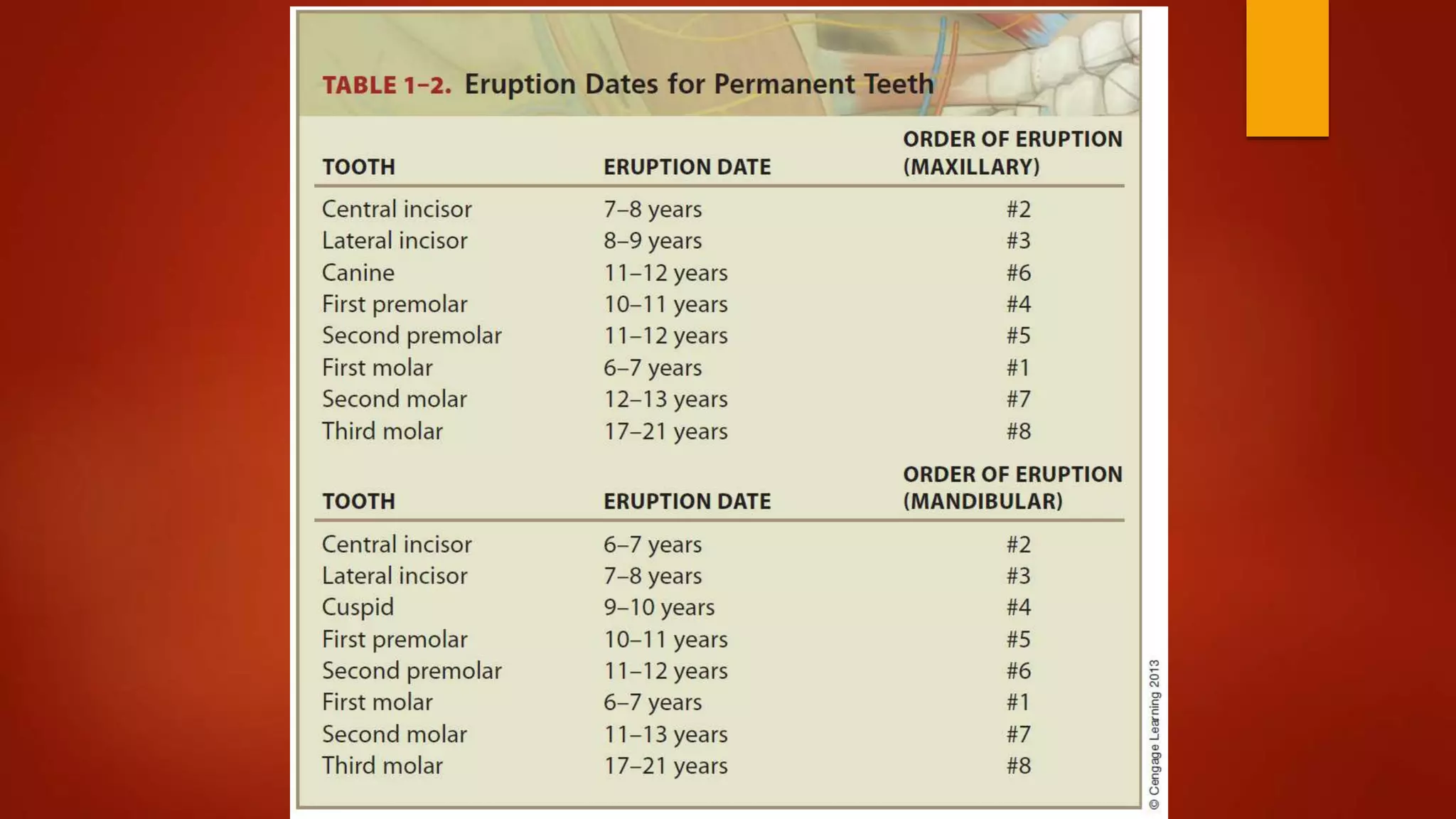
32 permanent teeth
16 maxillary and 16 mandibular
Mandibular first molar is the first permanent
tooth
Between ages 5 & 6
Erupts next to last primary molar
Permanent Dentition
Permanent Dentition
Between ages 5-12, mixed dentition is present
Both deciduous and permanent teeth in the mouth
together
Permanent teeth that replace the deciduous are
referred to as succedaneous
Permanent Teeth
Incisors are the four sharp-edged front teeth
Two central, two lateral
Incises/cuts food
Canines, aka cuspids, corner teeth with one pointed
cusp
Holds/tears food
Permanent Teeth
Premolars aka bicuspids, posterior teeth with two
cusps
Named by sequence from front to back in arch
Crushes/tears food
Molars are broad back teeth, several cusps
Named by sequence from front to back in arch
Chews/crushes/grinds food: mastication
The Arrangement of the Teeth
Anterior teeth
Front of the mouth, include incisors and canines
Posterior teeth
Back of the mouth, include premolars and molars
The Eruption Sequence
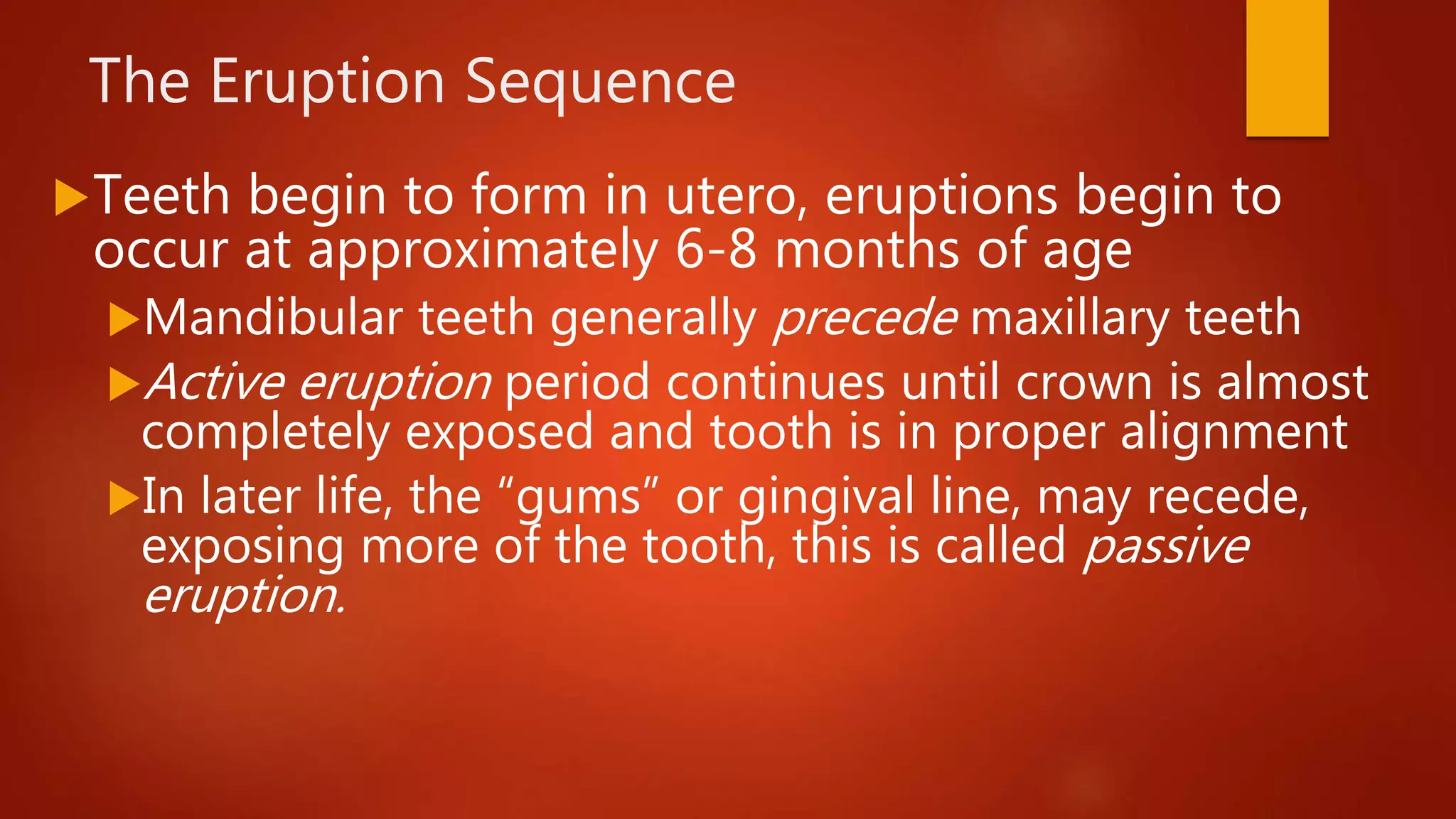
Teeth begin to form in utero, eruptions begin to
occur at approximately 6-8 months of age
Mandibular teeth generally precede maxillary teeth
Active eruption period continues until crown is almost
completely exposed and tooth is in proper alignment
In later life, the “gums” or gingival line, may recede,
exposing more of the tooth, this is called passive
eruption.
Eruption Sequence
 Eruption dates vary from person to person by a few
months
 By the age of 2.5-3 years old, all deciduous teeth have
erupted
 At about 6, the permanent teeth start to erupt
Which tooth?
 First molars are the first permanent tooth to erupt
Posterior to the deciduous second molar
Nonsuccedaneous
The Eruption Sequence
Tooth height can decrease throughout life due
to wearing away of biting and chewing surfaces
Wearing away is called attrition
Teeth grinding (bruxism) also causes attrition
Abrasion is caused by mechanical wear from
biting or vigorous brushing
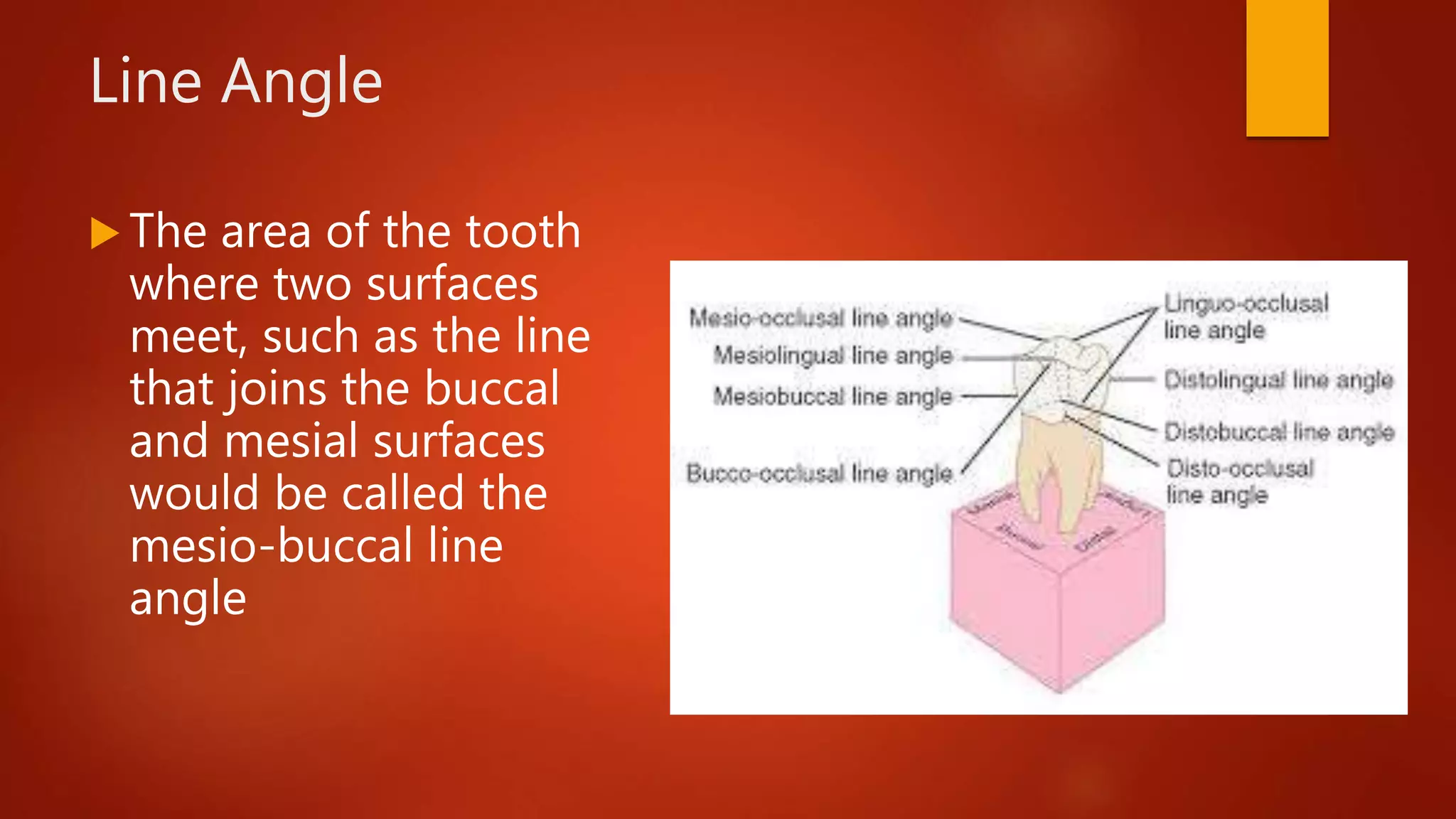
Line Angle
 The area of the tooth
where two surfaces
meet, such as the line
that joins the buccal
and mesial surfaces
would be called the
mesio-buccal line
angle
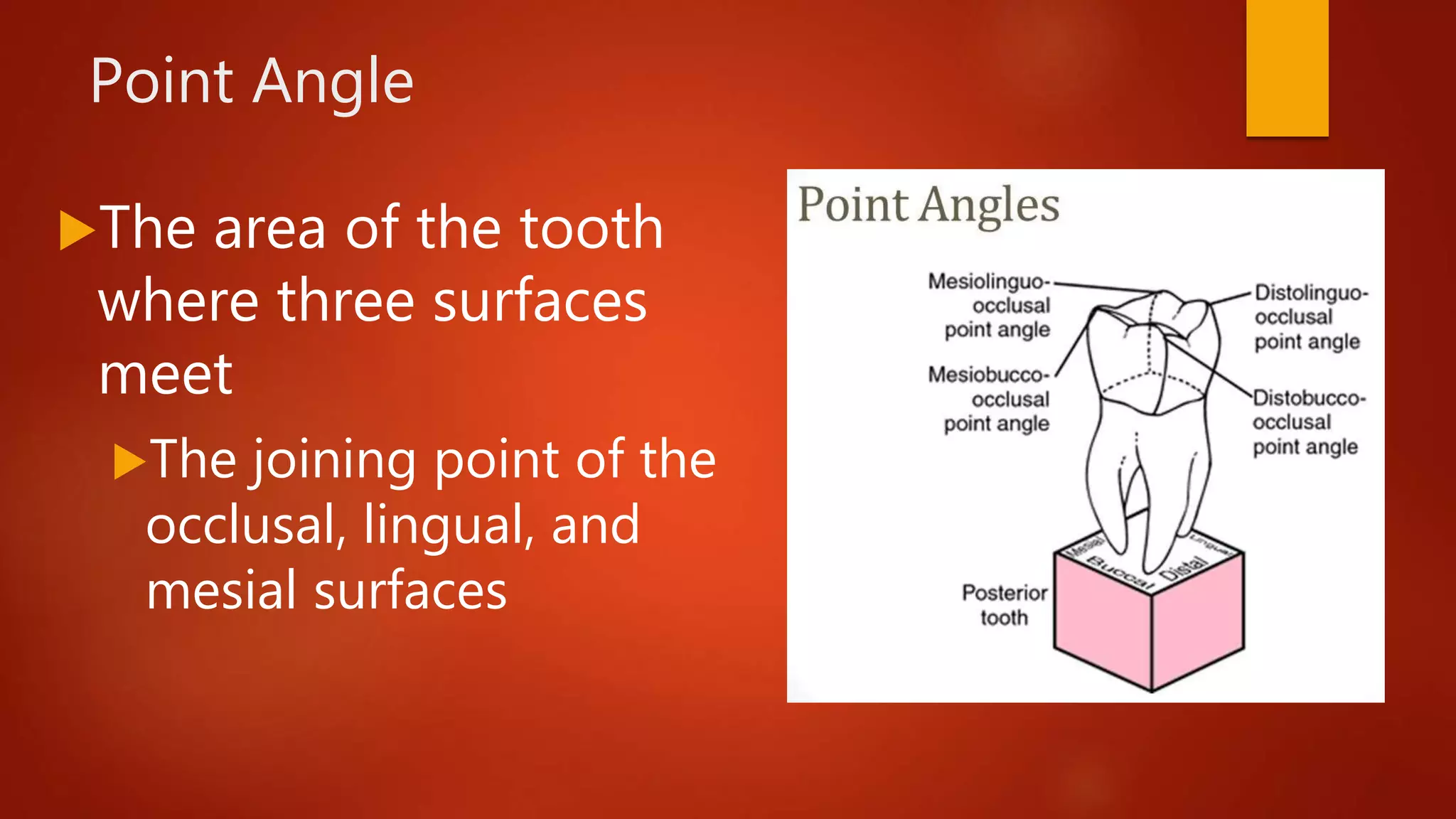
Point Angle
The area of the tooth
where three surfaces
meet
The joining point of the
occlusal, lingual, and
mesial surfaces
Oral Cavity Terminology
Divisions of the tooth
 The crown
 Portion of the tooth normally visible in the mouth
 Covered with enamel
 Teeth have different shaped crowns, each adapted to perform a specific function in reducing
food for digestion
 The cervix (neck)
 The crown joins the root at the Cementoenamel junction (CEJ)
 Junction between the anatomic crown and the anatomic root
 The root
 Located in the bone and not normally visible
 Covered with cementum
 Stabilize/support teeth when the pressure from mastication is exerted
Anatomic vs Clinical
 The anatomic crown is covered with enamel
 The anatomic root is covered with cementum
 After eruption is complete, only the anatomic crown is seen in the
mouth
 Later in life, as part of the aging process, the gingiva and bone may
recede, exposing a portion of the root.
 All of the tooth that is visible in the mouth, the crown AND the
exposed root together are referred to as the clinical crown
 The clinical crown extends from the biting surface of the tooth to the
gingival margin
Surfaces of the tooth
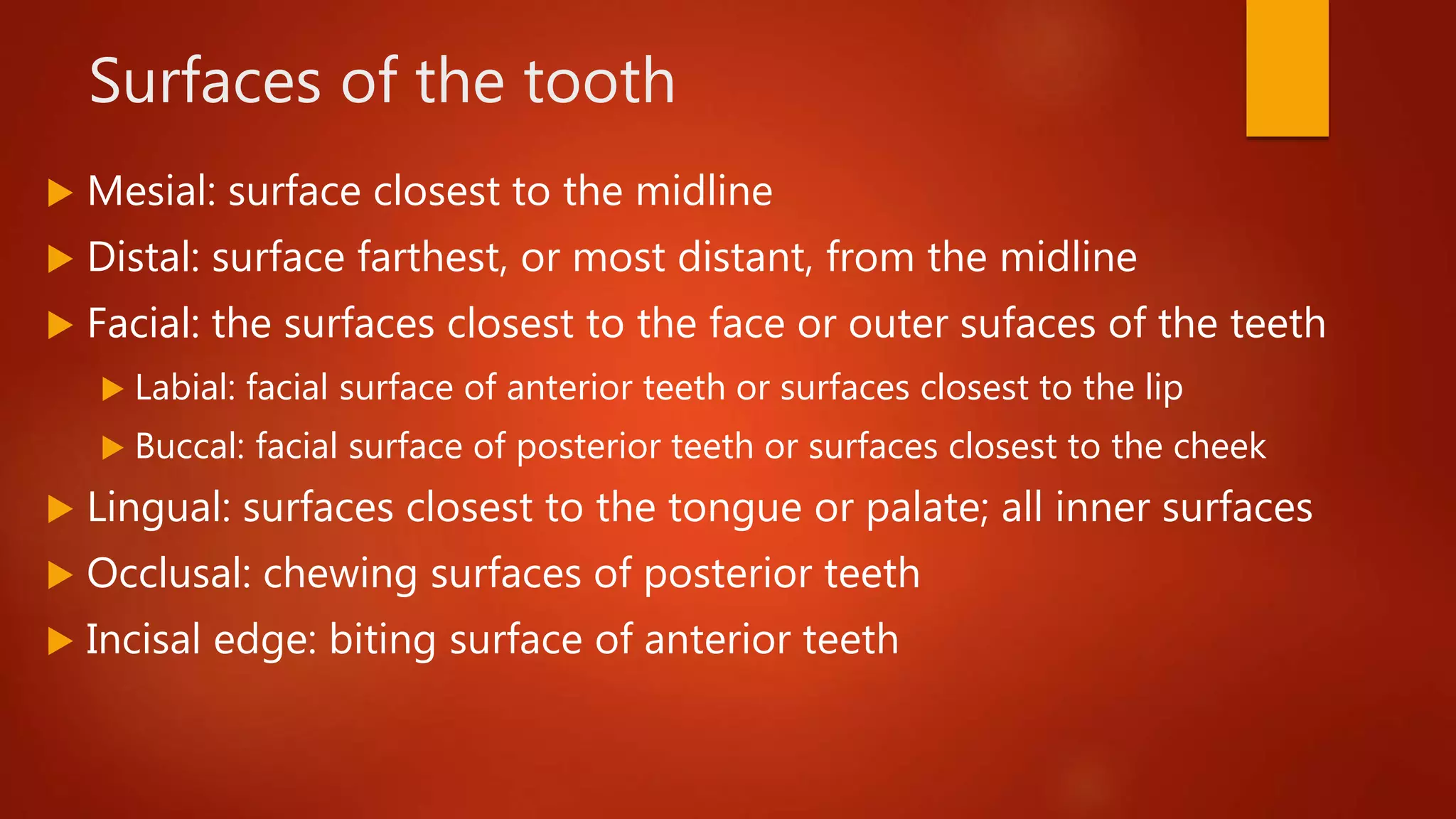
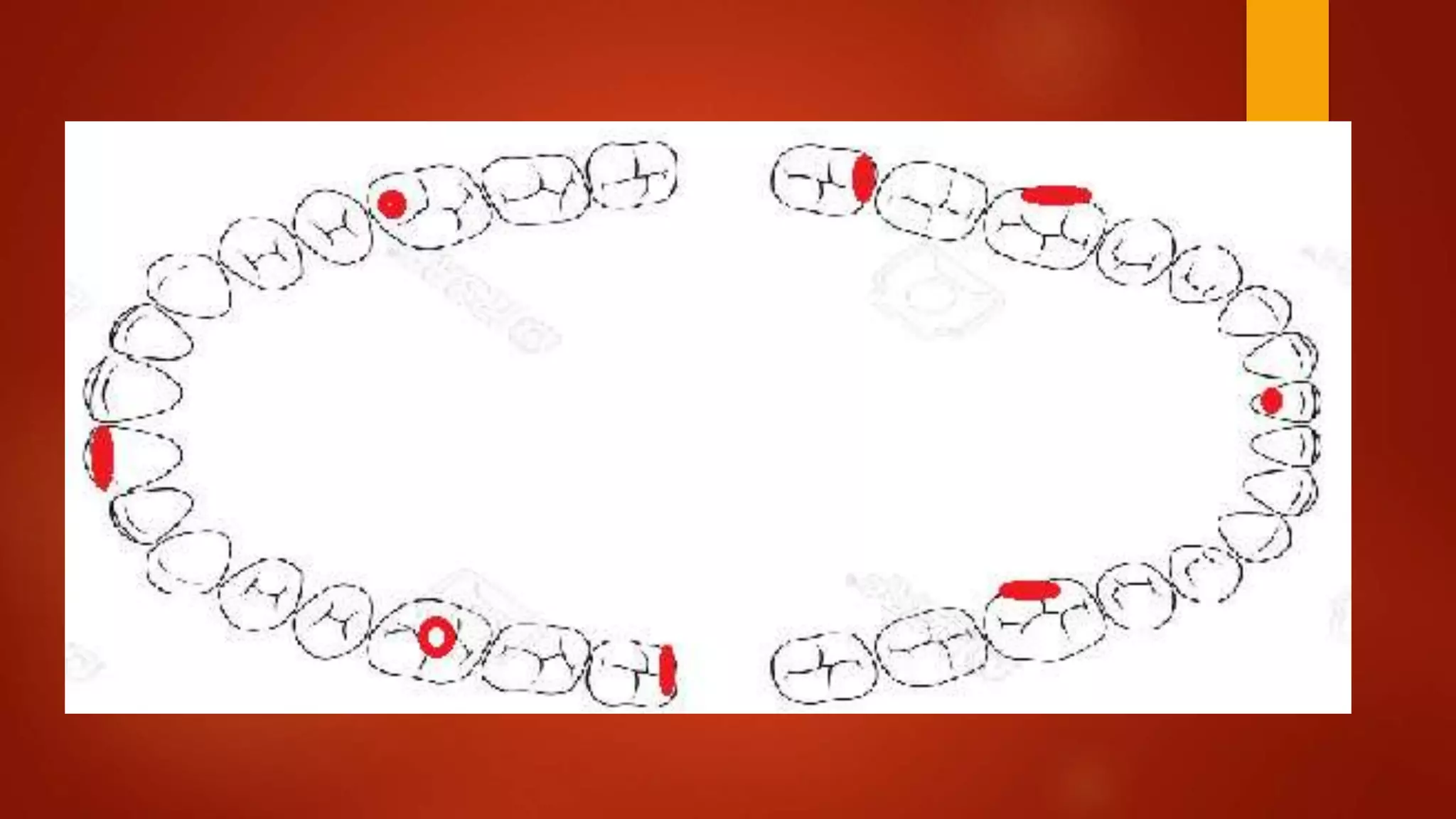
 Mesial: surface closest to the midline
 Distal: surface farthest, or most distant, from the midline
 Facial: the surfaces closest to the face or outer sufaces of the teeth
 Labial: facial surface of anterior teeth or surfaces closest to the lip
 Buccal: facial surface of posterior teeth or surfaces closest to the cheek
 Lingual: surfaces closest to the tongue or palate; all inner surfaces
 Occlusal: chewing surfaces of posterior teeth
 Incisal edge: biting surface of anterior teeth
Terms relating to tooth surfaces
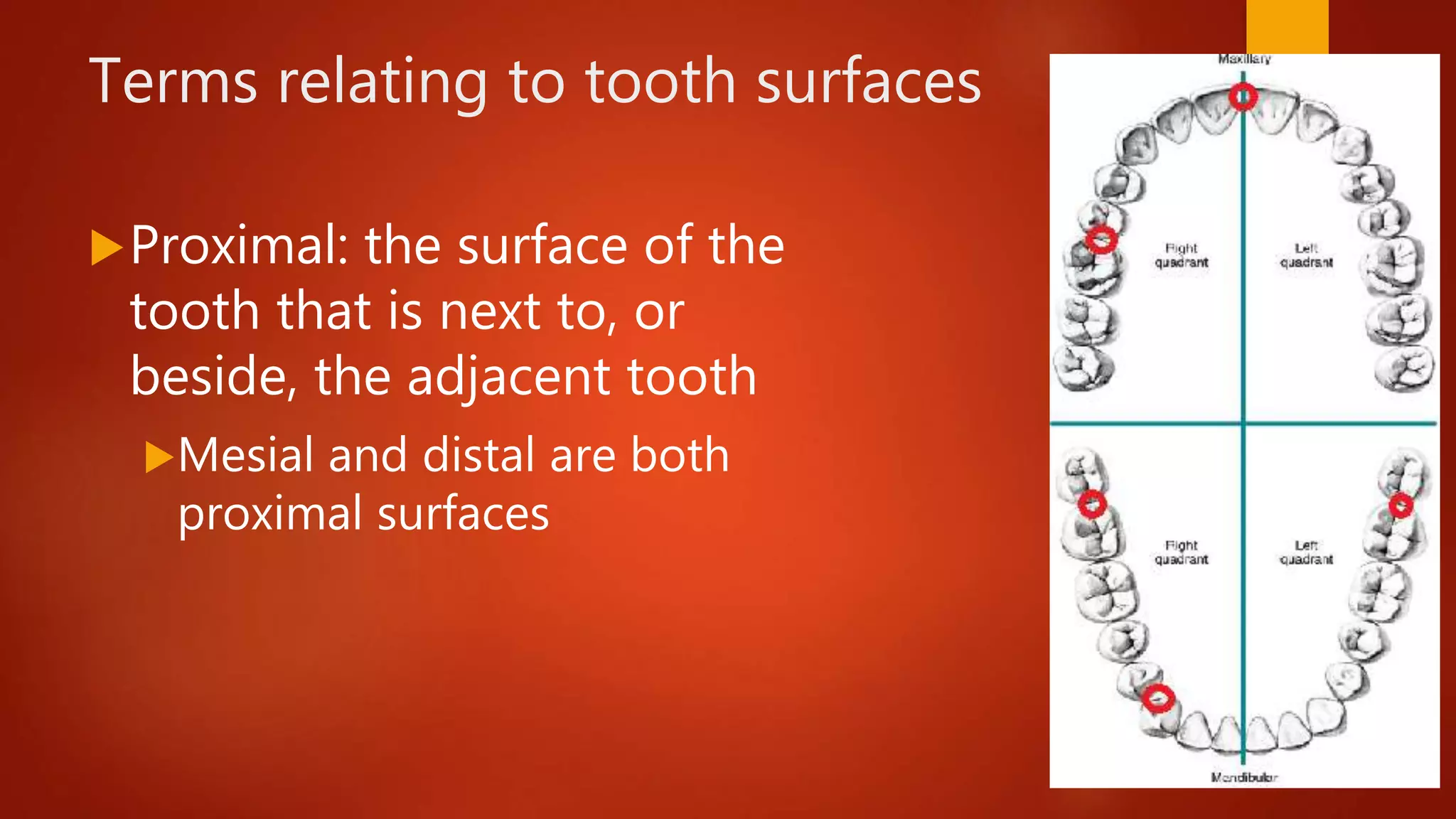
Proximal: the surface of the
tooth that is next to, or
beside, the adjacent tooth
Mesial and distal are both
proximal surfaces
Interproximal
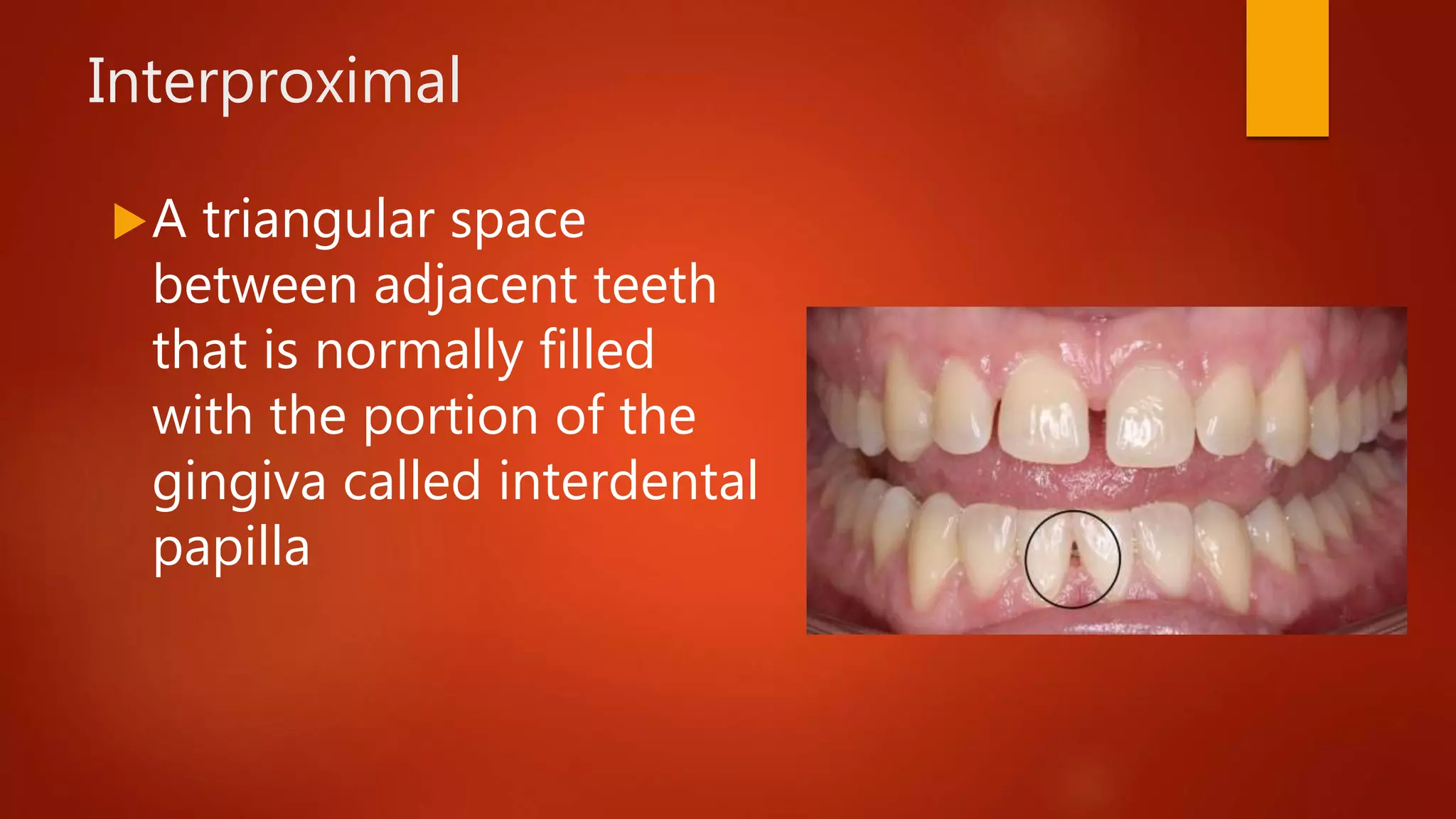
A triangular space
between adjacent teeth
that is normally filled
with the portion of the
gingiva called interdental
papilla
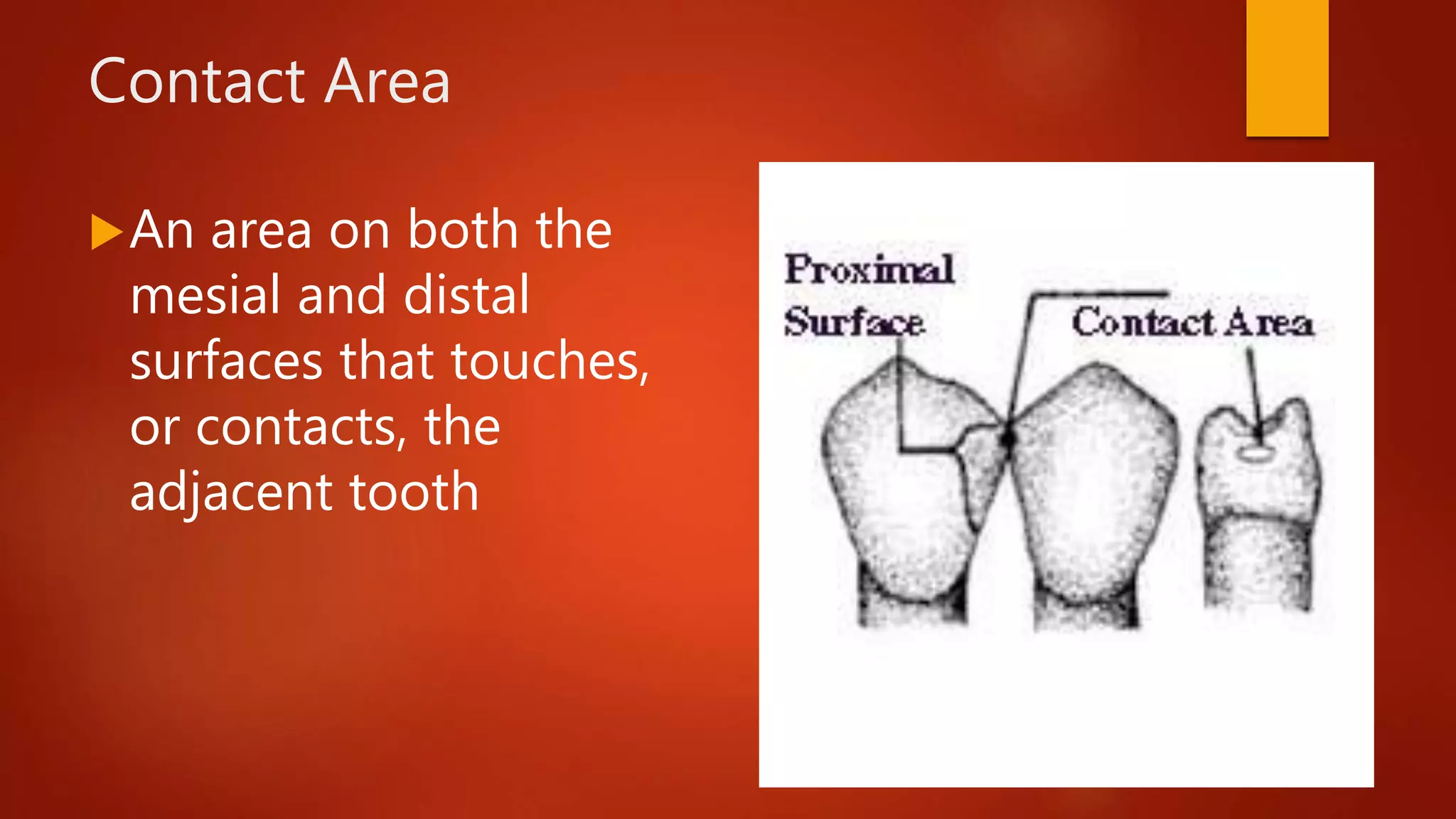
Contact Area
An area on both the
mesial and distal
surfaces that touches,
or contacts, the
adjacent tooth
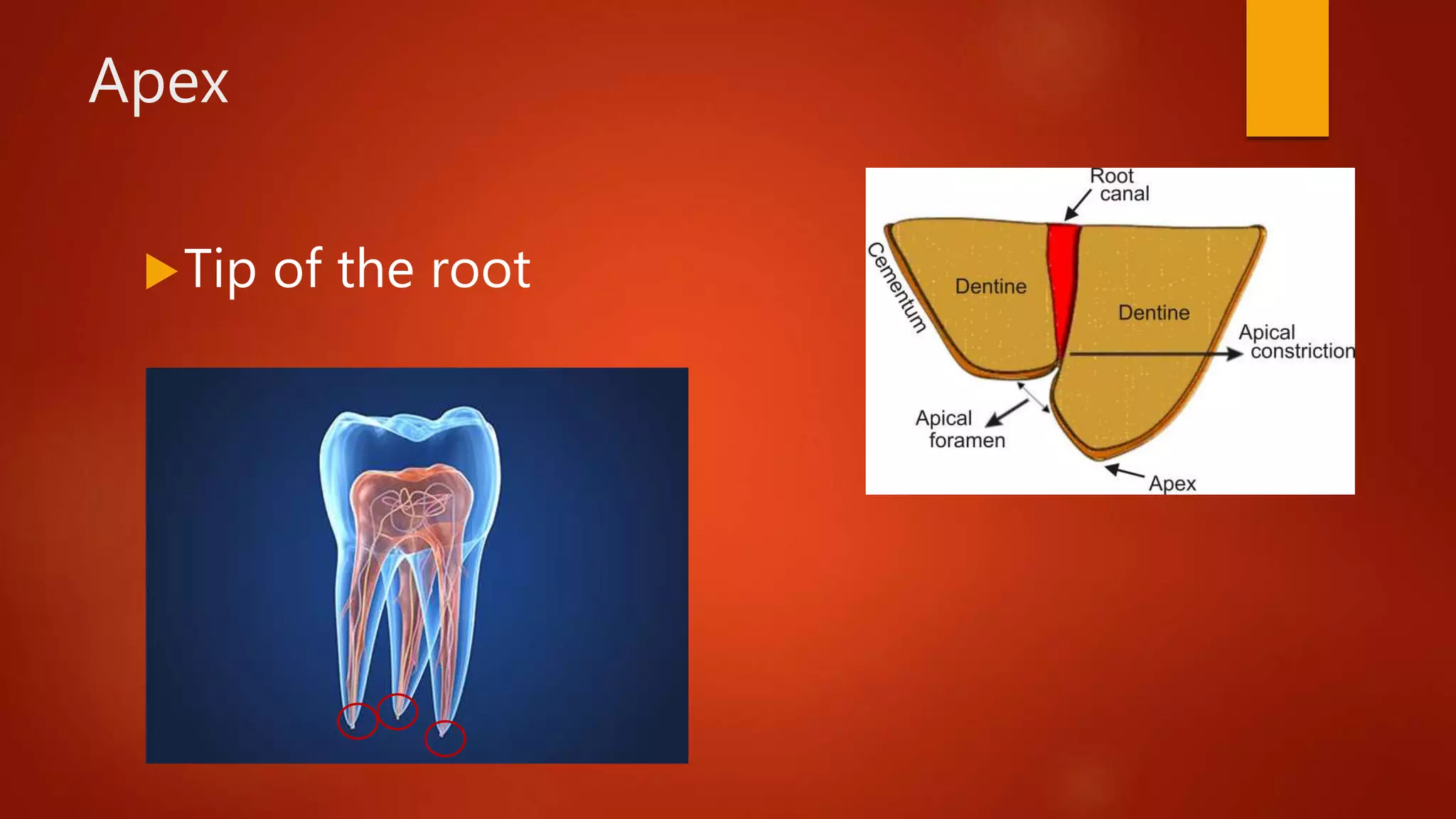
Apex
Tip of the root
Review
 https://www.animated-teeth.com/questions-answers/kids-deciduous-
tooth-identification/baby-teeth-types.html
 https://youtu.be/bEhsUtiHVXI
 https://www.purposegames.com/game/tooth-surfaces-game

The dentition,eruption sequence,functions ,line point angles,oral cavity terminology

  • 1.
    The Dentition Eruption Sequence Functions Line/PointAngles Oral Cavity Terminology CHAPTER 1, 2
  • 2.
  • 3.
    The Dentition Teeth arrangedto form two arches, named by the bone which composes it Maxilla forms the maxillary or upper arch Mandible forms mandibular or lower arch Two arches make up one dentition or set of teeth Two dentitions over a lifespan Primary (deciduous) and permanent
  • 4.
    Primary or DeciduousDentition Begin to emerge into mouth about 6-8 months age Teeth erupt following a developmental schedule 20 teeth 10 maxillary and 10 mandibular Fully erupt by age 2½-3 years Eventually replaced by permanent teeth
  • 5.
    Permanent Dentition 32 permanentteeth 16 maxillary and 16 mandibular Mandibular first molar is the first permanent tooth Between ages 5 & 6 Erupts next to last primary molar
  • 6.
  • 7.
    Permanent Dentition Between ages5-12, mixed dentition is present Both deciduous and permanent teeth in the mouth together Permanent teeth that replace the deciduous are referred to as succedaneous
  • 8.
    Permanent Teeth Incisors arethe four sharp-edged front teeth Two central, two lateral Incises/cuts food Canines, aka cuspids, corner teeth with one pointed cusp Holds/tears food
  • 9.
    Permanent Teeth Premolars akabicuspids, posterior teeth with two cusps Named by sequence from front to back in arch Crushes/tears food Molars are broad back teeth, several cusps Named by sequence from front to back in arch Chews/crushes/grinds food: mastication
  • 10.
    The Arrangement ofthe Teeth Anterior teeth Front of the mouth, include incisors and canines Posterior teeth Back of the mouth, include premolars and molars
  • 11.
    The Eruption Sequence Teethbegin to form in utero, eruptions begin to occur at approximately 6-8 months of age Mandibular teeth generally precede maxillary teeth Active eruption period continues until crown is almost completely exposed and tooth is in proper alignment In later life, the “gums” or gingival line, may recede, exposing more of the tooth, this is called passive eruption.
  • 14.
    Eruption Sequence  Eruptiondates vary from person to person by a few months  By the age of 2.5-3 years old, all deciduous teeth have erupted  At about 6, the permanent teeth start to erupt Which tooth?  First molars are the first permanent tooth to erupt Posterior to the deciduous second molar Nonsuccedaneous
  • 15.
    The Eruption Sequence Toothheight can decrease throughout life due to wearing away of biting and chewing surfaces Wearing away is called attrition Teeth grinding (bruxism) also causes attrition Abrasion is caused by mechanical wear from biting or vigorous brushing
  • 17.
    Line Angle  Thearea of the tooth where two surfaces meet, such as the line that joins the buccal and mesial surfaces would be called the mesio-buccal line angle
  • 18.
    Point Angle The areaof the tooth where three surfaces meet The joining point of the occlusal, lingual, and mesial surfaces
  • 19.
  • 20.
    Divisions of thetooth  The crown  Portion of the tooth normally visible in the mouth  Covered with enamel  Teeth have different shaped crowns, each adapted to perform a specific function in reducing food for digestion  The cervix (neck)  The crown joins the root at the Cementoenamel junction (CEJ)  Junction between the anatomic crown and the anatomic root  The root  Located in the bone and not normally visible  Covered with cementum  Stabilize/support teeth when the pressure from mastication is exerted
  • 21.
    Anatomic vs Clinical The anatomic crown is covered with enamel  The anatomic root is covered with cementum  After eruption is complete, only the anatomic crown is seen in the mouth  Later in life, as part of the aging process, the gingiva and bone may recede, exposing a portion of the root.  All of the tooth that is visible in the mouth, the crown AND the exposed root together are referred to as the clinical crown  The clinical crown extends from the biting surface of the tooth to the gingival margin
  • 22.
    Surfaces of thetooth  Mesial: surface closest to the midline  Distal: surface farthest, or most distant, from the midline  Facial: the surfaces closest to the face or outer sufaces of the teeth  Labial: facial surface of anterior teeth or surfaces closest to the lip  Buccal: facial surface of posterior teeth or surfaces closest to the cheek  Lingual: surfaces closest to the tongue or palate; all inner surfaces  Occlusal: chewing surfaces of posterior teeth  Incisal edge: biting surface of anterior teeth
  • 24.
    Terms relating totooth surfaces Proximal: the surface of the tooth that is next to, or beside, the adjacent tooth Mesial and distal are both proximal surfaces
  • 25.
    Interproximal A triangular space betweenadjacent teeth that is normally filled with the portion of the gingiva called interdental papilla
  • 26.
    Contact Area An areaon both the mesial and distal surfaces that touches, or contacts, the adjacent tooth
  • 27.
  • 28.