

SINGLE-GROUP DESIGN 
• This design involves a single treatment with two 
or more levels. 
• A design in which a group of subjects are 
administered a treatment and then measured. ( 
or observed) 
• It does NOT have an experimental group or 
control group.
REQUIREMENTS OF SINGLE-SUBJECT DESIGNS 
• Continuous assessment 
• Baseline assessment 
• Variability in data:
PHASES WITHIN SINGLE-SUBJECT DESIGN 
• Baseline 
• Intervention 
• Reversal
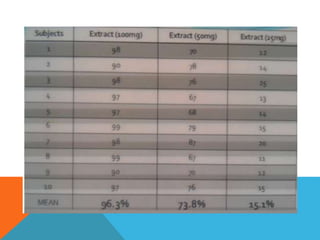
EXAMPLE: 
Problem: 
• Effect of leaf extract A to Bacterium A 
• Sampling Unit: Leaf extract 
• Subjects: Bacterium A grown on petri plates.
ADVANTAGES 
• Ease of implementation 
• Illustrates dramatic changes 
• Self-Controlling 
• Emphasizes recognizable clinical change 
• Flexible under a variety of conditions 
• Provides detailed description of the process 
necessary to effect significant change.
DISADVANTAGES 
• Lack of controls 
• Limited Application
LIMITATIONS 
• Carry-over effects 
• Order effects 
• Irreversibility 
• Ethical problems
DESIGN TYPES 
 AB Design 
Withdrawal Design- ABA 
 Multiple Baseline Design 
 Changing Criterion Design 
 Multiple Probe Design 
 Multi-Treatment Design 
 Alternating Treatments Design
1.A design in which a group of subjects 
are administered a treatment and then 
measured. 
2-4. Requirements of single subject 
designs 
5. Phases within single-subject design 
6-8. Advantages 
9-10.. Give the types of design.
QUIZ!!!!!!!!!!!!!!! 
!!

Single group design

  • 2.
    SINGLE-GROUP DESIGN •This design involves a single treatment with two or more levels. • A design in which a group of subjects are administered a treatment and then measured. ( or observed) • It does NOT have an experimental group or control group.
  • 3.
    REQUIREMENTS OF SINGLE-SUBJECTDESIGNS • Continuous assessment • Baseline assessment • Variability in data:
  • 4.
    PHASES WITHIN SINGLE-SUBJECTDESIGN • Baseline • Intervention • Reversal
  • 5.
    EXAMPLE: Problem: •Effect of leaf extract A to Bacterium A • Sampling Unit: Leaf extract • Subjects: Bacterium A grown on petri plates.
  • 7.
    ADVANTAGES • Easeof implementation • Illustrates dramatic changes • Self-Controlling • Emphasizes recognizable clinical change • Flexible under a variety of conditions • Provides detailed description of the process necessary to effect significant change.
  • 8.
    DISADVANTAGES • Lackof controls • Limited Application
  • 9.
    LIMITATIONS • Carry-overeffects • Order effects • Irreversibility • Ethical problems
  • 10.
    DESIGN TYPES AB Design Withdrawal Design- ABA  Multiple Baseline Design  Changing Criterion Design  Multiple Probe Design  Multi-Treatment Design  Alternating Treatments Design
  • 11.
    1.A design inwhich a group of subjects are administered a treatment and then measured. 2-4. Requirements of single subject designs 5. Phases within single-subject design 6-8. Advantages 9-10.. Give the types of design.
  • 12.