Pre-experimental Research
Designs & It’s Uses
Sani Prince Sarkar
Research Scholar
Department of Education
Aligarh Muslim University, Aligarh
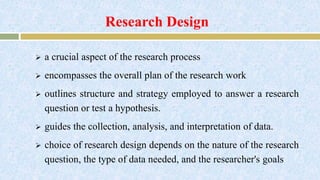
Research Design
 a crucial aspect of the research process
 encompasses the overall plan of the research work
 outlines structure and strategy employed to answer a research
question or test a hypothesis.
 guides the collection, analysis, and interpretation of data.
 choice of research design depends on the nature of the research
question, the type of data needed, and the researcher's goals
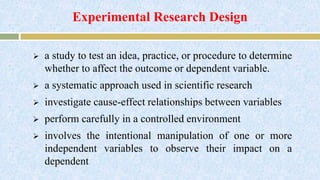
Experimental Research Design
 a study to test an idea, practice, or procedure to determine
whether to affect the outcome or dependent variable.
 a systematic approach used in scientific research
 investigate cause-effect relationships between variables
 perform carefully in a controlled environment
 involves the intentional manipulation of one or more
independent variables to observe their impact on a
dependent
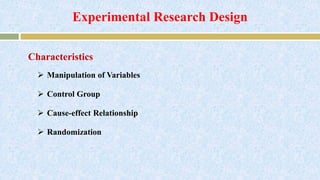
Experimental Research Design
Characteristics
 Manipulation of Variables
 Control Group
 Cause-effect Relationship
 Randomization
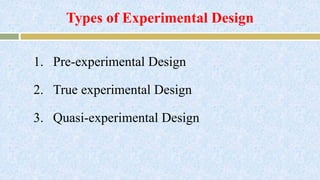
Types of Experimental Design
1. Pre-experimental Design
2. True experimental Design
3. Quasi-experimental Design
Pre-experimental Design
 simplest form of research design that follows the basic
steps in the experiment
 does not have a comparison group
 considered as very weak in terms of control
 less control over the experiment
 includes one or more than one experimental group to be
observed against certain treatments.
Types of Pre-experimental Design
There are three types of Pre-experimental designs.
1. One Shot Case Study Design
2. One Group Pre-test Post-test Design
3. Static Group Comparison Design
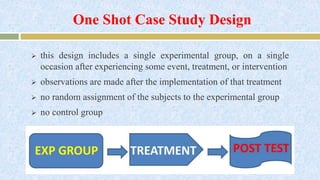
One Shot Case Study Design
 this design includes a single experimental group, on a single
occasion after experiencing some event, treatment, or intervention
 observations are made after the implementation of that treatment
 no random assignment of the subjects to the experimental group
 no control group
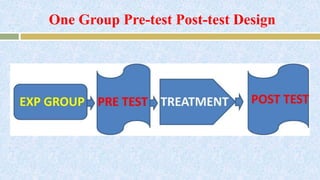
One Group Pre-test Post-test Design
 the simplest type of pre-experimental design
 only the experimental group is selected as the study subjects
 a pre-test of the dependent variable is made before the
implementation of the treatment in the selected group
 after treatment, a post-test is carried out to assess the effect of
treatment on the group
 this design measures the effect of intervention before (pre-test)
and after the experiment (post-test)
 there is no control group in this design
One Group Pre-test Post-test Design
Static Group Comparison Design
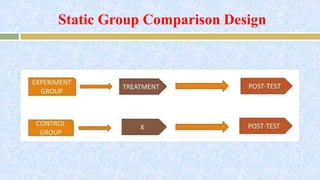
 two groups: Experimental Group and Control Group
 no random selection of the participants
 the researcher assumes the two groups are equivalent at the start
 no pre-test; dependent variable measured after treatment
 post-test compares the effect of the independent or treatment variable
 better performance in the experimental group indicates the
independent variable's responsibility for change in the dependent
variable
Static Group Comparison Design
Uses of Pre-experimental Design
This design is often the first step in the research process and can provide
valuable insights that inform future studies.
 Exploratory Studies: exploring a new area of study or phenomenon
 Pilot Studies: to test the feasibility before conducting larger, more
rigorous experiments
 Preliminary Investigations: investigations between variables to
provide initial evidence for the presence or absence of relationships
 One-Shot Case Study: provide preliminary evidence of the
potential effects of an intervention
Contd…
 One-Group Pretest-Posttest Design: examine changes within the
group over time
 Time-Series Designs: provide insights into how outcomes change
over time by measuring the dependent variable at multiple time
points before and after the introduction of an intervention
 Feasibility Studies: assess whether a larger-scale experimental
study is practical and achievable given the available resources and
constraints
 Educational Research: evaluate the effectiveness of teaching
methods, interventions, or programs in real-world settings
Pre-experimental Research Design and It's Uses

Pre-experimental Research Design and It's Uses

  • 1.
    Pre-experimental Research Designs &It’s Uses Sani Prince Sarkar Research Scholar Department of Education Aligarh Muslim University, Aligarh
  • 2.
    Research Design  acrucial aspect of the research process  encompasses the overall plan of the research work  outlines structure and strategy employed to answer a research question or test a hypothesis.  guides the collection, analysis, and interpretation of data.  choice of research design depends on the nature of the research question, the type of data needed, and the researcher's goals
  • 3.
    Experimental Research Design a study to test an idea, practice, or procedure to determine whether to affect the outcome or dependent variable.  a systematic approach used in scientific research  investigate cause-effect relationships between variables  perform carefully in a controlled environment  involves the intentional manipulation of one or more independent variables to observe their impact on a dependent
  • 4.
    Experimental Research Design Characteristics Manipulation of Variables  Control Group  Cause-effect Relationship  Randomization
  • 5.
    Types of ExperimentalDesign 1. Pre-experimental Design 2. True experimental Design 3. Quasi-experimental Design
  • 6.
    Pre-experimental Design  simplestform of research design that follows the basic steps in the experiment  does not have a comparison group  considered as very weak in terms of control  less control over the experiment  includes one or more than one experimental group to be observed against certain treatments.
  • 7.
    Types of Pre-experimentalDesign There are three types of Pre-experimental designs. 1. One Shot Case Study Design 2. One Group Pre-test Post-test Design 3. Static Group Comparison Design
  • 8.
    One Shot CaseStudy Design  this design includes a single experimental group, on a single occasion after experiencing some event, treatment, or intervention  observations are made after the implementation of that treatment  no random assignment of the subjects to the experimental group  no control group
  • 9.
    One Group Pre-testPost-test Design  the simplest type of pre-experimental design  only the experimental group is selected as the study subjects  a pre-test of the dependent variable is made before the implementation of the treatment in the selected group  after treatment, a post-test is carried out to assess the effect of treatment on the group  this design measures the effect of intervention before (pre-test) and after the experiment (post-test)  there is no control group in this design
  • 10.
    One Group Pre-testPost-test Design
  • 11.
    Static Group ComparisonDesign  two groups: Experimental Group and Control Group  no random selection of the participants  the researcher assumes the two groups are equivalent at the start  no pre-test; dependent variable measured after treatment  post-test compares the effect of the independent or treatment variable  better performance in the experimental group indicates the independent variable's responsibility for change in the dependent variable
  • 12.
  • 13.
    Uses of Pre-experimentalDesign This design is often the first step in the research process and can provide valuable insights that inform future studies.  Exploratory Studies: exploring a new area of study or phenomenon  Pilot Studies: to test the feasibility before conducting larger, more rigorous experiments  Preliminary Investigations: investigations between variables to provide initial evidence for the presence or absence of relationships  One-Shot Case Study: provide preliminary evidence of the potential effects of an intervention
  • 14.
    Contd…  One-Group Pretest-PosttestDesign: examine changes within the group over time  Time-Series Designs: provide insights into how outcomes change over time by measuring the dependent variable at multiple time points before and after the introduction of an intervention  Feasibility Studies: assess whether a larger-scale experimental study is practical and achievable given the available resources and constraints  Educational Research: evaluate the effectiveness of teaching methods, interventions, or programs in real-world settings