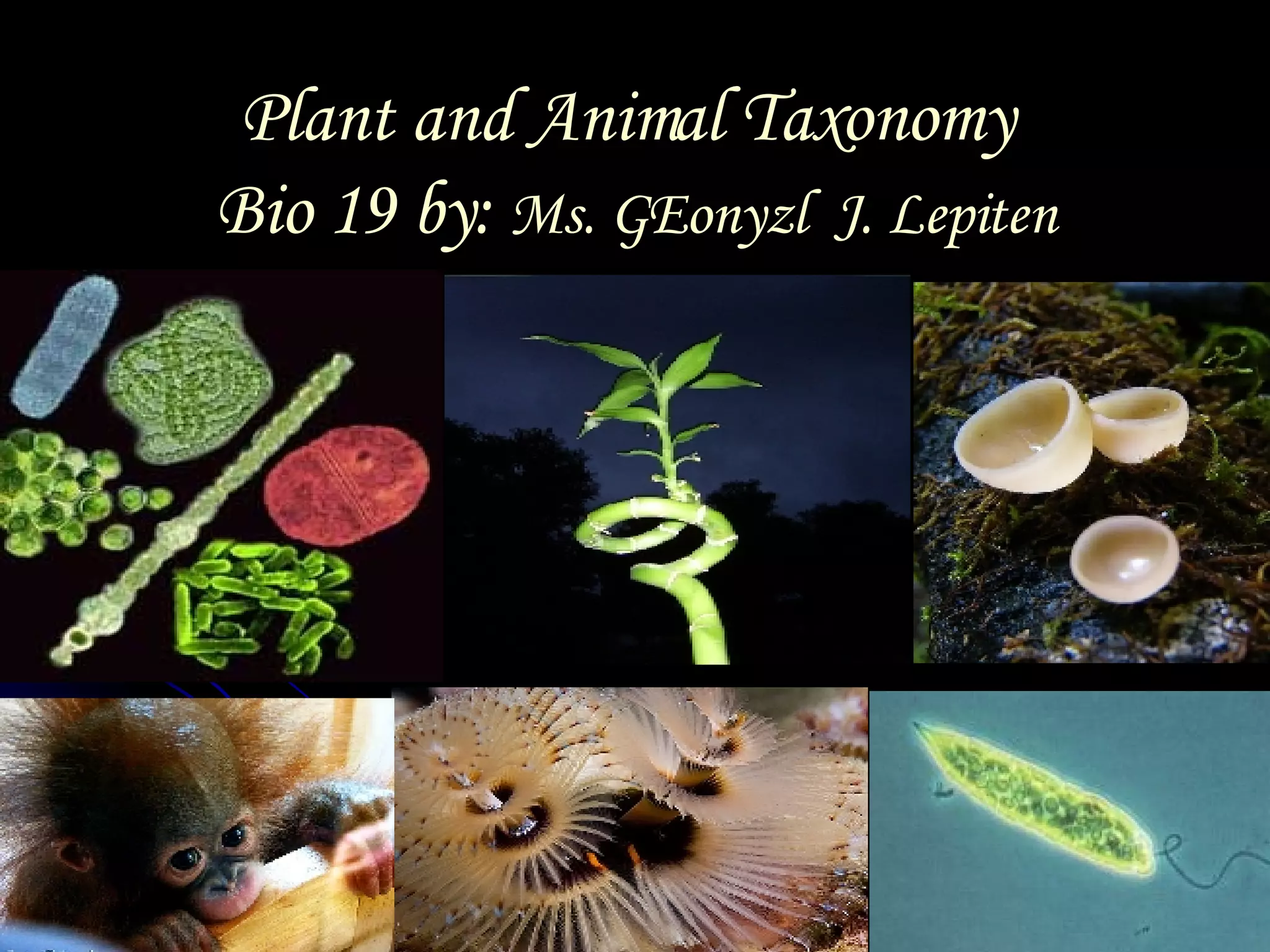
Plant and Animal Taxonomy  Bio 19 by:  Ms. GEonyzl  J. Lepiten
Objectives : To define  TAXONOMY To trace the history of  taxonomy. To know the  people who pioneered  taxonomy   To discuss the nature of  taxonomy Importance of  taxonomy. Relevance of  taxonomy  to you.
What is taxonomy to you? TAXONOMY………… * is a practice and science of  classification . * from two  Greek  words:  - “taxis ” ,  'order' +  νόμος ,  -“nomos ” ,  'law' or 'science'.  *  taxonomic units  known as: -  taxa  (singular  taxon ),  * a part of systematics
It is a science that  classify  organisms into  groups and its natural relationships Three main Schools of  Taxonomy : Phenetic taxonomy  –  classify organisms based on overall form and  structure or genetic similarity -  also called   NUMERICAL TAXONOMY Cladistics taxonomy  -  classify organisms based on branching  points. -  not based on  origin but on the shared characteristics -  also called   PHYLOGENETIC TAXONOMY
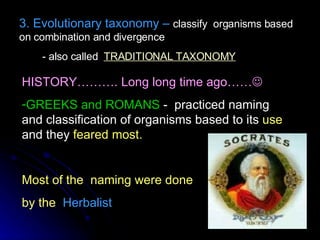
3. Evolutionary taxonomy –  classify  organisms based on combination and divergence - also called  TRADITIONAL TAXONOMY   HISTORY………. Long long time ago……  GREEKS and ROMANS  -  practiced naming and classification of organisms based to its  use  and they  feared most. Most of the  naming were done by the  Herbalist
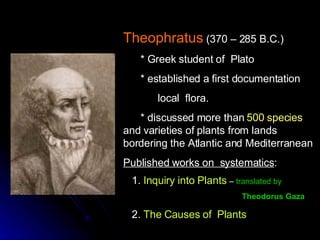
Theophratus   (370 – 285 B.C.) * Greek student of  Plato * established a first documentation local  flora. * discussed more than  500 species  and varieties of plants from lands bordering the Atlantic and Mediterranean  Published works on  systematics : 1.  Inquiry into Plants   –  translated by  Theodorus Gaza   2.  The Causes of  Plants
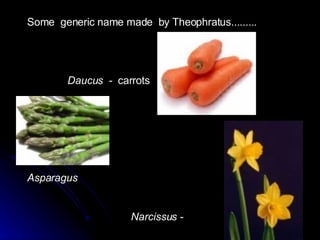
Some  generic name made  by Theophratus......... Daucus  -  carrots Asparagus  Narcissus -
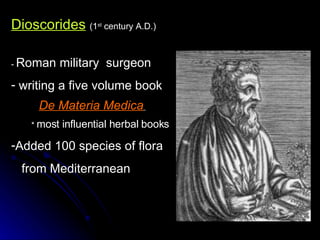
Dioscorides   (1 st  century A.D.) -  Roman military  surgeon writing a five volume book  De Materia Medica   *  most influential herbal books   Added 100 species of flora from Mediterranean
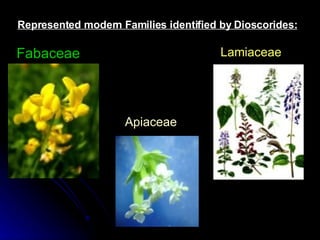
Represented modern Families identified by Dioscorides: Fabaceae Lamiaceae Apiaceae
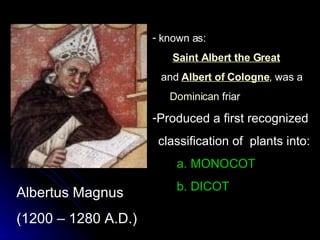
Albertus Magnus (1200 – 1280 A.D.) known as: Saint Albert the Great   and  Albert of Cologne , was a  Dominican  friar  Produced a first recognized classification of  plants into: a. MONOCOT b. DICOT
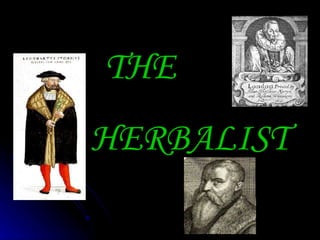
THE  HERBALIST
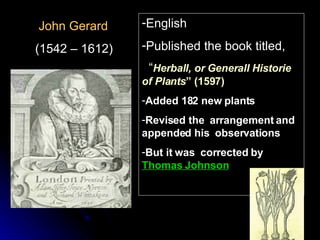
John Gerard (1542 – 1612) English Published the book titled, “ Herball, or Generall Historie of Plants ” (1597) Added 182 new plants Revised the  arrangement and appended his  observations But it was  corrected by  Thomas Johnson
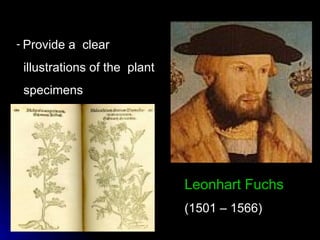
Leonhart Fuchs (1501 – 1566) Provide a  clear  illustrations of the  plant  specimens
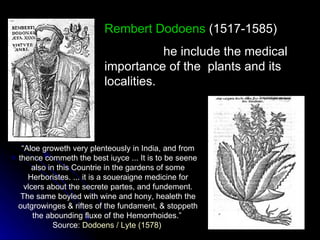
Rembert Dodoens  (1517-1585) he include the medical  importance of the  plants and its  localities. “ Aloe groweth very plenteously in India, and from thence commeth the best iuyce ... It is to be seene also in this Countrie in the gardens of some Herboristes. ... it is a soueraigne medicine for vlcers about the secrete partes, and fundement. The same boyled with wine and hony, healeth the outgrowinges & riftes of the fundament, & stoppeth the abounding fluxe of the Hemorrhoides.”  Source:  Dodoens  /  Lyte  (1578)
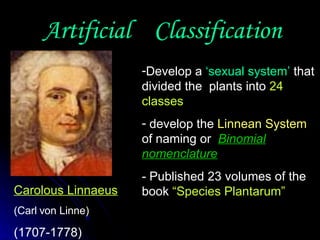
Artificial  Classification Carolous Linnaeus (Carl von Linne) (1707-1778) Develop a  ‘sexual system’  that divided the  plants into  24 classes develop the  Linnean System  of naming or  Binomial nomenclature - Published 23 volumes of the book  “Species Plantarum”
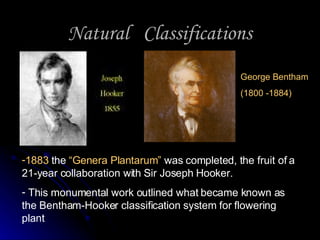
Natural  Classifications 1883  the  “Genera Plantarum”  was completed, the fruit of a 21-year collaboration with Sir Joseph Hooker.  This monumental work outlined what became known as the Bentham-Hooker classification system for flowering plant George Bentham (1800 -1884)
Phylogenetic  Classifications


Plant And Animal Taxonomy

  • 1.
    Plant and AnimalTaxonomy Bio 19 by: Ms. GEonyzl J. Lepiten
  • 2.
    Objectives : Todefine TAXONOMY To trace the history of taxonomy. To know the people who pioneered taxonomy To discuss the nature of taxonomy Importance of taxonomy. Relevance of taxonomy to you.
  • 3.
    What is taxonomyto you? TAXONOMY………… * is a practice and science of classification . * from two Greek words: - “taxis ” , 'order' + νόμος , -“nomos ” , 'law' or 'science'. * taxonomic units known as: - taxa (singular taxon ), * a part of systematics
  • 4.
    It is ascience that classify organisms into groups and its natural relationships Three main Schools of Taxonomy : Phenetic taxonomy – classify organisms based on overall form and structure or genetic similarity - also called NUMERICAL TAXONOMY Cladistics taxonomy - classify organisms based on branching points. - not based on origin but on the shared characteristics - also called PHYLOGENETIC TAXONOMY
  • 5.
    3. Evolutionary taxonomy– classify organisms based on combination and divergence - also called TRADITIONAL TAXONOMY HISTORY………. Long long time ago……  GREEKS and ROMANS - practiced naming and classification of organisms based to its use and they feared most. Most of the naming were done by the Herbalist
  • 6.
    Theophratus (370 – 285 B.C.) * Greek student of Plato * established a first documentation local flora. * discussed more than 500 species and varieties of plants from lands bordering the Atlantic and Mediterranean Published works on systematics : 1. Inquiry into Plants – translated by Theodorus Gaza 2. The Causes of Plants
  • 7.
    Some genericname made by Theophratus......... Daucus - carrots Asparagus Narcissus -
  • 8.
    Dioscorides (1 st century A.D.) - Roman military surgeon writing a five volume book De Materia Medica * most influential herbal books Added 100 species of flora from Mediterranean
  • 9.
    Represented modern Familiesidentified by Dioscorides: Fabaceae Lamiaceae Apiaceae
  • 10.
    Albertus Magnus (1200– 1280 A.D.) known as: Saint Albert the Great and Albert of Cologne , was a Dominican friar Produced a first recognized classification of plants into: a. MONOCOT b. DICOT
  • 11.
  • 12.
    John Gerard (1542– 1612) English Published the book titled, “ Herball, or Generall Historie of Plants ” (1597) Added 182 new plants Revised the arrangement and appended his observations But it was corrected by Thomas Johnson
  • 13.
    Leonhart Fuchs (1501– 1566) Provide a clear illustrations of the plant specimens
  • 14.
    Rembert Dodoens (1517-1585) he include the medical importance of the plants and its localities. “ Aloe groweth very plenteously in India, and from thence commeth the best iuyce ... It is to be seene also in this Countrie in the gardens of some Herboristes. ... it is a soueraigne medicine for vlcers about the secrete partes, and fundement. The same boyled with wine and hony, healeth the outgrowinges & riftes of the fundament, & stoppeth the abounding fluxe of the Hemorrhoides.” Source: Dodoens / Lyte (1578)
  • 15.
    Artificial ClassificationCarolous Linnaeus (Carl von Linne) (1707-1778) Develop a ‘sexual system’ that divided the plants into 24 classes develop the Linnean System of naming or Binomial nomenclature - Published 23 volumes of the book “Species Plantarum”
  • 16.
    Natural Classifications1883 the “Genera Plantarum” was completed, the fruit of a 21-year collaboration with Sir Joseph Hooker. This monumental work outlined what became known as the Bentham-Hooker classification system for flowering plant George Bentham (1800 -1884)
  • 17.
  • 18.
  • 19.
  • 20.
  • 21.
  • 22.