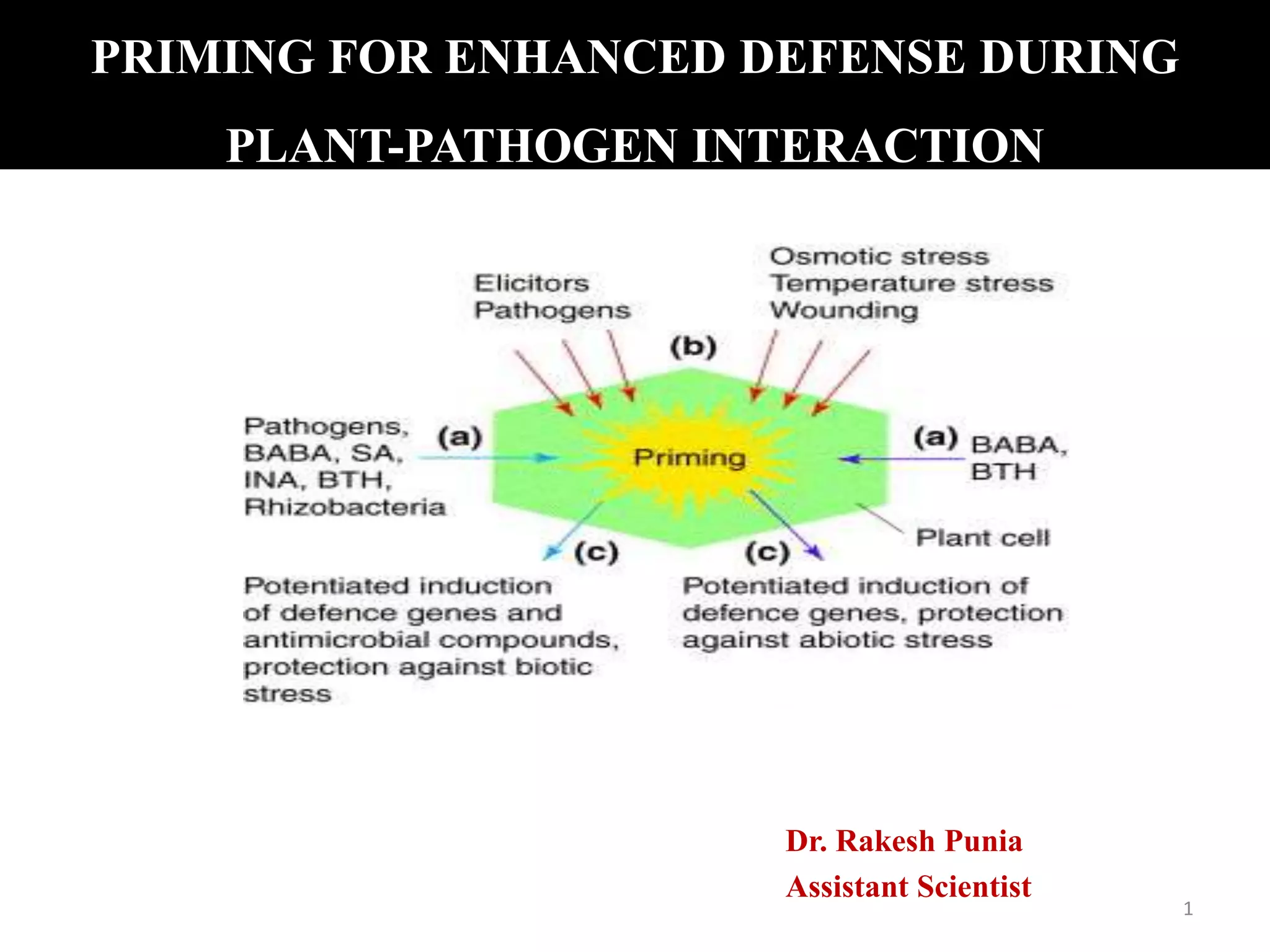
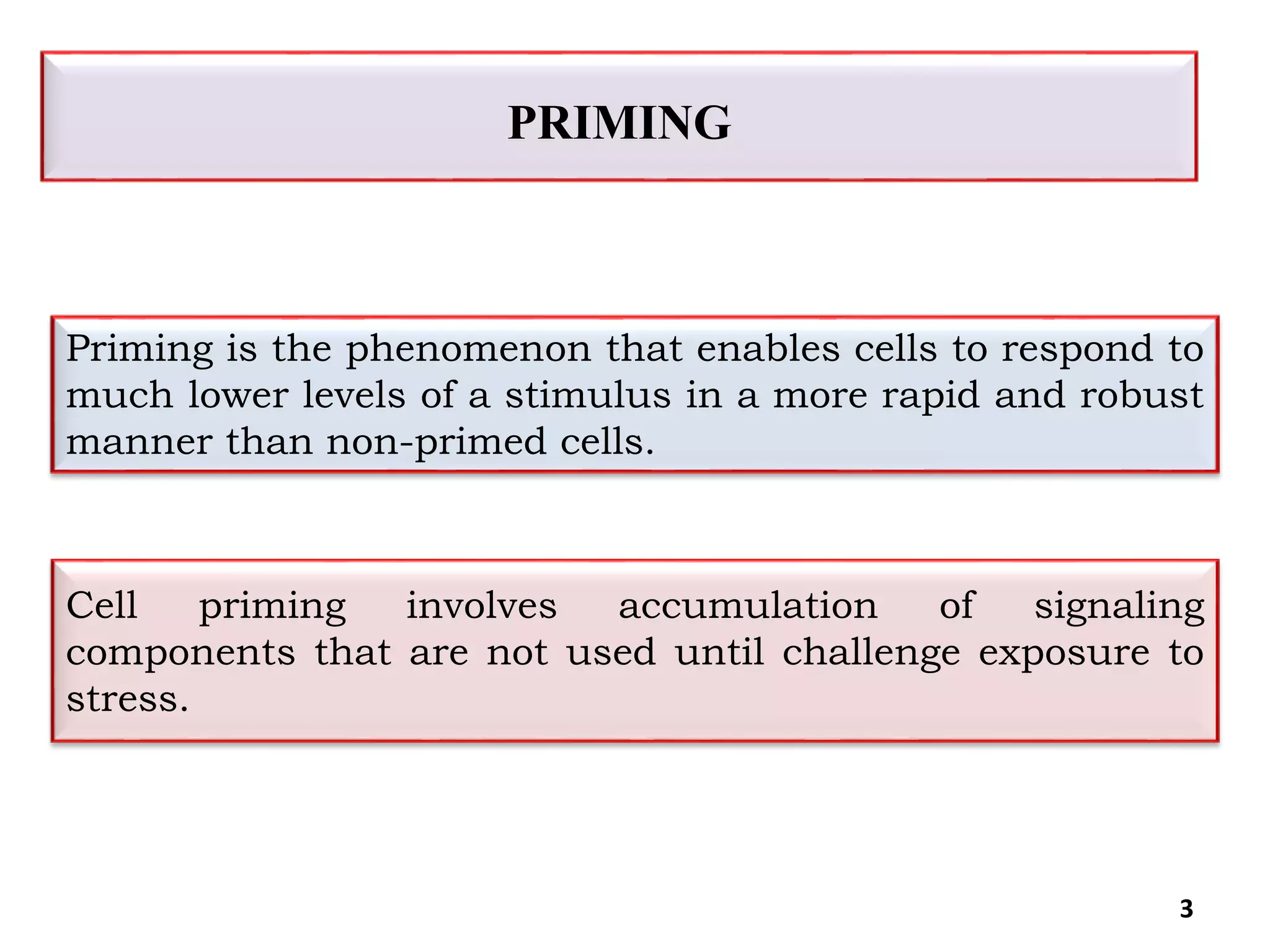
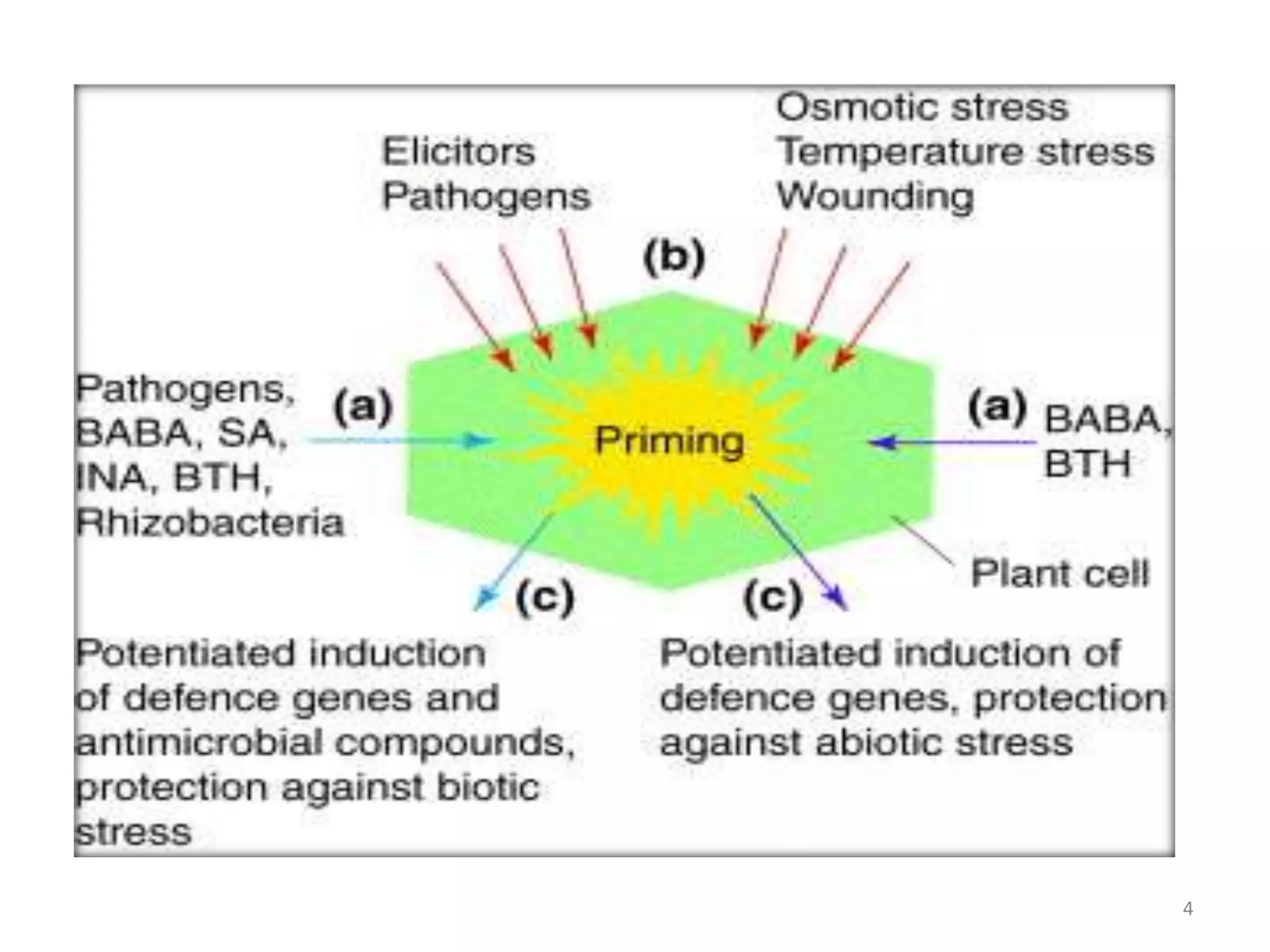
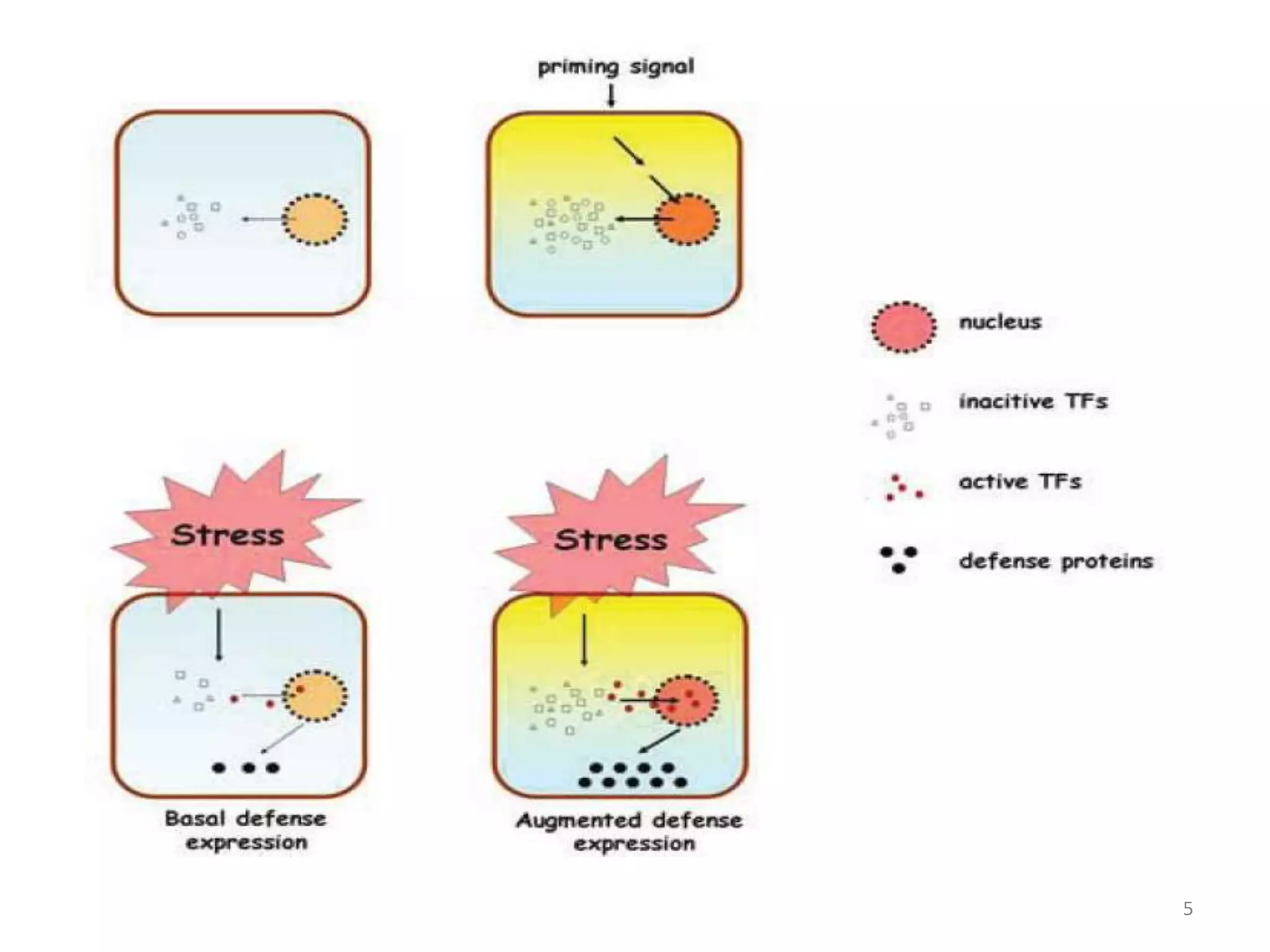
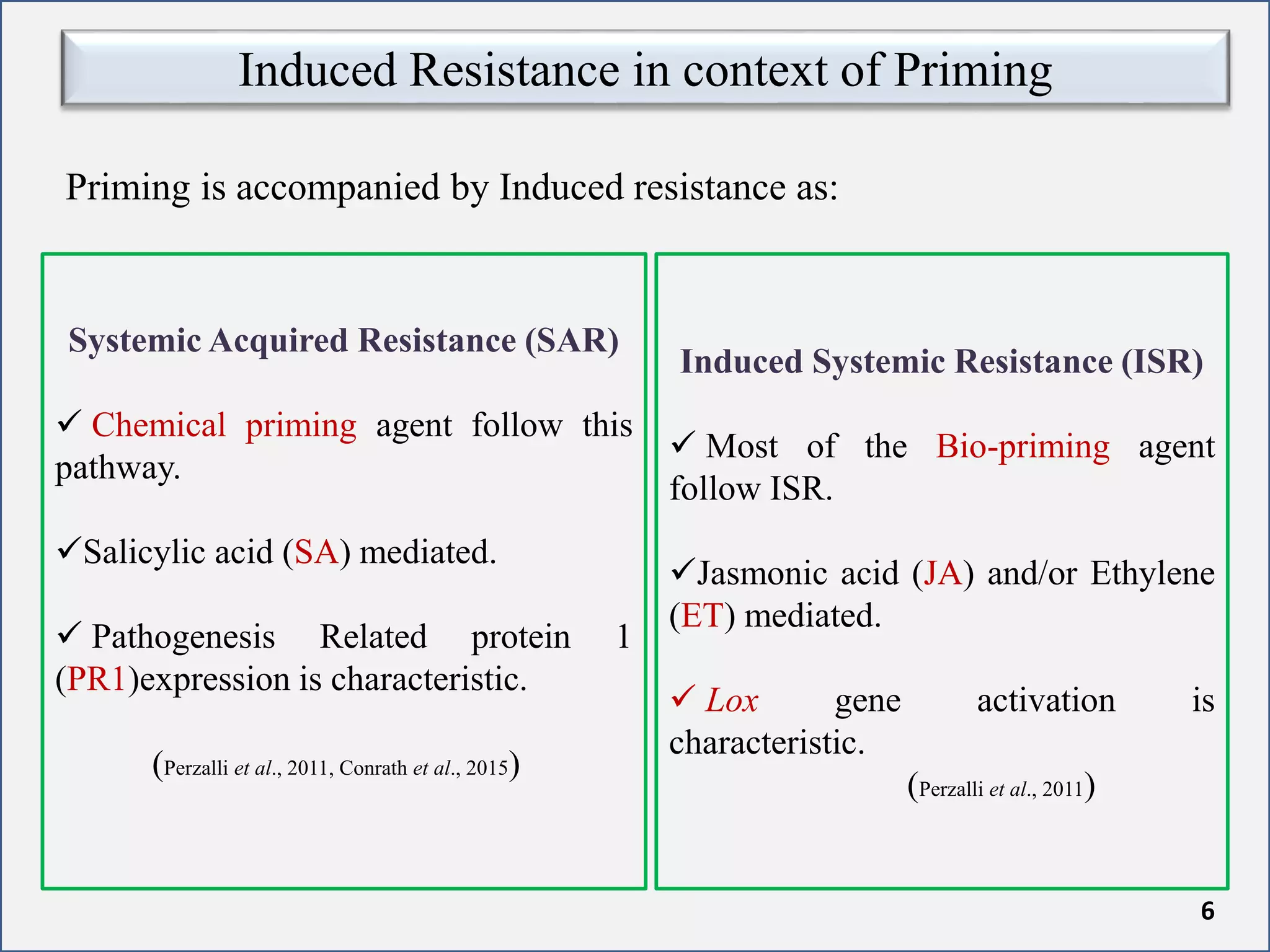
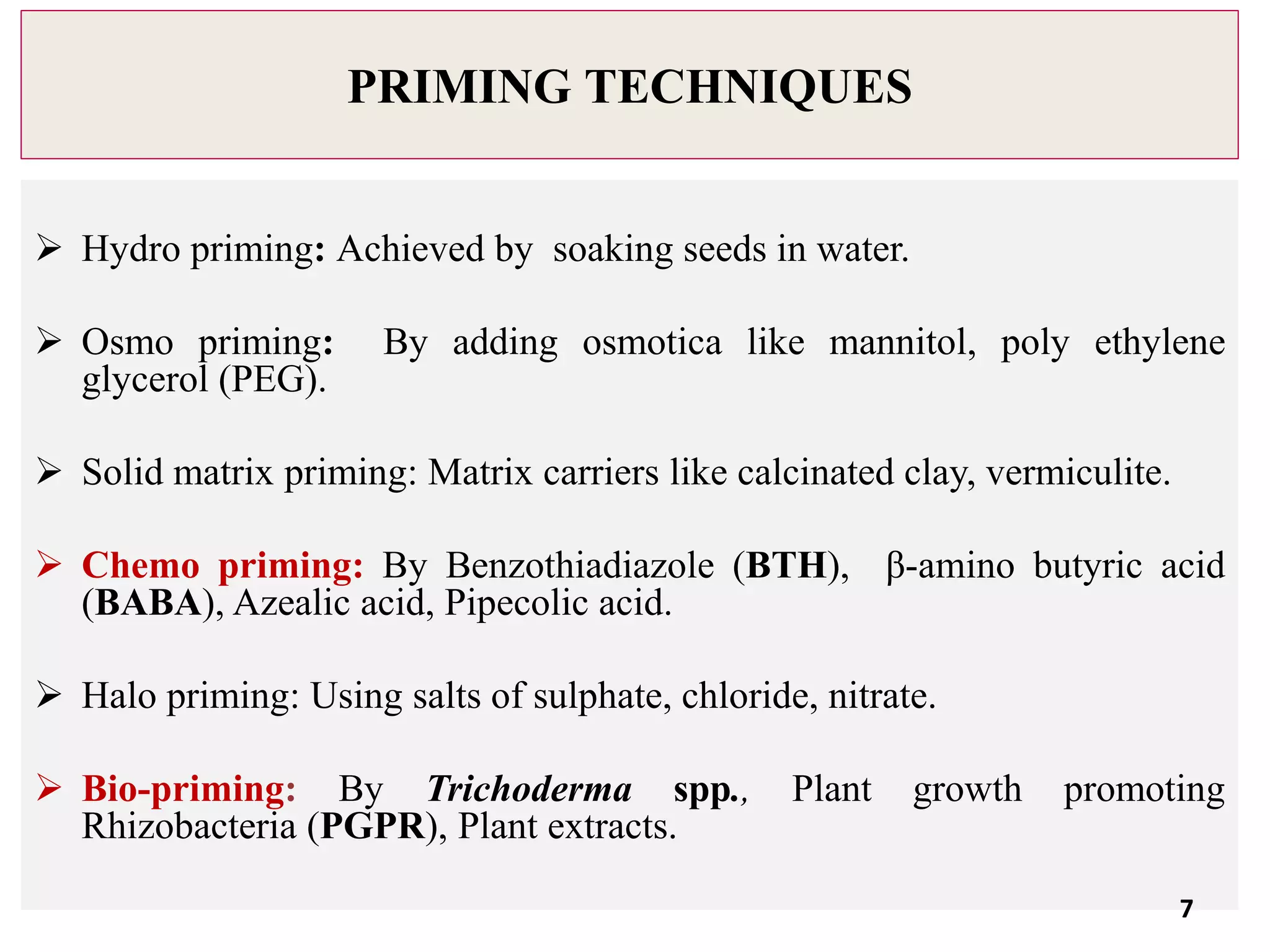
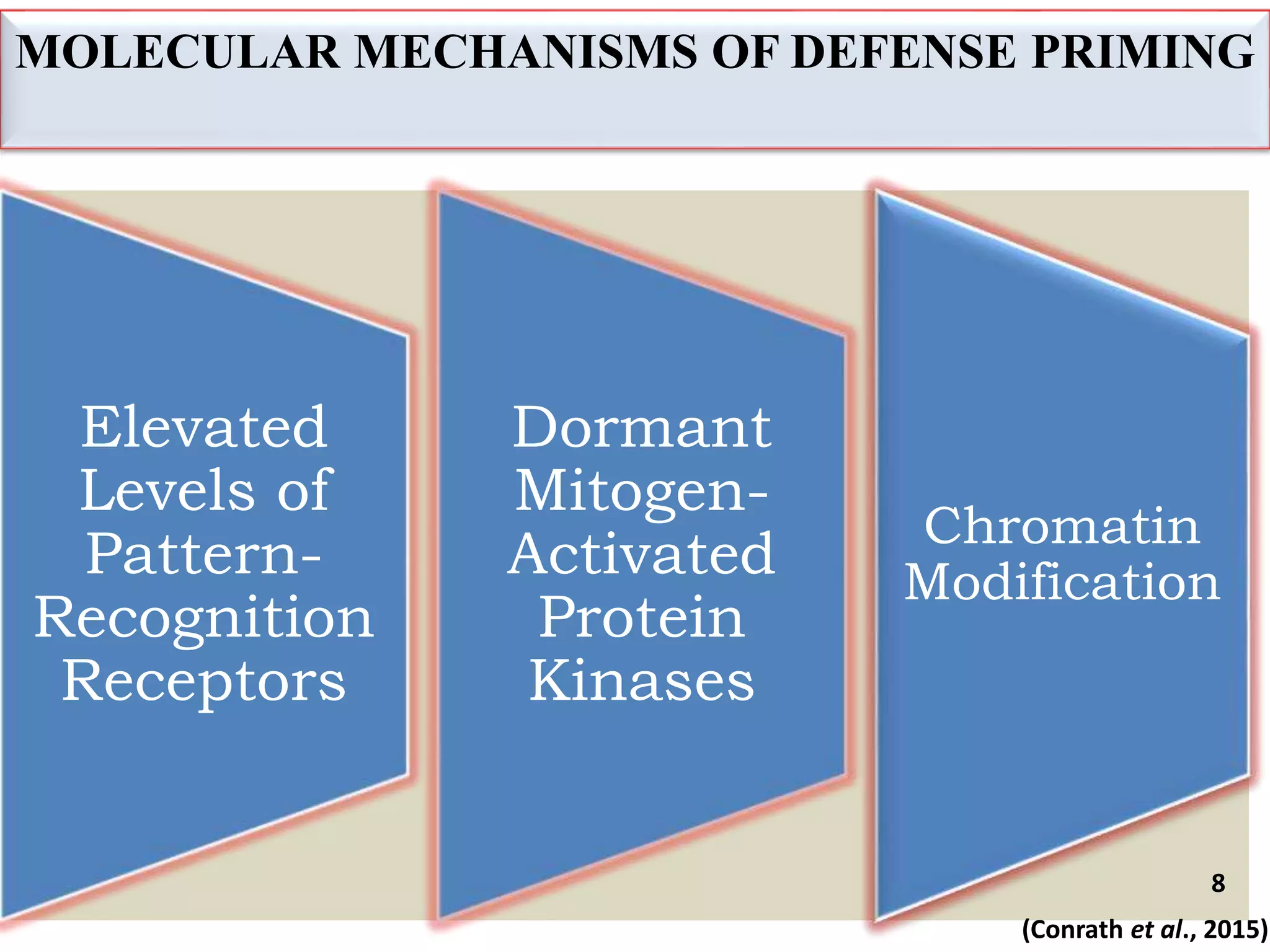
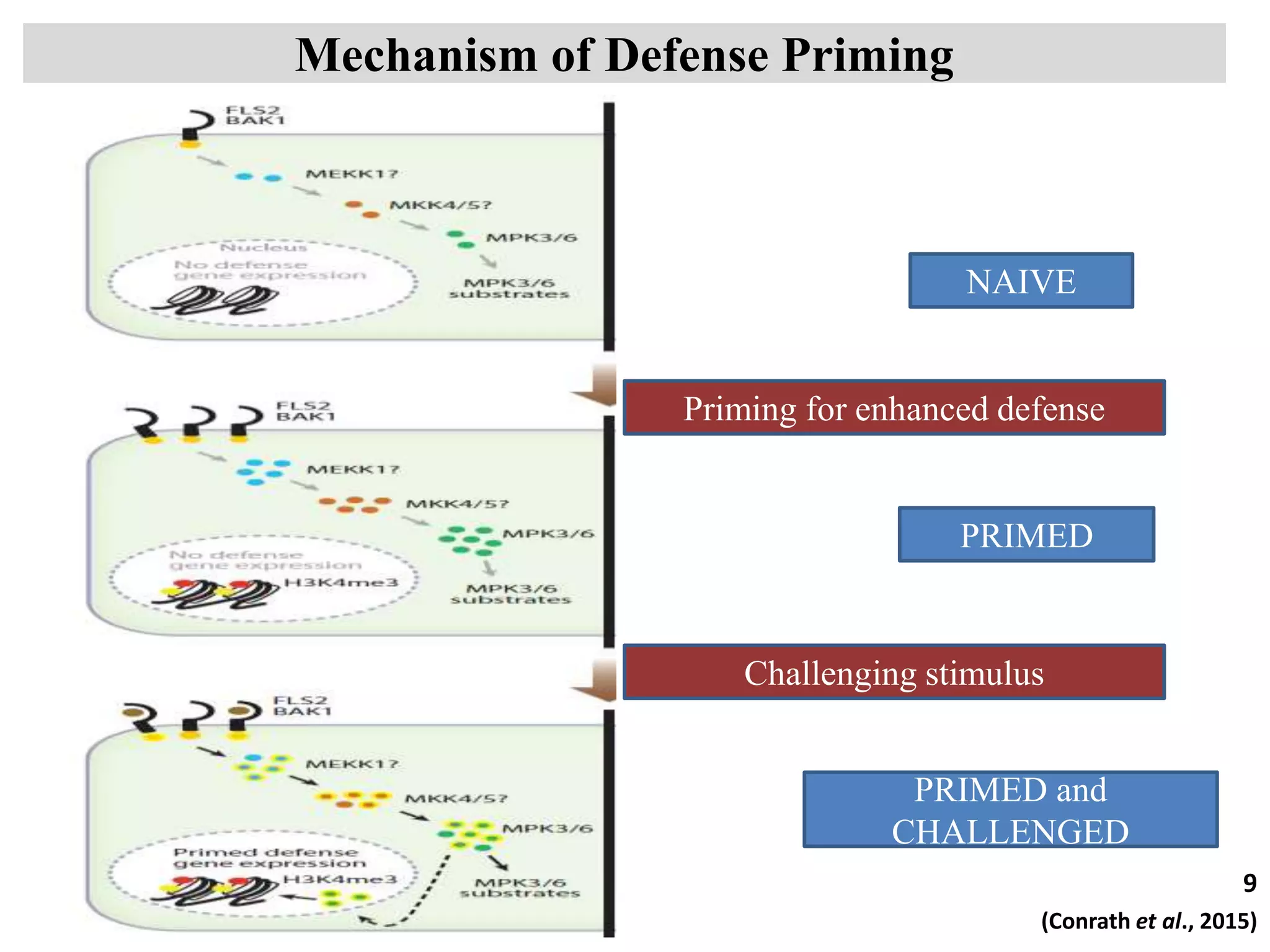
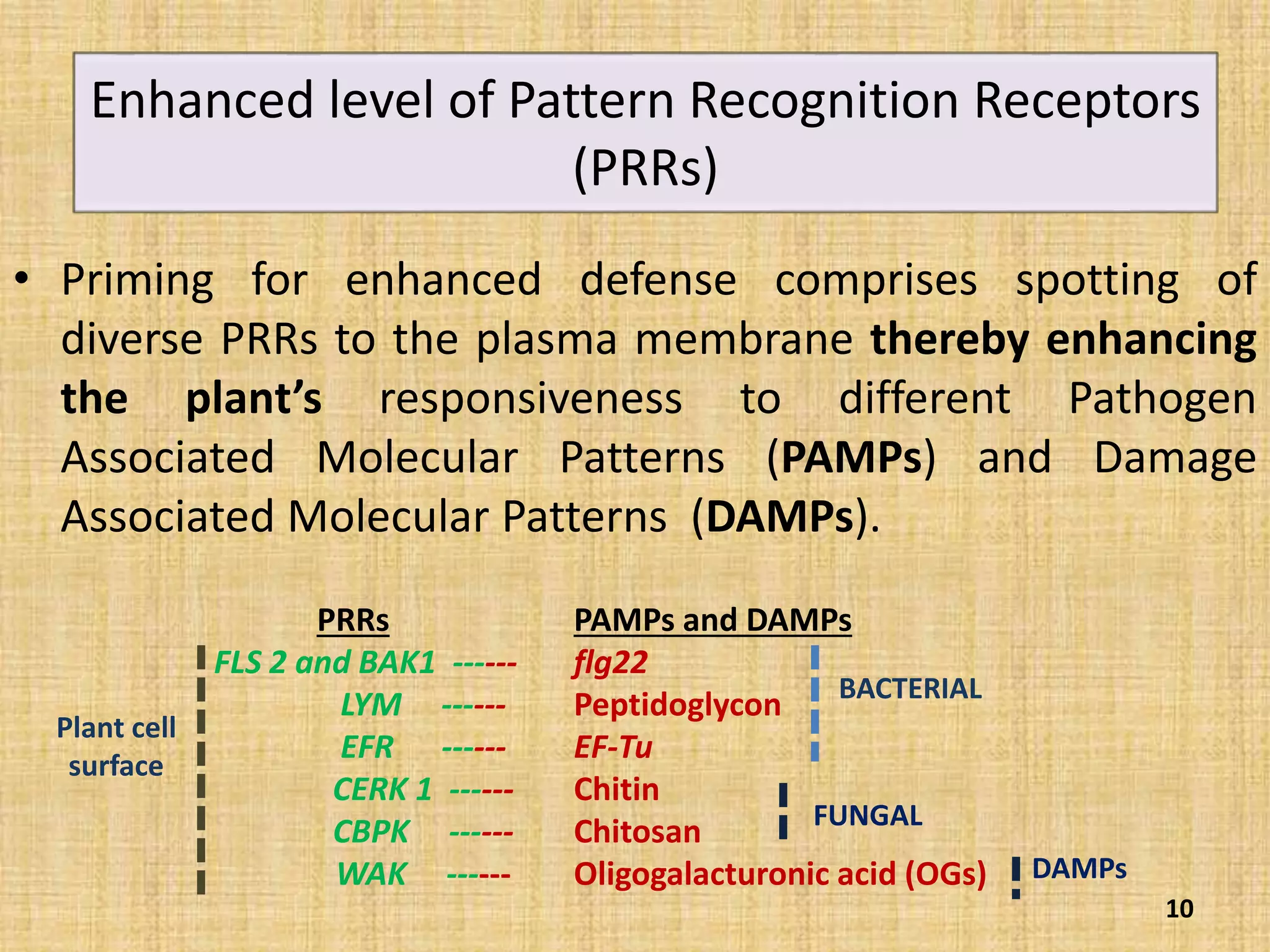
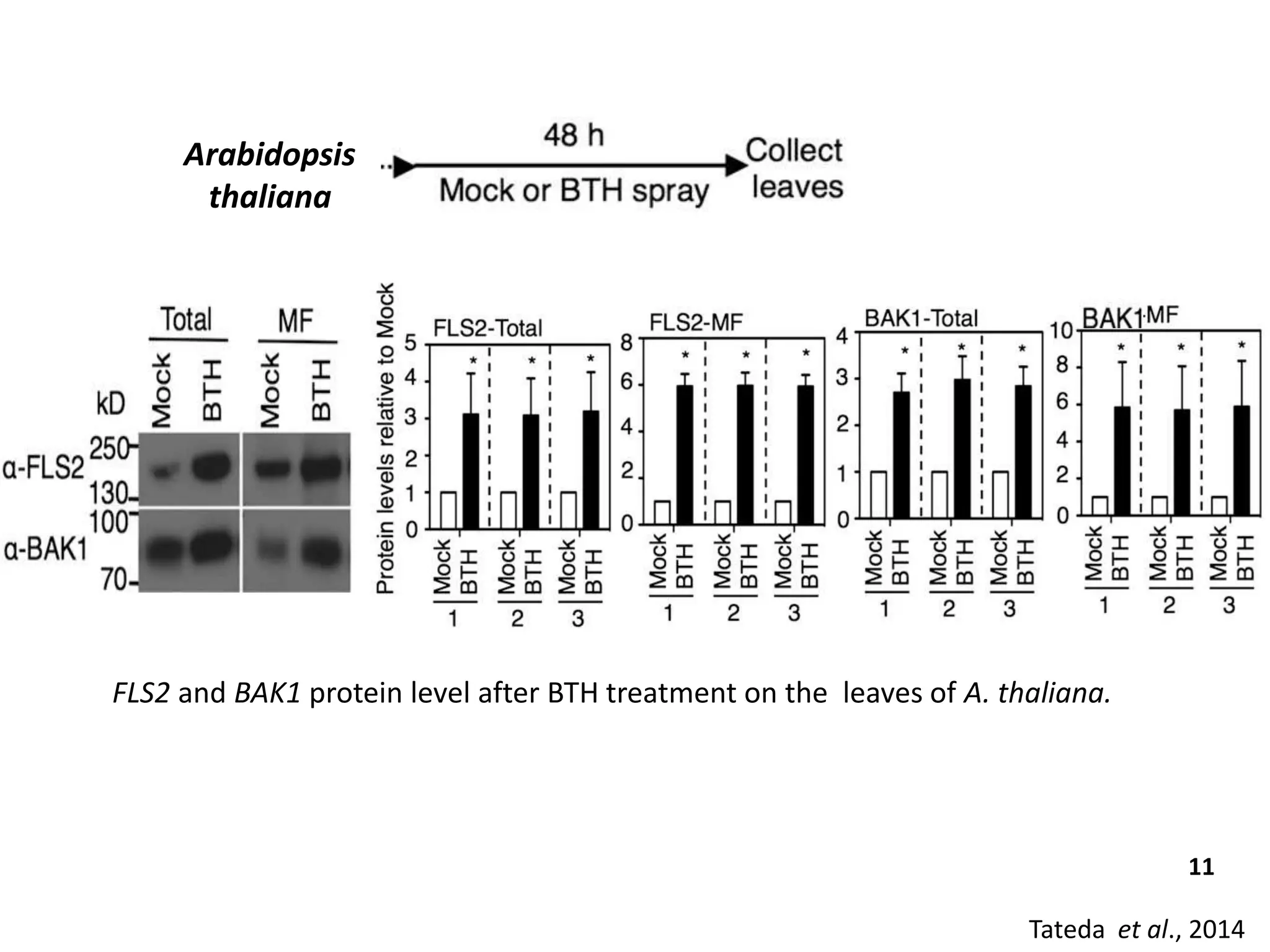
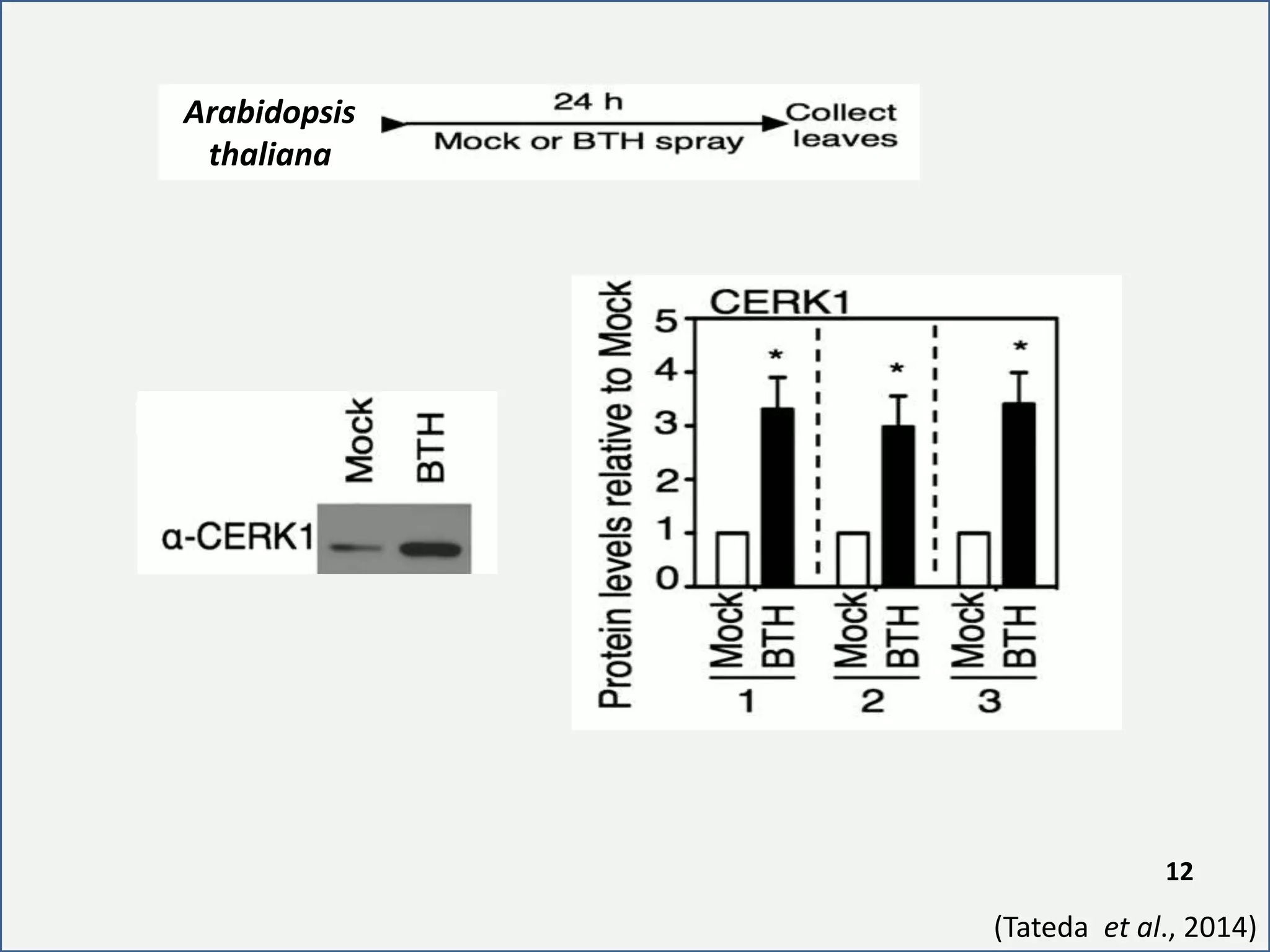
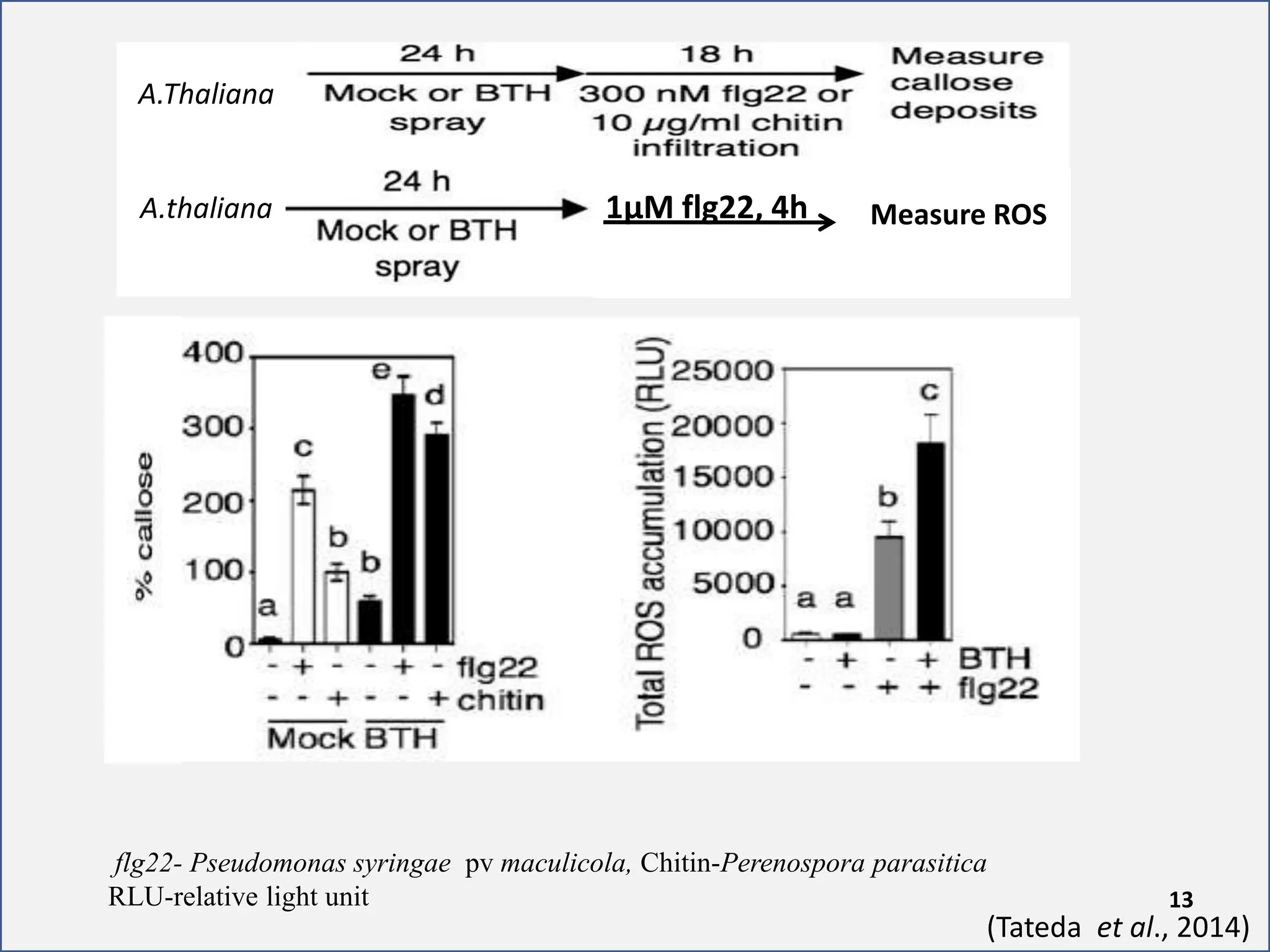
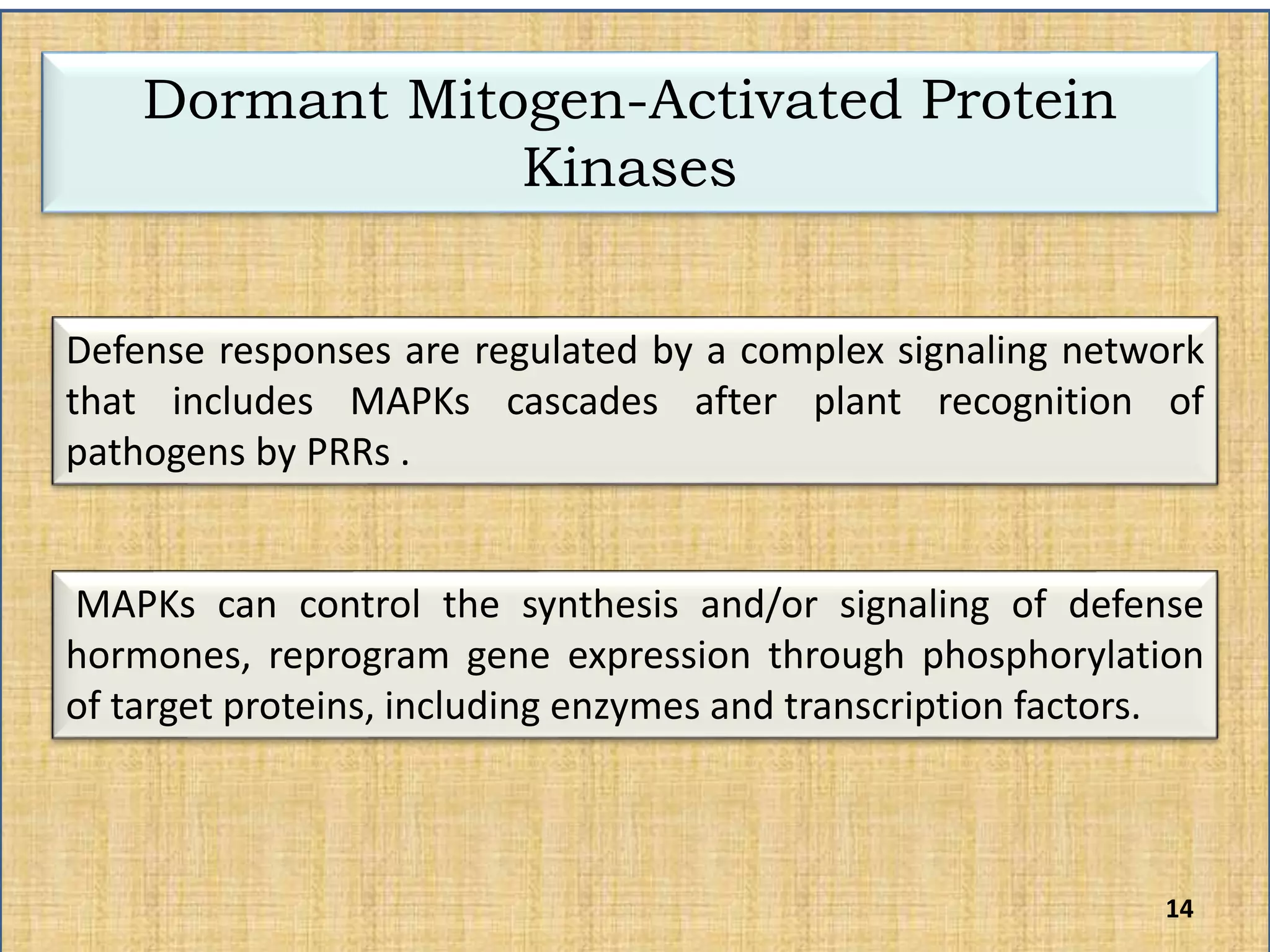
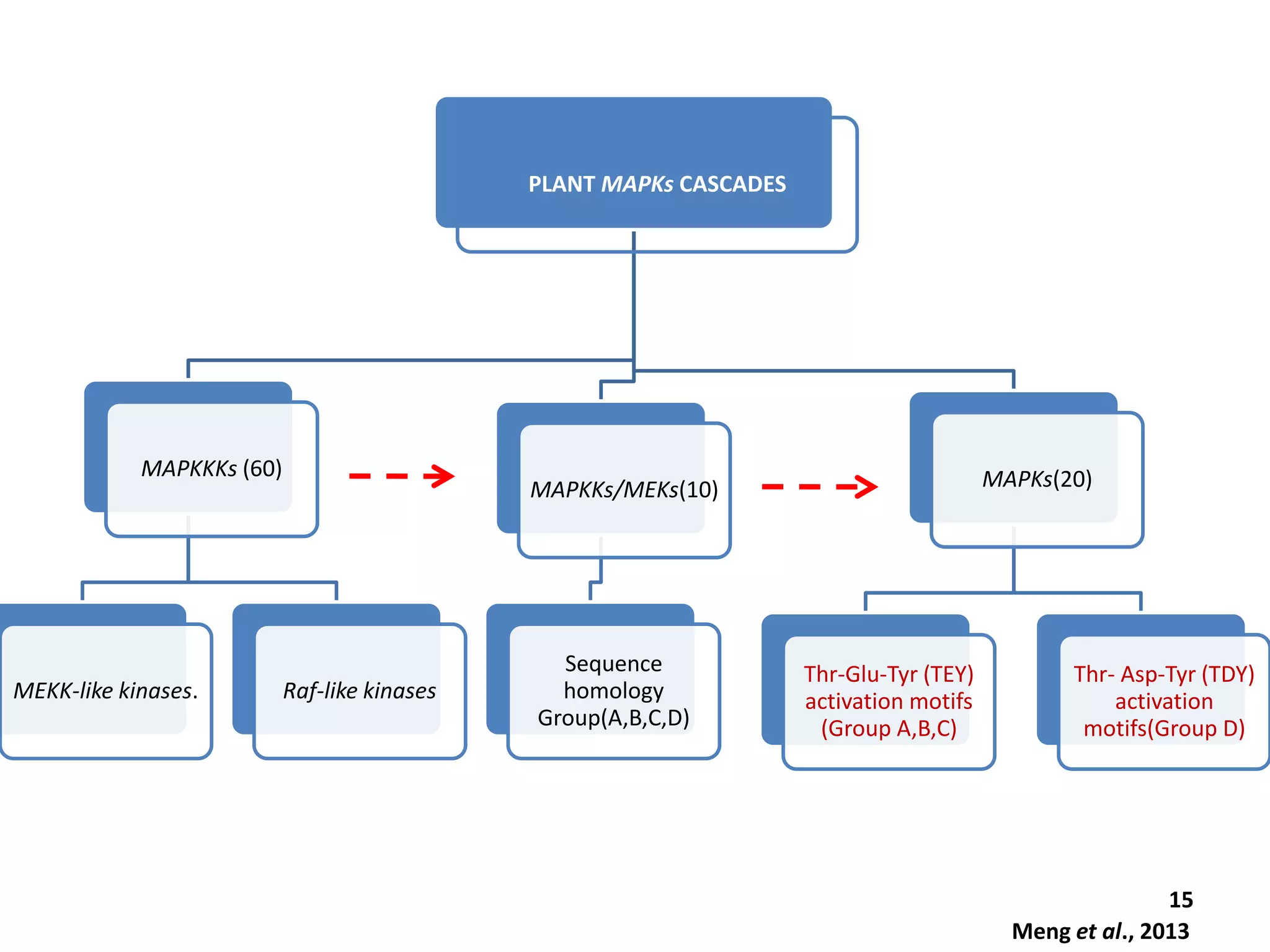
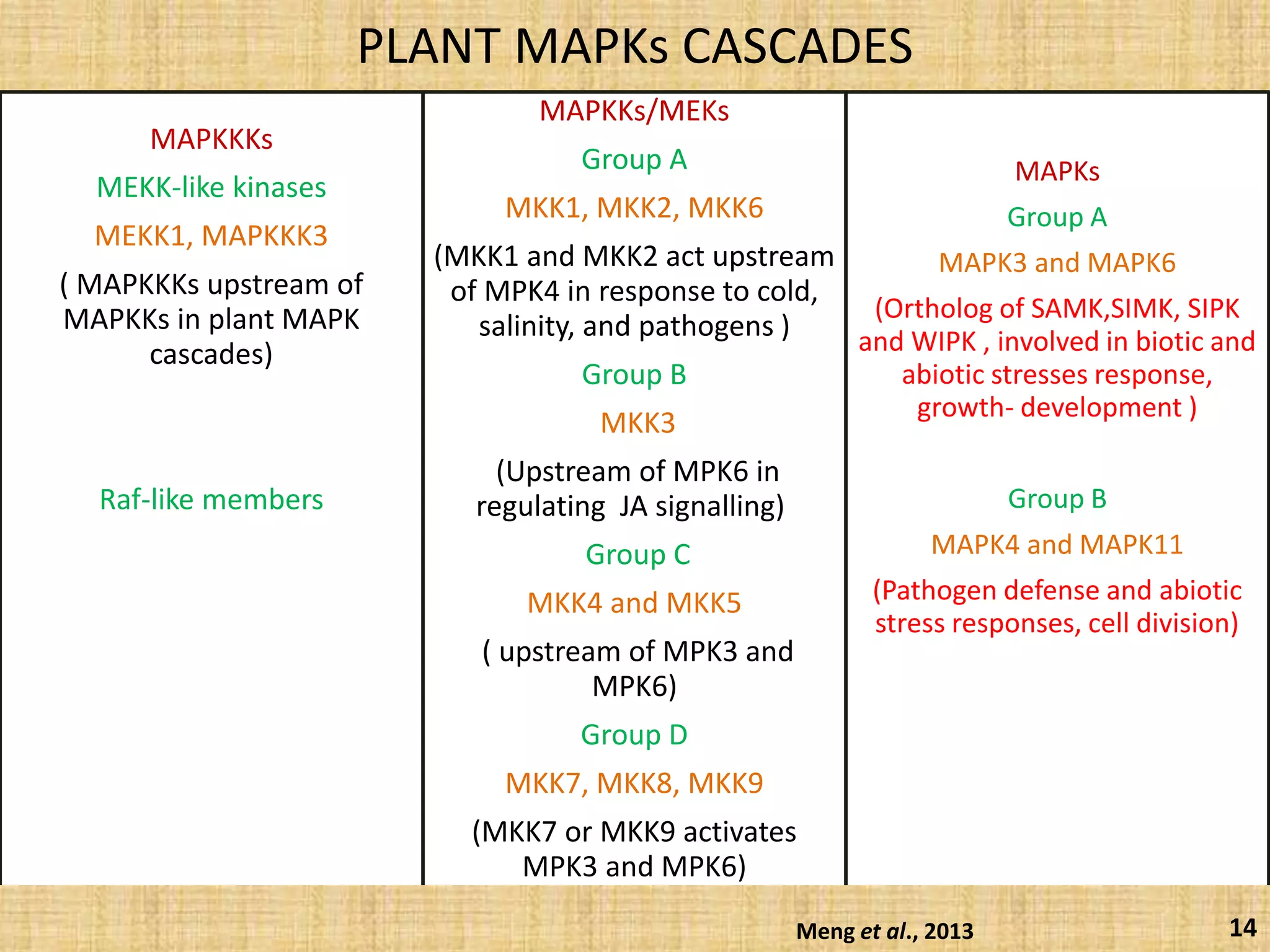
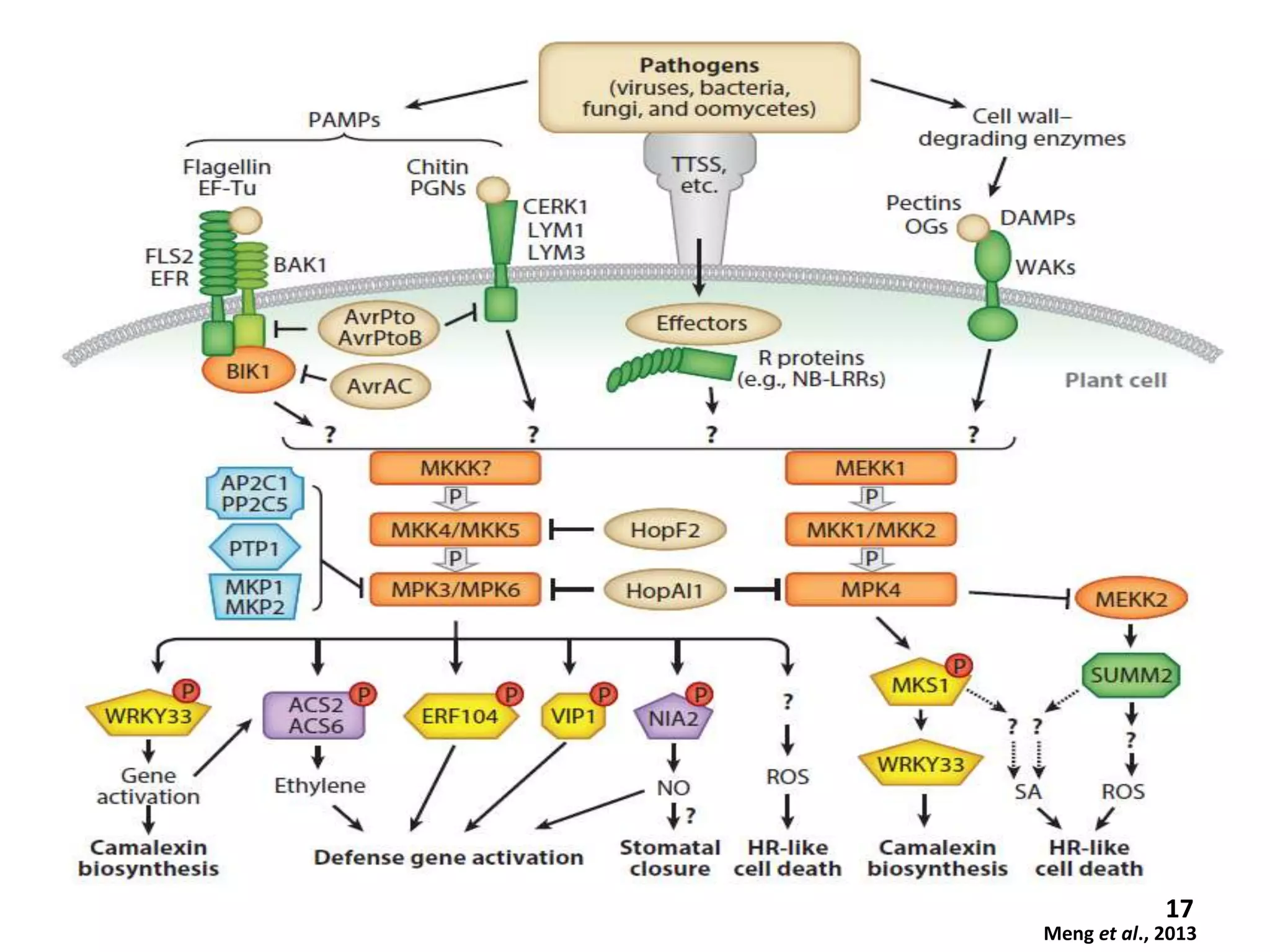
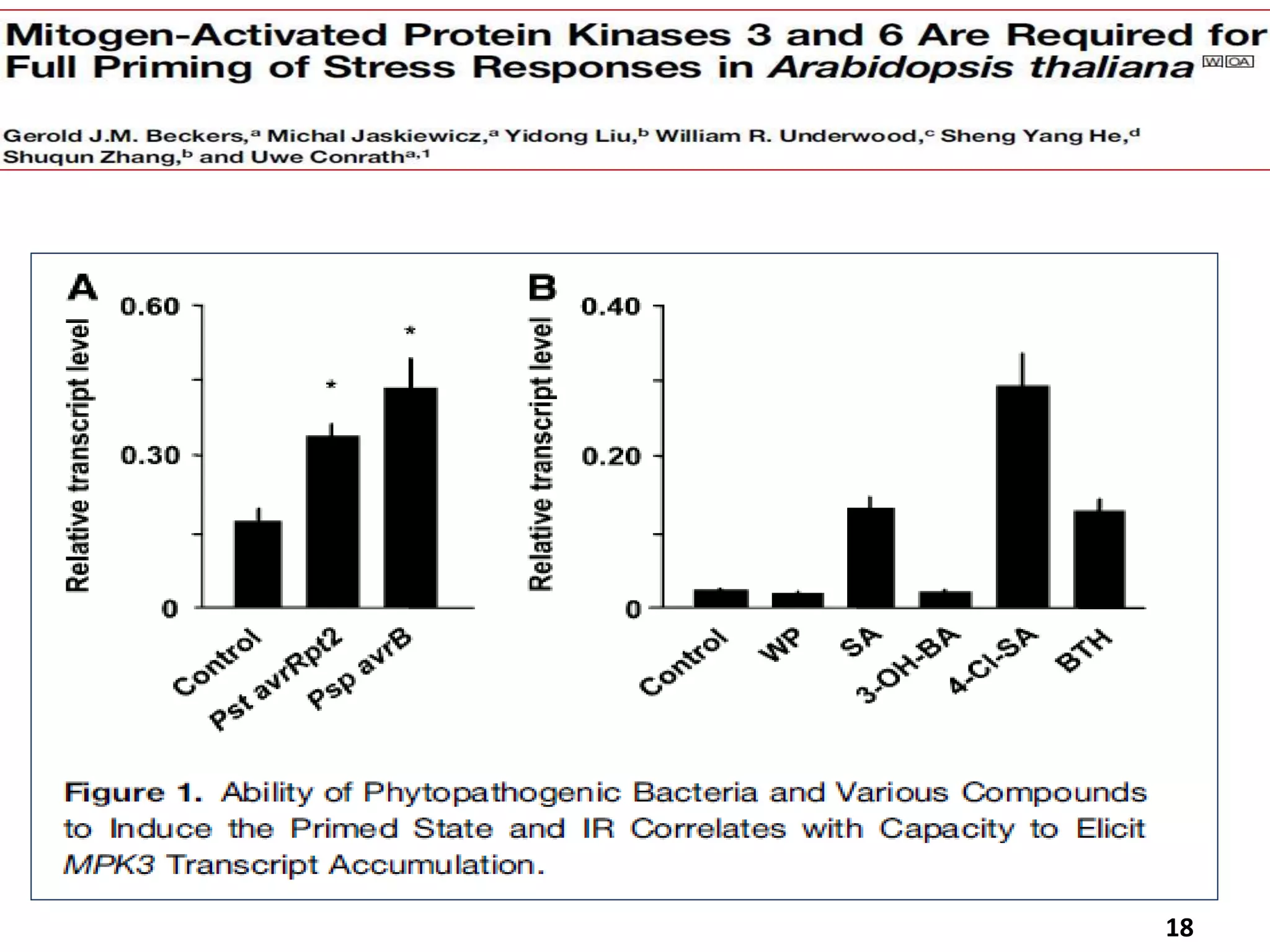
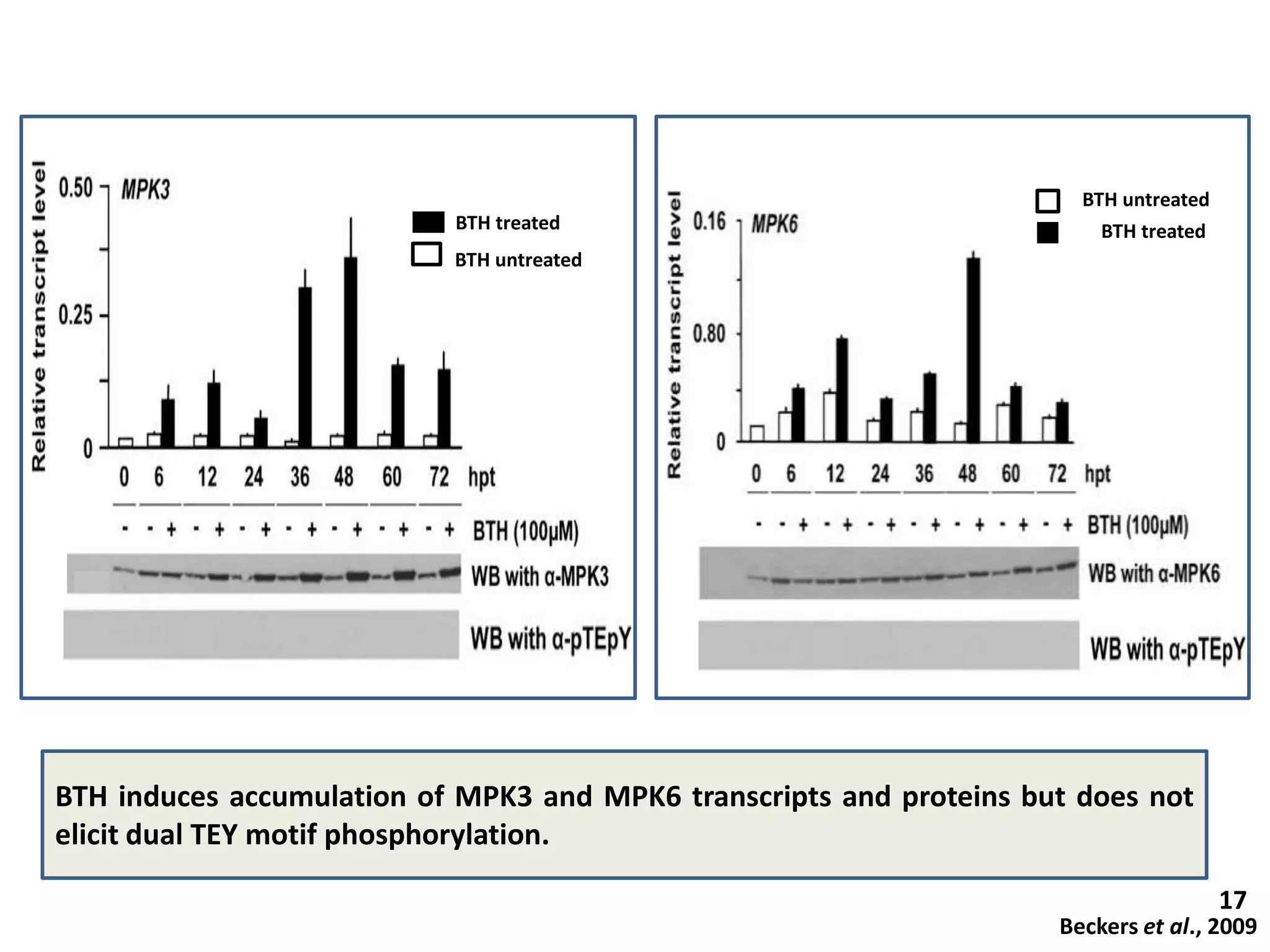
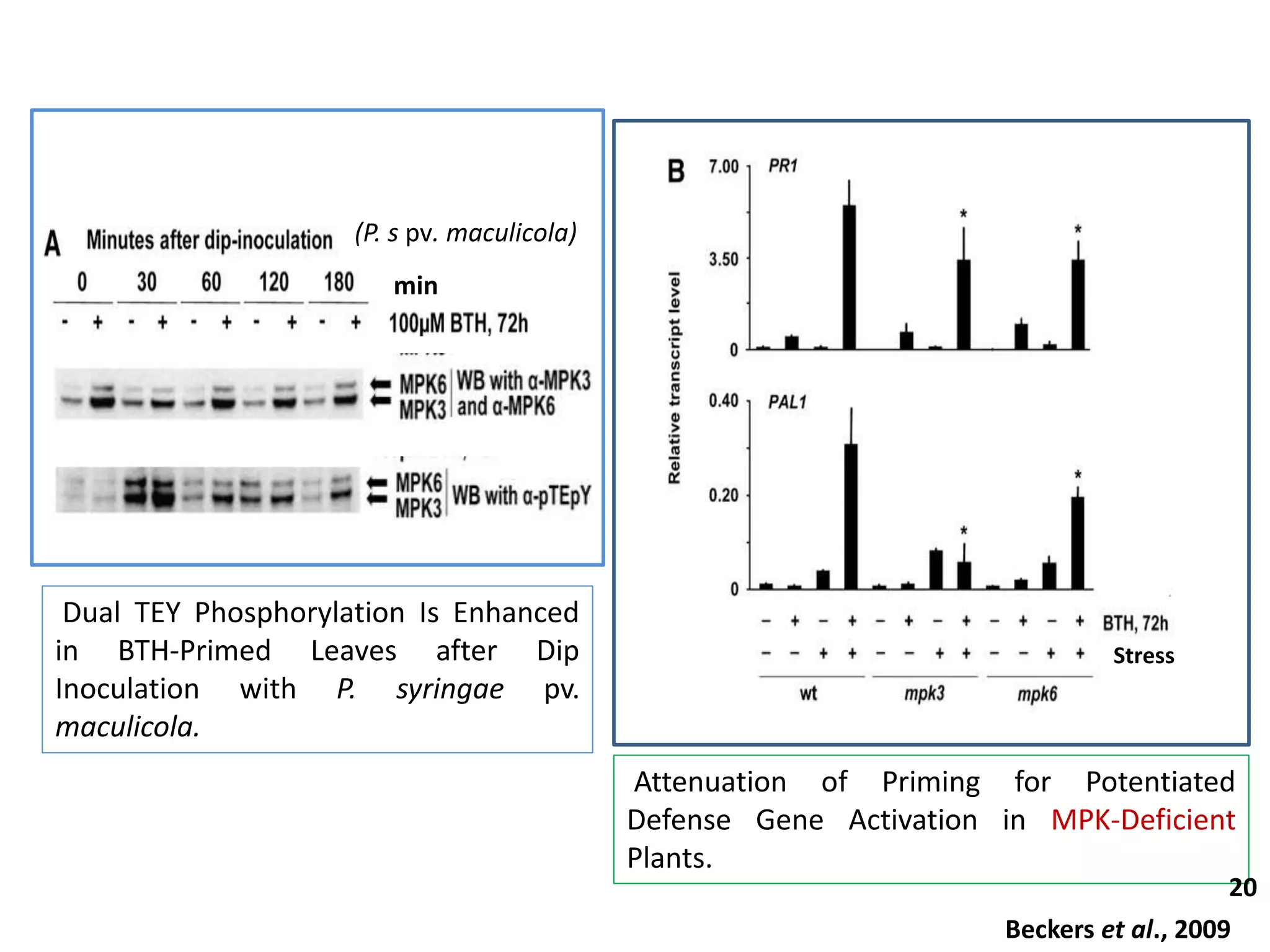
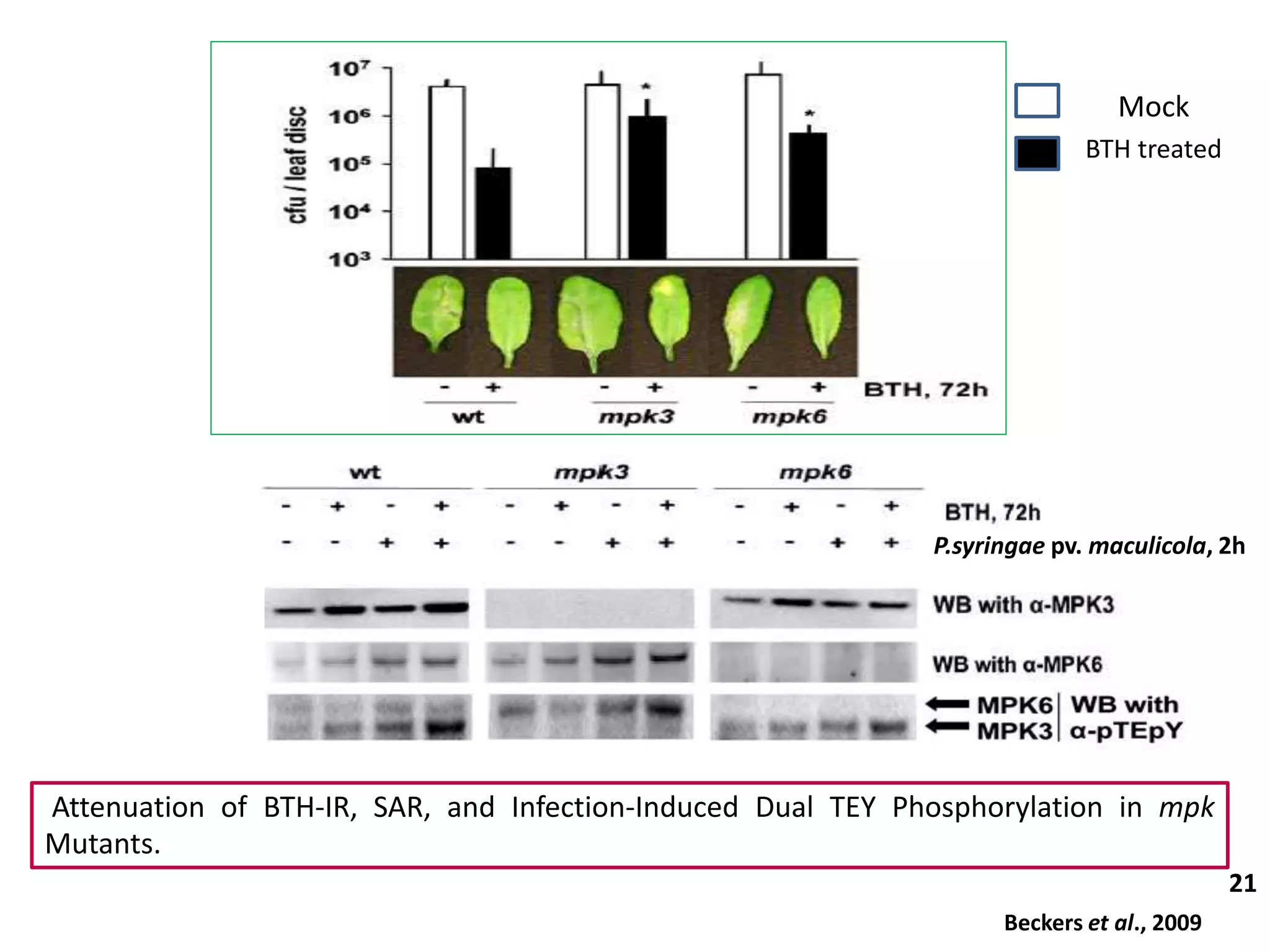
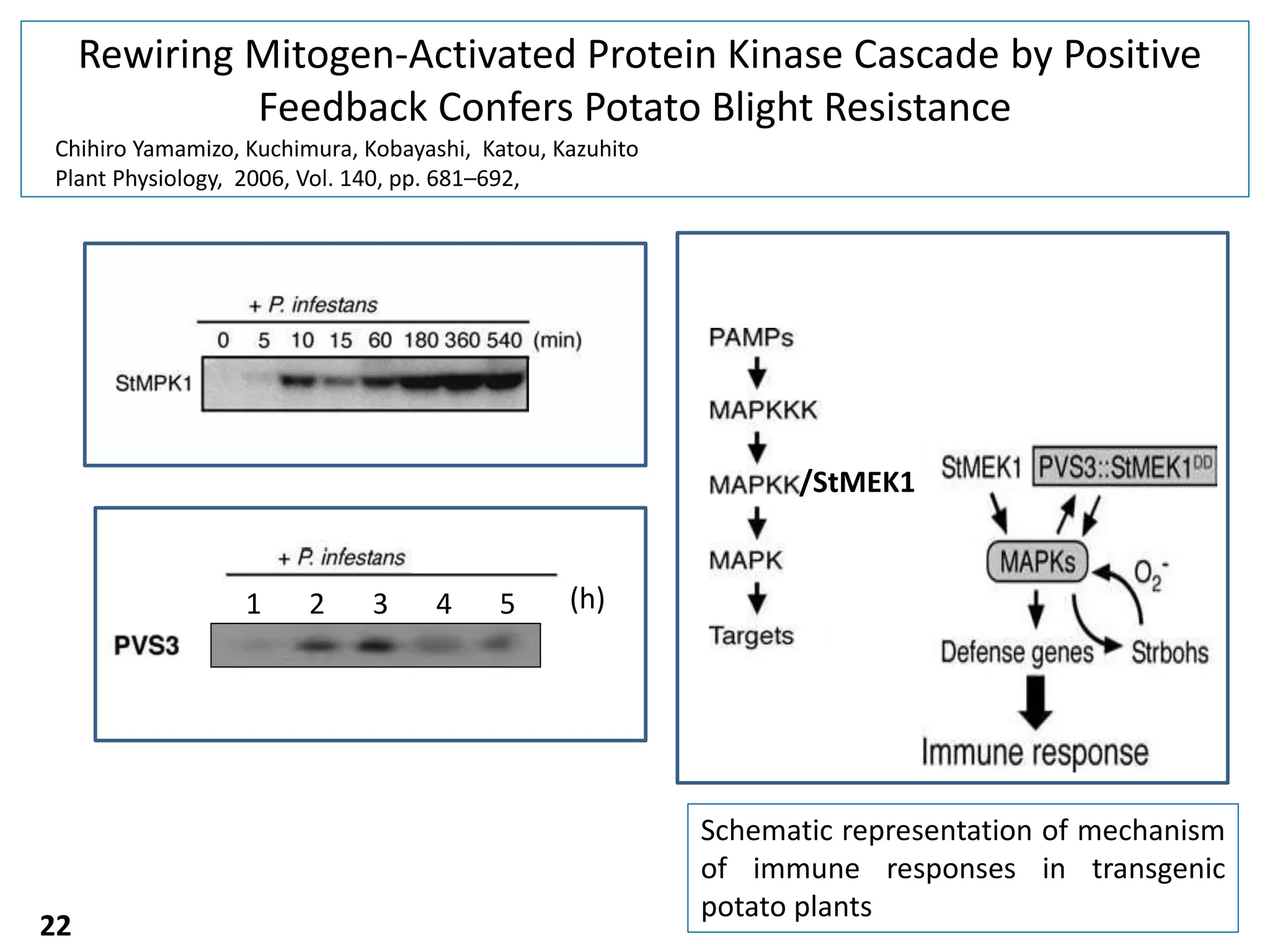
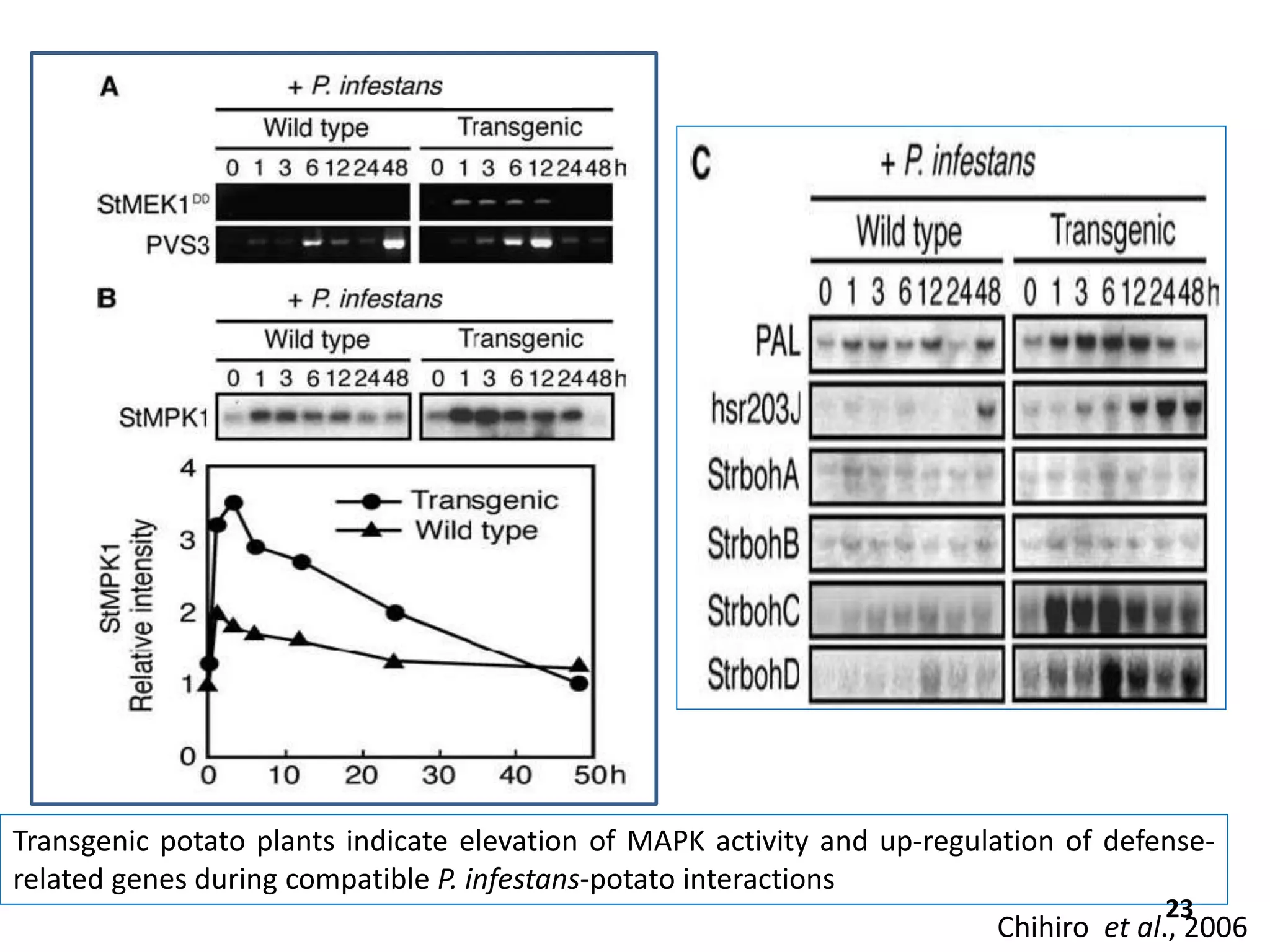
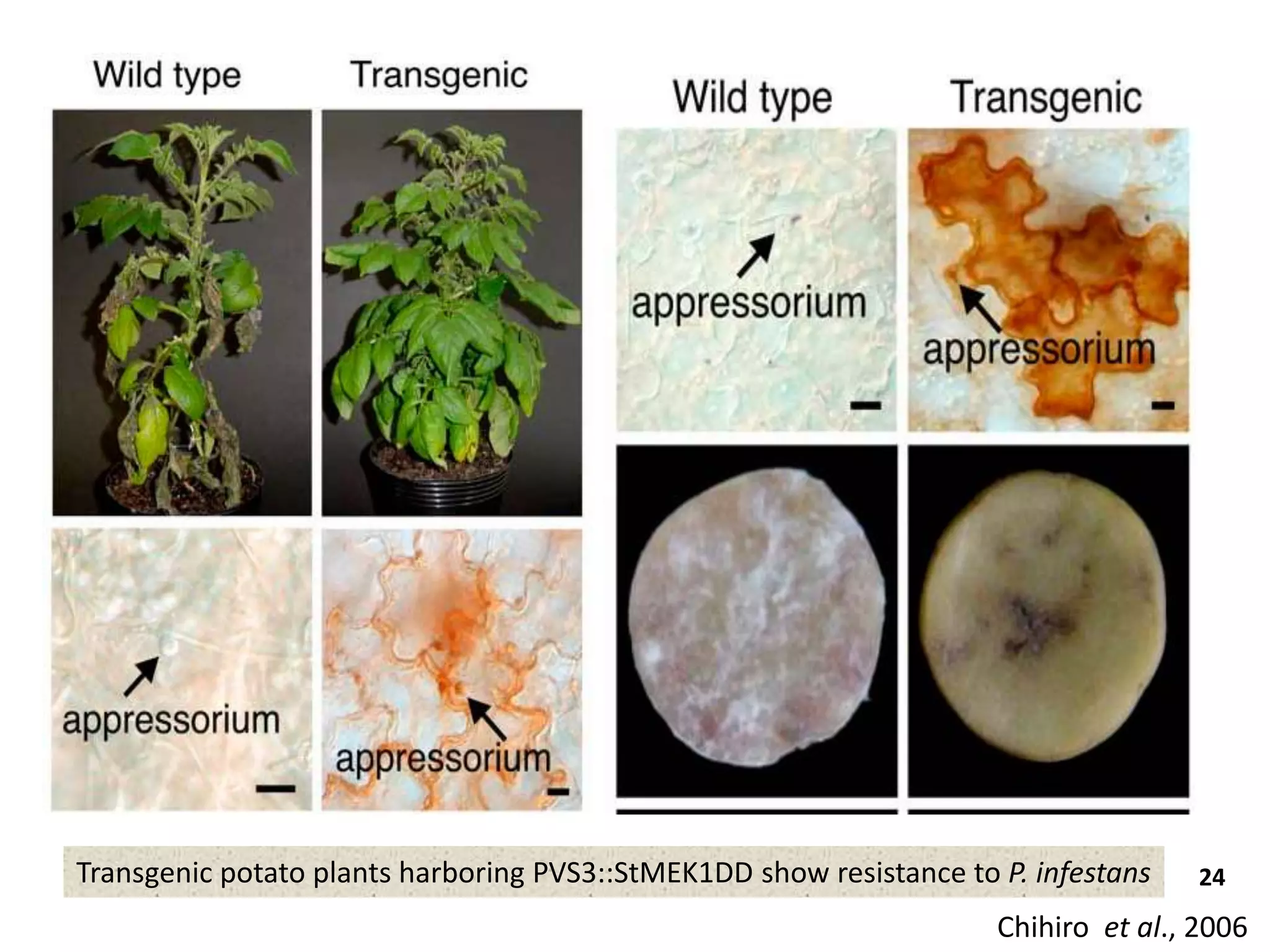
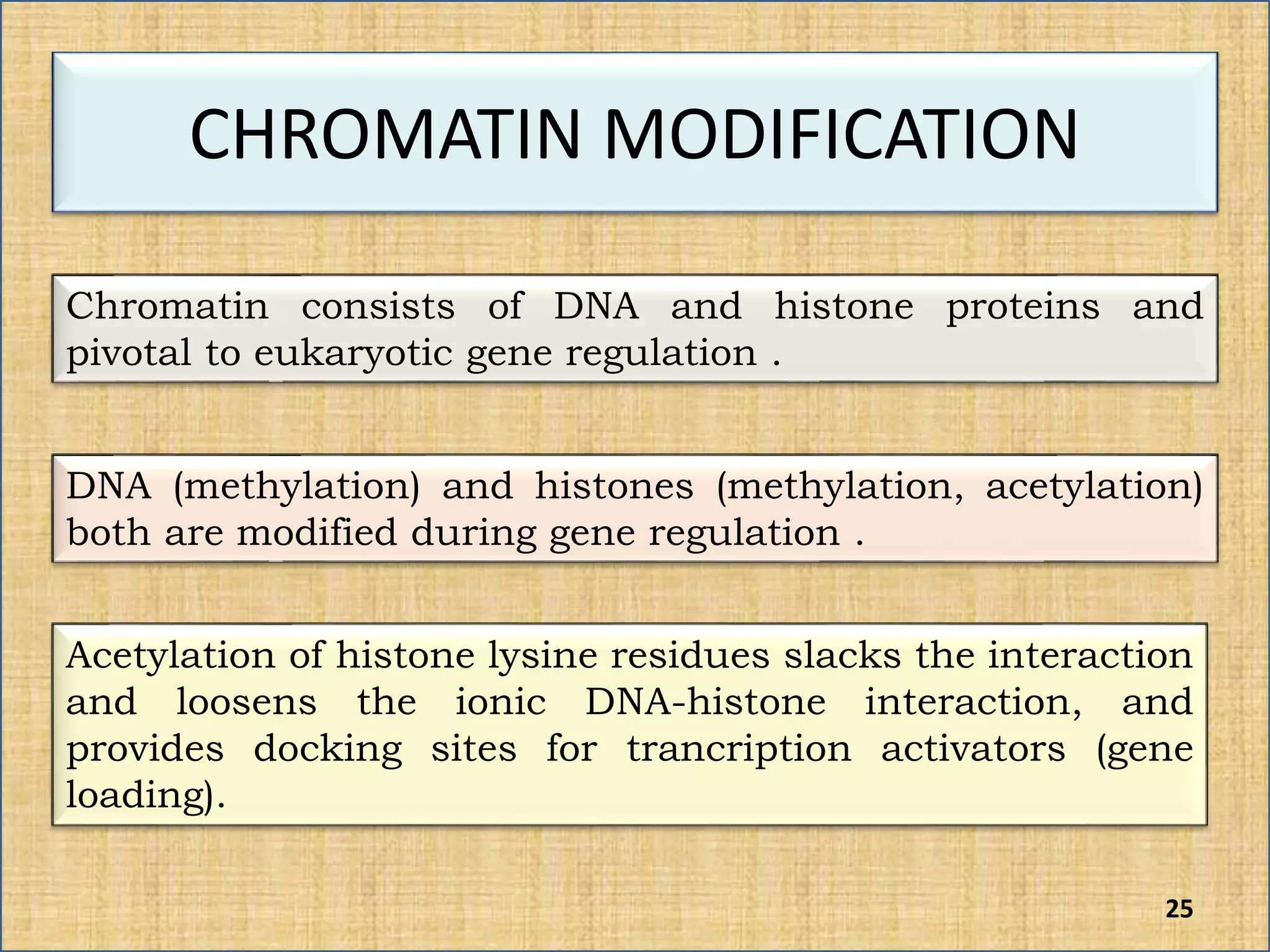
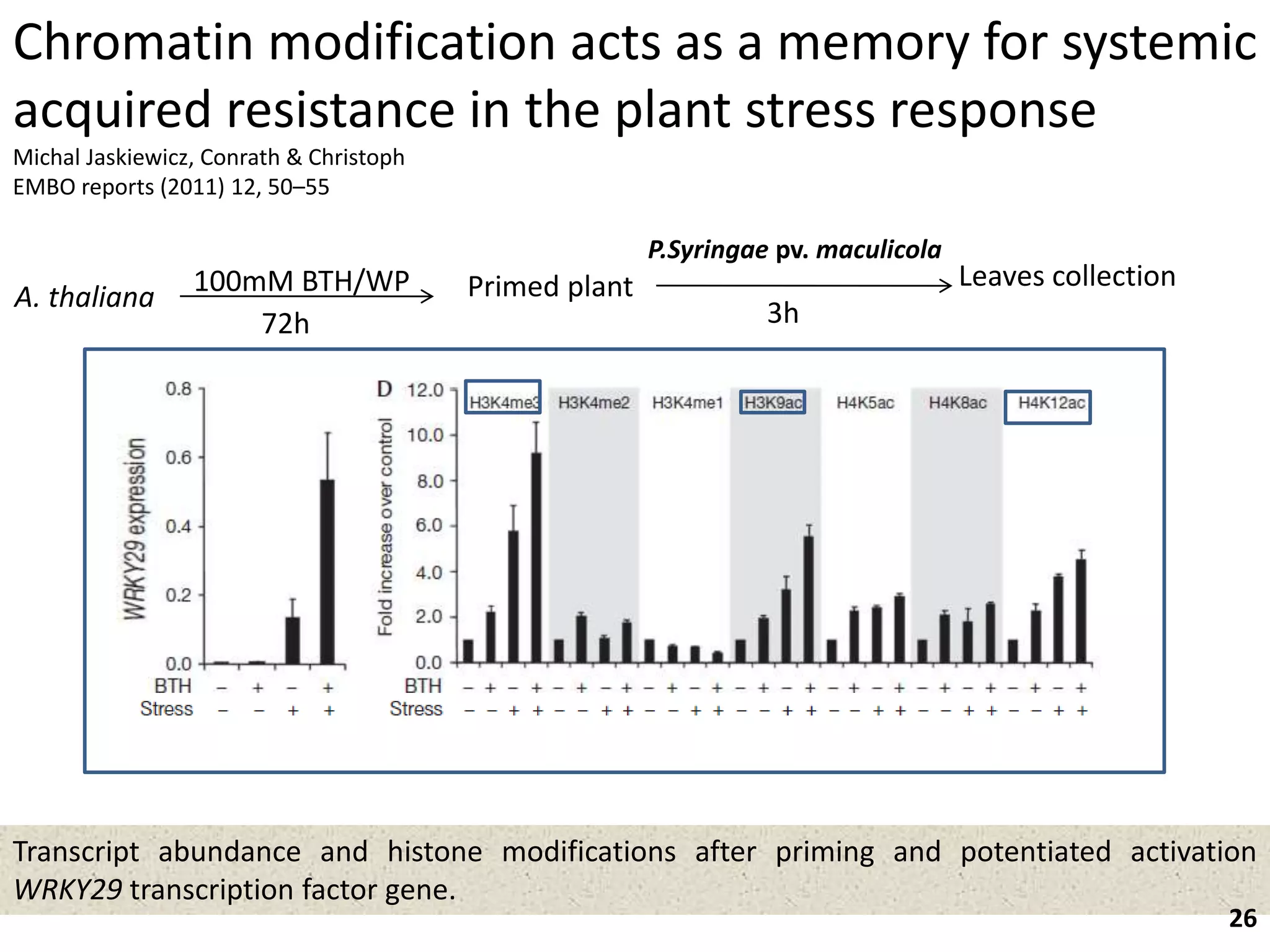
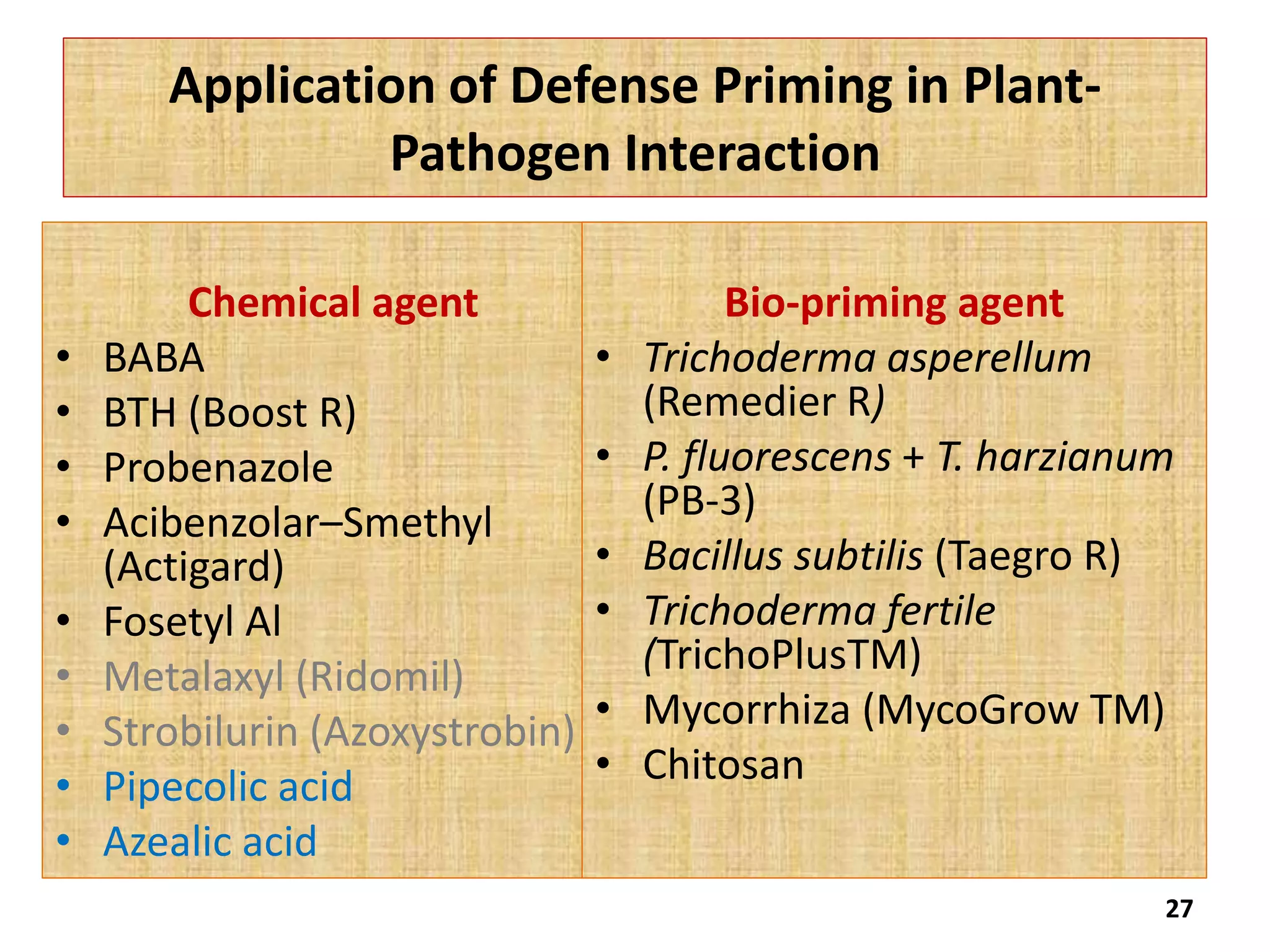
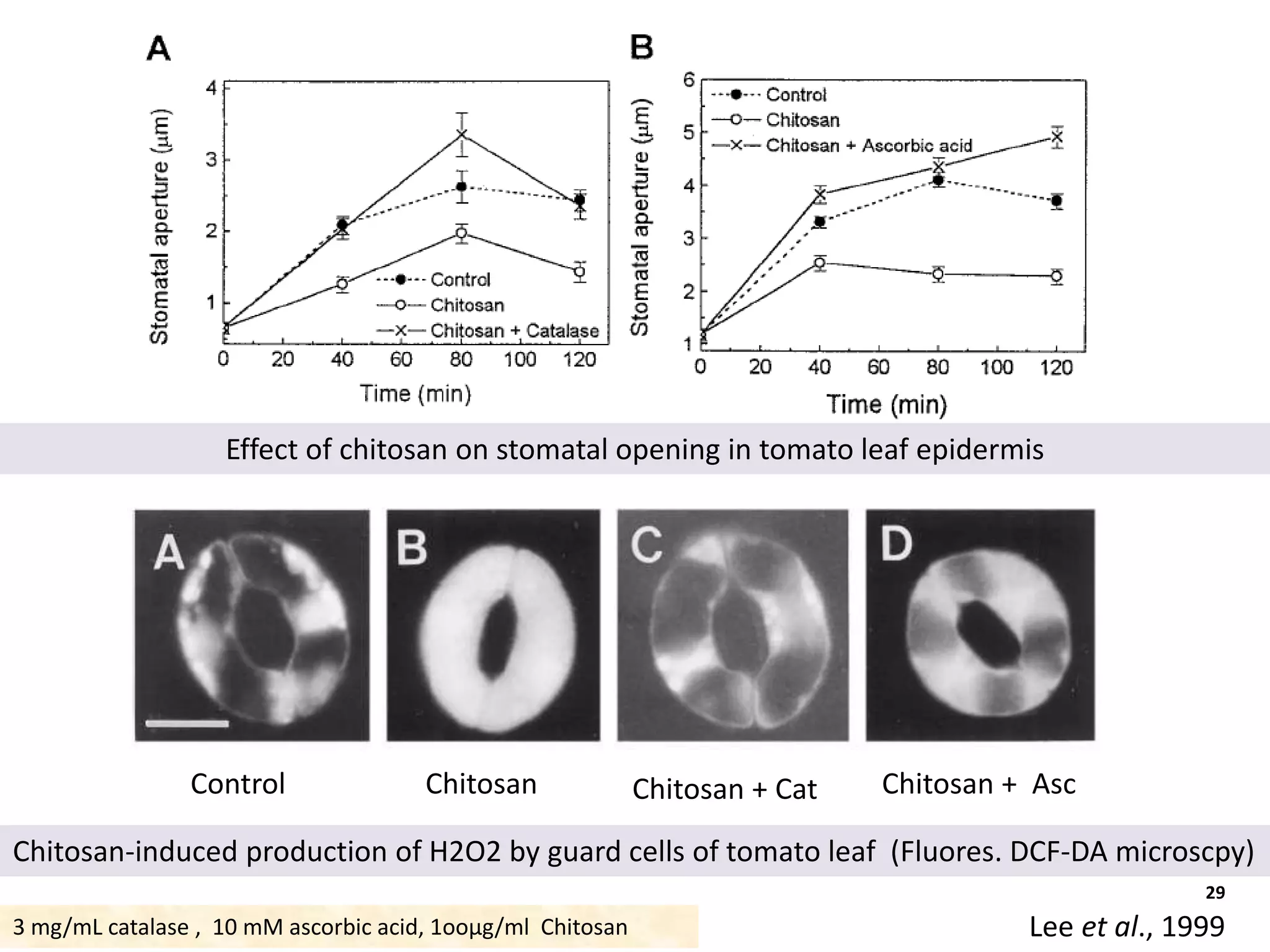
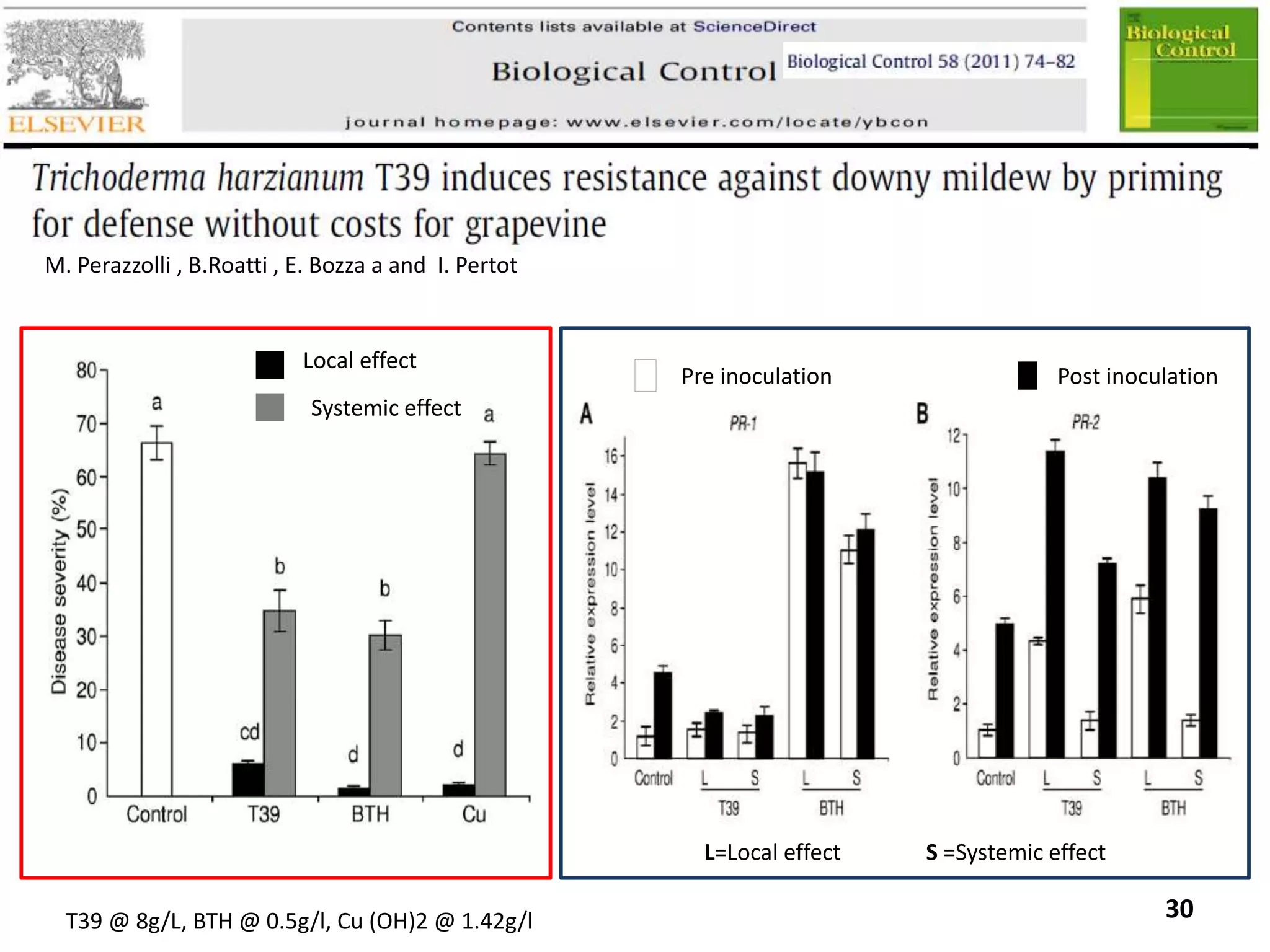
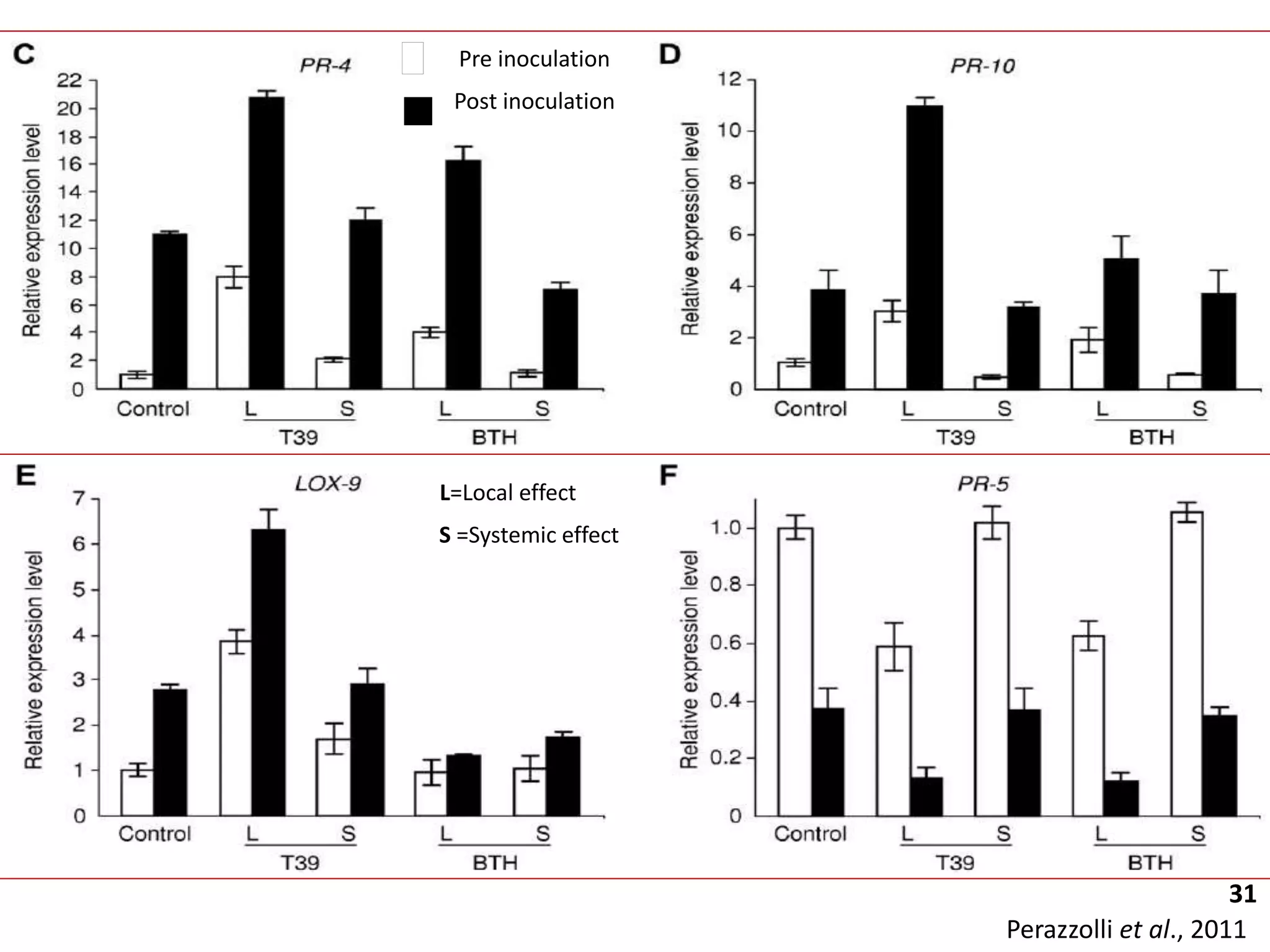
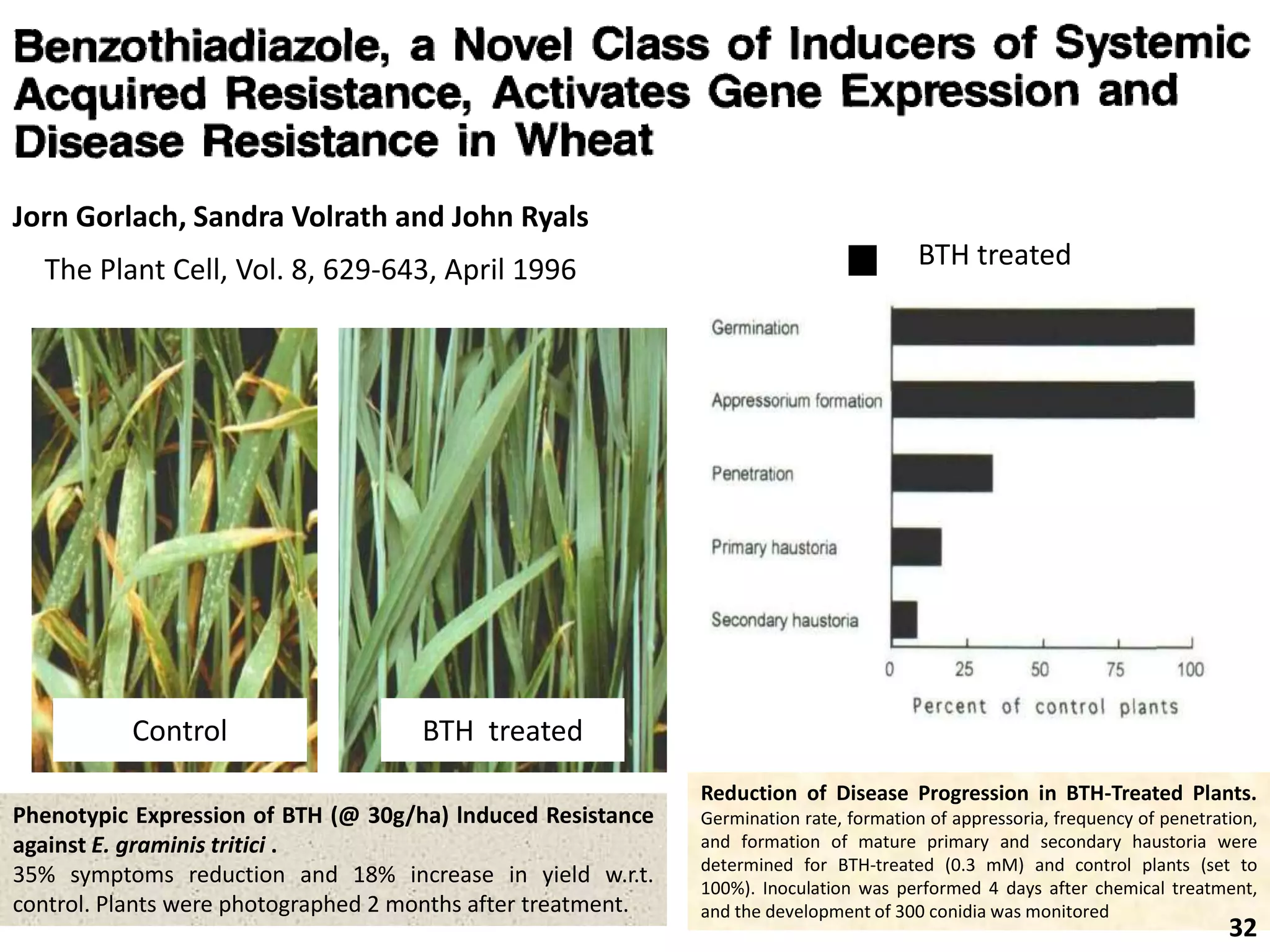
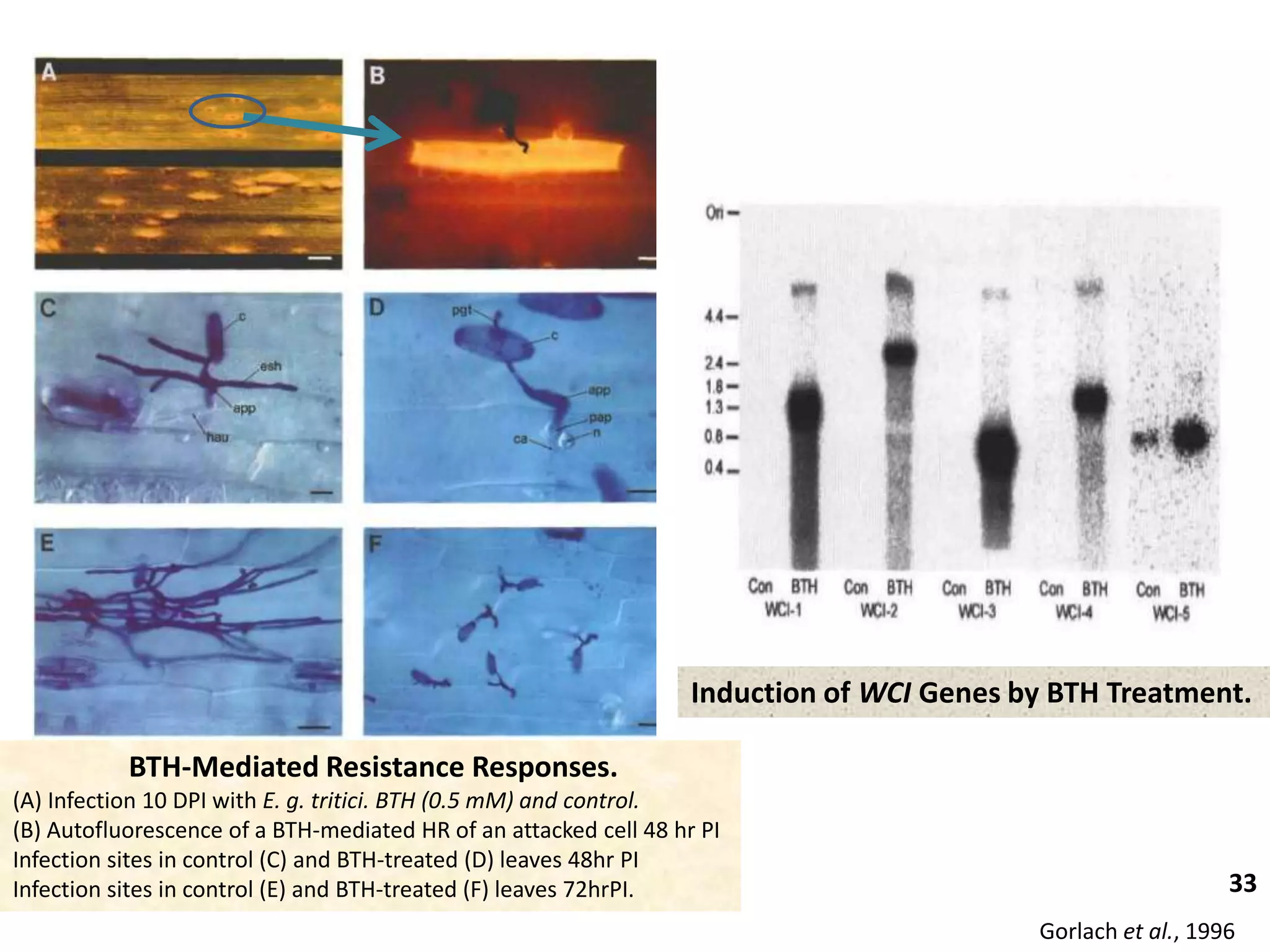
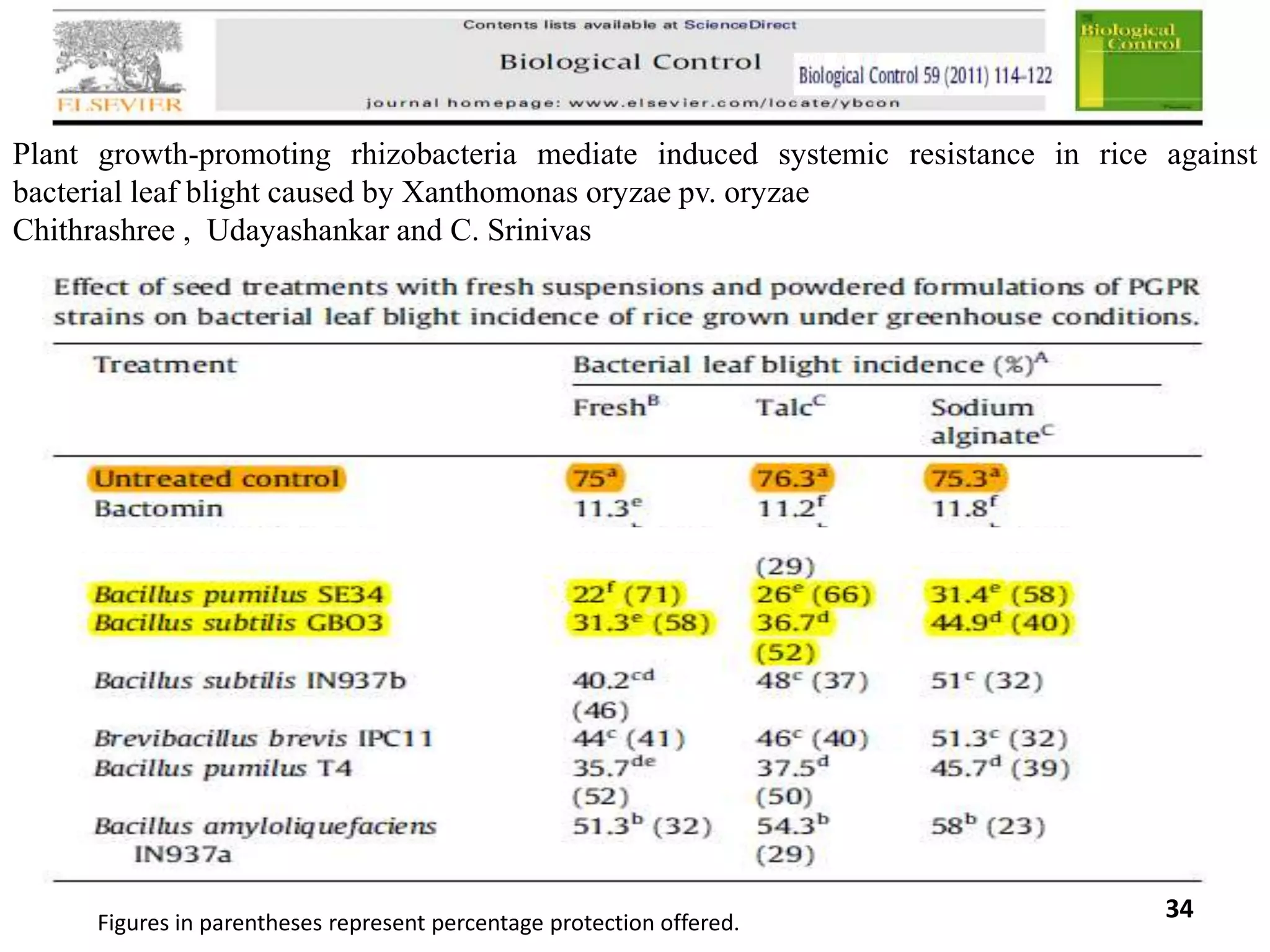
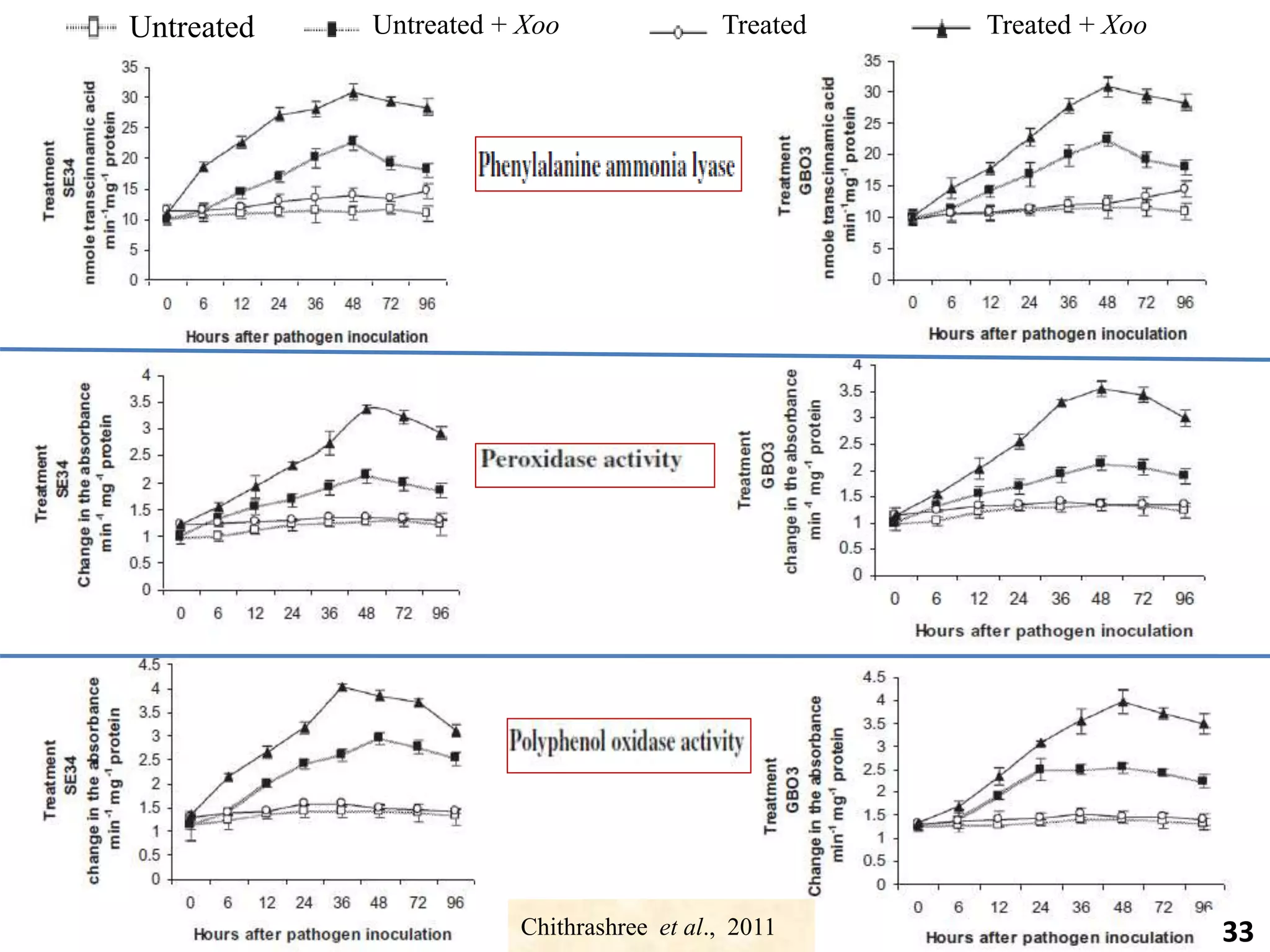
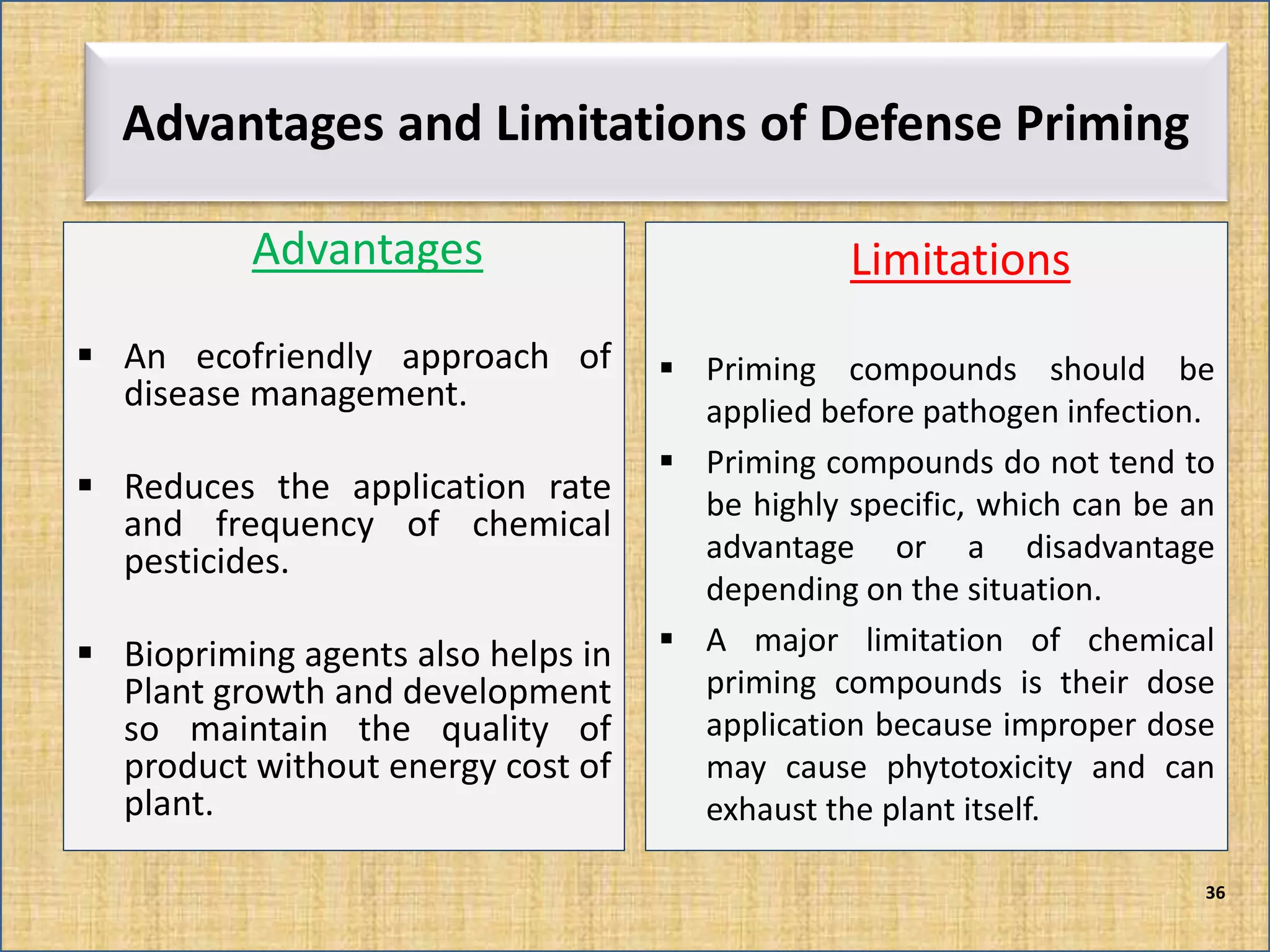
This document discusses plant defense priming, which enables plants to respond more rapidly and robustly to pathogens. Priming involves accumulating signaling components without activating full resistance. It is accompanied by induced resistance pathways. Priming techniques include chemical treatments and bio-priming with microbes. The molecular mechanisms of priming involve elevated pattern recognition receptors, dormant mitogen-activated protein kinases, and chromatin modifications that provide a stress memory. Priming shows potential for sustainable agriculture by reducing pesticide use through potentiated defenses.