1
Light control of plant
development : Seed
germination and de-
etiolation
2
Light in plant’s life
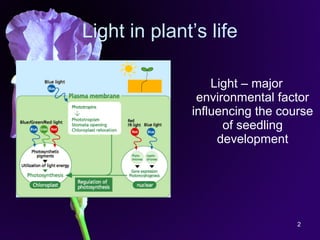
Light – major
environmental factor
influencing the course
of seedling
development
Iriawati, SITH - ITB 3
Iriawati, SITH - ITB 4
5
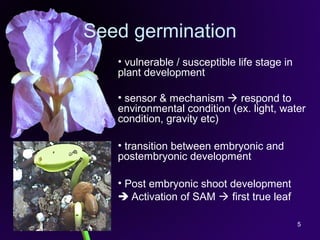
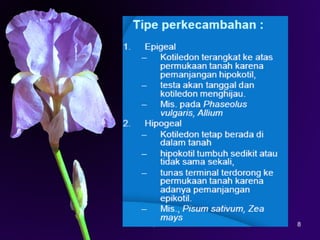
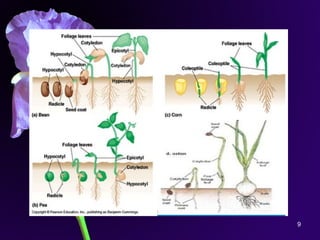
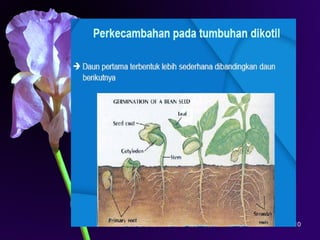
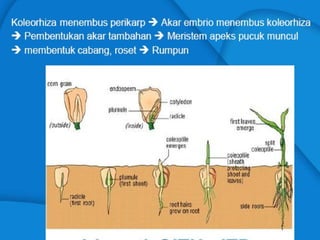
Seed germination
• vulnerable / susceptible life stage in
plant development
• sensor & mechanism  respond to
environmental condition (ex. light, water
condition, gravity etc)
• transition between embryonic and
postembryonic development
• Post embryonic shoot development
 Activation of SAM  first true leaf
6
Iriawati, SITH - ITB 7
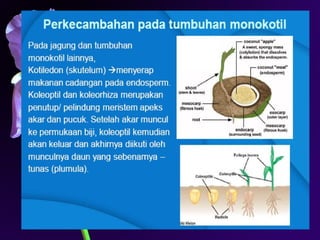
Storage Protein
Amino Acids
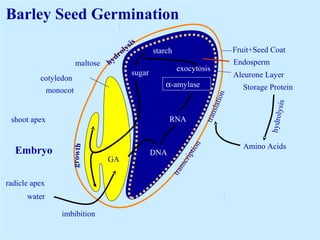
Barley Seed Germination
Fruit+Seed Coat
Endosperm
Aleurone Layer
hydrolysis
translation
transcription
hydrolysis
sugar
α-amylase
RNA
DNA
GA
imbibition
water
radicle apex
shoot apex
growthcotyledon
monocot
maltose
Embryo
exocytosis
starch
Amino Acids
Storage Protein
Iriawati, SITH - ITB 8
9
Iriawati, SITH - ITB 10
Iriawati, SITH - ITB 11
Iriawati, SITH - ITB 12
Iriawati, SITH - ITB 13
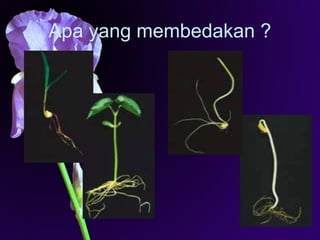
Apa yang membedakan ?
14
Iriawati, SITH - ITB 15
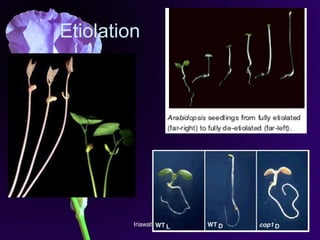
Etiolation
Iriawati, SITH - ITB 16
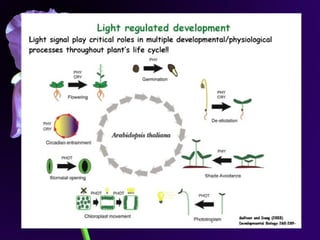
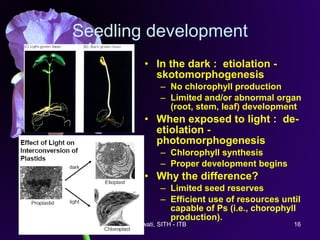
Seedling development
• In the dark : etiolation -
skotomorphogenesis
– No chlorophyll production
– Limited and/or abnormal organ
(root, stem, leaf) development
• When exposed to light : de-
etiolation -
photomorphogenesis
– Chlorophyll synthesis
– Proper development begins
• Why the difference?
– Limited seed reserves
– Efficient use of resources until
capable of Ps (i.e., chorophyll
production).
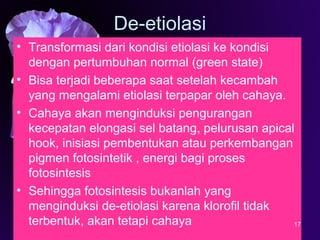
De-etiolasi
• Transformasi dari kondisi etiolasi ke kondisi
dengan pertumbuhan normal (green state)
• Bisa terjadi beberapa saat setelah kecambah
yang mengalami etiolasi terpapar oleh cahaya.
• Cahaya akan menginduksi pengurangan
kecepatan elongasi sel batang, pelurusan apical
hook, inisiasi pembentukan atau perkembangan
pigmen fotosintetik , energi bagi proses
fotosintesis
• Sehingga fotosintesis bukanlah yang
menginduksi de-etiolasi karena klorofil tidak
terbentuk, akan tetapi cahaya 17
Iriawati, SITH - ITB 18
Iriawati, SITH - ITB 19
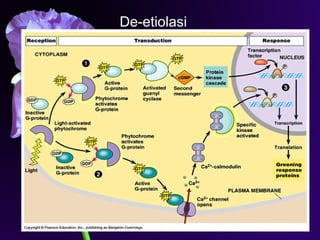
De-etiolasi
20
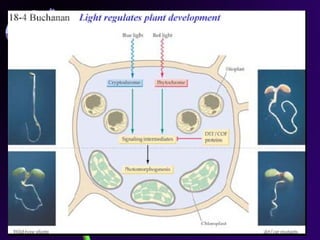
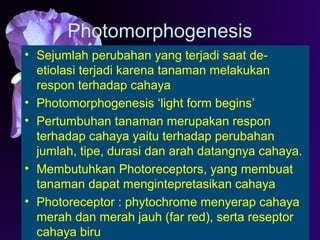
Photomorphogenesis
• Sejumlah perubahan yang terjadi saat de-
etiolasi terjadi karena tanaman melakukan
respon terhadap cahaya
• Photomorphogenesis ‘light form begins’
• Pertumbuhan tanaman merupakan respon
terhadap cahaya yaitu terhadap perubahan
jumlah, tipe, durasi dan arah datangnya cahaya.
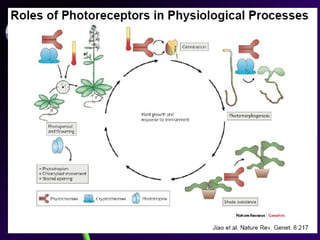
• Membutuhkan Photoreceptors, yang membuat
tanaman dapat mengintepretasikan cahaya
• Photoreceptor : phytochrome menyerap cahaya
merah dan merah jauh (far red), serta reseptor
cahaya biru
21
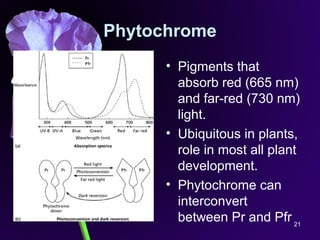
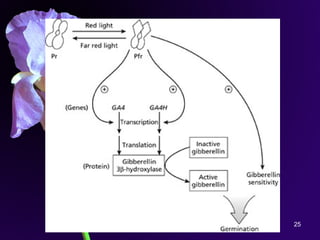
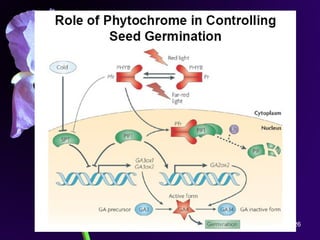
Phytochrome
• Pigments that
absorb red (665 nm)
and far-red (730 nm)
light.
• Ubiquitous in plants,
role in most all plant
development.
• Phytochrome can
interconvert
between Pr and Pfr
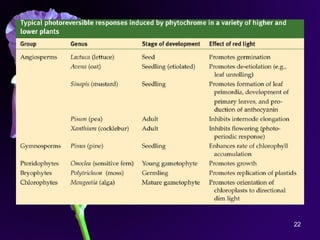
22
Iriawati, SITH - ITB 23
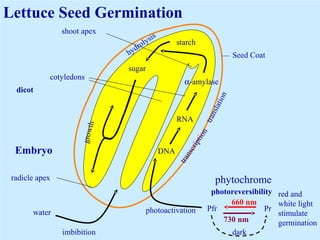
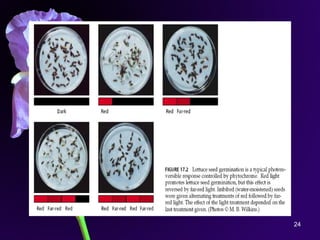
Lettuce Seed Germination
660 nm
730 nm
dark
Seed Coat
translation
transcription
hydrolysis
starch
sugar
α-amylase
RNA
DNA
imbibition
water
radicle apex
shoot apex
growthdicot
photoreversibility
Pfr Prphotoactivation
Embryo
phytochrome
red and
white light
stimulate
germination
cotyledons
24
Iriawati, SITH - ITB 25
Iriawati, SITH - ITB 26

Seed germination

  • 1.
    1 Light control ofplant development : Seed germination and de- etiolation
  • 2.
    2 Light in plant’slife Light – major environmental factor influencing the course of seedling development
  • 3.
  • 4.
  • 5.
    5 Seed germination • vulnerable/ susceptible life stage in plant development • sensor & mechanism  respond to environmental condition (ex. light, water condition, gravity etc) • transition between embryonic and postembryonic development • Post embryonic shoot development  Activation of SAM  first true leaf
  • 6.
  • 7.
    Iriawati, SITH -ITB 7 Storage Protein Amino Acids Barley Seed Germination Fruit+Seed Coat Endosperm Aleurone Layer hydrolysis translation transcription hydrolysis sugar α-amylase RNA DNA GA imbibition water radicle apex shoot apex growthcotyledon monocot maltose Embryo exocytosis starch Amino Acids Storage Protein
  • 8.
  • 9.
  • 10.
  • 11.
  • 12.
  • 13.
  • 14.
  • 15.
    Iriawati, SITH -ITB 15 Etiolation
  • 16.
    Iriawati, SITH -ITB 16 Seedling development • In the dark : etiolation - skotomorphogenesis – No chlorophyll production – Limited and/or abnormal organ (root, stem, leaf) development • When exposed to light : de- etiolation - photomorphogenesis – Chlorophyll synthesis – Proper development begins • Why the difference? – Limited seed reserves – Efficient use of resources until capable of Ps (i.e., chorophyll production).
  • 17.
    De-etiolasi • Transformasi darikondisi etiolasi ke kondisi dengan pertumbuhan normal (green state) • Bisa terjadi beberapa saat setelah kecambah yang mengalami etiolasi terpapar oleh cahaya. • Cahaya akan menginduksi pengurangan kecepatan elongasi sel batang, pelurusan apical hook, inisiasi pembentukan atau perkembangan pigmen fotosintetik , energi bagi proses fotosintesis • Sehingga fotosintesis bukanlah yang menginduksi de-etiolasi karena klorofil tidak terbentuk, akan tetapi cahaya 17
  • 18.
  • 19.
    Iriawati, SITH -ITB 19 De-etiolasi
  • 20.
    20 Photomorphogenesis • Sejumlah perubahanyang terjadi saat de- etiolasi terjadi karena tanaman melakukan respon terhadap cahaya • Photomorphogenesis ‘light form begins’ • Pertumbuhan tanaman merupakan respon terhadap cahaya yaitu terhadap perubahan jumlah, tipe, durasi dan arah datangnya cahaya. • Membutuhkan Photoreceptors, yang membuat tanaman dapat mengintepretasikan cahaya • Photoreceptor : phytochrome menyerap cahaya merah dan merah jauh (far red), serta reseptor cahaya biru
  • 21.
    21 Phytochrome • Pigments that absorbred (665 nm) and far-red (730 nm) light. • Ubiquitous in plants, role in most all plant development. • Phytochrome can interconvert between Pr and Pfr
  • 22.
  • 23.
    Iriawati, SITH -ITB 23 Lettuce Seed Germination 660 nm 730 nm dark Seed Coat translation transcription hydrolysis starch sugar α-amylase RNA DNA imbibition water radicle apex shoot apex growthdicot photoreversibility Pfr Prphotoactivation Embryo phytochrome red and white light stimulate germination cotyledons
  • 24.
  • 25.
  • 26.