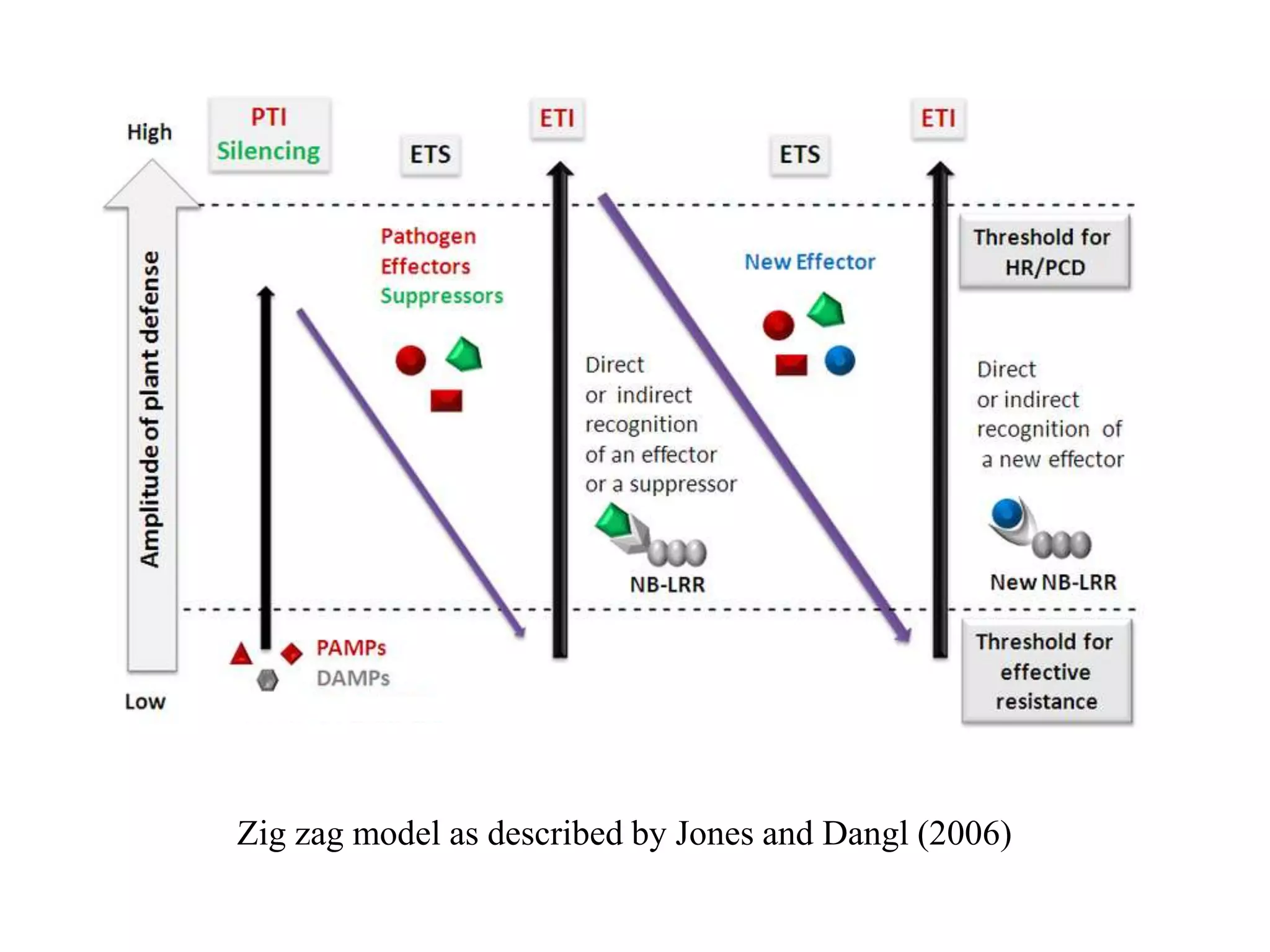
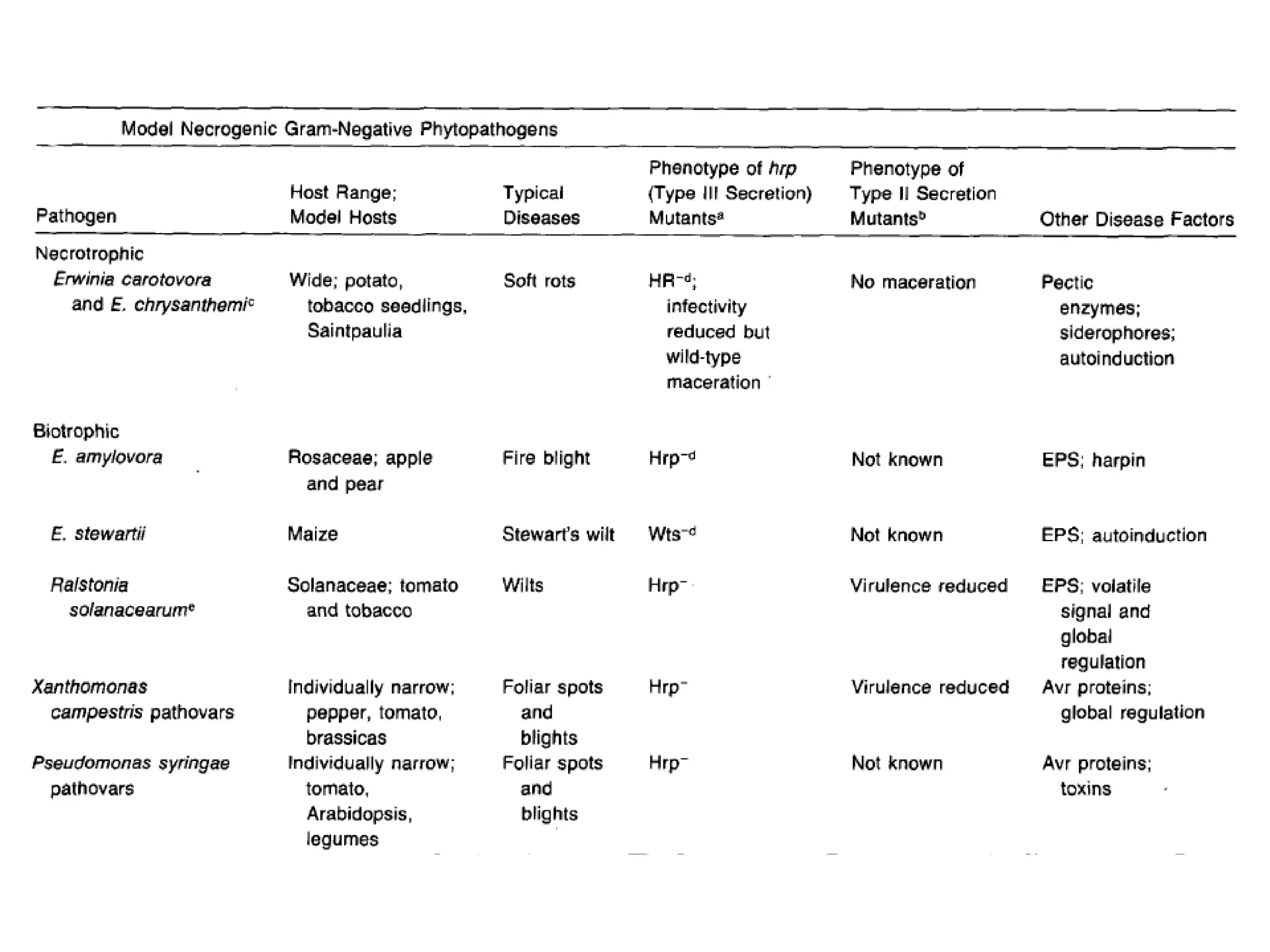
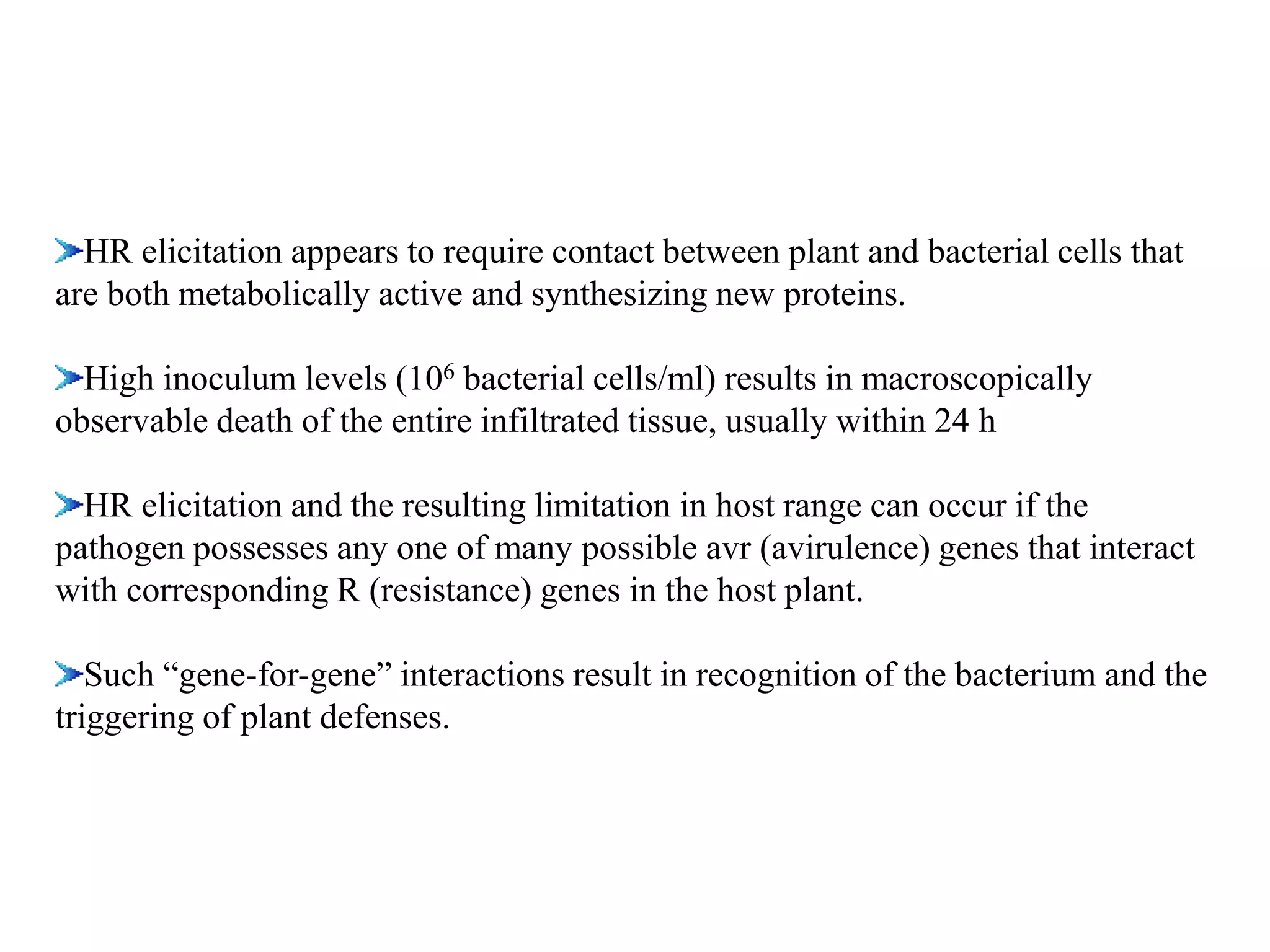
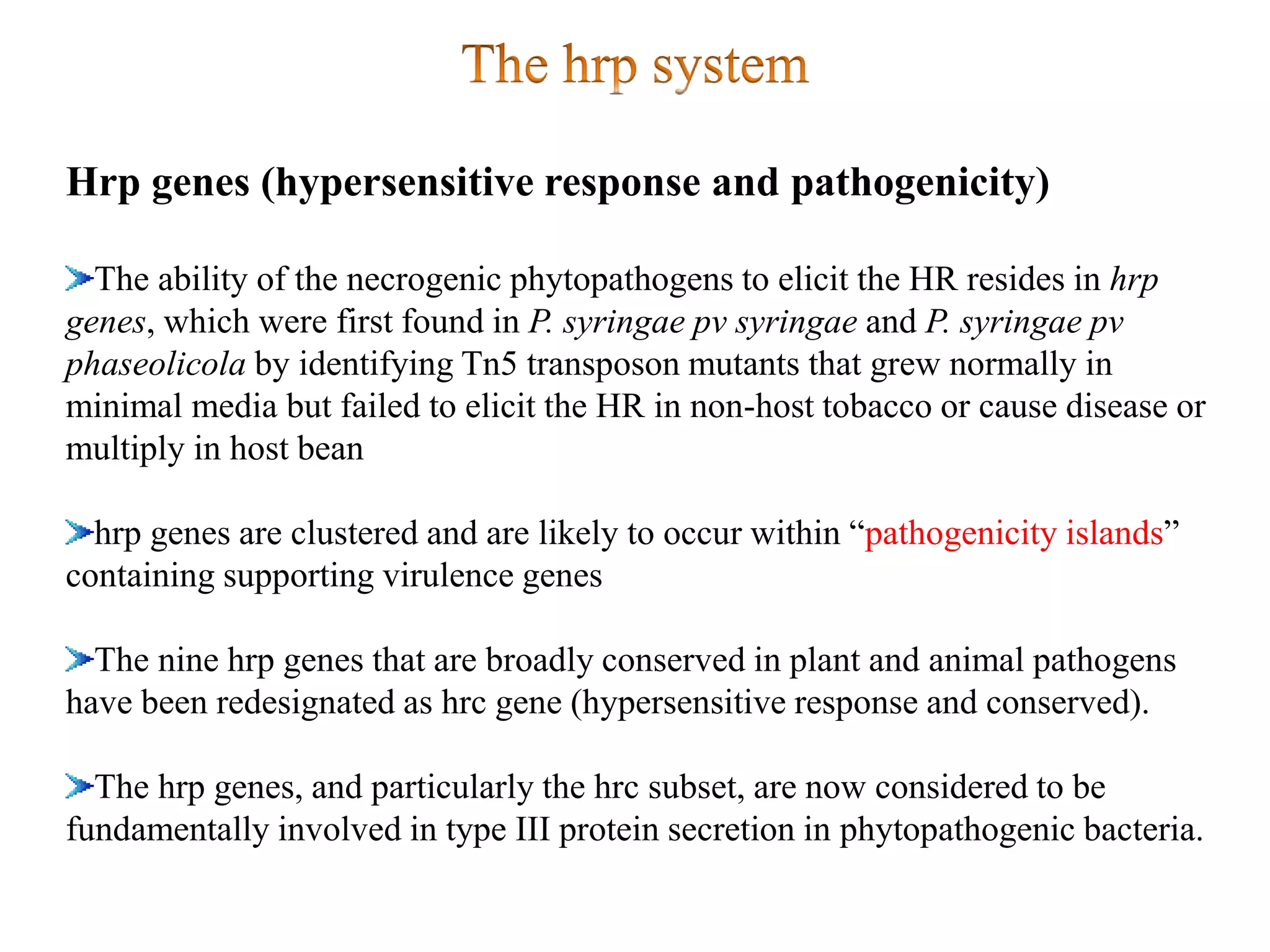
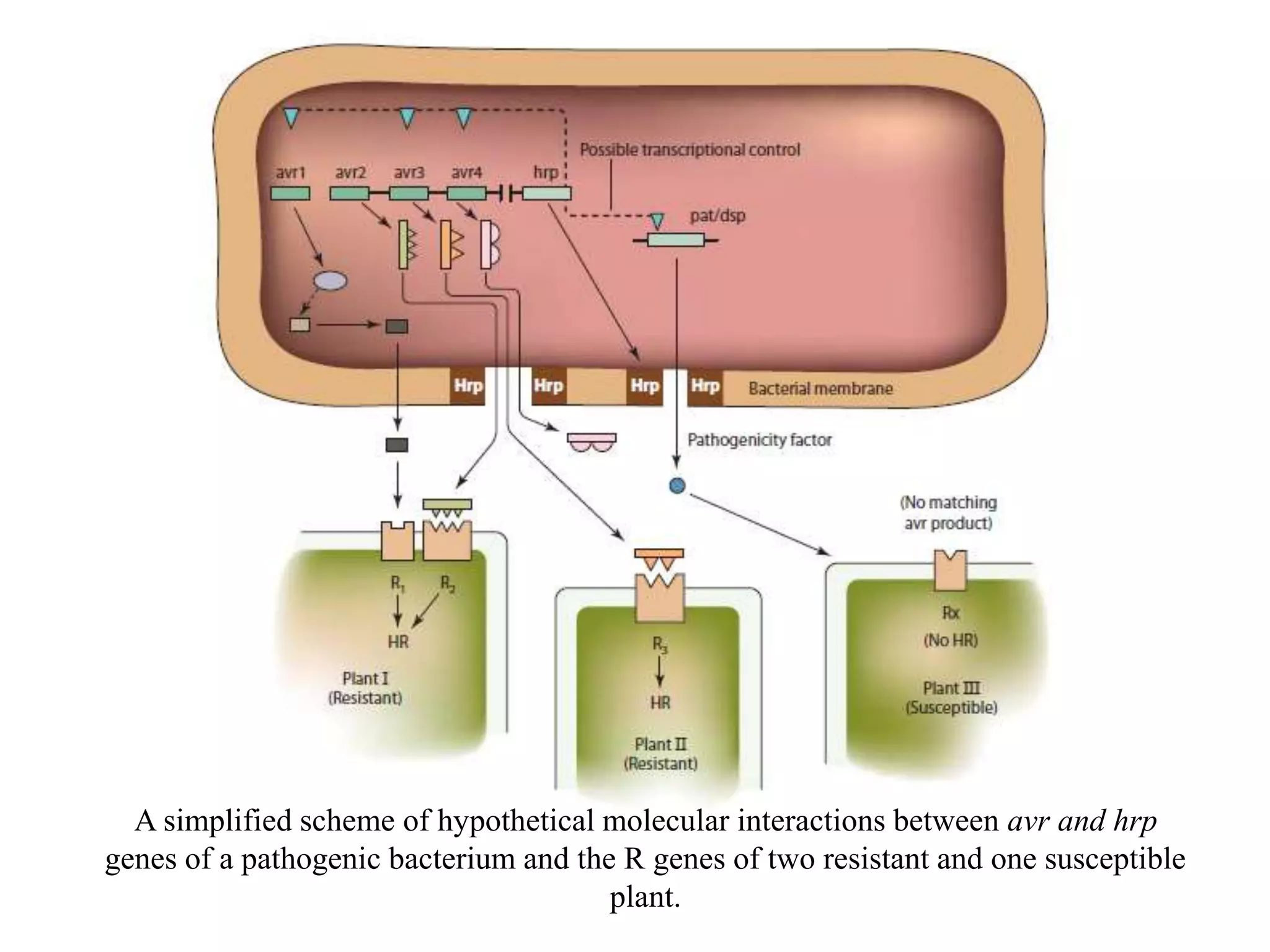
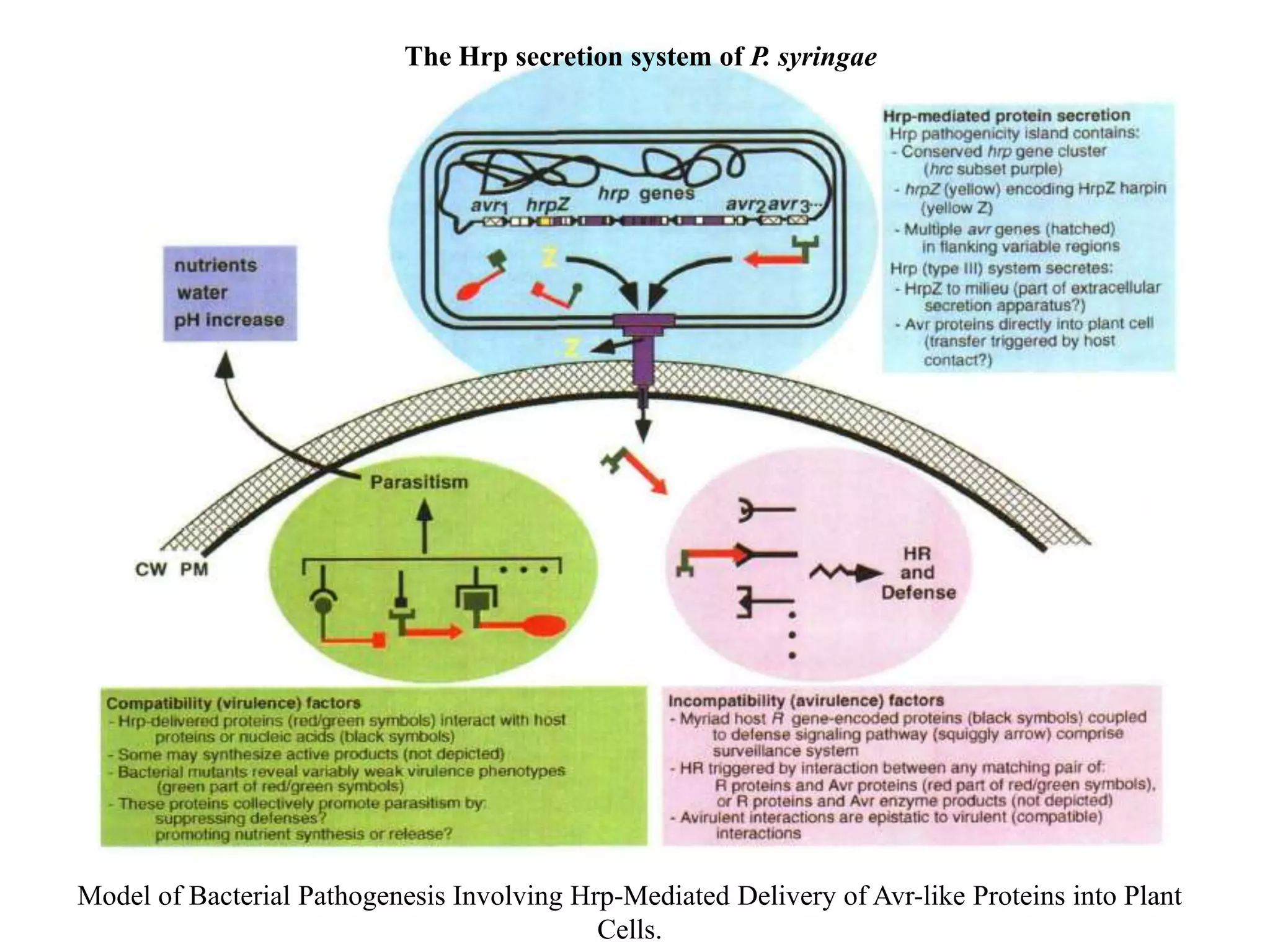
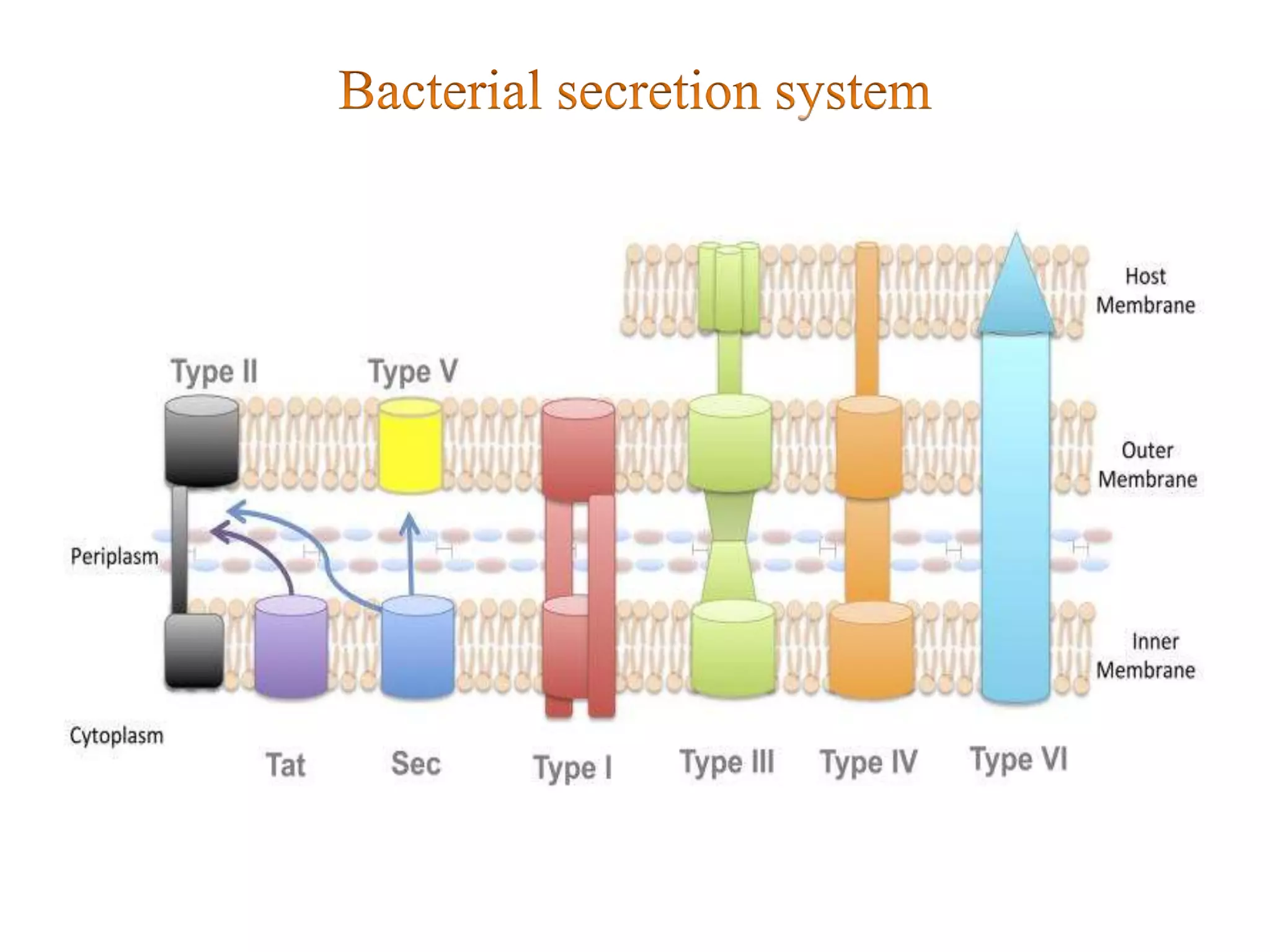
Higher plants contain nutrients that bacteria can access through openings like stomata. Gram-negative bacteria like Pseudomonads and Enterobacteria specialize in colonizing plant tissues. These apoplastic colonizers are often pathogens that cause diseases. Plants have evolved two lines of defense: pattern-triggered immunity in response to microbe-associated molecular patterns, and effector-triggered immunity in response to bacterial effectors through resistance proteins. Bacteria deliver effectors into plant cells through type III secretion systems like Hrp, and plants recognize specific effectors through corresponding resistance genes in a gene-for-gene interaction.