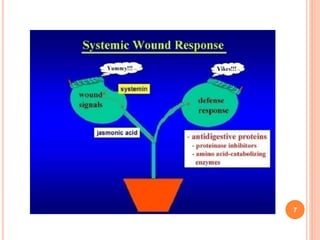
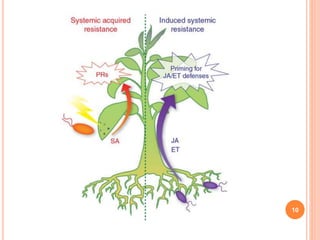
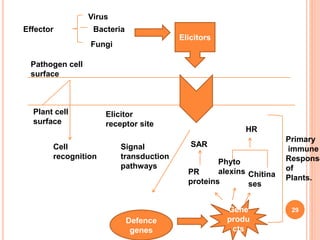
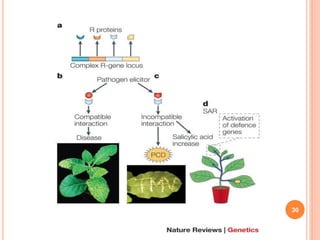
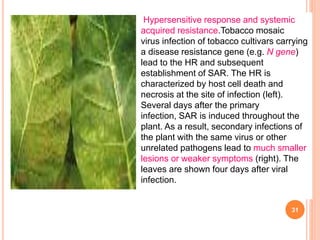
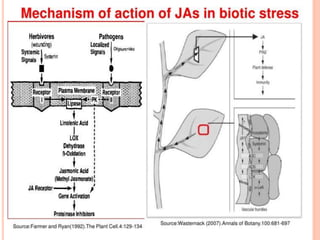
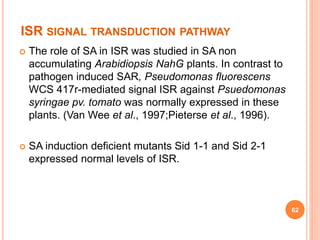
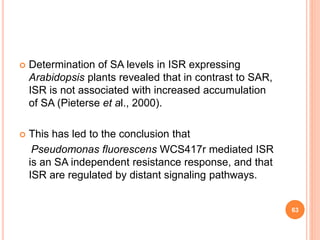
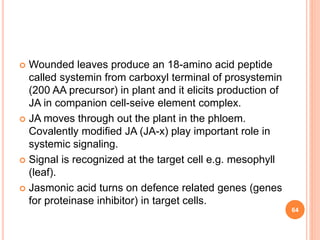
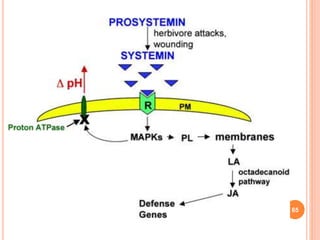
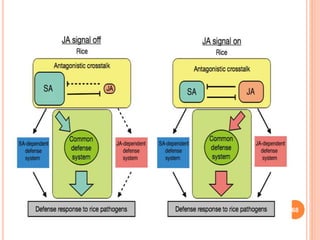
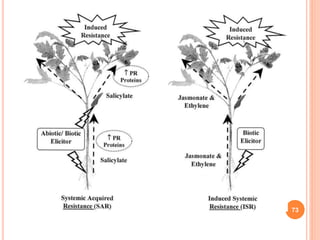
This document summarizes systemic acquired resistance (SAR) in plants. It discusses that SAR is a defense response activated by pathogens that results in long-lasting, broad-spectrum resistance in distant parts of the plant. The key points are:
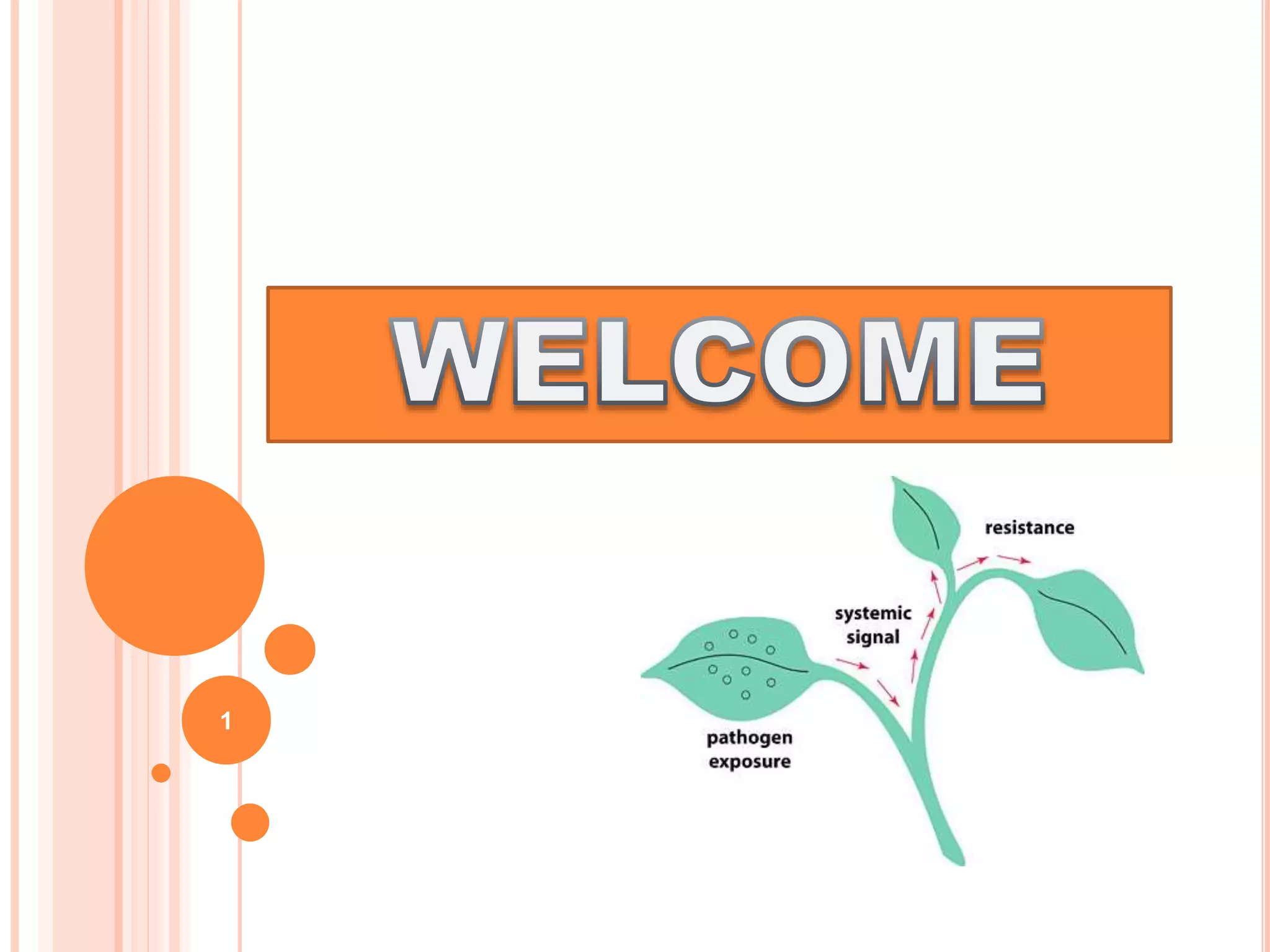
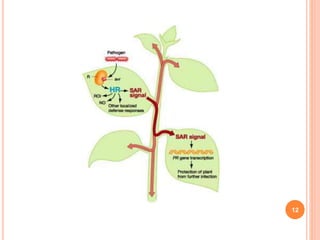
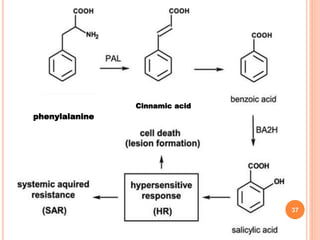
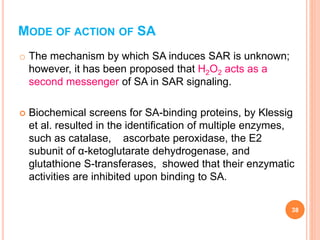
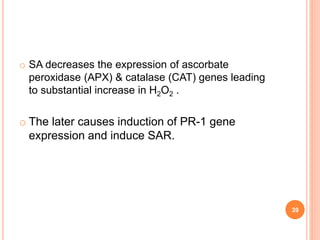
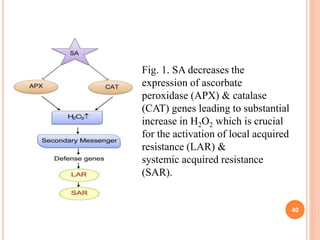
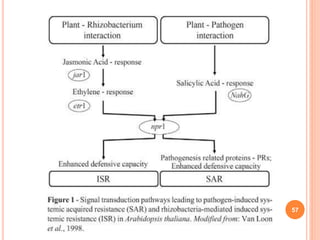
- SAR involves accumulation of salicylic acid and pathogenesis-related proteins in distant, uninfected tissues which provides resistance against a wide range of pathogens.
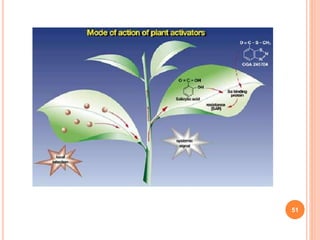
- It is activated after an initial infection causes cell death and necrosis, and involves mobile signaling molecules like methyl salicylate that transmit the defense signal systemically.
- SAR protects against future infections by viruses, fungi, bacteria and activates genes that encode antimicrobial pathogenesis-related proteins.