Prepared by:
Adil khan.
SICKLE CELL ANEMIA
SICKLE CELL ANEMIA:
 Sickle cell anemia is a disease in which the body makes sickle-shaped red
blood cells
 Normal red blood cells are disc-shaped .They move easily through blood
vessels.
 Red blood cells contain an iron-rich protein called hemoglobin. This protein
carries oxygen from the lungs to the rest of the body
 Sickle cells contain abnormal hemoglobin called sickle hemoglobin or
hemoglobin S. Sickle hemoglobin causes the cells to develop a sickle shape.
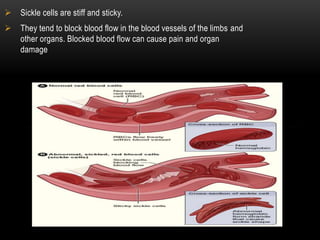
 Sickle cells are stiff and sticky.
 They tend to block blood flow in the blood vessels of the limbs and
other organs. Blocked blood flow can cause pain and organ
damage
TYPES
• There are the following types.
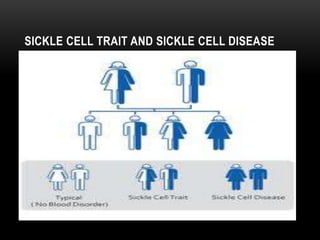
• Sickle cell trait (HbAS)
• A person has an HbS gene and normal hemoglobin A gene (HbA).
• Under normal circumstances, these person have no symptoms of sickle cell
disease
• Such children have no symptoms of sickle cell disease.
• Sickle cell anemia (HbSS)
• Person having two HbS genes, one inherited from each parent
• variety of symptoms and complications of sickle cell disease occur
SICKLE CELL TRAIT AND SICKLE CELL DISEASE
CAUSE
 Red blood cells contain hemoglobin
 Haemoglobin consist of two alpha and two beta chains
 In beta chain a single nucleotide is change, from GAG TO GTG.
 GAG codon code glutamic acid and GTG code valine. So here the whole
protein structure is change and this type of mutation is called miss sense
mutation.
 So miss sense mutation is responsible for sickle cell anemia.
EPIDEMIOLOGY
 The highest frequency of sickle cell disease is found in tropical
regions, particularly Africa, India and the Middle-East.
 total of 150,000 affected children born every year in Nigeria alone.
 About 70,000 people in the United States have sickle cell disease
 In Saudi Arabia about 4.2% of the population carry the sickle-cell trait and
0.26% have sickle cell disease
 Sickle Cell Disease (SCD) affects 90,000 Americans
DIAGNOSES
• Diagnosis of sickle cell disease and sickle cell trait can be done through
blood testing.
• A special technique is also used called hemoglobin electrophoresis
• Hemoglobin Electrophoresis: A small blood sample is taken and sent to a
laboratory where the percentage of normal and abnormal hemoglobin is
measured.
SIGNS AND SYMPTOMS
• The most common symptom of anemia is fatigue (feeling tired or weak). Other
signs and symptoms of anemia include:
• Shortness of breath
• Headaches
• Coldness in the hands and feet
• Jaundice (a yellowish color of the skin or whites of the eyes)
• Hand –foot syndrome due to the blockage of blood vessels in the hands and
feet.
• Organs like spleen and liver also damages.
TREATMENT
• Treatment of sickle cell anemia includes:
• pain medications (for example, morphine).
• Anti-inflammatory medications (for example, ibuprofen).
• Antibiotics for infection.
• Intravenous or oral fluids.
• Transfusions of red blood cells are given for anemia.
• Stem cell transplant is performed in young patients with severe sickle cell
disease.
Thanks…….

Sickle cell anemia presentation

  • 1.
  • 2.
    SICKLE CELL ANEMIA: Sickle cell anemia is a disease in which the body makes sickle-shaped red blood cells  Normal red blood cells are disc-shaped .They move easily through blood vessels.  Red blood cells contain an iron-rich protein called hemoglobin. This protein carries oxygen from the lungs to the rest of the body  Sickle cells contain abnormal hemoglobin called sickle hemoglobin or hemoglobin S. Sickle hemoglobin causes the cells to develop a sickle shape.
  • 3.
     Sickle cellsare stiff and sticky.  They tend to block blood flow in the blood vessels of the limbs and other organs. Blocked blood flow can cause pain and organ damage
  • 4.
    TYPES • There arethe following types. • Sickle cell trait (HbAS) • A person has an HbS gene and normal hemoglobin A gene (HbA). • Under normal circumstances, these person have no symptoms of sickle cell disease • Such children have no symptoms of sickle cell disease. • Sickle cell anemia (HbSS) • Person having two HbS genes, one inherited from each parent • variety of symptoms and complications of sickle cell disease occur
  • 5.
    SICKLE CELL TRAITAND SICKLE CELL DISEASE
  • 6.
    CAUSE  Red bloodcells contain hemoglobin  Haemoglobin consist of two alpha and two beta chains  In beta chain a single nucleotide is change, from GAG TO GTG.  GAG codon code glutamic acid and GTG code valine. So here the whole protein structure is change and this type of mutation is called miss sense mutation.  So miss sense mutation is responsible for sickle cell anemia.
  • 7.
    EPIDEMIOLOGY  The highestfrequency of sickle cell disease is found in tropical regions, particularly Africa, India and the Middle-East.  total of 150,000 affected children born every year in Nigeria alone.  About 70,000 people in the United States have sickle cell disease  In Saudi Arabia about 4.2% of the population carry the sickle-cell trait and 0.26% have sickle cell disease  Sickle Cell Disease (SCD) affects 90,000 Americans
  • 8.
    DIAGNOSES • Diagnosis ofsickle cell disease and sickle cell trait can be done through blood testing. • A special technique is also used called hemoglobin electrophoresis • Hemoglobin Electrophoresis: A small blood sample is taken and sent to a laboratory where the percentage of normal and abnormal hemoglobin is measured.
  • 9.
    SIGNS AND SYMPTOMS •The most common symptom of anemia is fatigue (feeling tired or weak). Other signs and symptoms of anemia include: • Shortness of breath • Headaches • Coldness in the hands and feet • Jaundice (a yellowish color of the skin or whites of the eyes) • Hand –foot syndrome due to the blockage of blood vessels in the hands and feet. • Organs like spleen and liver also damages.
  • 10.
    TREATMENT • Treatment ofsickle cell anemia includes: • pain medications (for example, morphine). • Anti-inflammatory medications (for example, ibuprofen). • Antibiotics for infection. • Intravenous or oral fluids. • Transfusions of red blood cells are given for anemia. • Stem cell transplant is performed in young patients with severe sickle cell disease.
  • 11.