http://www.fitango.com/categories.php?id=355
Fitango Education
Health Topics
Sickle-cell disease
1
Overview
Sickle cell anemia is a disease in which
your body produces abnormally shaped red blood
cells. The cells are shaped like
a crescent or sickle. They don't last as long as
normal, round red blood cells,
2
Overview
which leads to anemia.
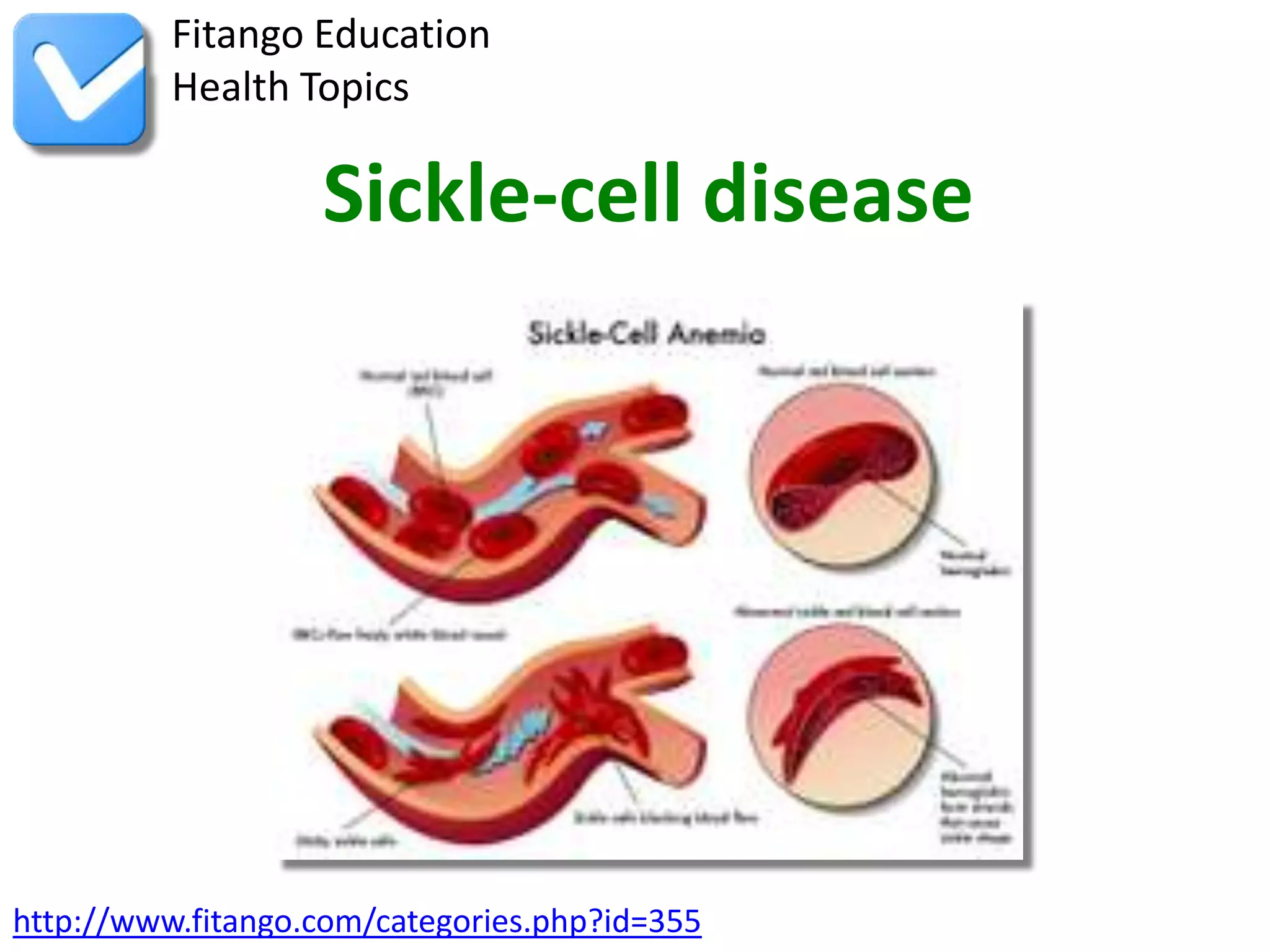
The sickle cells also get stuck in blood vessels,
blocking blood flow. This can
cause pain and organ damage.
A genetic problem causes sickle cell
3
Overview
anemia. People with the disease are born with two
sickle cell genes, one from
each parent. If you only have one sickle cell
gene, it's called sickle cell
trait. About 1 in 12 African Americans has sickle
cell trait. A blood test can
4
Overview
show if you have the trait or anemia. Most states
test newborn babies as part
of their newborn screening programs.
5
Causes
People who inherit a sickle hemoglobin gene
from one parent and a normal gene from the other
parent have a condition called
sickle cell trait. Their bodies make sickle
hemoglobin and normal hemoglobin.
6
Causes
People who have sickle cell trait usually
have few, if any, symptoms and lead normal lives.
However, some people may have
medical complications.
People who have sickle cell trait can pass
7
Causes
the sickle hemoglobin gene to their children. The
following image shows an
example of an inheritance pattern for sickle cell
trait.
The image shows how sickle hemoglobin genes
are inherited. A person inherits two hemoglobin
genes—one from each parent. A normal
8
Causes
gene will make normal hemoglobin (A). A sickle
hemoglobin gene will make
abnormal hemoglobin (S).
When both parents have a normal gene and an
abnormal gene, each child has a 25 percent chance
of inheriting two normal
9
Causes
genes; a 50 percent chance of inheriting one
normal gene and one abnormal gene;
and a 25 percent chance of inheriting two
abnormal genes.
10
Symptoms
The signs and symptoms of sickle cell
anemia vary. Some people have mild symptoms.
Others have very severe symptoms
and often are hospitalized for treatment.
Sickle cell anemia is present at birth, but
11
Symptoms
many infants don't show any signs until after 4
months of age.
The most common signs and symptoms are
linked to anemia and
pain. Other signs and symptoms are linked to the
disease's complications.
12
Symptoms
**Signs and Symptoms Related to Anemia**
The most common symptom of anemia is
fatigue (feeling tired or weak). Other signs and
symptoms of anemia may
include:
-- Shortness of breath
13
Symptoms
**Signs and Symptoms Related to Anemia**
-- Dizziness
-- Headaches
-- Coldness in the hands and feet
-- Paler than normal skin or mucous membranes
(the tissue that lines your nose, mouth, and other
organs and body cavities)
14
Symptoms
**Signs and Symptoms Related to Anemia**
-- Jaundice (a yellowish color of the skin or
whites of the eyes)
15
Symptoms
**Signs and Symptoms Related to Pain**
Sudden pain throughout the body is a common
symptom of sickle cell anemia. This pain is called a
sickle cell crisis. Sickle
cell crises often affect the bones, lungs, abdomen,
and joints.
16
Symptoms
**Signs and Symptoms Related to Pain**
These crises occur when sickled red blood
cells block blood flow to the limbs and organs. This
can cause pain and organ
damage.
The pain from sickle cell anemia can be
17
Symptoms
**Signs and Symptoms Related to Pain**
acute or chronic, but acute pain is more common.
Acute pain is sudden and can
range from mild to very severe. The pain usually
lasts from hours to as long as
a week or more.
Many people who have sickle cell anemia
18
Symptoms
**Signs and Symptoms Related to Pain**
also have chronic pain, especially in their bones.
Chronic pain often lasts for
weeks or months and can be hard to bear and
mentally draining. Chronic pain may
limit your daily activities.
Almost all people who have sickle cell
19
Symptoms
**Signs and Symptoms Related to Pain**
anemia have painful crises at some point in their
lives. Some have these crises
less than once a year. Others may have crises once
a month or more. Repeated
crises can damage the bones, kidneys, lungs, eyes,
heart, and liver. This type
20
Symptoms
**Signs and Symptoms Related to Pain**
of damage happens more often in adults than in
children.
Many factors can play a role in sickle cell
crises. Often, more than one factor is involved and
the exact cause isn't
known.
21
Symptoms
**Signs and Symptoms Related to Pain**
You can control some factors. For example,
the risk of a sickle cell crisis increases if you're
dehydrated (your body
doesn't have enough fluids). Drinking plenty of
fluids can lower the risk of a
painful crisis.
22
Symptoms
**Signs and Symptoms Related to Pain**
You can't control other factors, such as
infections.
Painful crises are the leading cause of
emergency room visits and hospital stays for
people who have sickle cell
anemia.
23
Diagnosis
A simple blood test, done at any time
during a person's lifespan, can detect whether he
or she has sickle hemoglobin.
However, early diagnosis is very important.
In the United States, all States mandate
24
Diagnosis
testing for sickle cell anemia as part of their
newborn screening programs. The
test uses blood from the same blood samples used
for other routine newborn
screening tests. The test can show whether a
newborn infant has sickle
hemoglobin.
25
Diagnosis
Test results are sent to the doctor who
ordered the test and to the baby's primary care
doctor. It's important to give
the correct contact information to the hospital.
This allows the baby's doctor
to get the test results as quickly as possible.
26
Diagnosis
Health providers from a newborn screening
followup program may contact you directly to
make sure you're aware of the test
results.
If the test shows some sickle hemoglobin, a
27
Diagnosis
second blood test is done to confirm the diagnosis.
The second test should be
done as soon as possible and within the first few
months of life.
The primary care doctor may send you to a
hematologist for a second blood test. A
hematologist is a doctor who
28
Diagnosis
specializes in blood diseases and disorders. This
doctor also can provide
treatment for sickle cell disease if needed.
Doctors also can diagnose sickle cell
disease before birth. This is done using a sample of
amniotic fluid or tissue
29
Diagnosis
taken from the placenta. (Amniotic fluid is the fluid
in the sac surrounding a
growing embryo. The placenta is the organ that
attaches the umbilical cord to
the mother's womb.)
Testing before birth can be done as early
30
Diagnosis
as 10 weeks into the pregnancy. This testing looks
for the sickle hemoglobin
gene, rather than the abnormal hemoglobin that
the gene makes.
31
Treatment
Sickle cell anemia has no widely available
cure. However, treatments can help relieve
symptoms and treat complications.
The goals of treating sickle cell anemia are to
relieve pain; prevent
32
Treatment
infections, organ damage, and strokes; and control
complications (if they occur).
Blood and
marrow stem cell transplants may offer a cure for a
small number of
people who have sickle cell anemia. Researchers
continue to look for new
33
Treatment
treatments for the disease.
Infants who have been diagnosed with sickle
cell anemia through newborn screening are
treated with antibiotics to prevent
infections. Their parents are educated about the
disease and how to manage it.
34
Treatment
These initial treatment steps have greatly
improved the outcome for children
who have sickle cell anemia.
35
Prevention
Sickle cell anemia is an inherited disease.
If a person is born with it, steps should be taken to
reduce its complications.
People who are at high risk of having a
36
Prevention
child with sickle cell anemia and are planning to
have children may want to
consider genetic counseling. A counselor can
explain the risk (likelihood) of
having a child who has the disease. He or she also
can help explain the choices
that are available.
37
Prevention
You can find information about genetic
counseling from health
departments, neighborhood health
centers, medical
centers, and clinics that care for people who have
sickle cell anemia.
Sickle-cell disease

Sickle-cell disease

  • 1.
  • 2.
    1 Overview Sickle cell anemiais a disease in which your body produces abnormally shaped red blood cells. The cells are shaped like a crescent or sickle. They don't last as long as normal, round red blood cells,
  • 3.
    2 Overview which leads toanemia. The sickle cells also get stuck in blood vessels, blocking blood flow. This can cause pain and organ damage. A genetic problem causes sickle cell
  • 4.
    3 Overview anemia. People withthe disease are born with two sickle cell genes, one from each parent. If you only have one sickle cell gene, it's called sickle cell trait. About 1 in 12 African Americans has sickle cell trait. A blood test can
  • 5.
    4 Overview show if youhave the trait or anemia. Most states test newborn babies as part of their newborn screening programs.
  • 6.
    5 Causes People who inherita sickle hemoglobin gene from one parent and a normal gene from the other parent have a condition called sickle cell trait. Their bodies make sickle hemoglobin and normal hemoglobin.
  • 7.
    6 Causes People who havesickle cell trait usually have few, if any, symptoms and lead normal lives. However, some people may have medical complications. People who have sickle cell trait can pass
  • 8.
    7 Causes the sickle hemoglobingene to their children. The following image shows an example of an inheritance pattern for sickle cell trait. The image shows how sickle hemoglobin genes are inherited. A person inherits two hemoglobin genes—one from each parent. A normal
  • 9.
    8 Causes gene will makenormal hemoglobin (A). A sickle hemoglobin gene will make abnormal hemoglobin (S). When both parents have a normal gene and an abnormal gene, each child has a 25 percent chance of inheriting two normal
  • 10.
    9 Causes genes; a 50percent chance of inheriting one normal gene and one abnormal gene; and a 25 percent chance of inheriting two abnormal genes.
  • 11.
    10 Symptoms The signs andsymptoms of sickle cell anemia vary. Some people have mild symptoms. Others have very severe symptoms and often are hospitalized for treatment. Sickle cell anemia is present at birth, but
  • 12.
    11 Symptoms many infants don'tshow any signs until after 4 months of age. The most common signs and symptoms are linked to anemia and pain. Other signs and symptoms are linked to the disease's complications.
  • 13.
    12 Symptoms **Signs and SymptomsRelated to Anemia** The most common symptom of anemia is fatigue (feeling tired or weak). Other signs and symptoms of anemia may include: -- Shortness of breath
  • 14.
    13 Symptoms **Signs and SymptomsRelated to Anemia** -- Dizziness -- Headaches -- Coldness in the hands and feet -- Paler than normal skin or mucous membranes (the tissue that lines your nose, mouth, and other organs and body cavities)
  • 15.
    14 Symptoms **Signs and SymptomsRelated to Anemia** -- Jaundice (a yellowish color of the skin or whites of the eyes)
  • 16.
    15 Symptoms **Signs and SymptomsRelated to Pain** Sudden pain throughout the body is a common symptom of sickle cell anemia. This pain is called a sickle cell crisis. Sickle cell crises often affect the bones, lungs, abdomen, and joints.
  • 17.
    16 Symptoms **Signs and SymptomsRelated to Pain** These crises occur when sickled red blood cells block blood flow to the limbs and organs. This can cause pain and organ damage. The pain from sickle cell anemia can be
  • 18.
    17 Symptoms **Signs and SymptomsRelated to Pain** acute or chronic, but acute pain is more common. Acute pain is sudden and can range from mild to very severe. The pain usually lasts from hours to as long as a week or more. Many people who have sickle cell anemia
  • 19.
    18 Symptoms **Signs and SymptomsRelated to Pain** also have chronic pain, especially in their bones. Chronic pain often lasts for weeks or months and can be hard to bear and mentally draining. Chronic pain may limit your daily activities. Almost all people who have sickle cell
  • 20.
    19 Symptoms **Signs and SymptomsRelated to Pain** anemia have painful crises at some point in their lives. Some have these crises less than once a year. Others may have crises once a month or more. Repeated crises can damage the bones, kidneys, lungs, eyes, heart, and liver. This type
  • 21.
    20 Symptoms **Signs and SymptomsRelated to Pain** of damage happens more often in adults than in children. Many factors can play a role in sickle cell crises. Often, more than one factor is involved and the exact cause isn't known.
  • 22.
    21 Symptoms **Signs and SymptomsRelated to Pain** You can control some factors. For example, the risk of a sickle cell crisis increases if you're dehydrated (your body doesn't have enough fluids). Drinking plenty of fluids can lower the risk of a painful crisis.
  • 23.
    22 Symptoms **Signs and SymptomsRelated to Pain** You can't control other factors, such as infections. Painful crises are the leading cause of emergency room visits and hospital stays for people who have sickle cell anemia.
  • 24.
    23 Diagnosis A simple bloodtest, done at any time during a person's lifespan, can detect whether he or she has sickle hemoglobin. However, early diagnosis is very important. In the United States, all States mandate
  • 25.
    24 Diagnosis testing for sicklecell anemia as part of their newborn screening programs. The test uses blood from the same blood samples used for other routine newborn screening tests. The test can show whether a newborn infant has sickle hemoglobin.
  • 26.
    25 Diagnosis Test results aresent to the doctor who ordered the test and to the baby's primary care doctor. It's important to give the correct contact information to the hospital. This allows the baby's doctor to get the test results as quickly as possible.
  • 27.
    26 Diagnosis Health providers froma newborn screening followup program may contact you directly to make sure you're aware of the test results. If the test shows some sickle hemoglobin, a
  • 28.
    27 Diagnosis second blood testis done to confirm the diagnosis. The second test should be done as soon as possible and within the first few months of life. The primary care doctor may send you to a hematologist for a second blood test. A hematologist is a doctor who
  • 29.
    28 Diagnosis specializes in blooddiseases and disorders. This doctor also can provide treatment for sickle cell disease if needed. Doctors also can diagnose sickle cell disease before birth. This is done using a sample of amniotic fluid or tissue
  • 30.
    29 Diagnosis taken from theplacenta. (Amniotic fluid is the fluid in the sac surrounding a growing embryo. The placenta is the organ that attaches the umbilical cord to the mother's womb.) Testing before birth can be done as early
  • 31.
    30 Diagnosis as 10 weeksinto the pregnancy. This testing looks for the sickle hemoglobin gene, rather than the abnormal hemoglobin that the gene makes.
  • 32.
    31 Treatment Sickle cell anemiahas no widely available cure. However, treatments can help relieve symptoms and treat complications. The goals of treating sickle cell anemia are to relieve pain; prevent
  • 33.
    32 Treatment infections, organ damage,and strokes; and control complications (if they occur). Blood and marrow stem cell transplants may offer a cure for a small number of people who have sickle cell anemia. Researchers continue to look for new
  • 34.
    33 Treatment treatments for thedisease. Infants who have been diagnosed with sickle cell anemia through newborn screening are treated with antibiotics to prevent infections. Their parents are educated about the disease and how to manage it.
  • 35.
    34 Treatment These initial treatmentsteps have greatly improved the outcome for children who have sickle cell anemia.
  • 36.
    35 Prevention Sickle cell anemiais an inherited disease. If a person is born with it, steps should be taken to reduce its complications. People who are at high risk of having a
  • 37.
    36 Prevention child with sicklecell anemia and are planning to have children may want to consider genetic counseling. A counselor can explain the risk (likelihood) of having a child who has the disease. He or she also can help explain the choices that are available.
  • 38.
    37 Prevention You can findinformation about genetic counseling from health departments, neighborhood health centers, medical centers, and clinics that care for people who have sickle cell anemia.