






SET INDUCTION -
CONCEPT AND
TECHNIQUES
By
Asst. Prof. Pratibha Dabhade-Raysoni
SET INDUCTION
SET ? INDUCTION ?
MENTAL STATE OF READINESS BRINGS IT ON
SET INDUCTION GETS LEARNERS MIND
READY FOR LEARNING
Just forget about students…
Ask a question to yourself….
All the time ..Am I ready for the new learning ?
I am damn sure your answer will be NO.
PRELIMINARY AIM
TO MOTIVATE THE STUDENTS
TO GET DESIRE FOR LEARNING
TO MAINTAIN DISCIPLINE
TO GET STUDENT ATTENTION ON WHAT IS TO BE LEARNT
SET INDUCTION MUST BE BASED ON
THE PREVIOUS KNOWLEDGE.
What is set induction?
The skill of introduction is one of the micro- teaching skill, set of rules followed
while introducing the lesson while teaching.
The many research studies found
“if you introduce the lesson in effective manner, then only whole process of the
classroom activity is good”.
Theoretical part
The skill of introduction some time known as set induction.
The student teacher while introduce the lesson in between he/she may ask
lower order questions, through is question the teacher can identify the amount
of entering behaviour possessed by the students.
Keep in mind while introduce the lesson • Start the lesson with the related
ideas or concepts • A lesson may be introduced by the way of asking lower
order question to the lesson to be taught • If you say any example, it should be
according the mental age of the student and that example related to life
oriented, then only student can understand the concept easily.
When to use ?
• At the beginning of a lesson.
• When changing topics.
• Before switching to another subject.
• Before a panel discussion.
• Before films, filmstrips, video clips, radio programmes.
COMPONENTS
PRELIMINARY ATTENTION
USE OF PREVIOUS KNOWLEDGE
CONNECTING LINK
TOPIC DECLARATION AND
APPROPRIATE DEVICES
TECHNIQUES OF
SET INDUCTION
Don't ask only questions….
But you can ask question with any other technique
of set induction.
DEMONSTRATION / EXPERIMENTS
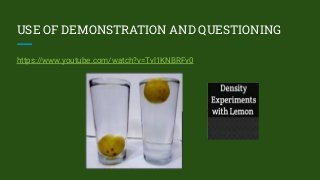
USE OF DEMONSTRATION AND QUESTIONING
https://www.youtube.com/watch?v=Tvl1KNBRFv0
TOPICS
Science :
magnetic property/ Acid and bases/ static electric charge etc
Chemical reaction: yeast
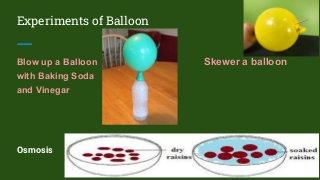
Experiments of Balloon
Blow up a Balloon Skewer a balloon
with Baking Soda
and Vinegar
Osmosis
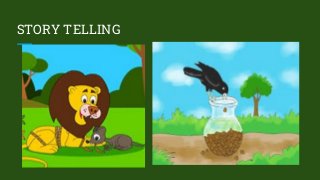
STORY TELLING
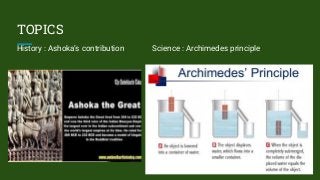
TOPICS
History : Ashoka’s contribution Science : Archimedes principle
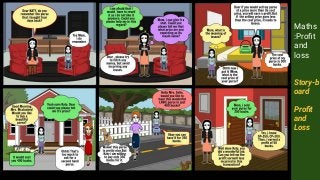
Maths
:Profit
and
loss
Story-b
oard
Profit
and
Loss
WEBSITES
https://www.youtube.com/watch?v=fulbwQ0yEJc : Stories of
Edison
scienceonline.tki.org.nz › Content resources and rich stories
www.eastoftheweb.com/short-stories/sci- fiindex.html
To teach profit and loss,
actual experiences of a ‘Subji Market’ can be told.
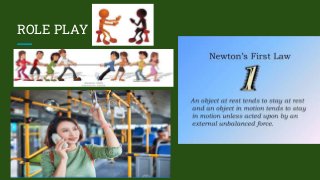
ROLE PLAY
DRAMMATIZATION / SKIT
TOPICS
● History : satipratha , child marriage
● Science: Pollution, diet, blood circulation , atom and
molecule, Malnutrition
● Maths : bank
● Geography: solar system
● Economics: consumer rights, disaster
● Civic - civil Amenities, interview of a corporator can be
depicted
USE OF AUDIO VISUAL AIDS
Chart,
graph,
models
Sample,
specimen,
Paper cutting,
Tape recorder
SAMPLE / SPECIMENS
● Sample : fossil/ paleontology
● Science : venation of the leaf,
● Geography : soil, rocks
To teach about food ingredients
actual specimens like cereals can be shown.
USE OF EXAMPLE, ANALOGY AND SIMILARITY
Classification of animals or plants : arrangement in store
Cell: brick
Statistics :cricket scores
Current affairs
Environmental pollution : smog in china
Tsunami
Science : Solar energy
Disaster management: mumbai flood
Brainstorming Activity?
What will happened if NET collapse?
In grammar if Noun’s are to taught then impose a question...
If person has no name?
or
You can show video and ask question on that
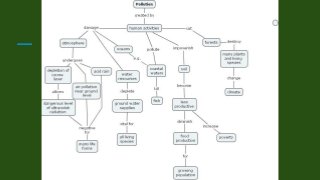
CONCEPT MAP AND MIND MAP
1. A concept map is a diagram showing the relationships among
concepts. They are graphical tools for organizing and representing
knowledge
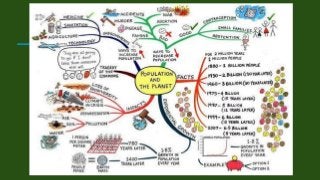
2. A mind map is a diagram used to represent words, ideas, tasks, or
other items linked to and arranged around a central key word or
idea.
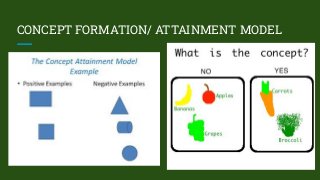
CONCEPT FORMATION/ ATTAINMENT MODEL
Set Induction Skill - Concept and Techniques of Set Induction

Set Induction Skill - Concept and Techniques of Set Induction

  • 1.
    SET INDUCTION - CONCEPTAND TECHNIQUES By Asst. Prof. Pratibha Dabhade-Raysoni
  • 2.
    SET INDUCTION SET ?INDUCTION ? MENTAL STATE OF READINESS BRINGS IT ON SET INDUCTION GETS LEARNERS MIND READY FOR LEARNING
  • 3.
    Just forget aboutstudents… Ask a question to yourself…. All the time ..Am I ready for the new learning ? I am damn sure your answer will be NO.
  • 4.
    PRELIMINARY AIM TO MOTIVATETHE STUDENTS TO GET DESIRE FOR LEARNING TO MAINTAIN DISCIPLINE TO GET STUDENT ATTENTION ON WHAT IS TO BE LEARNT
  • 5.
    SET INDUCTION MUSTBE BASED ON THE PREVIOUS KNOWLEDGE.
  • 6.
    What is setinduction? The skill of introduction is one of the micro- teaching skill, set of rules followed while introducing the lesson while teaching. The many research studies found “if you introduce the lesson in effective manner, then only whole process of the classroom activity is good”.
  • 7.
    Theoretical part The skillof introduction some time known as set induction. The student teacher while introduce the lesson in between he/she may ask lower order questions, through is question the teacher can identify the amount of entering behaviour possessed by the students. Keep in mind while introduce the lesson • Start the lesson with the related ideas or concepts • A lesson may be introduced by the way of asking lower order question to the lesson to be taught • If you say any example, it should be according the mental age of the student and that example related to life oriented, then only student can understand the concept easily.
  • 8.
    When to use? • At the beginning of a lesson. • When changing topics. • Before switching to another subject. • Before a panel discussion. • Before films, filmstrips, video clips, radio programmes.
  • 9.
    COMPONENTS PRELIMINARY ATTENTION USE OFPREVIOUS KNOWLEDGE CONNECTING LINK TOPIC DECLARATION AND APPROPRIATE DEVICES
  • 10.
  • 11.
    Don't ask onlyquestions…. But you can ask question with any other technique of set induction.
  • 12.
  • 13.
    USE OF DEMONSTRATIONAND QUESTIONING https://www.youtube.com/watch?v=Tvl1KNBRFv0
  • 14.
    TOPICS Science : magnetic property/Acid and bases/ static electric charge etc Chemical reaction: yeast
  • 15.
    Experiments of Balloon Blowup a Balloon Skewer a balloon with Baking Soda and Vinegar Osmosis
  • 16.
  • 17.
    TOPICS History : Ashoka’scontribution Science : Archimedes principle
  • 18.
  • 19.
    WEBSITES https://www.youtube.com/watch?v=fulbwQ0yEJc : Storiesof Edison scienceonline.tki.org.nz › Content resources and rich stories www.eastoftheweb.com/short-stories/sci- fiindex.html
  • 20.
    To teach profitand loss, actual experiences of a ‘Subji Market’ can be told.
  • 21.
  • 22.
  • 23.
    TOPICS ● History :satipratha , child marriage ● Science: Pollution, diet, blood circulation , atom and molecule, Malnutrition ● Maths : bank ● Geography: solar system ● Economics: consumer rights, disaster ● Civic - civil Amenities, interview of a corporator can be depicted
  • 24.
    USE OF AUDIOVISUAL AIDS Chart, graph, models Sample, specimen, Paper cutting, Tape recorder
  • 25.
    SAMPLE / SPECIMENS ●Sample : fossil/ paleontology ● Science : venation of the leaf, ● Geography : soil, rocks To teach about food ingredients actual specimens like cereals can be shown.
  • 26.
    USE OF EXAMPLE,ANALOGY AND SIMILARITY Classification of animals or plants : arrangement in store Cell: brick Statistics :cricket scores
  • 27.
    Current affairs Environmental pollution: smog in china Tsunami Science : Solar energy Disaster management: mumbai flood
  • 28.
    Brainstorming Activity? What willhappened if NET collapse? In grammar if Noun’s are to taught then impose a question... If person has no name? or You can show video and ask question on that
  • 29.
    CONCEPT MAP ANDMIND MAP 1. A concept map is a diagram showing the relationships among concepts. They are graphical tools for organizing and representing knowledge 2. A mind map is a diagram used to represent words, ideas, tasks, or other items linked to and arranged around a central key word or idea.
  • 36.