

From Individual Learning to Organizational Learning Based on Chapter 1,  Learning in Action by David A. Garvin Presented by Kevin McLogan MGT 501 www.kevinmclogan.com
ADULT LEARNING In an average year, an average adult: Engages in approximately eight learning projects Devotes 100 hours annually to each learning project Fewer than 1% of learning projects are undertaken for credit Garvin pp3
Well… we’re all here, but What about some of the other learning projects you have undertaken? Let’s talk about the different things we have to learn about in the modern world in order to grow and thrive.
New products
New ways of doing things Maintaining our homes Preparing our food Shopping Detours around construction zones Modes of communication
Or maybe just the school of hard knocks…
We know… That what we do away from work: Relationships with family and friends Hobbies Maintaining our living spaces Improving our physical beings Can be improved by learning new things, but why doesn’t the same apply to our work environment?
How does that translate into the workplace? If we have to adapt by learning in our everyday lives, then a reasonable person would assume that the same process must translate to a business environment. BUT… Are managers receptive to learning? No, most managers are ambivalent about leaning. Ibid p.4
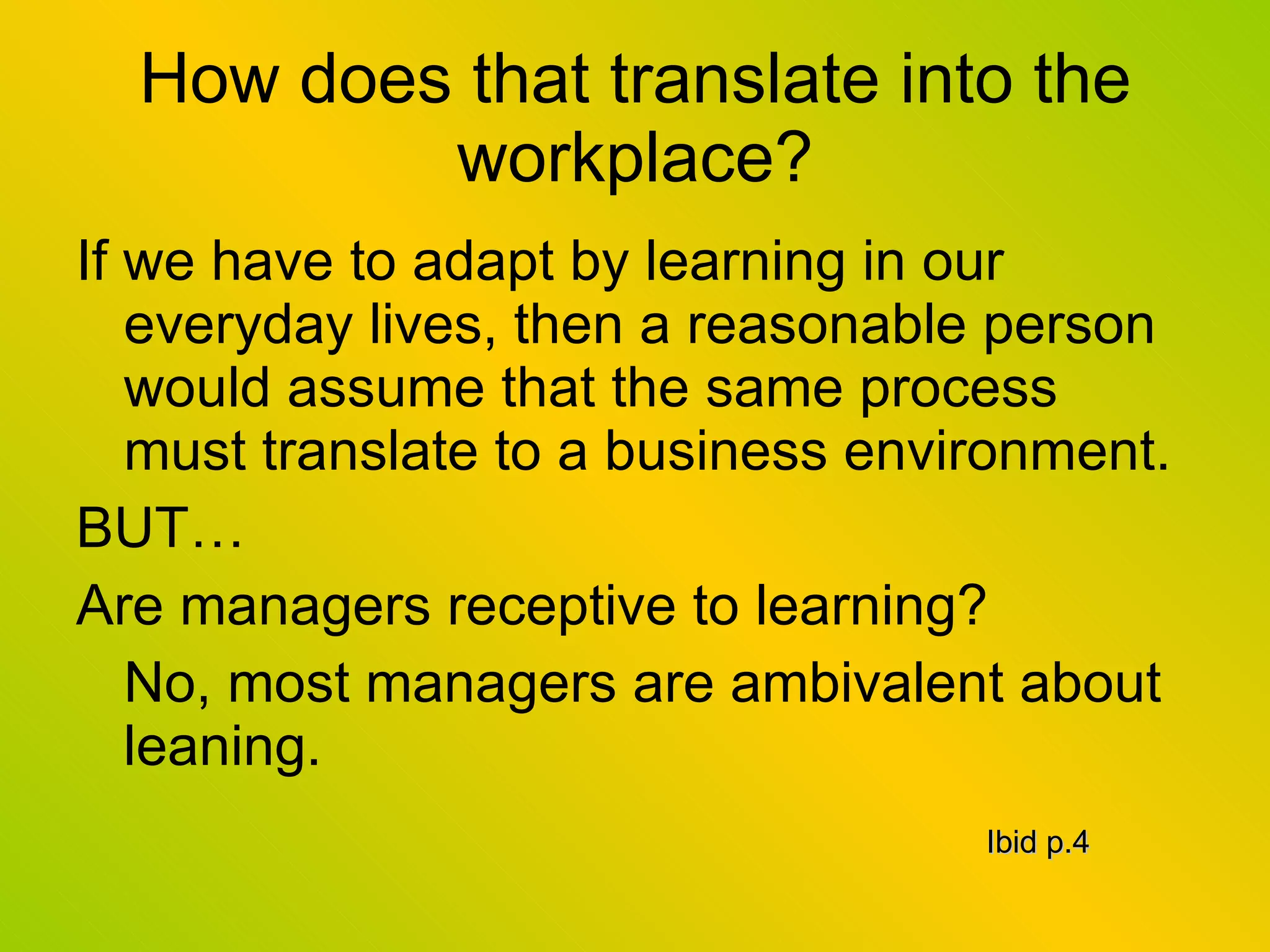
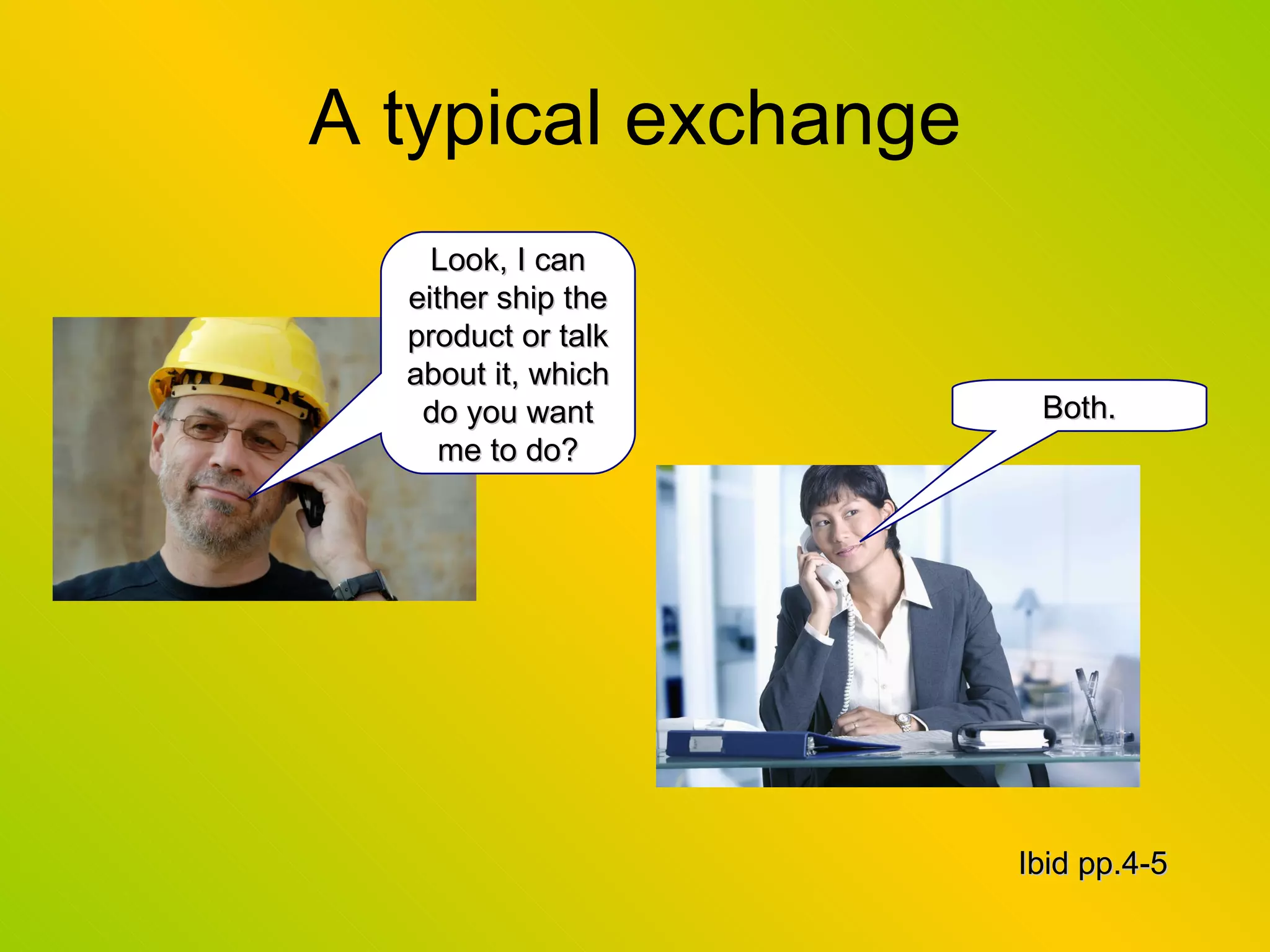
A typical exchange Look, I can either ship the product or talk about it, which do you want me to do? Both. Ibid pp.4-5
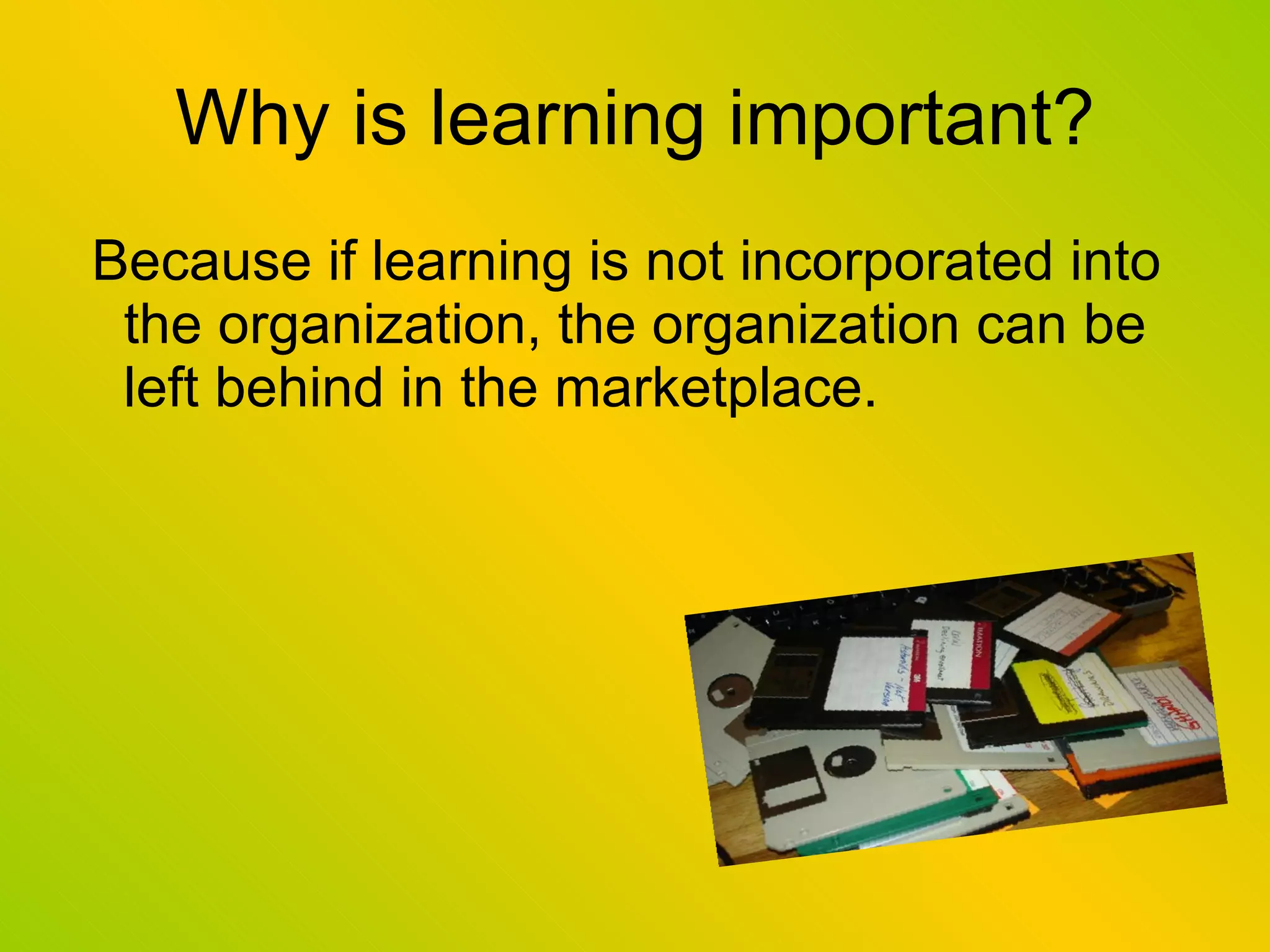
Why is learning important? Because if learning is not incorporated into the organization, the organization can be left behind in the marketplace.
The Big Disconnect Knowing what to do vs Doing what we know
Learning in Action Effective implementation of organizational learning in the organization is difficult. Start-up periods and new and more efficient technologies can take longer to adopt if organizational learning is not adopted. Organizations that deny the importance of learning risk big problems down the road
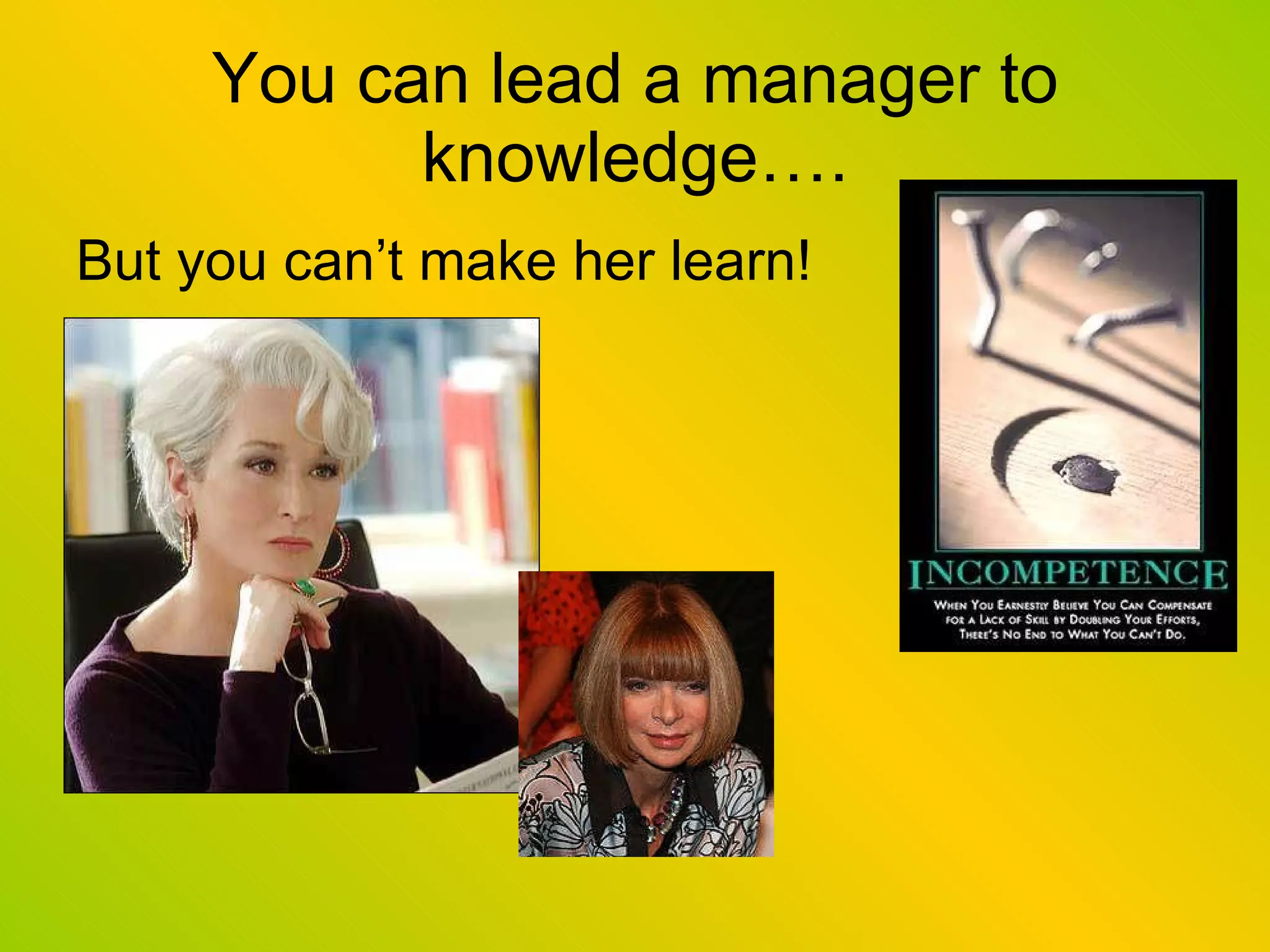
You can lead a manager to knowledge…. But you can’t make her learn!
Learning Organizations Lots of definitions, but Garvin boiled it down to this: A learning organization is an organization that is skilled at creating, acquiring, interpreting, transferring, and retaining knowledge, and at purposefully modifying its behavior to reflect new knowledge and insights. Ibid p.11
What does a Learning Organization act like? It’s a process! Abundance of knowledge does not ensure a Learning Organization The process continues with interpretation; knowledge needs to be shared collectively New ideas must be imbedded in the organization’s memory And then examined and analyzed. Ibid p.11
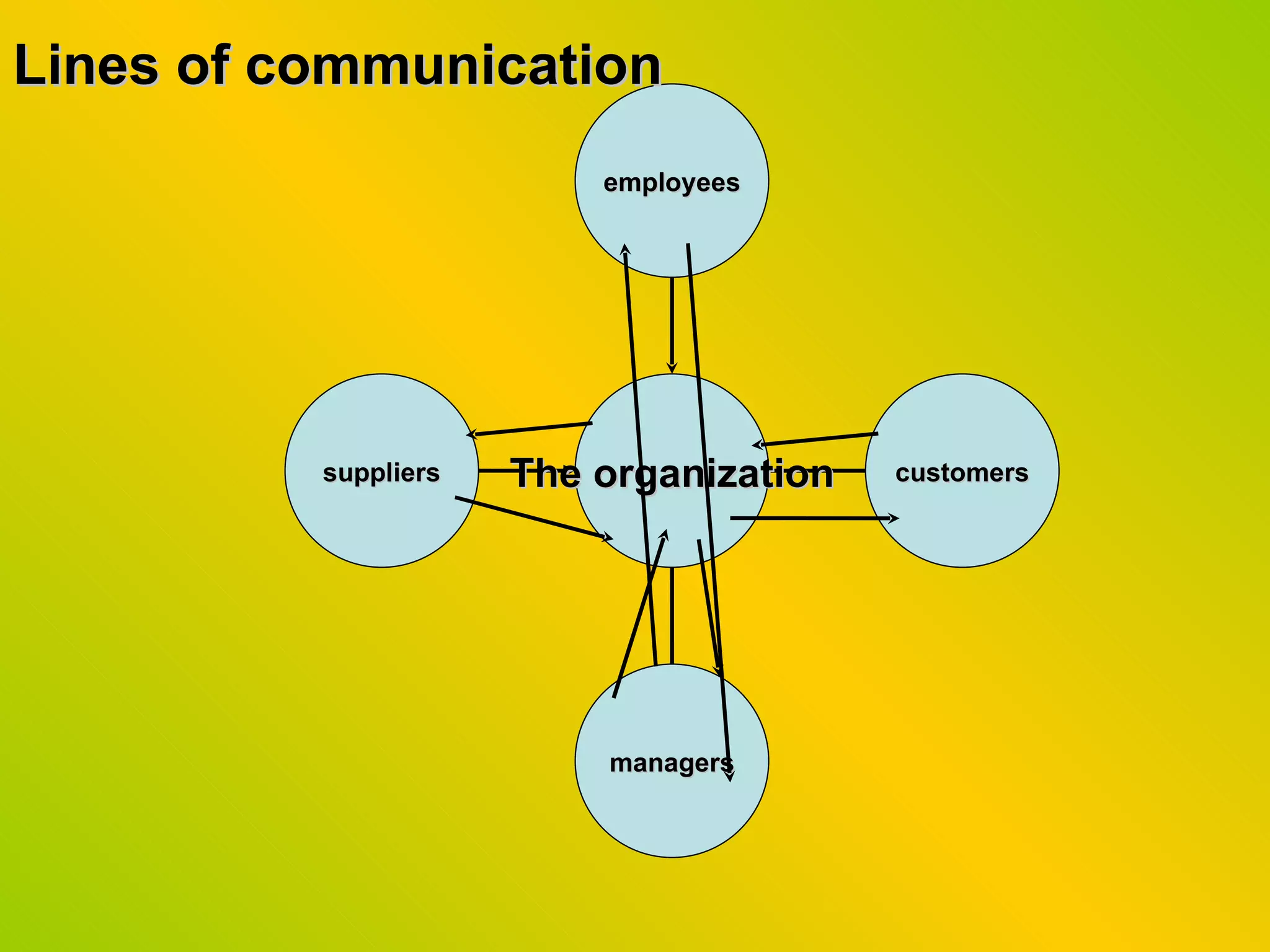
Lines of communication employees customers managers suppliers The organization
Warning Signs The organization does not have a defined plan to continue learning among all  the organization’s members. The organization is not open to the voices both inside and out that provide criticism of the organization. The organization makes the same type of mistakes over and over. When senior staff leave, their knowledge base leaves with them. The organization does not take advantage of what it has learned and does not modify its behavior based on what it knows.
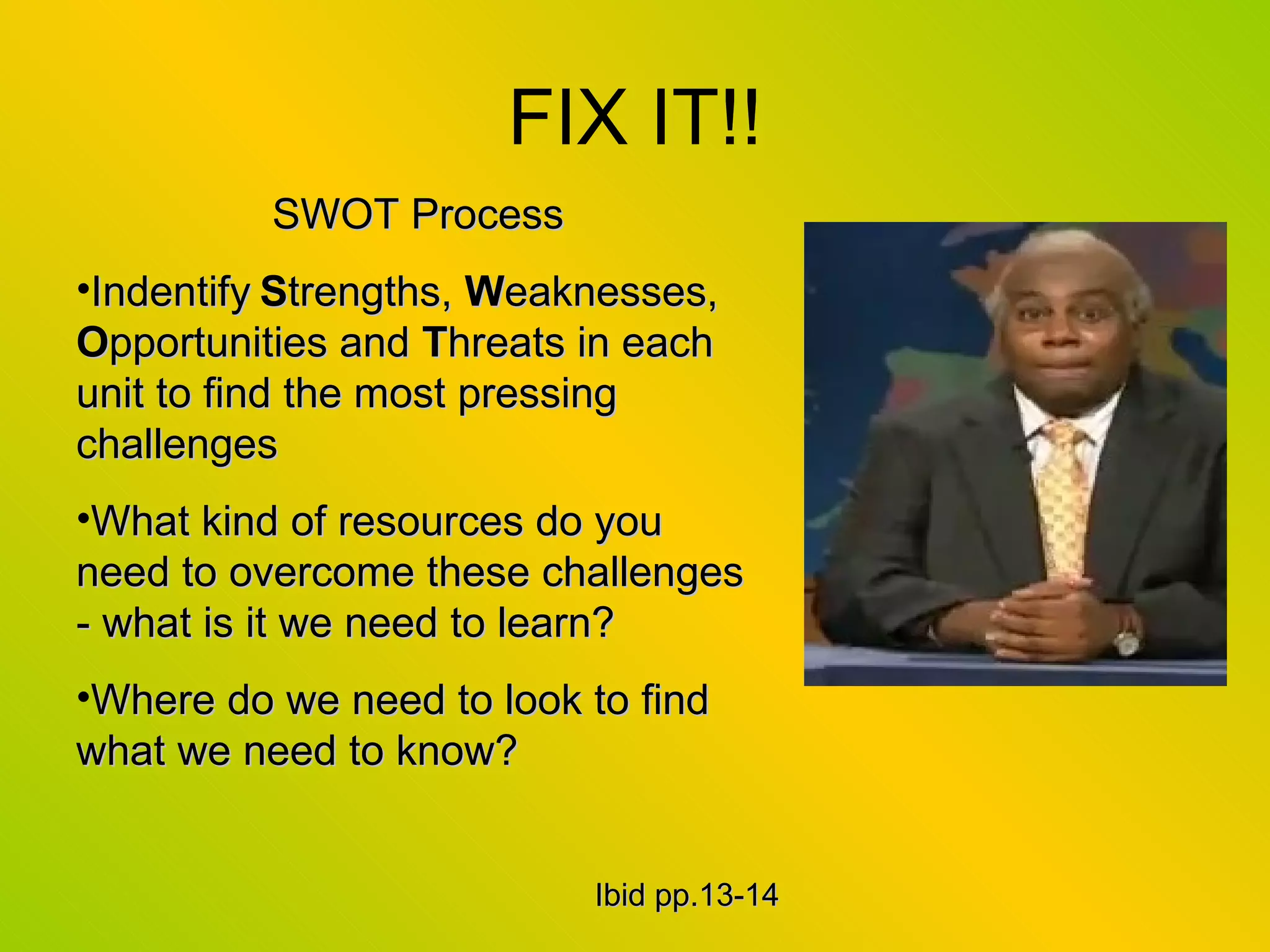
FIX IT!! SWOT Process Indentify   S trengths,  W eaknesses,  O pportunities and  T hreats in each unit to find the most pressing challenges What kind of resources do you need to overcome these challenges - what is it we need to learn? Where do we need to look to find what we need to know? Ibid pp.13-14
In summary… Ask good questions, question the answers, test the answers, examine your results and proceed again based on what you have learned. Just like you do at home! Thank you!

From Individual Learning To Organizational Learning

  • 1.
    From Individual Learningto Organizational Learning Based on Chapter 1, Learning in Action by David A. Garvin Presented by Kevin McLogan MGT 501 www.kevinmclogan.com
  • 2.
    ADULT LEARNING Inan average year, an average adult: Engages in approximately eight learning projects Devotes 100 hours annually to each learning project Fewer than 1% of learning projects are undertaken for credit Garvin pp3
  • 3.
    Well… we’re allhere, but What about some of the other learning projects you have undertaken? Let’s talk about the different things we have to learn about in the modern world in order to grow and thrive.
  • 4.
  • 5.
    New ways ofdoing things Maintaining our homes Preparing our food Shopping Detours around construction zones Modes of communication
  • 6.
    Or maybe justthe school of hard knocks…
  • 7.
    We know… Thatwhat we do away from work: Relationships with family and friends Hobbies Maintaining our living spaces Improving our physical beings Can be improved by learning new things, but why doesn’t the same apply to our work environment?
  • 8.
    How does thattranslate into the workplace? If we have to adapt by learning in our everyday lives, then a reasonable person would assume that the same process must translate to a business environment. BUT… Are managers receptive to learning? No, most managers are ambivalent about leaning. Ibid p.4
  • 9.
    A typical exchangeLook, I can either ship the product or talk about it, which do you want me to do? Both. Ibid pp.4-5
  • 10.
    Why is learningimportant? Because if learning is not incorporated into the organization, the organization can be left behind in the marketplace.
  • 11.
    The Big DisconnectKnowing what to do vs Doing what we know
  • 12.
    Learning in ActionEffective implementation of organizational learning in the organization is difficult. Start-up periods and new and more efficient technologies can take longer to adopt if organizational learning is not adopted. Organizations that deny the importance of learning risk big problems down the road
  • 13.
    You can leada manager to knowledge…. But you can’t make her learn!
  • 14.
    Learning Organizations Lotsof definitions, but Garvin boiled it down to this: A learning organization is an organization that is skilled at creating, acquiring, interpreting, transferring, and retaining knowledge, and at purposefully modifying its behavior to reflect new knowledge and insights. Ibid p.11
  • 15.
    What does aLearning Organization act like? It’s a process! Abundance of knowledge does not ensure a Learning Organization The process continues with interpretation; knowledge needs to be shared collectively New ideas must be imbedded in the organization’s memory And then examined and analyzed. Ibid p.11
  • 16.
    Lines of communicationemployees customers managers suppliers The organization
  • 17.
    Warning Signs Theorganization does not have a defined plan to continue learning among all the organization’s members. The organization is not open to the voices both inside and out that provide criticism of the organization. The organization makes the same type of mistakes over and over. When senior staff leave, their knowledge base leaves with them. The organization does not take advantage of what it has learned and does not modify its behavior based on what it knows.
  • 18.
    FIX IT!! SWOTProcess Indentify S trengths, W eaknesses, O pportunities and T hreats in each unit to find the most pressing challenges What kind of resources do you need to overcome these challenges - what is it we need to learn? Where do we need to look to find what we need to know? Ibid pp.13-14
  • 19.
    In summary… Askgood questions, question the answers, test the answers, examine your results and proceed again based on what you have learned. Just like you do at home! Thank you!

Editor's Notes

  • #3 Learning is going on all around us. In our houses, in our cars, in our relationships. My premise is this: Our lives are based on learning and we should incorporate leaning in the same way into our work.
  • #4 We are all here taking a class, in a formal, credit-gaining environment, but what other kinds of learning projects have you undertaken? I’ll start!
  • #5 We have to learn how to operate new technology to use new products.
  • #6 We learn to adapt based on the knowledge that we gain about services as well as products.
  • #7 Or sometimes we just learn lessons the hard way. Like me #3. 
  • #8 Well, why?
  • #9 Not as important as it should be…
  • #10 What is really important?
  • #11 Without learning, the time in which the adoption of new, more productive technologies is extended and the productivity that would have been gained is delayed. Best practices are not identified. New technologies are not adopted because organizations talk to the wrong people. What examples can you identify that could have gone better had learning been incorporated in the process?
  • #12 David Garvin talks about this in a training session he facilitates with wildfire fighters. Check it out here: http://www.youtube.com/watch?v=hXwBw2EZKHE Click on David’s picture to link directly.
  • #13 If you proceed in a new market, asking the same questions to the same customers may not get you to new markets.
  • #14 Maybe you didn’t have a boss as demanding as Miranda Priestly or Anna Wintour. (Click on the pictures if you don’t know who they are.) But you have had a boss that wasn’t great. What was it about that boss that was lacking? Did it have something to do with their inability to nurture learning in the organization?
  • #15 Is this sufficient or is there more that Garvin may be missing?
  • #16 Think of it as a continuum Each aspect must lead to the next, and not stop.
  • #17 Notice that all of the arrows go both ways, to and from the organization, and the only ones that do not cross through the organization are the ones from the employees to the managers. What do you think about this concept?
  • #18 Have you worked for an organization that has these warning signs? Has the organization been able to overcome them?
  • #19 http://www.youtube.com/watch?v=yo3uxqwTxk0 or click on Keenan’s picture. Short and amusing-you need a laugh!