
INDIVIDUAL LEARNING AND 
BEHAVIOUR 
PRESENTED BY-RASHMI 
14 
GIRISH 18 
SAJID 01 
AJINKYA 12 
FORGET THE MIND……
LEARNING 
 Any relatively permanent change in behavior 
that occurs as a result of experience 
 Learning which is temporary is not 
considered as actual. 
 We connect event that occurs in sequence 
HOW DO WE LEARN ASSOCIATION
CHARACTERISTICS 
 Involves change 
 Is relatively permanent 
 Some form of experience is required for 
learning 
 It is life long process
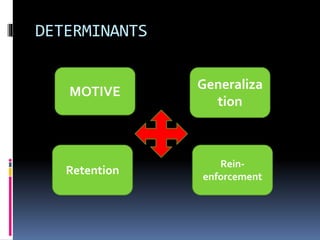
DETERMINANTS 
MOTIVE 
Generaliza 
tion 
Retention 
Rein-enforcement
THEORIES 
 Classical Conditioning 
 Operant Conditioning 
 Social learning
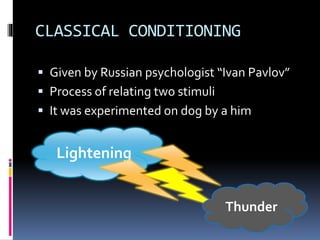
CLASSICAL CONDITIONING 
 Given by Russian psychologist “Ivan Pavlov” 
 Process of relating two stimuli 
 It was experimented on dog by a him 
Lightening 
Thunder
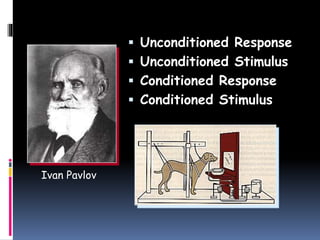
 Unconditioned Response 
 Unconditioned Stimulus 
 Conditioned Response 
 Conditioned Stimulus 
Ivan Pavlov
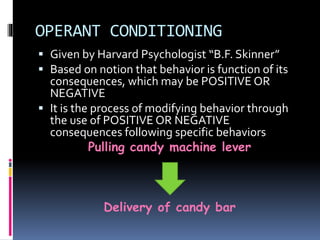
OPERANT CONDITIONING 
 Given by Harvard Psychologist “B.F. Skinner” 
 Based on notion that behavior is function of its 
consequences, which may be POSITIVE OR 
NEGATIVE 
 It is the process of modifying behavior through 
the use of POSITIVE OR NEGATIVE 
consequences following specific behaviors 
Pulling candy machine lever 
Delivery of candy bar
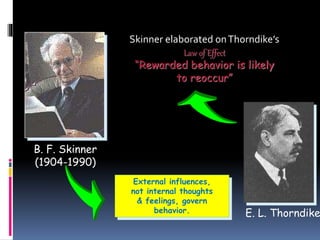
B. F. Skinner 
(1904-1990) 
Skinner elaborated on Thorndike’s 
“Rewarded behavior is likely 
E. L. Thorndike 
Law of Effect 
to reoccur” 
External influences, 
not internal thoughts 
& feelings, govern 
behavior.
Using Operant 
Conditioning, 
individuals are more likely 
to repeat 
rewarded behaviors
PUNISHMENT 
 Punishment is a term used in operant 
conditioning 
 It refers to any change that occurs after a 
behavior that reduces the likelihood that, 
that behavior will occur again in future 
 While positive & negative rein-enforcement 
are used to increase behaviors, punishment is 
focused on reducing or eliminating unwanted 
behavior
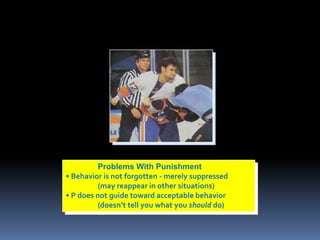
Problems With Punishment 
• Behavior is not forgotten - merely suppressed 
(may reappear in other situations) 
• P does not guide toward acceptable behavior 
(doesn’t tell you what you should do)
SOCIAL LEARNING 
 It is acquired by observing the model whom 
we admire 
 Parents 
 Teachers 
 Peers 
 Superiors
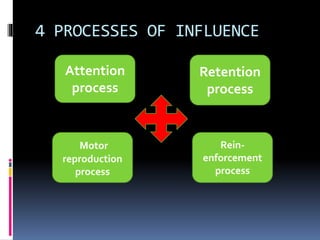
4 PROCESSES OF INFLUENCE 
Attention 
process 
Retention 
process 
Motor 
reproduction 
process 
Rein-enforcement 
process
Thank 
You

Individual learning and behaviour

  • 1.
    INDIVIDUAL LEARNING AND BEHAVIOUR PRESENTED BY-RASHMI 14 GIRISH 18 SAJID 01 AJINKYA 12 FORGET THE MIND……
  • 2.
    LEARNING  Anyrelatively permanent change in behavior that occurs as a result of experience  Learning which is temporary is not considered as actual.  We connect event that occurs in sequence HOW DO WE LEARN ASSOCIATION
  • 3.
    CHARACTERISTICS  Involveschange  Is relatively permanent  Some form of experience is required for learning  It is life long process
  • 4.
    DETERMINANTS MOTIVE Generaliza tion Retention Rein-enforcement
  • 6.
    THEORIES  ClassicalConditioning  Operant Conditioning  Social learning
  • 7.
    CLASSICAL CONDITIONING Given by Russian psychologist “Ivan Pavlov”  Process of relating two stimuli  It was experimented on dog by a him Lightening Thunder
  • 8.
     Unconditioned Response  Unconditioned Stimulus  Conditioned Response  Conditioned Stimulus Ivan Pavlov
  • 9.
    OPERANT CONDITIONING Given by Harvard Psychologist “B.F. Skinner”  Based on notion that behavior is function of its consequences, which may be POSITIVE OR NEGATIVE  It is the process of modifying behavior through the use of POSITIVE OR NEGATIVE consequences following specific behaviors Pulling candy machine lever Delivery of candy bar
  • 10.
    B. F. Skinner (1904-1990) Skinner elaborated on Thorndike’s “Rewarded behavior is likely E. L. Thorndike Law of Effect to reoccur” External influences, not internal thoughts & feelings, govern behavior.
  • 11.
    Using Operant Conditioning, individuals are more likely to repeat rewarded behaviors
  • 12.
    PUNISHMENT  Punishmentis a term used in operant conditioning  It refers to any change that occurs after a behavior that reduces the likelihood that, that behavior will occur again in future  While positive & negative rein-enforcement are used to increase behaviors, punishment is focused on reducing or eliminating unwanted behavior
  • 13.
    Problems With Punishment • Behavior is not forgotten - merely suppressed (may reappear in other situations) • P does not guide toward acceptable behavior (doesn’t tell you what you should do)
  • 14.
    SOCIAL LEARNING It is acquired by observing the model whom we admire  Parents  Teachers  Peers  Superiors
  • 15.
    4 PROCESSES OFINFLUENCE Attention process Retention process Motor reproduction process Rein-enforcement process
  • 16.