Download as PDF, PPTX

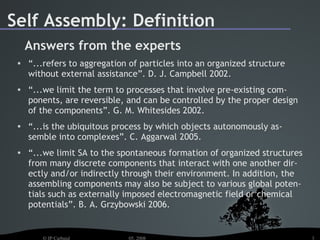
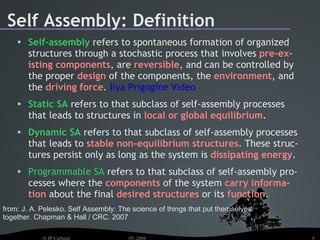
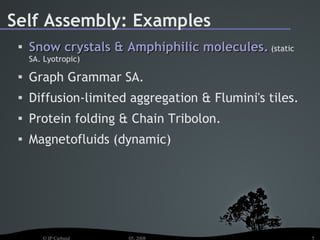
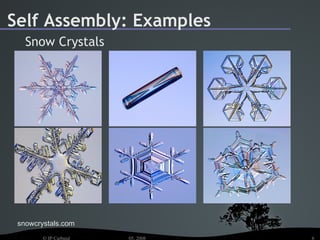
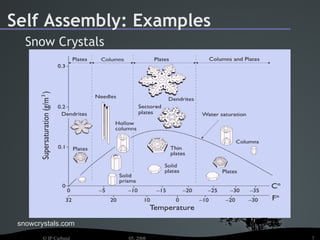
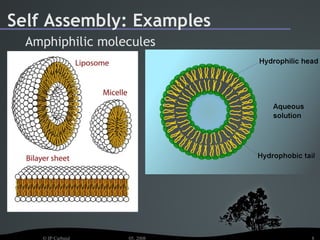
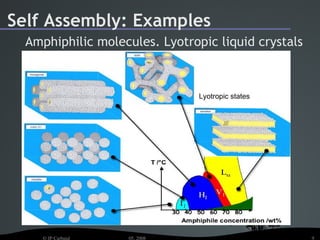
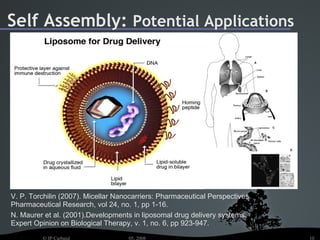


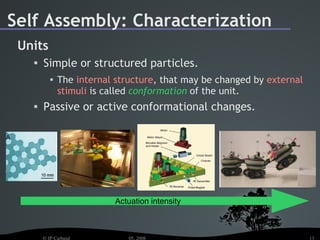
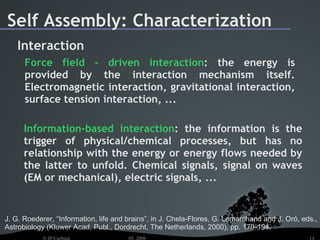
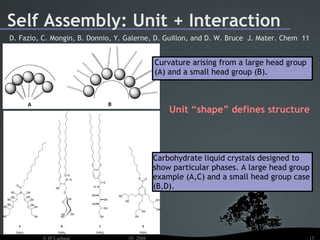
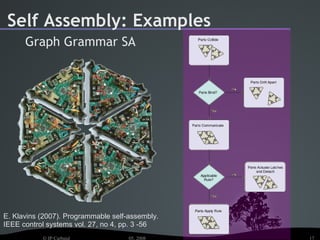

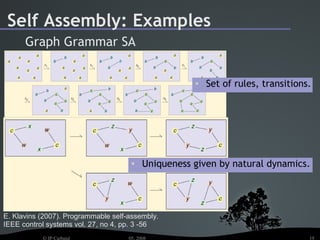

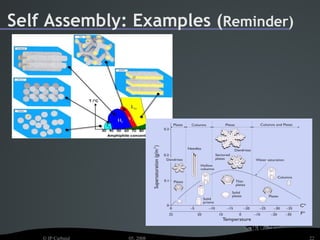
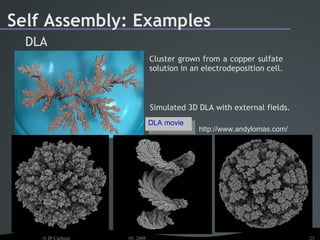
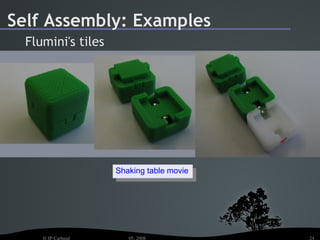

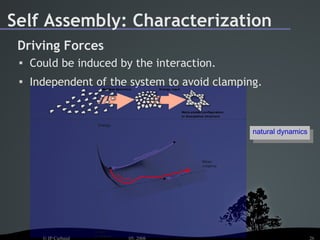
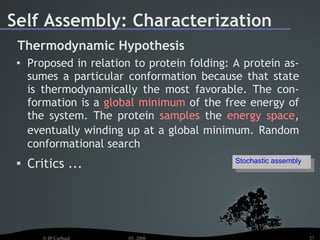
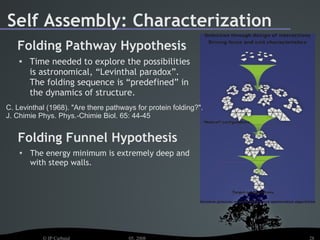
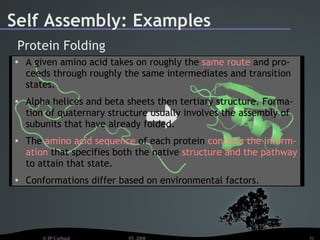
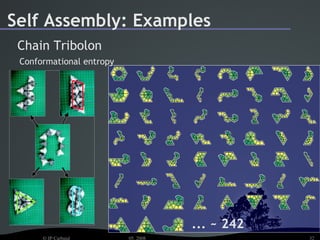
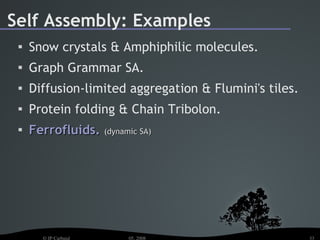
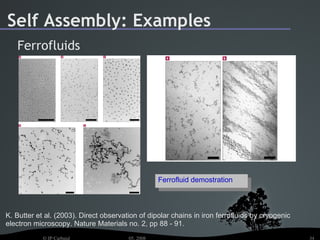




Self-assembly refers to the spontaneous formation of organized structures from many discrete components that interact directly or indirectly through their environment. There are four essential features of self-assembly: units, interactions between units, the environment, and driving forces. Self-assembly occurs through a stochastic process that minimizes energy as units aggregate. Examples include the formation of snow crystals, micelles of amphiphilic molecules, protein folding, and ferrofluids assembling under magnetic fields. Potential applications include drug delivery systems, self-healing materials, and programmable nanoscale structures.


