MICROEMULSION
BASIC PRINCIPLES, FORMULATION &
EVALUATION
• Guided by:
– Dr. Akshay koli
– Assistant professor
• Prepared by:
– Atul mangukiya
– 201204100410028
– M.Pharm.3rd sem
Pharmaceutics Department
7/28/2013
uka tarsadia university
1
CONTENT
• Introduction
• Basic principles (theories)
• Types of micro emulsion
• Formulation
• Evaluation
• References
7/28/2013 uka tarsadia university 2
INTRODUCTION
7/28/2013 uka tarsadia university 3
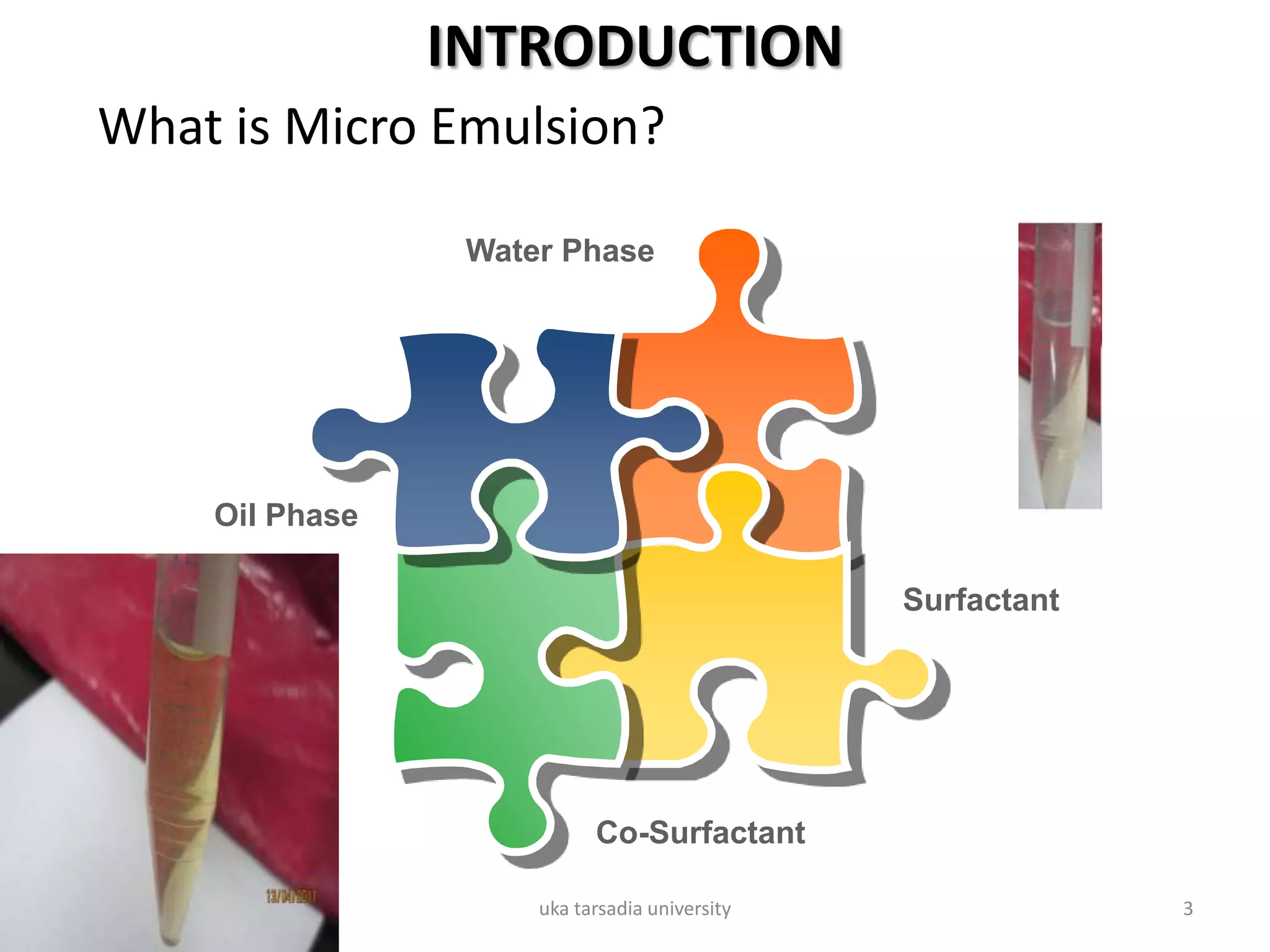
Surfactant
Oil Phase
Water Phase
Co-Surfactant
What is Micro Emulsion?
Microemulsion
• Microemulsions are thermodynamically stable dispersions of oil and
water stabilized by a surfactant and, in many cases, also a
cosurfactant.
• Microemulsions can have characteristic properties such as ultralow
interfacial tension, large interfacial area and capacity to solubilize
both aqueous and oil-soluble compounds.
7/28/2013 uka tarsadia university 4
Theories of Microemulsion Formation
1. Interfacial or mixed film theories.
2. Solubilization theories.
3. Thermodynamic treatments.
Interfacial/Mixed Film Theories:
• They considered that the spontaneous formation of microemulsion
droplets was due to the formation of a complex film at the oil-water
interface by the surfactant and co-surfactant.
• This caused a reduction in oil-water interfacial tension to very low values
(from close to zero to negative)
• equation. γi = γo/w -πi
Where,
γ o/w = Oil-water interfacial tension without the film present
πi = Spreading pressure
γi =Interfacial tension
7/28/2013 uka tarsadia university 5
Mechanism of curvature of a duplex film:
• The interfacial film should be curved to form small droplets to explain
both the stability of the system and bending of the interface.
• A flat duplex film would be under stress because of the difference in
tension and spreading of pressure on either side of it.
• Reduction of this tension gradient by equalizing the two surface tensions
is the driving force for the film curvature.
• It is generally easier to expand the oil side of an interface than the water
side and hence W/O microemulsion can be formed easily than O/W
microemulsion.
7/28/2013 uka tarsadia university 6
Solubilization Theories:-
• Illustrated the relationship between reverse micelles and W/O
microemulsion with the help of phase diagrams.
• The inverse micelle region of ternary system i.e. water, pentanol and
sodium dodecyl sulphate (SDS) is composed of water solubilized reverse
micelles of SDS in pentanol.
• Addition of O-xylene up to 50% gives rise to transparent W/O region
containing a maximum of 28% water with 5 % pentanol and 6% surfactant
(i.e. microemulsions).
• These four component systems could be prepared by adding hydrocarbon
directly to the inverse micellar phase by titration.
7/28/2013 uka tarsadia university 7
Thermodynamic theory
• The process of formation of oil droplets from a bulk oil phase is
accompanied by an increase in the interfacial area ∆A, and hence an
interfacial energy ∆G .
• The entropy of dispersion of the droplets is equal to T ∆ S and hence the
free energy of formation of the system is given by the expression.
∆Gf = γ ∆a - T ∆S
Where,
∆Gf = free energy of formation
∆A = change in interfacial area of microemulsion
∆ S = change in entropy of the system
T = temperature
γ = surface tension of oil water interphase
7/28/2013 uka tarsadia university 8
• When the interfacial tension is made sufficiently low that the interfacial
energy becomes comparable to or even lower than the entropy of
dispersion.
• The dominant favorable entropic contribution is very large dispersion
entropy arising from the mixing of one phase in the other in the form of
large number of small droplets.
• The free energy of formation of the system becomes zero or negative.
• This explains the thermodynamic stability of micro emulsions.
• The co-surfactant along with surfactant lower the interfacial tension to a
very small even transient negative value .
7/28/2013 uka tarsadia university 9
Main three components
1. Oil phase
2. Surfactant
3. Cosurfactant
7/28/2013 uka tarsadia university 10
7/28/2013 uka tarsadia university 11
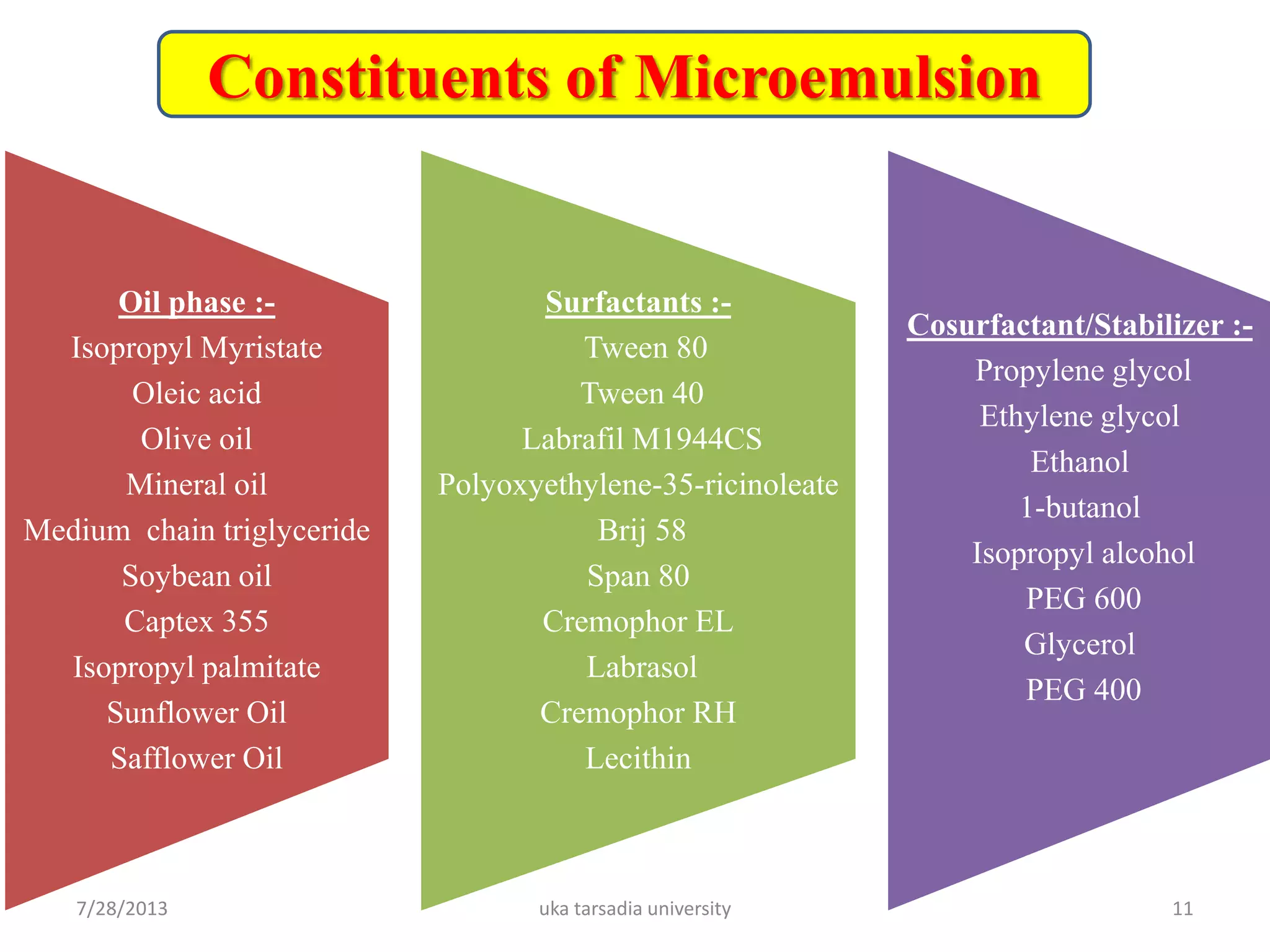
Constituents of Microemulsion
Oil phase :-
Isopropyl Myristate
Oleic acid
Olive oil
Mineral oil
Medium chain triglyceride
Soybean oil
Captex 355
Isopropyl palmitate
Sunflower Oil
Safflower Oil
Surfactants :-
Tween 80
Tween 40
Labrafil M1944CS
Polyoxyethylene-35-ricinoleate
Brij 58
Span 80
Cremophor EL
Labrasol
Cremophor RH
Lecithin
Cosurfactant/Stabilizer :-
Propylene glycol
Ethylene glycol
Ethanol
1-butanol
Isopropyl alcohol
PEG 600
Glycerol
PEG 400
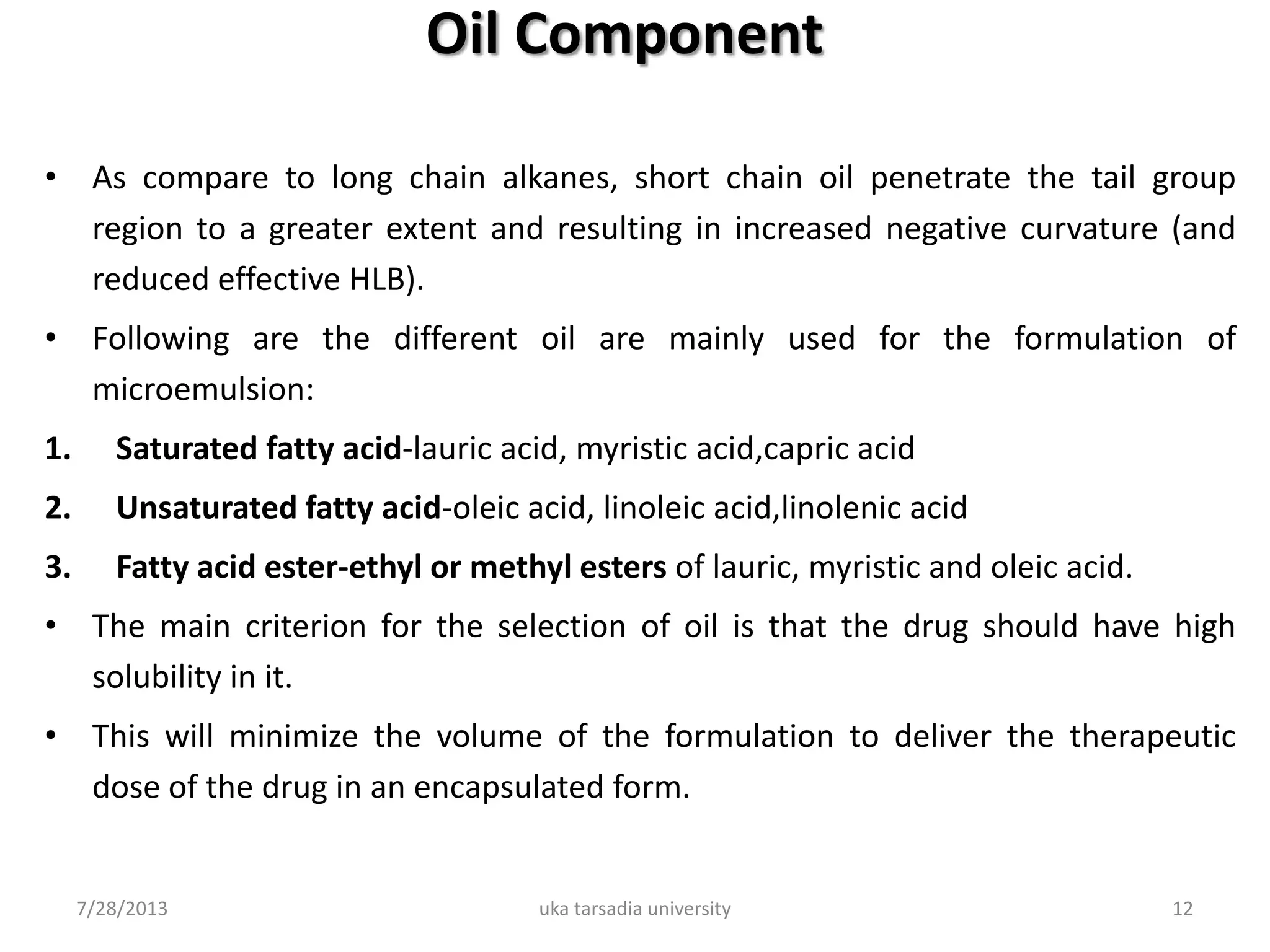
Oil Component
• As compare to long chain alkanes, short chain oil penetrate the tail group
region to a greater extent and resulting in increased negative curvature (and
reduced effective HLB).
• Following are the different oil are mainly used for the formulation of
microemulsion:
1. Saturated fatty acid-lauric acid, myristic acid,capric acid
2. Unsaturated fatty acid-oleic acid, linoleic acid,linolenic acid
3. Fatty acid ester-ethyl or methyl esters of lauric, myristic and oleic acid.
• The main criterion for the selection of oil is that the drug should have high
solubility in it.
• This will minimize the volume of the formulation to deliver the therapeutic
dose of the drug in an encapsulated form.
7/28/2013 uka tarsadia university 12
Surfactants
• It is to lower the interfacial tension which will ultimately facilitates
dispersion process and provide a flexible around the droplets.
• Generally, low HLB (3-6) surfactants are suitable for w/o
microemulsion, whereas high HLB (8-18) are suitable for o/w
microemulsion.
7/28/2013 uka tarsadia university 13
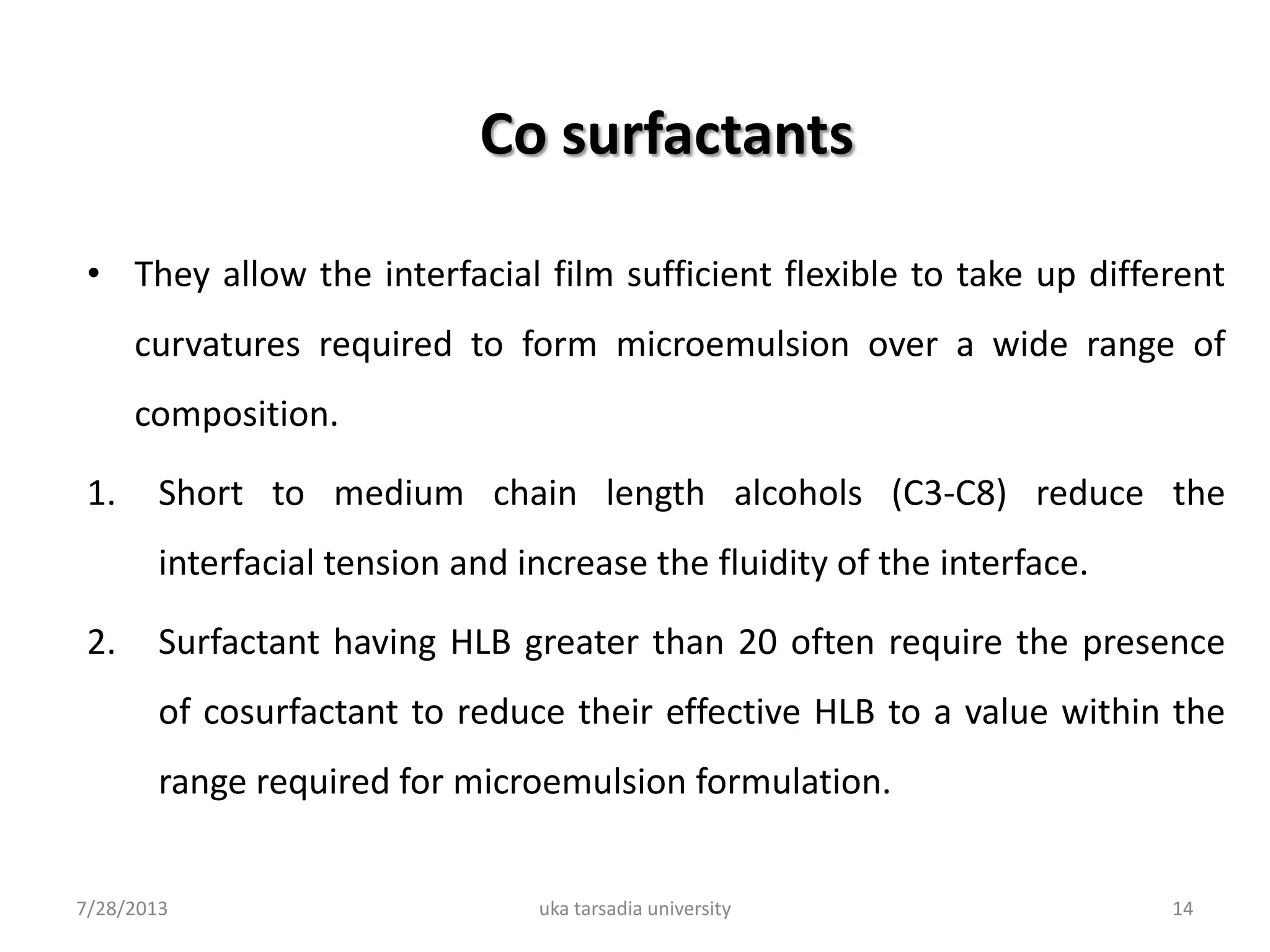
Co surfactants
• They allow the interfacial film sufficient flexible to take up different
curvatures required to form microemulsion over a wide range of
composition.
1. Short to medium chain length alcohols (C3-C8) reduce the
interfacial tension and increase the fluidity of the interface.
2. Surfactant having HLB greater than 20 often require the presence
of cosurfactant to reduce their effective HLB to a value within the
range required for microemulsion formulation.
7/28/2013 uka tarsadia university 14
7/28/2013 uka tarsadia university 15
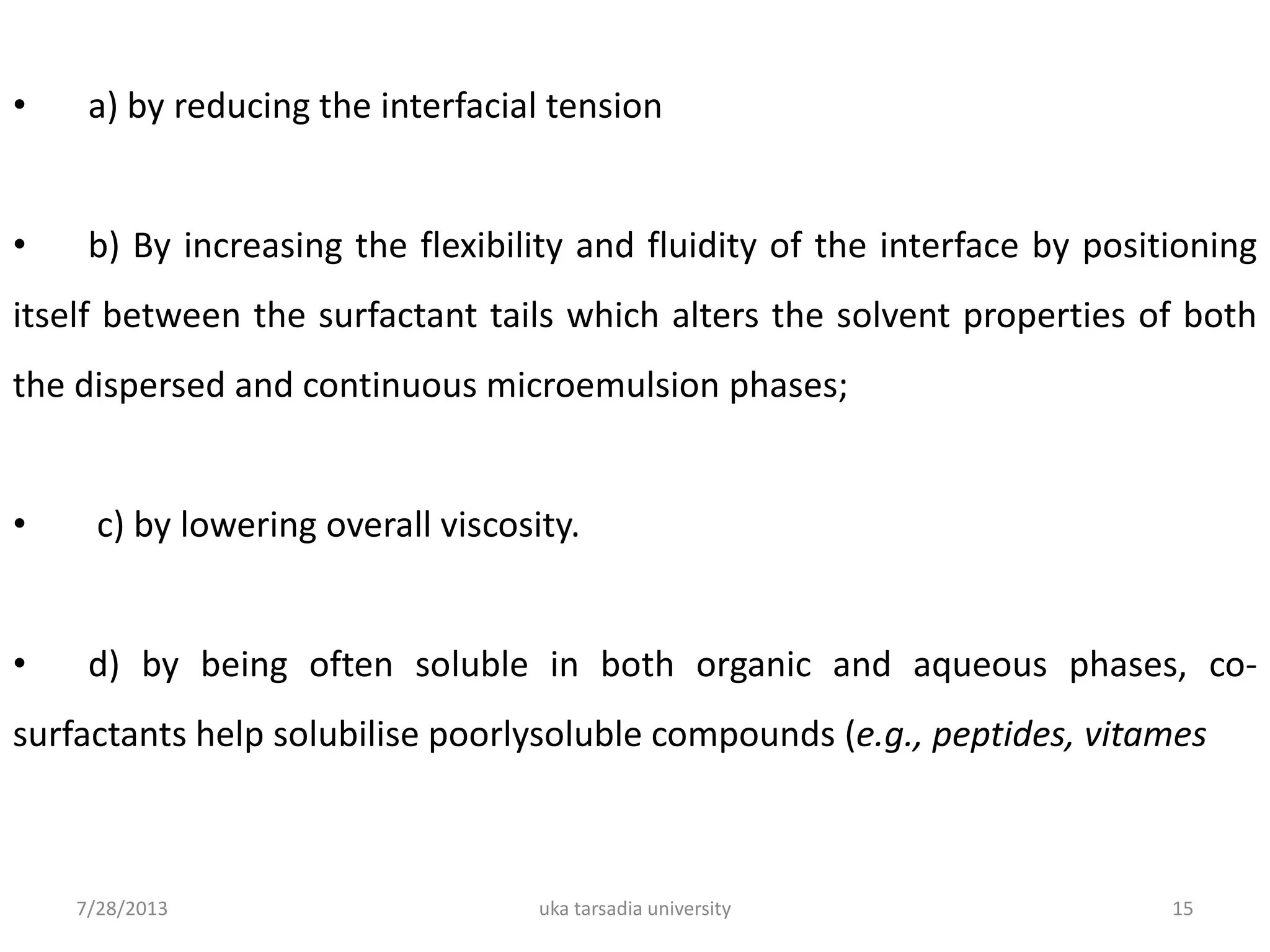
• a) by reducing the interfacial tension
• b) By increasing the flexibility and fluidity of the interface by positioning
itself between the surfactant tails which alters the solvent properties of both
the dispersed and continuous microemulsion phases;
• c) by lowering overall viscosity.
• d) by being often soluble in both organic and aqueous phases, co-
surfactants help solubilise poorlysoluble compounds (e.g., peptides, vitames
Types of micro emulsion
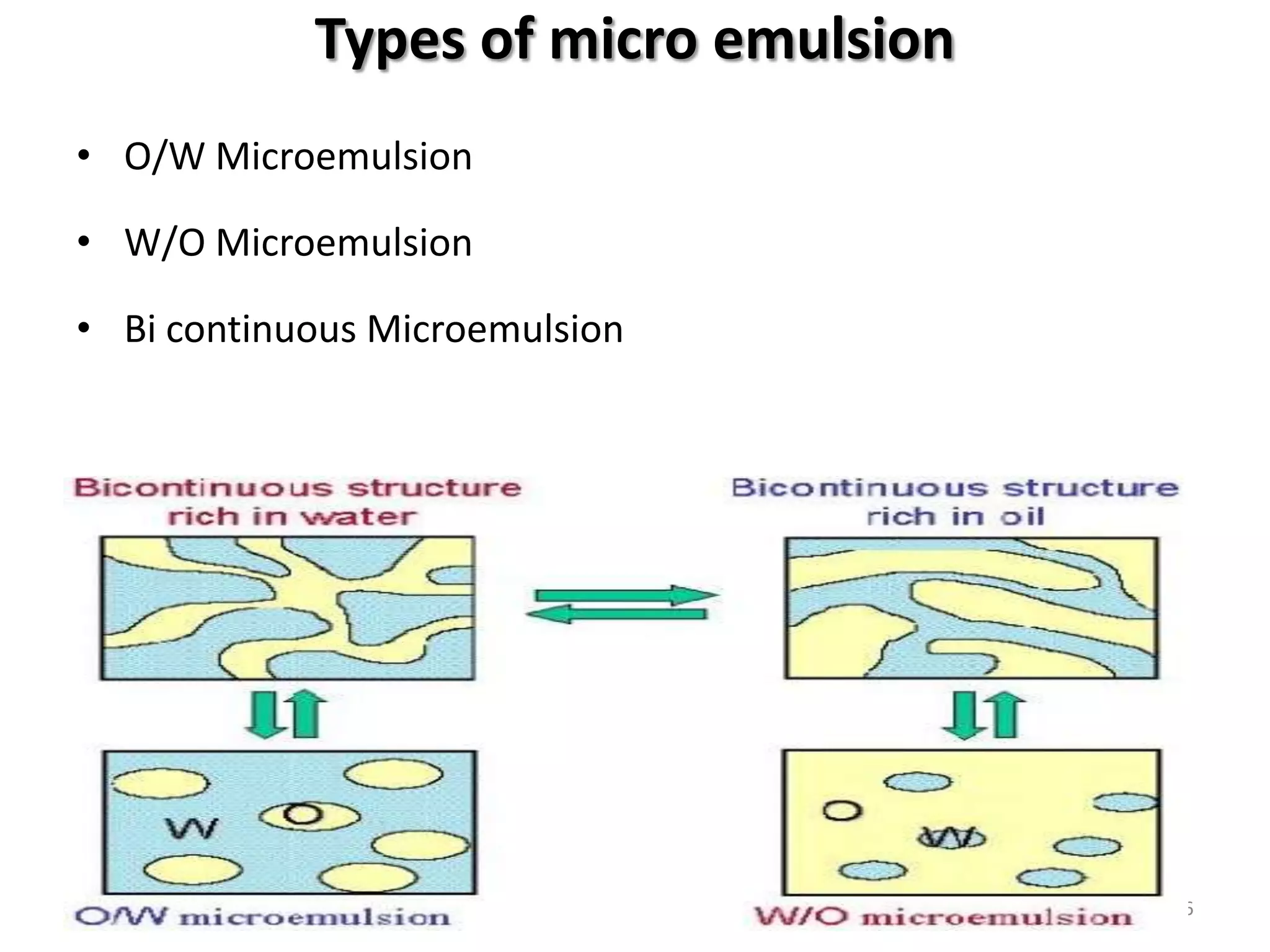
• O/W Microemulsion
• W/O Microemulsion
• Bi continuous Microemulsion
7/28/2013 uka tarsadia university 16
Phase Behaviour
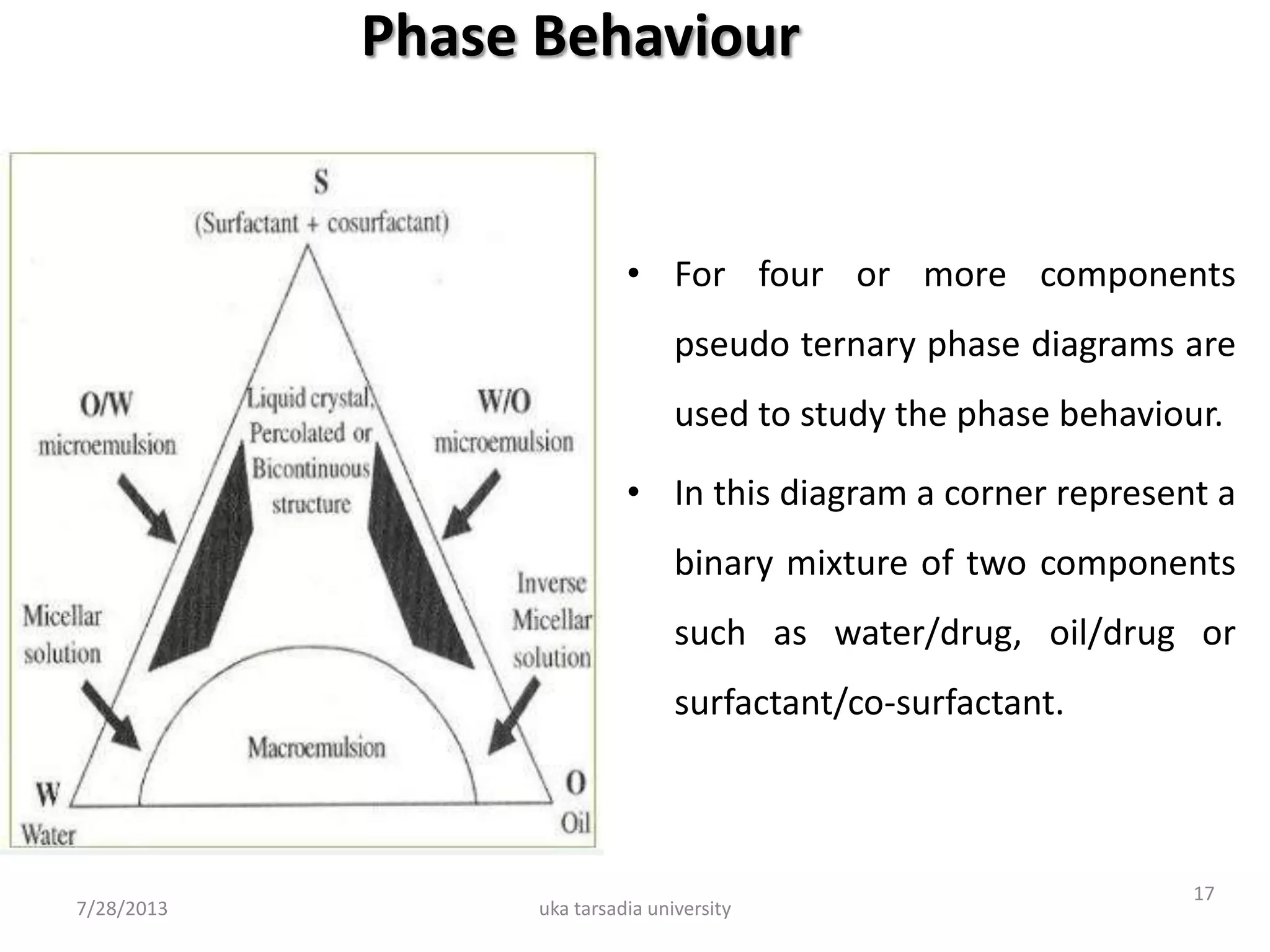
• For four or more components
pseudo ternary phase diagrams are
used to study the phase behaviour.
• In this diagram a corner represent a
binary mixture of two components
such as water/drug, oil/drug or
surfactant/co-surfactant.
7/28/2013 uka tarsadia university
17
• With high oil concentration surfactant forms reverse micelles capable of
solubilizing water molecules in their hydrophilic interior.
• Continued addition of water in this system may result in the formation
of W/O micro emulsion in which water exists as droplets surrounded
and stabilized by interfacial layer of the surfactant / co-surfactant
mixture.
• Finally, as amount of water increases, this lamellar structure will break
down and water will form a continuous phase containing droplets of oil
stabilized by a surfactant / co-surfactant (O/W microemulsions)
7/28/2013 uka tarsadia university 18
Preparation of Microemulsion
• Following are the different methods are used for the
preparation of microemulsion:
1. Phase titration method
2. Phase inversion method
7/28/2013 uka tarsadia university 19
7/28/2013 uka tarsadia university 20
• 1)dilution of an oil-surfactant mixture with water.(w/o)
• 2) dilution of a water-surfactant mixture with oil.(o/w)
• 3) mixing all components at once. In some systems, the order of
ingredient addition may determine whether a microemulsion forms or not.
•e.g.(w/o)
soybean oil, ethoxylated mono- and di-glycerides as surfactants and a
mixture of sucrose and ethanol as the aqueous phase.
Transparent microemulsions resulted from dilution of the oil-surfactant
mixtures with water along several regions in the pseudo-ternary phase
diagram.
Phase titration method
7/28/2013 uka tarsadia university 21
Phase inversion method :
Phase Inversion Temperature (PIT), i.e., the temperature range in which an
o/w microemulsion inverts to a w/o type or vice versa.
• using non-ionic surfactants, polyoxyethylene are very susceptible to
temperature since surfactant solubility (in oil or water) strongly depends on
temperature.
With increasing temperature, the polyoxyethylene group becomes
dehydrated, altering the critical packing parameter which results in phase
inversion.
• For ionic surfactants, increasing temperatures increase the electrostatic
repulsion between the surfactant headgroups thus causing reversal of film
curvature.
Hence the effect of temperature is opposite to the effect seen with non-ionic
surfactants.
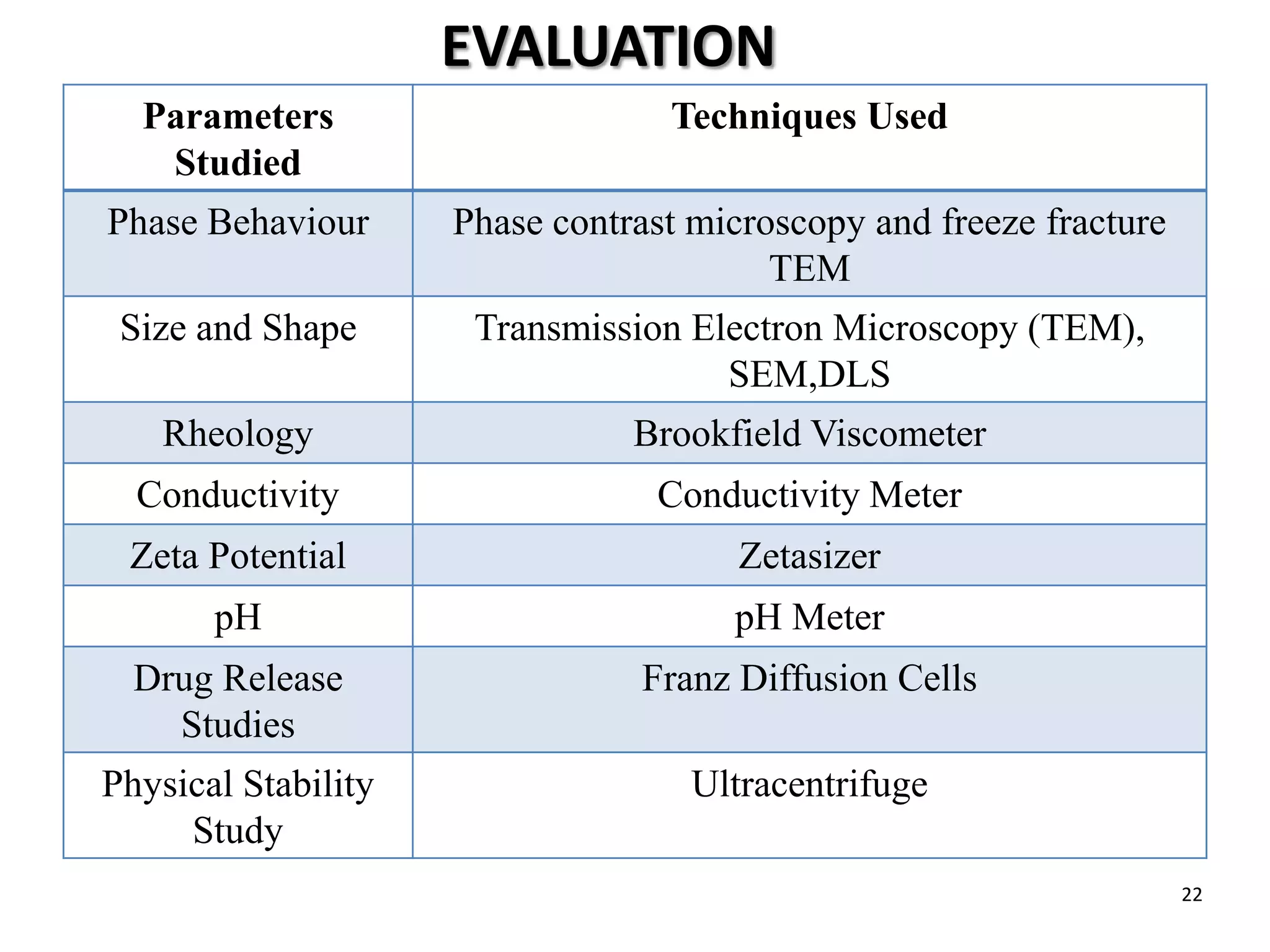
Parameters
Studied
Techniques Used
Phase Behaviour Phase contrast microscopy and freeze fracture
TEM
Size and Shape Transmission Electron Microscopy (TEM),
SEM,DLS
Rheology Brookfield Viscometer
Conductivity Conductivity Meter
Zeta Potential Zetasizer
pH pH Meter
Drug Release
Studies
Franz Diffusion Cells
Physical Stability
Study
Ultracentrifuge
22
EVALUATION
In Vitro Drug Permeation Studies
• Determination of permeability coefficient and flux
– Excised human cadaver skin from the abdomen can be obtained
from dead who have undergone postmortem not more than 5
days ago in the hospital. The skin is stored at 4C and the
epidermis separated.
– The skin is first immersed in purified water at 60C for 2 min and
the epidermis then peeled off.
– Dried skin samples can be kept at -20C for later use.
– Alternatively the full thickness dorsal skin of male hairless mice
may be used.
– The skin shall be excised, washed with normal saline and used.
7/28/2013 uka tarsadia university 23
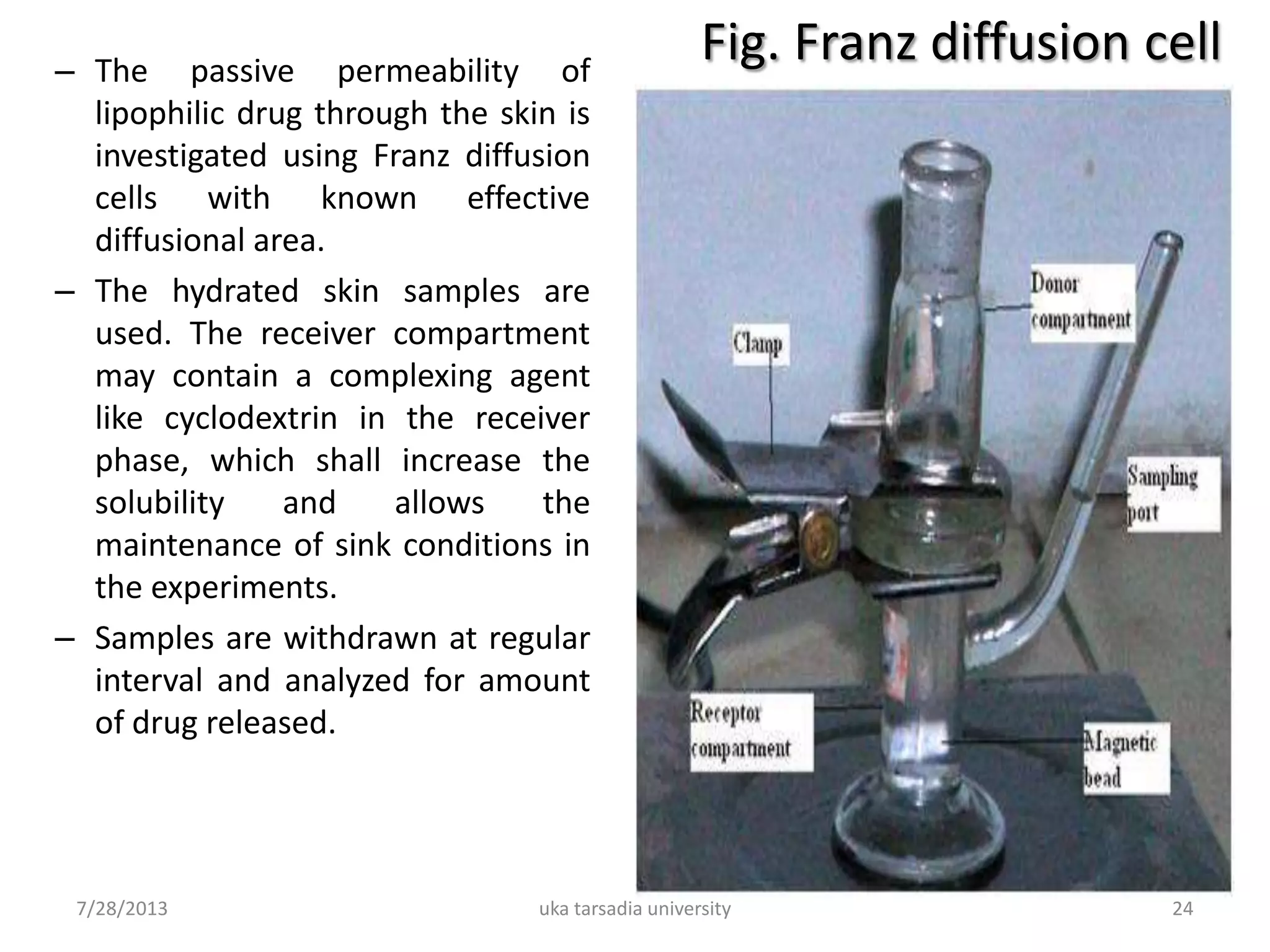
– The passive permeability of
lipophilic drug through the skin is
investigated using Franz diffusion
cells with known effective
diffusional area.
– The hydrated skin samples are
used. The receiver compartment
may contain a complexing agent
like cyclodextrin in the receiver
phase, which shall increase the
solubility and allows the
maintenance of sink conditions in
the experiments.
– Samples are withdrawn at regular
interval and analyzed for amount
of drug released.
7/28/2013 uka tarsadia university 24
Fig. Franz diffusion cell
• Stability Studies
– The physical stability of the microemulsion must be determined
under different storage conditions (4, 25 and 40 °C) during 12
months.
– Depending on different regulatory agency requirement it’ll vary
according to them.
– Effect of surfactant and their concentration on size of droplet is
also be studied.
7/28/2013 uka tarsadia university 25
References:
• Berry, natasha, "development and stability of microemulsions as carriers
for nutraceuticals" (2011). Theses and dissertations. Paper 679.
• P. J. Sinko, Martin’s Physical Pharmacy & Pharmaceutical Science, 5th
Ed., Wolters Kluwer Press, 2009, Chapter 16.
• Lachman , the theory and practice of industrial pharmacy, 3rd ed.,Varghese
publishing house, 2008, chapter 17.
• The science and practice of pharmacy 21st edition vol-1 remington 2005
pg.No.-315,316,763 published by wolters kluwer health(india) pvt.Ltd.,
New delhi.
• Microemulsion-based media as novel drug delivery systems
www.Elsevier.Com/ locate / drugdeliv advanced drug delivery reviews 45
(2000) 89–121
• “Emerging trend of microemulsion in formulation and research”
international bulletin of drug research., 1(1): 54-83 54
• Michael e aulton, “the design and manufacture of medicines”, elsevier
publisher,third edition(2007)
7/28/2013 uka tarsadia university 26
27

Microemulsion by atul mangukiya

  • 1.
    MICROEMULSION BASIC PRINCIPLES, FORMULATION& EVALUATION • Guided by: – Dr. Akshay koli – Assistant professor • Prepared by: – Atul mangukiya – 201204100410028 – M.Pharm.3rd sem Pharmaceutics Department 7/28/2013 uka tarsadia university 1
  • 2.
    CONTENT • Introduction • Basicprinciples (theories) • Types of micro emulsion • Formulation • Evaluation • References 7/28/2013 uka tarsadia university 2
  • 3.
    INTRODUCTION 7/28/2013 uka tarsadiauniversity 3 Surfactant Oil Phase Water Phase Co-Surfactant What is Micro Emulsion?
  • 4.
    Microemulsion • Microemulsions arethermodynamically stable dispersions of oil and water stabilized by a surfactant and, in many cases, also a cosurfactant. • Microemulsions can have characteristic properties such as ultralow interfacial tension, large interfacial area and capacity to solubilize both aqueous and oil-soluble compounds. 7/28/2013 uka tarsadia university 4 Theories of Microemulsion Formation 1. Interfacial or mixed film theories. 2. Solubilization theories. 3. Thermodynamic treatments.
  • 5.
    Interfacial/Mixed Film Theories: •They considered that the spontaneous formation of microemulsion droplets was due to the formation of a complex film at the oil-water interface by the surfactant and co-surfactant. • This caused a reduction in oil-water interfacial tension to very low values (from close to zero to negative) • equation. γi = γo/w -πi Where, γ o/w = Oil-water interfacial tension without the film present πi = Spreading pressure γi =Interfacial tension 7/28/2013 uka tarsadia university 5
  • 6.
    Mechanism of curvatureof a duplex film: • The interfacial film should be curved to form small droplets to explain both the stability of the system and bending of the interface. • A flat duplex film would be under stress because of the difference in tension and spreading of pressure on either side of it. • Reduction of this tension gradient by equalizing the two surface tensions is the driving force for the film curvature. • It is generally easier to expand the oil side of an interface than the water side and hence W/O microemulsion can be formed easily than O/W microemulsion. 7/28/2013 uka tarsadia university 6
  • 7.
    Solubilization Theories:- • Illustratedthe relationship between reverse micelles and W/O microemulsion with the help of phase diagrams. • The inverse micelle region of ternary system i.e. water, pentanol and sodium dodecyl sulphate (SDS) is composed of water solubilized reverse micelles of SDS in pentanol. • Addition of O-xylene up to 50% gives rise to transparent W/O region containing a maximum of 28% water with 5 % pentanol and 6% surfactant (i.e. microemulsions). • These four component systems could be prepared by adding hydrocarbon directly to the inverse micellar phase by titration. 7/28/2013 uka tarsadia university 7
  • 8.
    Thermodynamic theory • Theprocess of formation of oil droplets from a bulk oil phase is accompanied by an increase in the interfacial area ∆A, and hence an interfacial energy ∆G . • The entropy of dispersion of the droplets is equal to T ∆ S and hence the free energy of formation of the system is given by the expression. ∆Gf = γ ∆a - T ∆S Where, ∆Gf = free energy of formation ∆A = change in interfacial area of microemulsion ∆ S = change in entropy of the system T = temperature γ = surface tension of oil water interphase 7/28/2013 uka tarsadia university 8
  • 9.
    • When theinterfacial tension is made sufficiently low that the interfacial energy becomes comparable to or even lower than the entropy of dispersion. • The dominant favorable entropic contribution is very large dispersion entropy arising from the mixing of one phase in the other in the form of large number of small droplets. • The free energy of formation of the system becomes zero or negative. • This explains the thermodynamic stability of micro emulsions. • The co-surfactant along with surfactant lower the interfacial tension to a very small even transient negative value . 7/28/2013 uka tarsadia university 9
  • 10.
    Main three components 1.Oil phase 2. Surfactant 3. Cosurfactant 7/28/2013 uka tarsadia university 10
  • 11.
    7/28/2013 uka tarsadiauniversity 11 Constituents of Microemulsion Oil phase :- Isopropyl Myristate Oleic acid Olive oil Mineral oil Medium chain triglyceride Soybean oil Captex 355 Isopropyl palmitate Sunflower Oil Safflower Oil Surfactants :- Tween 80 Tween 40 Labrafil M1944CS Polyoxyethylene-35-ricinoleate Brij 58 Span 80 Cremophor EL Labrasol Cremophor RH Lecithin Cosurfactant/Stabilizer :- Propylene glycol Ethylene glycol Ethanol 1-butanol Isopropyl alcohol PEG 600 Glycerol PEG 400
  • 12.
    Oil Component • Ascompare to long chain alkanes, short chain oil penetrate the tail group region to a greater extent and resulting in increased negative curvature (and reduced effective HLB). • Following are the different oil are mainly used for the formulation of microemulsion: 1. Saturated fatty acid-lauric acid, myristic acid,capric acid 2. Unsaturated fatty acid-oleic acid, linoleic acid,linolenic acid 3. Fatty acid ester-ethyl or methyl esters of lauric, myristic and oleic acid. • The main criterion for the selection of oil is that the drug should have high solubility in it. • This will minimize the volume of the formulation to deliver the therapeutic dose of the drug in an encapsulated form. 7/28/2013 uka tarsadia university 12
  • 13.
    Surfactants • It isto lower the interfacial tension which will ultimately facilitates dispersion process and provide a flexible around the droplets. • Generally, low HLB (3-6) surfactants are suitable for w/o microemulsion, whereas high HLB (8-18) are suitable for o/w microemulsion. 7/28/2013 uka tarsadia university 13
  • 14.
    Co surfactants • Theyallow the interfacial film sufficient flexible to take up different curvatures required to form microemulsion over a wide range of composition. 1. Short to medium chain length alcohols (C3-C8) reduce the interfacial tension and increase the fluidity of the interface. 2. Surfactant having HLB greater than 20 often require the presence of cosurfactant to reduce their effective HLB to a value within the range required for microemulsion formulation. 7/28/2013 uka tarsadia university 14
  • 15.
    7/28/2013 uka tarsadiauniversity 15 • a) by reducing the interfacial tension • b) By increasing the flexibility and fluidity of the interface by positioning itself between the surfactant tails which alters the solvent properties of both the dispersed and continuous microemulsion phases; • c) by lowering overall viscosity. • d) by being often soluble in both organic and aqueous phases, co- surfactants help solubilise poorlysoluble compounds (e.g., peptides, vitames
  • 16.
    Types of microemulsion • O/W Microemulsion • W/O Microemulsion • Bi continuous Microemulsion 7/28/2013 uka tarsadia university 16
  • 17.
    Phase Behaviour • Forfour or more components pseudo ternary phase diagrams are used to study the phase behaviour. • In this diagram a corner represent a binary mixture of two components such as water/drug, oil/drug or surfactant/co-surfactant. 7/28/2013 uka tarsadia university 17
  • 18.
    • With highoil concentration surfactant forms reverse micelles capable of solubilizing water molecules in their hydrophilic interior. • Continued addition of water in this system may result in the formation of W/O micro emulsion in which water exists as droplets surrounded and stabilized by interfacial layer of the surfactant / co-surfactant mixture. • Finally, as amount of water increases, this lamellar structure will break down and water will form a continuous phase containing droplets of oil stabilized by a surfactant / co-surfactant (O/W microemulsions) 7/28/2013 uka tarsadia university 18
  • 19.
    Preparation of Microemulsion •Following are the different methods are used for the preparation of microemulsion: 1. Phase titration method 2. Phase inversion method 7/28/2013 uka tarsadia university 19
  • 20.
    7/28/2013 uka tarsadiauniversity 20 • 1)dilution of an oil-surfactant mixture with water.(w/o) • 2) dilution of a water-surfactant mixture with oil.(o/w) • 3) mixing all components at once. In some systems, the order of ingredient addition may determine whether a microemulsion forms or not. •e.g.(w/o) soybean oil, ethoxylated mono- and di-glycerides as surfactants and a mixture of sucrose and ethanol as the aqueous phase. Transparent microemulsions resulted from dilution of the oil-surfactant mixtures with water along several regions in the pseudo-ternary phase diagram. Phase titration method
  • 21.
    7/28/2013 uka tarsadiauniversity 21 Phase inversion method : Phase Inversion Temperature (PIT), i.e., the temperature range in which an o/w microemulsion inverts to a w/o type or vice versa. • using non-ionic surfactants, polyoxyethylene are very susceptible to temperature since surfactant solubility (in oil or water) strongly depends on temperature. With increasing temperature, the polyoxyethylene group becomes dehydrated, altering the critical packing parameter which results in phase inversion. • For ionic surfactants, increasing temperatures increase the electrostatic repulsion between the surfactant headgroups thus causing reversal of film curvature. Hence the effect of temperature is opposite to the effect seen with non-ionic surfactants.
  • 22.
    Parameters Studied Techniques Used Phase BehaviourPhase contrast microscopy and freeze fracture TEM Size and Shape Transmission Electron Microscopy (TEM), SEM,DLS Rheology Brookfield Viscometer Conductivity Conductivity Meter Zeta Potential Zetasizer pH pH Meter Drug Release Studies Franz Diffusion Cells Physical Stability Study Ultracentrifuge 22 EVALUATION
  • 23.
    In Vitro DrugPermeation Studies • Determination of permeability coefficient and flux – Excised human cadaver skin from the abdomen can be obtained from dead who have undergone postmortem not more than 5 days ago in the hospital. The skin is stored at 4C and the epidermis separated. – The skin is first immersed in purified water at 60C for 2 min and the epidermis then peeled off. – Dried skin samples can be kept at -20C for later use. – Alternatively the full thickness dorsal skin of male hairless mice may be used. – The skin shall be excised, washed with normal saline and used. 7/28/2013 uka tarsadia university 23
  • 24.
    – The passivepermeability of lipophilic drug through the skin is investigated using Franz diffusion cells with known effective diffusional area. – The hydrated skin samples are used. The receiver compartment may contain a complexing agent like cyclodextrin in the receiver phase, which shall increase the solubility and allows the maintenance of sink conditions in the experiments. – Samples are withdrawn at regular interval and analyzed for amount of drug released. 7/28/2013 uka tarsadia university 24 Fig. Franz diffusion cell
  • 25.
    • Stability Studies –The physical stability of the microemulsion must be determined under different storage conditions (4, 25 and 40 °C) during 12 months. – Depending on different regulatory agency requirement it’ll vary according to them. – Effect of surfactant and their concentration on size of droplet is also be studied. 7/28/2013 uka tarsadia university 25
  • 26.
    References: • Berry, natasha,"development and stability of microemulsions as carriers for nutraceuticals" (2011). Theses and dissertations. Paper 679. • P. J. Sinko, Martin’s Physical Pharmacy & Pharmaceutical Science, 5th Ed., Wolters Kluwer Press, 2009, Chapter 16. • Lachman , the theory and practice of industrial pharmacy, 3rd ed.,Varghese publishing house, 2008, chapter 17. • The science and practice of pharmacy 21st edition vol-1 remington 2005 pg.No.-315,316,763 published by wolters kluwer health(india) pvt.Ltd., New delhi. • Microemulsion-based media as novel drug delivery systems www.Elsevier.Com/ locate / drugdeliv advanced drug delivery reviews 45 (2000) 89–121 • “Emerging trend of microemulsion in formulation and research” international bulletin of drug research., 1(1): 54-83 54 • Michael e aulton, “the design and manufacture of medicines”, elsevier publisher,third edition(2007) 7/28/2013 uka tarsadia university 26
  • 27.