Sedative-Hypnotics
Mr. Mangesh Bansod
Asst. Professor
SDDVCPRC, Panvel
Content
• Introduction
• Sleep Cycle
• Classification
• Barbiturates
• Benzodiazepines
• Non-benzodiazepine hypnotics
• Uses
• Benzodiazepine antagonist
Introduction
• Sedative- A drug that subdues excitement and
calms the subject without inducing sleep, though
drowsiness may be produced.
• Sedation refers to decreased responsiveness to any level of
stimulation; is associated with some decrease in motor
activity and ideation.
• Hypnotic - A drug that induces and/or maintains
sleep, similar to normal arousable sleep.
• ‘Hypnosis’ meaning a trans-like state in which the subject
becomes passive and highly suggestible.
• The sedatives and hypnotics are more or less global CNS
depressants.
• Those with quicker onset, shorter duration and steeper
dose-response curves are preferred as hypnotics while more
slowly acting drugs with flatter dose-response curves are
employed as sedatives.
• A hypnotic at lower dose may act as sedative.
• sedation—hypnosis—general anaesthesia may be regarded
as increasing grades of CNS depression.
• Hypnotics given in high doses can produce general
anaesthesia.
• Treatment of insomnia is the most important use of this
class of drugs
Sleep Cycle
• The duration and pattern of sleep varies considerably among individuals.
Age has an important effect on quantity and depth of sleep. It has been
recognized that sleep is an architectured cyclic process
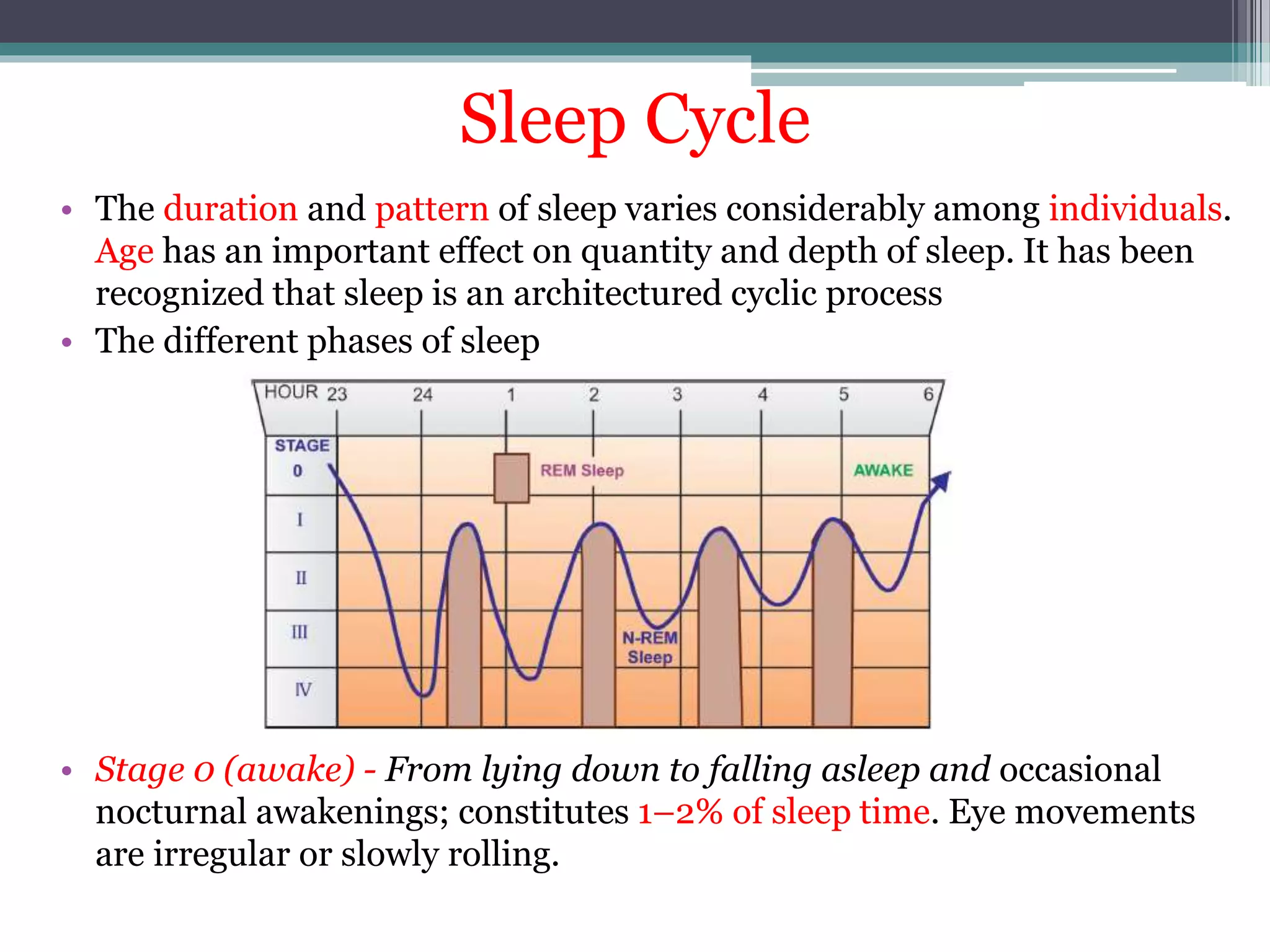
• The different phases of sleep
• Stage 0 (awake) - From lying down to falling asleep and occasional
nocturnal awakenings; constitutes 1–2% of sleep time. Eye movements
are irregular or slowly rolling.
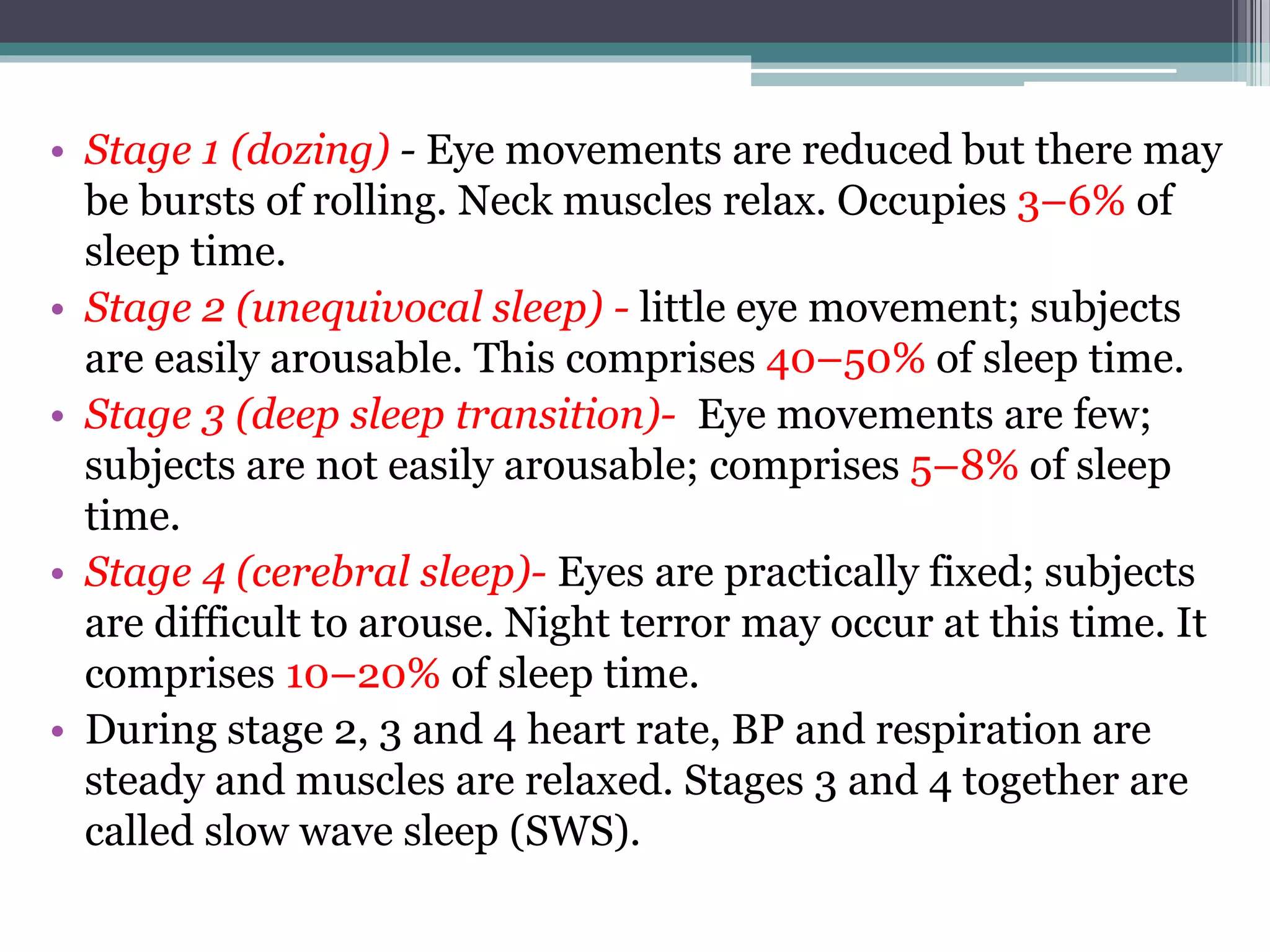
• Stage 1 (dozing) - Eye movements are reduced but there may
be bursts of rolling. Neck muscles relax. Occupies 3–6% of
sleep time.
• Stage 2 (unequivocal sleep) - little eye movement; subjects
are easily arousable. This comprises 40–50% of sleep time.
• Stage 3 (deep sleep transition)- Eye movements are few;
subjects are not easily arousable; comprises 5–8% of sleep
time.
• Stage 4 (cerebral sleep)- Eyes are practically fixed; subjects
are difficult to arouse. Night terror may occur at this time. It
comprises 10–20% of sleep time.
• During stage 2, 3 and 4 heart rate, BP and respiration are
steady and muscles are relaxed. Stages 3 and 4 together are
called slow wave sleep (SWS).
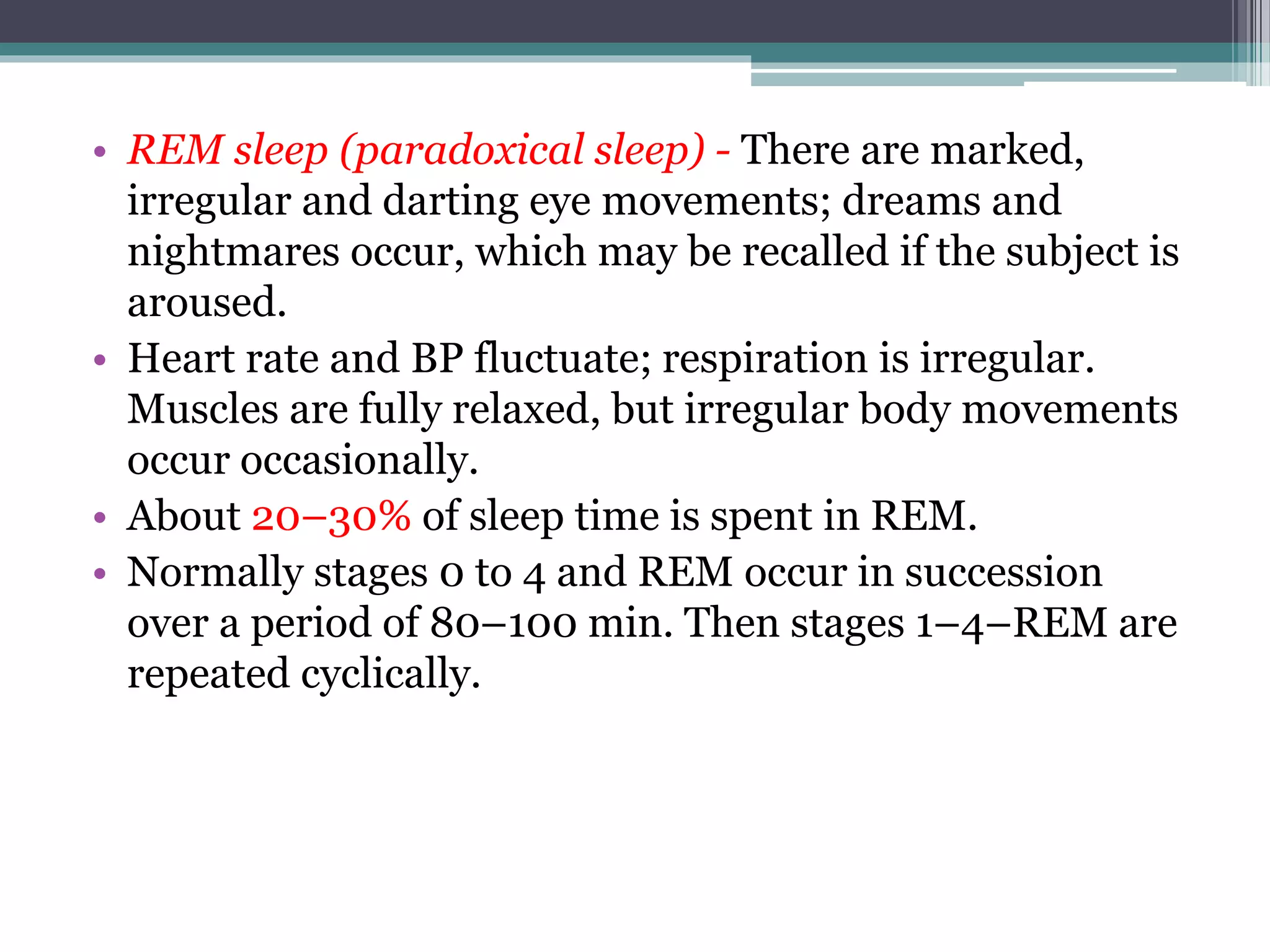
• REM sleep (paradoxical sleep) - There are marked,
irregular and darting eye movements; dreams and
nightmares occur, which may be recalled if the subject is
aroused.
• Heart rate and BP fluctuate; respiration is irregular.
Muscles are fully relaxed, but irregular body movements
occur occasionally.
• About 20–30% of sleep time is spent in REM.
• Normally stages 0 to 4 and REM occur in succession
over a period of 80–100 min. Then stages 1–4–REM are
repeated cyclically.
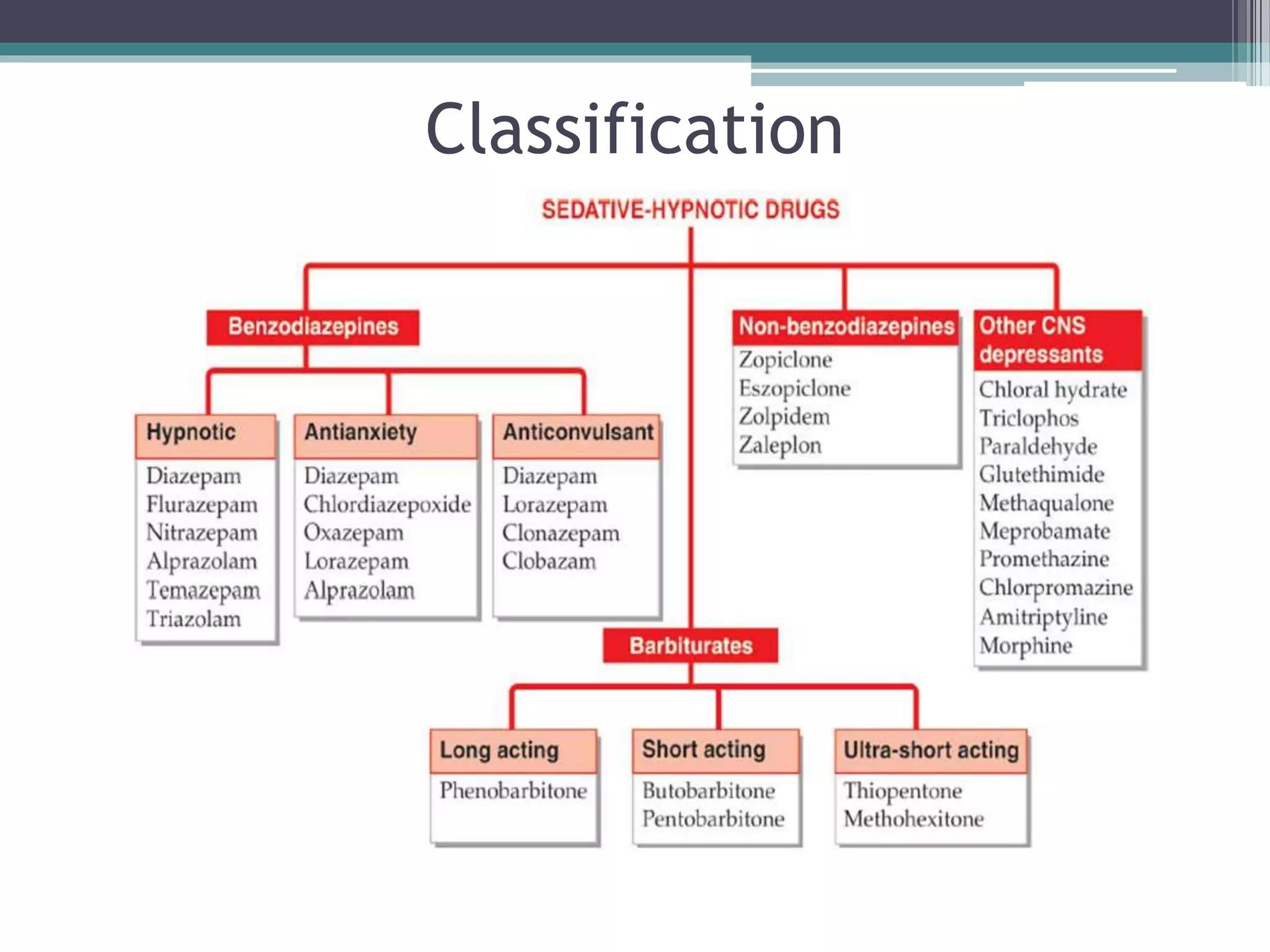
Classification
Barbiturates
• Barbiturates have been popular hypnotics and
sedatives of the last century upto 1960s, but are not
used now to promote sleep or to calm patients.
• However, they are described first because they are
the prototype of CNS depressants.
• Pharmacological actions
• Barbiturates are general depressants for all
excitable cells, the CNS.
• 1. CNS
• barbiturates produce dose-dependent effects:
sedation → sleep → anaesthesia → coma.
• Hypnotic dose shortens the time taken to fall asleep and
increases sleep duration.
• Night awakenings are reduced. REM and stage 3, 4 sleep are
decreased; REM-NREM sleep cycle is disrupted.
• A rebound increase in REM sleep and nightmares is often
noted when the drug is discontinued after a few nights of use
and it takes several nights for normal pattern to be restored.
• Hangover (dizziness, distortions of mood, irritability and
lethargy) may occur in the morning after a nightly dose.
• Sedative dose (smaller dose of a longer acting barbiturate)
given at daytime can produce drowsiness, reduction in
anxiety and excitability.
• Barbiturates can impair learning, short term memory and
judgement.
• Barbiturates have anticonvulsant property.
• (phenobarbitone) have higher anticonvulsant.
• Mechanism of action
• Barbiturates appear to act primarily at the GABA : BZD
receptor–Cl¯ channel complex and potentiate
GABAergic inhibition by increasing the lifetime of Cl¯
channel opening induced by GABA .
• They do not bind to the BZD receptor, but bind to
another site on the same macromolecular complex to
exert the GABA facilitatory action.
• At high concentrations, barbiturates directly increase
Cl¯ conductance (GABA-mimetic action; contrast BZDs
which have only GABA-facilitatory action) and inhibit
Ca2+ dependent release of neurotransmitters.
• they depress glutamate induced neuronal depolarization
through AMPA receptors (a type of excitatory amino
acid receptors).
• 2. Other systems
• Respiration - is depressed by relatively higher doses.
• CVS - Hypnotic doses of barbiturates produce a slight
decrease in BP and heart rate. Toxic doses produce
marked fall in BP due to vasomotor centre depression,
ganglionic blockade and direct decrease in cardiac
contractility.
• Skeletal muscle - Hypnotic doses have little effect but
anaesthetic doses reduce muscle contraction by action on
neuromuscular junction.
• Smooth muscles - Tone and motility of bowel is decreased
slightly by hypnotic doses; more profoundly during
intoxication.
• Kidney - Barbiturates tend to reduce urine flow by
decreasing BP and increasing ADH release. Oliguria
attends barbiturate intoxication.
• Pharmacokinetics
• Barbiturates are well absorbed from the g.i. tract. They are
widely distributed in the body. The rate of entry into CNS
is dependent on lipid solubility.
• (a) Redistribution- It is important in the case of highly
lipid soluble thiopentone. After i.v. injection,
consciousness is regained in 6–10 min due to
redistribution
• (b) Metabolism- Drugs with intermediate lipid-solubility
(short-acting barbiturates) are primarily metabolized in
liver
• (c) Excretion -Barbiturates with low lipid-solubility (long
acting agents) are significantly excreted unchanged in
urine. The t½ of phenobarbitone is 80–120 hours.
• Barbiturates induce several hepatic microsomal enzymes
and increase the rate of their own metabolism as well as
that of many other drugs.
• Uses
• Except for phenobarbitone in epilepsy and thiopentone in
anaesthesia no other barbiturate is used now.
• As hypnotic and anxiolytic they have been superseded by
BZDs.
• Adverse Effects
• Side effects - Hangover was common after the use of
barbiturates as hypnotic. On repeated use they accumulate
in the body—produce tolerance and dependence.
• Idiosyncrasy - In an occasional patient barbiturates produce
excitement. This is more common in the elderly.
• Hypersensitivity - Rashes, swelling of eyelids, lips, etc.—
more common in atopic individuals.
• Tolerance and dependence - Both cellular and
pharmacokinetic (due to enzyme induction) tolerance
develops on repeated use.
• Acute barbiturate poisoning
• Mostly suicidal, sometimes accidental.
• The principles of treatment apply to any CNS depressant
poisoning.
• Manifestations are due to excessive CNS depression—
patient is flabby and comatose with shallow and failing
respiration, fall in BP and cardiovascular collapse, renal shut
down, pulmonary complications, bullous eruptions.
• Lethal dose depends on lipid solubility. It is 2–3 g for the
more lipid-soluble agents (short-acting barbiturates) and 5–
10 g for less lipid-soluble phenobarbitone.
• Treatment
1. Gastric lavage; leave a suspension of activated charcoal in
the stomach to prevent absorption of the drug from
intestines.
2. Supportive measures: such as, patent airway, assisted
respiration, oxygen, maintenance of blood volume by fluid
infusion and use of vasopressors—dopamine may be
preferred for its renal vasodilating action.
3. Alkaline diuresis: with sodium bicarbonate 1 mEq/kg i.v.
with or without mannitol is helpful only in the case of long
acting barbiturates which are eliminated primarily by renal
excretion.
4. Haemodialysis and haemoperfusion (through a column of
activated charcoal or other adsorbants) is highly effective in
removing long-acting as well as short-acting barbiturates.
• There is no specific antidote for barbiturates.
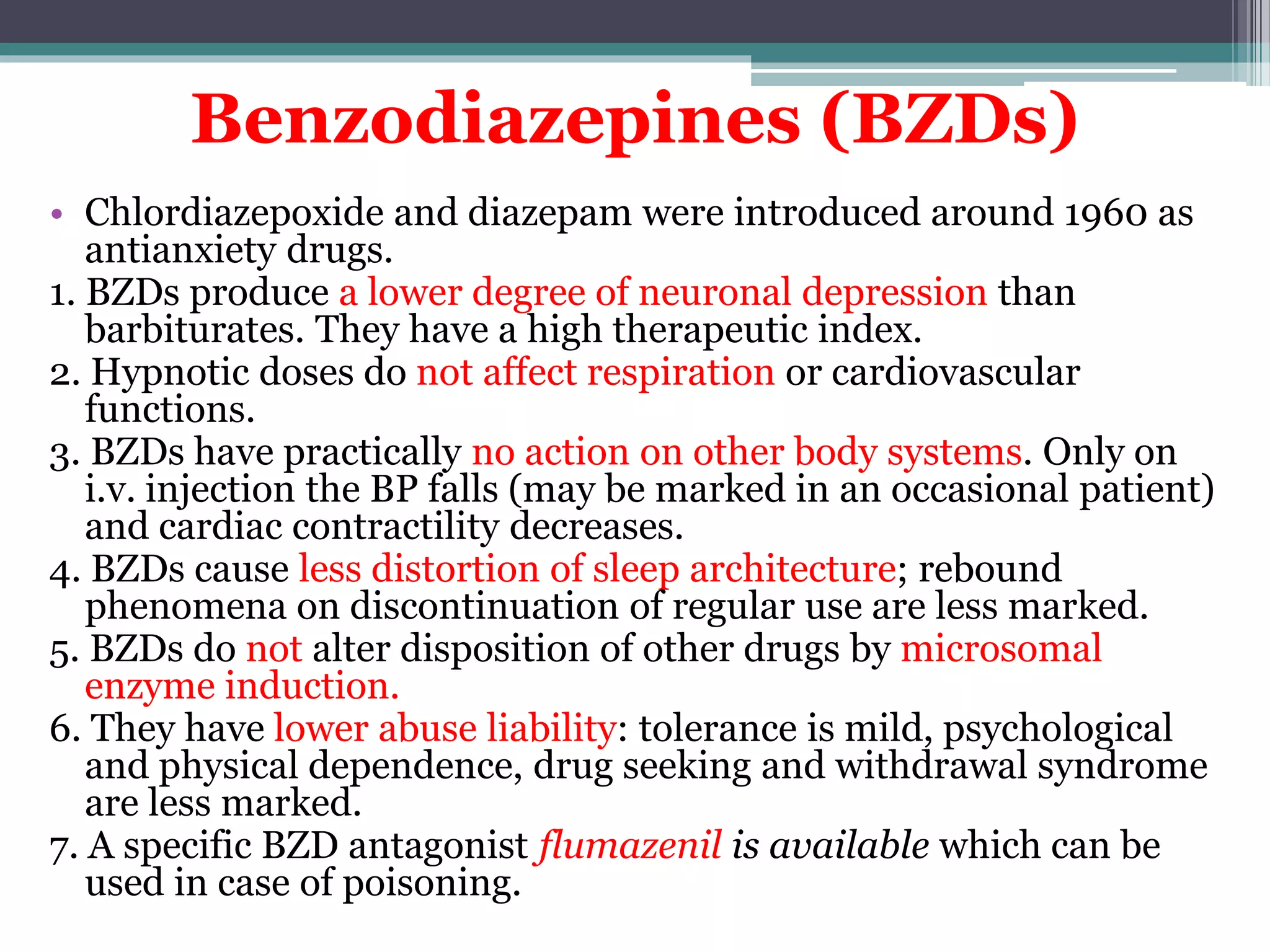
Benzodiazepines (BZDs)
• Chlordiazepoxide and diazepam were introduced around 1960 as
antianxiety drugs.
1. BZDs produce a lower degree of neuronal depression than
barbiturates. They have a high therapeutic index.
2. Hypnotic doses do not affect respiration or cardiovascular
functions.
3. BZDs have practically no action on other body systems. Only on
i.v. injection the BP falls (may be marked in an occasional patient)
and cardiac contractility decreases.
4. BZDs cause less distortion of sleep architecture; rebound
phenomena on discontinuation of regular use are less marked.
5. BZDs do not alter disposition of other drugs by microsomal
enzyme induction.
6. They have lower abuse liability: tolerance is mild, psychological
and physical dependence, drug seeking and withdrawal syndrome
are less marked.
7. A specific BZD antagonist flumazenil is available which can be
used in case of poisoning.
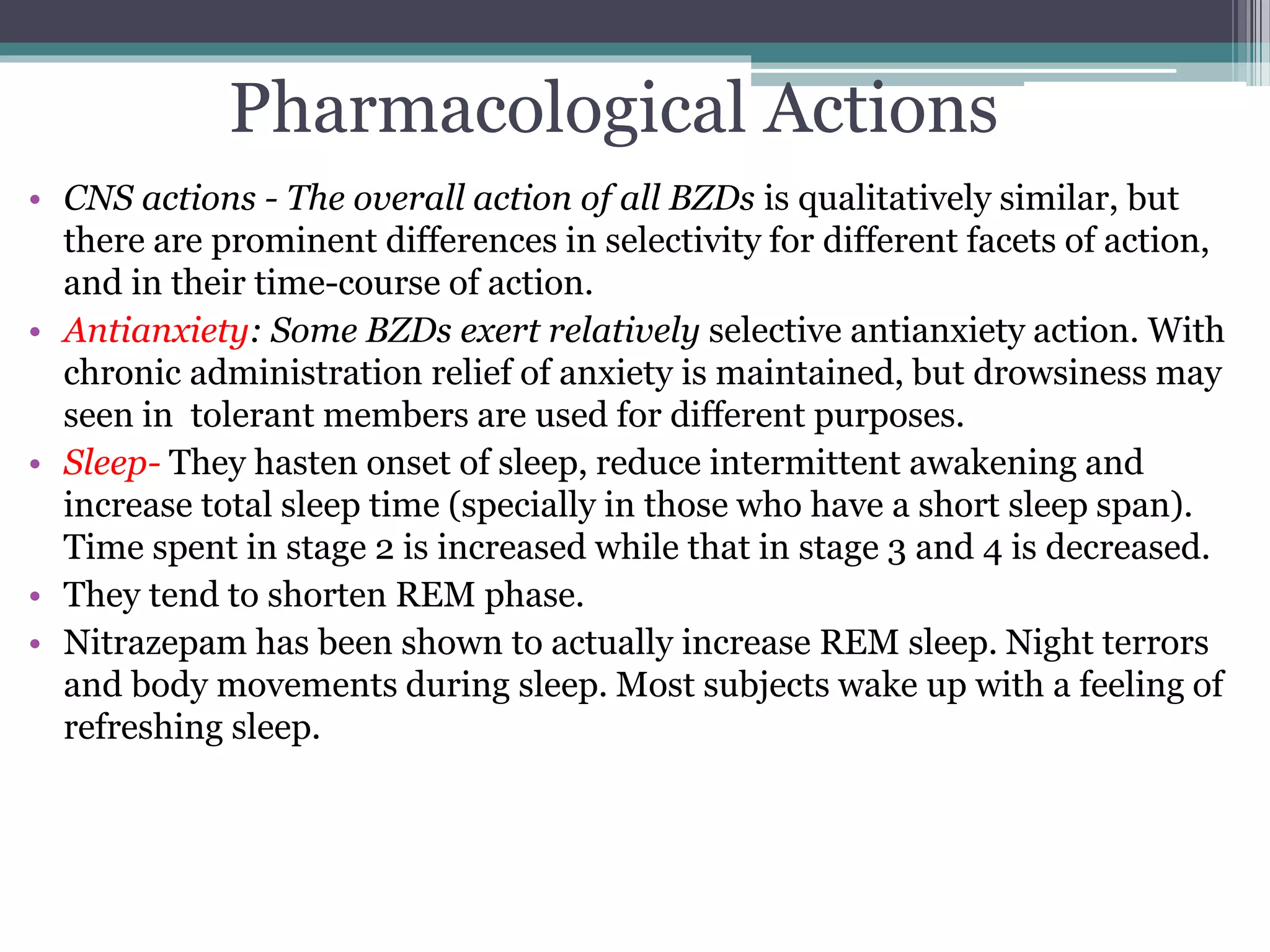
Pharmacological Actions
• CNS actions - The overall action of all BZDs is qualitatively similar, but
there are prominent differences in selectivity for different facets of action,
and in their time-course of action.
• Antianxiety: Some BZDs exert relatively selective antianxiety action. With
chronic administration relief of anxiety is maintained, but drowsiness may
seen in tolerant members are used for different purposes.
• Sleep- They hasten onset of sleep, reduce intermittent awakening and
increase total sleep time (specially in those who have a short sleep span).
Time spent in stage 2 is increased while that in stage 3 and 4 is decreased.
• They tend to shorten REM phase.
• Nitrazepam has been shown to actually increase REM sleep. Night terrors
and body movements during sleep. Most subjects wake up with a feeling of
refreshing sleep.
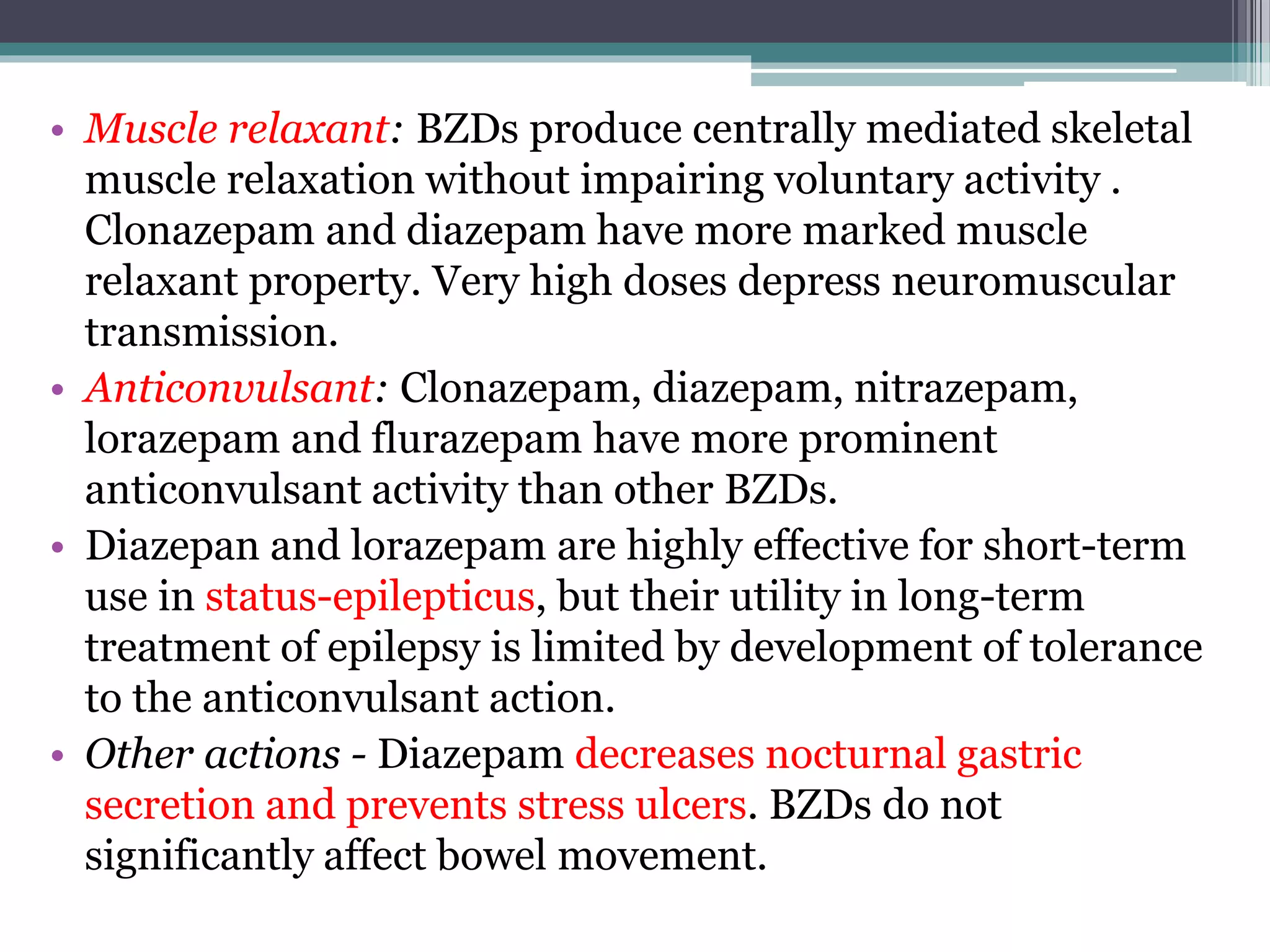
• Muscle relaxant: BZDs produce centrally mediated skeletal
muscle relaxation without impairing voluntary activity .
Clonazepam and diazepam have more marked muscle
relaxant property. Very high doses depress neuromuscular
transmission.
• Anticonvulsant: Clonazepam, diazepam, nitrazepam,
lorazepam and flurazepam have more prominent
anticonvulsant activity than other BZDs.
• Diazepan and lorazepam are highly effective for short-term
use in status-epilepticus, but their utility in long-term
treatment of epilepsy is limited by development of tolerance
to the anticonvulsant action.
• Other actions - Diazepam decreases nocturnal gastric
secretion and prevents stress ulcers. BZDs do not
significantly affect bowel movement.
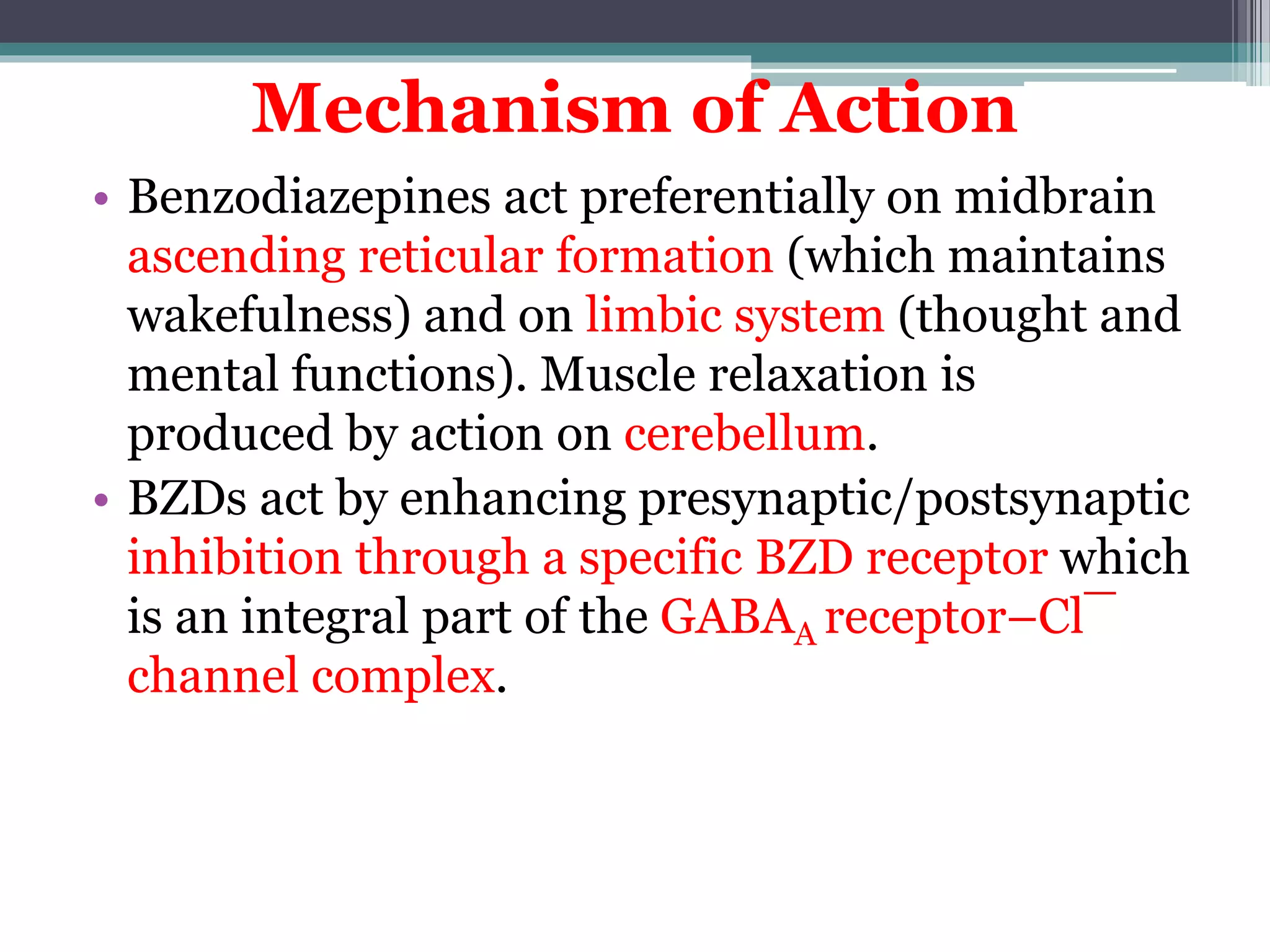
Mechanism of Action
• Benzodiazepines act preferentially on midbrain
ascending reticular formation (which maintains
wakefulness) and on limbic system (thought and
mental functions). Muscle relaxation is
produced by action on cerebellum.
• BZDs act by enhancing presynaptic/postsynaptic
inhibition through a specific BZD receptor which
is an integral part of the GABAA receptor–Cl¯
channel complex.
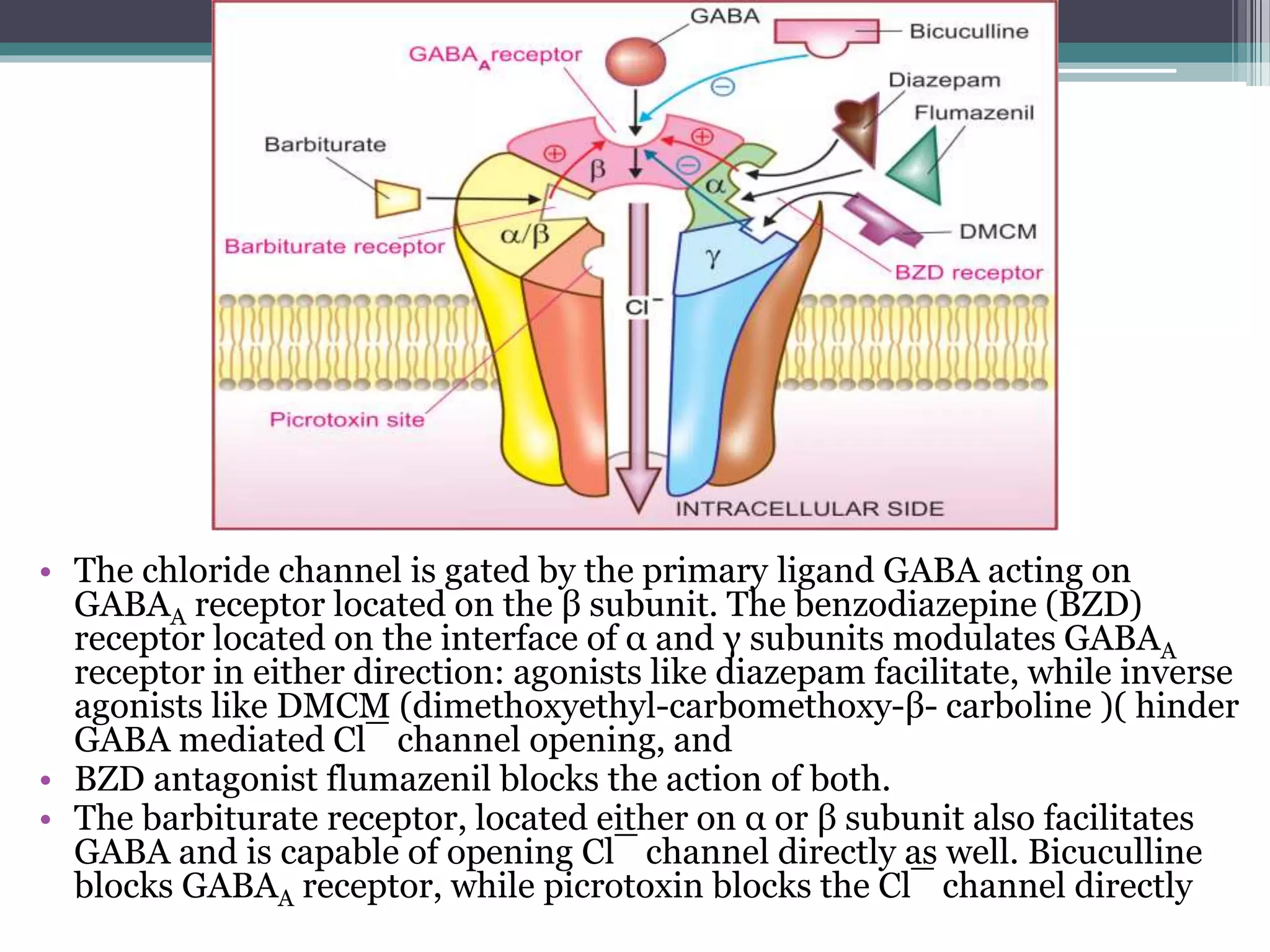
• The chloride channel is gated by the primary ligand GABA acting on
GABAA receptor located on the β subunit. The benzodiazepine (BZD)
receptor located on the interface of α and γ subunits modulates GABAA
receptor in either direction: agonists like diazepam facilitate, while inverse
agonists like DMCM (dimethoxyethyl-carbomethoxy-β- carboline )( hinder
GABA mediated Cl¯ channel opening, and
• BZD antagonist flumazenil blocks the action of both.
• The barbiturate receptor, located either on α or β subunit also facilitates
GABA and is capable of opening Cl¯ channel directly as well. Bicuculline
blocks GABAA receptor, while picrotoxin blocks the Cl¯ channel directly
• Pharmacokinetics
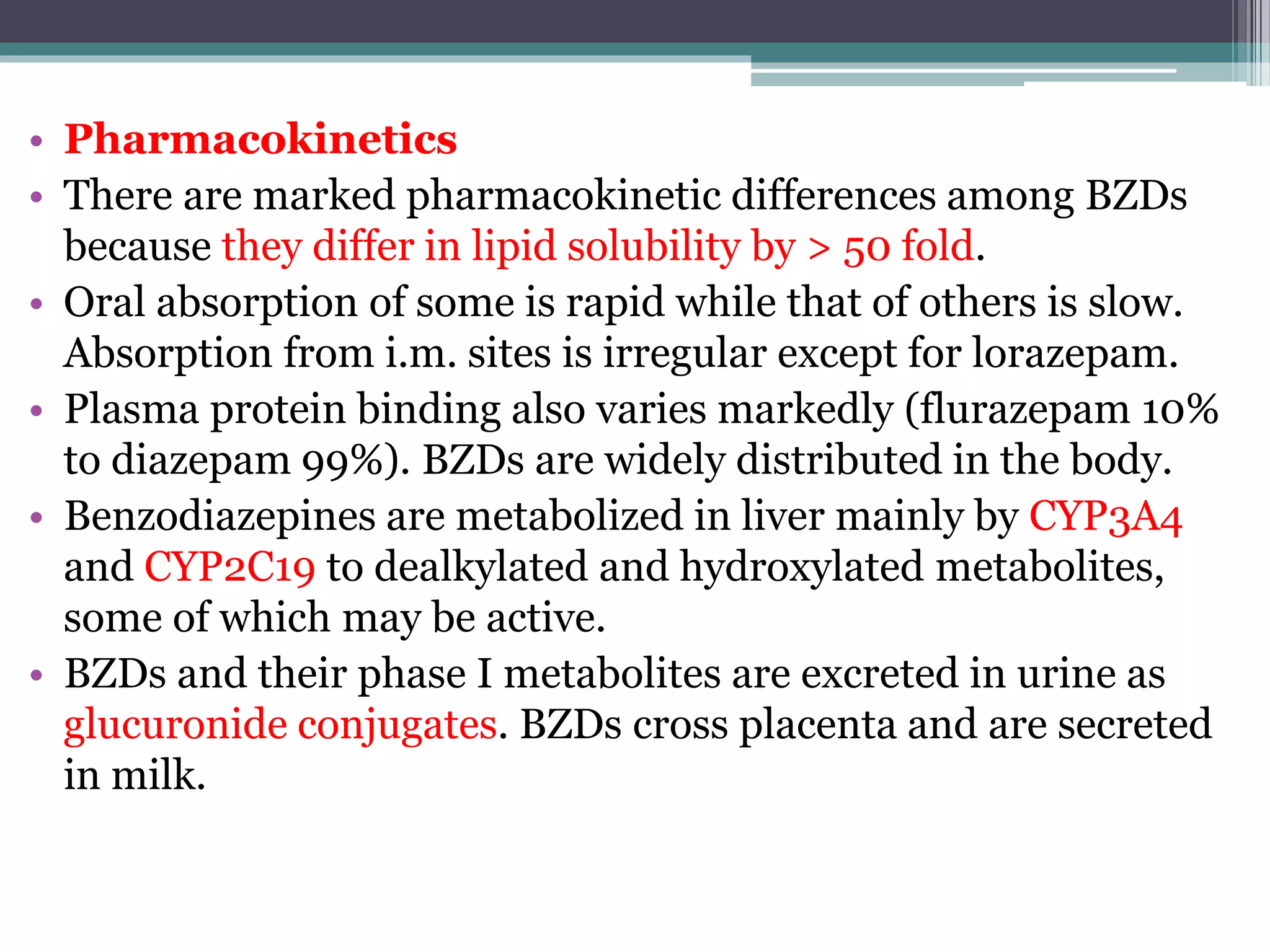
• There are marked pharmacokinetic differences among BZDs
because they differ in lipid solubility by > 50 fold.
• Oral absorption of some is rapid while that of others is slow.
Absorption from i.m. sites is irregular except for lorazepam.
• Plasma protein binding also varies markedly (flurazepam 10%
to diazepam 99%). BZDs are widely distributed in the body.
• Benzodiazepines are metabolized in liver mainly by CYP3A4
and CYP2C19 to dealkylated and hydroxylated metabolites,
some of which may be active.
• BZDs and their phase I metabolites are excreted in urine as
glucuronide conjugates. BZDs cross placenta and are secreted
in milk.
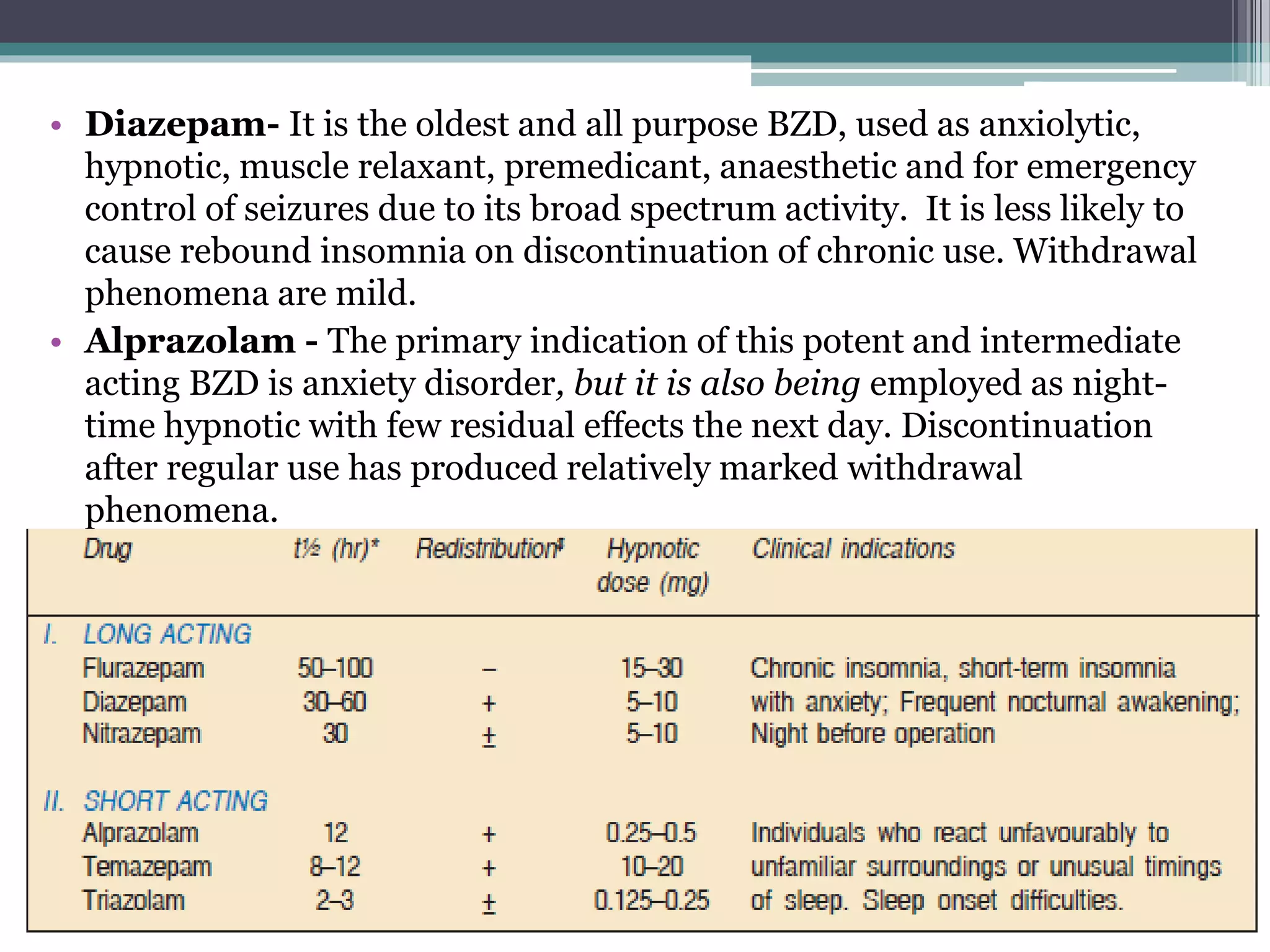
• Diazepam- It is the oldest and all purpose BZD, used as anxiolytic,
hypnotic, muscle relaxant, premedicant, anaesthetic and for emergency
control of seizures due to its broad spectrum activity. It is less likely to
cause rebound insomnia on discontinuation of chronic use. Withdrawal
phenomena are mild.
• Alprazolam - The primary indication of this potent and intermediate
acting BZD is anxiety disorder, but it is also being employed as night-
time hypnotic with few residual effects the next day. Discontinuation
after regular use has produced relatively marked withdrawal
phenomena.
• Adverse Effects-
• Benzodiazepines are relatively safe drugs.
• Side effects of hypnotic doses are dizziness, vertigo, ataxia,
disorientation, amnesia, prolongation of reaction time—
impairment of psychomotor skills (should not drive).
• Paradoxical stimulation, irritability and sweating may occur
in an occasional patient, especially with flurazepam.
• Tolerance to the sedative effects develops gradually
• The dependence producing liability of BZDs is low.
Non-benzodiazepine hypnotics
• This lately developed group of hypnotics are
chemically different from BZDs, but act as agonists
on a specific subset of BZD receptors.
• Their action is competitively antagonized by the
BZD antagonist flumazenil, which can be used to
treat their overdose toxicity.
• They have lower abuse potential than hypnotic
BZDs.
• Given their shorter duration of action, they are
being preferred over BZDs for the treatment of
insomnia.
Zopiclone
• This is the first of the non-BZD hypnotics, which acts as
an agonist at a subtype of BZD receptor involved in the
hypnotic action.
• The effect on sleep resemble those of BZDs, but it does
not alter REM sleep and tends to prolong stages 3 and 4.
It is reported not to disturb sleep architecture, but some
degree of next morning impairment can occur.
• Zopiclone is indicated for short term (< 2 weeks)
treatment of insomnia.
• Side effects are metallic or bitter after-taste, impaired
judgement and alertness, psychological disturbances,
dry mouth and milder dependence.
• Safety in overdose is similar to BZDs.
Uses
• 1. As hypnotic –
• A hypnotic should not be casually prescribed for every case of
insomnia. Understanding the pattern and cause of insomnia.
• When indicated, BZDs or the newer non-BZDs like zolpidem,
zaleplon are the hypnotic of choice.
• A hypnotic may be used to shorten sleep latency, to reduce
nocturnal awakenings.
• Chronic insomnia (> 3 weeks) - The patient may have a personality
disorder, but often there is no specific stress factor.
• He may have used hypnotics for long periods or may be alcoholic
or have some somatic disease, e.g. gastroesophageal reflux, pain,
COPD, etc. which interfere with sleep.
• Short-term insomnia (3–21 days) - Emotional problem
(occupational stress, bereavement) and physical illness are the
usual causes.
• Transient insomnia (1–3 days) - Due to alterations in the
circumstances of sleep, e.g. unusual noise, on an overnight train,
new place, unusual pattern of work, shift workers
Other uses
(a) As anxiolytic and for day-time sedation
(b) As anticonvulsant, especially emergency control of status
epilepticus, febrile convulsions, tetanus, etc.
(c) As centrally acting muscle relaxant
(d) For preanaesthetic medication, i.v. anaesthesia and
conscious sedation
(e) Before ECT, electrical cardioversion of arrhythmias, cardiac
catheterization, endoscopies, in obstetrics and many minor
procedures—diazepam i.v. has gained popularity because of
its calming-amnesic analgesic and muscle relaxant properties
and relative safety.
(f) Alcohol withdrawal in dependent subjects.
Benzodiazepine Antagonist
• Flumazenil - It is a BZD analogue which has little intrinsic activity
(practically no effect on normal subjects), but competes with BZD
agonists as well as inverse agonists for the BZD receptor and
reverses their depressant or stimulant effects respectively.
• Flumazenil abolishes the hypnogenic, psychomotor, cognitive and
EEG effects of BZDs.
• Uses
1. To reverse BZD anaesthesia - Patients anaesthetized/sedated with a
BZD wakeup, get oriented and regain motor control.
2. BZD overdose - Majority of patients of BZD overdose require only
supportive measures like patent airway, maintenance of BP, cardiac
and renal function (by fluid transfusion, etc.).
Melatonin
• It is the principal hormone of the pineal gland which is secreted at night
and has been found to play an important role in entraining
(synchronizing) the sleepwakefulness cycle with the circadian rhythm.
• Two subtypes of melatonin receptor MT1 and MT2 have been identified
in the brain. Both are GPCRs and are believed to carry out the function
of facilitating sleep onset and fixing its timing in relation to the
circadian clock.
• Though high doses (80 mg) of melatonin administered orally can induce
sleep, low doses (2–10 mg) do not depress the CNS, but probably
increase the propensity of falling asleep. Since melatonin secretion
declines with age, it has been argued that melatonin supplementation
might retard ageing.
• In India it is marketed as a remedy for disturbed biorhythms and sleep
disorders.
• Ramelteon - It is a MT1 as well as MT2 melatonin receptor agonist
introduced in USA and now approved in India as well, as a new class of
hypnotic for sleep onset insomnia, that does not produce the usual BZD-
like side effects.
Thank you . . .

Sedative hypnotics

  • 1.
  • 2.
    Content • Introduction • SleepCycle • Classification • Barbiturates • Benzodiazepines • Non-benzodiazepine hypnotics • Uses • Benzodiazepine antagonist
  • 3.
    Introduction • Sedative- Adrug that subdues excitement and calms the subject without inducing sleep, though drowsiness may be produced. • Sedation refers to decreased responsiveness to any level of stimulation; is associated with some decrease in motor activity and ideation. • Hypnotic - A drug that induces and/or maintains sleep, similar to normal arousable sleep. • ‘Hypnosis’ meaning a trans-like state in which the subject becomes passive and highly suggestible.
  • 4.
    • The sedativesand hypnotics are more or less global CNS depressants. • Those with quicker onset, shorter duration and steeper dose-response curves are preferred as hypnotics while more slowly acting drugs with flatter dose-response curves are employed as sedatives. • A hypnotic at lower dose may act as sedative. • sedation—hypnosis—general anaesthesia may be regarded as increasing grades of CNS depression. • Hypnotics given in high doses can produce general anaesthesia. • Treatment of insomnia is the most important use of this class of drugs
  • 5.
    Sleep Cycle • Theduration and pattern of sleep varies considerably among individuals. Age has an important effect on quantity and depth of sleep. It has been recognized that sleep is an architectured cyclic process • The different phases of sleep • Stage 0 (awake) - From lying down to falling asleep and occasional nocturnal awakenings; constitutes 1–2% of sleep time. Eye movements are irregular or slowly rolling.
  • 6.
    • Stage 1(dozing) - Eye movements are reduced but there may be bursts of rolling. Neck muscles relax. Occupies 3–6% of sleep time. • Stage 2 (unequivocal sleep) - little eye movement; subjects are easily arousable. This comprises 40–50% of sleep time. • Stage 3 (deep sleep transition)- Eye movements are few; subjects are not easily arousable; comprises 5–8% of sleep time. • Stage 4 (cerebral sleep)- Eyes are practically fixed; subjects are difficult to arouse. Night terror may occur at this time. It comprises 10–20% of sleep time. • During stage 2, 3 and 4 heart rate, BP and respiration are steady and muscles are relaxed. Stages 3 and 4 together are called slow wave sleep (SWS).
  • 7.
    • REM sleep(paradoxical sleep) - There are marked, irregular and darting eye movements; dreams and nightmares occur, which may be recalled if the subject is aroused. • Heart rate and BP fluctuate; respiration is irregular. Muscles are fully relaxed, but irregular body movements occur occasionally. • About 20–30% of sleep time is spent in REM. • Normally stages 0 to 4 and REM occur in succession over a period of 80–100 min. Then stages 1–4–REM are repeated cyclically.
  • 8.
  • 9.
    Barbiturates • Barbiturates havebeen popular hypnotics and sedatives of the last century upto 1960s, but are not used now to promote sleep or to calm patients. • However, they are described first because they are the prototype of CNS depressants. • Pharmacological actions • Barbiturates are general depressants for all excitable cells, the CNS. • 1. CNS • barbiturates produce dose-dependent effects: sedation → sleep → anaesthesia → coma.
  • 10.
    • Hypnotic doseshortens the time taken to fall asleep and increases sleep duration. • Night awakenings are reduced. REM and stage 3, 4 sleep are decreased; REM-NREM sleep cycle is disrupted. • A rebound increase in REM sleep and nightmares is often noted when the drug is discontinued after a few nights of use and it takes several nights for normal pattern to be restored. • Hangover (dizziness, distortions of mood, irritability and lethargy) may occur in the morning after a nightly dose. • Sedative dose (smaller dose of a longer acting barbiturate) given at daytime can produce drowsiness, reduction in anxiety and excitability. • Barbiturates can impair learning, short term memory and judgement. • Barbiturates have anticonvulsant property. • (phenobarbitone) have higher anticonvulsant.
  • 11.
    • Mechanism ofaction • Barbiturates appear to act primarily at the GABA : BZD receptor–Cl¯ channel complex and potentiate GABAergic inhibition by increasing the lifetime of Cl¯ channel opening induced by GABA . • They do not bind to the BZD receptor, but bind to another site on the same macromolecular complex to exert the GABA facilitatory action. • At high concentrations, barbiturates directly increase Cl¯ conductance (GABA-mimetic action; contrast BZDs which have only GABA-facilitatory action) and inhibit Ca2+ dependent release of neurotransmitters. • they depress glutamate induced neuronal depolarization through AMPA receptors (a type of excitatory amino acid receptors).
  • 12.
    • 2. Othersystems • Respiration - is depressed by relatively higher doses. • CVS - Hypnotic doses of barbiturates produce a slight decrease in BP and heart rate. Toxic doses produce marked fall in BP due to vasomotor centre depression, ganglionic blockade and direct decrease in cardiac contractility. • Skeletal muscle - Hypnotic doses have little effect but anaesthetic doses reduce muscle contraction by action on neuromuscular junction. • Smooth muscles - Tone and motility of bowel is decreased slightly by hypnotic doses; more profoundly during intoxication. • Kidney - Barbiturates tend to reduce urine flow by decreasing BP and increasing ADH release. Oliguria attends barbiturate intoxication.
  • 13.
    • Pharmacokinetics • Barbituratesare well absorbed from the g.i. tract. They are widely distributed in the body. The rate of entry into CNS is dependent on lipid solubility. • (a) Redistribution- It is important in the case of highly lipid soluble thiopentone. After i.v. injection, consciousness is regained in 6–10 min due to redistribution • (b) Metabolism- Drugs with intermediate lipid-solubility (short-acting barbiturates) are primarily metabolized in liver • (c) Excretion -Barbiturates with low lipid-solubility (long acting agents) are significantly excreted unchanged in urine. The t½ of phenobarbitone is 80–120 hours. • Barbiturates induce several hepatic microsomal enzymes and increase the rate of their own metabolism as well as that of many other drugs.
  • 14.
    • Uses • Exceptfor phenobarbitone in epilepsy and thiopentone in anaesthesia no other barbiturate is used now. • As hypnotic and anxiolytic they have been superseded by BZDs. • Adverse Effects • Side effects - Hangover was common after the use of barbiturates as hypnotic. On repeated use they accumulate in the body—produce tolerance and dependence. • Idiosyncrasy - In an occasional patient barbiturates produce excitement. This is more common in the elderly. • Hypersensitivity - Rashes, swelling of eyelids, lips, etc.— more common in atopic individuals. • Tolerance and dependence - Both cellular and pharmacokinetic (due to enzyme induction) tolerance develops on repeated use.
  • 15.
    • Acute barbituratepoisoning • Mostly suicidal, sometimes accidental. • The principles of treatment apply to any CNS depressant poisoning. • Manifestations are due to excessive CNS depression— patient is flabby and comatose with shallow and failing respiration, fall in BP and cardiovascular collapse, renal shut down, pulmonary complications, bullous eruptions. • Lethal dose depends on lipid solubility. It is 2–3 g for the more lipid-soluble agents (short-acting barbiturates) and 5– 10 g for less lipid-soluble phenobarbitone.
  • 16.
    • Treatment 1. Gastriclavage; leave a suspension of activated charcoal in the stomach to prevent absorption of the drug from intestines. 2. Supportive measures: such as, patent airway, assisted respiration, oxygen, maintenance of blood volume by fluid infusion and use of vasopressors—dopamine may be preferred for its renal vasodilating action. 3. Alkaline diuresis: with sodium bicarbonate 1 mEq/kg i.v. with or without mannitol is helpful only in the case of long acting barbiturates which are eliminated primarily by renal excretion. 4. Haemodialysis and haemoperfusion (through a column of activated charcoal or other adsorbants) is highly effective in removing long-acting as well as short-acting barbiturates. • There is no specific antidote for barbiturates.
  • 17.
    Benzodiazepines (BZDs) • Chlordiazepoxideand diazepam were introduced around 1960 as antianxiety drugs. 1. BZDs produce a lower degree of neuronal depression than barbiturates. They have a high therapeutic index. 2. Hypnotic doses do not affect respiration or cardiovascular functions. 3. BZDs have practically no action on other body systems. Only on i.v. injection the BP falls (may be marked in an occasional patient) and cardiac contractility decreases. 4. BZDs cause less distortion of sleep architecture; rebound phenomena on discontinuation of regular use are less marked. 5. BZDs do not alter disposition of other drugs by microsomal enzyme induction. 6. They have lower abuse liability: tolerance is mild, psychological and physical dependence, drug seeking and withdrawal syndrome are less marked. 7. A specific BZD antagonist flumazenil is available which can be used in case of poisoning.
  • 18.
    Pharmacological Actions • CNSactions - The overall action of all BZDs is qualitatively similar, but there are prominent differences in selectivity for different facets of action, and in their time-course of action. • Antianxiety: Some BZDs exert relatively selective antianxiety action. With chronic administration relief of anxiety is maintained, but drowsiness may seen in tolerant members are used for different purposes. • Sleep- They hasten onset of sleep, reduce intermittent awakening and increase total sleep time (specially in those who have a short sleep span). Time spent in stage 2 is increased while that in stage 3 and 4 is decreased. • They tend to shorten REM phase. • Nitrazepam has been shown to actually increase REM sleep. Night terrors and body movements during sleep. Most subjects wake up with a feeling of refreshing sleep.
  • 19.
    • Muscle relaxant:BZDs produce centrally mediated skeletal muscle relaxation without impairing voluntary activity . Clonazepam and diazepam have more marked muscle relaxant property. Very high doses depress neuromuscular transmission. • Anticonvulsant: Clonazepam, diazepam, nitrazepam, lorazepam and flurazepam have more prominent anticonvulsant activity than other BZDs. • Diazepan and lorazepam are highly effective for short-term use in status-epilepticus, but their utility in long-term treatment of epilepsy is limited by development of tolerance to the anticonvulsant action. • Other actions - Diazepam decreases nocturnal gastric secretion and prevents stress ulcers. BZDs do not significantly affect bowel movement.
  • 20.
    Mechanism of Action •Benzodiazepines act preferentially on midbrain ascending reticular formation (which maintains wakefulness) and on limbic system (thought and mental functions). Muscle relaxation is produced by action on cerebellum. • BZDs act by enhancing presynaptic/postsynaptic inhibition through a specific BZD receptor which is an integral part of the GABAA receptor–Cl¯ channel complex.
  • 21.
    • The chloridechannel is gated by the primary ligand GABA acting on GABAA receptor located on the β subunit. The benzodiazepine (BZD) receptor located on the interface of α and γ subunits modulates GABAA receptor in either direction: agonists like diazepam facilitate, while inverse agonists like DMCM (dimethoxyethyl-carbomethoxy-β- carboline )( hinder GABA mediated Cl¯ channel opening, and • BZD antagonist flumazenil blocks the action of both. • The barbiturate receptor, located either on α or β subunit also facilitates GABA and is capable of opening Cl¯ channel directly as well. Bicuculline blocks GABAA receptor, while picrotoxin blocks the Cl¯ channel directly
  • 22.
    • Pharmacokinetics • Thereare marked pharmacokinetic differences among BZDs because they differ in lipid solubility by > 50 fold. • Oral absorption of some is rapid while that of others is slow. Absorption from i.m. sites is irregular except for lorazepam. • Plasma protein binding also varies markedly (flurazepam 10% to diazepam 99%). BZDs are widely distributed in the body. • Benzodiazepines are metabolized in liver mainly by CYP3A4 and CYP2C19 to dealkylated and hydroxylated metabolites, some of which may be active. • BZDs and their phase I metabolites are excreted in urine as glucuronide conjugates. BZDs cross placenta and are secreted in milk.
  • 23.
    • Diazepam- Itis the oldest and all purpose BZD, used as anxiolytic, hypnotic, muscle relaxant, premedicant, anaesthetic and for emergency control of seizures due to its broad spectrum activity. It is less likely to cause rebound insomnia on discontinuation of chronic use. Withdrawal phenomena are mild. • Alprazolam - The primary indication of this potent and intermediate acting BZD is anxiety disorder, but it is also being employed as night- time hypnotic with few residual effects the next day. Discontinuation after regular use has produced relatively marked withdrawal phenomena.
  • 24.
    • Adverse Effects- •Benzodiazepines are relatively safe drugs. • Side effects of hypnotic doses are dizziness, vertigo, ataxia, disorientation, amnesia, prolongation of reaction time— impairment of psychomotor skills (should not drive). • Paradoxical stimulation, irritability and sweating may occur in an occasional patient, especially with flurazepam. • Tolerance to the sedative effects develops gradually • The dependence producing liability of BZDs is low.
  • 25.
    Non-benzodiazepine hypnotics • Thislately developed group of hypnotics are chemically different from BZDs, but act as agonists on a specific subset of BZD receptors. • Their action is competitively antagonized by the BZD antagonist flumazenil, which can be used to treat their overdose toxicity. • They have lower abuse potential than hypnotic BZDs. • Given their shorter duration of action, they are being preferred over BZDs for the treatment of insomnia.
  • 26.
    Zopiclone • This isthe first of the non-BZD hypnotics, which acts as an agonist at a subtype of BZD receptor involved in the hypnotic action. • The effect on sleep resemble those of BZDs, but it does not alter REM sleep and tends to prolong stages 3 and 4. It is reported not to disturb sleep architecture, but some degree of next morning impairment can occur. • Zopiclone is indicated for short term (< 2 weeks) treatment of insomnia. • Side effects are metallic or bitter after-taste, impaired judgement and alertness, psychological disturbances, dry mouth and milder dependence. • Safety in overdose is similar to BZDs.
  • 27.
    Uses • 1. Ashypnotic – • A hypnotic should not be casually prescribed for every case of insomnia. Understanding the pattern and cause of insomnia. • When indicated, BZDs or the newer non-BZDs like zolpidem, zaleplon are the hypnotic of choice. • A hypnotic may be used to shorten sleep latency, to reduce nocturnal awakenings. • Chronic insomnia (> 3 weeks) - The patient may have a personality disorder, but often there is no specific stress factor. • He may have used hypnotics for long periods or may be alcoholic or have some somatic disease, e.g. gastroesophageal reflux, pain, COPD, etc. which interfere with sleep. • Short-term insomnia (3–21 days) - Emotional problem (occupational stress, bereavement) and physical illness are the usual causes. • Transient insomnia (1–3 days) - Due to alterations in the circumstances of sleep, e.g. unusual noise, on an overnight train, new place, unusual pattern of work, shift workers
  • 28.
    Other uses (a) Asanxiolytic and for day-time sedation (b) As anticonvulsant, especially emergency control of status epilepticus, febrile convulsions, tetanus, etc. (c) As centrally acting muscle relaxant (d) For preanaesthetic medication, i.v. anaesthesia and conscious sedation (e) Before ECT, electrical cardioversion of arrhythmias, cardiac catheterization, endoscopies, in obstetrics and many minor procedures—diazepam i.v. has gained popularity because of its calming-amnesic analgesic and muscle relaxant properties and relative safety. (f) Alcohol withdrawal in dependent subjects.
  • 29.
    Benzodiazepine Antagonist • Flumazenil- It is a BZD analogue which has little intrinsic activity (practically no effect on normal subjects), but competes with BZD agonists as well as inverse agonists for the BZD receptor and reverses their depressant or stimulant effects respectively. • Flumazenil abolishes the hypnogenic, psychomotor, cognitive and EEG effects of BZDs. • Uses 1. To reverse BZD anaesthesia - Patients anaesthetized/sedated with a BZD wakeup, get oriented and regain motor control. 2. BZD overdose - Majority of patients of BZD overdose require only supportive measures like patent airway, maintenance of BP, cardiac and renal function (by fluid transfusion, etc.).
  • 30.
    Melatonin • It isthe principal hormone of the pineal gland which is secreted at night and has been found to play an important role in entraining (synchronizing) the sleepwakefulness cycle with the circadian rhythm. • Two subtypes of melatonin receptor MT1 and MT2 have been identified in the brain. Both are GPCRs and are believed to carry out the function of facilitating sleep onset and fixing its timing in relation to the circadian clock. • Though high doses (80 mg) of melatonin administered orally can induce sleep, low doses (2–10 mg) do not depress the CNS, but probably increase the propensity of falling asleep. Since melatonin secretion declines with age, it has been argued that melatonin supplementation might retard ageing. • In India it is marketed as a remedy for disturbed biorhythms and sleep disorders. • Ramelteon - It is a MT1 as well as MT2 melatonin receptor agonist introduced in USA and now approved in India as well, as a new class of hypnotic for sleep onset insomnia, that does not produce the usual BZD- like side effects.
  • 31.