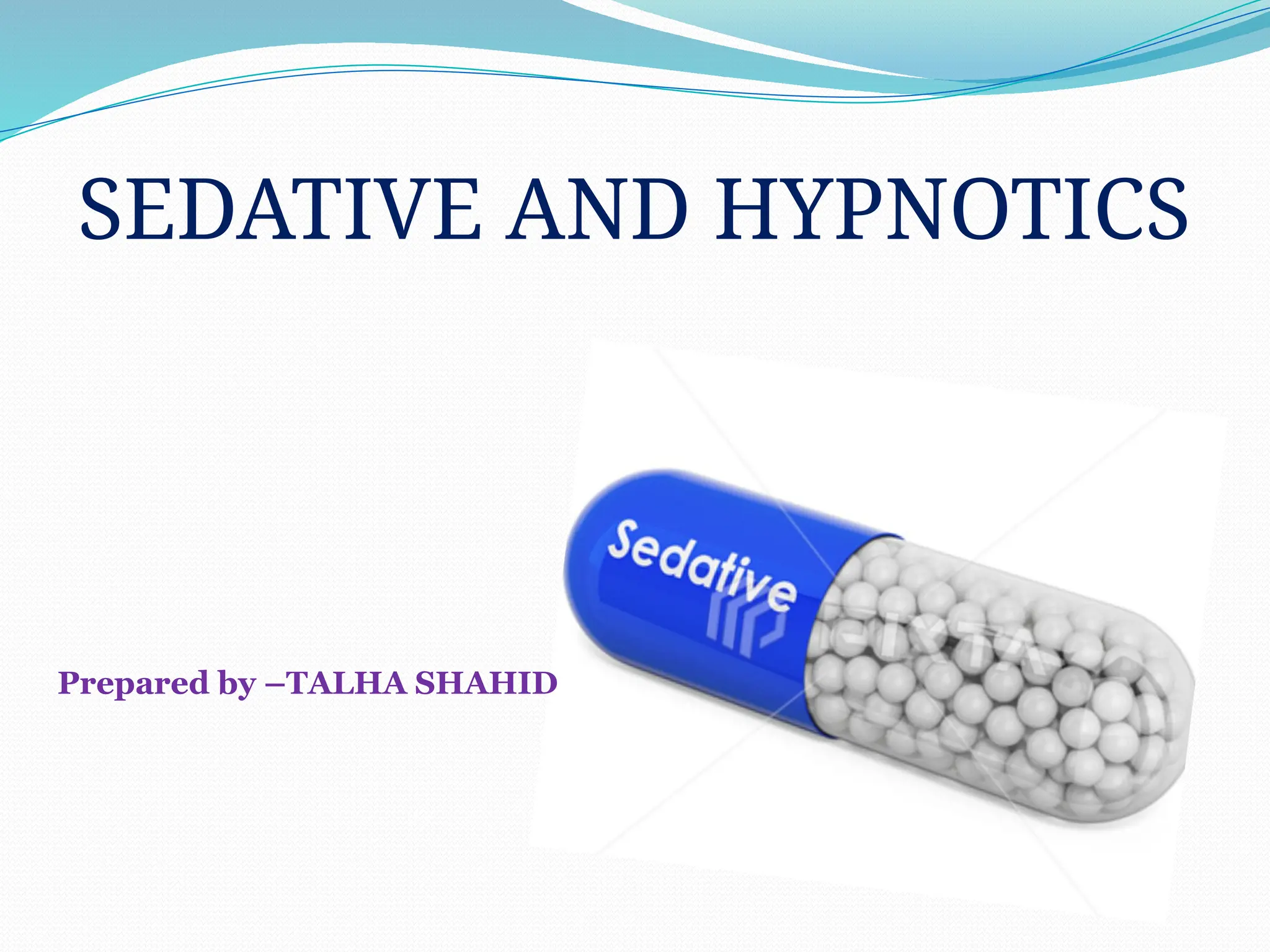
SEDATIVE AND HYPNOTICS
Prepared by –TALHA SHAHID
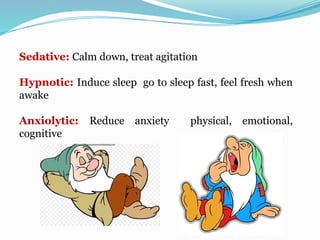
Sedative: Calm down, treat agitation
Hypnotic: Induce sleep go to sleep fast, feel fresh when
awake
Anxiolytic: Reduce anxiety physical, emotional,
cognitive
Sedative
A drug that subdues excitement and calms the
subject without inducing sleep, though drowsiness
may be produced. Sedation refers to decreased
responsiveness to any level of stimulation; is associated
with some decrease in motor activity.
Hypnotic
A drug that induces and/or maintains sleep, similar
to normal arousable sleep. This is not to be confused with
‘hypnosis’ meaning a trans-like state in which the subject
becomes passive and highly suggestible.
Sleep
The duration and pattern of sleep varies considerably among individuals. Age has
an important effect on quantity and depth of sleep.
The different phases of sleep and their characteristics are—
Stage 0 (awake) From lying down to falling asleep and occasional nocturnal
awakenings; constitutes 1–2% of sleep time.. Eye movements are irregular or
slowly rolling.
Stage 1 (dozing) Eye movements are reduced but there may be bursts of rolling.
Neck muscles relax. Occupies 3–6% of sleep time.
Stage 2 (unequivocal sleep); little eye movement; subjects are easily
arousable. This comprises 40–50% of sleep time.
Stage 3 (deep sleep transition) person can be evoked with strong
stimuli only.
Eye movements are few; subjects are not easily arousable; comprises 5–
8% of sleep time.
Stage 4 (cerebral sleep) Person cannot be evoked. Eyes are
practically fixed; subjects are difficult to arouse. Night terror may occur
at this time. It comprises 10–20% of sleep time. During stage 2, 3 and 4
heart rate, BP and respiration are steady and muscles are relaxed. Stages 3 and 4
together are called slow wave sleep (SWS).
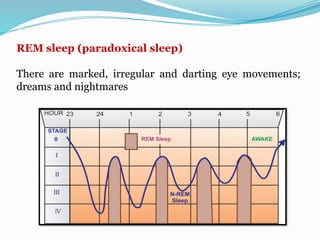
REM sleep (paradoxical sleep)
There are marked, irregular and darting eye movements;
dreams and nightmares
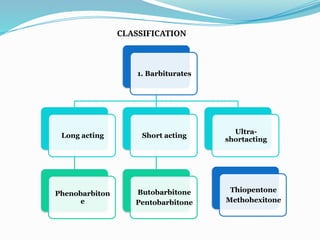
1. Barbiturates
Long acting
Phenobarbiton
e
Short acting
Butobarbitone
Pentobarbitone
Ultra-
shortacting
Thiopentone
Methohexitone
CLASSIFICATION
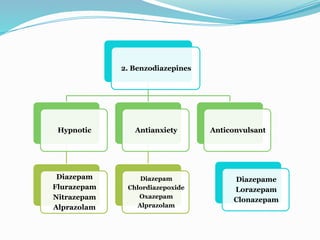
2. Benzodiazepines
Hypnotic
Diazepam
Flurazepam
Nitrazepam
Alprazolam
Antianxiety
Diazepam
Chlordiazepoxide
Oxazepam
Alprazolam
Anticonvulsant
Diazepame
Lorazepam
Clonazepam
Newer nonbenzodiazepine hypnotics
Zopiclone Zolpidem Zaleplon
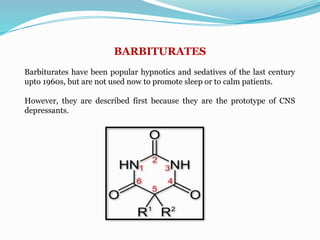
BARBITURATES
Barbiturates have been popular hypnotics and sedatives of the last century
upto 1960s, but are not used now to promote sleep or to calm patients.
However, they are described first because they are the prototype of CNS
depressants.

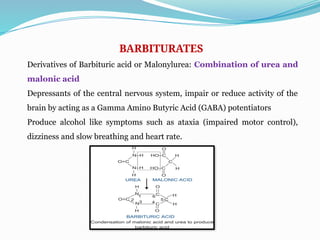
BARBITURATES
Derivatives of Barbituric acid or Malonylurea: Combination of urea and
malonic acid
Depressants of the central nervous system, impair or reduce activity of the
brain by acting as a Gamma Amino Butyric Acid (GABA) potentiators
Produce alcohol like symptoms such as ataxia (impaired motor control),
dizziness and slow breathing and heart rate.
History
 Barbituric acid was first prepared in 1864 by a German scientist -
Adolf von Baeyer - by combining urea from animals and malonic acid
from apples
 Its first derivative utilized as a medicine was used to put dogs to
sleep, latter Bayer produced Veronal in 1903 to be used as a sleeping
aid
 Soon after, phenobarbital and many other barbituric acid derivatives
were discovered and marketed
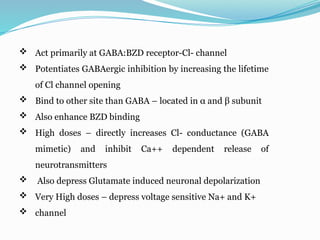
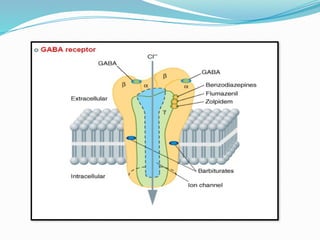
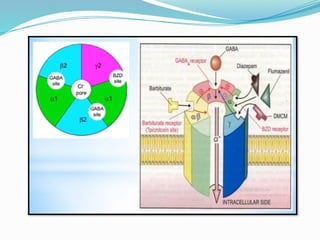
 Act primarily at GABA:BZD receptor-Cl- channel
 Potentiates GABAergic inhibition by increasing the lifetime
of Cl channel opening
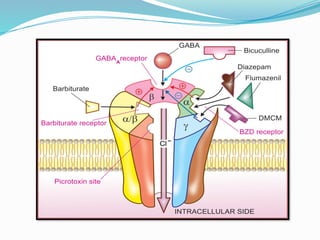
 Bind to other site than GABA – located in α and β subunit
 Also enhance BZD binding
 High doses – directly increases Cl- conductance (GABA
mimetic) and inhibit Ca++ dependent release of
neurotransmitters
 Also depress Glutamate induced neuronal depolarization
 Very High doses – depress voltage sensitive Na+ and K+
 channel
CNS: Barbiturates produce dose-dependent effects:
sedation sleep anaesthesia coma.
→ → →
Hypnotic dose shortens the time taken to fall asleep and increases
sleep duration.
The sleep is arousable, but the subject may feel confused and unsteady if
waken early.
Night awakenings are reduced. REM and stage 3, 4 sleep are decreased;
REM-NREM sleep cycle is disrupted. The effects on sleep become
progressively less marked if the drug is taken every night consecutively.
A rebound increase in REM sleep and nightmares is often noted when the
drug is discontinued after a few nights of use and it takes several nights for
normal pattern to be restored
BARBITURATE –PHARMACOLOGICAL ACTIONS
Respiration: Depressed – neurogenic, hypercapneic and hypoxic drives
to respiratory centre depressed
CVS: Slight decrease in BP and Heart Rate
Toxic doses: Marked fall in BP and HR – due to ganglion blockade,
vasomotor centre depression and direct cardiac action – reflex
tachycardia
Skeletal Muscle: Little effect but anaesthetic doses reduce muscle
contraction
Smooth muscle: Tone and motility of bowel is decreased. Higher doses –
more profound decrease
Kidney: Reduce urine flow – due to decrease BP and ADH release
ADVERSE EFFECTS:
 Hang over, tolerance and dependence,
 mental confusion, impaired performance – accidents
 Idiosyncrasy: Occasional excitement – In elderly
 Hypersensitivity: Rashes, swelling of eyelids, lips etc.
 Tolerance and dependence: Cellular and pharmacokinetic
– on repeated use
 Physical and psychological dependence – abuse liability
Acute barbiturate poisoning
Mostly suicidal, sometimes accidental.
Manifestations are due to excessive CNS depression— patient is flabby and
comatose with shallow and failing respiration, fall in BP and cardiovascular
collapse, renal shut down, pulmonary complications, bullous eruptions. Lethal
dose depends on lipid solubility.
Treatment
1. Gastric lavage; leave a suspension of activated charcoal in the stomach
to prevent absorption of the drug from intestines.
2. Supportive measures: such as, patent airway, assisted respiration,
oxygen, maintenance of blood volume by fluid infusion and use of
vasopressors—dopamine may be preferred for its renal vasodilating
action.
.
3. Alkaline diuresis: with sodium bicarbonate 1 mEq/kg i.v. with or
without mannitol is helpful only in the case of long acting barbiturates
which are eliminated primarily by renal excretion.
4. Haemodialysis and haemoperfusion (through a column of activated
charcoal or other adsorbants) is highly effective in removing long-acting
as well as short-acting barbiturates. There is no specific antidote for
barbiturates.
In the past, analeptics like metrazol, bemegride, etc. have been used in an
attempt to awaken the patient. This is dangerous, may precipitate
convulsions while the patient is still comatose— mortality is increased.
BENZODIAZEPINES (BZDs)
Chlordiazepoxide and diazepam were introduced around 1960 as
antianxiety drugs. Since then this class has proliferated and has
replaced barbiturates as hypnotic and sedative as well, because—
1. BZDs produce a lower degree of neuronal depression than
barbiturates. They have a high therapeutic index.
2. Ingestion of even 20 hypnotic doses does not usually endanger
life—there is no loss of consciousness (though amnesia occurs)
and patient can be aroused; respiration is mostly not so
depressed as to need assistance
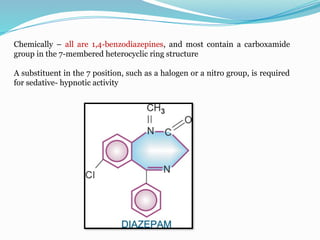
Chemically – all are 1,4-benzodiazepines, and most contain a carboxamide
group in the 7-membered heterocyclic ring structure
A substituent in the 7 position, such as a halogen or a nitro group, is required
for sedative- hypnotic activity
BENZODIAZEPINES VS OLDER ONES
Most widely used sedative-hypnotics now since 1960 and replaced
Barbiturates
 High therapeutic index – 20 hypnotic doses – no loss of
consciousness or respiratory depression – patient can be aroused
 Hypnotic doses do not affect respiration or cardiovascular functions.
Higher doses produce mild respiratory depression and hypotension
 which is problematic only in patients with respiratory insufficiency
or cardiac/haemodynamic abnormality
 BZDs have no action on other body system – only IV injection BP
may fall – Barbiturates ?
 BZDs cause less distortion of sleep architecture
 No microsomal induction – less drug interaction
 Low abuse liability, mild tolerance, psychological and physical
dependence and less withdrawal symptoms
 Specific antagonist - flumazenil
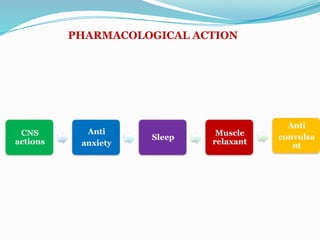
PHARMACOLOGICAL ACTION
CNS
actions
Anti
anxiety
Sleep
Muscle
relaxant
Anti
convulsa
nt
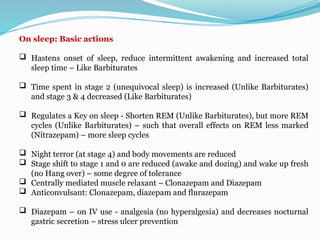
On sleep: Basic actions
 Hastens onset of sleep, reduce intermittent awakening and increased total
sleep time – Like Barbiturates
 Time spent in stage 2 (unequivocal sleep) is increased (Unlike Barbiturates)
and stage 3 & 4 decreased (Like Barbiturates)
 Regulates a Key on sleep - Shorten REM (Unlike Barbiturates), but more REM
cycles (Unlike Barbiturates) – such that overall effects on REM less marked
(Nitrazepam) – more sleep cycles
 Night terror (at stage 4) and body movements are reduced
 Stage shift to stage 1 and 0 are reduced (awake and dozing) and wake up fresh
(no Hang over) – some degree of tolerance
 Centrally mediated muscle relaxant – Clonazepam and Diazepam
 Anticonvulsant: Clonazepam, diazepam and flurazepam
 Diazepam – on IV use - analgesia (no hyperalgesia) and decreases nocturnal
gastric secretion – stress ulcer prevention
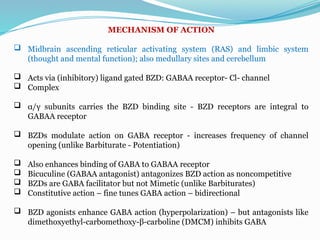
MECHANISM OF ACTION
 Midbrain ascending reticular activating system (RAS) and limbic system
(thought and mental function); also medullary sites and cerebellum
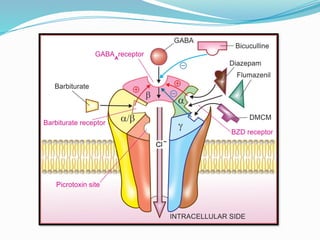
 Acts via (inhibitory) ligand gated BZD: GABAA receptor- Cl- channel
 Complex
 α/γ subunits carries the BZD binding site - BZD receptors are integral to
GABAA receptor
 BZDs modulate action on GABA receptor - increases frequency of channel
opening (unlike Barbiturate - Potentiation)
 Also enhances binding of GABA to GABAA receptor
 Bicuculine (GABAA antagonist) antagonizes BZD action as noncompetitive
 BZDs are GABA facilitator but not Mimetic (unlike Barbiturates)
 Constitutive action – fine tunes GABA action – bidirectional
 BZD agonists enhance GABA action (hyperpolarization) – but antagonists like
dimethoxyethyl-carbomethoxy-β-carboline (DMCM) inhibits GABA
INDIVIDUAL DRUGS
 Slow elimination but rapid redistribution
 Diazepam: Generates active metabolite (desmethyl-diazepam, oxazepam) –
single dose no residual effects – regular use accumulation and prolonged
anxiolytic effect.
 Nitrazepam: Accumulates - Residual effects – day time sedation (not on
single dose) – for frequent nocturnal awakening patients (if day time sedation
acceptable)
 Flurazepam: Slow elimination of parent drug or metabolite – Produces active
metabolite which have long half life – residual effects frequently (morning) –
cumulation – day time sedation (if day time sedation acceptable)
 Rapid elimination and marked redistribution
 Alprazolam: Basically used as anxiolytic – but also night time hypnotic –
withdrawal phenimenon after regular use - sedation
 Temazepam: No residual effect, no metabolite – used in sleep onset difficulty
 Ultrarapid elimination: Triazolam – potent, quick acting – for induction of
sleep
BZDS – ADVERSE EFFECTS
 Older individuals are more susceptible – Be careful
 Hypnotic doses: Dizziness, vertigo, ataxia, disorientation, amnesia,
prolongation of reaction time – impairment of psychomotor skill
 Hang over with larger doses – long acting ones
 Weakness, blurring of vision, dry mouth and urinary incontinence
 Paradoxical stimulation, irritability and sweating – Flurazepam
 Nightmares and behaviuoral alteration – Nitrazepam
 Tolerance to sedative effect very slowly – little tendency to increase dose –
cross tolerance to alcohol and other CNS depressants
 Dependence liability and drug seeking behaviour – low (bland) - Midazolam
 Low withdrawal syndrome – more with ultrarapid ones – anxiety, insomnia,
restlessness, malaise, loss of appetite, bad dreams
 Pregnancy – flaccidity and respiratory depression in neonate
USES OF BZDS
 As Hypnotic: Not all are useful as hypnotic agents, although all have
sedative or calming effects
 As anxiolytic and for day time sedation
 As anticonvulsant – status epilepticus, febrile convulsion, tetanus
 As Muscle relaxant (centrally acting)
 Preananesthetic medication, IV anaesthesia and conscious sedation
 Before procedures: ECT, electrical cardioversion of arrhythmias, cardiac
catheterization, endoscopies and other minor procedures
 Alcohol and other sedative-hypnotic withdrawal
 Along with analgesics, NSAIDs, spasmolytics, antiulcer and many other
drugs
AS HYPNOTIC
 A hypnotic should not be casually prescribed for every case of
insomnia – BZDs and Non-BZDs are most frequently used
 The choice of a particular BZD to treat a sleep disturbance is
generally based on Pharmacokinetic criteria:
 Long-acting compounds (e.g. flurazepam) may ensure that a patient
will sleep through the night, they also may cause cumulative effects
resulting in daytime sluggishness or drug hangover
 Short-acting compounds (e.g. triazolam) avoid the hangover
problem, but their use may be associated with early awakening and
an increase in daytime anxiety
BZD AS HYPNOTIC – GENERAL POINTS
 A hypnotic should be used –
(1) shorten sleep latency, (2) to reduce nocturnal awakening and
(3) to provide anxiolytic effect the next day Should consider onset of action and
duration of action of the drug Should consider next day effects – prolonged
sedation or rebound anxiety
 All become useless after regular use – except ` z` drugs
 Should consider the subjects perception and assessment
BENZODIAZEPINE ANTAGONIST
Flumazenil
It is a BZD analogue which has little intrinsic activity (practically no
effect on normal subjects), but competes with BZD agonists as well as
inverse agonists for the BZD receptor and reverses their depressant or stimulant
effects respectively.
Flumazenil abolishes the hypnogenic, psychomotor, cognitive effect of BZDs. At
higher doses it has some week BZD agonist-like as well as inverse agonist-like
activity in animal models, but these are of no clinical significance. Flumazenil is
absorbed orally; oral bioavailability is ~16%, but it is not used orally. On i.v.
injection, action of flumazenil starts in seconds and lasts for 1–2 hr; elimination
t½ is 1 hr, due to rapid metabolism.
USES OF FLUMAZENIL
1.To reverse BZD anaesthesia Patients anaesthetized/sedated
with a BZD wakeup, get oriented and regain motor control within 1
min of an i.v. injection of 0.3–1 mg of flumazenil.
Resedation generally occurs within 1 hour (more with diazepam
than with midazolam): supplemental doses of flumazenil may be
given. This may allow early discharge of patients after diagnostic
procedures and facilitates postanaesthetic management.
2. BZD overdose
Majority of patients of BZD overdose require only supportive measures like
patent airway, maintenance of BP, cardiac and renal function (by fluid
transfusion, etc.).
In addition, flumazenil 0.2 mg/min may be injected i.v. till the
patient regains consciousness.
Practically all patients intoxicated with a BZD alone respond within 5 min.
However, reversal of respiratory depression is incomplete.
Flumazenil blocks the hypnotic effect of zolpidem-like non-BZDs as well.
In mixed CNS depressant poisoning, whatever sedation is not abolished by
5 mg of flumazenil should be taken to be due to a non-BZD/non-Zolpidem-like
depressant. It thus helps in differential diagnosis of such patients.
THANK YOU

sedativeandhypnotics7t8675646544535342.pptx

  • 1.
  • 2.
    Sedative: Calm down,treat agitation Hypnotic: Induce sleep go to sleep fast, feel fresh when awake Anxiolytic: Reduce anxiety physical, emotional, cognitive
  • 3.
    Sedative A drug thatsubdues excitement and calms the subject without inducing sleep, though drowsiness may be produced. Sedation refers to decreased responsiveness to any level of stimulation; is associated with some decrease in motor activity. Hypnotic A drug that induces and/or maintains sleep, similar to normal arousable sleep. This is not to be confused with ‘hypnosis’ meaning a trans-like state in which the subject becomes passive and highly suggestible.
  • 4.
    Sleep The duration andpattern of sleep varies considerably among individuals. Age has an important effect on quantity and depth of sleep. The different phases of sleep and their characteristics are— Stage 0 (awake) From lying down to falling asleep and occasional nocturnal awakenings; constitutes 1–2% of sleep time.. Eye movements are irregular or slowly rolling. Stage 1 (dozing) Eye movements are reduced but there may be bursts of rolling. Neck muscles relax. Occupies 3–6% of sleep time. Stage 2 (unequivocal sleep); little eye movement; subjects are easily arousable. This comprises 40–50% of sleep time.
  • 5.
    Stage 3 (deepsleep transition) person can be evoked with strong stimuli only. Eye movements are few; subjects are not easily arousable; comprises 5– 8% of sleep time. Stage 4 (cerebral sleep) Person cannot be evoked. Eyes are practically fixed; subjects are difficult to arouse. Night terror may occur at this time. It comprises 10–20% of sleep time. During stage 2, 3 and 4 heart rate, BP and respiration are steady and muscles are relaxed. Stages 3 and 4 together are called slow wave sleep (SWS).
  • 6.
    REM sleep (paradoxicalsleep) There are marked, irregular and darting eye movements; dreams and nightmares
  • 7.
    1. Barbiturates Long acting Phenobarbiton e Shortacting Butobarbitone Pentobarbitone Ultra- shortacting Thiopentone Methohexitone CLASSIFICATION
  • 8.
  • 9.
  • 10.
    BARBITURATES Barbiturates have beenpopular hypnotics and sedatives of the last century upto 1960s, but are not used now to promote sleep or to calm patients. However, they are described first because they are the prototype of CNS depressants.
  • 11.
    BARBITURATES Derivatives of Barbituricacid or Malonylurea: Combination of urea and malonic acid Depressants of the central nervous system, impair or reduce activity of the brain by acting as a Gamma Amino Butyric Acid (GABA) potentiators Produce alcohol like symptoms such as ataxia (impaired motor control), dizziness and slow breathing and heart rate.
  • 12.
    History  Barbituric acidwas first prepared in 1864 by a German scientist - Adolf von Baeyer - by combining urea from animals and malonic acid from apples  Its first derivative utilized as a medicine was used to put dogs to sleep, latter Bayer produced Veronal in 1903 to be used as a sleeping aid  Soon after, phenobarbital and many other barbituric acid derivatives were discovered and marketed
  • 13.
     Act primarilyat GABA:BZD receptor-Cl- channel  Potentiates GABAergic inhibition by increasing the lifetime of Cl channel opening  Bind to other site than GABA – located in α and β subunit  Also enhance BZD binding  High doses – directly increases Cl- conductance (GABA mimetic) and inhibit Ca++ dependent release of neurotransmitters  Also depress Glutamate induced neuronal depolarization  Very High doses – depress voltage sensitive Na+ and K+  channel
  • 17.
    CNS: Barbiturates producedose-dependent effects: sedation sleep anaesthesia coma. → → → Hypnotic dose shortens the time taken to fall asleep and increases sleep duration. The sleep is arousable, but the subject may feel confused and unsteady if waken early. Night awakenings are reduced. REM and stage 3, 4 sleep are decreased; REM-NREM sleep cycle is disrupted. The effects on sleep become progressively less marked if the drug is taken every night consecutively. A rebound increase in REM sleep and nightmares is often noted when the drug is discontinued after a few nights of use and it takes several nights for normal pattern to be restored
  • 18.
    BARBITURATE –PHARMACOLOGICAL ACTIONS Respiration:Depressed – neurogenic, hypercapneic and hypoxic drives to respiratory centre depressed CVS: Slight decrease in BP and Heart Rate Toxic doses: Marked fall in BP and HR – due to ganglion blockade, vasomotor centre depression and direct cardiac action – reflex tachycardia Skeletal Muscle: Little effect but anaesthetic doses reduce muscle contraction Smooth muscle: Tone and motility of bowel is decreased. Higher doses – more profound decrease Kidney: Reduce urine flow – due to decrease BP and ADH release
  • 19.
    ADVERSE EFFECTS:  Hangover, tolerance and dependence,  mental confusion, impaired performance – accidents  Idiosyncrasy: Occasional excitement – In elderly  Hypersensitivity: Rashes, swelling of eyelids, lips etc.  Tolerance and dependence: Cellular and pharmacokinetic – on repeated use  Physical and psychological dependence – abuse liability
  • 20.
    Acute barbiturate poisoning Mostlysuicidal, sometimes accidental. Manifestations are due to excessive CNS depression— patient is flabby and comatose with shallow and failing respiration, fall in BP and cardiovascular collapse, renal shut down, pulmonary complications, bullous eruptions. Lethal dose depends on lipid solubility. Treatment 1. Gastric lavage; leave a suspension of activated charcoal in the stomach to prevent absorption of the drug from intestines. 2. Supportive measures: such as, patent airway, assisted respiration, oxygen, maintenance of blood volume by fluid infusion and use of vasopressors—dopamine may be preferred for its renal vasodilating action. .
  • 21.
    3. Alkaline diuresis:with sodium bicarbonate 1 mEq/kg i.v. with or without mannitol is helpful only in the case of long acting barbiturates which are eliminated primarily by renal excretion. 4. Haemodialysis and haemoperfusion (through a column of activated charcoal or other adsorbants) is highly effective in removing long-acting as well as short-acting barbiturates. There is no specific antidote for barbiturates. In the past, analeptics like metrazol, bemegride, etc. have been used in an attempt to awaken the patient. This is dangerous, may precipitate convulsions while the patient is still comatose— mortality is increased.
  • 22.
    BENZODIAZEPINES (BZDs) Chlordiazepoxide anddiazepam were introduced around 1960 as antianxiety drugs. Since then this class has proliferated and has replaced barbiturates as hypnotic and sedative as well, because— 1. BZDs produce a lower degree of neuronal depression than barbiturates. They have a high therapeutic index. 2. Ingestion of even 20 hypnotic doses does not usually endanger life—there is no loss of consciousness (though amnesia occurs) and patient can be aroused; respiration is mostly not so depressed as to need assistance
  • 23.
    Chemically – allare 1,4-benzodiazepines, and most contain a carboxamide group in the 7-membered heterocyclic ring structure A substituent in the 7 position, such as a halogen or a nitro group, is required for sedative- hypnotic activity
  • 24.
    BENZODIAZEPINES VS OLDERONES Most widely used sedative-hypnotics now since 1960 and replaced Barbiturates  High therapeutic index – 20 hypnotic doses – no loss of consciousness or respiratory depression – patient can be aroused  Hypnotic doses do not affect respiration or cardiovascular functions. Higher doses produce mild respiratory depression and hypotension  which is problematic only in patients with respiratory insufficiency or cardiac/haemodynamic abnormality  BZDs have no action on other body system – only IV injection BP may fall – Barbiturates ?  BZDs cause less distortion of sleep architecture  No microsomal induction – less drug interaction  Low abuse liability, mild tolerance, psychological and physical dependence and less withdrawal symptoms  Specific antagonist - flumazenil
  • 25.
  • 26.
    On sleep: Basicactions  Hastens onset of sleep, reduce intermittent awakening and increased total sleep time – Like Barbiturates  Time spent in stage 2 (unequivocal sleep) is increased (Unlike Barbiturates) and stage 3 & 4 decreased (Like Barbiturates)  Regulates a Key on sleep - Shorten REM (Unlike Barbiturates), but more REM cycles (Unlike Barbiturates) – such that overall effects on REM less marked (Nitrazepam) – more sleep cycles  Night terror (at stage 4) and body movements are reduced  Stage shift to stage 1 and 0 are reduced (awake and dozing) and wake up fresh (no Hang over) – some degree of tolerance  Centrally mediated muscle relaxant – Clonazepam and Diazepam  Anticonvulsant: Clonazepam, diazepam and flurazepam  Diazepam – on IV use - analgesia (no hyperalgesia) and decreases nocturnal gastric secretion – stress ulcer prevention
  • 27.
    MECHANISM OF ACTION Midbrain ascending reticular activating system (RAS) and limbic system (thought and mental function); also medullary sites and cerebellum  Acts via (inhibitory) ligand gated BZD: GABAA receptor- Cl- channel  Complex  α/γ subunits carries the BZD binding site - BZD receptors are integral to GABAA receptor  BZDs modulate action on GABA receptor - increases frequency of channel opening (unlike Barbiturate - Potentiation)  Also enhances binding of GABA to GABAA receptor  Bicuculine (GABAA antagonist) antagonizes BZD action as noncompetitive  BZDs are GABA facilitator but not Mimetic (unlike Barbiturates)  Constitutive action – fine tunes GABA action – bidirectional  BZD agonists enhance GABA action (hyperpolarization) – but antagonists like dimethoxyethyl-carbomethoxy-β-carboline (DMCM) inhibits GABA
  • 29.
    INDIVIDUAL DRUGS  Slowelimination but rapid redistribution  Diazepam: Generates active metabolite (desmethyl-diazepam, oxazepam) – single dose no residual effects – regular use accumulation and prolonged anxiolytic effect.  Nitrazepam: Accumulates - Residual effects – day time sedation (not on single dose) – for frequent nocturnal awakening patients (if day time sedation acceptable)  Flurazepam: Slow elimination of parent drug or metabolite – Produces active metabolite which have long half life – residual effects frequently (morning) – cumulation – day time sedation (if day time sedation acceptable)  Rapid elimination and marked redistribution  Alprazolam: Basically used as anxiolytic – but also night time hypnotic – withdrawal phenimenon after regular use - sedation  Temazepam: No residual effect, no metabolite – used in sleep onset difficulty  Ultrarapid elimination: Triazolam – potent, quick acting – for induction of sleep
  • 30.
    BZDS – ADVERSEEFFECTS  Older individuals are more susceptible – Be careful  Hypnotic doses: Dizziness, vertigo, ataxia, disorientation, amnesia, prolongation of reaction time – impairment of psychomotor skill  Hang over with larger doses – long acting ones  Weakness, blurring of vision, dry mouth and urinary incontinence  Paradoxical stimulation, irritability and sweating – Flurazepam  Nightmares and behaviuoral alteration – Nitrazepam  Tolerance to sedative effect very slowly – little tendency to increase dose – cross tolerance to alcohol and other CNS depressants  Dependence liability and drug seeking behaviour – low (bland) - Midazolam  Low withdrawal syndrome – more with ultrarapid ones – anxiety, insomnia, restlessness, malaise, loss of appetite, bad dreams  Pregnancy – flaccidity and respiratory depression in neonate
  • 31.
    USES OF BZDS As Hypnotic: Not all are useful as hypnotic agents, although all have sedative or calming effects  As anxiolytic and for day time sedation  As anticonvulsant – status epilepticus, febrile convulsion, tetanus  As Muscle relaxant (centrally acting)  Preananesthetic medication, IV anaesthesia and conscious sedation  Before procedures: ECT, electrical cardioversion of arrhythmias, cardiac catheterization, endoscopies and other minor procedures  Alcohol and other sedative-hypnotic withdrawal  Along with analgesics, NSAIDs, spasmolytics, antiulcer and many other drugs
  • 32.
    AS HYPNOTIC  Ahypnotic should not be casually prescribed for every case of insomnia – BZDs and Non-BZDs are most frequently used  The choice of a particular BZD to treat a sleep disturbance is generally based on Pharmacokinetic criteria:  Long-acting compounds (e.g. flurazepam) may ensure that a patient will sleep through the night, they also may cause cumulative effects resulting in daytime sluggishness or drug hangover  Short-acting compounds (e.g. triazolam) avoid the hangover problem, but their use may be associated with early awakening and an increase in daytime anxiety
  • 33.
    BZD AS HYPNOTIC– GENERAL POINTS  A hypnotic should be used – (1) shorten sleep latency, (2) to reduce nocturnal awakening and (3) to provide anxiolytic effect the next day Should consider onset of action and duration of action of the drug Should consider next day effects – prolonged sedation or rebound anxiety  All become useless after regular use – except ` z` drugs  Should consider the subjects perception and assessment
  • 34.
    BENZODIAZEPINE ANTAGONIST Flumazenil It isa BZD analogue which has little intrinsic activity (practically no effect on normal subjects), but competes with BZD agonists as well as inverse agonists for the BZD receptor and reverses their depressant or stimulant effects respectively. Flumazenil abolishes the hypnogenic, psychomotor, cognitive effect of BZDs. At higher doses it has some week BZD agonist-like as well as inverse agonist-like activity in animal models, but these are of no clinical significance. Flumazenil is absorbed orally; oral bioavailability is ~16%, but it is not used orally. On i.v. injection, action of flumazenil starts in seconds and lasts for 1–2 hr; elimination t½ is 1 hr, due to rapid metabolism.
  • 35.
    USES OF FLUMAZENIL 1.Toreverse BZD anaesthesia Patients anaesthetized/sedated with a BZD wakeup, get oriented and regain motor control within 1 min of an i.v. injection of 0.3–1 mg of flumazenil. Resedation generally occurs within 1 hour (more with diazepam than with midazolam): supplemental doses of flumazenil may be given. This may allow early discharge of patients after diagnostic procedures and facilitates postanaesthetic management.
  • 36.
    2. BZD overdose Majorityof patients of BZD overdose require only supportive measures like patent airway, maintenance of BP, cardiac and renal function (by fluid transfusion, etc.). In addition, flumazenil 0.2 mg/min may be injected i.v. till the patient regains consciousness. Practically all patients intoxicated with a BZD alone respond within 5 min. However, reversal of respiratory depression is incomplete. Flumazenil blocks the hypnotic effect of zolpidem-like non-BZDs as well. In mixed CNS depressant poisoning, whatever sedation is not abolished by 5 mg of flumazenil should be taken to be due to a non-BZD/non-Zolpidem-like depressant. It thus helps in differential diagnosis of such patients.
  • 37.